Introduction
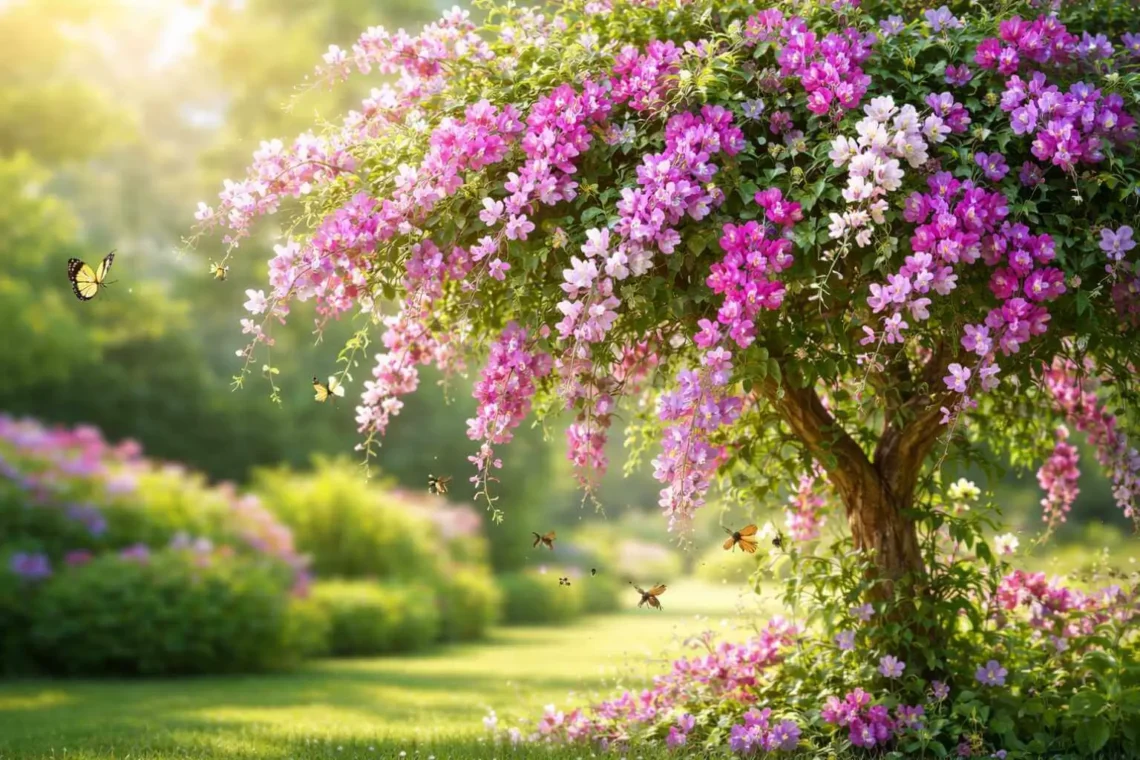
The sweet pea tree is a stunning addition to any garden, celebrated for its delicate sweet pea flowers and lush green foliage. Known for its vibrant blooms and graceful growth, it is a favorite among gardeners seeking both aesthetic charm and seasonal interest. Planting a sweet pea tree not only enhances the visual appeal of outdoor spaces but also attracts pollinators such as bees and butterflies, contributing to a healthy garden ecosystem. With manageable maintenance and a variety of flowering types, the sweet pea tree is ideal for both beginners and seasoned gardeners looking to add color, fragrance, and natural beauty to their landscapes.
Understanding the Sweet Pea Tree
-
What is a Sweet Pea Tree?
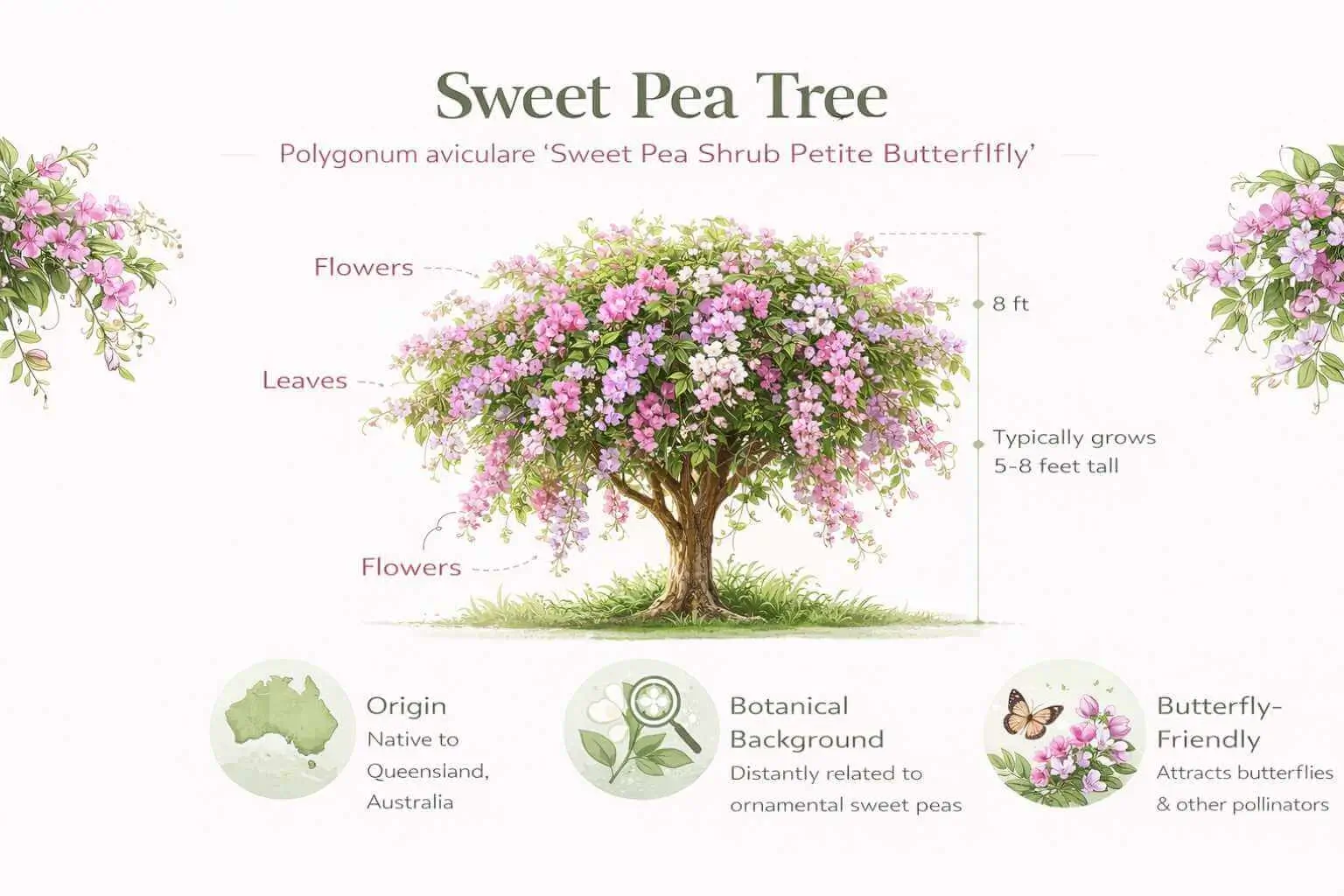
A sweet pea tree is a small to medium-sized flowering shrub renowned for its charming clusters of sweet pea shrub petite butterfly blooms. Originating from temperate regions, this tree is part of the legume family, which is known for nitrogen-fixing properties that enrich soil fertility. Its botanical background includes a variety of species, each offering unique flower shapes and colors. Popular in ornamental gardening, the sweet pea tree combines elegance with ecological benefits, making it a versatile choice for borders, patios, and mixed flower beds.
-
Sweet Pea Tree Height and Size
The typical sweet pea tree height ranges from 6 to 10 feet, depending on the variety and growing conditions. Its spread, often referred to as sweet pea shrub size, can range between 4 to 8 feet, providing a balanced, bushy appearance. Regular pruning helps maintain its compact size while encouraging more vibrant blooms. Its moderate stature makes it suitable for small gardens, container planting, or as a striking focal point in larger landscapes.
-
Sweet Pea Bush Varieties
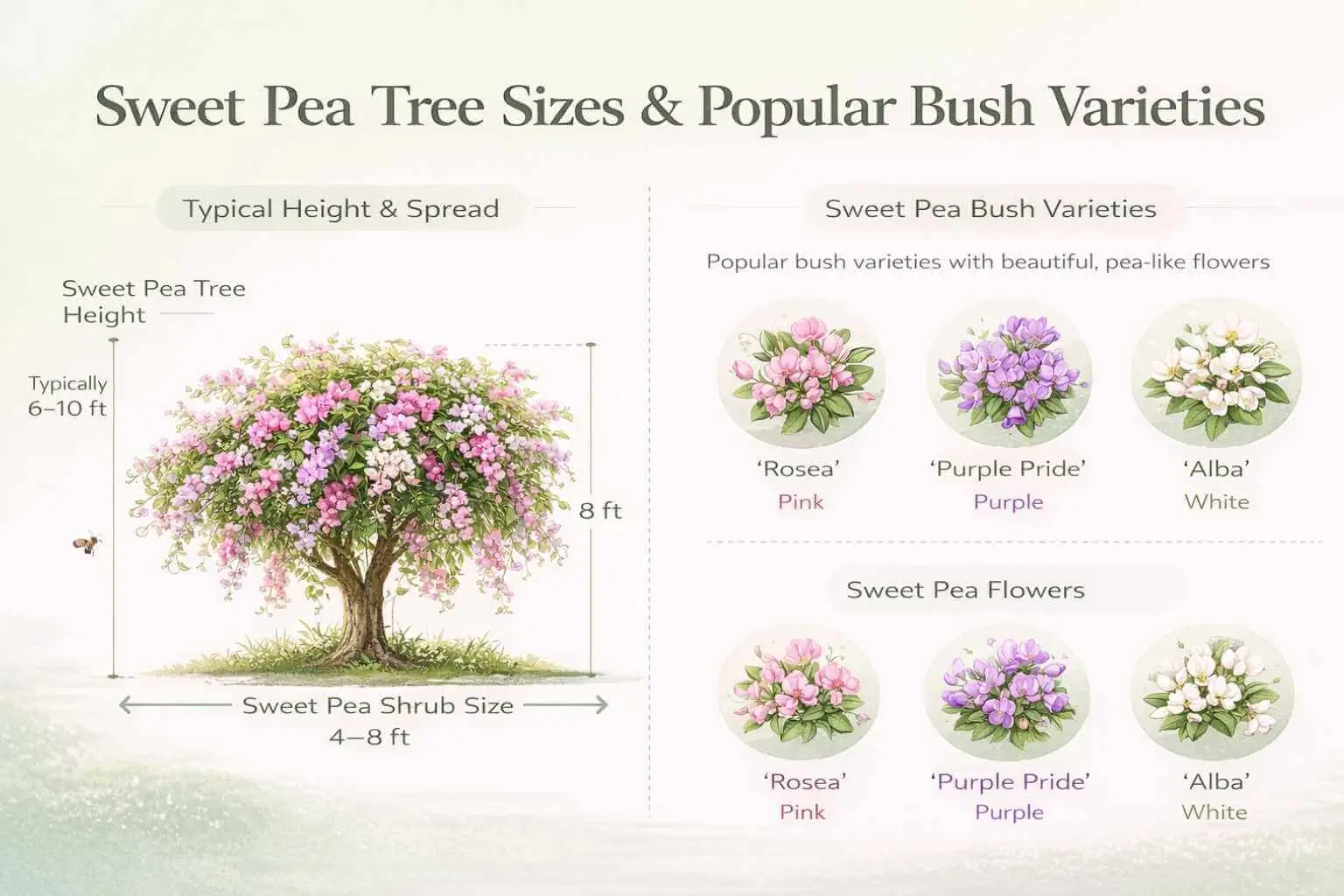
Gardeners can choose from several sweet pea bush varieties, each offering a distinct range of colors and flowering habits. Common varieties include shades of pink, purple, and white, with some featuring fragrant blooms. For flowering enthusiasts, certain sweet pea flower types are especially prized for long-lasting and profuse blossoms. Selecting the right variety ensures continuous seasonal interest and complements the garden’s overall design.
Planting and Growing a Sweet Pea Tree
Ideal Soil and Location
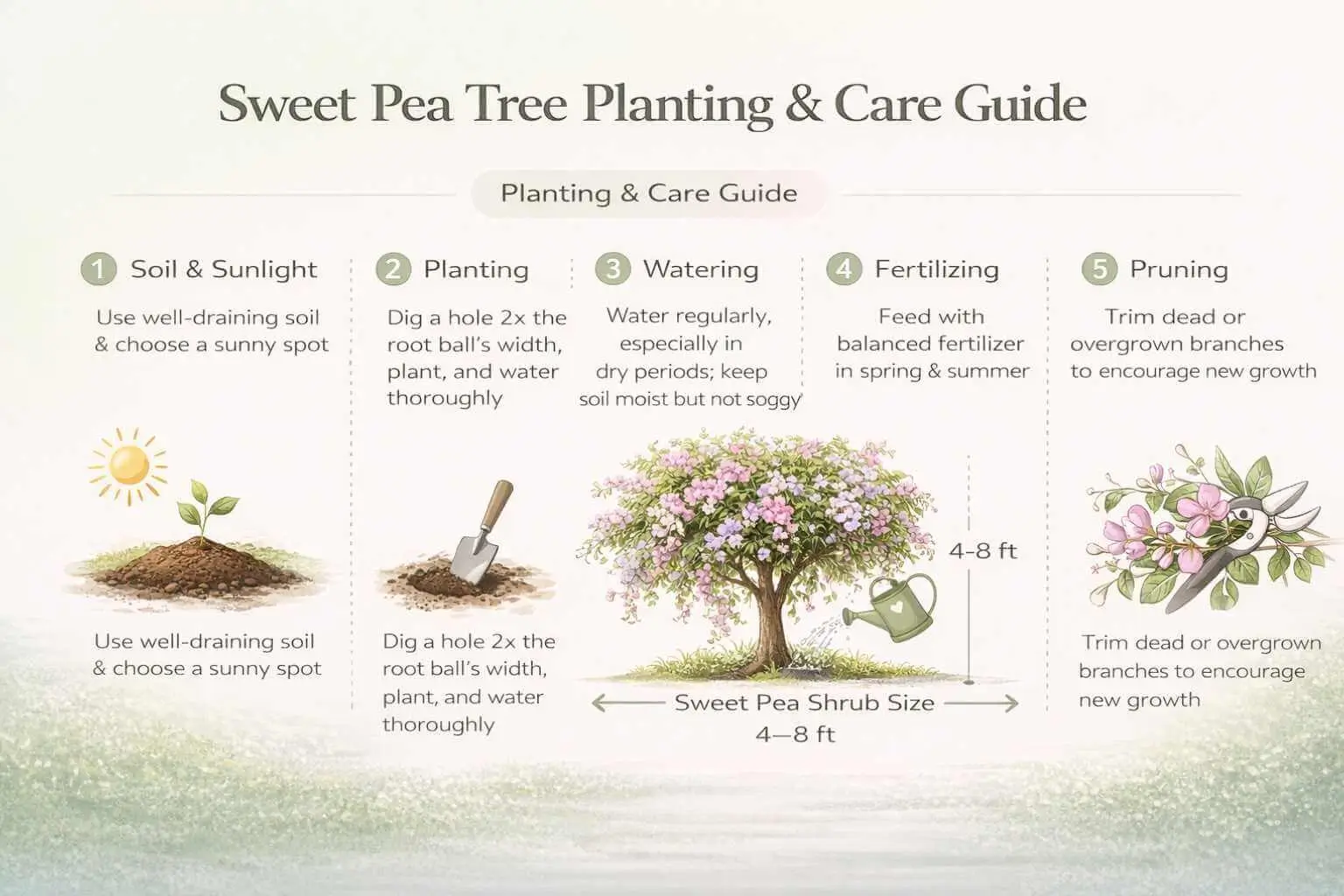
Sweet pea trees thrive in well-draining, fertile soils with a slightly acidic to neutral pH. They prefer full sun exposure for at least six hours a day but can tolerate partial shade in hotter climates. Proper spacing is essential to allow air circulation and healthy growth, reducing the risk of fungal diseases. Choosing the ideal location ensures strong root development and prolific flowering each season.
Planting Guide
Planting a sweet pea tree involves a few key steps:
- Step 1: Dig a hole twice the width of the root ball and slightly deeper than its height.
- Step 2: Place the tree in the hole, ensuring roots are spread evenly.
- Step 3: Backfill with soil, gently firming it around the base.
- Step 4: Water thoroughly immediately after planting.
- Step 5: Apply a balanced fertilizer to encourage root growth and vibrant blooms.
Regular watering during the first growing season helps the tree establish strong roots.
Sweet Pea Shrub Care Tips
Proper sweet pea shrub care includes:
- Pruning: Trim spent flowers and shape the shrub after flowering to maintain its form.
- Watering: Maintain consistent moisture without waterlogging the soil.
- Fertilizing: Feed with a balanced, slow-release fertilizer during the growing season.
- Mulching: Apply organic mulch to retain soil moisture and suppress weeds.
Routine care ensures the shrub remains healthy and produces abundant blooms year after year.
Common Problems with Sweet Pea Trees and Bushes
Sweet Pea Bush Problems
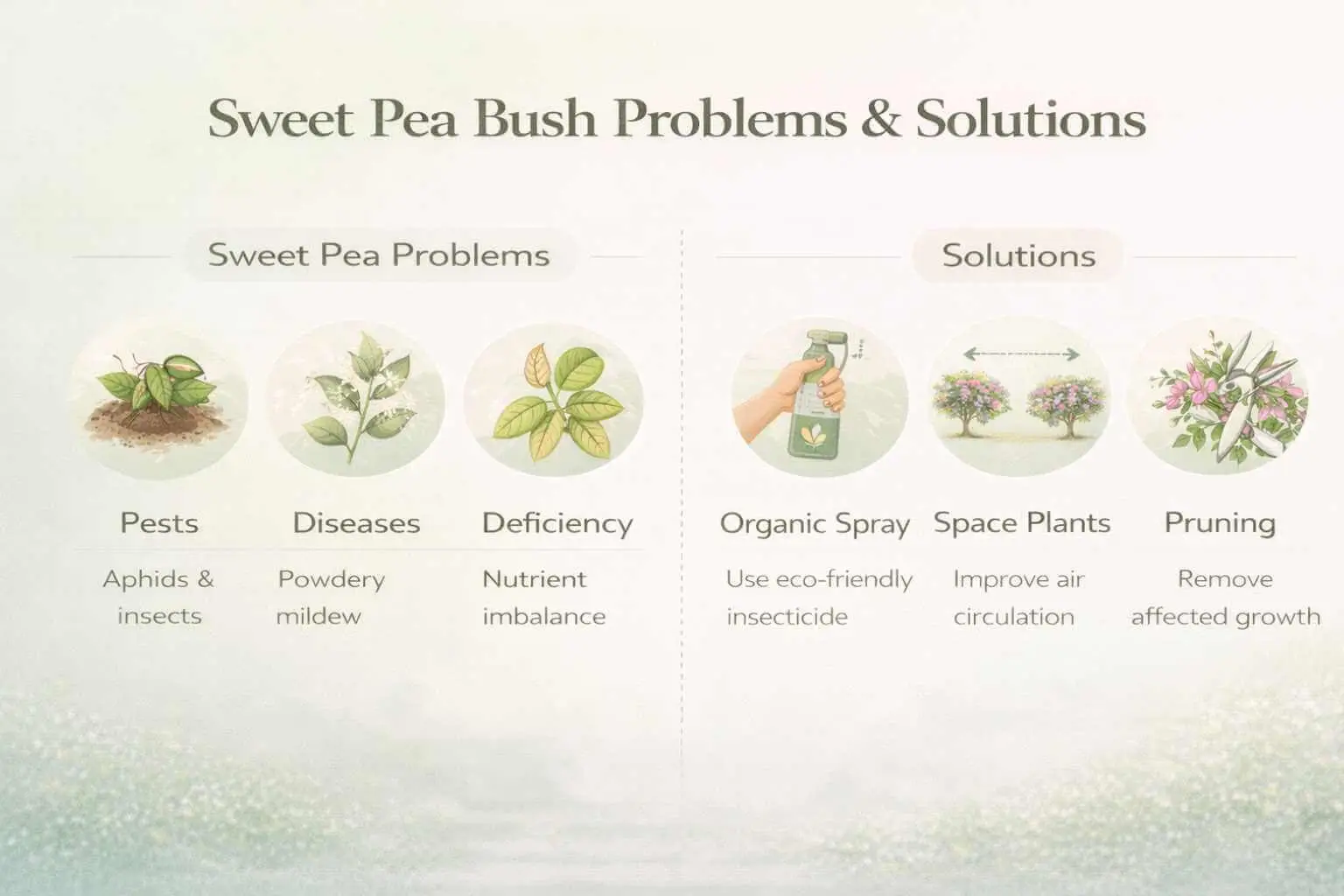
Like all plants, sweet pea trees can face challenges. Common sweet pea bush problems include:
- Aphids, mites, and other pests that feed on new growth.
- Fungal infections such as powdery mildew or root rot.
- Nutrient deficiencies leading to yellowing leaves or poor flowering.
Early identification of these issues is crucial for maintaining a vibrant and healthy tree.
How to Prevent and Treat Issues
Preventive measures and treatments include:
- Organic remedies: Neem oil, insecticidal soap, or companion planting to deter pests.
- Chemical options: Fungicides and targeted insecticides when infestations become severe.
- Cultural practices: Proper spacing, pruning, and watering to reduce disease risk.
Following these tips ensures the sweet pea tree thrives while minimizing the impact of common garden problems.
Visual Guide and Inspiration
Sweet Pea Tree Pictures
Sweet pea tree pictures reveal the wide range of forms and colors available. From compact shrubs with delicate flowers to taller trees with cascading blooms, visual inspiration helps gardeners select the ideal type for their space. Photos also demonstrate pruning styles and seasonal changes, offering practical guidance and design ideas.
Flowering and Seasonal Beauty
The sweet pea flower is celebrated for its vibrant seasonal display. Blooms typically appear in spring and continue into summer, with colors ranging from pastel pinks to deep purples. Seasonal care, including deadheading spent flowers and regular watering, enhances flowering duration and maintains the tree’s ornamental appeal. These blooms not only beautify gardens but also attract pollinators, contributing to a thriving ecosystem.
Conclusion
The sweet pea tree is a delightful addition to any garden, offering vibrant sweet pea flowers, elegant foliage, and a manageable size that suits a variety of spaces. Its beauty is complemented by the ease of care, including proper watering, pruning, and soil management, making it an excellent choice for both beginner and experienced gardeners. Planting a sweet pea tree not only enhances the aesthetic appeal of your garden but also supports pollinators and encourages seasonal interest. Explore different sweet pea bush varieties to find colors and forms that best suit your landscape, and enjoy the long-lasting charm of this remarkable flowering tree. Start planting today and transform your garden with the colorful elegance of the sweet pea tree.
Learn more: Jewish Plant Care: 7+ Powerful Benefits & Easy Indoor Tips
FAQs
- What is the average height of a sweet pea tree?
The typical sweet pea tree height ranges from 6 to 10 feet, depending on the variety and growing conditions. Regular pruning can help maintain a compact and manageable size. - Which sweet pea bush varieties are best for small gardens?
For smaller gardens, compact sweet pea bush varieties with a bushy growth habit are ideal. These include dwarf or petite types that offer abundant blooms without overwhelming the space. - How do I care for a sweet pea shrub petite butterfly?
Caring for a sweet pea shrub petite butterfly involves consistent watering, pruning spent flowers, and providing nutrient-rich soil. Regular sweet pea shrub care also includes mulching to retain moisture and feeding with a balanced fertilizer during the growing season. - What are common problems with sweet pea bushes?
Common sweet pea bush problems include aphid infestations, fungal infections like powdery mildew, and nutrient deficiencies. Early detection and proper care help maintain healthy growth and vibrant blooms. - When do sweet pea flowers bloom?
Sweet pea flowers typically bloom from spring into summer. Deadheading spent flowers and providing adequate sunlight and water can prolong the flowering period and encourage more vibrant blooms.