
Introduction
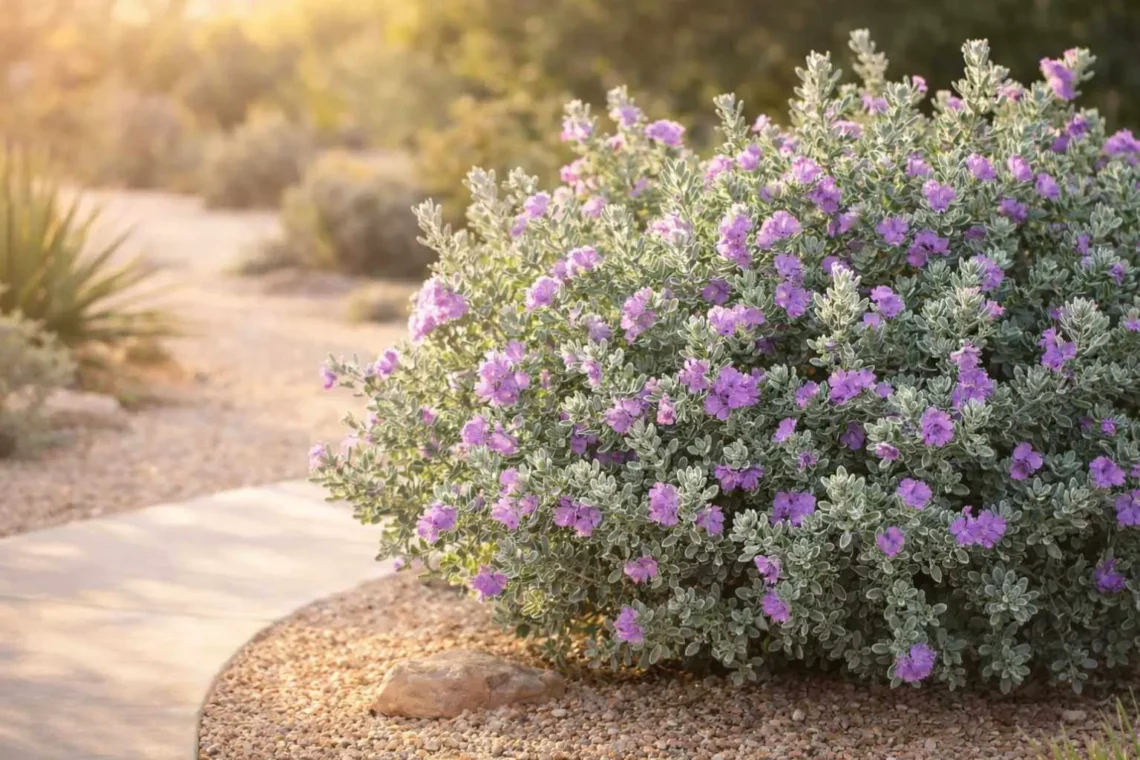
The Texas Ranger Plant (Leucophyllum spp.) is a striking, low-maintenance shrub prized in xeriscaping and drought-tolerant landscapes. Known for its silvery foliage and vibrant blooms, it thrives in arid environments, making it a favorite for gardeners seeking beauty with minimal care. Its versatility allows it to serve as a border plant, hedge, or standalone accent, while its drought-tolerance ensures it remains resilient even during prolonged dry spells. Loved for both aesthetics and practicality, the Texas Ranger Plant adds year-round charm and structure to gardens in hot, dry regions.
What is a Texas Ranger Plant?
-
Texas Ranger Plant Overview
The Texas Ranger bush, also called Texas Ranger shrub or Leucophyllum Texas Ranger, is native to the southwestern United States and northern Mexico. It is a hardy, evergreen plant with a compact growth habit, typically reaching 3–6 feet in height. Its dense, silver-green foliage contrasts beautifully with seasonal purple, pink, or lavender flowers. Slow-growing yet resilient, the Texas Ranger thrives in full sun and well-drained soil, making it a practical choice for gardeners who want low-maintenance yet visually striking greenery.
-
Common Names and Varieties
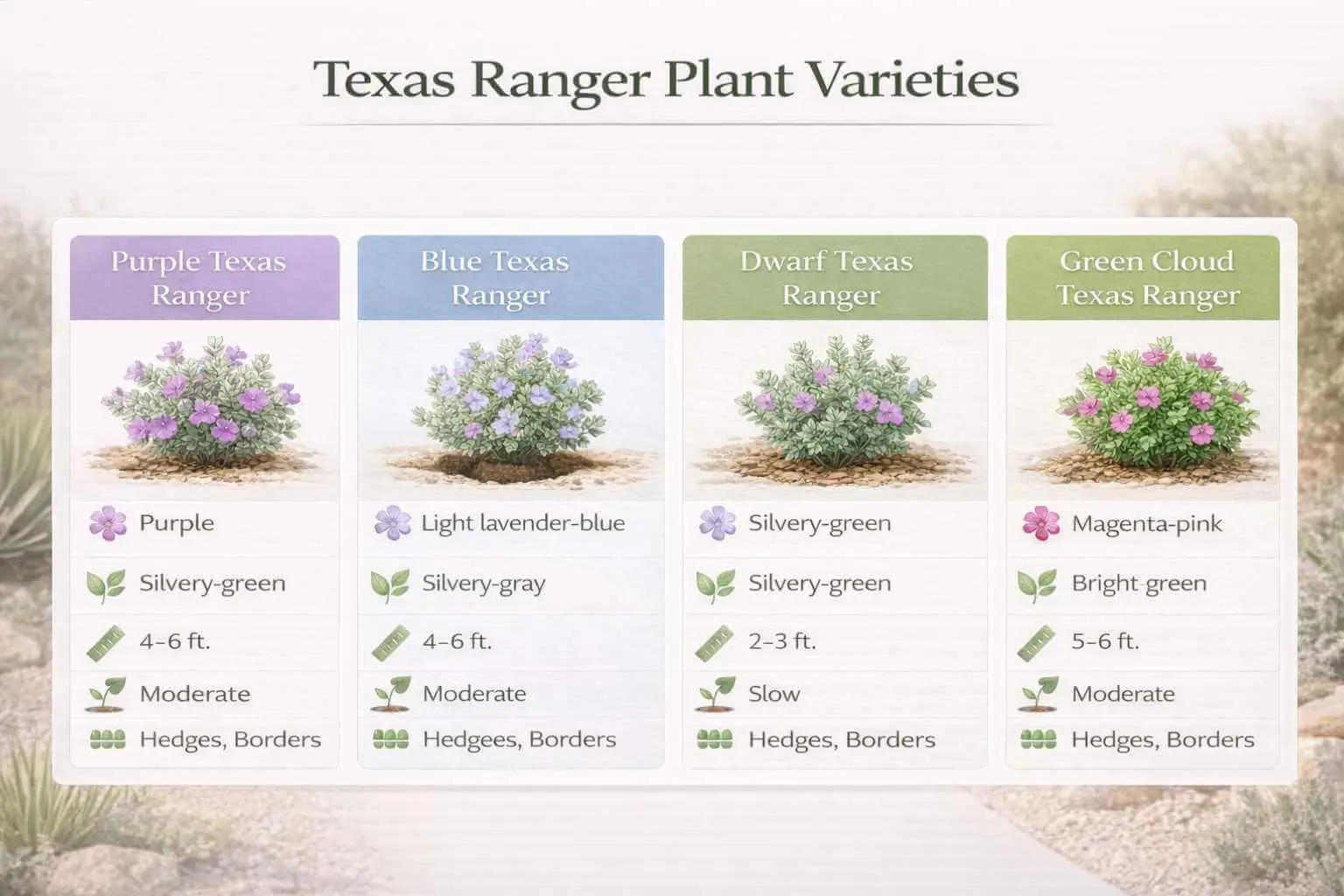
There are several popular Texas Ranger plant varieties, each with unique characteristics. The Purple Texas Ranger produces vibrant purple blooms, while the Blue Texas Ranger features soft blue-gray foliage. Compact gardeners often choose the Dwarf Texas Ranger plant for smaller spaces, and the Green Cloud Texas Ranger plant is valued for its dense, rounded form. These varieties provide options for both decorative and functional landscaping, ensuring the Texas Ranger suits a range of garden designs.
Texas Ranger Plant Care
-
Watering Requirements
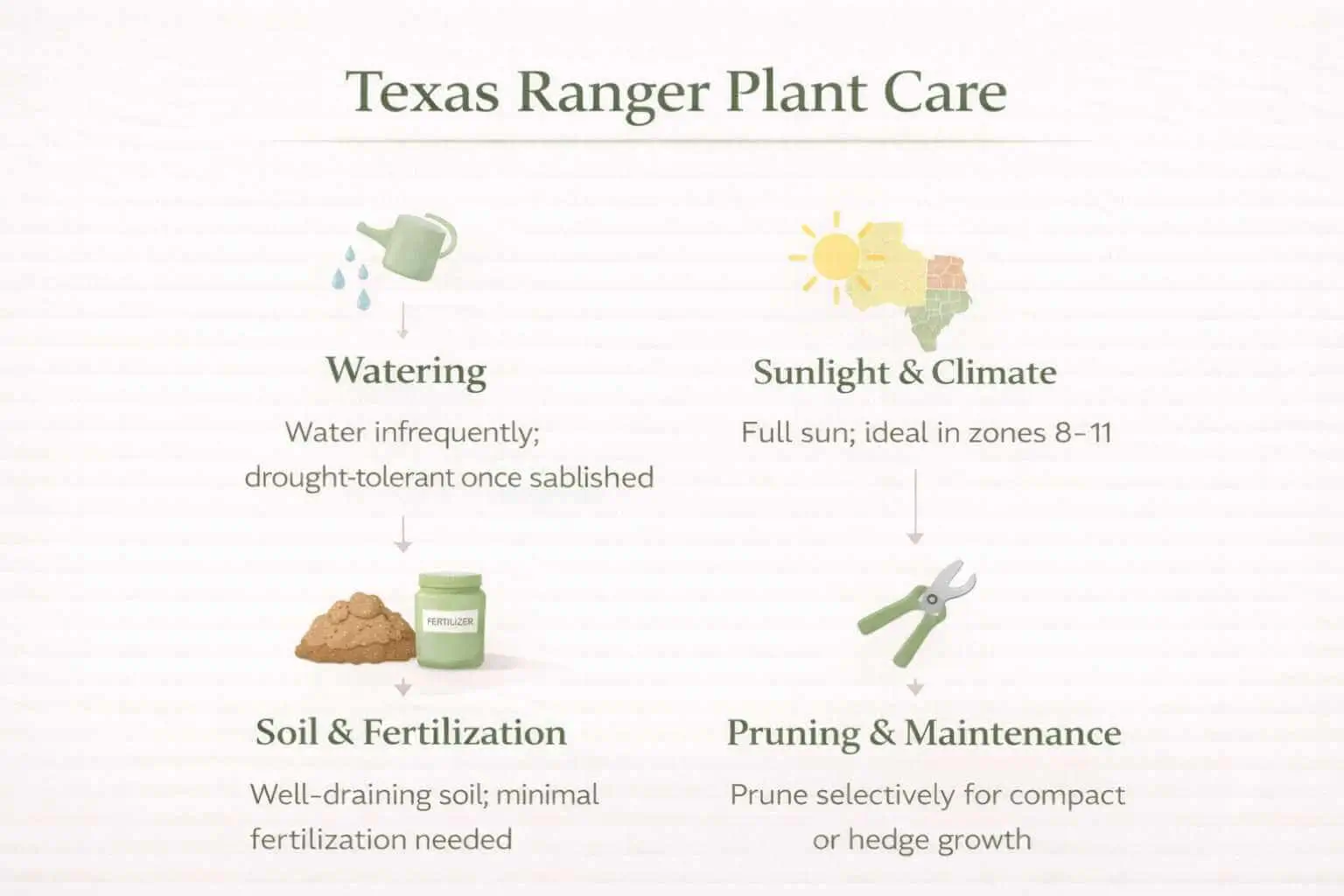
Proper Texas Ranger plant watering is essential for healthy growth. While drought-tolerant, young plants need regular watering until established. Mature plants can survive with infrequent irrigation. Many gardeners wonder, does Texas sage need full sun? The plant thrives in bright, direct sunlight, and minimal water promotes more abundant flowering. Overall, understanding Texas sage care ensures your plant maintains its vibrant foliage and blooms throughout the season.
-
Sunlight and Climate Needs
The Texas Ranger excels in warm climates, making it ideal for Texas Ranger plant zones including Arizona, Texas, and other hot, dry areas. Full sun exposure encourages dense foliage and robust flowering. Known as Texas Ranger plant Arizona in local nurseries, it adapts to a range of desert conditions, tolerating heat, wind, and low humidity. Its resilience makes it perfect for regions where water conservation is a priority.
-
Soil and Fertilization
How to grow Texas sage successfully depends on soil type. Well-draining sandy or loamy soils are ideal. Heavy clay or waterlogged soil can harm roots. Fertilize sparingly with a balanced, slow-release fertilizer in spring to promote healthy growth and vibrant flowers. Following proper growing Texas sage practices ensures long-lasting, thriving plants that remain low-maintenance.
-
Pruning and Maintenance
Maintaining a compact Texas Ranger plant or Texas Ranger plant hedge requires minimal effort. Light pruning after flowering helps retain shape and encourages new growth. For hedge applications, trim regularly to maintain even height and density. Routine maintenance prevents overgrowth while showcasing the plant’s natural beauty, making it a practical choice for structured garden designs.
Planting Texas Ranger in Your Garden
Best Time to Plant
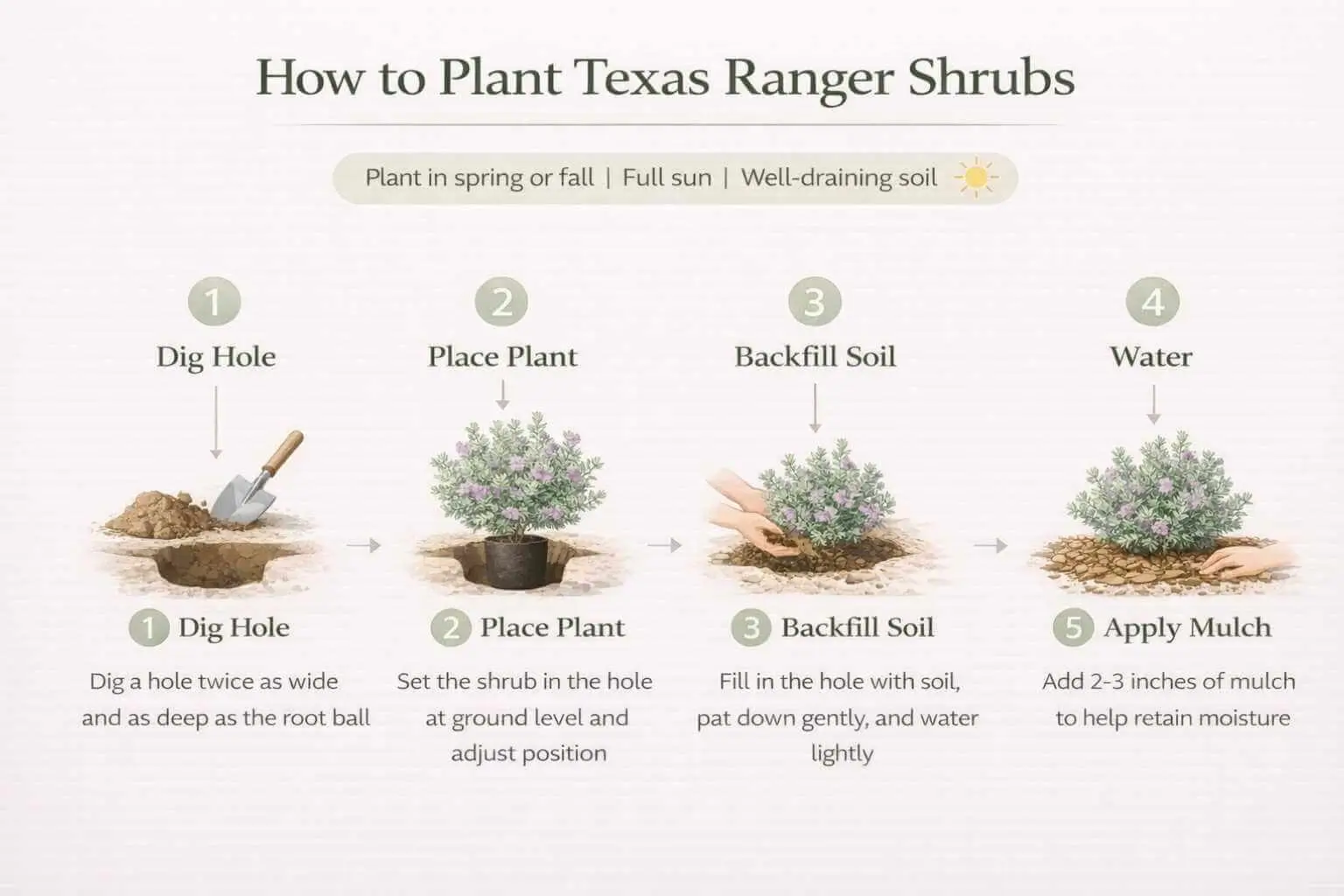
Understanding Texas sage when to plant is crucial for successful establishment. The best time to plant Texas sage is during spring or early fall, avoiding extreme heat. Choosing where to plant Texas sage with full sun exposure and well-draining soil ensures strong root development and long-term health.
Planting Steps
To plant Texas Ranger successfully, follow these steps:
- Dig a hole slightly larger than the root ball.
- Place the plant and fill with native soil.
- Water deeply after planting.
- Mulch around the base to retain moisture.
- Monitor weekly for the first month.
These instructions apply whether you are how to plant Texas sage in borders, containers, or as part of a planting Texas sage hedge design.
Landscaping Ideas
Landscaping Texas Ranger plant provides creative options for modern gardens. Use as a border, a low hedge, or in mixed xeriscape beds. Its silver foliage and colorful blooms complement rocks, gravel, and desert-tolerant plants. Texas sage landscaping allows for low-maintenance yet visually appealing arrangements that enhance any garden style.
Texas Ranger Plant Varieties and Growth
-
Size and Growth Rate
The Texas Ranger plant size varies by variety, typically reaching 3–6 feet tall and 2–5 feet wide. Its Texas Ranger plant growth rate is moderate, allowing for easy integration into existing landscapes without overwhelming surrounding plants.
-
Popular Varieties
Key varieties include the purple Texas Ranger plant, blue Texas Ranger plant, dwarf Texas Ranger plant, and green cloud Texas Ranger plant. Each offers unique foliage color, bloom timing, and growth habit, catering to diverse landscaping needs.
-
Flowering and Appearance
The Texas Ranger flower blooms seasonally, usually in shades of purple or lavender. Texas Ranger shrub pictures highlight silvery foliage contrasted with vibrant flowers. Texas Ranger plant images show its versatility as both a hedge and accent plant, making it a favorite for gardeners seeking aesthetic appeal and drought-tolerance.
Where to Buy Texas Ranger Plants
-
Nurseries and Garden Centers
You can buy Texas Ranger plant at local nurseries, including Star Nursery Las Vegas and other regional garden centers. Look for Texas Ranger plant for sale signs to find healthy specimens. Trusted sources like Nursery Star ensure high-quality plants for your landscaping needs.
-
Online Options
Reputable online suppliers also offer Texas Ranger plants for delivery. Purchasing from trusted websites guarantees healthy, well-rooted plants suitable for xeriscaping and home gardens.
Common Problems and Solutions
-
Pests and Diseases
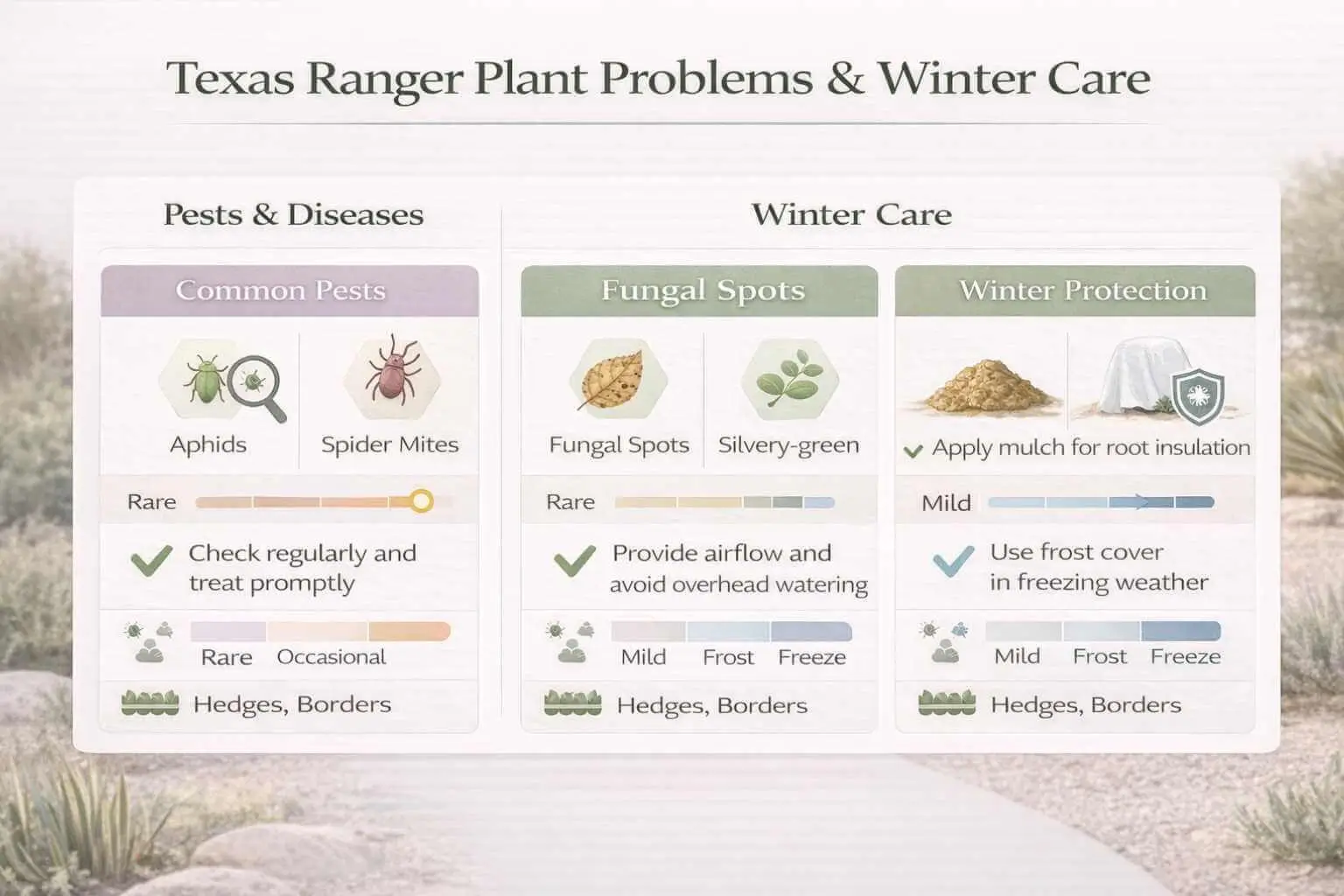
Typical Texas sage problems include spider mites, aphids, and occasional fungal issues. Texas sage problems pictures can help identify infestations early. Proper watering and pruning prevent most pest and disease concerns.
-
Winter Care and Protection
While drought-tolerant, Texas sage winter care is important in colder zones. Protect plants from frost by using mulch or temporary covers during extreme cold. Choosing the right zone ensures the plant thrives year-round.
Conclusion
The Texas Ranger Plant is ideal for low-maintenance landscaping, offering drought-tolerance, vibrant flowers, and versatile design options. Its beauty, resilience, and adaptability make it a must-have for gardens in hot, dry regions. Enhance your garden with a beautiful Texas Ranger plant today! Visit local nurseries or trusted online stores to secure your own.
Learn more: 7+ Powerful Horsetail Benefits for Hair, Health & Beauty
FAQs About Texas Ranger Plant
- What is a Texas Ranger plant and how is it different from Texas Sage?
The Texas Ranger Plant (Leucophyllum spp.) is a drought-tolerant shrub similar to Texas Sage. Both are low-maintenance, but Texas Ranger often refers specifically to decorative varieties used in landscaping. - How do I care for a Texas Ranger plant in hot climates?
Provide full sun, well-draining soil, and occasional watering for young plants. Mature shrubs require minimal irrigation and tolerate high temperatures. - Which Texas Ranger plant varieties are best for hedges?
Dwarf Texas Ranger and Green Cloud Texas Ranger plants are ideal for compact hedges due to their dense growth and manageable size. - How often should I water my Texas Ranger plant?
Young plants need weekly watering until established. Mature plants thrive with occasional irrigation, especially in arid conditions. - Can Texas Ranger plants survive winter frost?
They tolerate mild frost, but in colder zones, protect roots with mulch or cover plants during extreme cold to prevent damage.