Introduction
Trachelospermum jasminoides, commonly known as star jasmine or confederate jasmine, is a widely admired evergreen jasmine climber prized for its beauty and versatility. Its glossy green foliage and fragrant white flowers make it a favorite choice for gardens, patios, and home décor. Known for its easy care and adaptability, trachelospermum jasminoides can thrive in various climates and growing conditions. Whether you are a beginner gardener or an experienced plant enthusiast, this star jasmine vine offers effortless elegance and the potential for propagation through cuttings or seeds, making it a highly rewarding addition to any outdoor or indoor space.
Overview of Trachelospermum Jasminoides
-
Scientific and Common Names
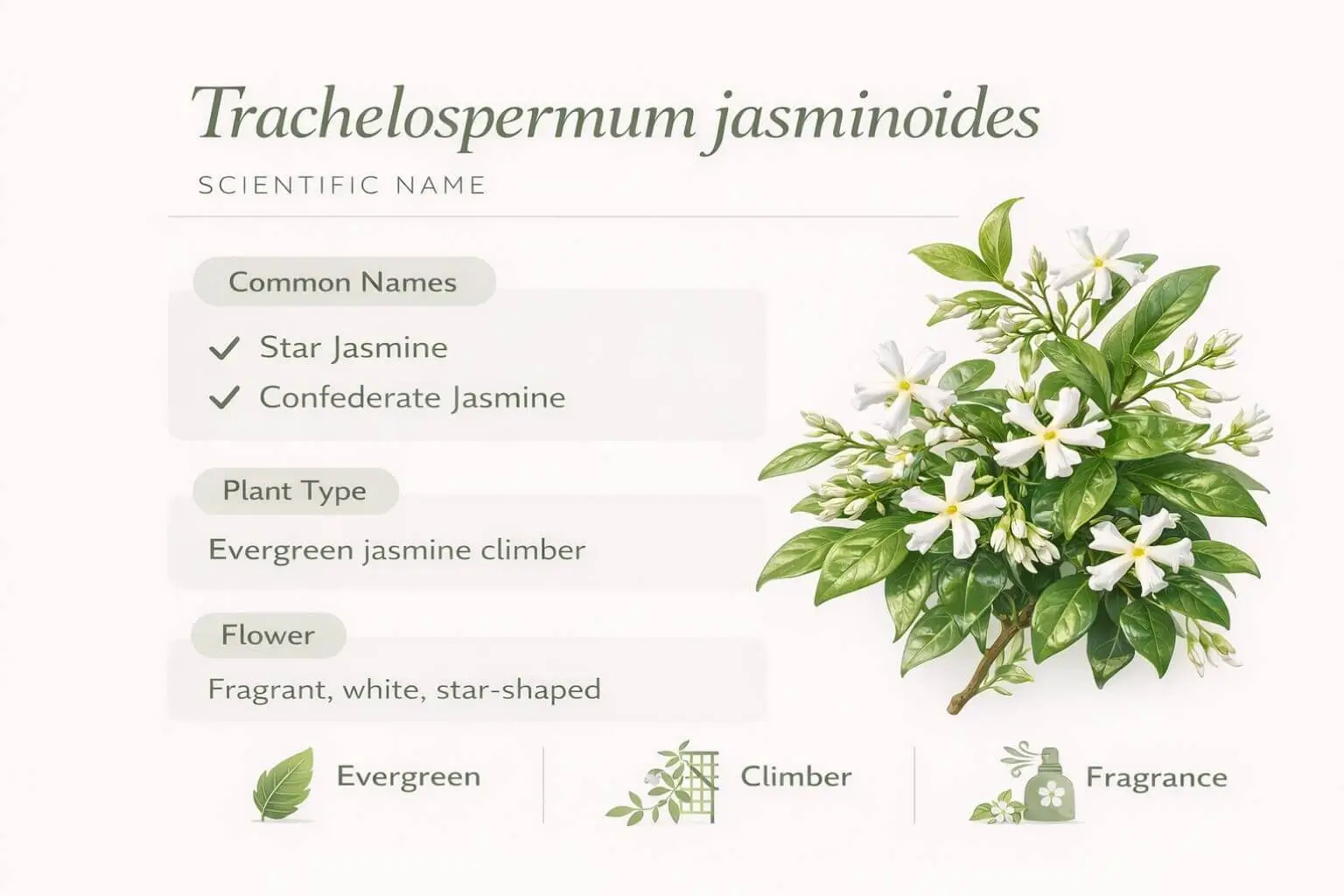
The trachelospermum jasminoides scientific name is, as expected, Trachelospermum jasminoides. This plant is commonly referred to by several names, including star jasmine and confederate jasmine (trachelospermum jasminoides). These names reflect both its appearance and its fragrant blossoms, widely recognized across gardens worldwide. When planning your garden or discussing plant care, using the correct trachelospermum jasminoides common name ensures clarity, especially when sourcing plants or gardening resources.
-
Plant Description and Characteristics
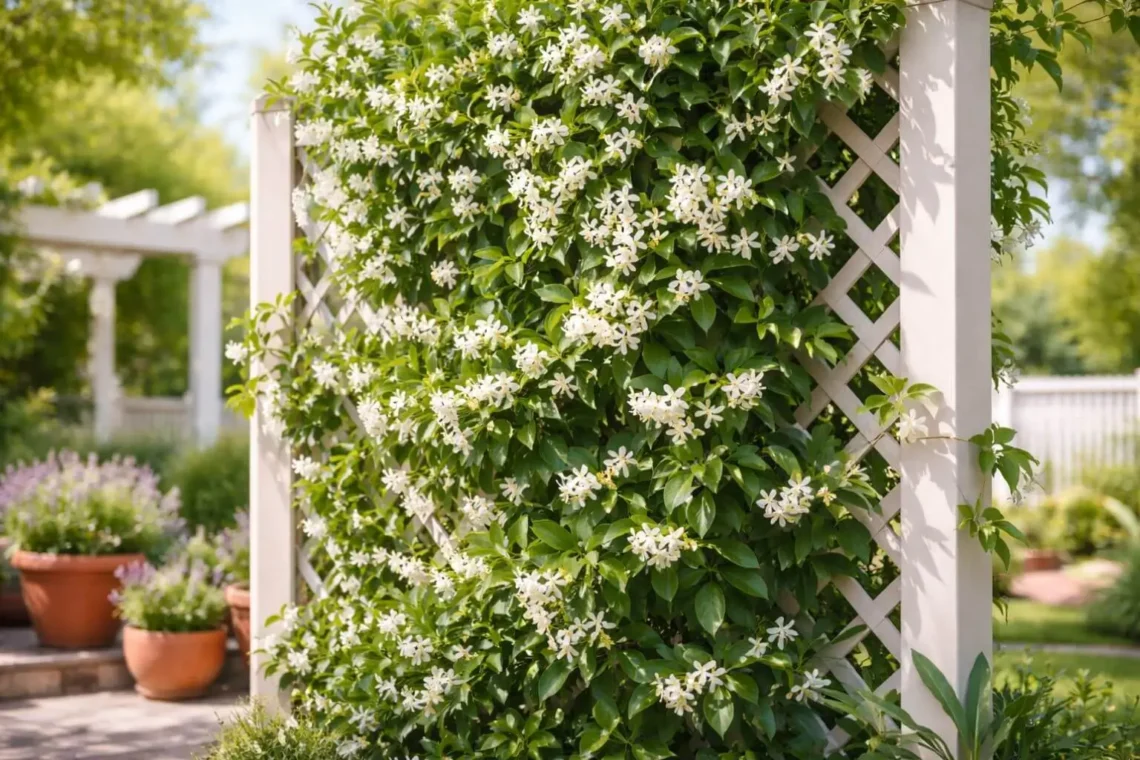
Trachelospermum jasminoides evergreen features a dense growth of glossy green leaves that remain lush year-round. Its star jasmine climber habit allows it to grow as a vine along trellises, pergolas, or walls, or even as a small shrub in containers. The plant produces trachelospermum jasminoides flowers, which are fragrant, star-shaped, and bright white, attracting pollinators while adding visual charm. Its growth flexibility makes it an ideal star jasmine vine for both decorative and functional landscaping purposes.
Planting and Care of Star Jasmine
-
Ideal Growing Conditions
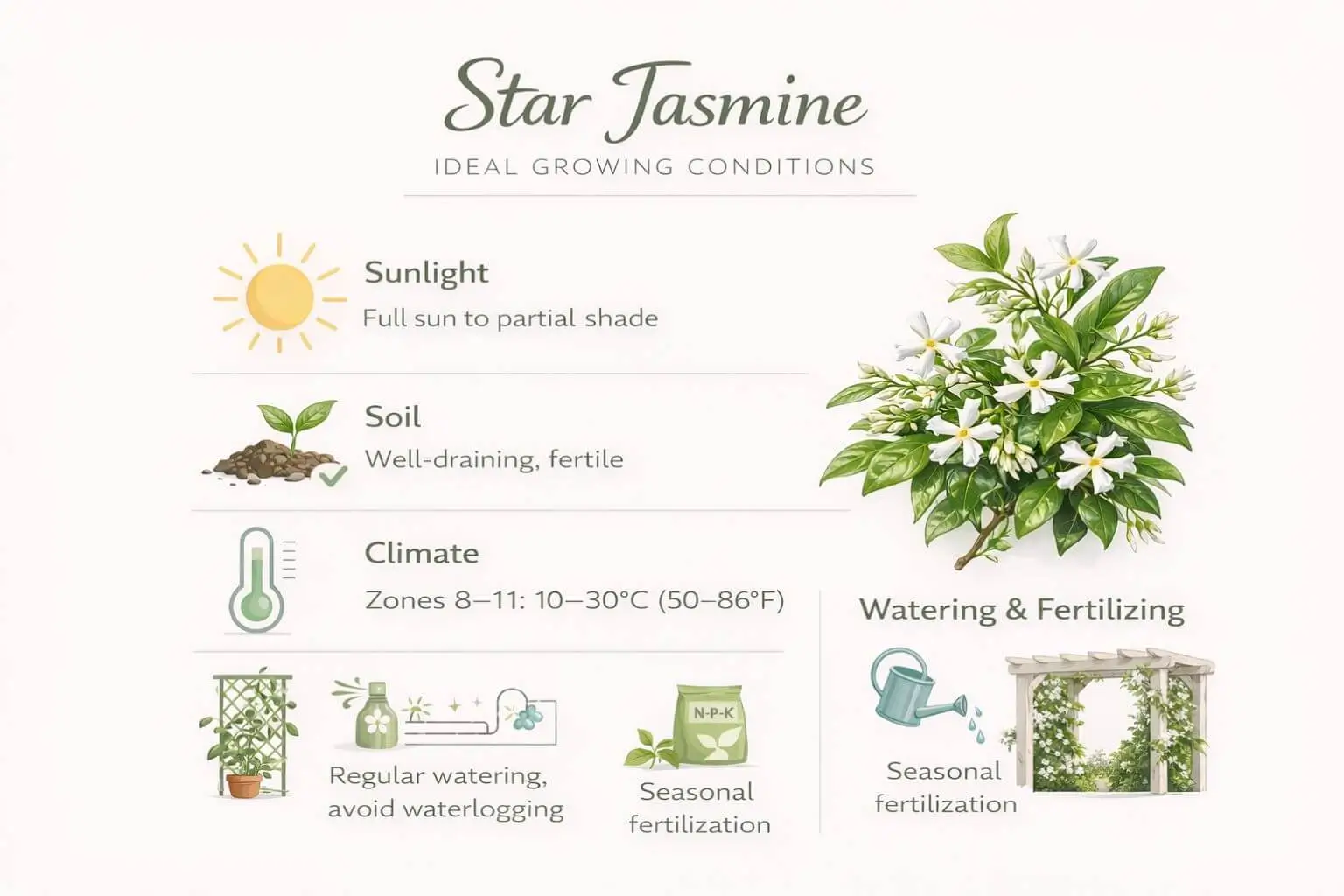
Star jasmine thrives in full sun to partial shade, making it adaptable to various garden settings. It prefers well-draining, fertile soil enriched with organic matter. Known for its resilience, it performs well across multiple climates and is suitable for a variety of star jasmine zone and star jasmine hardiness zone conditions. Its versatility makes the evergreen jasmine climber a reliable choice for home gardeners seeking both beauty and durability.
-
Watering and Fertilizing
Proper trachelospermum jasminoides care involves regular watering while avoiding waterlogged conditions, which can damage roots. Seasonal fertilization, especially during the growing season, promotes healthy foliage and abundant flowering. Learning how to care for star jasmine ensures consistent growth and longevity, allowing your plant to flourish as a fragrant, attractive feature in your garden.
-
Pruning and Maintenance
Maintaining a star jasmine plant requires pruning to shape growth and encourage flowering. Remove dead or damaged branches to promote air circulation and reduce disease risk. For climbing varieties, provide support with a trellis or pergola to guide the trachelospermum jasminoides size and growth. Regular maintenance ensures a neat appearance while maximizing floral display.
Propagation of Trachelospermum Jasminoides
-
Propagation from Cuttings
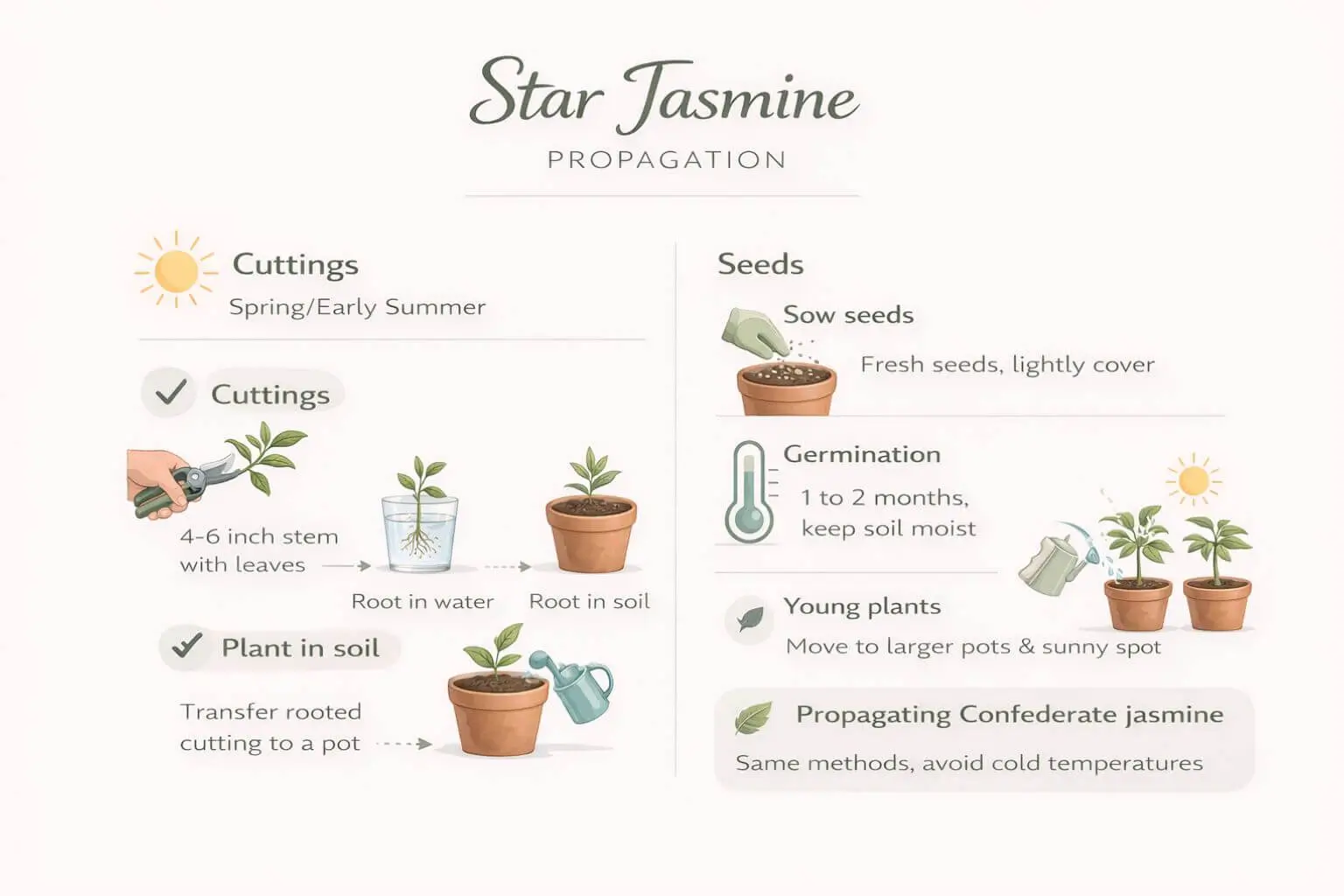
Star jasmine propagation cuttings is a reliable method to multiply plants. The best time for cuttings is during spring or early summer. Cut healthy stem sections and root them either in water or well-draining soil. Propagate star jasmine in water for visible root development or plant directly in soil for faster establishment. Learning how to plant jasmine from a cutting and how to start jasmine from cuttings ensures success in expanding your garden collection.
-
Propagation from Seeds
Growing trachelospermum jasminoides seeds requires patience but can be rewarding. Sow seeds in a well-draining seed mix, lightly cover with soil, and maintain consistent moisture. Germination can take several weeks, and young seedlings should be nurtured under optimal light and temperature conditions for healthy growth.
-
Propagation of Confederate Jasmine
When propagating confederate jasmine, methods are similar to star jasmine, though cuttings are typically preferred for faster flowering. Both approaches ensure the plant retains its fragrant blossoms and vigorous climbing habit, allowing gardeners to effectively propagate confederate jasmine for new garden additions.
Common Problems and Solutions
-
Pests and Diseases
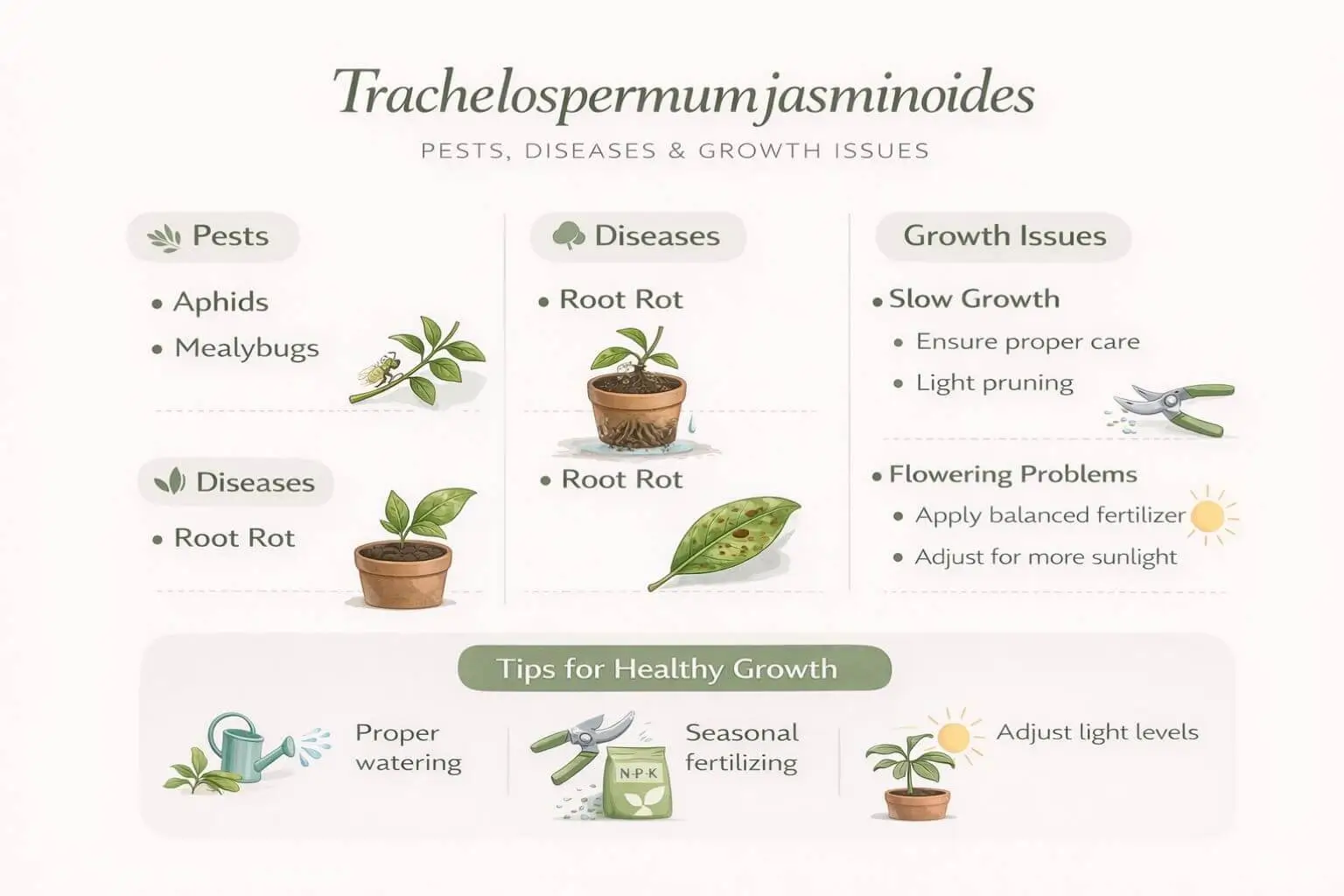
Common pests affecting trachelospermum jasminoides include aphids and mealybugs. Monitor plants regularly and apply insecticidal soaps or horticultural oils as needed. Diseases like root rot or leaf spot can occur if overwatering or poor drainage is present. Proper trachelospermum jasminoides care mitigates these issues and maintains plant health.
-
Growth Issues
Slow growth or reduced flowering can result from insufficient light, nutrient deficiencies, or improper pruning. Addressing these issues through adequate sunlight, fertilization, and pruning practices ensures your star jasmine climber remains vigorous and floriferous.
Landscaping and Decorative Uses
The star jasmine plant is ideal for trellises, fences, pergolas, or as ground cover. Its trachelospermum jasminoides vine offers fragrant blooms, enhancing both visual appeal and sensory experience in gardens, patios, or balcony spaces. This versatile plant elevates home aesthetics while providing functional coverage.
Conclusion
Trachelospermum jasminoides is an easy-care, fragrant, and versatile evergreen jasmine climber suitable for diverse landscaping needs. Its aesthetic charm and adaptability make it perfect for gardeners seeking fragrant blooms and climbing greenery. Consider planting or propagating star jasmine today to enhance your garden with beauty, scent, and year-round elegance.
Learn more: Pink Trumpet Tree: 7+ Stunning Facts, Care & Bloom Secrets
FAQs
- What is the scientific name of star jasmine?
The scientific name of star jasmine is Trachelospermum jasminoides. - How do I propagate trachelospermum jasminoides from cuttings?
Take healthy stem cuttings during spring or early summer and root them in water or well-draining soil until established. - What are the best growing conditions for star jasmine?
Star jasmine prefers full sun to partial shade, fertile well-draining soil, and moderate watering. It thrives in a variety of hardiness zones. - How long does it take for jasmine cuttings to root?
Cuttings typically develop roots within 3–6 weeks, depending on temperature, moisture, and propagation method. - Can trachelospermum jasminoides grow as a bonsai or in containers?
Yes, star jasmine can grow in containers and be trained as a small shrub or bonsai with regular pruning. - What is the difference between star jasmine and confederate jasmine?
Both are Trachelospermum jasminoides, but “confederate jasmine” is a regional common name. Their care and growth habits are identical.