Introduction
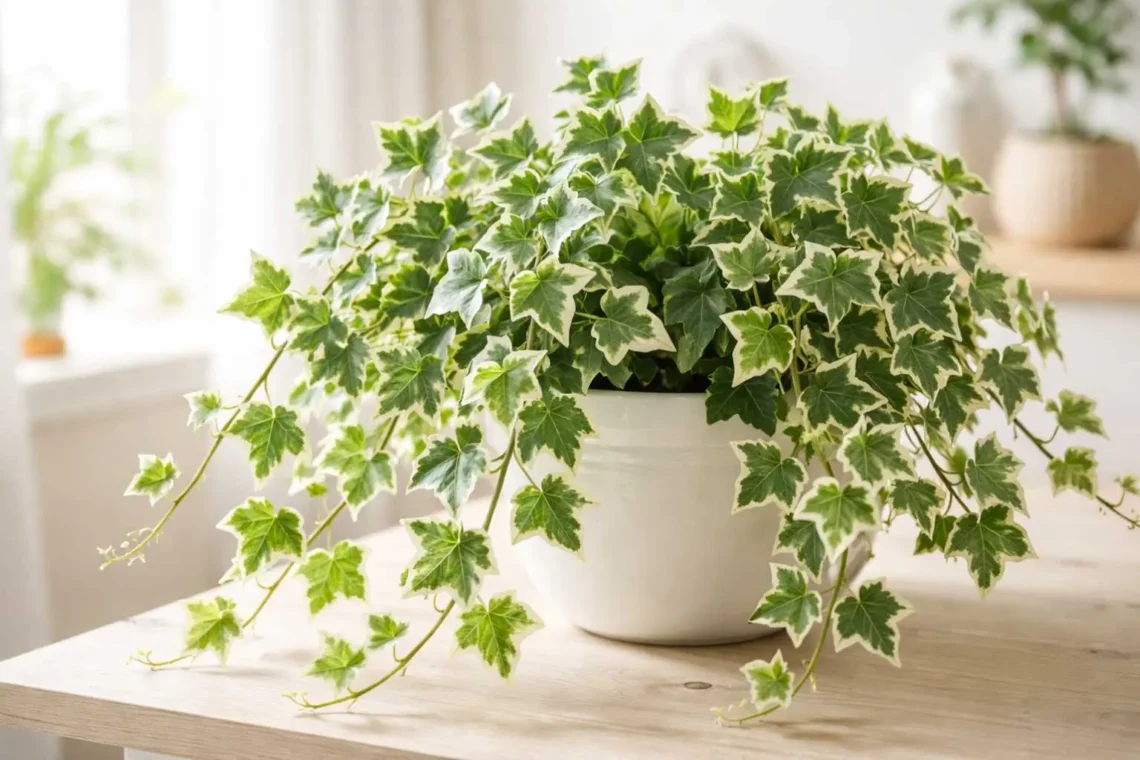
Variegated English ivy is a classic decorative foliage plant valued for its elegant trailing growth and eye-catching leaf patterns. Known for its ability to thrive both indoors and outdoors, this plant is widely used in hanging baskets, containers, ground cover, and vertical gardens. The main appeal of variegated English ivy lies in its multi-toned leaves, which feature contrasting shades of green, cream, white, or yellow. This natural variegation adds depth, texture, and visual brightness to any space. Its evergreen nature, adaptability, and relatively low maintenance requirements make it a popular choice for homeowners, gardeners, and interior stylists seeking year-round greenery with refined visual interest.
What Is Variegated English Ivy?
Variegated English Ivy Scientific Name
Variegated English ivy belongs to the species Hedera helix, within the family Araliaceae. While common English ivy has solid green leaves, variegated forms are cultivated varieties that display patterned coloration along leaf edges or centers. These patterns occur due to reduced chlorophyll in certain leaf areas. Scientific naming helps gardeners and buyers identify specific cultivars, understand growth behavior, and ensure accurate plant selection, especially when comparing care needs or purchasing from nurseries.
Key Characteristics of Variegated English Ivy
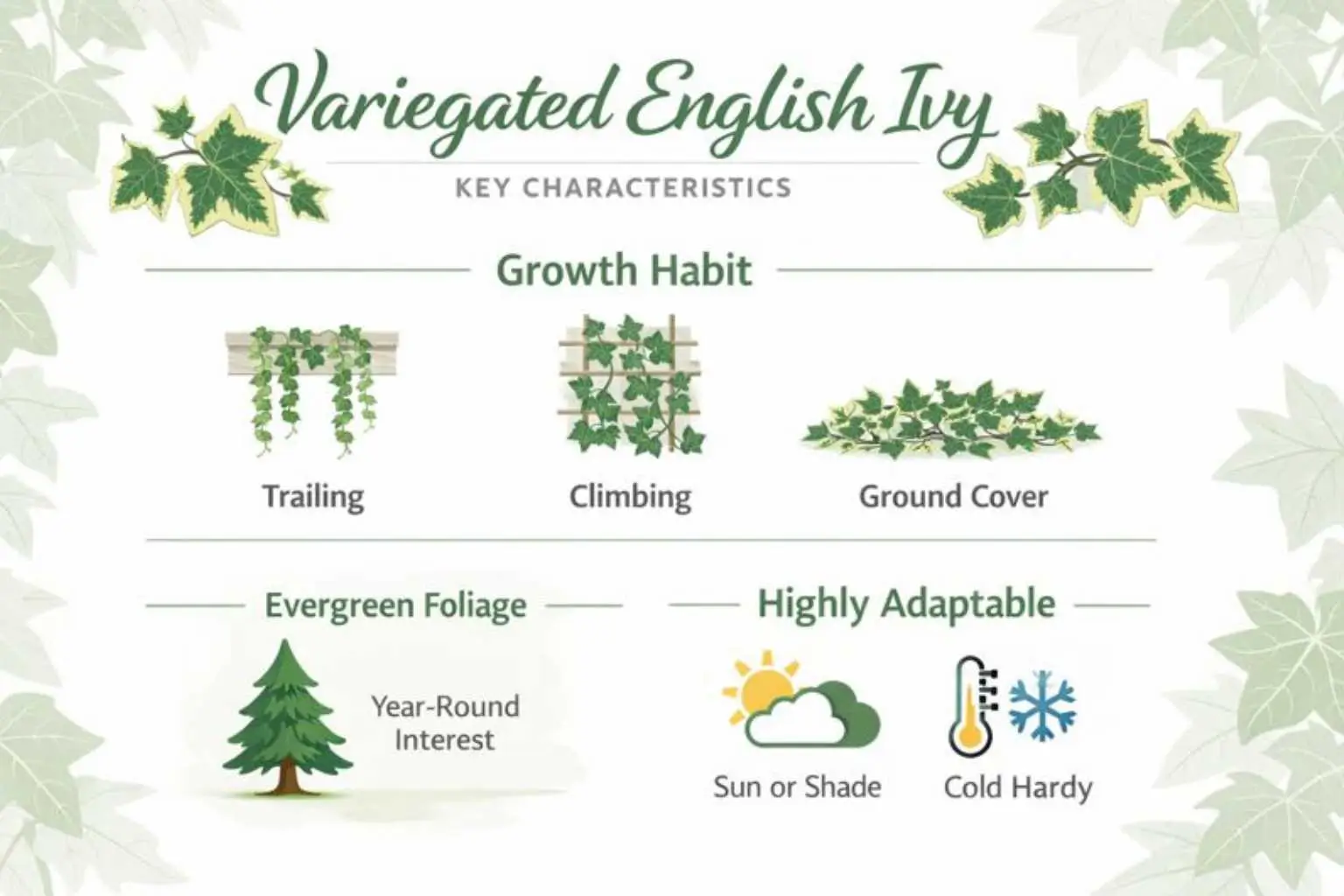
- Distinct leaf patterns combining green with cream, white, or yellow tones
- Glossy to lightly textured leaf surfaces depending on the cultivar
- Trailing, climbing, or spreading growth habit
- Suitable as ground cover, wall climber, or container plant
- Evergreen foliage that retains color year-round
- High adaptability to indoor and outdoor environments
Popular Variegated English Ivy Varieties
Common Variegated English Ivy Types
Several cultivars are widely grown for their ornamental value. Popular types differ in leaf size, variegation intensity, and growth rate. Some feature fine white margins, while others display bold golden centers or irregular marbling. Growth habits may range from compact and slow-growing to vigorous and spreading, making variety selection important for space planning.
Choosing the Right Variety for Your Space
- Containers: Compact, slow-growing varieties with fine variegation
- Walls and trellises: Vigorous climbers with strong trailing stems
- Ground cover: Dense, spreading varieties that tolerate pruning and foot traffic
Variegated English Ivy Care Guide
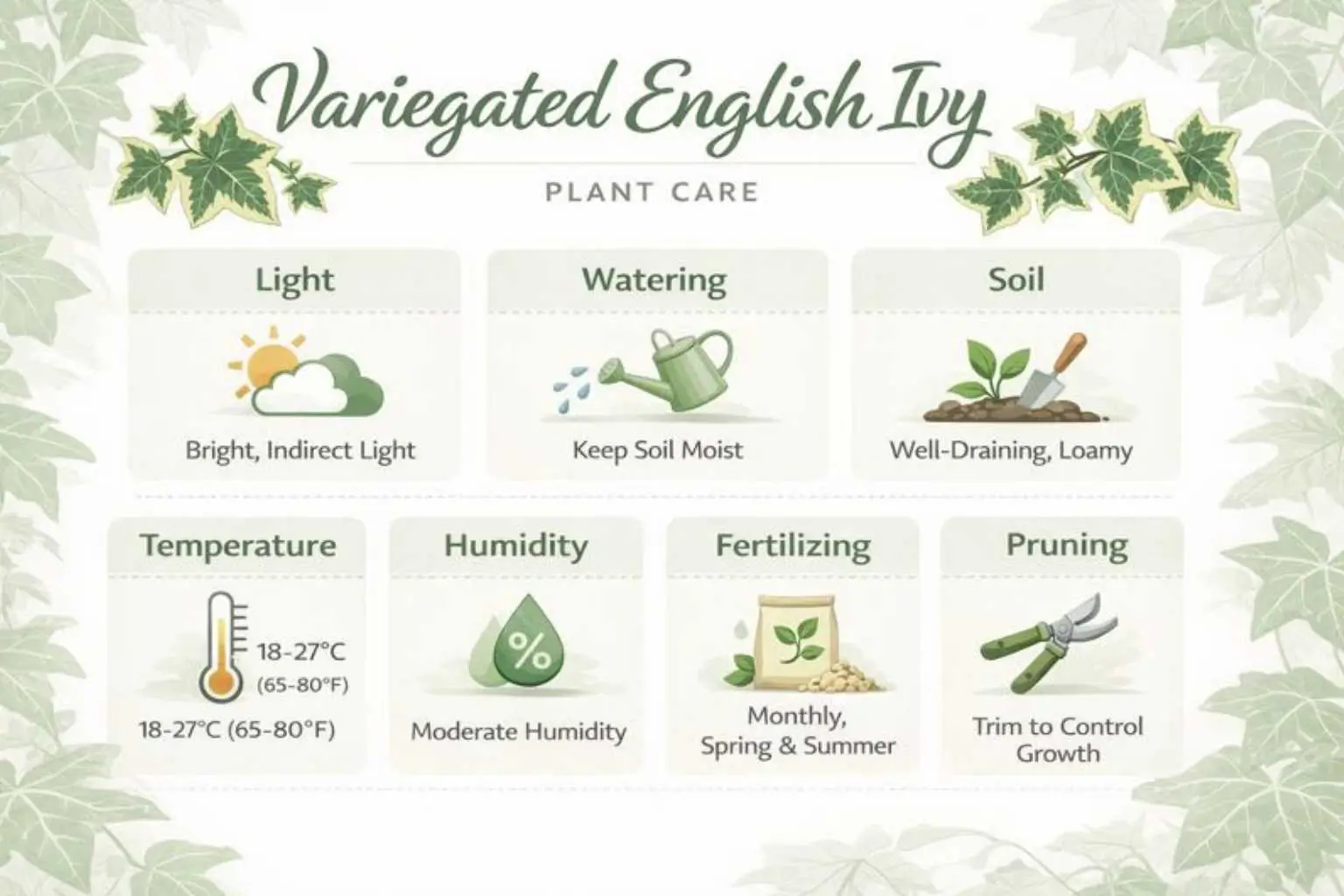
Light Requirements
Bright, indirect light is ideal for maintaining healthy variegation. Indoors, filtered sunlight near windows works best. Outdoors, partial shade prevents leaf scorch while supporting balanced growth. Insufficient light can cause color fading.
Watering & Soil Preferences
Water when the top layer of soil feels dry. Overwatering should be avoided.
- Use well-draining soil with organic matter
- Ensure pots have drainage holes
- Avoid waterlogged conditions
Temperature & Humidity Needs
Variegated English ivy prefers moderate temperatures and adapts well to indoor climates.
- Ideal range: 15–24°C (59–75°F)
- Average household humidity is sufficient
- Increased humidity benefits indoor growth
Fertilizing & Maintenance
- Feed with a balanced liquid fertilizer during the growing season
- Prune regularly to control size and encourage bushier growth
- Remove weak or reverted green shoots promptly
Variegated English Ivy Indoors vs Outdoors
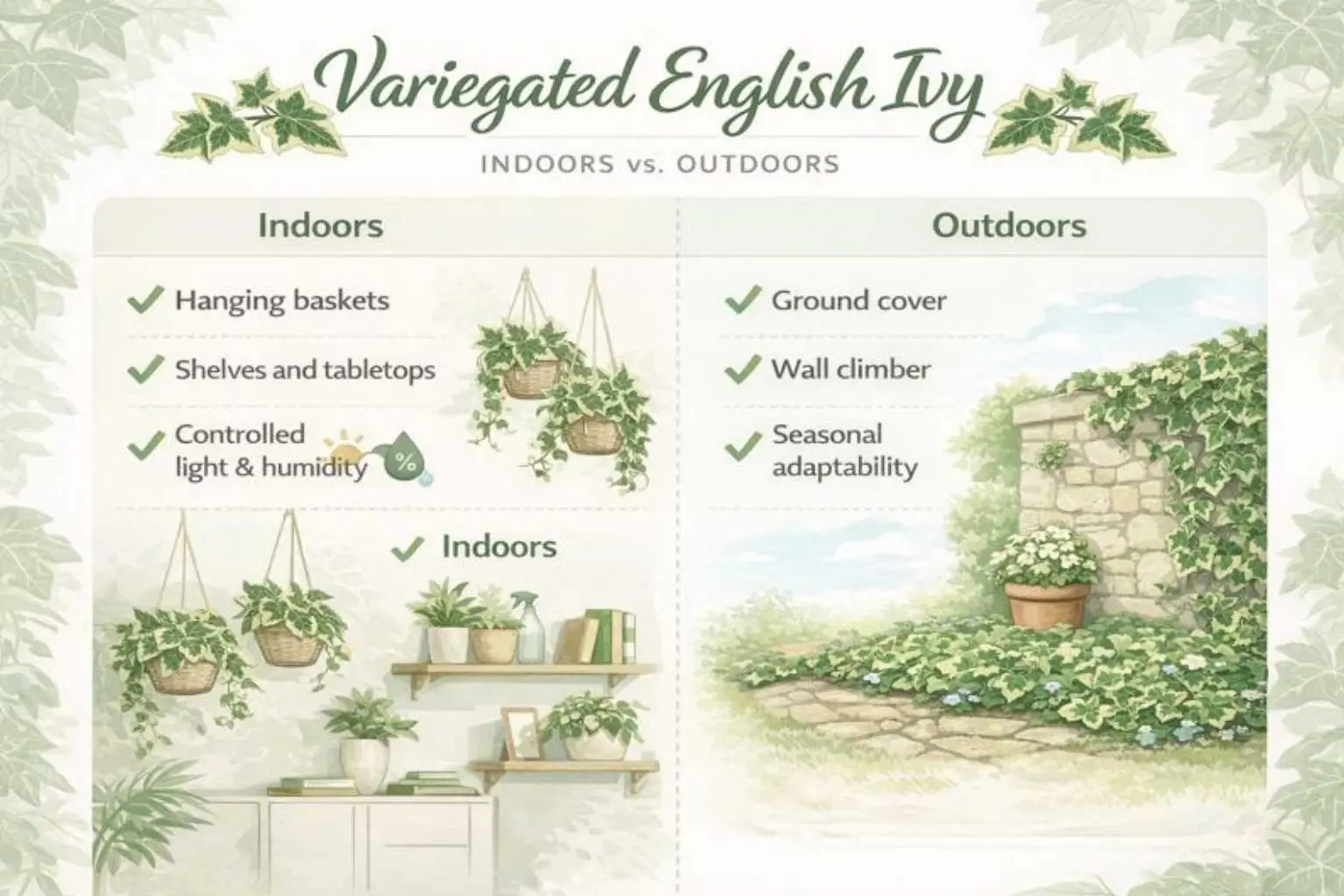
Growing Variegated English Ivy Indoors
Indoor placements include hanging baskets, shelves, and tabletops. Common issues include dry air and low light, which can be corrected with better placement and humidity control.
Growing Variegated English Ivy Outdoors
Outdoors, it functions as ground cover, climber, or border plant. It adapts to seasonal changes but benefits from protection in extreme heat or frost.
Variegated English Ivy Propagation Methods
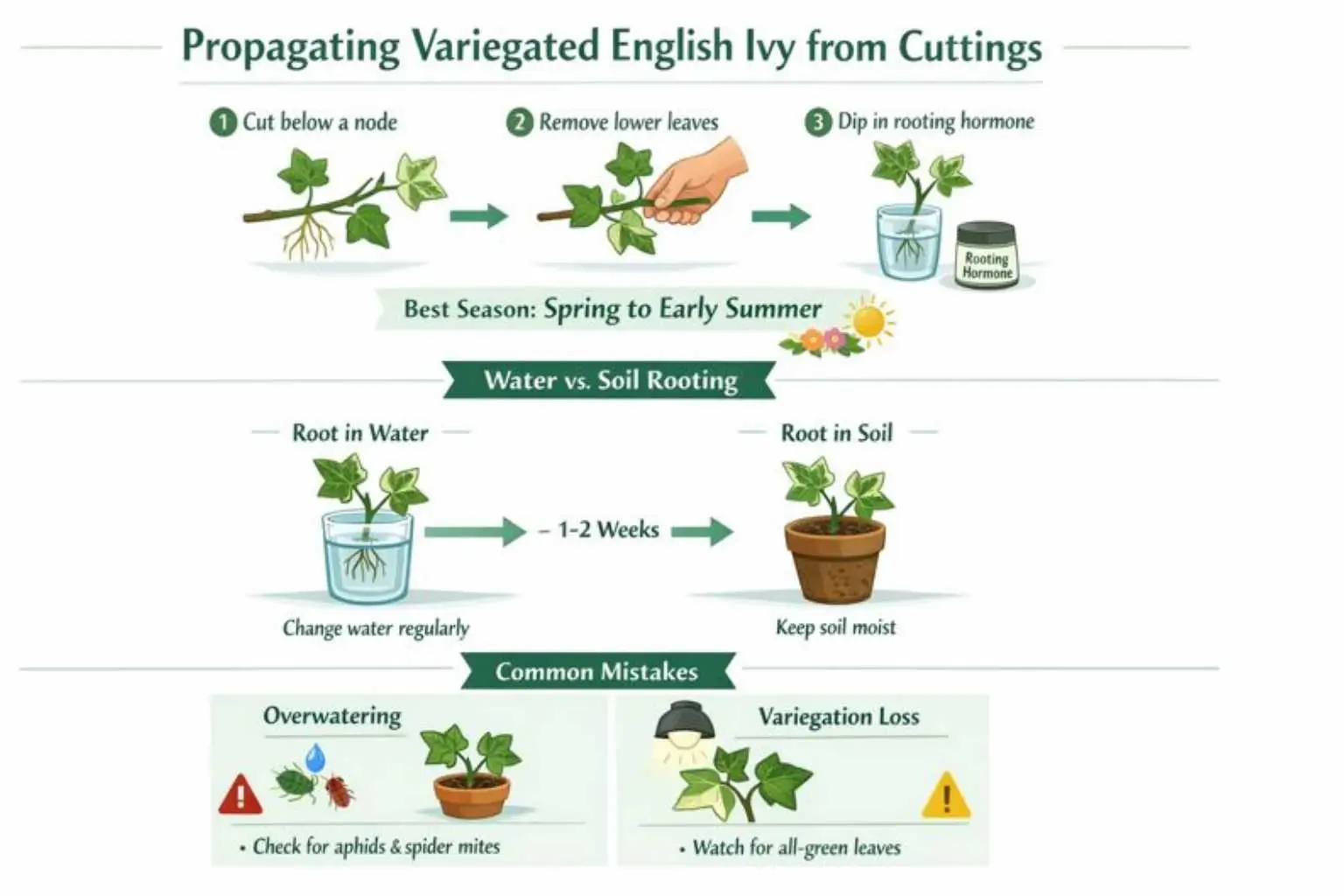
Propagation Through Cuttings
- Take healthy stem cuttings with several leaves
- Remove lower leaves
- Place in water or moist soil
- Best propagated during spring or early summer
Tips for Successful Rooting
- Water propagation allows easy root monitoring
- Soil propagation produces stronger roots long term
- Avoid overwatering and low-light conditions
Variegated English Ivy Price & Buying Guide
Variegated English Ivy Price Range
Prices vary based on plant size, cultivar rarity, and location. Smaller plants are more affordable, while mature or rare varieties cost more.
Learn more: 7+ Powerful Benefits of Dymondia Ground Cover You’ll Love
Variegated English Ivy for Sale: What to Look For
- Firm stems and vibrant variegation
- No signs of pests or leaf damage
- Nurseries offer healthier plants, while online sellers provide wider variety
Common Problems & Solutions
Pests and Diseases
- Spider mites and aphids in dry conditions
- Fungal issues from excess moisture
- Treat with proper airflow and targeted treatments
Leaf Reversion & Color Loss
Variegation fades due to low light or stress. Improve lighting and prune reverted growth to restore coloration.
Conclusion & Call to Action
Variegated English ivy offers year-round beauty, versatile growth habits, and adaptable care requirements. With the right variety and proper care approach, it enhances both indoor and outdoor spaces. Explore suitable cultivars, choose healthy plants, and enjoy the decorative value of variegated English ivy in your home or garden.
Learn more: 7+ Critical Facts About Cupaniopsis Anacardioides You Must Know
Frequently Asked Questions (FAQs)
- Is variegated English ivy easy to care for?
Yes, it is low-maintenance when provided with proper light, water, and drainage. - Can variegated English ivy grow indoors year-round?
Yes, it thrives indoors with consistent light and moderate humidity. - How fast does variegated English ivy grow?
Growth is moderate and slower than solid green ivy due to reduced chlorophyll. - Does variegated English ivy need direct sunlight?
No, bright indirect light is best to prevent leaf damage. - How do I propagate variegated English ivy successfully?
Use healthy stem cuttings in water or soil during the active growing season.