Introduction
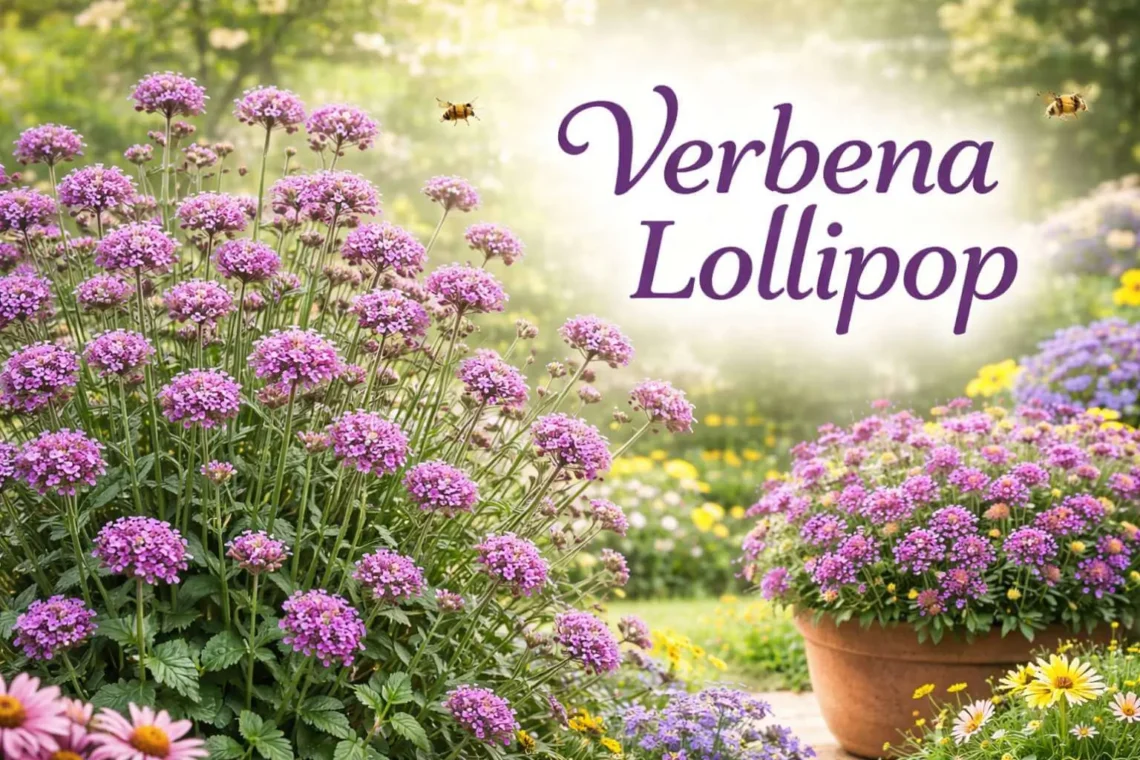
Verbena Lollipop is a compact, ornamental flowering plant prized for its long-lasting blooms and vibrant colors. It is well-suited for borders, containers, and garden displays, making it a popular choice for gardeners seeking low-maintenance yet visually striking plants. Botanically, the Verbena Lollipop plant is related to Verbena bonariensis but has a more compact growth habit. It thrives as a perennial in suitable climates, offering repeated seasonal blooms. Understanding its care, growth patterns, and environmental preferences allows gardeners to maintain healthy plants with consistent flowering, enhancing both garden aesthetics and functionality.
Botanical Profile of Verbena Lollipop
-
Taxonomy and Classification
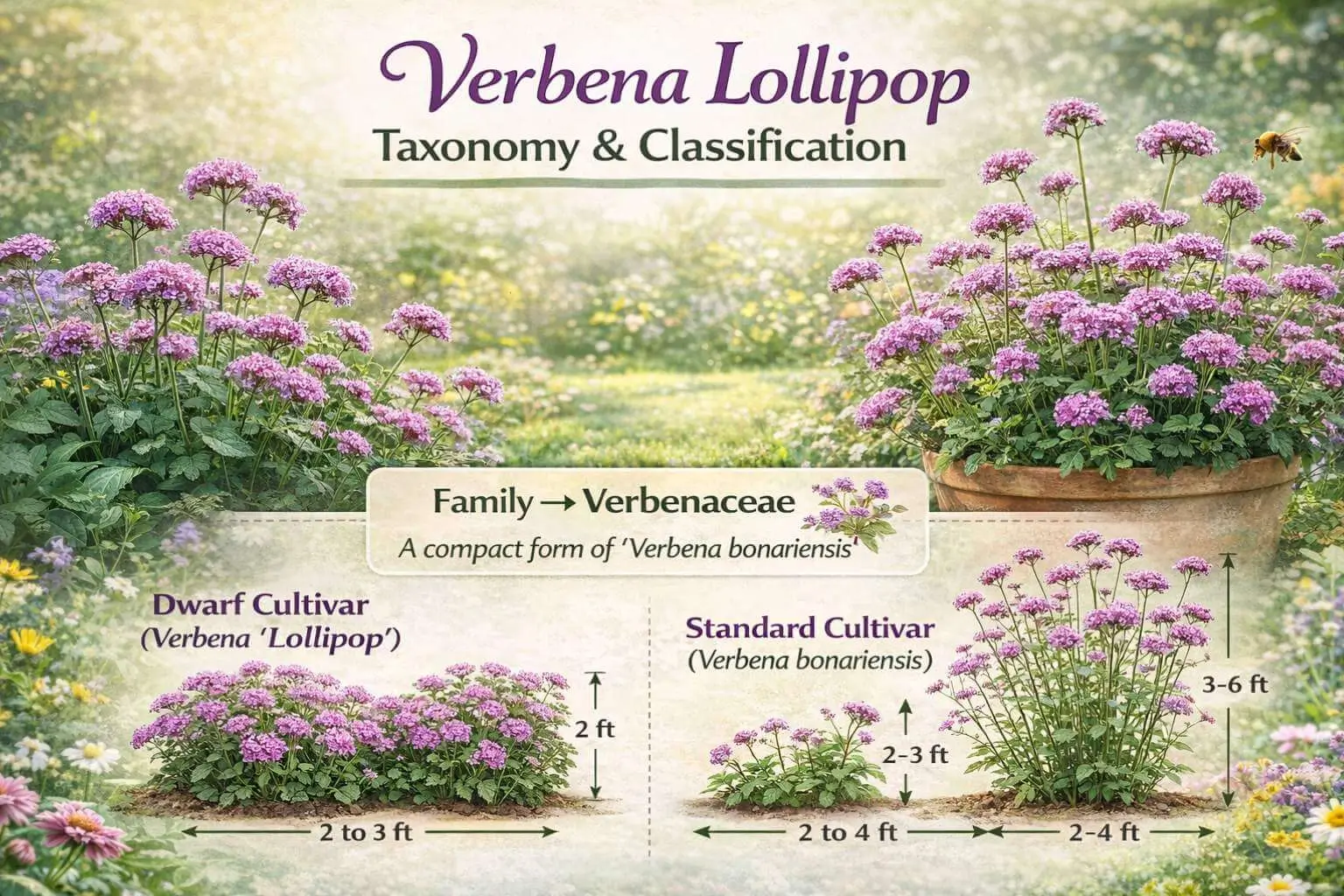
Verbena Lollipop is closely related to Verbena bonariensis, sharing similar floral structures and vibrant colors. Cultivars of Verbena Lollipop differ mainly in size, growth habit, and bloom intensity. While Verbena bonariensis typically grows taller with more open stems, the Lollipop variety is compact, ideal for small garden spaces or container planting. Its classification under the Verbenaceae family aligns it with other ornamental verbenas, emphasizing its decorative value in horticulture. For more detailed botanical information on the genus, see Verbena on Wikipedia.
-
Native Range and Hardiness
Verbena Lollipop is native to regions in South and Central America, similar to its parent species. It thrives in USDA hardiness zones 7–10, where mild winters allow it to behave as a perennial. In colder climates, it is often treated as an annual or overwintered indoors. Its native adaptability ensures tolerance to a range of soils and sun exposures, though full sunlight maximizes bloom production and plant vigor.
-
Size, Height, and Growth Habit
Typically, Verbena Lollipop reaches 12–18 inches in height with a similar spread, forming dense, compact mounds. Dwarf cultivars remain under 12 inches, making them ideal for container planting or front-of-border placement. Its compact growth reduces leggy stems, promotes continuous flowering, and allows gardeners to maintain tidy displays without extensive pruning.
Cultivation and Care
-
Planting Requirements
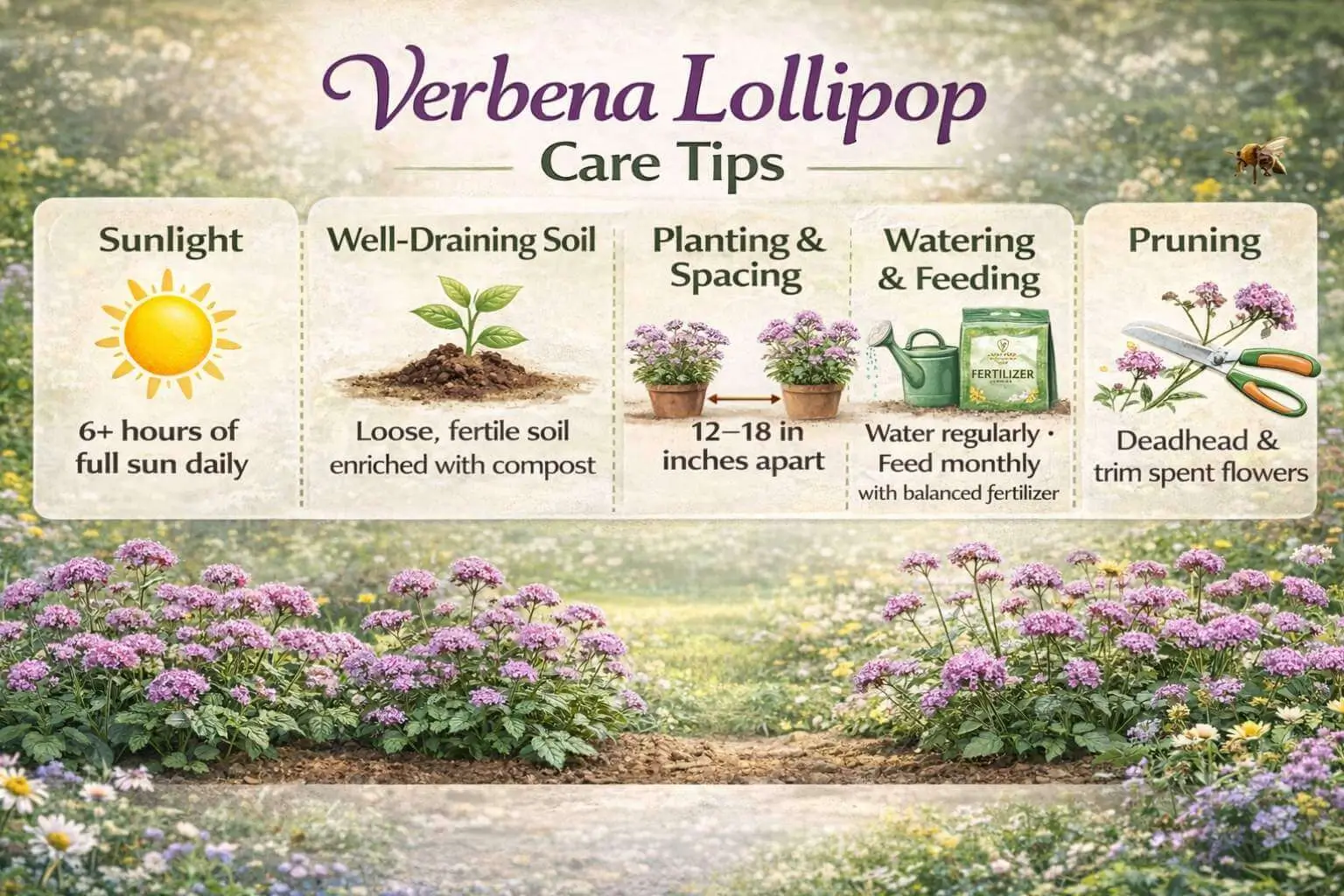
Verbena Lollipop grows best in well-draining soil with moderate fertility. It requires full sunlight for at least 6–8 hours daily. Spacing plants 12–18 inches apart ensures air circulation, reducing disease risk. The plant performs well in containers, raised beds, or garden borders, offering versatility for both ornamental and functional garden designs.
-
Watering and Fertilization
For optimal growth, water Verbena Lollipop regularly, allowing the topsoil to dry slightly between waterings. Overwatering can cause root rot, while irregular watering reduces flower production. Fertilize monthly during the growing season with a balanced, slow-release fertilizer to promote lush foliage and abundant blooms. Consistent care encourages long-lasting flowering throughout the season.
-
Pruning and Maintenance
Prune Verbena Lollipop periodically to maintain its compact shape and encourage branching. Deadheading spent blooms prevents seed formation and extends flowering. The best time to cut back is early spring or after the first major flowering flush. Regular maintenance reduces legginess, enhances plant health, and keeps displays tidy.
Propagation and Growth
From Seeds
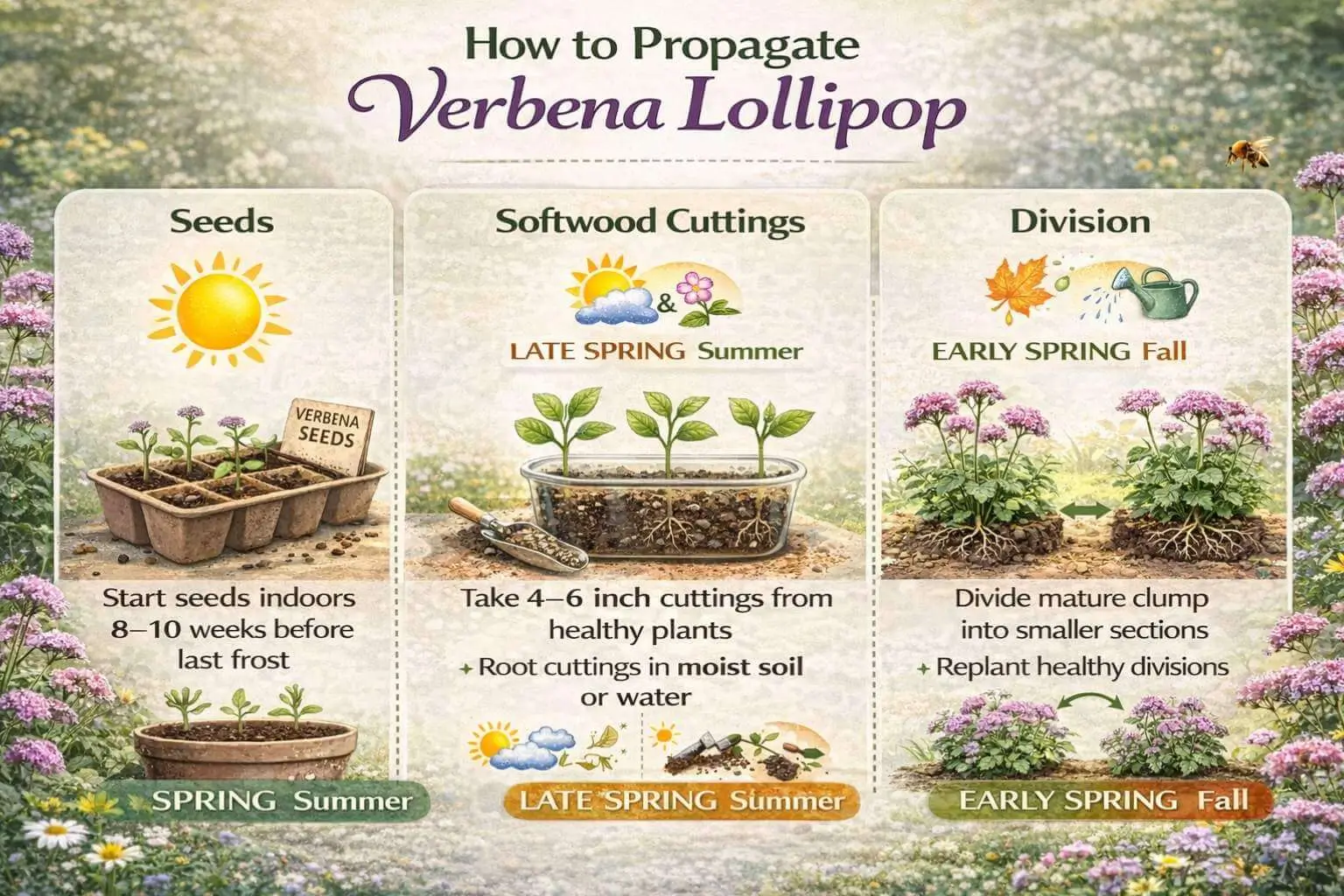
Verbena Lollipop can be propagated from seeds. Sow seeds indoors 8–10 weeks before the last frost in a well-draining seed mix. Keep soil moist and provide temperatures of 70–75°F for germination. Transplant seedlings outdoors after hardening off and when danger of frost has passed. Seed propagation allows gardeners to grow multiple plants cost-effectively.
Vegetative Propagation
Cuttings and division are effective vegetative propagation methods. Softwood cuttings taken in spring root readily in moist soil or propagation medium. Division of mature clumps ensures genetically identical plants and maintains compact growth. These methods are ideal for gardeners seeking uniform flowering and predictable plant habits.
Self-Seeding and Perennial Nature
Verbena Lollipop may self-seed in favorable climates but is generally considered perennial only in USDA zones 7–10. In colder regions, it behaves as an annual unless overwintered indoors. Self-seeding contributes to natural garden spread, while perennial care ensures consistent seasonal blooms.
Flowering and Seasonal Care
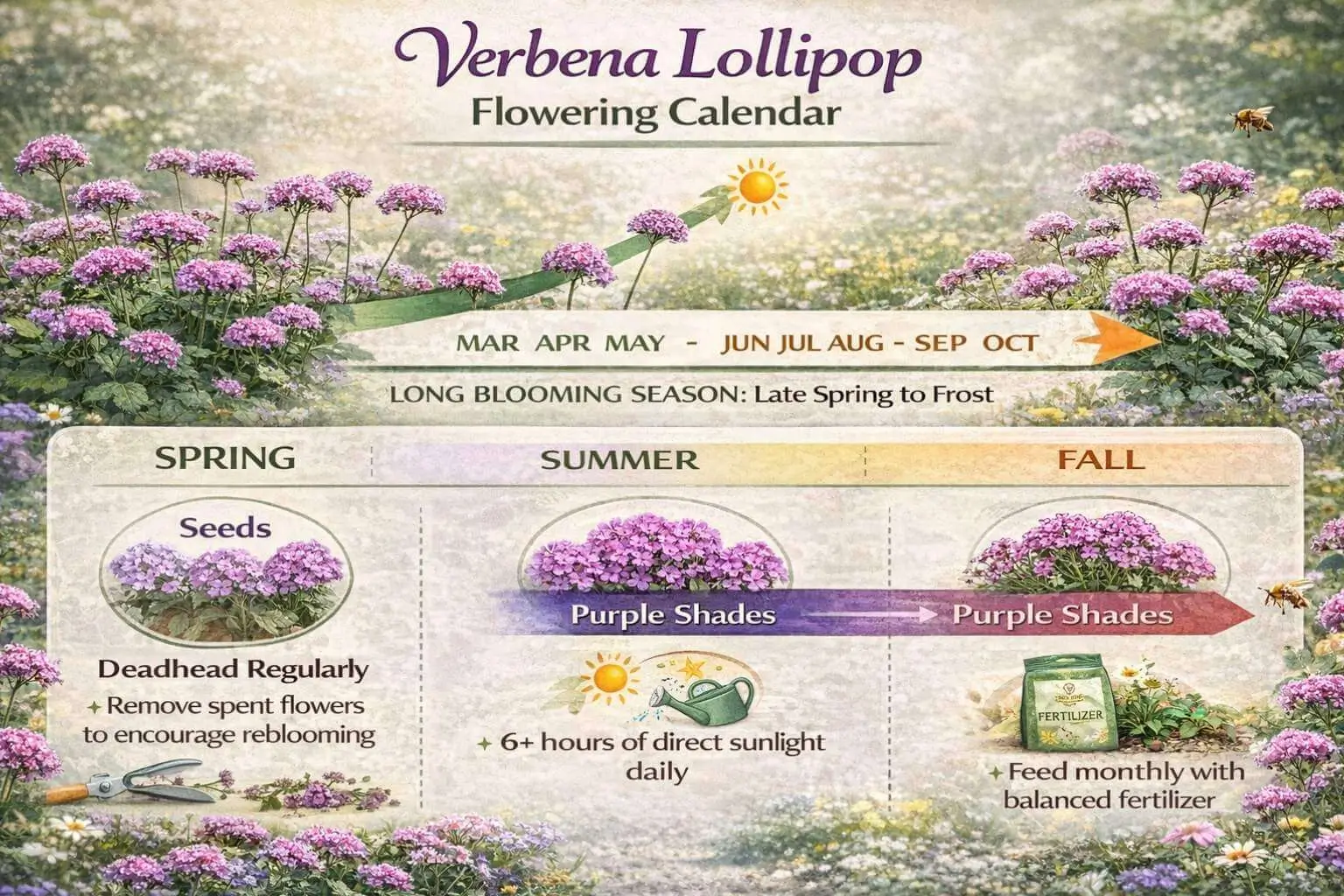
Verbena Lollipop blooms from late spring through fall, producing vibrant flowers, often in purple shades. Regular deadheading encourages continuous flowering. Seasonal considerations include providing adequate sunlight, avoiding overwatering during humid periods, and adjusting fertilization to maintain vigor. With proper care, Verbena Lollipop provides long-lasting color displays suitable for mixed borders and container arrangements.
Common Problems and Solutions
-
Pest and Disease Issues
Common pests include aphids, spider mites, and whiteflies. Fungal diseases such as powdery mildew or root rot may occur in poorly drained soils. Early detection and treatment with insecticidal soap or fungicides help maintain plant health.
-
Environmental Challenges
Overwatering, insufficient sunlight, and compacted or poorly drained soil can hinder growth. Ensuring proper site selection, well-draining soil, and adequate light mitigates these challenges.
-
Growth Mistakes
Verbena Lollipop may fail to bloom or become leggy due to excessive nitrogen fertilization, overcrowding, or lack of pruning. Observing plant spacing, fertilization practices, and pruning schedules prevents common mistakes.
-
Remedies
Deadheading, pruning, adjusting watering schedules, and improving sunlight exposure correct growth issues. Regular monitoring and preventive care maintain compact, flowering plants.
Differentiation and Varieties
Verbena Lollipop differs from Verbena bonariensis in size, growth habit, and flowering density. While bonariensis grows tall and airy, Lollipop remains compact and dense. Notable varieties include the dwarf “Bampton,” offering smaller dimensions and vibrant blooms suitable for containers or tight garden spaces. These cultivars provide gardeners with options tailored to design needs. While Verbena Lollipop offers compact blooms, gardeners may also explore structural contrast with plants like False Agave for mixed garden displays.
Landscape and Garden Uses
Verbena Lollipop excels in container planting, garden borders, and pollinator-friendly spaces. Its compact form and deer-resistant qualities make it suitable for diverse garden settings. Mixing with other perennials or seasonal bedding plants enhances visual appeal and encourages biodiversity. Verbena Lollipop pairs well with other compact, flowering plants like Purple Trailing Lantana for vibrant garden borders and pollinator-friendly landscapes.
Topical Cluster Connections
Indoor adjustments involve controlling light and temperature for overwintering. Companion planting with species like Verbena bonariensis, Geranium Rozanne, or Achillea Terracotta enhances garden aesthetics and ecological benefits. Propagation techniques such as seed sowing or cuttings support sustainable garden expansion.
Conclusion
Verbena Lollipop is a compact, low-maintenance ornamental perennial valued for long-lasting blooms, adaptability, and versatility in garden design. With proper care, pruning, and propagation, it thrives across climates and provides vibrant seasonal displays. Its ease of cultivation, pest tolerance, and compact habit make it an ideal choice for containers, borders, and pollinator-friendly gardens, reinforcing its place as a reliable, ornamental perennial.
FAQ
- Is Verbena Lollipop a perennial plant?
Yes, Verbena Lollipop behaves as a perennial in USDA zones 7–10. In colder climates, it may be treated as an annual or overwintered indoors for continued growth. - How tall does Verbena Lollipop grow?
It typically grows 12–18 inches in height, with dwarf varieties staying under 12 inches. Compact growth makes it suitable for containers and borders. - Can I grow Verbena Lollipop from seeds?
Yes, sow seeds indoors 8–10 weeks before the last frost in moist, well-draining soil. Transplant seedlings outdoors after hardening off for best results. - How do I prune Verbena Lollipop for best blooms?
Prune in early spring or after flowering to maintain shape. Deadhead spent blooms regularly to encourage continuous flowering and reduce legginess. - What pests or diseases affect Verbena Lollipop?
Common pests include aphids, spider mites, and whiteflies. Fungal issues like powdery mildew and root rot may occur in wet or poorly drained soils. - Is Verbena Lollipop deer-resistant?
Yes, it is generally deer-resistant. Planting with companion species enhances protection and promotes garden biodiversity. - How is Verbena Lollipop different from Verbena bonariensis?
Verbena Lollipop is compact and dense, while Verbena bonariensis grows tall and airy. Lollipop cultivars bloom abundantly in smaller spaces and are ideal for containers or front-of-border planting.