Introduction
Overseeding is the process of spreading grass seed over an existing lawn to improve density, repair bare patches, and enhance overall lawn health. In UK lawns, this technique is commonly used to maintain a vibrant, resilient turf throughout the year.
Mowing after overseeding refers to cutting the grass once the newly sown seeds have germinated and established enough to withstand blade contact. Timing this first cut is crucial because mowing too early can damage young shoots, while waiting too long can lead to uneven growth and reduced lawn density. Correct timing ensures healthy establishment, optimal root development, and uniform coverage. Context keywords such as new lawn first cut, when to mow after overseeding, and waiting too long to mow new grass are essential to understanding proper lawn care.
Understanding Overseeding and Lawn Recovery
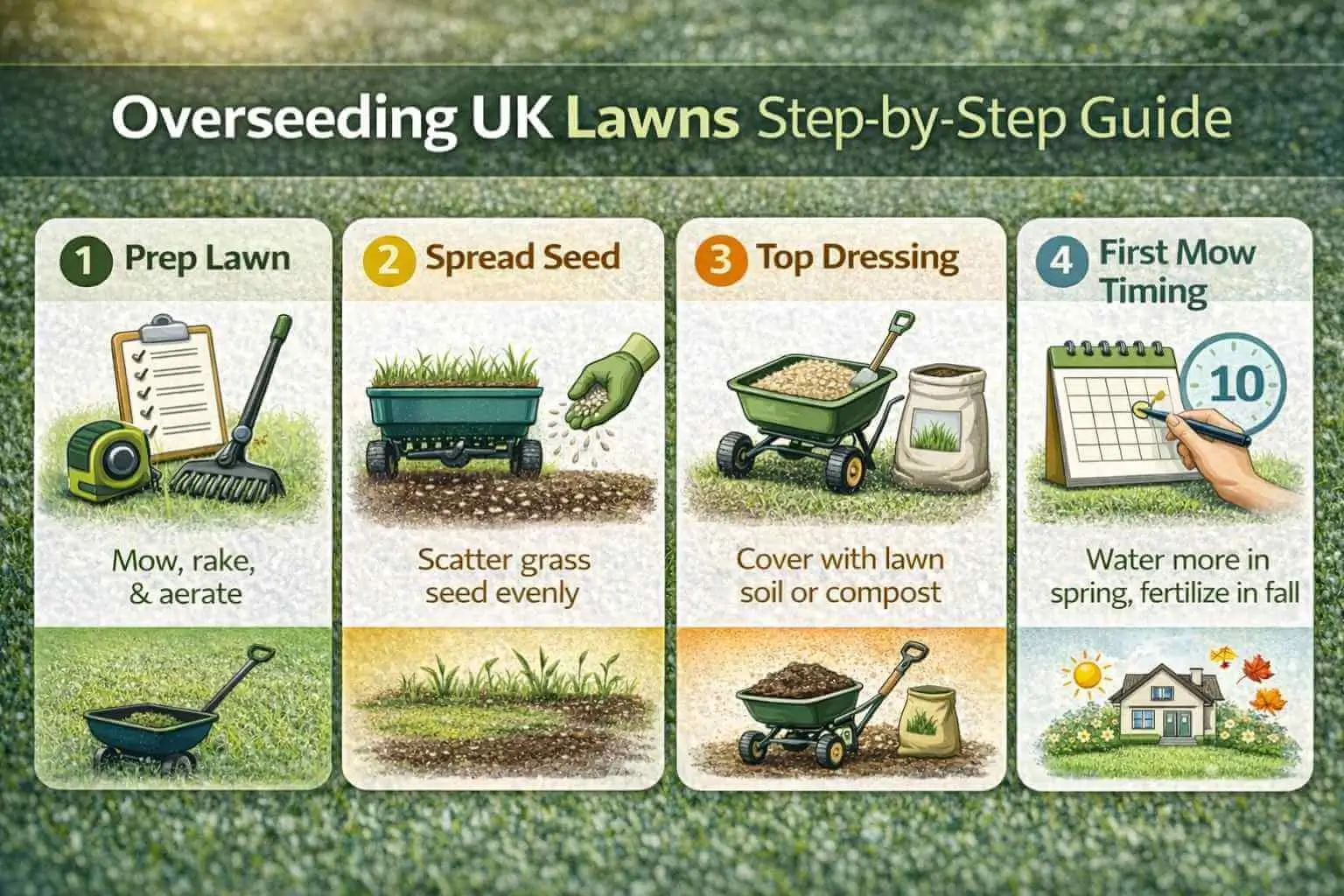
Overseeding improves lawn density and promotes overall grass health by introducing new seed into worn or thin areas. This process aids recovery after stress or seasonal wear. Combining overseeding with proper soil management ensures that seeds establish well and the lawn remains robust. For optimal results, it’s helpful to know the best time to aerate and overseed your lawn in the UK, which complements overseeding techniques and enhances grass recovery.
Techniques such as overseeding topsoil, top dressing and overseeding lawn, top dressing lawn overseeding, and deciding whether to overseed before or after top dressing can influence germination success. Applying a thin layer of nutrient-rich topsoil or compost can protect seeds, retain moisture, and provide a medium for roots to grow.
How Grass Establishes After Overseeding
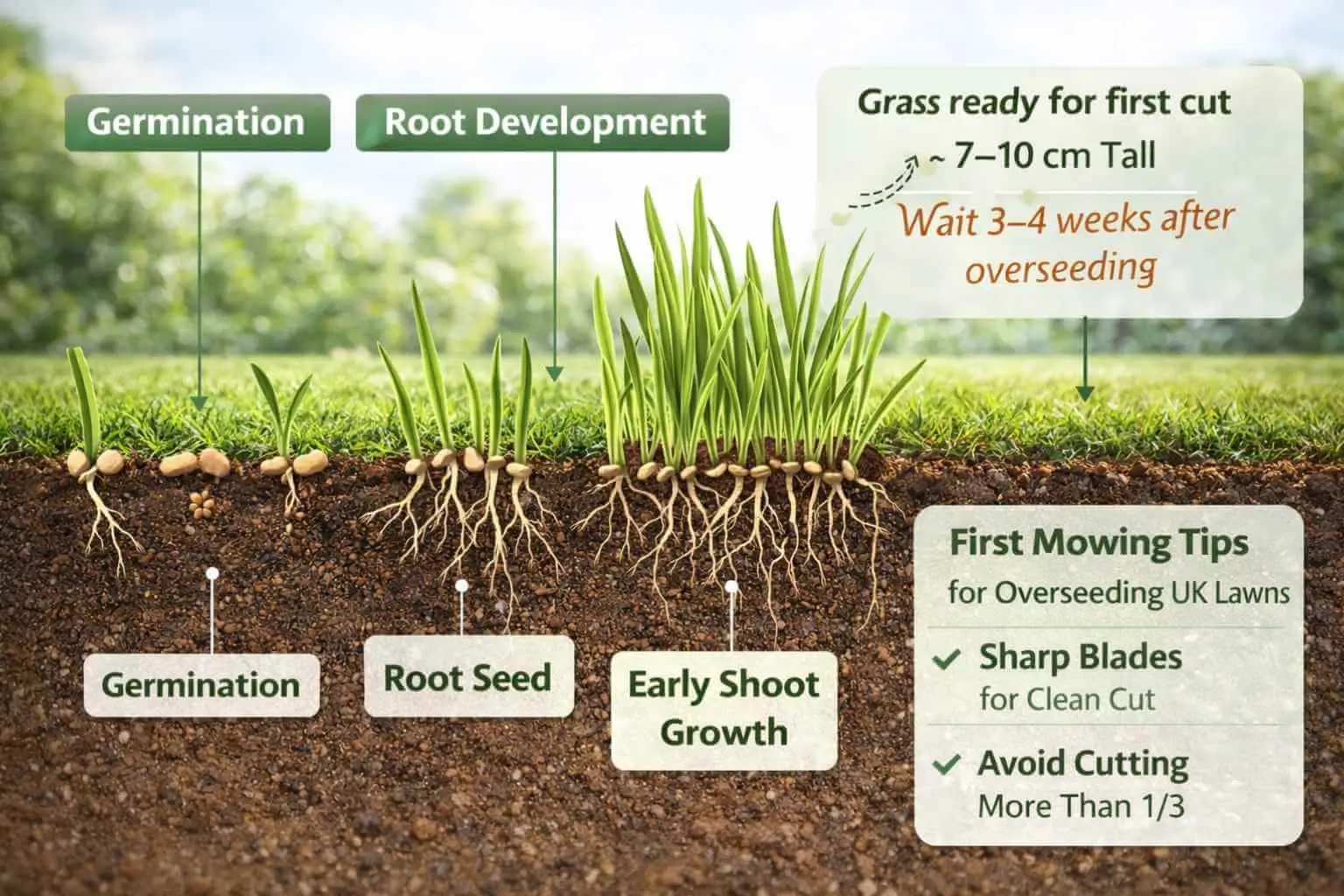
Grass seed undergoes germination, root development, and early shoot growth before it is ready for mowing. Initially, seeds absorb moisture, swell, and sprout tiny shoots. Roots develop to anchor the plant, while leaves elongate to capture sunlight. Grass seeds undergo germination and root development, following natural growth stages described in Grass biology.
New grass is generally ready for its first cut when blades reach around 7–10 cm in height and can withstand gentle pressure without uprooting. Supporting practices like new grass first cut, understanding new lawn how long before mowing, and using grass seed top dressing enhance seedling survival and promote uniform growth.
Timing Your First Cut After Overseeding
The timing of your first mow in UK conditions depends on grass type, weather, and seasonal growth rates. Most cool-season grasses used in UK lawns require 2–3 weeks to establish before being cut.
Guidelines include checking blade height, density, and overall shoot strength. Keywords like when to cut lawn after overseeding, when should i cut the grass after overseeding, when to cut a lawn after overseeding, and when to mow lawn after overseeding help determine optimal timing. Mowing too early risks scalping, while waiting too long can result in uneven growth or thatch buildup.
Signs Your Lawn is Ready for Its First Mow
Visual and tactile cues indicate readiness: grass should appear uniform, strong, and upright. Blades should resist gentle tugging without uprooting. Avoid cutting tender shoots, as this can reduce germination success and damage young roots.
Common descriptors include cutting a new lawn, mowing a new lawn, cutting new grass, and mow new lawn, which signal both readiness and best practices for initial mowing.
Seasonal Considerations for the UK
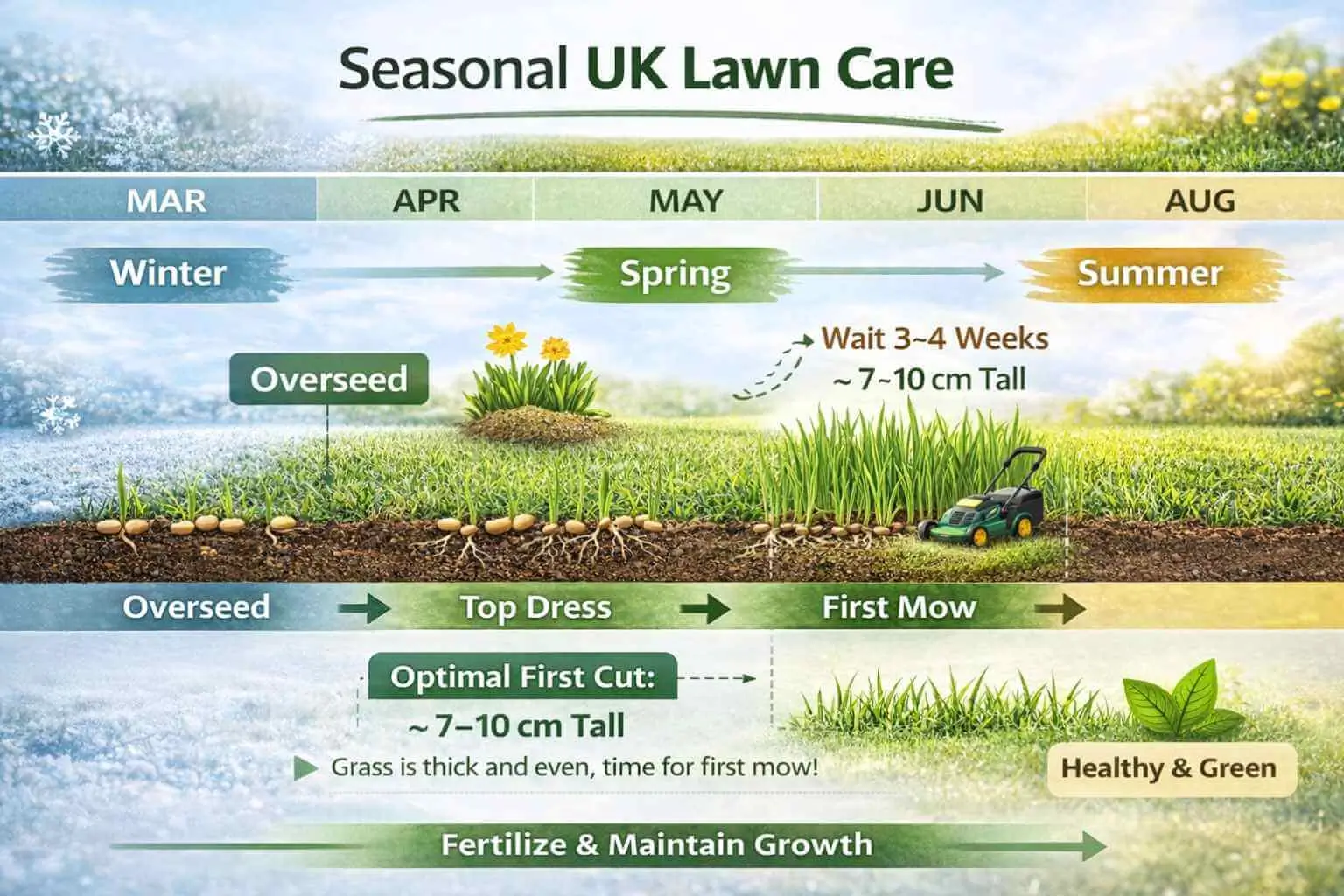
UK seasonal conditions affect how quickly grass establishes after overseeding. During winter, cooler temperatures slow growth, so the first cut may need to be delayed. In spring and summer, warmer soil encourages faster germination, allowing earlier mowing.
Relevant supporting keywords are when to cut grass after overseeding uk winter and when to cut grass uk after winter, which highlight seasonal adjustments for lawn care. Monitoring growth and adjusting mowing schedules based on conditions ensures healthy turf establishment.
Top Dressing and Overseeding Practices
Top dressing involves applying a layer of soil, compost, or nutrient-rich material over grass seed. This practice improves seed-to-soil contact, retains moisture, and encourages even germination.
Best practices include mixing grass seed with topsoil, deciding whether to should i mix grass seed with topsoil, and using topsoil for overseeding. Lawn managers should follow recommended protocols for top dressing lawn before and after overseeding to protect seedlings during the first growth stage. Using proper topsoil or compost can improve seed germination, especially when paired with strategies for improving clay soil for lawns.
Common Mistakes and How to Avoid Them
Mowing errors can hinder lawn establishment. Cutting too early may uproot seedlings, while waiting too long to mow new grass can result in tall, uneven growth. Scalping or uneven mowing further stresses young turf.
Monitoring grass height, observing growth patterns, and adjusting mowing frequency help prevent these issues. Keywords like when to cut grass after scalping highlight common pitfalls and corrective measures.
Ongoing Lawn Maintenance After Overseeding
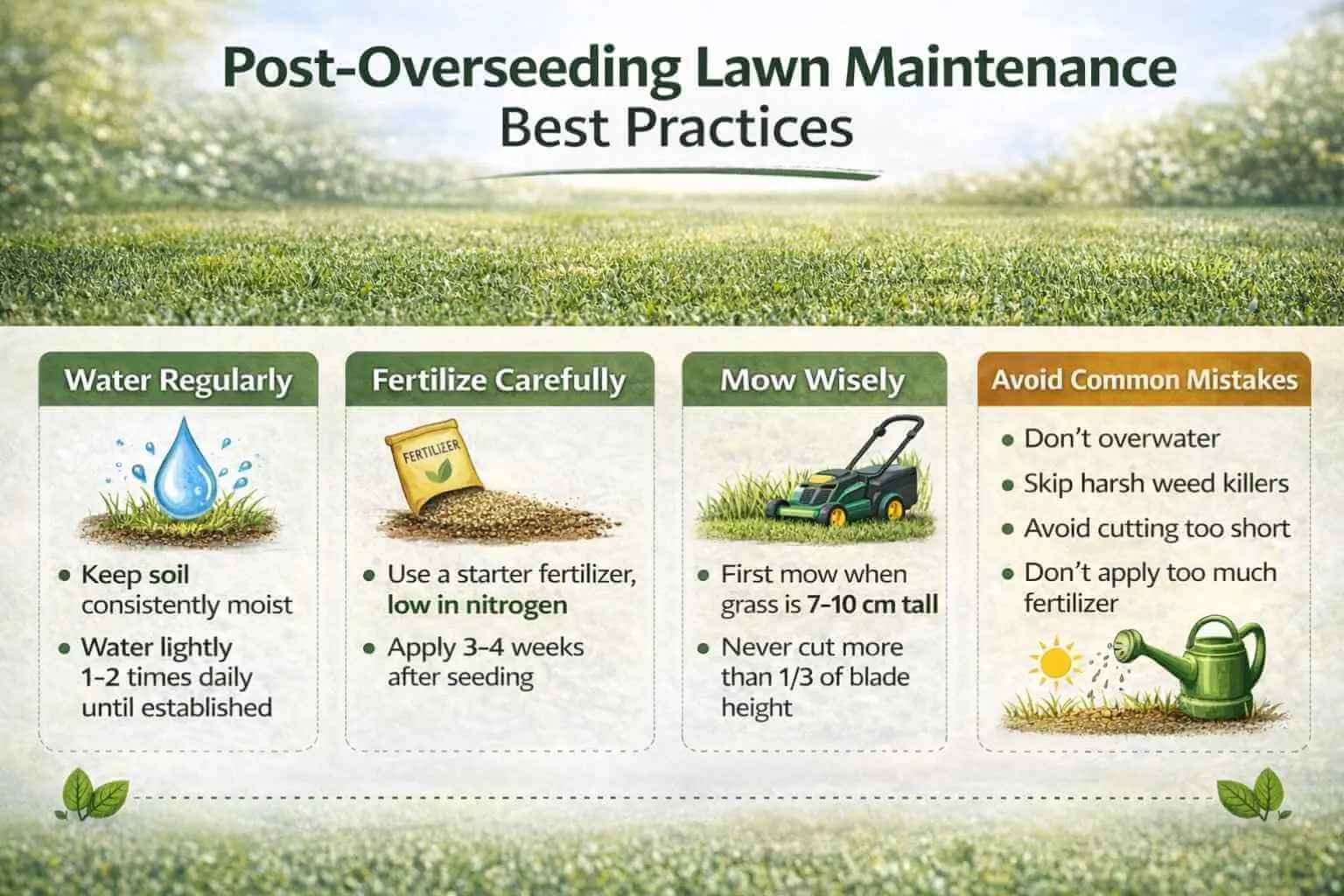
After the first cut, continued care supports lawn health. Gradually reduce blade height over successive mows and maintain consistent watering and fertilization. Proper mowing frequency prevents shock to new grass and encourages strong root systems.
Supporting keywords include new grass mowing, mowing new lawn, new lawn mowing, and cut new grass, which reinforce ongoing maintenance best practices for a dense, healthy lawn.
Conclusion
The best time to cut grass after overseeding in the UK is when new shoots are strong, upright, and at the recommended height of 7–10 cm. Observing visual and tactile cues, adjusting for seasonal growth, and following top dressing best practices ensure optimal establishment. Adaptive mowing strategies and careful monitoring of young grass create a lush, dense, and healthy lawn.
Learn more about proper lawn care after overseeding to achieve a lush, healthy lawn.
FAQ
- When should I first cut my lawn after overseeding in the UK?
The first cut is usually after the new grass reaches about 7–10 cm tall, ensuring shoots are strong enough to withstand mowing. - Can I mow too early after overseeding?
Yes, mowing too early can damage young seedlings, reduce density, and slow establishment. - How does top dressing affect when to mow?
If top dressing is applied, wait until the seed has rooted through the soil layer; mowing too soon can disturb growth. - Does the season change when I should cut grass after overseeding?
Yes, in winter or cooler periods, growth is slower, so the first cut may be delayed compared to spring or summer. - What signs indicate my new grass is ready for mowing?
Grass should be uniform, strong, and at the recommended height; blades should stand upright and not pull out when gently tugged.