
Introduction
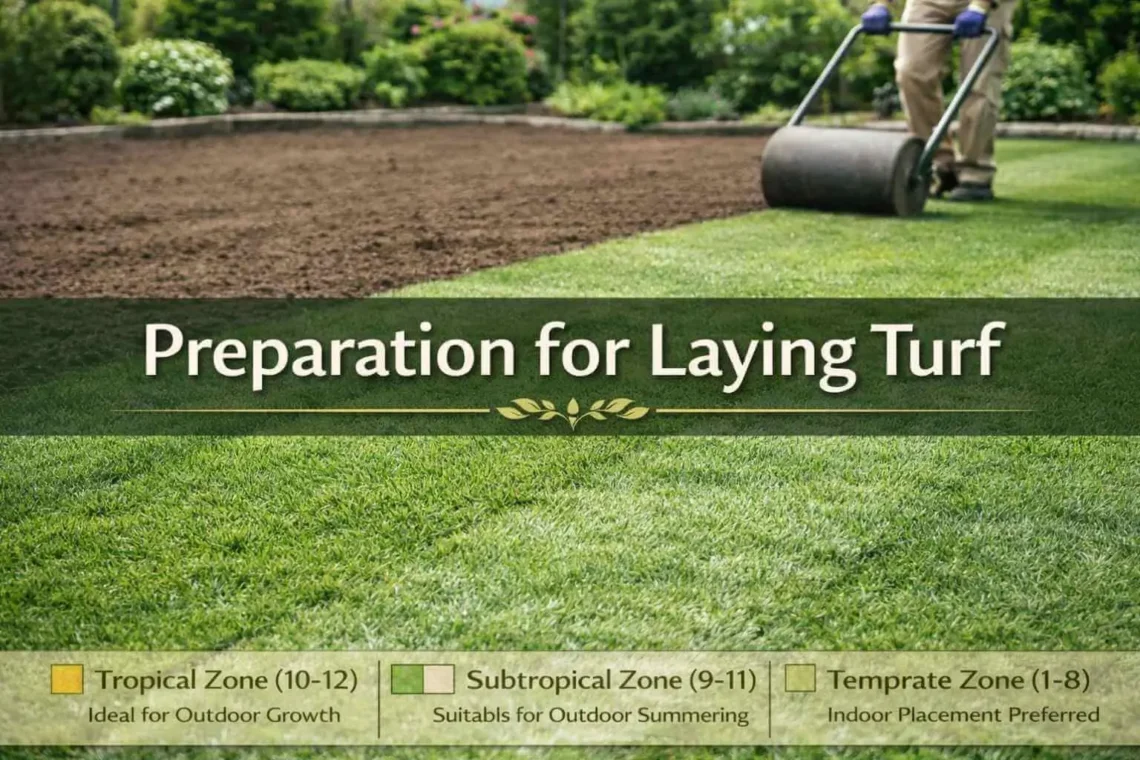
Preparation for laying turf refers to the systematic process of readying soil or ground surfaces to ensure successful installation and healthy growth of turf. Proper preparation is essential for achieving an even, resilient lawn that establishes quickly and maintains long-term quality. This process applies to both natural and artificial turf, taking into account soil types such as clay, sand, or loam, and seasonal conditions that can affect growth and durability. By understanding the correct steps for preparing ground for turf, gardeners and landscapers can prevent common issues such as uneven surfaces, weak root systems, or turf failure. This guide provides practical, step-by-step instructions for optimizing soil, ground conditions, and installation methods. Preparation for laying turf, a process essential for establishing healthy lawns, involves soil and ground readiness to support both natural and artificial turf Wikipedia.
Understanding the Basics of Turf Preparation
What Is Turf Preparation?
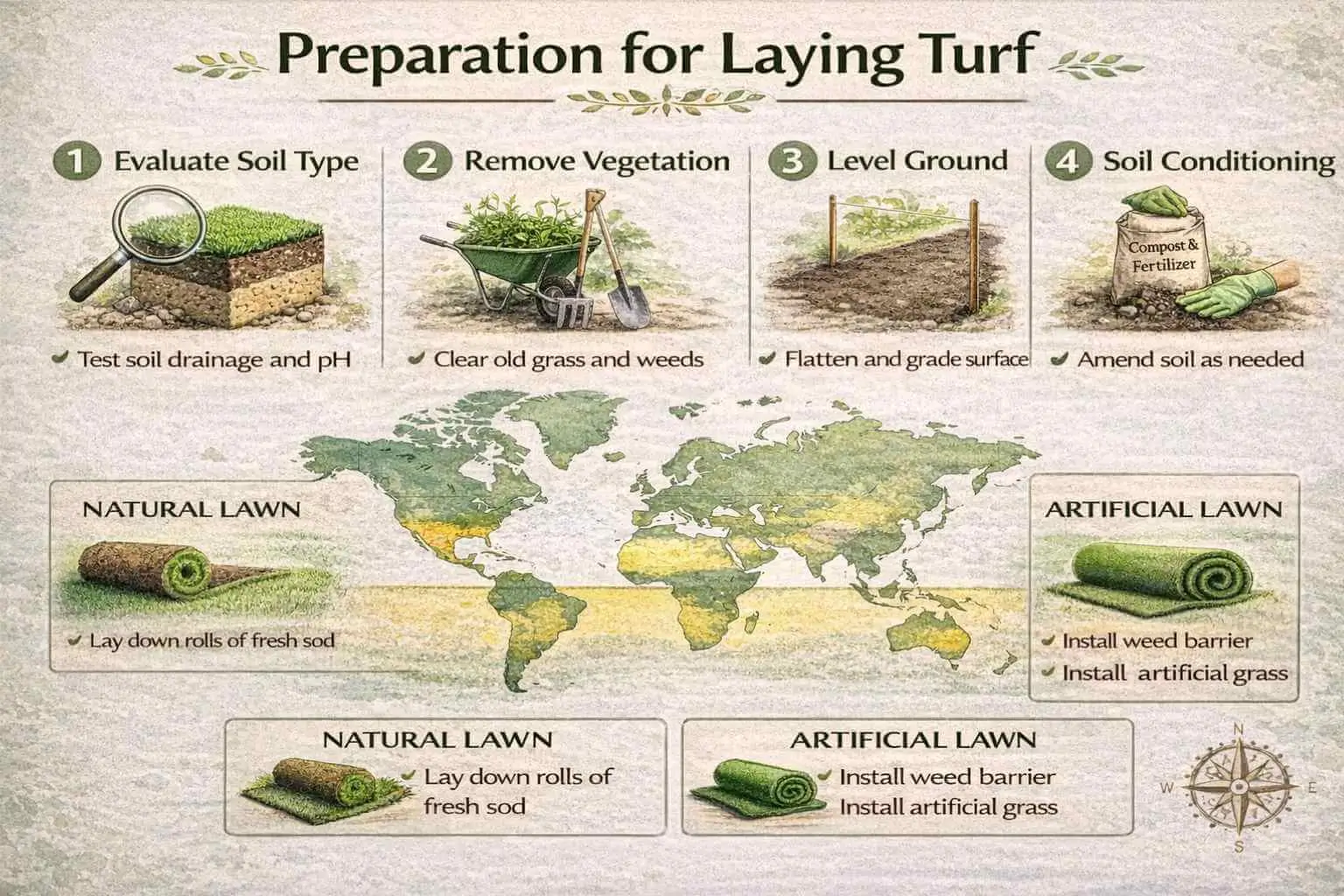
Turf preparation involves soil leveling, ensuring proper drainage, balancing nutrients, and removing debris. For natural turf, it focuses on soil fertility, root contact, and moisture retention. For artificial turf, preparation emphasizes a firm, leveled base and effective drainage layers. The goal is to create an optimal surface where turf can establish efficiently and remain visually appealing over time. Properly preparing soil for turf also ensures uniformity and durability, reducing maintenance needs.
Importance of Proper Preparation
Correct preparation directly impacts turf growth, appearance, and longevity. Poorly prepared ground can lead to uneven surfaces, weak roots, waterlogging, or premature turf failure. For artificial turf, inadequate base preparation can result in sagging, poor drainage, and instability. Therefore, soil preparation for laying turf or for artificial installations is critical to prevent structural and aesthetic problems, ensuring a robust, healthy lawn.
Assessing and Preparing the Ground
Evaluating Soil Type
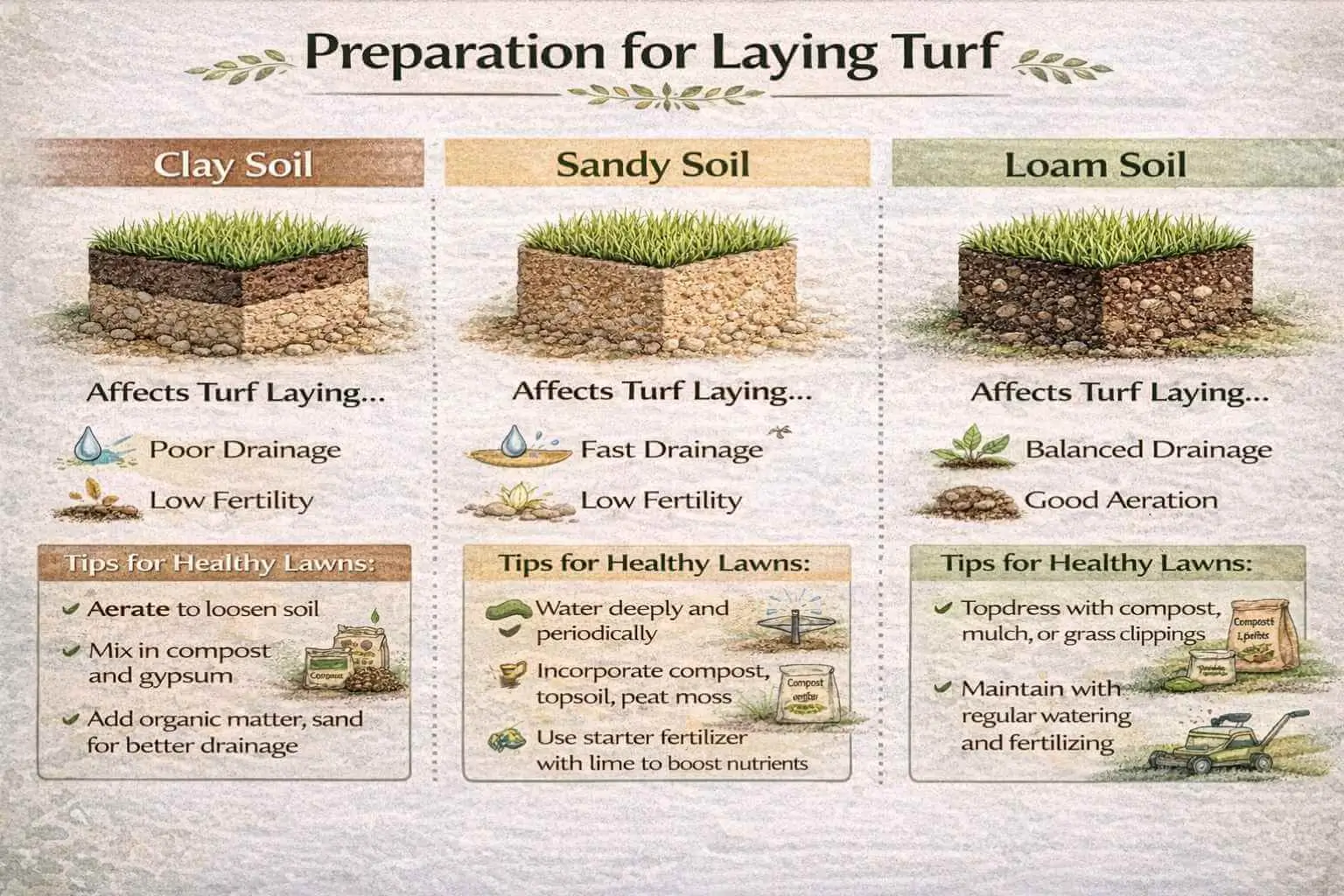
Soil type significantly affects turf performance. Clay soils hold water but may compact easily, while sandy soils drain quickly but may lack nutrients. Loam soils are generally ideal for natural turf. Adjusting soil conditions before laying turf, such as adding sand to clay or organic matter to sandy soil, improves drainage and fertility, creating the optimal environment for root development. For guidance on selecting and maintaining turf types suitable for different soils, see our detailed article on Korean Grass Lawn.
Removing Existing Vegetation and Debris
All weeds, rocks, and old grass must be removed before turf installation. Common methods include manual removal, chemical weed control, or mechanical tilling. Clearing the surface ensures proper contact between the turf and soil and prevents future growth interference.
Leveling Uneven Ground
Uneven terrain, including slopes or hollows, requires careful leveling and grading. Small hollows can collect water, while high spots can dry out. Techniques like raking, soil filling, and light rolling help achieve a smooth, stable surface. Proper leveling is essential for laying turf on uneven ground and for long-term lawn maintenance.
Preparing the Soil for Turf
Soil Improvement and Conditioning
Enhancing soil quality involves adding sand, compost, or topsoil to improve fertility and drainage. For natural turf, the recommended topsoil depth is 4–6 inches, providing sufficient nutrients and support for roots. Proper conditioning ensures that turf establishes quickly and develops a dense, healthy root system. If working with clay-heavy soil, learn effective techniques in How to Improve Clay Soil for Lawns to enhance drainage and turf health.
Soil Testing and Nutrient Balancing
Testing soil for pH levels and nutrient content allows adjustments to optimize growth. Adding lime, fertilizer, or organic matter corrects deficiencies and creates ideal conditions for turf. Balanced soil promotes strong root growth and reduces susceptibility to disease, ensuring that topsoil for turf laying meets the requirements of specific grass types.
Laying Turf – Step by Step Overview
Natural Turf Laying Process
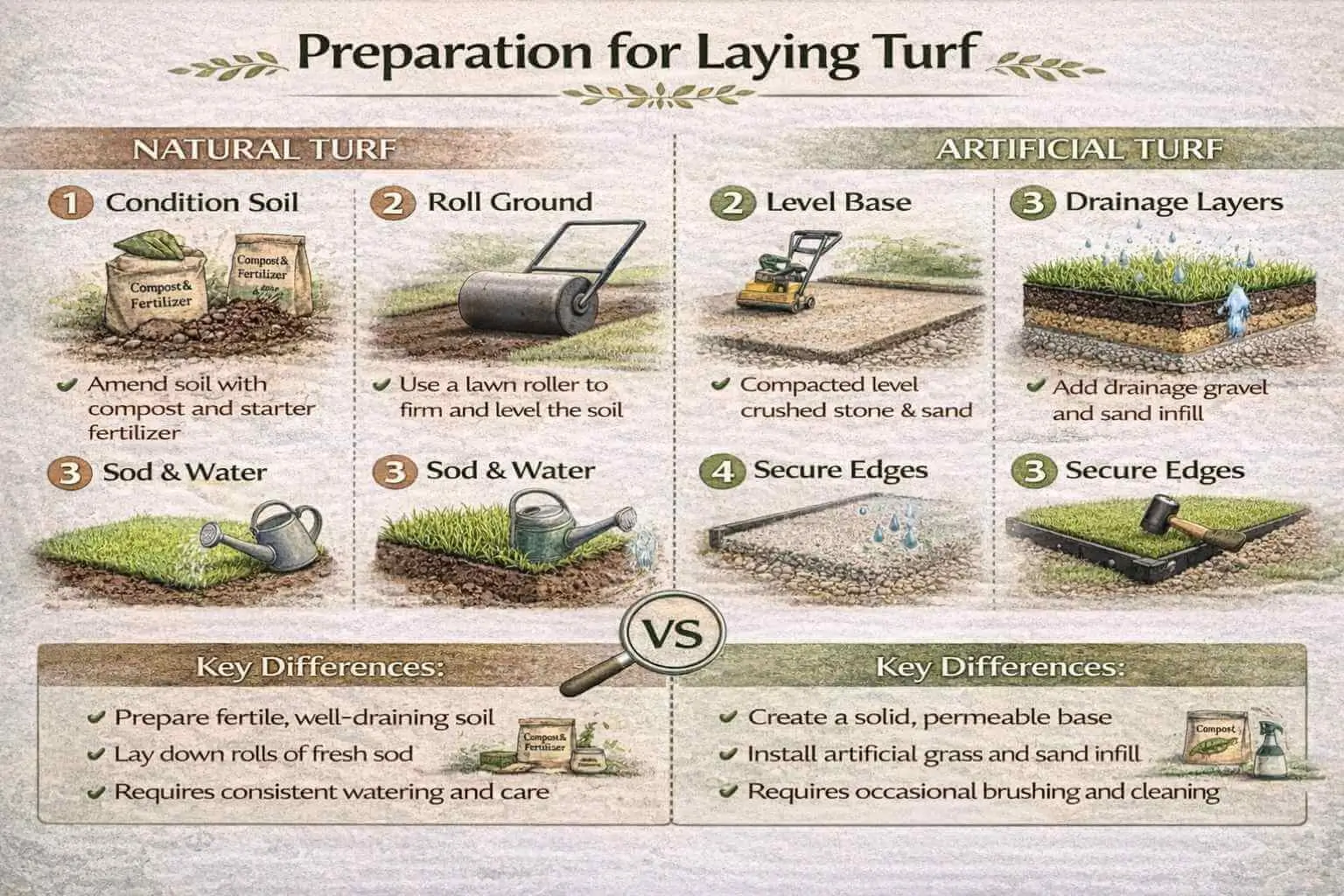
Natural turf installation follows a sequence of ground preparation → leveling → rolling → watering. Rolling helps eliminate air pockets, while watering immediately after laying supports root contact and initial growth. Correct spacing and alignment prevent gaps and uneven growth patterns.
Artificial Turf Installation
Artificial turf requires a firm, level base, drainage layers, and edge securing. Unlike natural turf, it does not rely on soil fertility, but base stability and drainage are critical to prevent pooling or shifting. Step-by-step installation ensures smooth appearance and long-term performance.
Seasonal Considerations and Timing
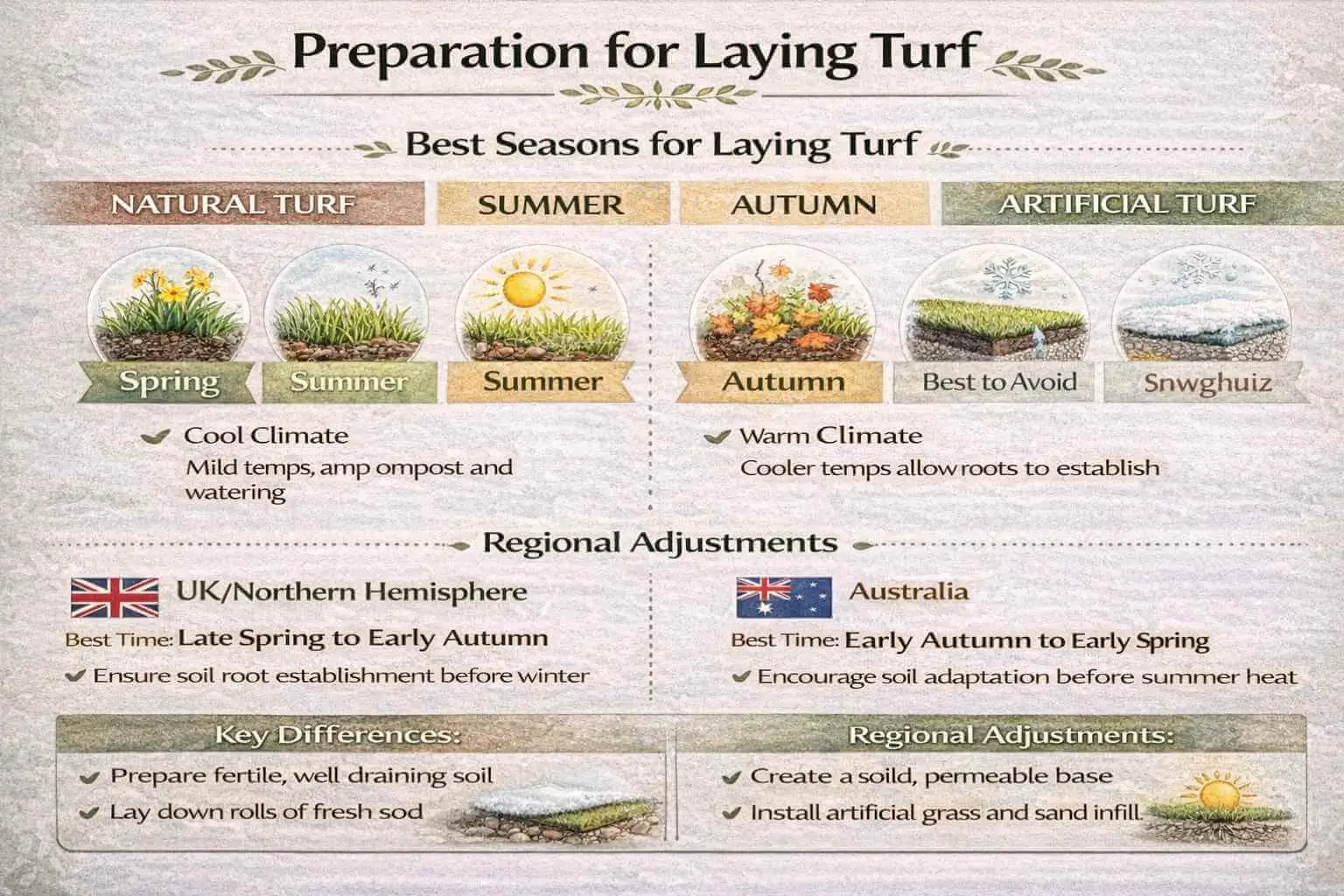
Best Time of Year to Lay Turf
Season affects root establishment, water needs, and growth rate. Spring and autumn are typically ideal for natural turf, while summer installation is possible with regular watering and heat protection. Proper timing ensures faster establishment and reduces stress on the turf.
Climate and Regional Adaptations
Regional conditions influence preparation methods. In the UK, turf may require extra drainage, whereas in Australia, soil conditioning for heat and drought tolerance is critical. Adjusting preparation practices to local climate ensures optimal turf performance.
Maintaining Prepared Ground Post-Laying
After turf installation, watering schedules, rolling, and initial mowing maintain soil contact and encourage root development. Preventing compaction and soil erosion safeguards turf integrity and ensures a healthy, even lawn. Regular monitoring during early growth stages is essential for long-term success.
Conclusion
Thorough preparation for laying turf is essential for creating a healthy, durable, and visually appealing lawn. Understanding soil types, turf varieties, and installation techniques enables gardeners and landscapers to avoid common issues like weak roots or uneven growth. By following these step-by-step practices, you can ensure that both natural and artificial turf establish efficiently and remain resilient over time. Understand these principles to achieve a healthy, even lawn.
FAQ
- What is the first step in preparing the ground for turf?
Clearing existing vegetation, leveling, and assessing soil type are the initial steps before turf laying. - How deep should topsoil be for laying turf?
Topsoil depth should generally be 4–6 inches to support root growth and nutrient availability. - Can turf be laid on clay or sandy soil?
Yes, but clay may need aeration and sand may require additional organic matter for moisture retention. - Is it possible to lay turf during summer?
Turf can be laid in summer with proper watering and heat protection to ensure root establishment. - How does artificial turf preparation differ from natural turf?
Artificial turf requires a firm, level base with drainage layers, unlike natural turf which relies on soil fertility and proper root contact. - Why is leveling uneven ground important before laying turf?
Uneven ground can cause water pooling, weak root growth, and an unattractive lawn appearance.