Introduction
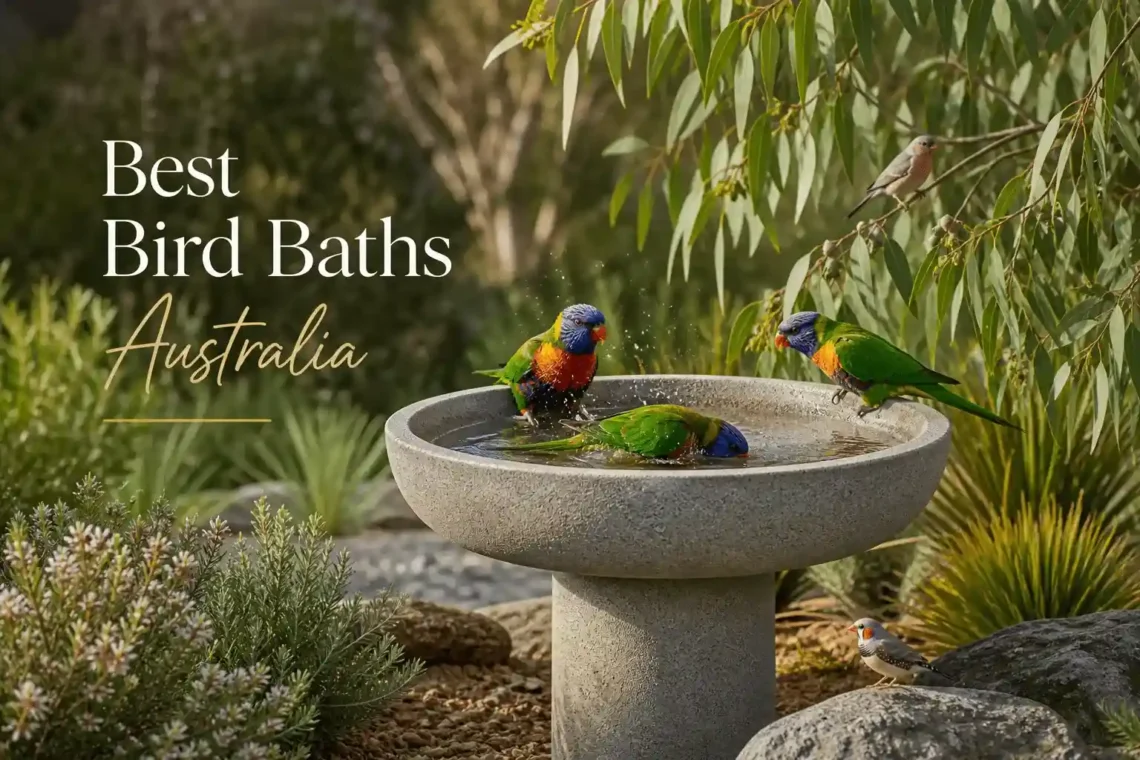
The best bird baths Australia homeowners choose are designed to attract native birds while withstanding local climates and garden conditions. A well-selected bird bath provides clean water for drinking and bathing, supports bird health, and enhances outdoor spaces aesthetically. Choosing the best bird bath involves understanding materials, size, placement, and bird behavior. In Australia’s varied climate—ranging from hot summers to coastal conditions—durability and proper setup are essential. When selected correctly, bird baths not only improve garden biodiversity but also create a reliable water source that encourages regular bird visits. Bird baths provide essential water for drinking and bathing, which supports feather maintenance and hygiene, a behavior explained in studies on bird bathing (see: wikipedia).
Quick Summary
- The best bird baths combine durable materials, safe depth, and stable design.
- Australian conditions favor stone, metal, and solar-powered options.
- Placement, water freshness, and visibility determine bird attraction.
- Features like fountains or moving water increase bird activity.
What Makes the Best Bird Baths in Australia?
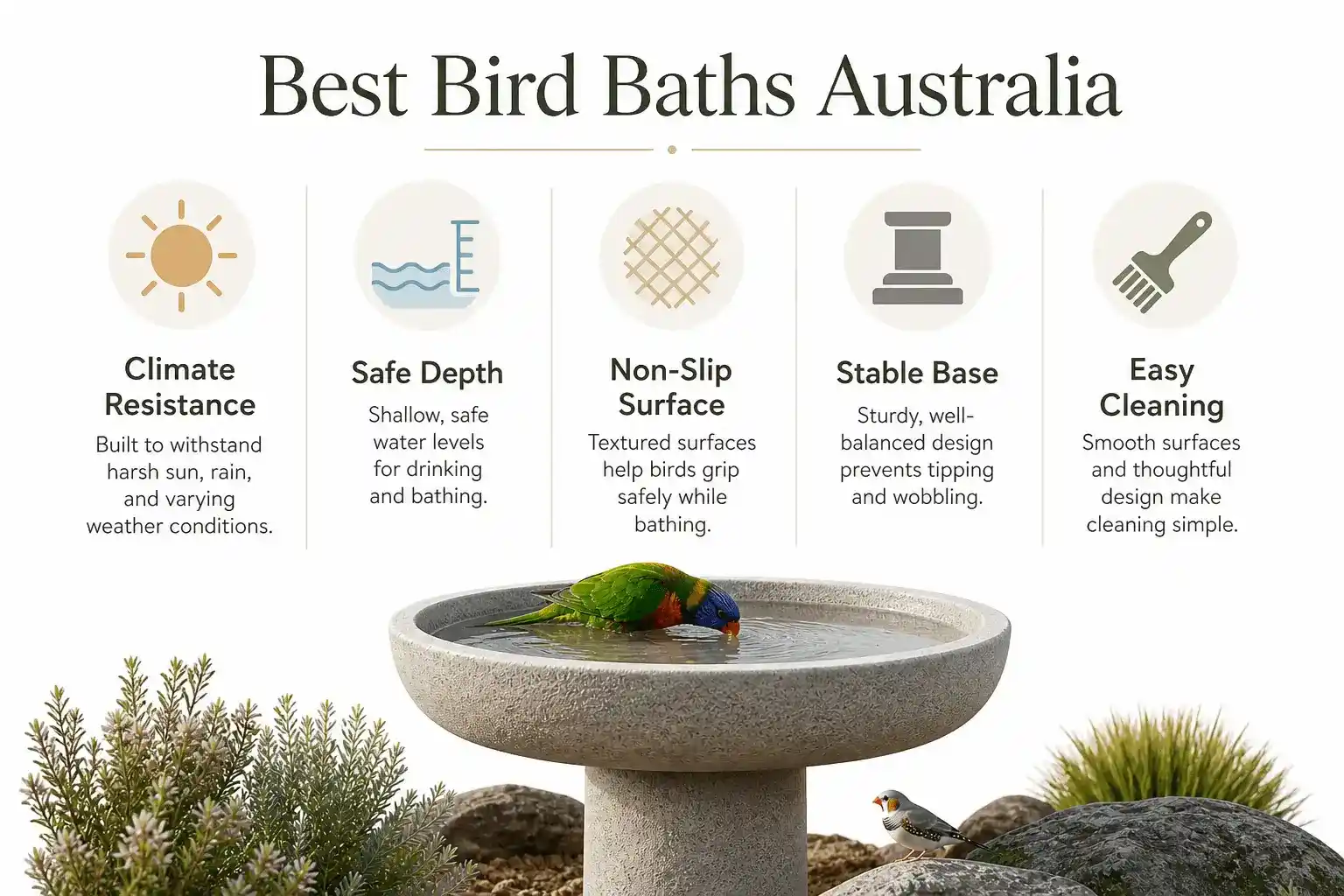
The best bird baths in Australia are defined by durability, safety, and suitability for native bird species. A high-quality bird bath must handle intense sunlight, temperature fluctuations, and outdoor exposure while remaining safe and accessible for birds.
Key criteria include:
- Climate resistance: Materials must withstand UV exposure, heat, and weather changes.
- Safe depth: Ideal depth is shallow with gradual slopes to prevent drowning.
- Non-slip surfaces: Textured basins help birds maintain grip while bathing.
- Stability: A sturdy base prevents tipping due to wind or animal movement.
- Ease of cleaning: Simple designs allow regular maintenance to keep water hygienic.
- Suitability for native birds: Australian species prefer open, visible water sources.
Types of Bird Baths Available in Australia
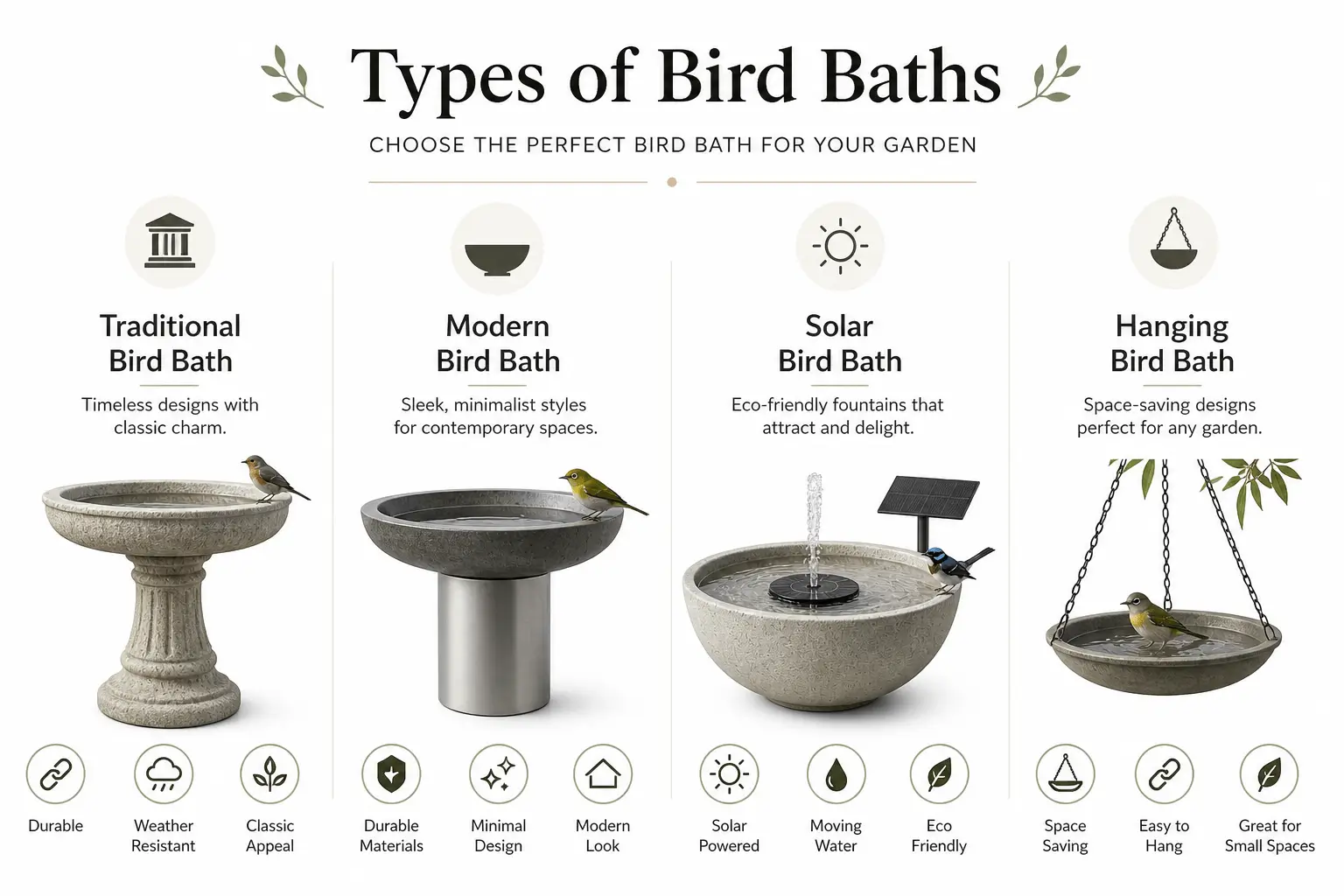
Traditional vs Modern Bird Baths
Traditional bird baths typically feature pedestal designs made from stone or terracotta, offering a classic garden look. Modern bird baths use sleek lines and materials like metal or concrete, fitting contemporary landscapes.
- Traditional designs: Decorative, stable, and suitable for large gardens
- Modern designs: Minimalist, space-efficient, and visually clean
Bird Bath Fountains and Water Features
Bird bath fountains and water features attract birds by providing moving water. Birds naturally prefer flowing water as it signals freshness and safety.
Benefits include:
- Increased bird activity
- Reduced algae buildup
- Enhanced garden aesthetics
Examples include bird bath fountains, bird fountains, and water fountain bird baths.
Solar Bird Baths
Solar bird baths use sunlight to power small pumps that circulate water. These eco-friendly options are increasingly popular in Australia.
Advantages:
- No electricity required
- Continuous water movement
- Low operating cost
Solar bird bath fountains are ideal for sunny Australian environments.
Hanging and Compact Bird Baths
Hanging and compact bird baths suit smaller spaces such as balconies or courtyards.
Features:
- Lightweight and easy to install
- Suitable for small bird species
- Ideal for urban gardens
Modern bird bath styles integrate seamlessly into contemporary outdoor layouts, especially in a modern Australian native garden design where clean lines and natural elements are prioritized.
Bird Bath Materials Explained (Comparison Section)
Different materials influence durability, maintenance, and bird comfort.
Bird Bath Material Comparison
| Material | Durability | Heat Resistance | Maintenance | Best For |
| Stone | High | Excellent | Low | Large gardens |
| Metal (Steel, Iron) | High | Moderate | Medium | Modern gardens |
| Copper | High | Good | Medium | Decorative appeal |
| Terracotta | Medium | Moderate | Medium | Natural aesthetics |
| Concrete | High | Excellent | Low | Stability |
Key insights:
- Stone bird baths are highly durable and stable.
- Metal bird baths (steel or iron) offer modern appeal but can heat up.
- Copper bird baths provide decorative value with antimicrobial properties.
- Terracotta bird baths blend naturally but require moderate care.
Best Bird Bath Sizes and Designs for Different Birds
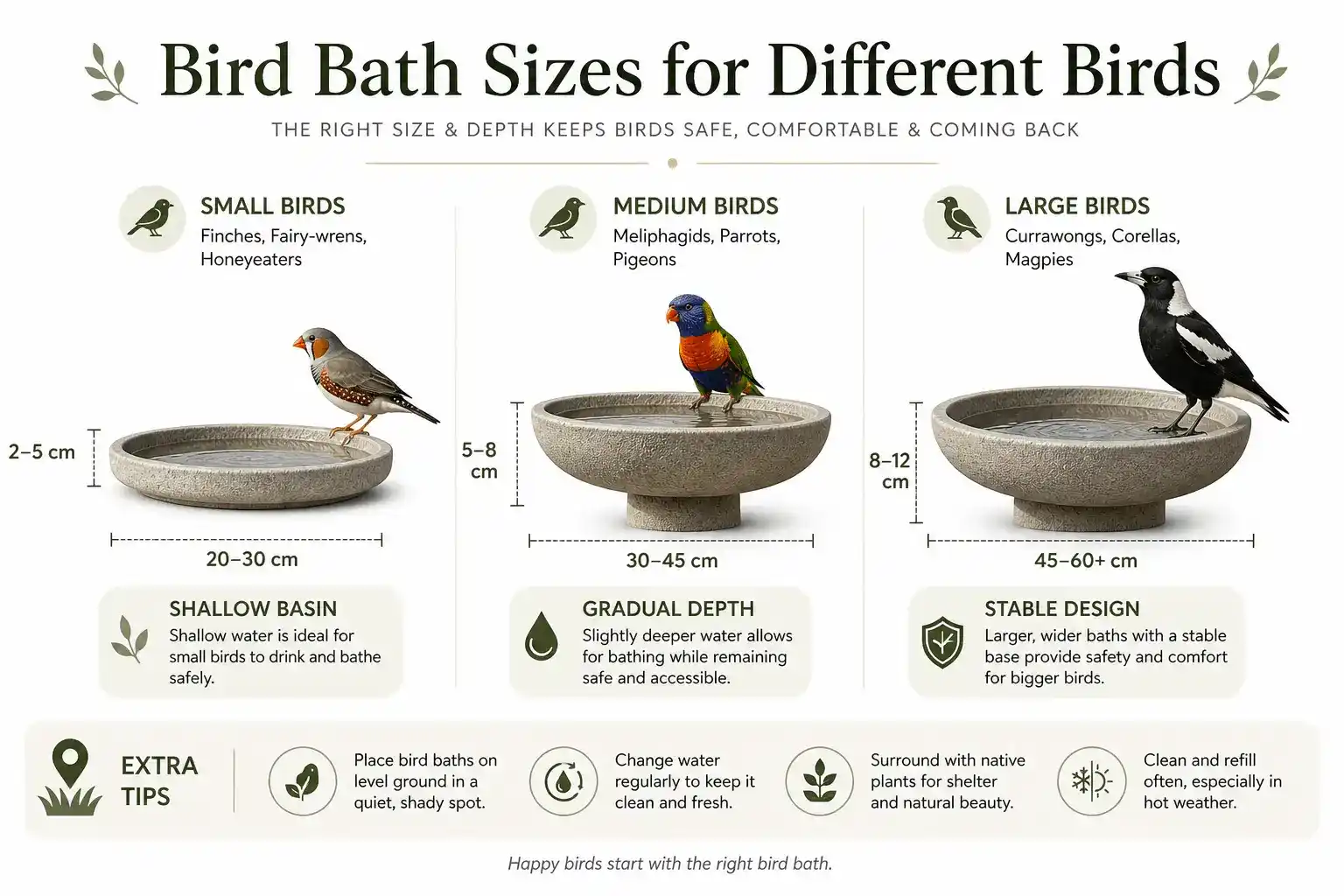
The best bird bath size depends on the type of birds you want to attract. Basin depth and width directly affect usability.
- Small birds (e.g., finches, wrens): Prefer shallow, wide basins (2–5 cm depth)
- Larger birds: Require slightly deeper and more stable baths
- Gradual depth design: Allows safe entry and exit
Extra large bird baths may attract a wider range of species but must maintain safe depth levels.
How to Choose the Best Bird Bath Setup
The best bird bath setup balances placement, safety, and environmental conditions to attract birds consistently.
Key setup factors:
- Height: Elevated baths improve visibility and safety
- Placement: Position near plants but not too hidden
- Shade vs sunlight: Partial shade prevents overheating and algae growth
- Predator safety: Ensure clear escape routes and avoid enclosed spaces
A well-positioned garden bird bath increases usage significantly.
How to Attract Birds to Your Bird Bath in Australia
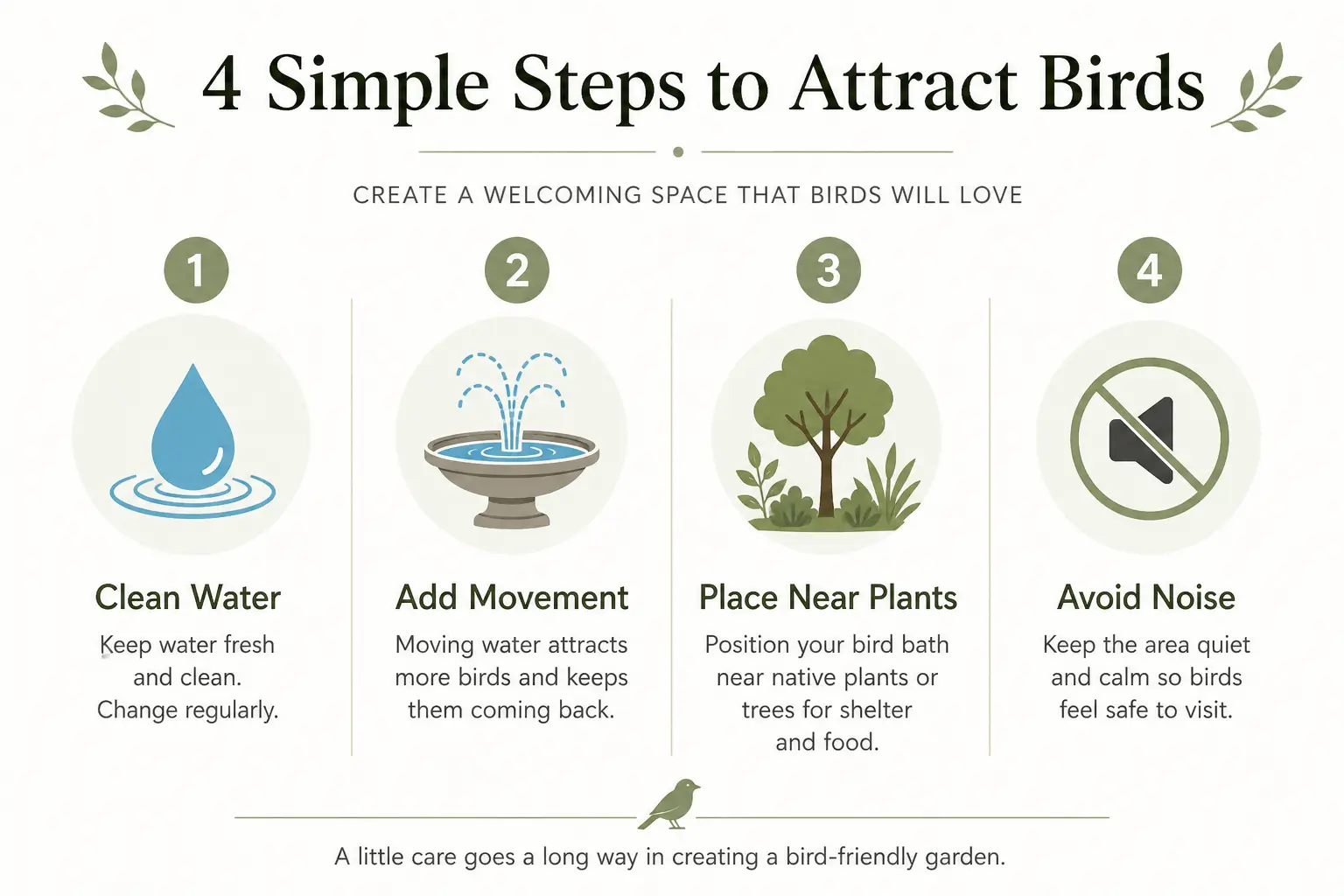
To attract birds to a bird bath in Australia, maintain clean water, provide movement, and ensure safe placement. Birds are more likely to visit when the bath appears fresh, visible, and secure.
Effective strategies:
- Keep water clean and replace it regularly
- Add movement using fountains or drippers
- Place the bath near shrubs or trees for shelter
- Avoid high-traffic or noisy areas
Understanding what birds like—clean, shallow, and accessible water—is essential for consistent activity. You can further increase wildlife activity by pairing your setup with butterfly attracting flowers, which help create a vibrant, pollinator-friendly environment.
Common Problems and How to Fix Them
Birds Not Using the Bath
Birds may avoid a bath due to poor placement or stagnant water.
Fix: Relocate the bath to a visible area and add moving water to attract attention.
Water Gets Dirty Quickly
Debris, algae, and bird activity can contaminate water.
Fix: Clean the bath frequently and place it in partial shade to reduce buildup.
Overheating Water in Summer
Direct sunlight can make water too warm for birds.
Fix: Move the bath to shaded areas or use deeper bowls to maintain cooler temperatures.
Beginner Mistakes to Avoid When Choosing Bird Baths
Common mistakes reduce the effectiveness of bird baths and limit bird attraction.
Avoid:
- Choosing decorative designs that lack functionality
- Ignoring climate suitability of materials
- Using deep or slippery bowls
- Poor placement (too exposed or too hidden)
Practical design and proper setup are more important than appearance alone.
Modern vs Traditional Bird Baths (Comparison Block)
| Feature | Modern Bird Baths | Traditional Bird Baths |
| Design | Minimal, sleek | Classic pedestal |
| Materials | Metal, concrete | Stone, terracotta |
| Functionality | Often includes fountains | Static water |
| Best Use | Contemporary gardens | Classic landscapes |
Environmental and Seasonal Considerations in Australia
Australian conditions require adapting bird bath care throughout the year.
Key considerations:
- Summer: High evaporation and overheating require frequent refilling
- Winter: Minimal maintenance but monitor for debris
- Water conservation: Use shallow designs and refill responsibly
- Wildlife interaction: Ensure safe access for native birds without attracting predators
Seasonal adjustments improve long-term usability.
Where Bird Baths Fit in Garden and Landscaping Design
Bird baths act as both functional and aesthetic elements in garden design.
Roles include:
- Serving as a focal point in landscaping
- Integrating with plants and natural features
- Supporting biodiversity by attracting birds and pollinators
Well-placed bird bath gardens enhance both visual appeal and ecological value. Bird baths work especially well when combined with shade-providing plants—explore ideas like best trees around pools Australia for easy care to create a balanced and bird-friendly outdoor space.
While bird baths are typically used outdoors, understanding how plants interact with their environment—covered in this guide to house plants—can help you design greener, more balanced living spaces overall.
Conclusion
Choosing the best bird baths Australia offers involves balancing durability, functionality, and bird-friendly design. By selecting the right material, size, and placement—and maintaining clean, accessible water—you can create a reliable habitat that attracts a variety of native birds while enhancing your outdoor space.
FAQs
1. What is the best bird bath for Australian conditions?
The best option is a durable, heat-resistant bath such as stone or metal, with shallow water and stable placement.
2. Do birds prefer moving or still water in bird baths?
Birds are more attracted to moving water, such as fountains or drippers, because it signals freshness.
3. How deep should a bird bath be for small birds?
A depth of 2–5 cm is ideal, with gradual slopes for safe access.
4. Where should I place a bird bath in my garden?
Place it in a visible but sheltered area near plants, away from predators and direct afternoon sun.
5. How often should I clean a bird bath?
Clean and refill every 2–3 days to prevent algae and bacteria buildup.