Introduction
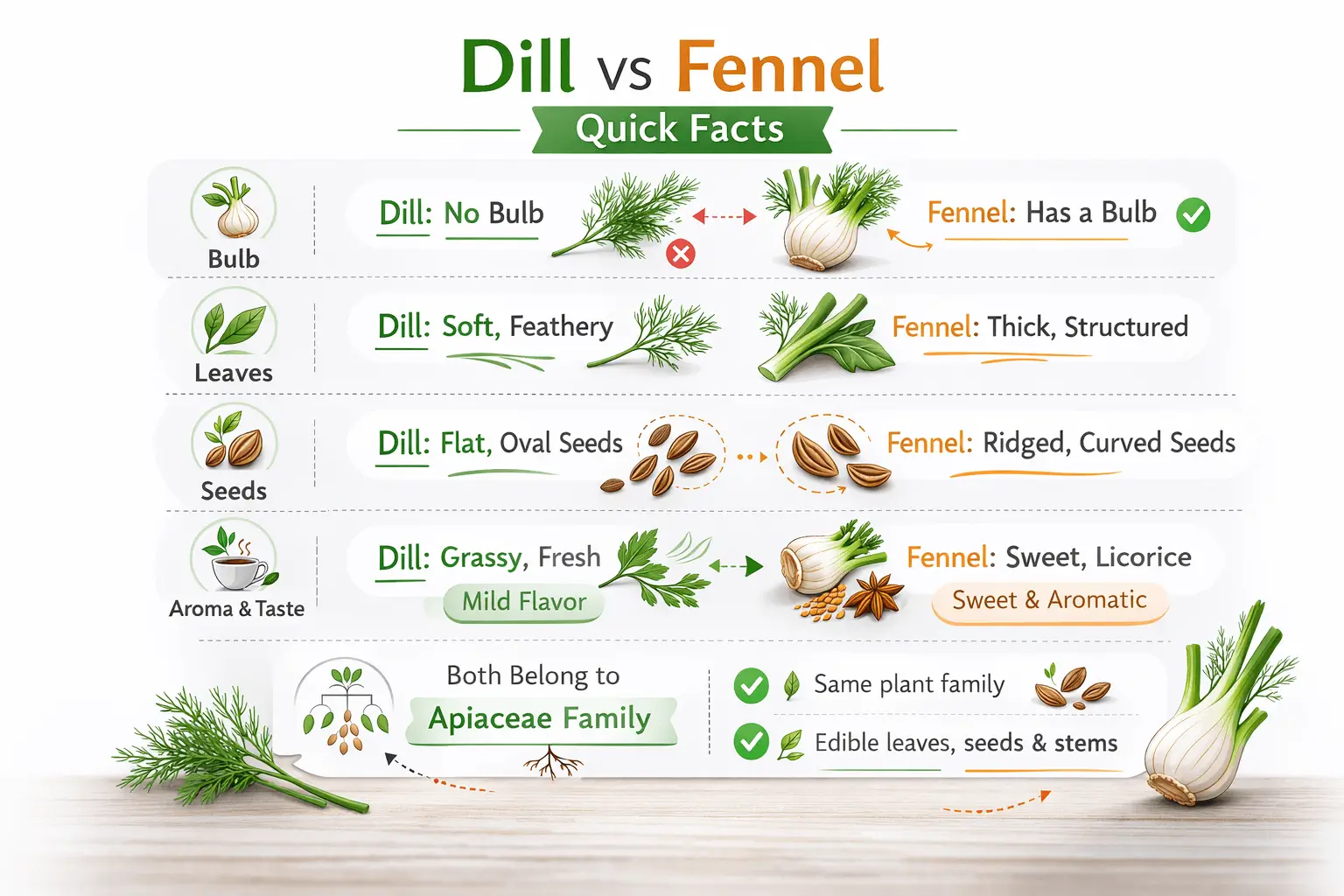
Dill and fennel are often confused because they share feathery leaves and similar growth habits, but they are distinct plants with different flavors, structures, and uses. Understanding plant how to identify dill vs fennel is essential for gardeners, cooks, and plant enthusiasts who want accurate identification and proper usage. Both belong to the Both belong to the Apiaceae family, a group of aromatic plants that includes many herbs and vegetables (learn more on Wikipedia). Correct identification ensures safe use in cooking and effective garden management.
Quick Summary
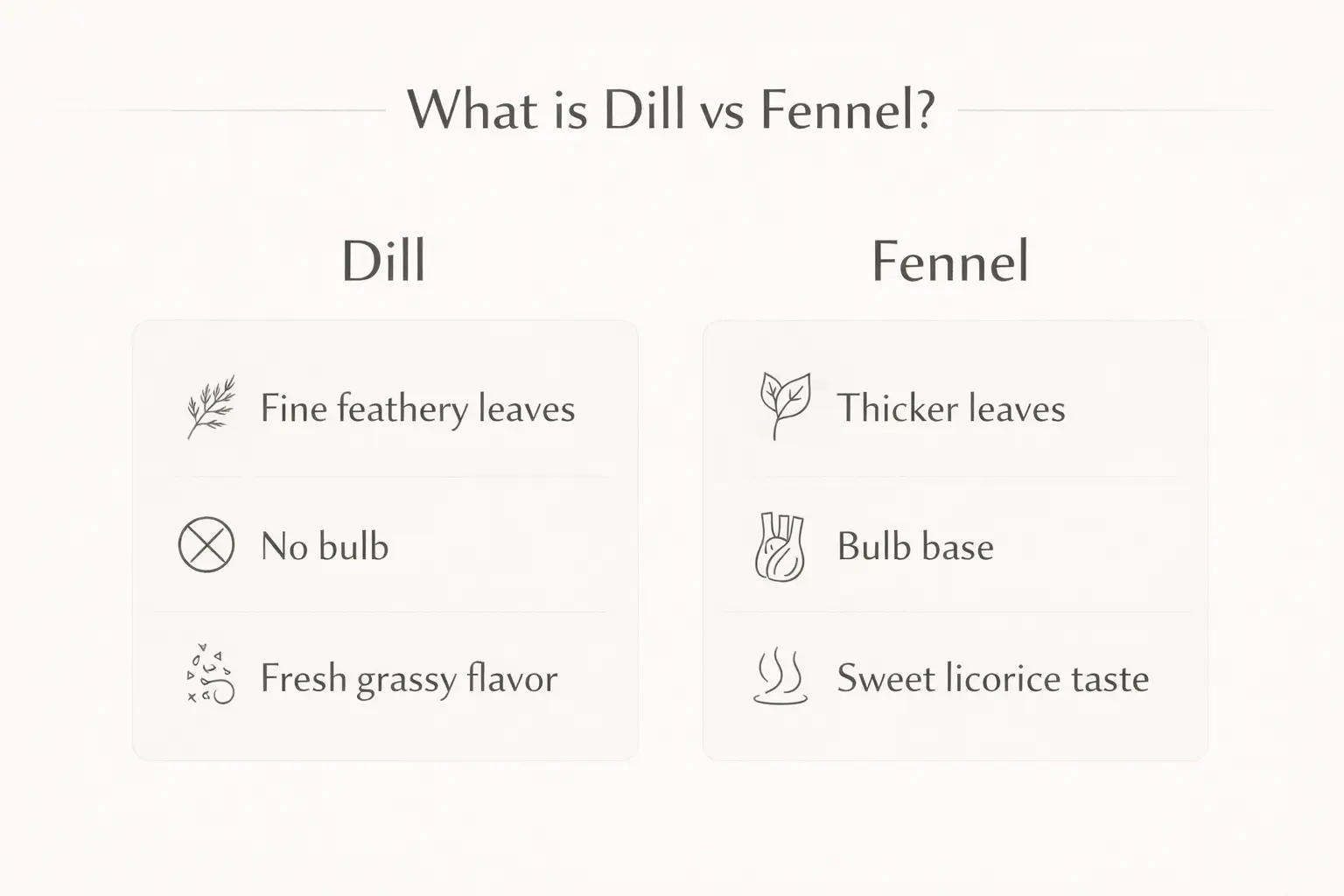
- Dill and fennel are different plants with distinct leaves, stems, bulbs, and aroma.
- Fennel often develops a bulb base, while dill does not.
- Leaf texture and scent are the fastest ways to identify dill vs fennel.
- Seeds and taste profiles also differ significantly between dill and fennel.
Dill vs Fennel: Key Differences at a Glance
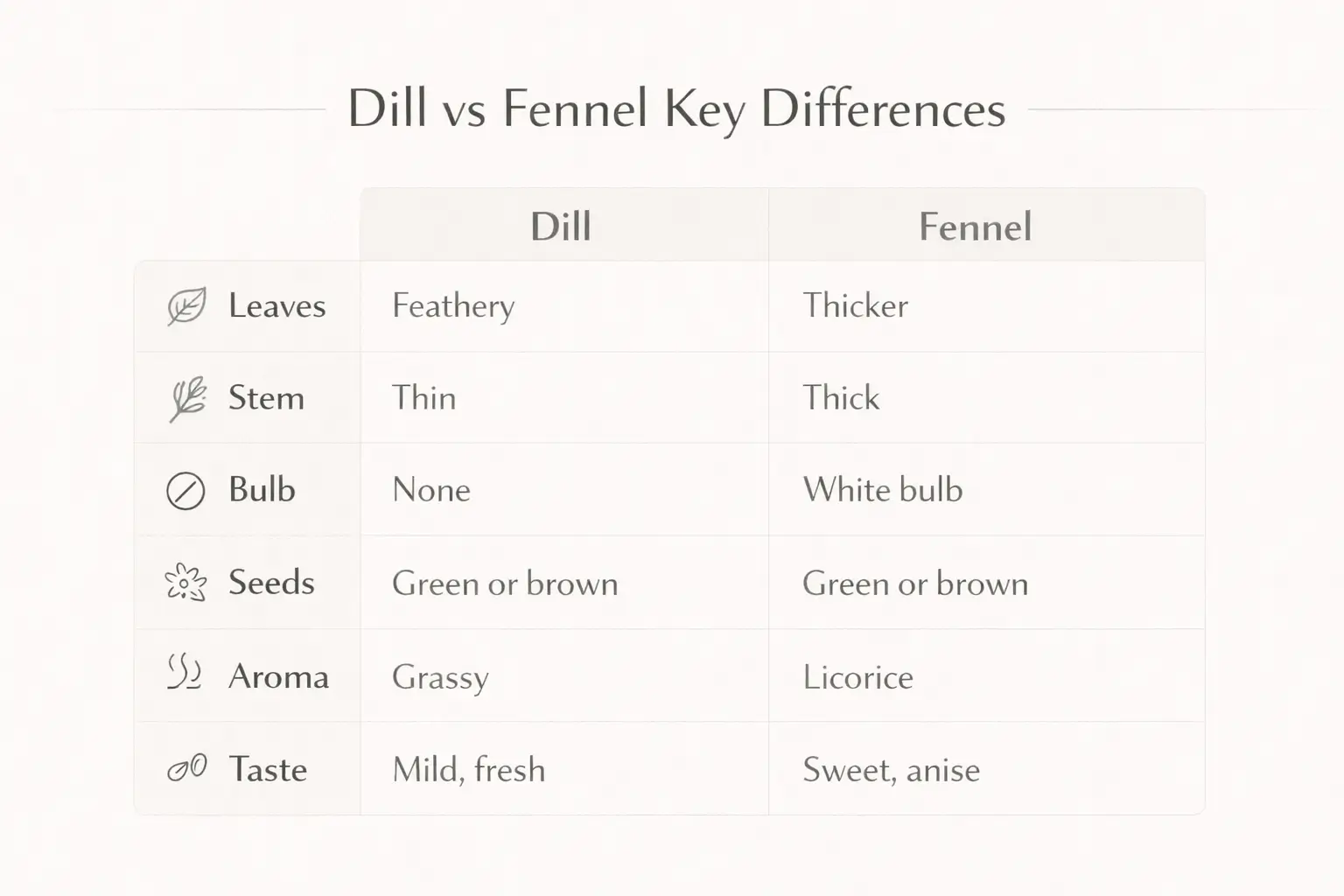
| Feature | Dill | Fennel |
| Scientific family | Apiaceae | Apiaceae |
| Leaf appearance | Fine, soft, thread-like | Slightly thicker, more structured |
| Stem | Thin, hollow | Thicker, solid |
| Bulb | No bulb | Bulbous base (Florence fennel) |
| Aroma | Fresh, grassy | Sweet, licorice-like |
| Seeds | Flat, oval | Larger, ridged |
| Taste | Tangy, herbaceous | Sweet, anise flavor |
How to Identify Dill vs Fennel by Leaves
Leaf Structure and Texture Differences
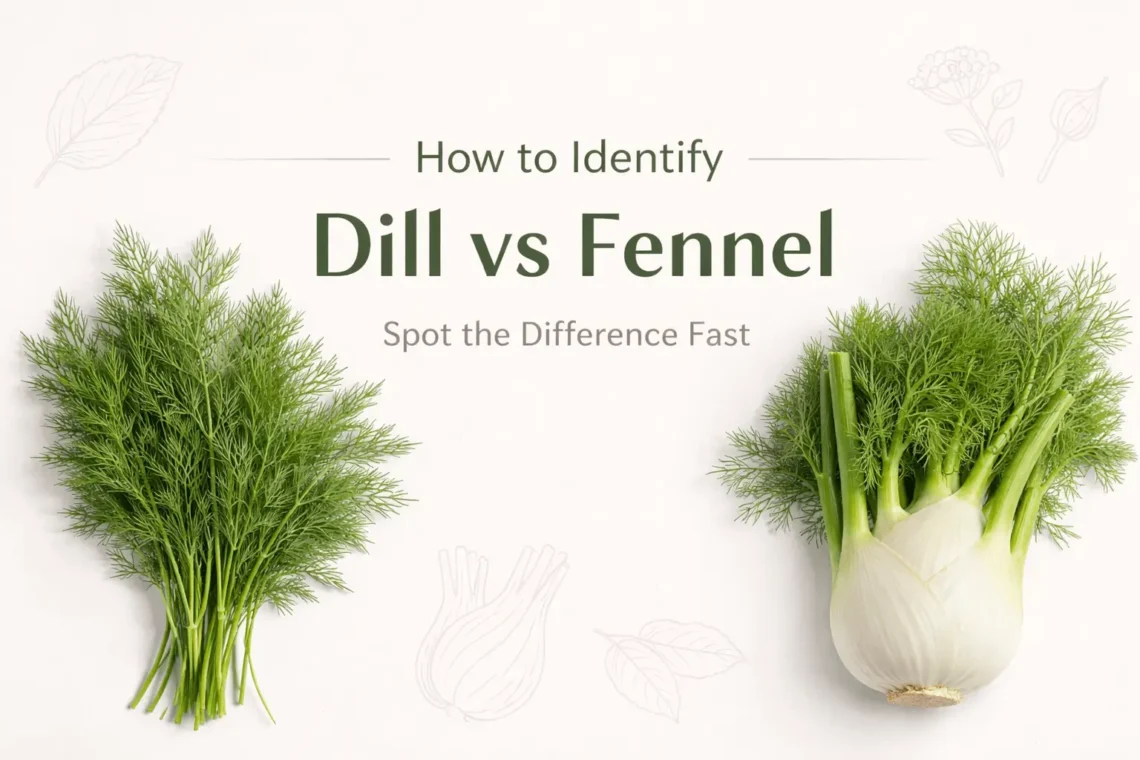
Dill leaves are softer, finer, and more delicate, forming thin thread-like structures that appear airy. In contrast, fennel leaves are slightly thicker, more structured, and denser, giving the plant a fuller appearance.
Visual Identification Using Leaves
To identify plant how to identify dill vs fennel leaves, compare the fineness and density. Dill appears lighter and more feathery, while fennel looks slightly stronger and more rigid. Side-by-side comparison is one of the fastest ways to distinguish them.
Stem and Bulb Differences Between Dill and Fennel
Stem Characteristics
Dill has thin, hollow stems that are fragile and flexible. Fennel, on the other hand, develops thicker, solid stems that are sturdier and more upright.
Bulb Formation (Key Identifier)
Fennel forms a bulb at the base, especially in Florence fennel varieties. Dill never develops a bulb. This is one of the most reliable structural differences between the two plants.
Dill vs Fennel Seeds: How to Tell Them Apart
Seed Shape and Size
Dill seeds are flat, oval, and relatively lighter. Fennel seeds are larger, slightly curved, and have visible ridges.
Practical Identification Tips
To identify plant how to identify dill vs fennel seeds, compare size and texture:
- Dill seeds → flatter and smoother
- Fennel seeds → thicker and ridged
These differences are especially useful in cooking and seed storage.
Dill vs Fennel Taste and Aroma Differences
Flavor Profiles
Dill has a fresh, tangy, and slightly grassy flavor. Fennel has a sweet taste with a strong anise or licorice-like flavor.
Smell as an Identification Tool
Crushing the leaves provides a quick identification method:
- Dill → fresh grassy aroma
- Fennel → sweet, licorice scent
This sensory test is one of the fastest ways to distinguish between the two.
Dill vs Fennel Seedlings: Early Growth Identification
Seedling Appearance
Dill seedlings are thinner, more fragile, and delicate. Fennel seedlings are slightly sturdier with thicker early stems.
Early Identification Tips
During early growth:
- Observe stem thickness
- Check leaf density
Fennel tends to look stronger even at the seedling stage, while dill appears more fragile.
Common Confusion: Is Dill the Same as Fennel?
Dill and fennel are not the same plant; they are different species within the Apiaceae family, with distinct botanical characteristics and uses.
Direct Answers to Common Questions
- Is dill and fennel the same? → No
- Is fennel the same as dill? → No
- Is fennel dill? → No
- Does dill come from fennel? → No
Despite visual similarities, their structure, taste, and growth patterns clearly differentiate them. This type of confusion is common in gardening, much like misunderstandings around nutrients—explained clearly in Plant Food vs Fertilizer.
Dill vs Fennel vs Dog Fennel: Avoiding Misidentification
Key Differences
Dog fennel is not edible and has a strong unpleasant odor. Dill and fennel are both edible and commonly used in cooking.
- Dog fennel → inedible, strong smell
- Dill → edible herb
- Fennel → edible herb and bulb
Safety Tips
Always verify plant identity using multiple traits, especially smell and structure, before consumption.
Common Identification Mistakes and How to Avoid Them
Beginner Mistakes
- Assuming all feathery leaves belong to dill
- Ignoring bulb formation
- Not checking plant aroma
How to Fix and Prevent Errors
Use multiple identification factors:
- Leaf structure
- Stem type
- Smell
- Seed shape
Combining these traits reduces the risk of misidentification. Many beginners also struggle with basic plant distinctions in general, similar to how tools are confused—see Plant Shears vs Scissors for another clear comparison example.
Practical Identification Checklist (Step-by-Step)
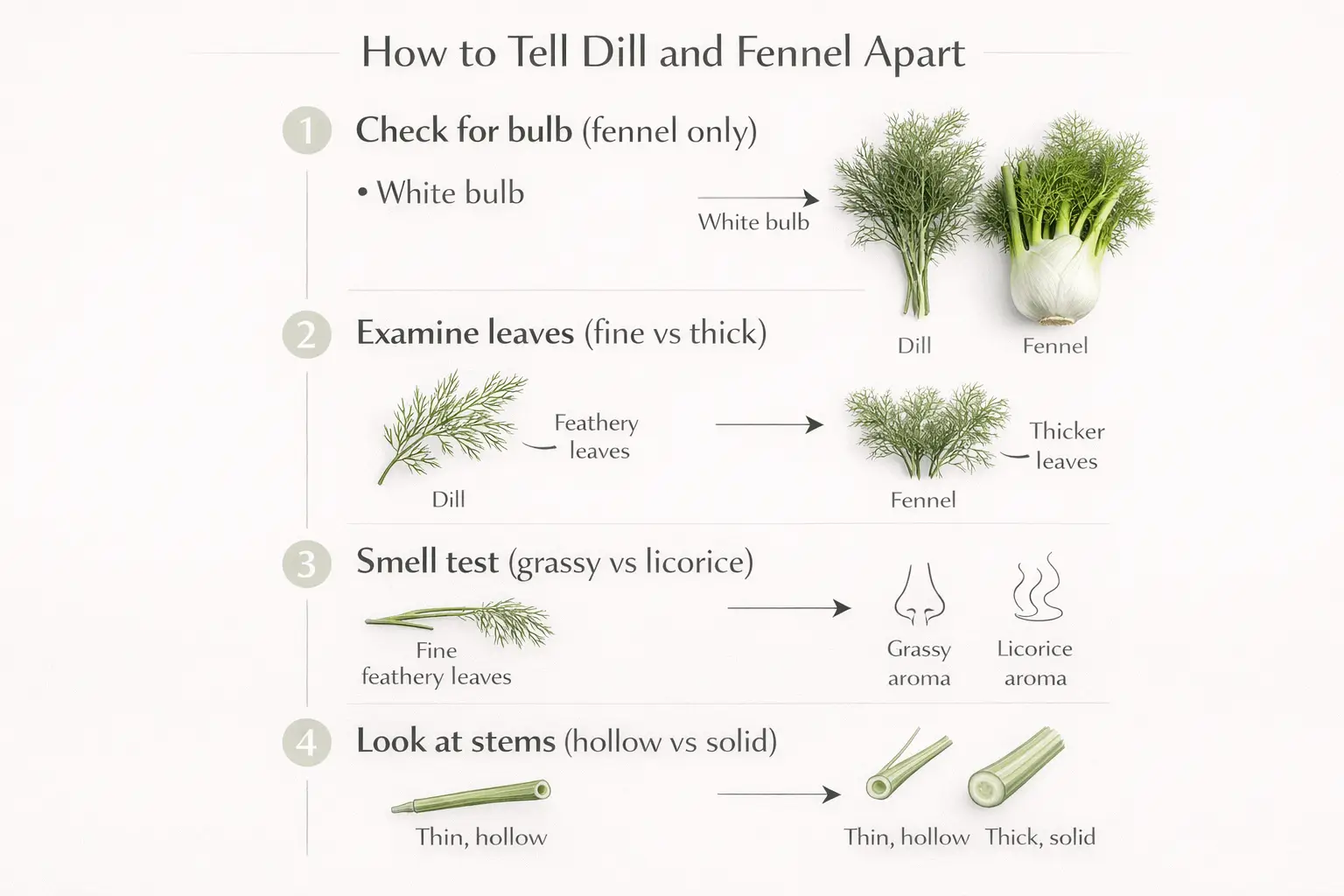
- Check for bulb → If yes, likely fennel
- Examine leaves → softer = dill, thicker = fennel
- Smell the plant → grassy vs licorice
- Look at stems → hollow vs solid
- Compare seeds if available
Comparison: Dill vs Fennel Plant Uses
| Use | Dill | Fennel |
| Herb | Yes | Yes |
| Bulb vegetable | No | Yes |
| Seeds used in cooking | Yes | Yes |
| Flavor type | Tangy | Sweet |
Conclusion
Understanding plant how to identify dill vs fennel comes down to observing key traits such as leaves, stems, bulbs, seeds, and aroma. While both plants share similarities due to their Apiaceae classification, their differences become clear through careful observation. Using multiple identification methods together ensures accurate recognition, prevents confusion, and supports better use in both gardening and culinary applications.
FAQs
1. How to tell the difference between dill and fennel plants?
Look at the bulb, smell the leaves, and check stem thickness—fennel has a bulb and sweet scent, while dill does not.
2. Are dill and fennel leaves the same?
No, dill leaves are finer and softer, while fennel leaves are slightly thicker and more structured.
3. Can you identify dill vs fennel from seeds?
Yes, dill seeds are flatter and smaller, while fennel seeds are larger and ridged.
4. Why do dill and fennel look similar?
They belong to the same plant family (Apiaceae), which gives them similar feathery leaf structures.
5. Is it safe to confuse dill with fennel?
It is generally safe in cooking, but confusion with dog fennel can be unsafe, so proper identification is important.