
Introduction
A tree with wide canopy refers to a tree that develops a broad, spreading crown, providing extensive shade and visual impact. These trees are commonly used in landscaping for cooling outdoor spaces, improving comfort, and enhancing garden structure. From fast-growing shade trees to native Australian canopy trees, understanding how canopy trees grow and function helps in selecting the right option for different environments. Their ability to regulate temperature, reduce glare, and create shaded zones makes them essential in both residential and urban landscapes.
Quick Summary
- A tree with wide canopy has a broad crown that maximizes shade coverage.
- Canopy trees vary by size, growth rate, and evergreen or deciduous type.
- Fast-growing and native Australian shade trees are popular for practical landscaping.
- Selection depends on space, climate, and desired shade density.
What Is a Canopy Tree and How Does It Grow?
A canopy tree is defined by its upper layer of branches and leaves, known as the canopy, which spreads outward to capture sunlight and create shade below. This structure develops as the tree matures and extends its branching system horizontally.
The canopy forms through a combination of trunk growth, lateral branching, and leaf expansion. As branches spread outward, they create a crown that intercepts sunlight efficiently, supporting photosynthesis while casting shade on the ground. The concept of a Tree canopy refers to the upper layer of branches and leaves that intercept light and create shade.
Key Structural Concepts
- Canopy: The uppermost layer of foliage and branches
- Crown spread: The horizontal width of the tree
- Branching structure: Determines canopy density and shape
- Light interception: Helps regulate temperature beneath the tree
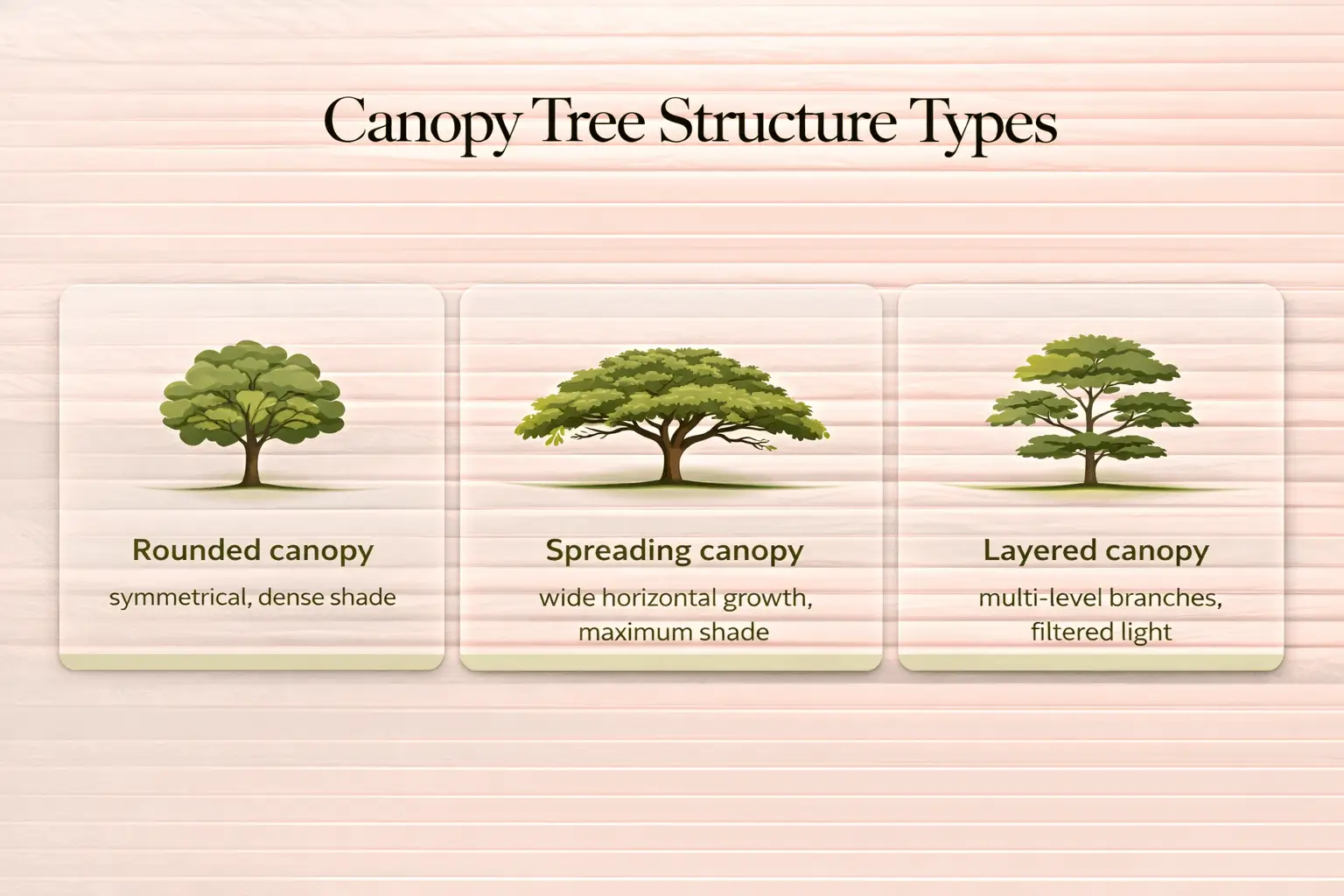
Common Canopy Shapes
- Rounded canopy: Symmetrical and dense
- Spreading canopy: Wide and horizontally extended
- Layered canopy: Multiple levels of branching
These forms are often seen in spreading trees, round tree types, and various canopy trees used in landscaping.
Why Choose a Tree With Wide Canopy? (Benefits Explained)
Trees with wide canopies provide immediate functional and environmental benefits. They are widely used as shade trees for backyard spaces, outdoor seating areas, and urban environments.
Key Benefits
- Provides natural cooling by blocking direct sunlight
- Creates shaded outdoor living areas for comfort
- Supports biodiversity by offering shelter for birds and insects
- Improves soil moisture retention by reducing evaporation
- Enhances landscape aesthetics with structure and visual balance
These benefits make wide canopy trees a practical choice for both residential gardens and public landscapes. These trees are commonly used in structured layouts such as driveway planting, where thoughtful placement enhances both shade and design, as seen in various driveway tree ideas.
Types of Trees With Wide Canopy (By Size and Use)
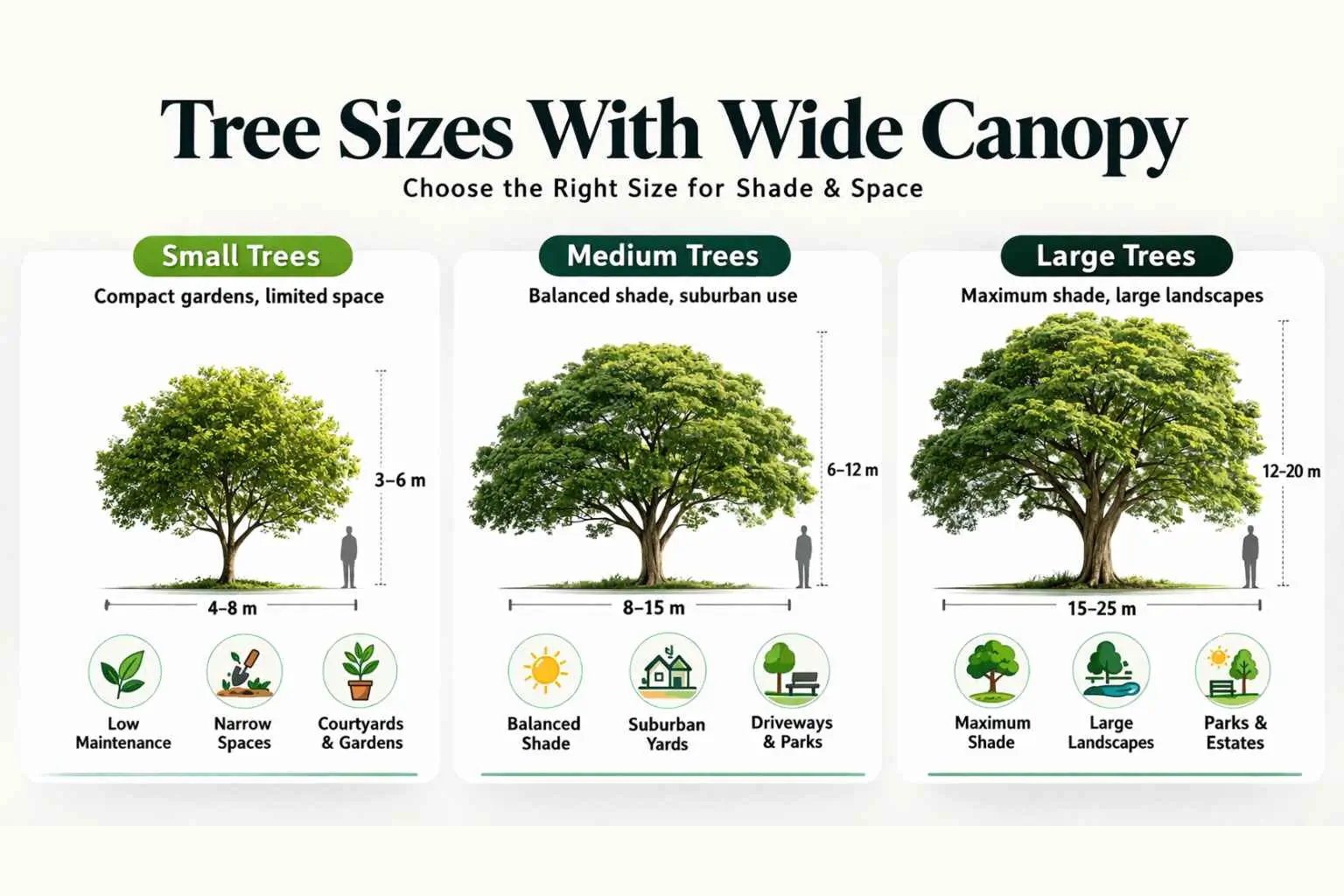
Trees with wide canopies can be categorized based on their size and how they fit into different landscape designs.
Small Trees With Wide Canopy
Small canopy trees are suitable for compact gardens and limited spaces. They provide shade without overwhelming the area.
Examples include:
- Small shade trees
- Short trees with wide canopy
- Small canopy trees Australia
Medium Trees With Wide Canopy
Medium-sized trees offer a balance between shade coverage and manageable growth, making them ideal for suburban landscapes.
Examples include:
- Medium sized native trees
- General-purpose canopy trees for residential yards
Tall and Large Canopy Trees
Large canopy trees are best suited for expansive areas such as farms, parks, or long driveways.
Examples include:
- Large canopy trees Australia
- Avenue planting trees
- Large spreading shade trees
Large canopy trees are also widely used for long driveways and avenue planting, as explained in our guide on trees to plant along driveway for shade and style.
Evergreen vs Deciduous Canopy Trees
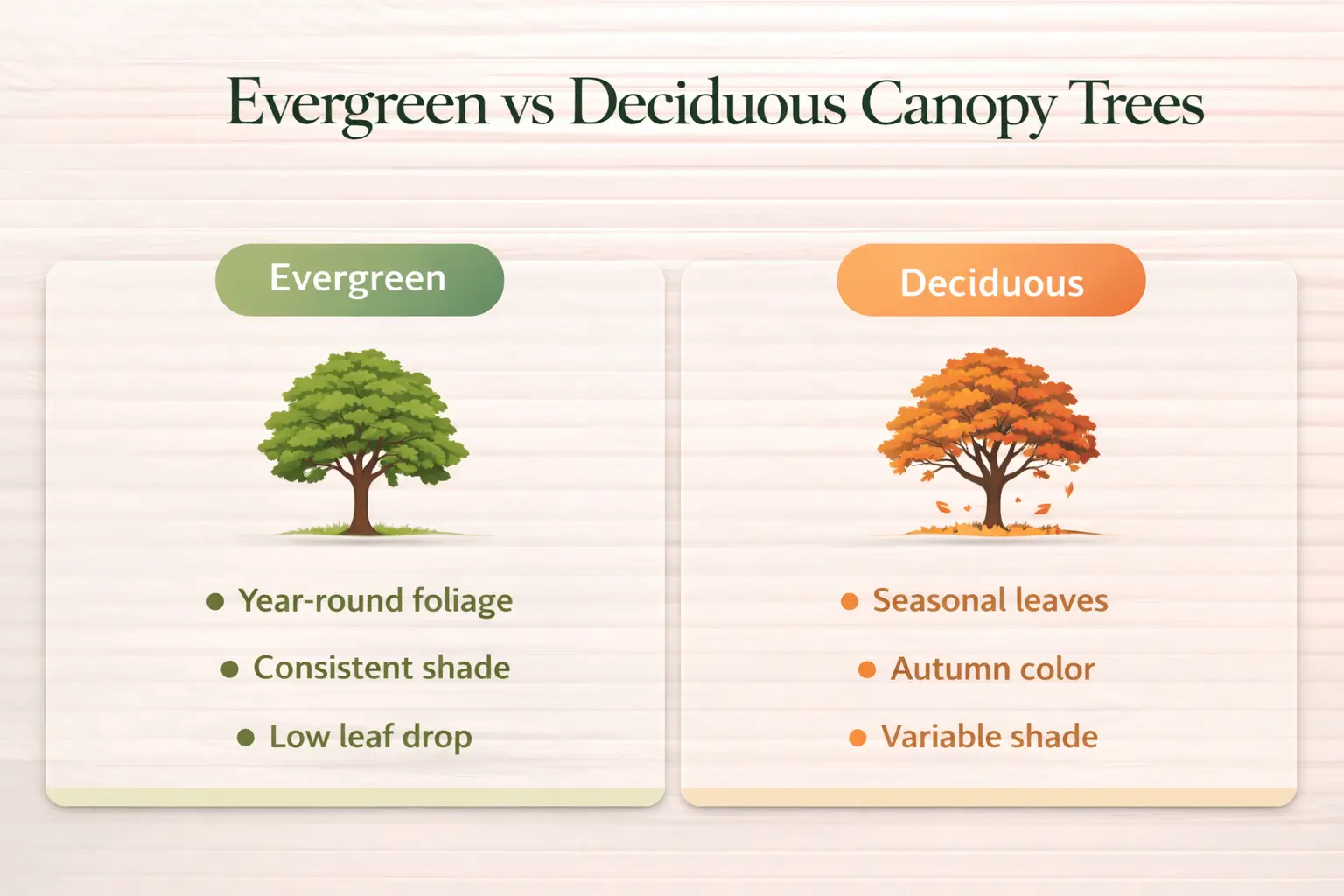
Evergreen canopy trees retain their leaves throughout the year, providing consistent shade, while deciduous canopy trees shed leaves seasonally, allowing sunlight during cooler months.
| Feature | Evergreen Canopy Trees | Deciduous Canopy Trees |
| Leaf Retention | Year-round foliage | Seasonal leaf drop |
| Shade Density | Consistent shade | Seasonal shade |
| Maintenance | Lower leaf cleanup | More seasonal cleanup |
| Climate Suitability | Mild climates | Seasonal climates |
This comparison helps determine whether year-round coverage or seasonal flexibility is more suitable for a landscape.
Fast Growing Trees With Wide Canopy
Fast-growing trees with wide canopies are ideal when quick shade coverage is needed. These trees develop both vertically and horizontally at a rapid rate.
Key Characteristics
- Rapid vertical and horizontal growth
- Quick shade formation
- Often moderate lifespan depending on species
Examples of Fast Growing Shade Trees
- Fast growing shade trees Australia
- Fast growing evergreen trees Australia
- Fast growing trees for shade Australia
- Fast growing trees for privacy
These trees are commonly used in new landscapes where immediate results are desired.
Australian Native Canopy Trees for Shade
Australian native canopy trees are adapted to local environmental conditions, making them efficient and low-maintenance choices for landscaping.
Advantages
- Adapted to local climate conditions
- Require less water once established
- Support native wildlife and ecosystems
Categories
- Native Australian evergreen trees
- Native Australian flowering trees
- Native Australian trees for backyards
- Regional options such as native trees Queensland
These trees are particularly useful for sustainable and climate-resilient landscaping. Different trees create shade in very different ways. If you’d like a broader overview beyond the examples discussed here, this illustrated guide to wide canopy shade trees explains canopy structure, growth characteristics, and landscape applications for a wider selection of species.
Shade-Tolerant Trees vs Sun-Loving Canopy Trees
Shade-tolerant trees can grow under partial light conditions, while sun-loving canopy trees require full sunlight for optimal growth and canopy development.
Comparison
Shade tolerant trees:
- Grow under filtered or partial light
- Slower canopy expansion
- Suitable for shaded gardens
Sun-loving canopy trees:
- Thrive in full sun conditions
- Faster canopy expansion
- Provide denser shade coverage
Understanding light requirements is essential when selecting the right tree for specific site conditions. When comparing multiple trees, it’s helpful to evaluate mature height, canopy spread, growth rate, maintenance needs, and ideal planting locations side by side. This wide canopy tree comparison chart provides a quick reference that simplifies the decision-making process.
How to Choose the Best Tree With Wide Canopy
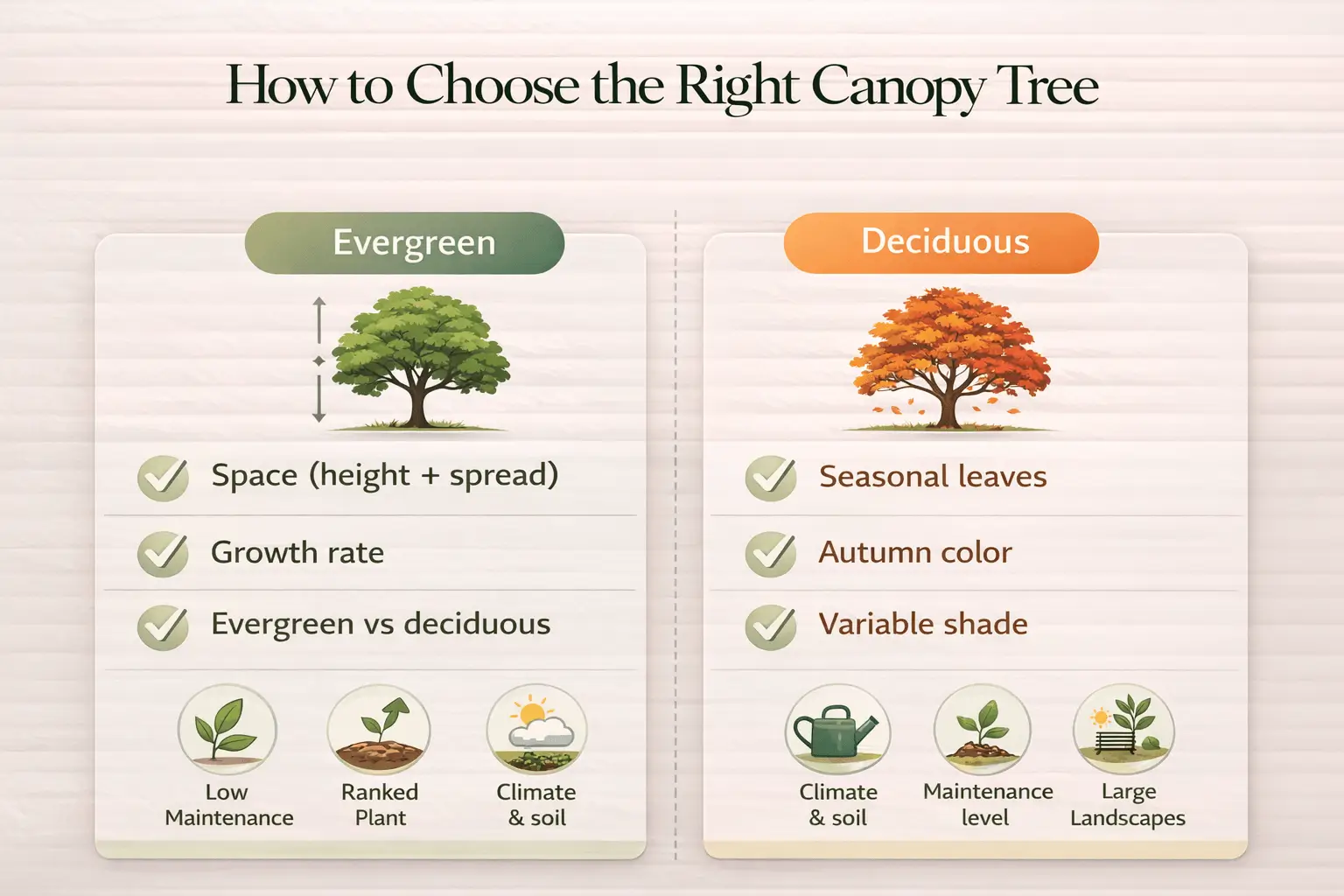
Choosing the right tree depends on environmental conditions, available space, and desired outcomes.
Selection Checklist
- Available space (height and canopy spread)
- Preferred growth rate
- Evergreen vs deciduous type
- Climate and soil compatibility
- Maintenance requirements
Careful planning ensures long-term success and avoids issues such as overcrowding or excessive maintenance. Selecting the right canopy tree often overlaps with choosing feature trees that provide both shade and visual impact, similar to recommended feature tree selections used in landscape planning. If you’re still comparing different species before making a decision, this complete wide canopy shade tree reference database organizes popular trees by growth habits, mature size, climate suitability, maintenance requirements, and landscape use, making it easier to narrow your options before planting.
Table: Tree Selection Based on Landscape Needs
| Need | Recommended Tree Type |
| Small backyard | Small canopy trees |
| Fast shade | Fast growing shade trees |
| Low maintenance | Native Australian trees |
| Year-round shade | Evergreen canopy trees |
| Seasonal sunlight | Deciduous canopy trees |
Growth Rate of Wide Canopy Trees
The growth rate of canopy trees varies depending on species and environmental conditions. Some trees grow rapidly, while others develop more slowly but live longer.
Key Factors Influencing Growth
- Water availability: Adequate watering supports faster growth
- Soil quality: Nutrient-rich soil promotes healthy development
- Sun exposure: Full sun accelerates canopy expansion
Growth rates are generally categorized as:
- Fast growers
- Moderate growers
- Slow growers
Seasonal changes can also affect growth patterns, with most trees growing actively during warmer months.
Care Guide for Canopy Trees
Proper care ensures healthy canopy development and long-term tree stability.
Essential Care Requirements
- Watering: Deep but infrequent watering encourages strong roots
- Light: Match tree type with full sun or shade tolerance
- Soil: Well-draining soil prevents root issues
- Pruning: Helps maintain canopy shape and structure
- Fertilization: Seasonal feeding supports growth
Regular maintenance helps trees achieve optimal canopy spread and density.
Common Problems and Solutions
Canopy trees may encounter issues during growth, but most can be resolved with proper care.
Problems and Fixes
- Slow canopy growth → Improve soil quality and sunlight exposure
- Sparse canopy → Prune strategically to encourage branching
- Root spread issues → Select appropriate species for space
- Pest or disease → Monitor regularly and treat early
Addressing these issues early prevents long-term damage.
Common Mistakes When Planting Canopy Trees
Avoiding common mistakes ensures successful establishment and healthy growth.
Common Mistakes
- Planting too close to buildings or structures
- Ignoring mature canopy width
- Choosing the wrong tree for climate conditions
- Overwatering young trees
Planning ahead is essential to avoid costly corrections later.
Unique Canopy Tree Types and Examples
Some canopy trees stand out due to their unique appearance or botanical characteristics.
Examples include:
- Flowering trees with bright orange blooms and wide canopy
- Wide canopy tropical trees of the pea family (Fabaceae)
These trees add visual interest and diversity to landscapes while still providing functional shade.
Conclusion
A tree with wide canopy is one of the most valuable additions to any landscape, offering shade, comfort, and ecological benefits. By understanding canopy structure, growth rate, and environmental needs, you can select the best tree for your space—whether it’s a fast-growing shade tree, a native Australian species, or a compact canopy tree for smaller gardens. Proper selection and care ensure long-term performance and maximum shade coverage.
FAQs
1. What is a canopy tree?
A canopy tree is a tree with a broad crown of branches and leaves that provides shade and coverage. Its canopy forms the upper layer that spreads outward to intercept sunlight.
2. Which trees have the widest canopy?
Spreading trees, large shade trees, and certain native species typically develop the widest canopies due to their extensive branching structure.
3. What is the fastest growing tree with wide canopy?
Fast growing shade trees, especially those adapted to Australian conditions, are known for rapid canopy expansion and quick shade formation.
4. Are evergreen canopy trees better than deciduous ones?
Evergreen trees provide year-round shade, while deciduous trees allow seasonal sunlight, making each suitable for different environmental needs.
5. Can trees with wide canopy grow in shade?
Some shade tolerant trees can grow in low light conditions, but most canopy trees require full sun to achieve optimal growth and canopy spread.
6. What is the best tree with wide canopy for small gardens?
Small canopy trees or medium-sized shade trees are ideal for limited spaces, providing sufficient shade without excessive growth.