Introduction
Trees to plant along driveway are carefully selected species that enhance visual appeal, provide shade, and create a structured landscape entrance. The best driveway trees balance size, root behavior, maintenance needs, and climate suitability to ensure long-term performance without damaging pavement. A well-planned tree lined driveway improves both functionality and aesthetics, offering natural cooling, privacy, and a defined entrance. Whether choosing evergreen driveway trees for year-round greenery or deciduous trees for seasonal interest, proper selection ensures lasting results.
Quick Summary
- Driveway trees improve aesthetics, shade, and property value
- Choose trees based on root safety, size, and climate
- Evergreen and deciduous trees offer different visual benefits
- Spacing and maintenance are critical for long-term success
What Are Driveway Trees and Why They Matter
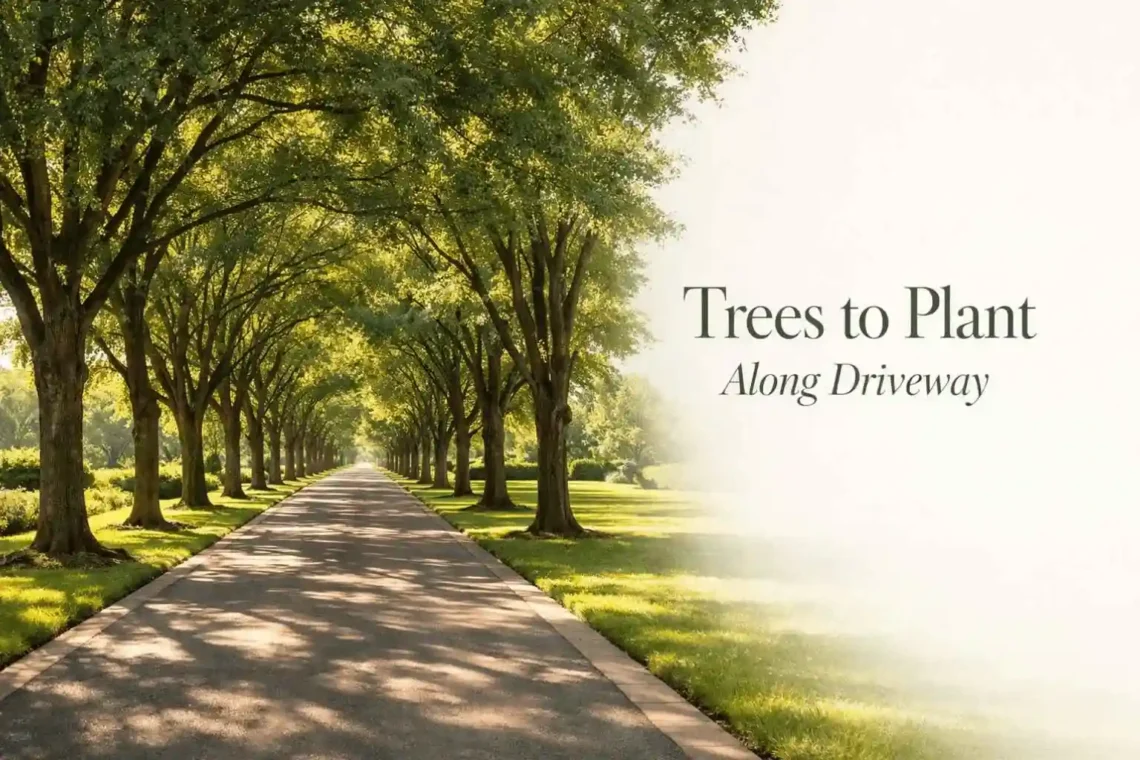
Driveway trees are trees intentionally planted along the edges of a driveway to create a visually structured and functional landscape feature. A tree lined driveway, often designed using avenue planting, places trees symmetrically on both sides to form a cohesive and elegant entrance.
This symmetrical planting style, known as an avenue, is widely used in landscape design to create visually striking entrances (see Avenue).
A driveway lined with trees enhances the overall property layout by framing the approach and creating a sense of scale and direction. This method, commonly referred to as avenue tree planting, is widely used in residential and rural properties.
Key Points
- Creates a strong visual entrance
- Enhances curb appeal and property value
- Provides shade and cooling
- Defines boundaries and structure
Key Factors When Choosing Trees to Plant Along Driveway
Choosing the right trees to plant along driveway requires evaluating multiple structural and environmental factors. The most critical consideration is root behavior, as aggressive roots can damage concrete and pavement over time.
Canopy spread must match the width of the driveway to avoid overcrowding or obstruction. Height clearance is also essential to ensure vehicles can pass safely without interference from branches. Climate suitability, particularly in Australia and similar regions, plays a major role in long-term survival and growth performance.
Key Considerations
- Root safety (avoid lifting concrete)
- Growth rate (fast growing vs slow)
- Leaf drop (deciduous trees considerations)
- Evergreen vs seasonal shade
Best Types of Trees for Driveways (Core Categories)
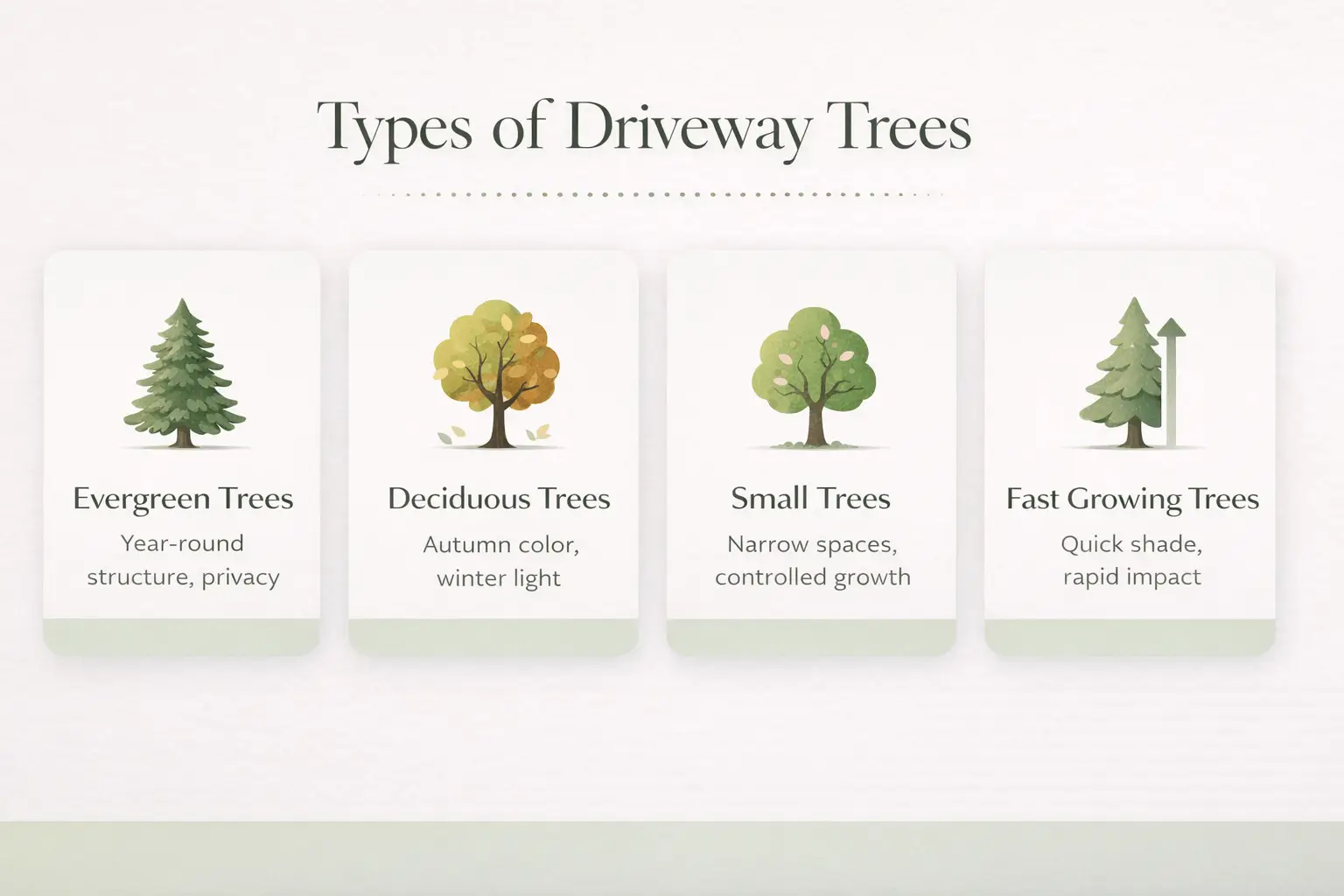
The best driveway trees are categorized based on their structure, growth behavior, and visual impact. This structured approach helps in selecting good trees to plant along driveway based on specific needs.
-
Evergreen Trees for Year-Round Structure
Evergreen trees to plant along driveway provide consistent foliage throughout the year, making them ideal for privacy and structure. These evergreen driveway trees maintain a uniform appearance and reduce seasonal maintenance.
They are commonly used in driveway evergreen trees NZ and similar climates where year-round greenery is preferred.
-
Deciduous Trees for Seasonal Interest
Deciduous trees lose their leaves seasonally, offering changing visual interest throughout the year. These trees provide shade in summer while allowing sunlight during winter, making them a practical choice for balanced climate control.
They are ideal for creating dynamic and visually engaging driveway landscapes.
-
Small Trees for Narrow Driveways
Small trees to plant along driveway are suitable for compact spaces where large canopy trees would be overwhelming. These small driveway trees provide structure without crowding the space.
They are ideal for urban properties and narrow driveways where space efficiency is essential.
-
Fast Growing Trees for Quick Impact
Fast growing driveway trees are ideal for homeowners seeking rapid visual transformation. These fast growing trees for driveways quickly establish canopy cover and enhance the landscape within a shorter timeframe.
However, they may require more maintenance during early growth stages.
Best Trees for Driveways in Australia and Similar Climates
The best trees for driveways Australia are species adapted to heat, drought, and varying soil conditions. Selecting driveway trees Australia that are climate-resilient ensures long-term success with minimal maintenance.
Suitable Tree Characteristics
- Native shade trees
- Drought-tolerant species
- Low water requirement trees
These characteristics are especially important for rural driveway trees Australia, where irrigation may be limited. If you’re selecting standout species for warm climates, these Feature Trees Brisbane: 7+ Smart Picks & Expert Tips highlight climate-adapted trees ideal for driveway planting.
Driveway Tree Spacing and Layout
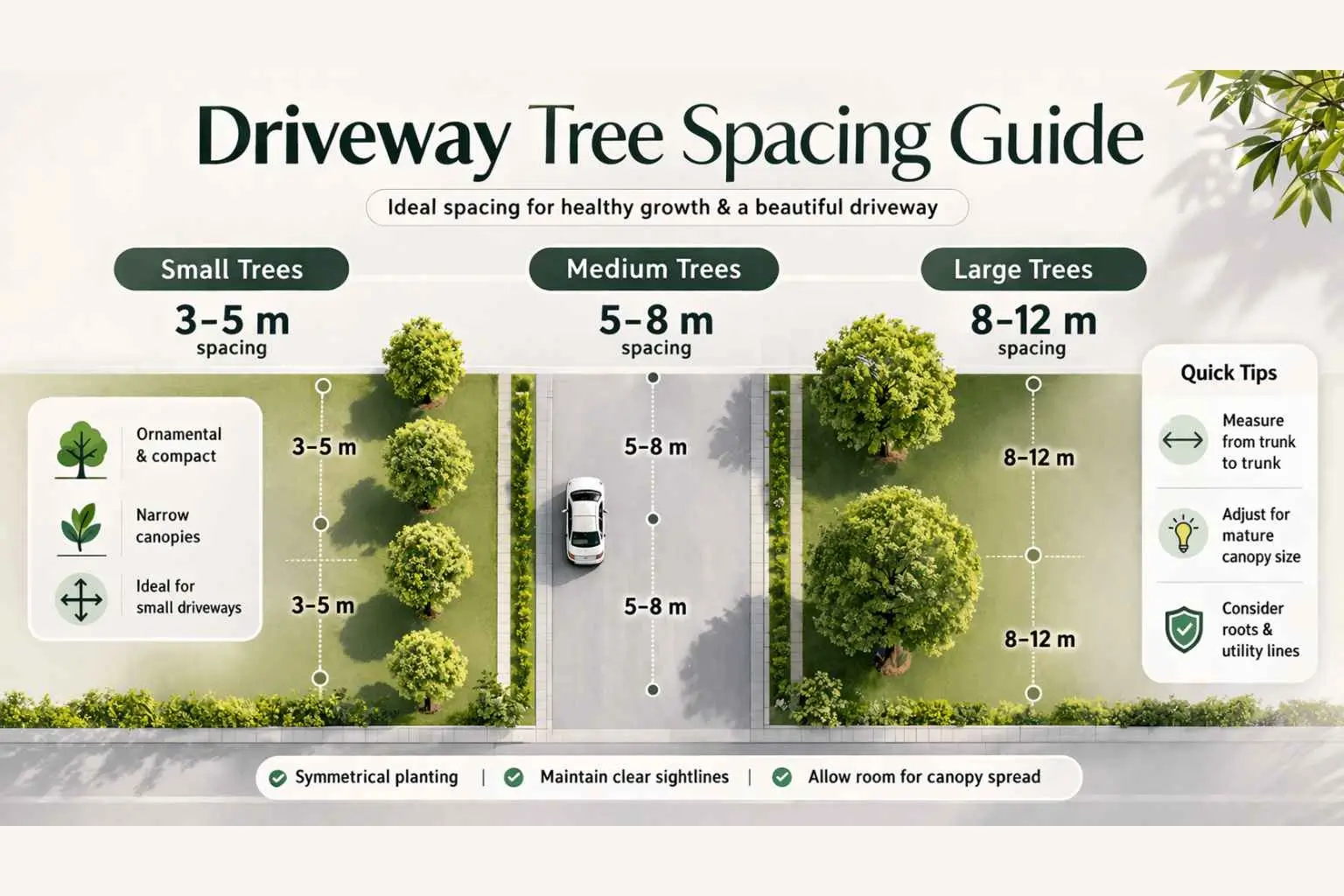
Proper spacing is essential when planning trees to line driveway, as it affects both visual balance and long-term tree health. Tree lined driveways require consistent spacing to maintain symmetry and prevent overcrowding.
Recommended Spacing Guidelines
| Tree Size Type | Spacing Distance | Ideal Use Case |
| Small trees | 3–5 m | Narrow driveways |
| Medium trees | 5–8 m | Standard residential |
| Large canopy trees | 8–12 m | Long driveways |
Design Ideas for a Tree-Lined Driveway
Driveway trees ideas focus on creating a visually appealing and functional layout. Long driveway trees can dramatically enhance the entrance experience when arranged thoughtfully.
Design Concepts
- Symmetrical avenue planting
- Mixed species for seasonal variation
- Formal vs natural layout
- Entrance focal point trees (trees for driveway entrance)
For more visual inspiration and structured layouts, explore these Driveway Trees Ideas: 7+ Smart Designs for Shade, which showcase practical designs for both short and long driveways
Fast Growing vs Slow Growing Driveway Trees
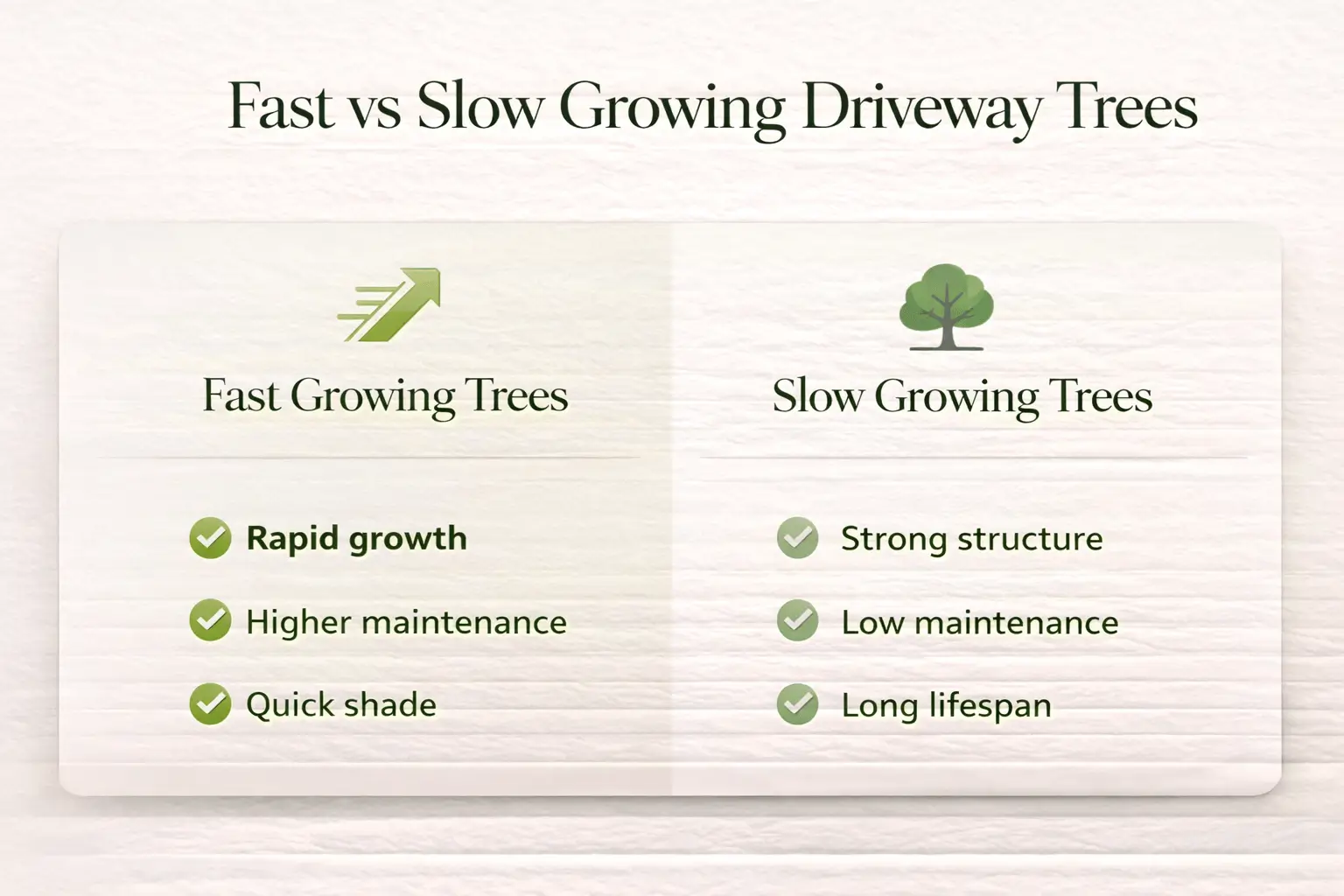
Choosing between fast growing driveway trees Australia and slower-growing varieties depends on long-term goals and maintenance capacity.
Comparison
| Feature | Fast Growing Trees | Slow Growing Trees |
| Growth speed | Rapid | Gradual |
| Maintenance | Higher | Lower |
| Longevity | Moderate | Long-lasting |
| Structure stability | Weaker early | Stronger |
Common Problems When Planting Driveway Trees (And Solutions)
Driveway trees can present challenges if not planned correctly. Understanding common issues helps prevent costly mistakes.
Problems and Solutions
- Problem: Roots lifting driveway → Solution: choose non-invasive species
- Problem: Overcrowding → Solution: proper spacing planning
- Problem: Excess leaf drop → Solution: evergreen alternatives
Low Maintenance Trees for Driveways
Low maintenance trees to plant along driveway are ideal for homeowners who want long-term benefits with minimal upkeep. These trees require less pruning, watering, and care.
Key Features
- Drought-tolerant species
- Slow-growing trees
- Minimal pruning required
For minimal cleanup and year-round greenery, consider 7+ Smart Trees That Don’t Drop Leaves in Australia, which are ideal for low-maintenance driveway planting.
Growth Rate of Driveway Trees
Driveway trees generally fall into slow, moderate, or fast growth categories. Growth rate depends on species, soil conditions, water availability, and climate.
Fast-growing trees establish quickly but may require more maintenance, while slow-growing trees develop stronger structures over time and often have longer lifespans.
Seasonal patterns also affect growth, with most trees experiencing active growth during warmer months.
Care Guide for Trees Planted Along Driveways
Proper care ensures long-term health and performance of driveway trees. Establishment phase care is especially critical during the first few years after planting.
Care Essentials
- Water deeply during establishment
- Use well-draining soil
- Prune for clearance and shape
- Monitor root spread
Climate tolerance should always be considered, especially in regions with high heat or limited rainfall.
Beginner Mistakes to Avoid
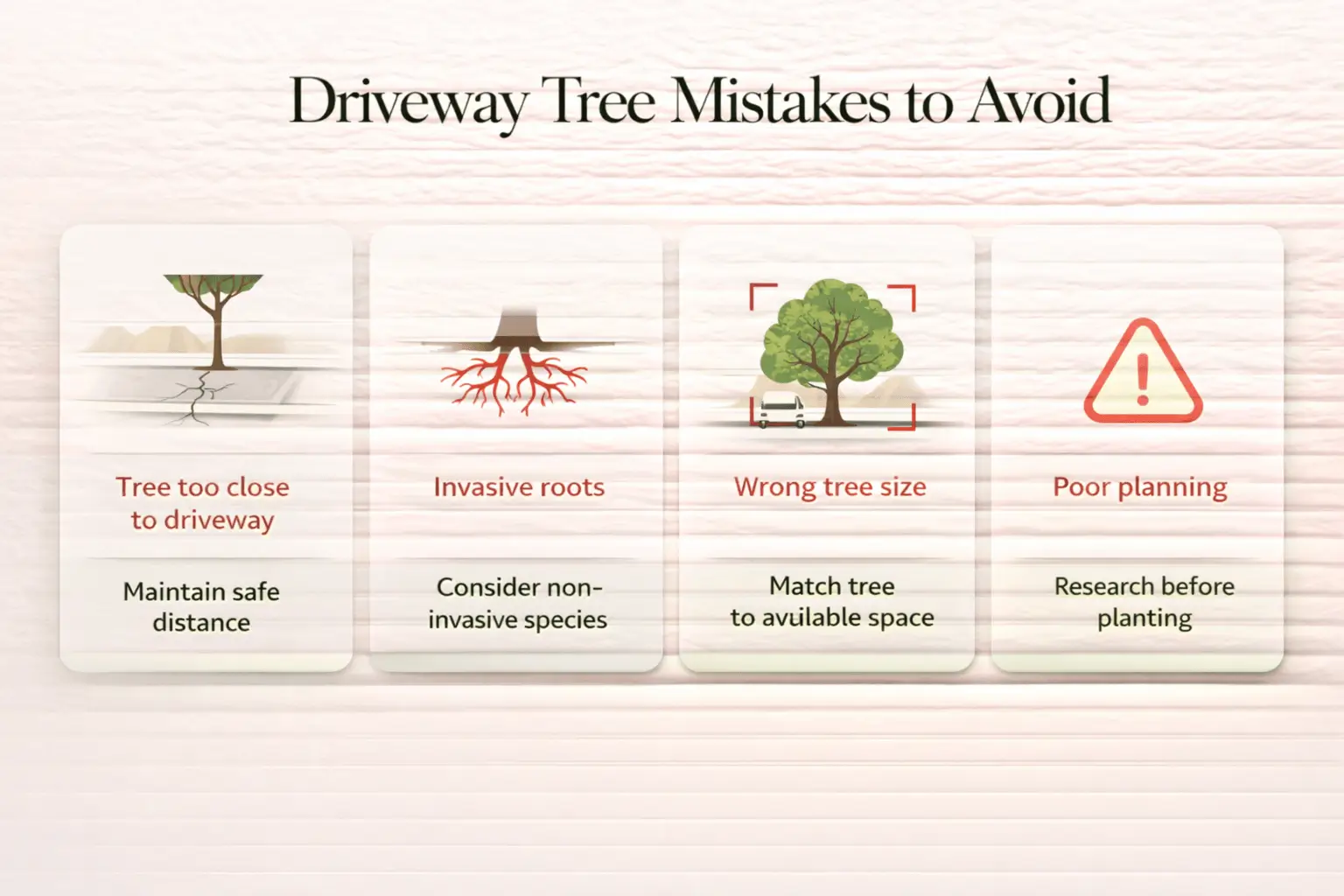
Many common mistakes occur due to lack of planning or understanding of tree growth behavior. Avoiding these errors ensures better long-term results.
Common Mistakes
- Planting too close to driveway
- Choosing trees with invasive roots
- Ignoring mature size
- Lack of long-term planning
How to Choose the Best Trees for Your Driveway
Choosing the best trees to plant along driveway requires a practical decision-making approach based on space, climate, and maintenance expectations.
Selection Framework
- Consider driveway length and width
- Match tree size to space
- Evaluate maintenance capacity
- Choose climate-suitable species
This approach ensures that the best trees to plant along long driveway are both functional and visually appealing.
Conclusion
Trees to plant along driveway should be selected based on structure, growth habits, and long-term compatibility with your space. The right combination of species, spacing, and care transforms a simple driveway into a visually striking and functional landscape feature.
FAQs
1. What are the best trees to plant along a driveway?
The best trees are those with non-invasive roots, suitable canopy size, and climate adaptability, such as evergreen or moderate-growing shade trees.
2. How far apart should driveway trees be planted?
Spacing depends on tree size, typically ranging from 3 to 12 meters to allow proper canopy development and root expansion.
3. Are evergreen or deciduous trees better for driveways?
Evergreen trees provide year-round coverage, while deciduous trees offer seasonal interest and allow winter sunlight.
4. What trees should not be planted near driveways?
Avoid trees with aggressive root systems or excessive leaf drop, as they can damage pavement and increase maintenance.
5. How do I prevent tree roots from damaging my driveway?
Choose species with non-invasive roots, plant at proper distances, and use root barriers if necessary.