Introduction
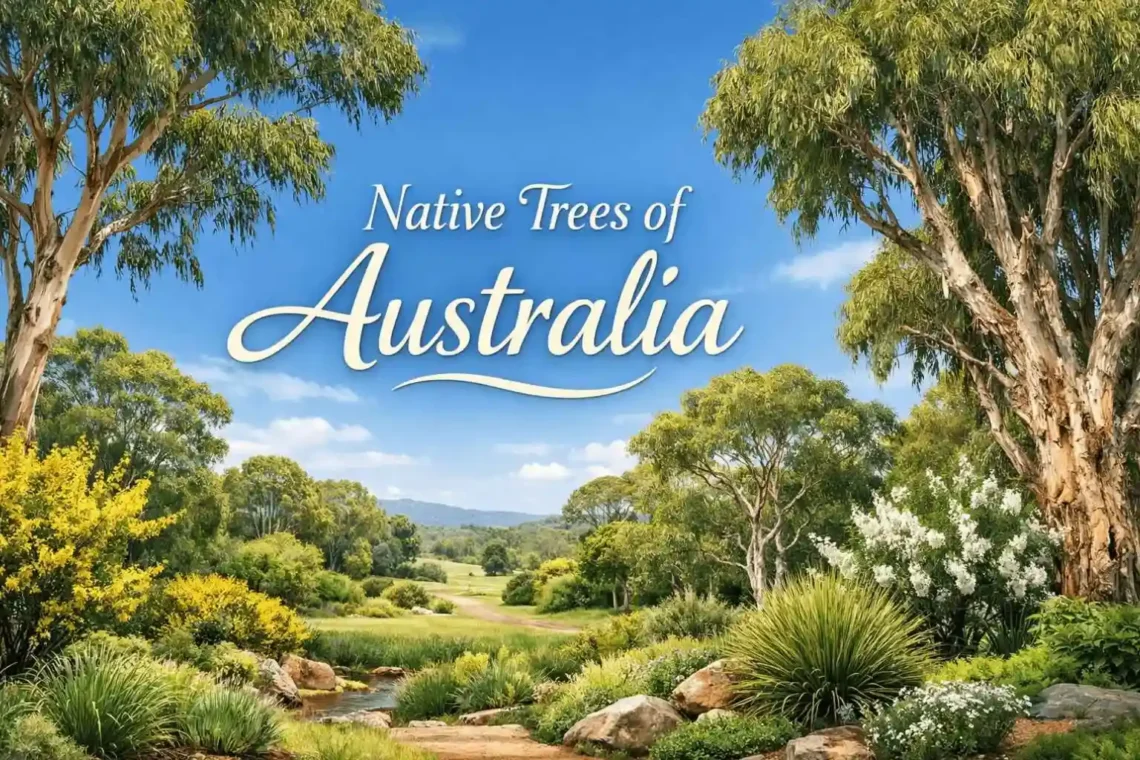
Native trees of Australia are tree species naturally occurring across diverse Australian ecosystems, including eucalyptus woodlands, rainforests, and coastal zones. These trees are adapted to local climates and soils, contributing significantly to biodiversity, soil stabilization, and habitat creation. Widely recognized for their ecological and aesthetic value, native Australian trees are popular in landscaping, providing shade, ornamental appeal, and environmental benefits. Variations of the term include native Australian trees, trees native to Australia, and Australian trees, all reflecting the importance of indigenous species in both natural and urban settings.
Quick Summary
- Native trees of Australia are species adapted to local climates, soils, and ecosystems.
- They include evergreen, flowering, shade, and fruit-bearing varieties.
- Common types include eucalyptus, acacia, and melaleuca.
- Widely used for landscaping, shade, and biodiversity support.
What Are Native Trees of Australia? (Definition & Scope)
Native trees of Australia, or Australian native trees, are species that have evolved and occur naturally within the country’s ecosystems. Unlike non-native or introduced species, they are well-adapted to local environmental conditions, supporting biodiversity and ecological balance. These trees can include types ranging from towering gum trees to small flowering shrubs. Their role extends beyond aesthetics; they stabilize soils, provide habitats for wildlife, and contribute to the overall health of ecosystems. Keywords include native trees Australia, trees from Australia, and types of native trees in Australia. Native trees of Australia, such as eucalyptus and acacia, are species naturally occurring in the continent’s ecosystems.
Types of Native Australian Trees (Major Categories)
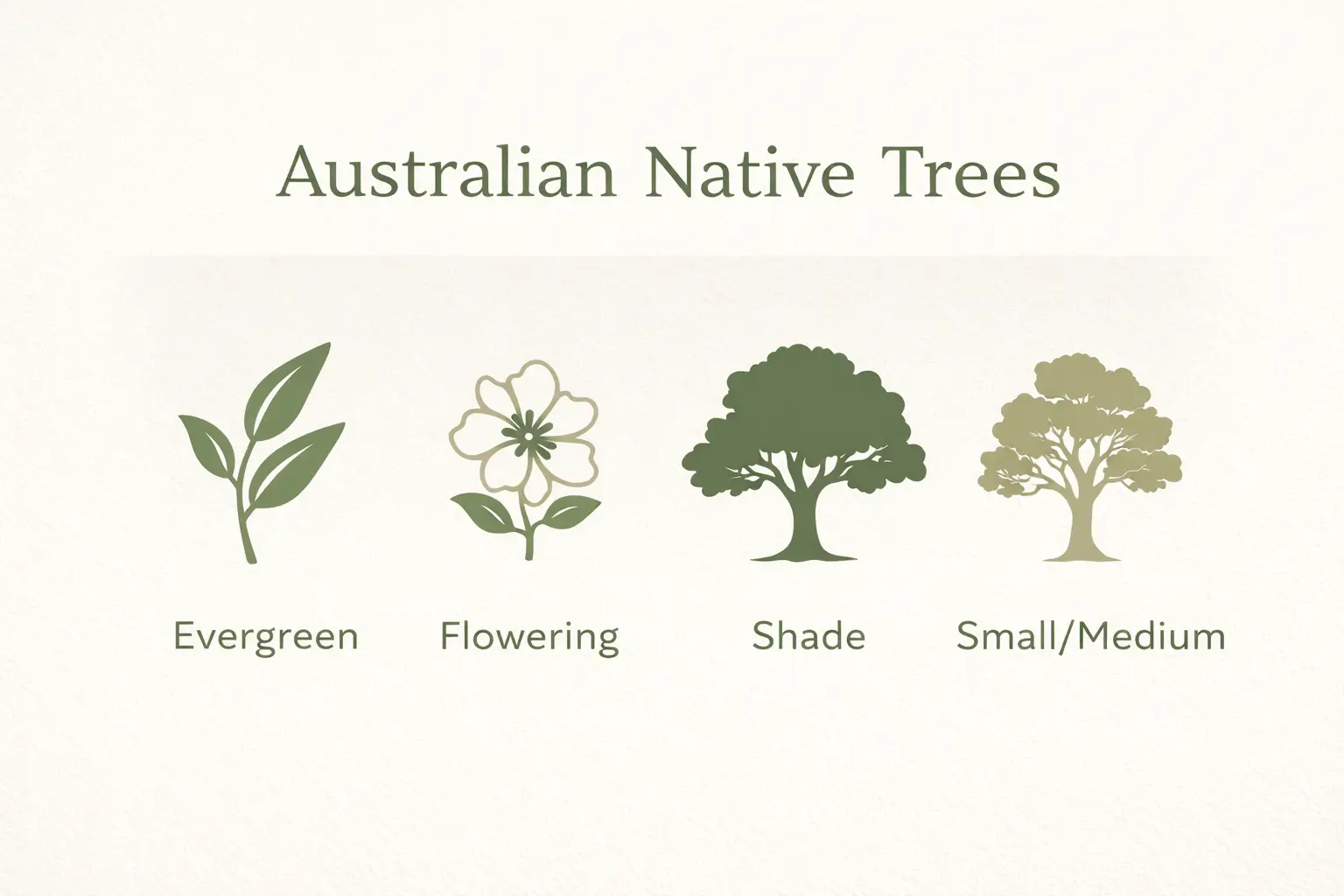
Australian native trees can be categorized based on foliage type, growth habit, and environmental function. Key categories include:
Evergreen Native Trees
Evergreen native trees maintain foliage year-round, providing consistent shade and greenery in landscapes. These include eucalyptus and other dense canopy species.
Flowering Native Trees
Flowering native trees produce seasonal blooms that attract pollinators such as bees and birds, enhancing garden biodiversity.
Shade Trees (Fast-Growing & Large Canopy)
Fast-growing shade trees are ideal for providing cooling and large canopy cover in parks and urban landscapes. They help reduce heat and create comfortable outdoor spaces.
Small & Medium Native Trees
Small and medium trees are suitable for urban gardens, courtyards, and backyard spaces, offering beauty without overwhelming limited space.
Common Australian Trees and Popular Species
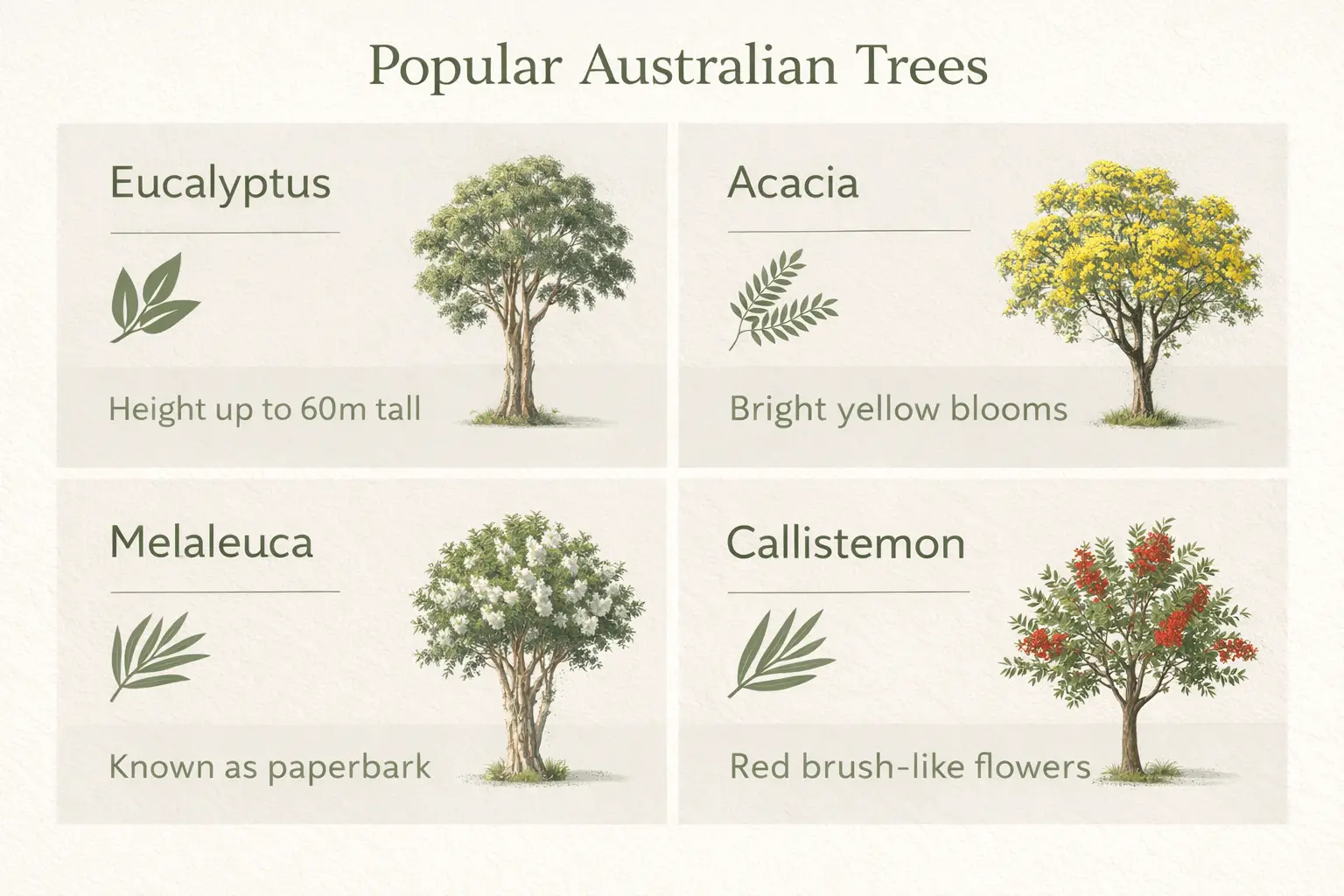
Several native trees are commonly found across Australia and are popular for both ecological and landscaping purposes:
- Eucalyptus (gum trees) – iconic tall trees with aromatic leaves
- Acacia (wattle) – vibrant yellow blooms and nitrogen-fixing roots
- Melaleuca (paperbark) – water-tolerant trees with textured bark
- Callistemon (bottlebrush) – ornamental flowers attracting pollinators
Alongside eucalyptus and acacia, species like Brisbane Box and Australian Brush Cherry are popular choices for home gardens.
Native Trees of Australia by Region
Australian native trees vary across regions due to differences in soil, rainfall, and temperature.
Native Trees of Western Australia
Characterized by drought-tolerant species adapted to sandy soils and arid conditions.
Native Trees of South Australia
Include species suited to Mediterranean climates with hot summers and mild winters.
Native Trees of South Eastern Australia
Rainfall-rich regions support diverse forests and mixed woodlands.
Native Tree Identification Guide (How to Identify Australian Trees)
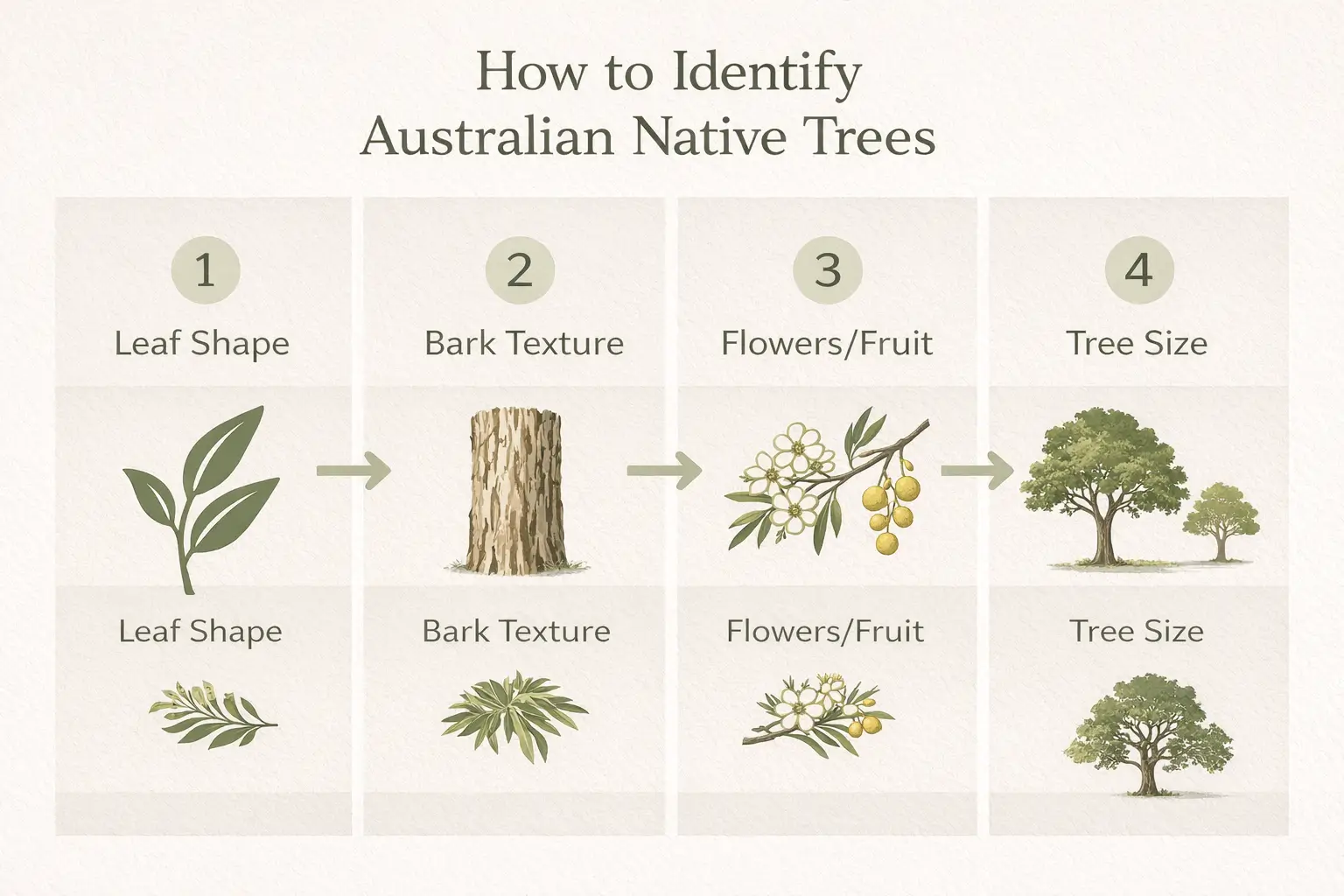
Identifying native Australian trees involves observing multiple features:
- Leaf shape and arrangement – alternate, opposite, or compound leaves
- Bark texture – smooth, rough, or peeling surfaces
- Flower and fruit characteristics – color, shape, and timing
- Tree size and growth pattern – height, canopy spread, and growth rate
List of Native Trees of Australia (Table Section)
| Tree Name | Type | Size | Climate Suitability | Key Feature |
| Eucalyptus | Evergreen | Large | Most regions | Aromatic leaves, tall canopy |
| Acacia | Flowering | Medium | Arid to temperate | Nitrogen-fixing, yellow blooms |
| Melaleuca | Evergreen | Medium | Wetlands, coastal | Textured bark, water-tolerant |
| Callistemon | Flowering | Small-Medium | Coastal & inland | Red bottlebrush flowers |
Native Trees for Landscaping and Gardens
Australian native trees offer low-maintenance and drought-tolerant options for gardens:
- Best trees for small gardens – Callistemon, small Acacia species
- Trees for shade and privacy – Eucalyptus, Melaleuca
- Native shrubs and tree combinations – Integrating shrubs like Grevillea with small native trees
For additional landscaping inspiration, consider plants like Sweet Flag Grass, Grass Palm, or Bamboo, which complement native Australian trees beautifully. For indoor planting tips and pairing small native trees with potted house plants, see our comprehensive Guide to House Plants.
Growth Rate and Size of Native Australian Trees
Growth rates and ultimate size vary among species and environmental conditions:
- Soil quality – Fertile soils support faster growth
- Water availability – Drought-resistant species grow slower under minimal watering
- Climate conditions – Temperature and rainfall influence growth seasonality
Care Guide for Native Trees of Australia
Practical care ensures healthy native trees in gardens and landscapes:
- Watering needs – low to moderate depending on species
- Sunlight requirements – full sun to partial shade
- Soil preferences – well-drained, sandy, or loamy soils
- Fertilization tips – minimal fertilization; native-specific nutrients
- Pruning basics – remove dead branches and shape canopy
Common Problems and Mistakes (Troubleshooting Guide)
Yellowing Leaves or Poor Growth
- Causes: Overwatering or poor soil quality
- Fix: Adjust watering schedule, improve soil drainage
Pest Infestations in Native Trees
- Common pests: psyllids, caterpillars, and scale insects
- Solutions: Biological controls, pruning affected areas, insecticidal soaps
Choosing the Wrong Tree for Space
- Issues: Root damage and overcrowding
- Prevention: Select species suited to available space and soil conditions
Comparison: Native vs Non-Native Trees in Australia
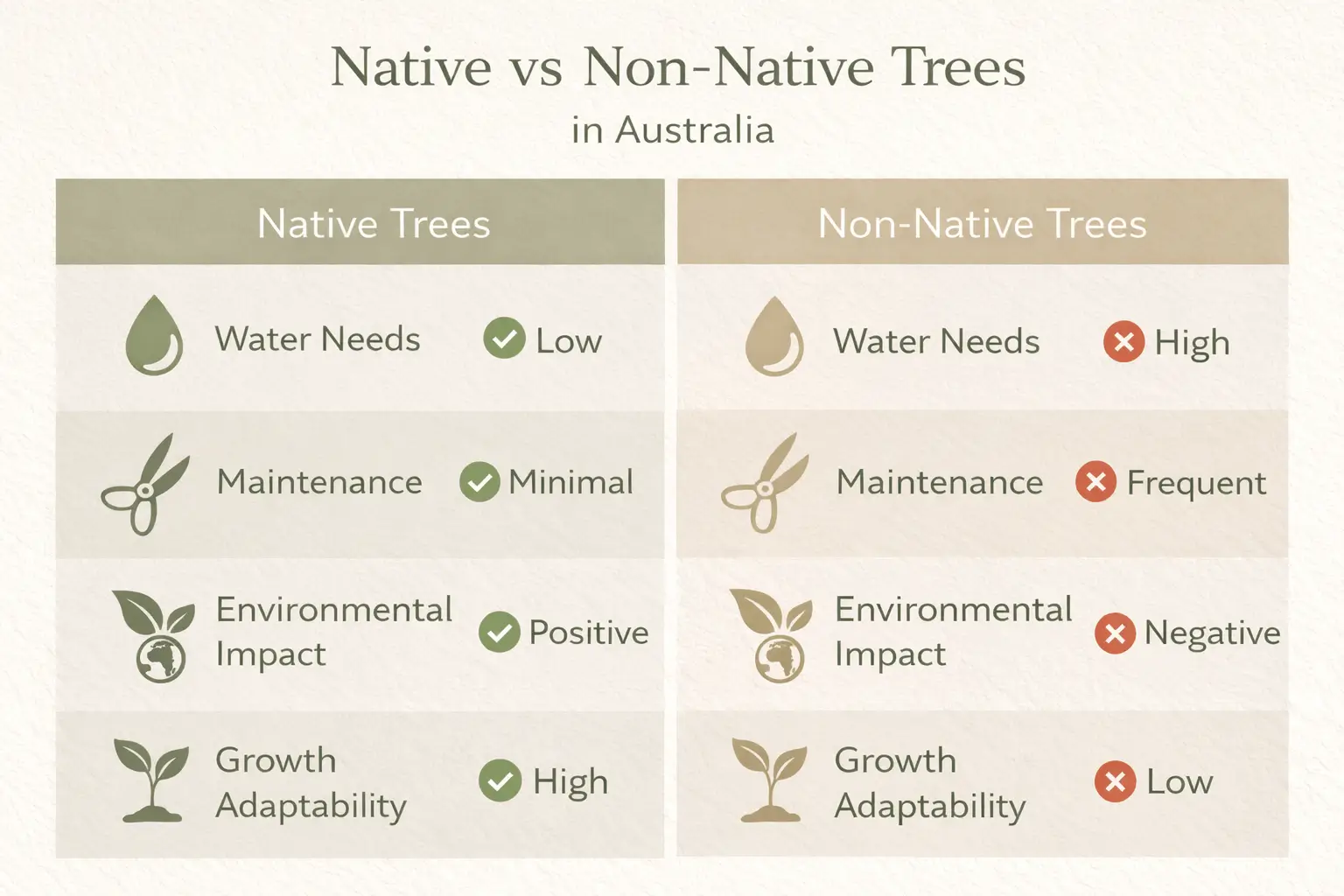
| Feature | Native Trees | Non-Native Trees |
| Water Needs | Adapted to local rainfall | Often higher, needs irrigation |
| Maintenance | Low maintenance, hardy | Can require intensive care |
| Environmental Impact | Supports biodiversity and soil health | May disrupt local ecosystems |
| Growth Adaptability | Suited to local climate and soil | May struggle in extreme conditions |
Unique Benefits of Native Australian Trees
- Support native wildlife such as birds and insects
- Exhibit drought and soil adaptation
- Require low-maintenance landscaping
- Enhance ecosystem services and biodiversity
Native Trees and Broader Gardening Context
- Indoor vs outdoor planting relevance – suited primarily for outdoor landscapes
- Landscaping integration – combine with lawns, paths, and water features
- Native shrubs pairing – complement trees with native shrubs for layered ecosystems
- Biodiversity gardening – create habitats to support local fauna
Conclusion
Native trees of Australia are diverse, resilient, and vital for ecosystems and gardens. Selecting the right species depends on climate, space, and intended purpose. Understanding identification, growth patterns, and care ensures successful long-term integration, supporting both biodiversity and sustainable landscaping.
FAQs
What are the most common native trees of Australia?
Common species include eucalyptus, acacia, melaleuca, and bottlebrush, widely distributed across regions.
How can I identify a native Australian tree?
Observe leaf shape, bark texture, flowers, fruits, and tree size to identify species accurately.
What are the best native trees for small backyards in Australia?
Small and medium trees like Callistemon, compact Acacia, and certain Melaleuca species are ideal.
Which native Australian trees grow the fastest?
Fast-growing shade trees include certain eucalyptus varieties and fast-growing acacias.
Are native Australian trees better for the environment?
Yes, they support biodiversity, are adapted to local climates, conserve water, and improve soil health.