Introduction
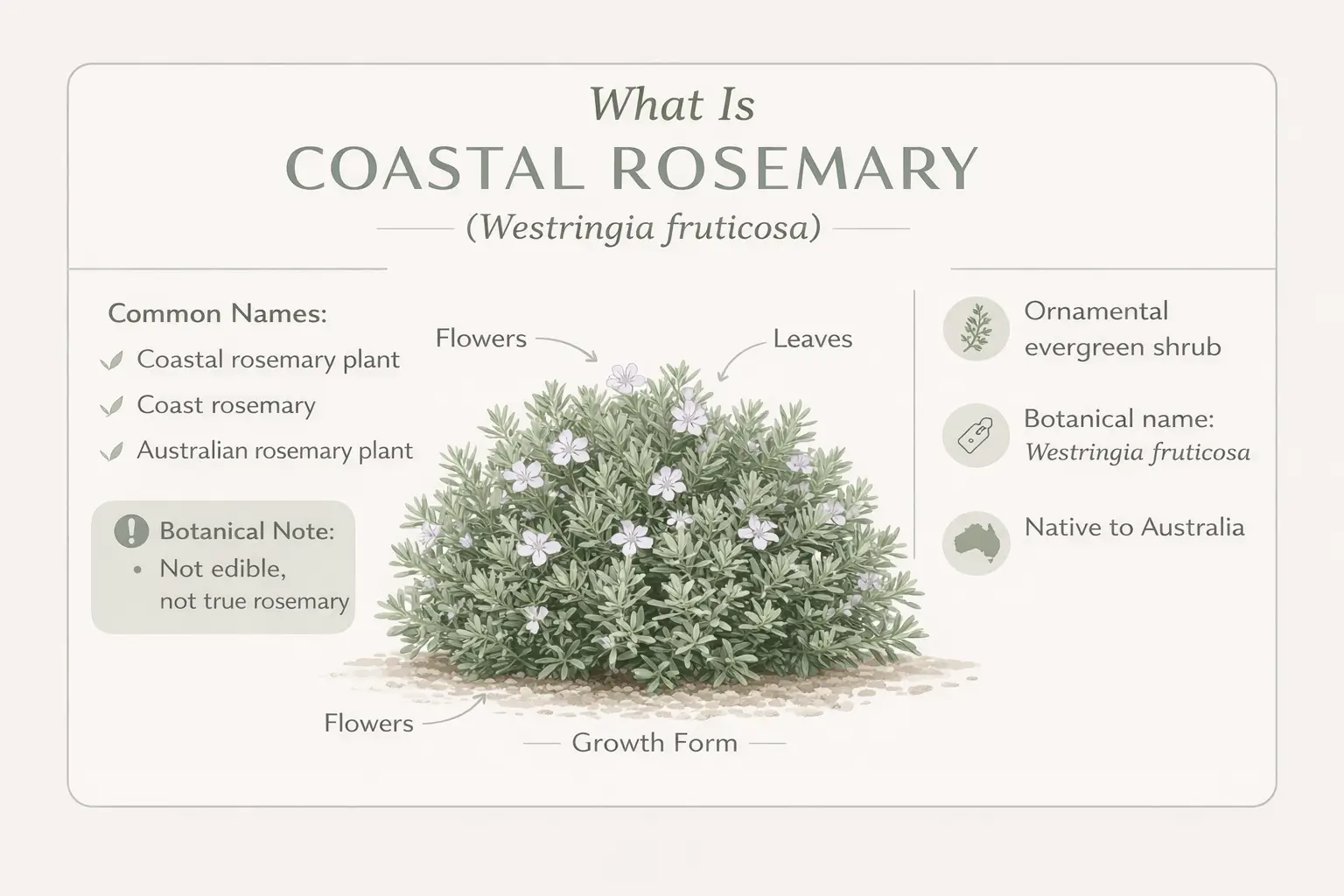
Coastal rosemary is a resilient ornamental shrub valued for its refined appearance, low maintenance needs, and strong adaptability to challenging environments. Commonly referred to as the coastal rosemary plant, coast rosemary, or Australian rosemary plant, it is widely used in modern landscaping for its neat structure and year-round appeal. Despite its name, coastal rosemary is not a culinary herb and should not be confused with true rosemary. Botanically identified as Westringia fruticosa, this evergreen shrub is prized for its tolerance to wind, salt spray, and drought. Its subtle foliage, soft flowers, and dependable growth habit make it a practical choice for both coastal and inland gardens.
Coastal Rosemary Plant Overview
Botanical Name and Classification
The correct botanical name of the coastal rosemary plant is Westringia fruticosa, a woody evergreen shrub native to Australia. The term fruticosa refers to its shrubby, branching growth habit, which distinguishes it from herbaceous plants. Plant westringia belongs to the mint family, Lamiaceae, a group known for square stems and paired leaves. While many members of this family are aromatic, westringia fruticosa plant is grown primarily for ornamental landscaping rather than fragrance or culinary use.
Why It’s Called Coastal Rosemary
Coastal rosemary gets its name from its visual resemblance to true rosemary rather than from botanical relation. The narrow, needle-like leaves closely resemble rosemary foliage, leading to frequent comparisons. However, the difference between rosemary and westringia coastal rosemary is significant in function and use. True rosemary is edible and aromatic, while coast rosemary plant is strictly ornamental. Misconceptions often arise due to the shared common name, but these plants differ in growth behavior, care requirements, and purpose.
Australian Rosemary Plant Origins
Native Habitat and Natural Range
The Australian rosemary plant originates from the coastal regions of eastern Australia, where it thrives in exposed environments. Coastal Australia conditions include sandy soils, high winds, salt spray, and periodic drought. Westringia fruticosa evolved with strong salt tolerance and wind resistance, making it exceptionally well-suited to seaside planting. These natural adaptations explain why coastal climates suit coastal rosemary better than many traditional shrubs.
Growth Habit and Mature Size
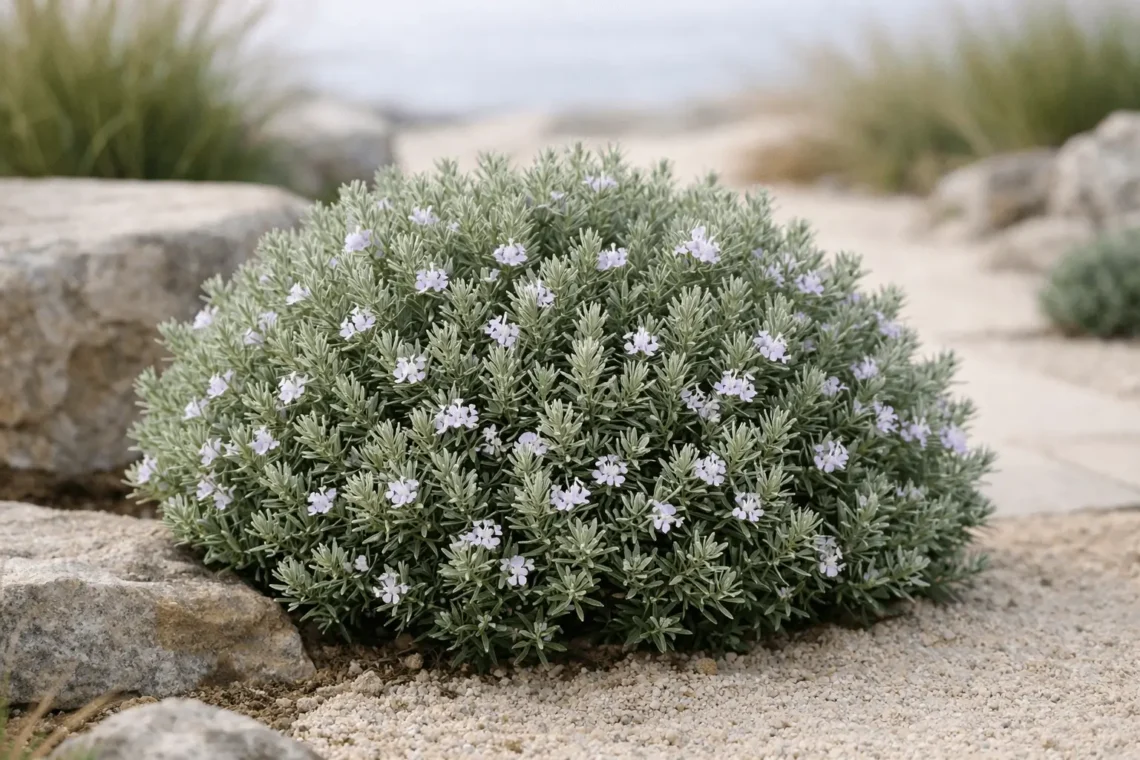
Coastal rosemary grows as a compact, rounded shrub with a naturally dense structure. The typical height and spread range from 3 to 6 feet, depending on variety and pruning. Its tidy form makes it especially useful in hedges and borders, where consistent shape and controlled growth are desirable. Without aggressive spreading, it maintains clean lines in both formal and informal landscapes.
Westringia Fruticosa Foliage and Flowers
Leaf Shape, Texture, and Color
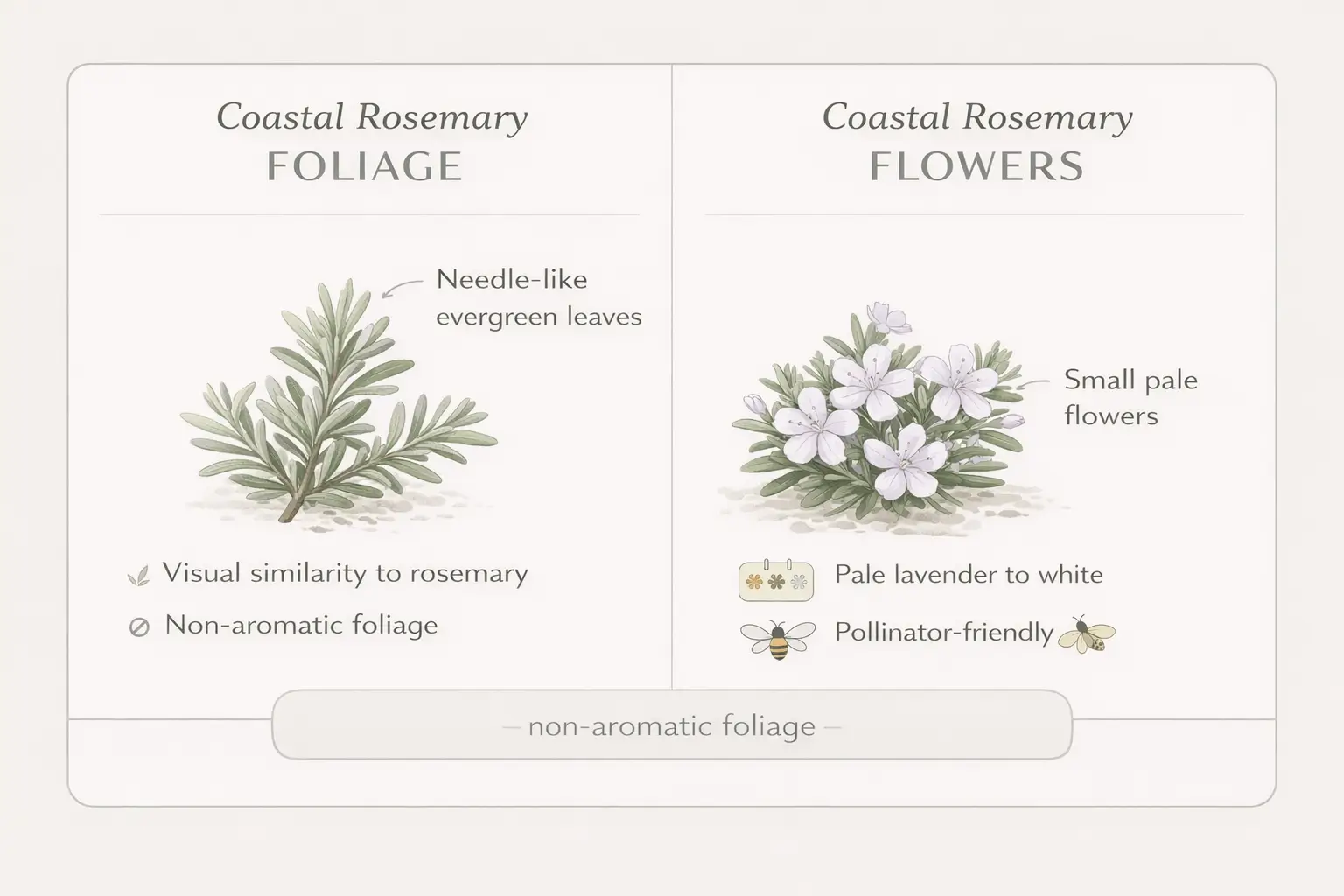
The foliage of westringia fruticosa features narrow, needle-like leaves that resemble rosemary. Leaves are arranged in whorls, contributing to its structured appearance. The plant remains evergreen throughout the year, maintaining visual interest even in winter. Unlike culinary rosemary, coastal rosemary has little to no fragrance, reinforcing its role as a decorative rather than aromatic plant.
Flowering Characteristics
Coastal rosemary produces small, delicate flowers that typically appear in pale lavender, white, or soft blue tones. Flowering occurs mainly in spring, with lighter blooms possible in other seasons. These flowers attract pollinators such as bees, adding ecological value. The subtle blossoms enhance the visual appeal of landscapes without overwhelming surrounding plants.
Popular Coastal Rosemary Varieties
Westringia ‘Morning Light’
Westringia ‘Morning Light’ is a refined cultivar known for its soft, variegated foliage. Westringia morning light overview highlights its pale green leaves edged with creamy white, creating a lighter, more decorative effect. Morning light westringia foliage color brightens garden spaces, while westringia fruticosa morning light features include compact growth and excellent wind tolerance.
Morning Light Coast Rosemary vs Standard Varieties
Morning light coast rosemary has a slightly more upright and elegant growth habit compared to standard varieties. Coast rosemary morning light landscaping uses include accent hedges, container planting, and modern garden designs. When compared with classic westringia fruticosa coastal rosemary, Morning Light offers greater visual contrast but similar durability and maintenance requirements.
How to Grow Coastal Rosemary Successfully
Sunlight Requirements
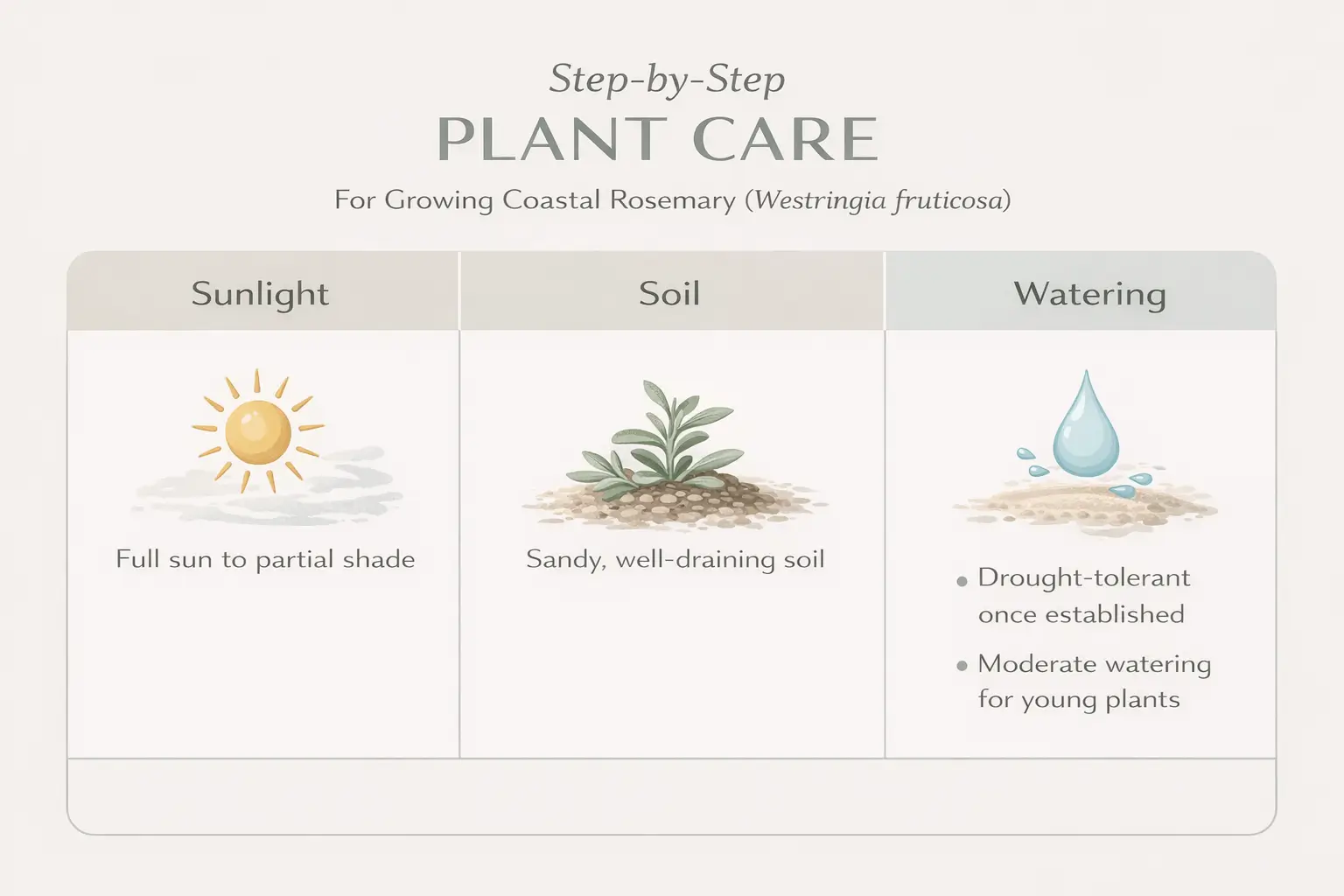
Coastal rosemary performs best in full sun, where it develops dense growth and balanced form. Partial shade is tolerated but may result in looser structure. For best light exposure and compact growth, at least six hours of direct sunlight daily is recommended.
Soil Type and Drainage
Sandy and well-draining soils are ideal for coastal rosemary. The plant shows strong tolerance to poor soils and does not require rich amendments. Good drainage is essential to prevent root issues, particularly in heavier inland soils.
Watering Needs
Once established, coastal rosemary is drought tolerant and requires minimal supplemental watering. Young plants need regular watering during establishment, typically once or twice weekly, until roots are developed. Overwatering should be avoided.
Pruning and Maintenance of Coast Rosemary
Pruning for Shape and Health
Pruning westringia coastal rosemary is best done after flowering or in early spring. Light, regular trimming encourages compact growth and maintains clean lines. Avoid cutting into old wood to preserve healthy regrowth.
Low-Maintenance Benefits
- Minimal fertilization requirements
- Strong resistance to pests and diseases
- Consistent appearance with limited care
Landscaping Uses of Coastal Rosemary
Coastal and Seaside Gardens
Coastal rosemary excels in seaside gardens due to salt spray resistance and structural strength. It functions effectively as a windbreak and contributes to erosion control on slopes and sandy soils.
Urban and Modern Landscapes
In urban settings, coastal rosemary is widely used for hedges, borders, and foundation planting. It pairs well with other drought-tolerant plants, supporting water-wise landscape designs.
Read Also: 7+ Stunning Reasons Sweet Flag Grass Transforms Gardens
Coastal Rosemary vs True Rosemary
Key Differences Explained
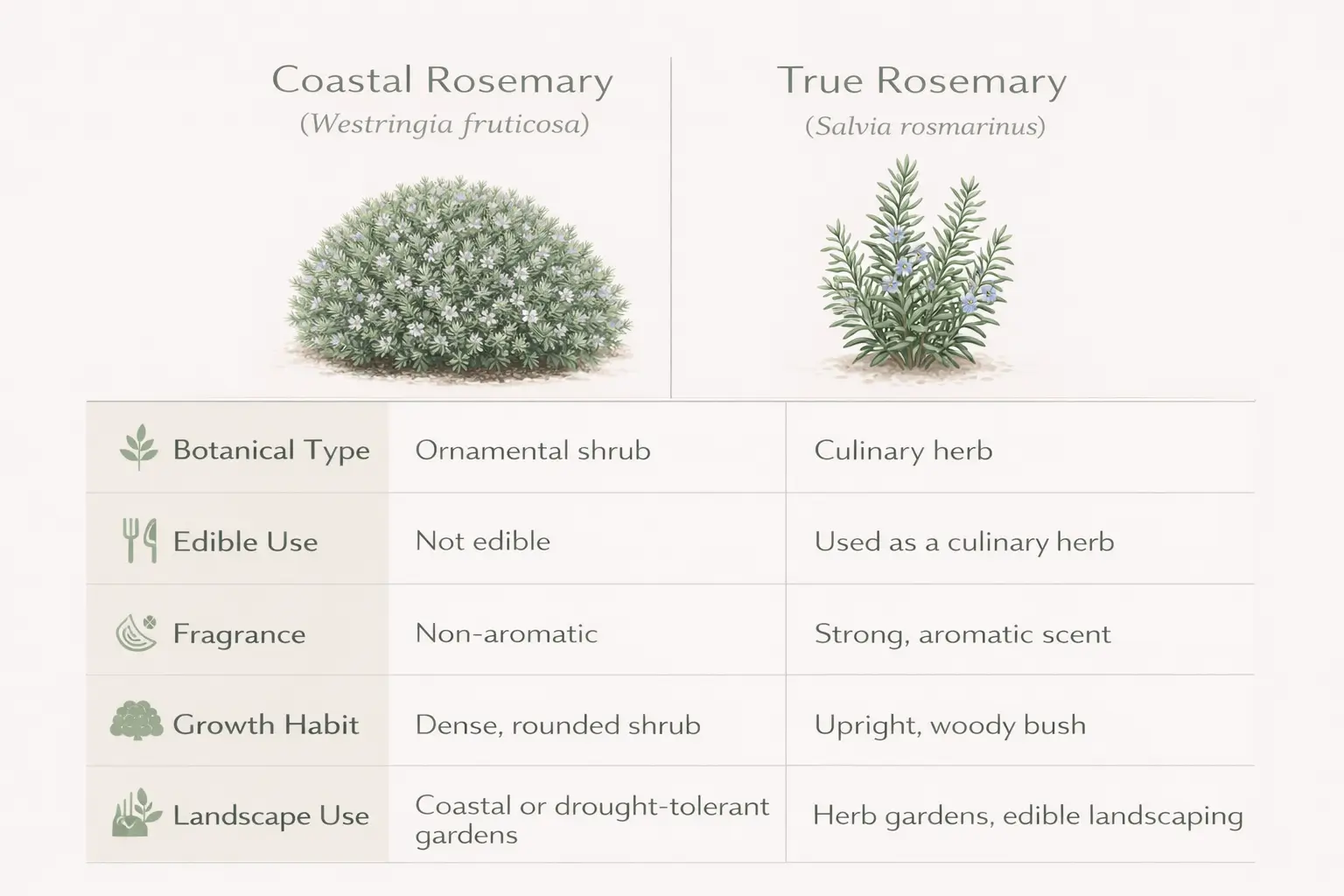
Botanically, coastal rosemary and true rosemary are unrelated species. True rosemary is used for culinary purposes, while coastal rosemary is ornamental only. Growth habits differ, with westringia forming shrubs and culinary rosemary often growing more openly. Care requirements also vary, particularly regarding pruning and soil tolerance.
Common Problems and Solutions
Yellowing Leaves or Sparse Growth
Yellowing leaves are commonly linked to overwatering or poor soil drainage. Improving drainage and reducing irrigation usually resolves the issue.
Growth in Non-Coastal Climates
Coastal rosemary adapts well inland when planted in well-drained soil and full sun. Frost tolerance is moderate; protection may be required in colder regions.
Is Coastal Rosemary Right for Your Garden?
Coastal rosemary is ideal for gardeners seeking a hardy, beginner-friendly shrub with long-term landscape value. It performs best in warm, sunny climates but adapts well with proper care. Its durability, structure, and low maintenance needs make it a dependable choice for sustainable garden design.
Conclusion / Call to Action
The coastal rosemary plant stands out as a durable, attractive, and low-maintenance shrub suited to a wide range of landscapes. Its ability to tolerate salt, wind, drought, and poor soils makes it especially valuable for coastal and water-wise gardens, while its neat structure supports clean, modern design. Choosing Westringia fruticosa as a landscaping plant is a practical decision for long-term performance, reduced upkeep, and year-round visual stability. With multiple varieties available, gardeners can select forms that match their space, light conditions, and design goals. Selecting the right coastal rosemary variety ensures balanced growth, consistent form, and reliable results across seasons.
Read Also: 5+ Powerful Benefits of the Brisbane Box Tree You’ll Love
FAQs — Coastal Rosemary
Is coastal rosemary the same as rosemary?
No. Coastal rosemary is an ornamental shrub, while true rosemary is a culinary herb. They are not botanically related and serve different purposes in gardens.
How fast does westringia fruticosa grow?
Westringia fruticosa has a moderate growth rate. Under good conditions, it establishes steadily and forms a dense shrub within a few growing seasons.
Can coastal rosemary grow in pots?
Yes. Coastal rosemary can grow well in containers if provided with excellent drainage, adequate sunlight, and controlled watering.
Is morning light westringia suitable for hedging?
Yes. Morning Light westringia is suitable for low to medium hedges due to its compact habit and consistent growth when lightly pruned.
Does coastal rosemary need regular pruning?
Regular heavy pruning is not required. Occasional light pruning helps maintain shape and encourages compact growth.
Is coastal rosemary safe for pets?
Coastal rosemary is generally considered non-toxic, but pets should not be encouraged to chew ornamental plants. Consult a veterinarian if ingestion occurs.