Introduction
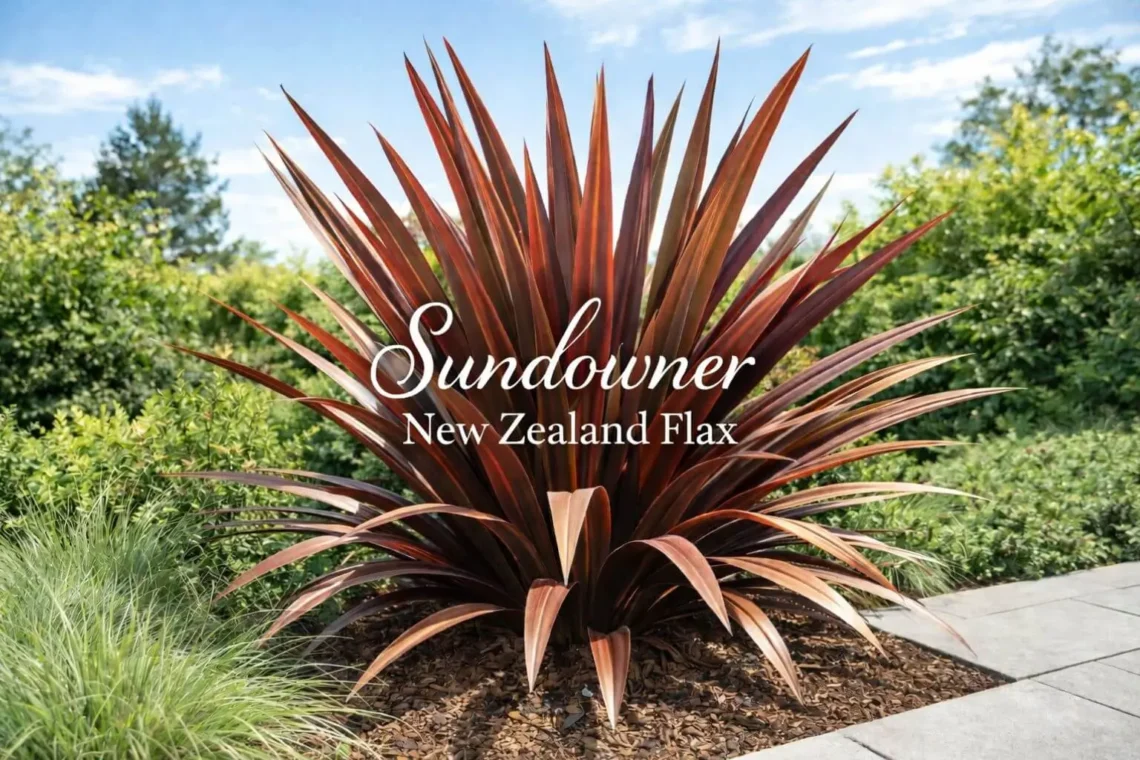
Sundowner New Zealand Flax is a visually striking cultivar of the Phormium genus, valued for its vibrant foliage and architectural presence in gardens. Known scientifically as Phormium sundowner, this variety features red and bronze leaves that change intensity with light exposure. It has become a gardener’s dream Phormium Sundowner New Zealand Flax due to its versatility, ease of care, and bold aesthetic. Native to New Zealand, this flax plant is both ornamental and functional, making it a popular choice for landscaping, container planting, and border accents. Its adaptability allows it to thrive in diverse climates while offering ecological benefits such as erosion control and wildlife attraction.
Botanical Overview of Sundowner New Zealand Flax
Taxonomy and Species
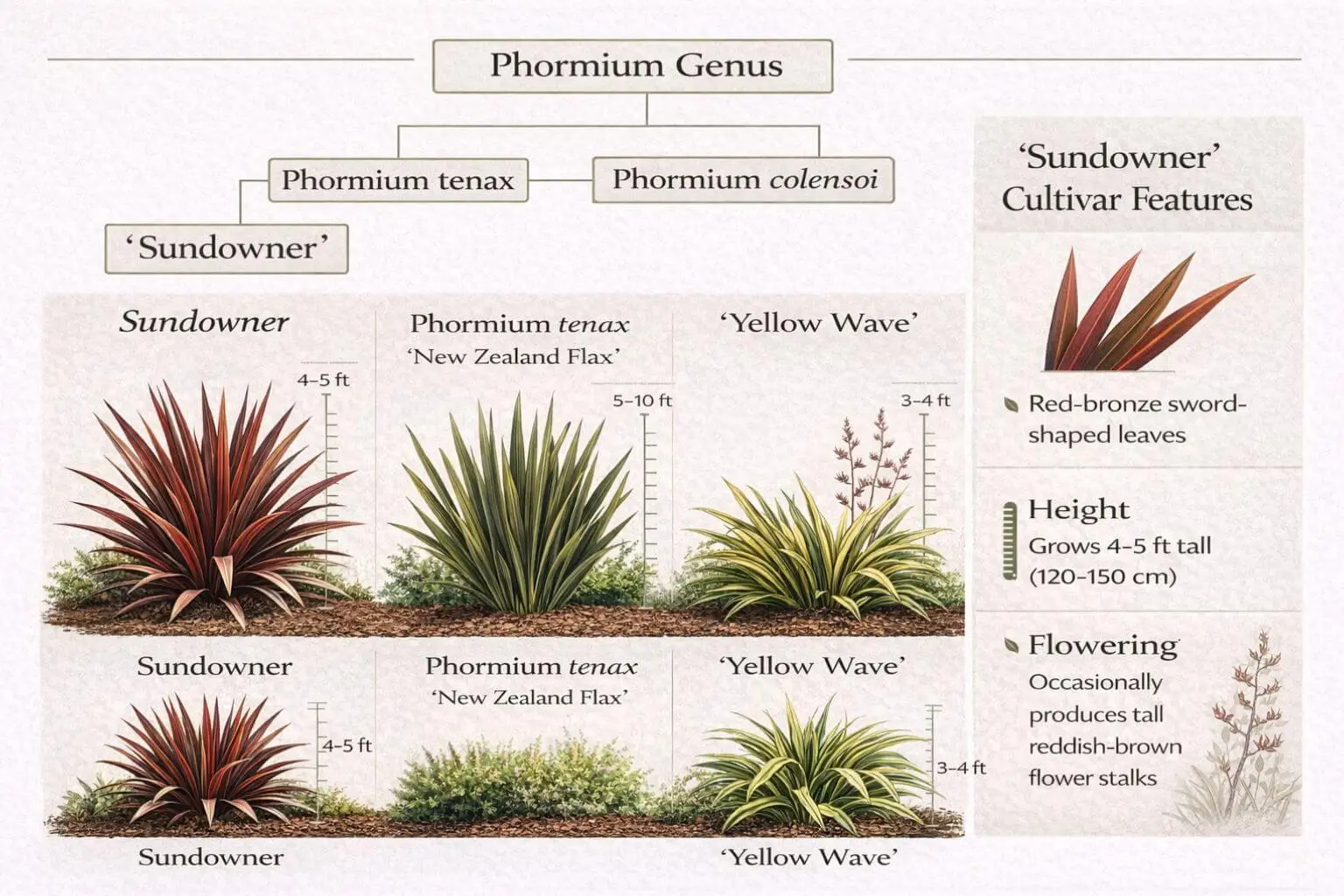
The Phormium genus includes several species and cultivars native to New Zealand, commonly called New Zealand flax. Phormium tenax is the traditional robust species, while Phormium yellow wave is known for its golden-green leaves. The Sundowner cultivar distinguishes itself with red-tinted foliage and medium height, offering a unique visual contrast in gardens. Understanding these differences helps gardeners select the right variety for aesthetic and functional purposes.
Physical Characteristics
Sundowner New Zealand Flax features long, sword-shaped leaves ranging from red to bronze, often with green undertones. Mature plants reach heights of 1–1.5 meters with similar spread. Flowering occurs in summer, producing tall stalks with tubular yellow to red flowers that attract birds. Seasonal changes intensify leaf coloration, making the plant an ornamental centerpiece year-round. The phormium Sundowner New Zealand Flax stands out compared to phormium tenax, which grows larger and greener, and the phormium yellow wave, which has brighter yellow leaves. For gardeners interested in exploring similar plants, the Flax Lily Plant offers complementary foliage and care insights.
Growing and Care Requirements
-
Soil and Sunlight Conditions
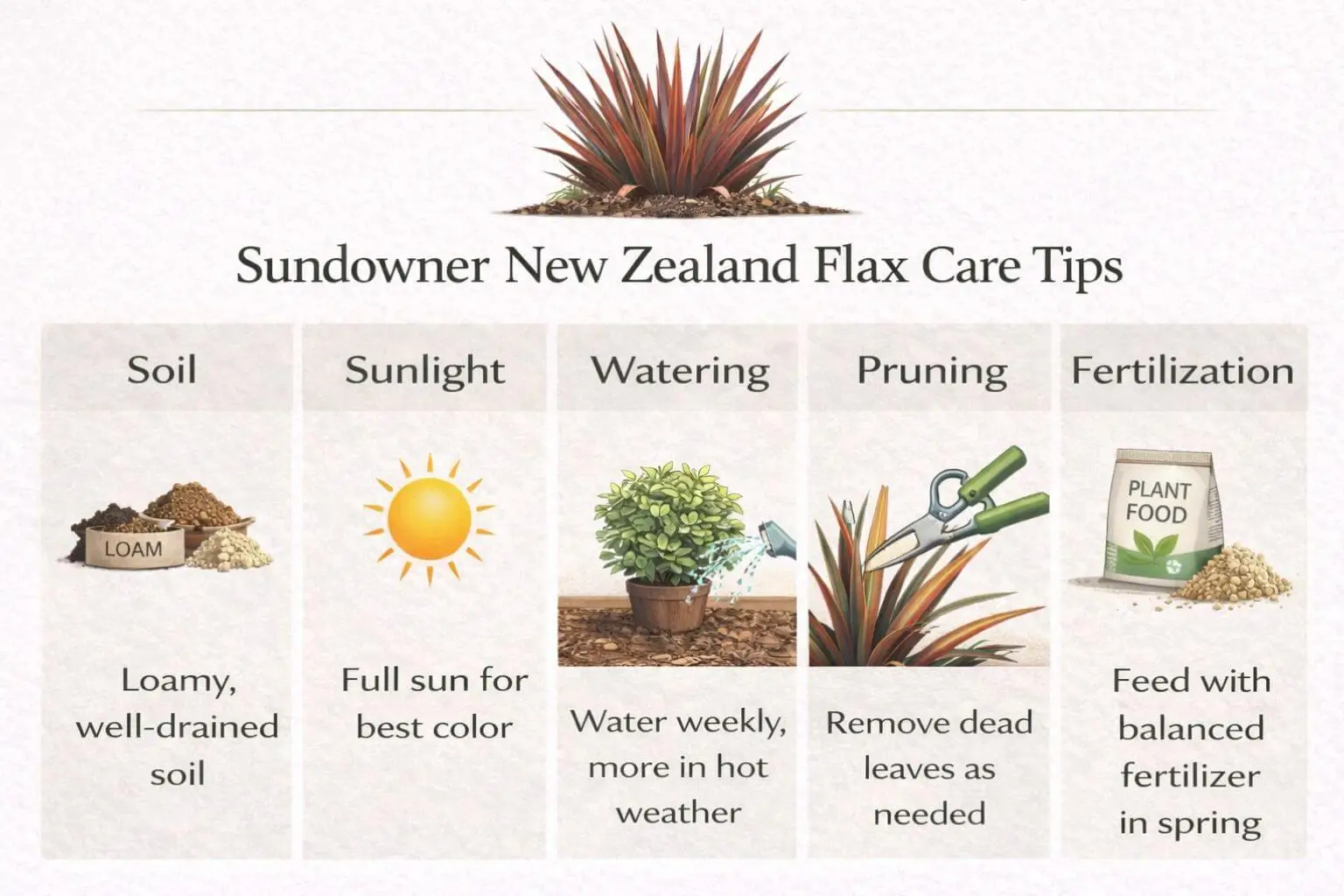
Sundowner New Zealand Flax prefers well-drained soil with a slightly acidic to neutral pH. It tolerates sandy or loamy soils but requires adequate drainage to prevent root rot. The plant thrives in full sun for maximum leaf coloration but can adapt to partial shade, although color intensity may reduce. Proper site selection ensures healthy growth and reduces maintenance.
-
Watering and Fertilization
Although drought-tolerant once established, regular watering helps maintain vibrant foliage. Irrigation should be moderate and consistent, avoiding waterlogged conditions. Fertilize annually with a balanced slow-release fertilizer to support leaf growth and flowering. Following Sundowner New Zealand Flax care guidelines ensures longevity and resilience in various climates.
-
Pruning and Maintenance
Routine maintenance involves removing dead leaves and trimming damaged growth. Plants can be divided during spring or autumn to propagate new individuals. Cutting back older leaves promotes fresh growth and maintains a tidy appearance. Gardeners often ask how to cut back New Zealand Flax or can you divide New Zealand Flax, and these practices are essential for sustaining healthy, vigorous plants.
Landscaping and Garden Uses
Design Applications
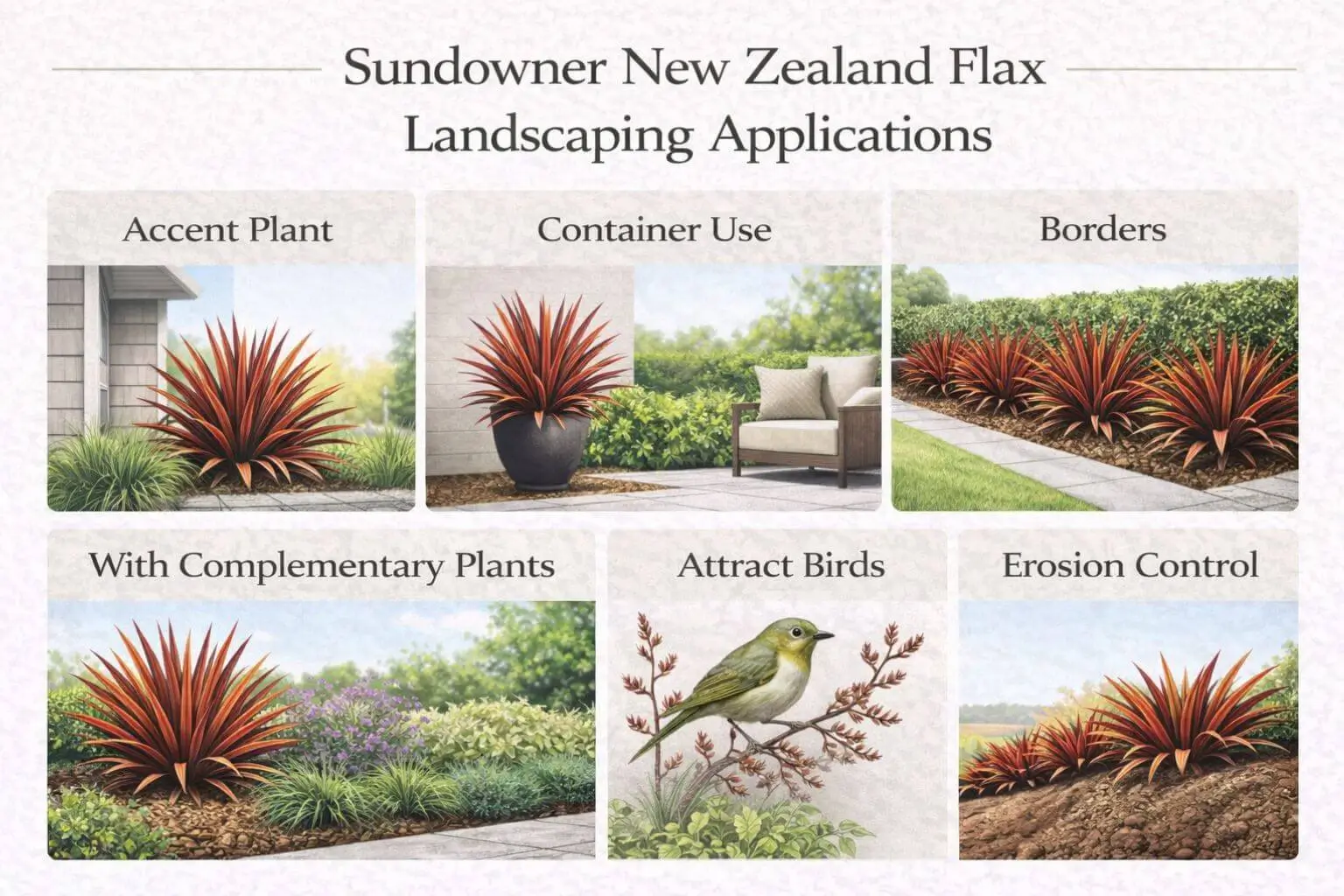
This cultivar functions well as an accent plant, border element, or container centerpiece. Its bold color complements subtler greens and flowering species. Combining gardeners dream Phormium Sundowner New Zealand Flax with native plants like harakeke or flax bush NZ enhances garden depth and seasonal interest.
Environmental Benefits
New Zealand flax contributes to biodiversity by attracting nectar-feeding birds and insects. Its fibrous root system stabilizes soil, reducing erosion and supporting sustainable landscaping. Using harakeke or NZ flax plants promotes eco-friendly gardens while offering low-maintenance beauty. Pairing Sundowner New Zealand Flax with structured plants like the Brisbane Box Tree can create stunning borders and accent features in your garden.
Propagation and Growth
Division and Planting
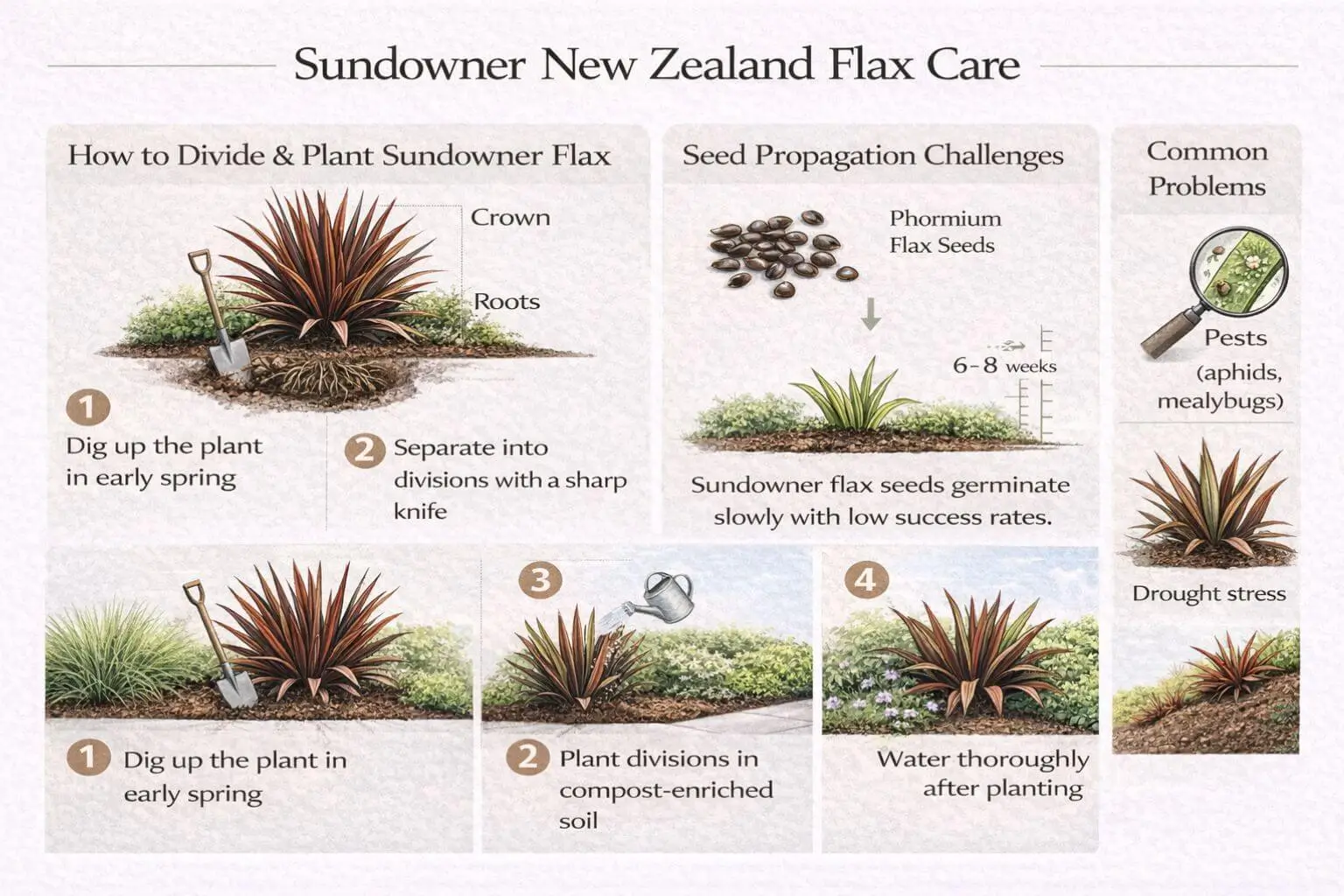
Dividing mature Sundowner New Zealand Flax is a straightforward method of propagation. Best done in spring or autumn, the process involves lifting the plant, separating clumps with roots intact, and replanting in prepared soil. Proper timing ensures minimal stress and quick establishment. Gardeners often seek guidance on when to divide New Zealand Flax for optimal results.
Seed Propagation
While possible, growing from seeds is less common due to slow germination and variable coloration. Seeds require controlled conditions, making division the preferred propagation method. Planting NZ flax plants via seeds is feasible but better suited for research or conservation purposes.
Common Problems and Solutions
Pests and Diseases
Common issues include scale insects, aphids, and fungal leaf spots. Regular monitoring and removal of affected foliage prevent infestations from spreading. Chemical or organic treatments may be applied as needed.
Growth and Environmental Challenges
Leaf browning, nutrient deficiencies, and drought stress are typical growth challenges. Sundowner New Zealand Flax is drought-tolerant, but prolonged water shortages or poor soil can reduce vitality. Corrective measures include irrigation, soil enrichment, and pruning to restore vigor.
Popular Varieties Related to Sundowner
- Phormium tenax – larger, green foliage, robust growth
- Phormium yellow wave – golden leaves, medium size
- Other Sundowner types – variations in leaf coloration and size
Comparing varieties helps gardeners choose based on visual appeal, hardiness, and garden design compatibility.
Conclusion
Sundowner New Zealand Flax is a versatile, visually striking, and environmentally beneficial plant. Its bold foliage, adaptability, and low-maintenance care make it ideal for modern gardens and landscapes. Understanding its botanical characteristics, growth requirements, and propagation techniques ensures successful cultivation. Gardeners are encouraged to explore native flax varieties and leverage Sundowner New Zealand Flax for aesthetic, ecological, and practical benefits.
FAQ
- What is Sundowner New Zealand Flax?
A vibrant Phormium cultivar with striking red-bronze foliage, valued for gardens and landscapes. - How do I care for Sundowner New Zealand Flax?
Provide full sun, well-drained soil, moderate watering, and annual pruning for healthy growth. - Can you divide Sundowner New Zealand Flax?
Yes, mature plants can be divided in spring or autumn to propagate new plants. - Is Sundowner New Zealand Flax drought tolerant?
Yes, established plants tolerate periods of low water but grow best with moderate irrigation. - What are the common problems with Sundowner New Zealand Flax?
Issues include leaf browning, pests, and fungal diseases, manageable with proper care.