Introduction
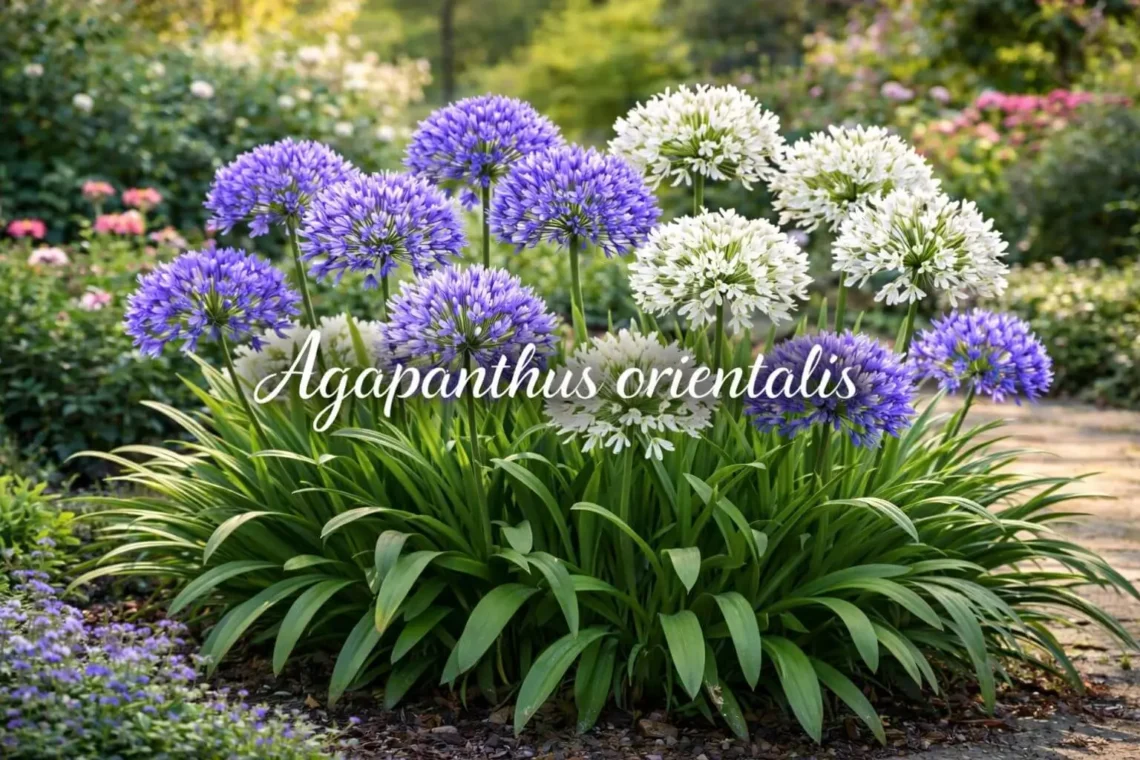
Agapanthus orientalis, commonly known as Lily of the Nile, is a perennial flowering plant native to South Africa. This ornamental plant is highly valued for its clusters of trumpet-shaped flowers and strap-like evergreen leaves, making it a popular choice in gardens worldwide. Belonging to the Amaryllidaceae family, the agapanthus plant thrives in a variety of settings, from borders to containers, and contributes aesthetic appeal with its long-lasting blooms. Gardeners appreciate agapanthus flowers for their vibrant colors and ease of maintenance, while horticulturists recognize the species for its adaptability and hybridization potential.
Botanical Overview of Agapanthus orientalis
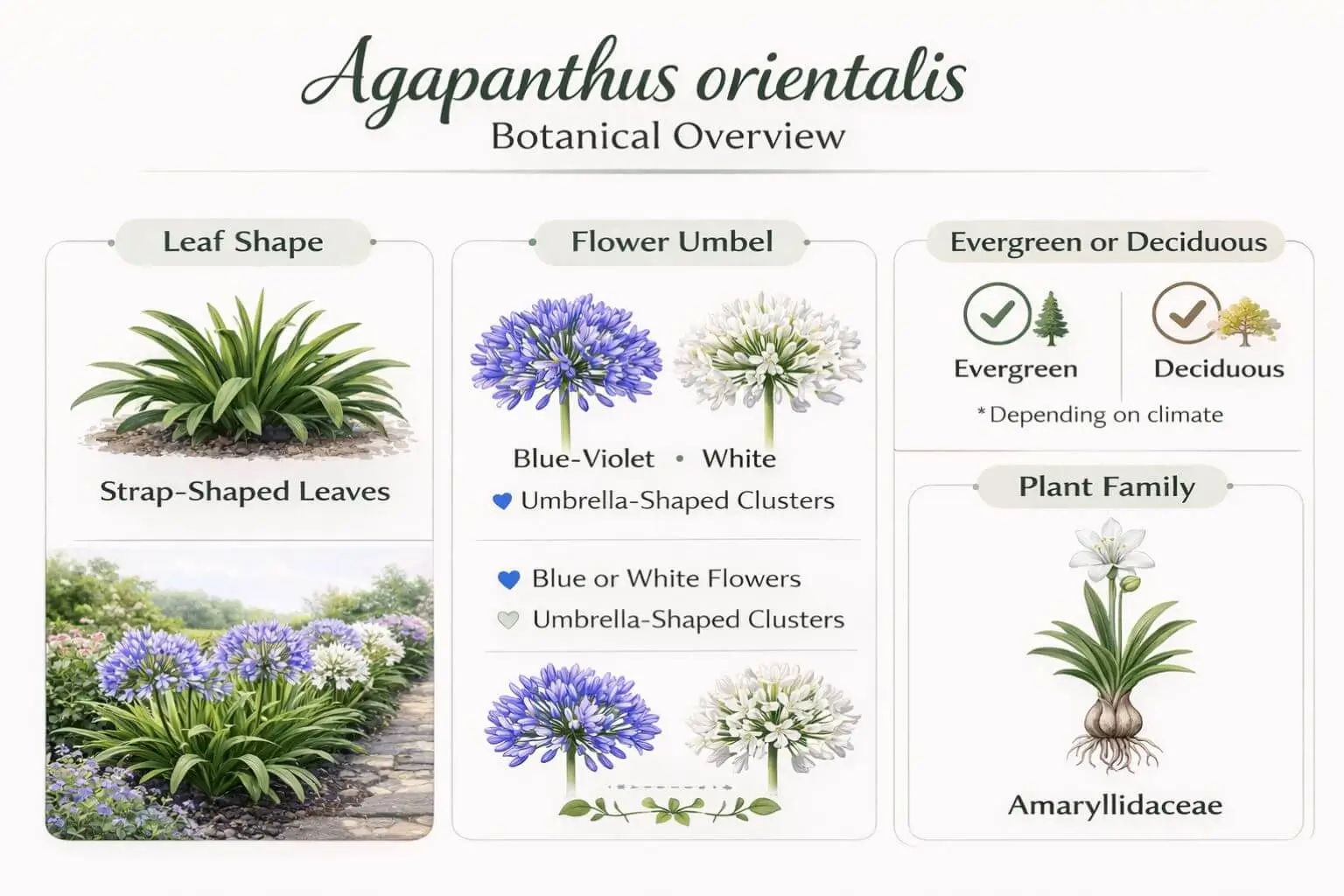
Agapanthus orientalis belongs to the Amaryllidaceae family, characterized by perennial, bulbous or rhizomatous plants. Typically evergreen in mild climates, it may behave deciduously under extreme cold. Its growth habit includes clumping foliage with tall flowering stems that support umbels of flowers.
Physical Characteristics
Leaves are strap-shaped, forming dense basal clumps. Flowers appear in umbrella-like umbels, with each bloom shaped like a slender trumpet. Agapanthus orientalis exhibits color variations ranging from deep blue to pure white, with hybrids displaying intermediate hues. Notable forms include agapanthus orientalis blue and agapanthus orientalis white, highlighting the diversity of agapanthus colors.
Taxonomy and Related Species
Agapanthus orientalis differs from Agapanthus africanus primarily in size, flower arrangement, and natural distribution. While A. africanus is typically smaller and native to the Cape region, A. orientalis is more vigorous and widespread. Subspecies and cultivars include agapanthus praecox subsp orientalis, with named varieties such as ‘Queen Mum’, ‘Peter Pan’, and ‘Baby Pete’, each offering unique flower size and coloration. Agapanthus orientalis queen mum is known for large, pale-blue umbels.
Growing Conditions
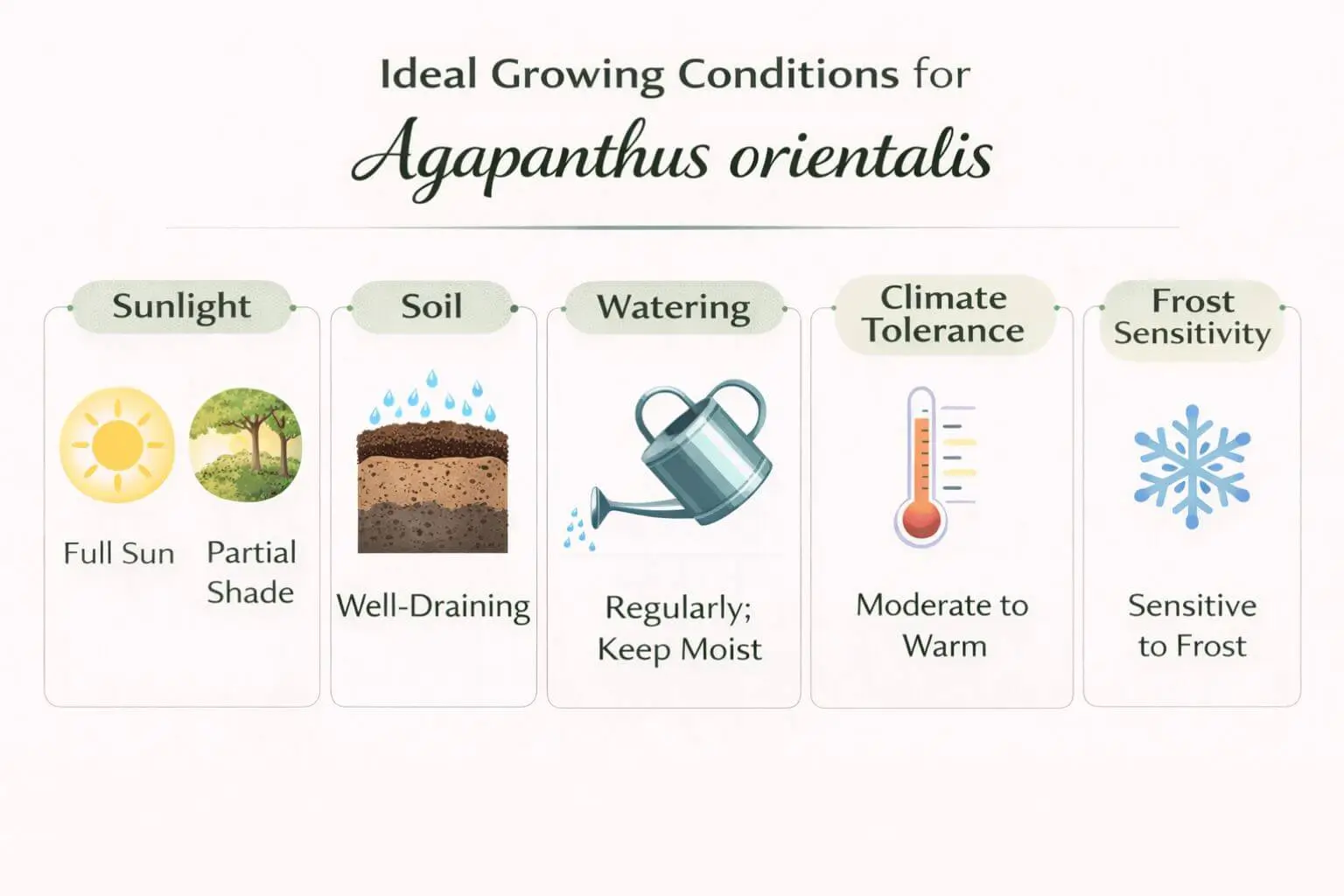
Healthy growth of Agapanthus orientalis depends on suitable light, soil, and climate conditions.
-
Sunlight Requirements
Agapanthus orientalis prefers full sun for optimal flowering but tolerates partial shade. While it will grow in shade, flowering may be reduced. Gardeners should consider agapanthus sun or shade carefully to balance growth and bloom production.
-
Soil and Watering
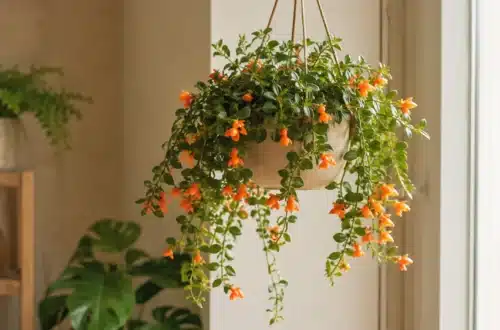
The plant thrives in well-draining soil, enriched with organic matter. Regular watering promotes growth during active seasons but should be moderated to prevent root rot. Fertilization during spring and summer enhances flower production. Proper agapanthus orientalis care includes maintaining soil moisture without waterlogging. In German-speaking regions, gardeners refer to this as agapanthus gießen. Similar to Agapanthus orientalis, plants like the Flax Lily Plant also thrive in well-draining soil and full sun, offering vibrant flowers and low-maintenance care.
-
Climate and Hardiness
Agapanthus orientalis is hardy in mild climates but sensitive to frost. It can tolerate temperatures down to -5°C but may require winter protection in colder zones. Evergreen behavior depends on climate, with some varieties maintaining foliage year-round (agapanthus evergreen). Gardeners also consider agapanthus winterhärte or ist agapanthus winterhart when selecting suitable cultivars.
Propagation and Cultivation
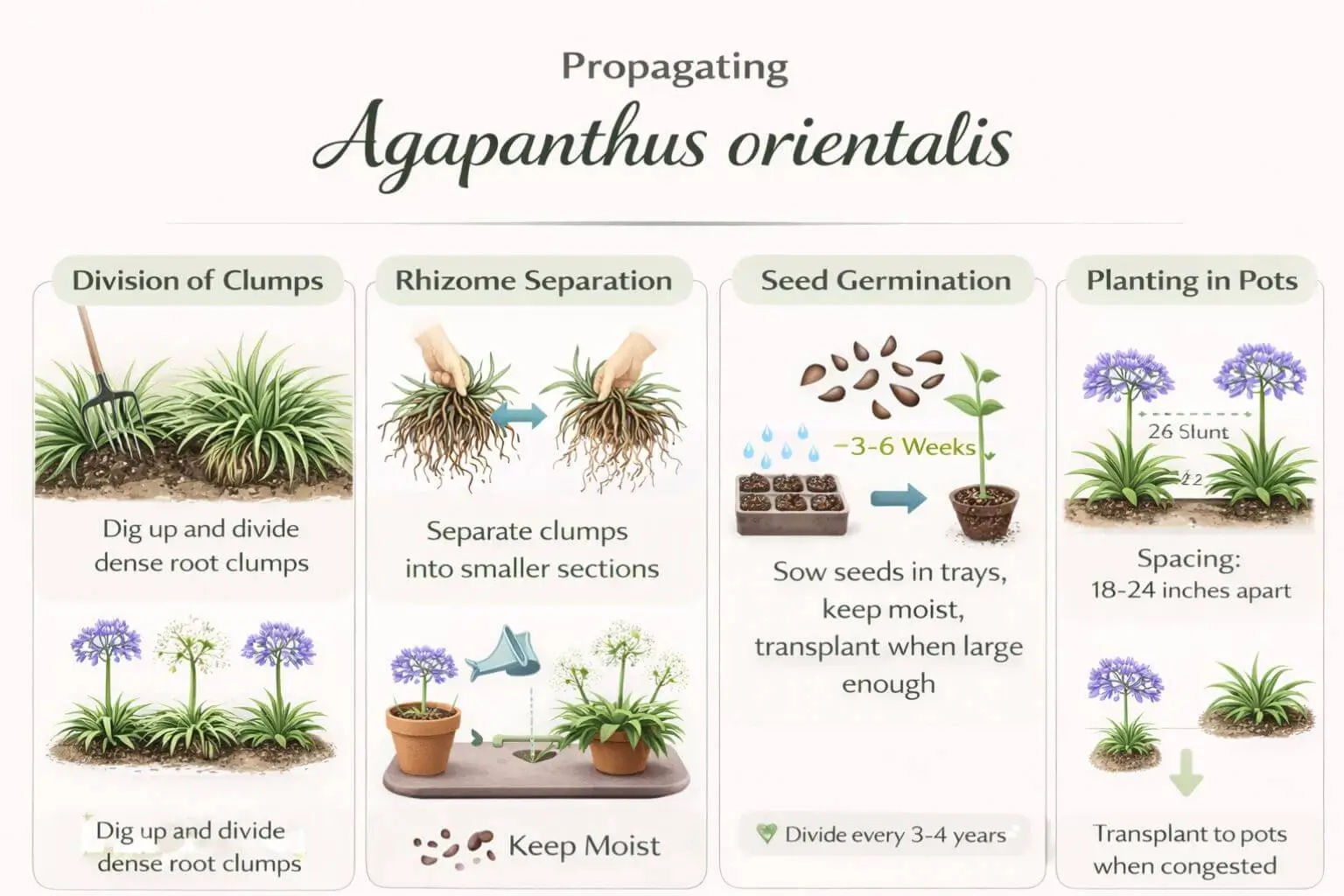
Propagation ensures long-term availability and maintains cultivar traits.
Propagation Methods
Agapanthus orientalis propagates through division of mature clumps, separating rhizomes, or seed germination under controlled conditions. Agapanthus rhizome division is effective for preserving characteristics, while agapanthus vermehrung by seed may produce variable traits. Proper agapanthus orientalis propagation ensures vigorous plants for landscaping.
Planting Guidelines
Clumps should be spaced 30–50 cm apart to allow full growth. Agapanthus orientalis can be planted in pots (agapanthus orientalis im kübel) or directly in the ground (agapanthus orientalis einpflanzen). When transplanting, care should be taken to minimize root disturbance. Umtopfen (repotting) may be necessary for container-grown plants.
Varieties and Cultivars
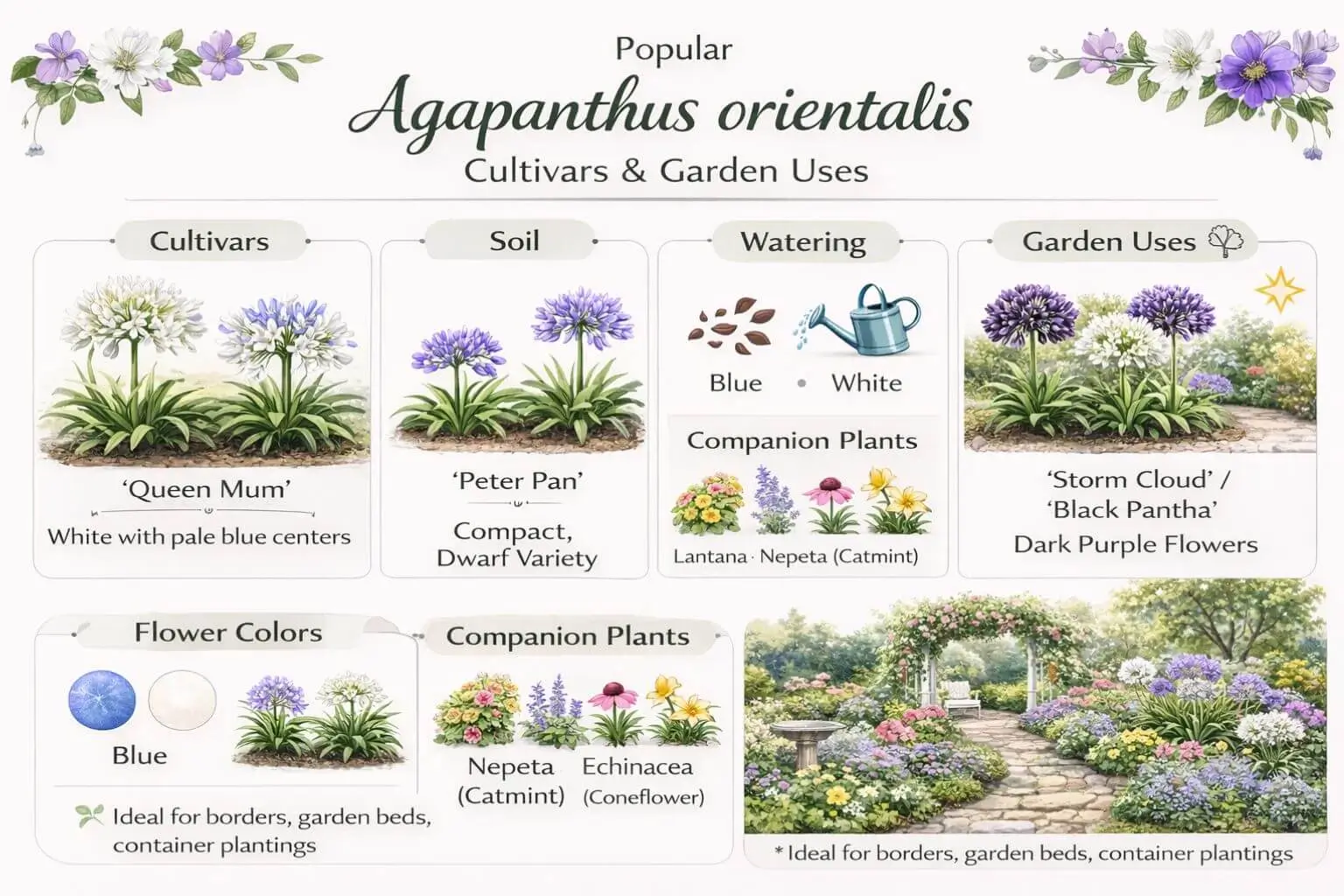
Agapanthus orientalis offers diverse aesthetic options.
Color-Based Varieties
Blue and white forms are most common, with rare cultivars such as agapanthus orientalis albus offering pure white blooms. Agapanthus orientalis blue provides classic garden color, while agapanthus orientalis white adds contrast to mixed plantings.
Named Cultivars
Distinct cultivars include ‘Queen Mum’, ‘Peter Pan’, ‘Baby Pete’, ‘Storm Cloud’, and ‘Black Pantha’. Each cultivar varies in flower size, color intensity, and growth habit. Agapanthus orientalis storm cloud and agapanthus orientalis black pantha provide unique, darker tones that suit modern landscapes.
Common Problems and Solutions
Agapanthus orientalis is generally resilient but can face pests and growth issues.
Pests and Diseases
Aphids (agapanthus orientalis läuse), snails, and fungal infections are primary concerns. Monitoring and early treatment prevent spread and preserve plant health. Agapanthus orientalis krankheiten can be managed through good garden hygiene and fungicidal applications.
Leaf and Flower Issues
Yellowing leaves (agapanthus orientalis gelbe blätter) may indicate nutrient deficiency or overwatering. Drooping leaves or poor flowering (agapanthus orientalis lässt blätter hängen) can result from inadequate sunlight, water stress, or aging clumps. Corrective measures include adjusting care routines and dividing older clumps.
Landscape and Garden Uses
Agapanthus orientalis is versatile for garden design. Its structural foliage and tall flower stems complement borders, containers, and mass plantings. Agapanthus lily clusters work well with companion plants, while agapanthus garden placement enhances visual appeal in both formal and informal landscapes. Multiple plants (agapanthus plants) can create a bold, color-rich display. For gardeners designing layered borders or mixed perennial beds, companion plants such as Japanese Sweet Flag Grass complement Agapanthus orientalis, adding texture and seasonal interest.
Conclusion
Agapanthus orientalis, the Lily of the Nile, combines ornamental beauty with low-maintenance care. Understanding its botanical traits, growing conditions, and propagation methods allows gardeners to select appropriate cultivars and ensure healthy growth. With proper sunlight, soil, watering, and winter protection, agapanthus flowers thrive in diverse landscapes, offering vibrant color and structural appeal.
FAQs
- What is Agapanthus orientalis?
Agapanthus orientalis, also known as Lily of the Nile, is a perennial flowering plant native to South Africa, recognized for its umbels of blue or white flowers and strap-shaped leaves. - Does Agapanthus orientalis grow in shade or sun?
It prefers full sun but can tolerate partial shade, although flowering may be reduced in low-light conditions. - How do you propagate Agapanthus orientalis?
The plant can be propagated through division of mature clumps, by separating rhizomes, or from seeds under controlled conditions. - What are the common varieties of Agapanthus orientalis?
Popular varieties include ‘Queen Mum’, ‘Peter Pan’, ‘Baby Pete’, ‘Storm Cloud’, and ‘Black Pantha’, each varying in flower color and size. - How do you care for Agapanthus orientalis?
Care involves well-draining soil, moderate watering, full to partial sunlight, periodic fertilization, and protection from frost in colder climates. - What pests or problems affect Agapanthus orientalis?
Aphids, snails, fungal infections, yellowing leaves, and drooping foliage are common issues that can be managed with proper garden hygiene and care.