Introduction: What Is Variegated Lomandra?
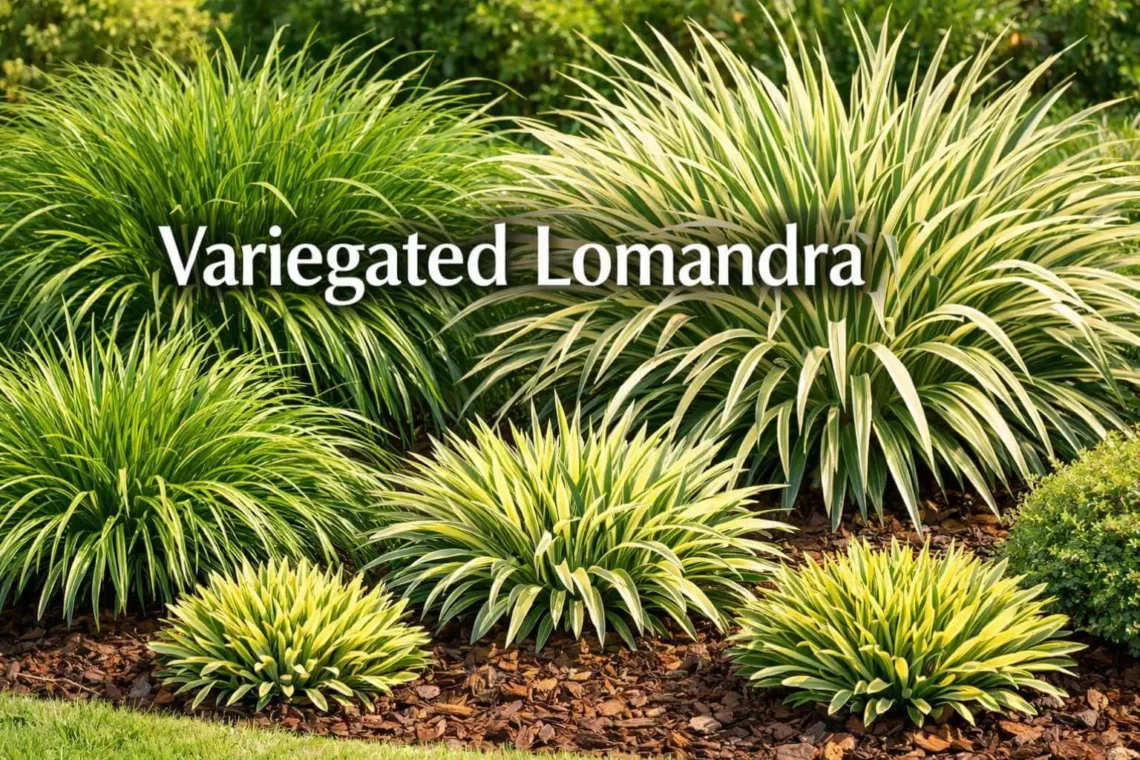
Variegated lomandra is a cultivated ornamental grass-like plant known for its distinctive multi-colored leaves. Unlike solid-green lomandra, variegated forms display stripes, margins, or streaks of cream, yellow, or white on green foliage. These patterns are the result of selective breeding rather than natural mutation, producing visually dynamic plants. Commonly used in landscapes and gardens, variegated lomandra adds texture, color contrast, and ecological interest without excessive maintenance. It is suitable for borders, mass plantings, or container gardens. This grass-like perennial also supports soil stabilization and provides habitat for small fauna, making it both decorative and functional in sustainable landscaping.
Botanical Background and Classification
Relationship to Lomandra longifolia
Variegated lomandra is derived primarily from Lomandra longifolia, a native Australian perennial grass-like species. While L. longifolia occurs naturally with solid green foliage, variegated cultivars result from selective horticultural practices emphasizing leaf color variation. The variegated forms retain the structural traits of the species—tough, fibrous leaves, and dense basal growth—but are propagated for ornamental purposes. Both natural and cultivated forms share drought tolerance, adaptability, and ecological resilience, although variegated varieties are less likely to spread aggressively in native environments. Variegated lomandra is derived primarily from Lomandra longifolia, a native Australian perennial species with solid green foliage.
Common Variegated Lomandra Varieties Explained
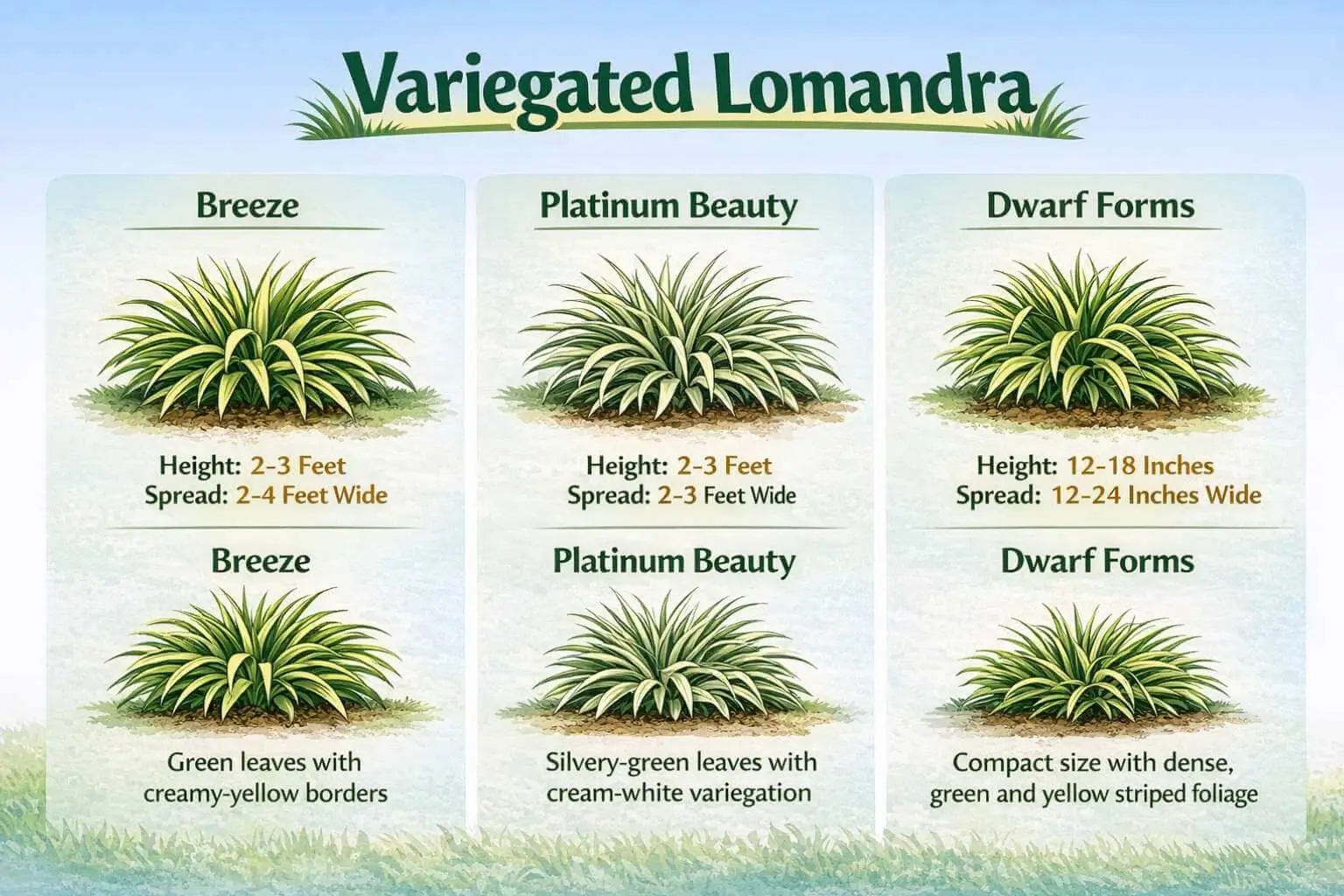
Variegated lomandra includes multiple cultivated forms, each offering unique visual and structural qualities. Differences arise in leaf coloration, height, spread, and overall texture, providing diverse options for landscape design. For more ideas on incorporating variegated lomandra into garden designs, see Lomandra Variegated.
-
Breeze-Type Variegated Lomandra
The Breeze cultivar features narrow, arching leaves with subtle yellow or cream variegation along green blades. Its medium height and tufted growth habit make it suitable for borders or accent plantings. Known as variegated lomandra breeze or lomandra longifolia Breeze, this form emphasizes texture and movement. Breeze varieties maintain the species’ resilience and are low-maintenance, thriving in full sun to partial shade.
-
Platinum Beauty and Similar Cultivars
Platinum Beauty showcases broad, linear leaves with striking cream-to-white margins against green centers, enhancing contrast and ornamental appeal. Also referred to as lomandra platinum beauty, mat rush platinum beauty, or platinum beauty mat rush, it reaches moderate height with dense, upright clumps. This cultivar is popular for mass plantings or mixed garden beds due to its eye-catching foliage and structural consistency.
-
Dwarf and Compact Variegated Forms
Compact selections, including dwarf variegated lomandra and variegated tanika lomandra, are smaller in stature and suitable for confined spaces or container planting. These forms maintain variegation patterns while providing controlled growth, typically under 30–40 cm tall. Their reduced size and uniform shape make them ideal for edging, rockeries, and small-scale landscapes.
Growth Characteristics and Mature Size
Variegated lomandra typically reaches heights of 30–120 cm and spreads between 50–150 cm depending on the cultivar. Lomandra longifolia size provides a benchmark for natural growth, while lomandra breeze size and lomandra platinum beauty size reflect ornamental selections. Leaf density, environmental factors, and planting conditions influence ultimate dimensions, with sunlight and soil fertility affecting height and spread. Dense clumping supports erosion control and maintains aesthetic structure in landscape design.
Variegated Lomandra Growth Rate and Lifespan
Growth rate varies among cultivars. Breeze types exhibit moderate growth, achieving maturity within 3–4 years, while Platinum Beauty may develop more slowly due to broader leaves and denser clumping. Seasonal growth is strongest in spring and early summer, with reduced expansion during cooler months. Variegated lomandra growth rate is generally steady under adequate sunlight, well-drained soil, and regular moisture. Lifespan can extend 10–15 years, though older clumps may require division to maintain vigor.
How to Care for Variegated Lomandra
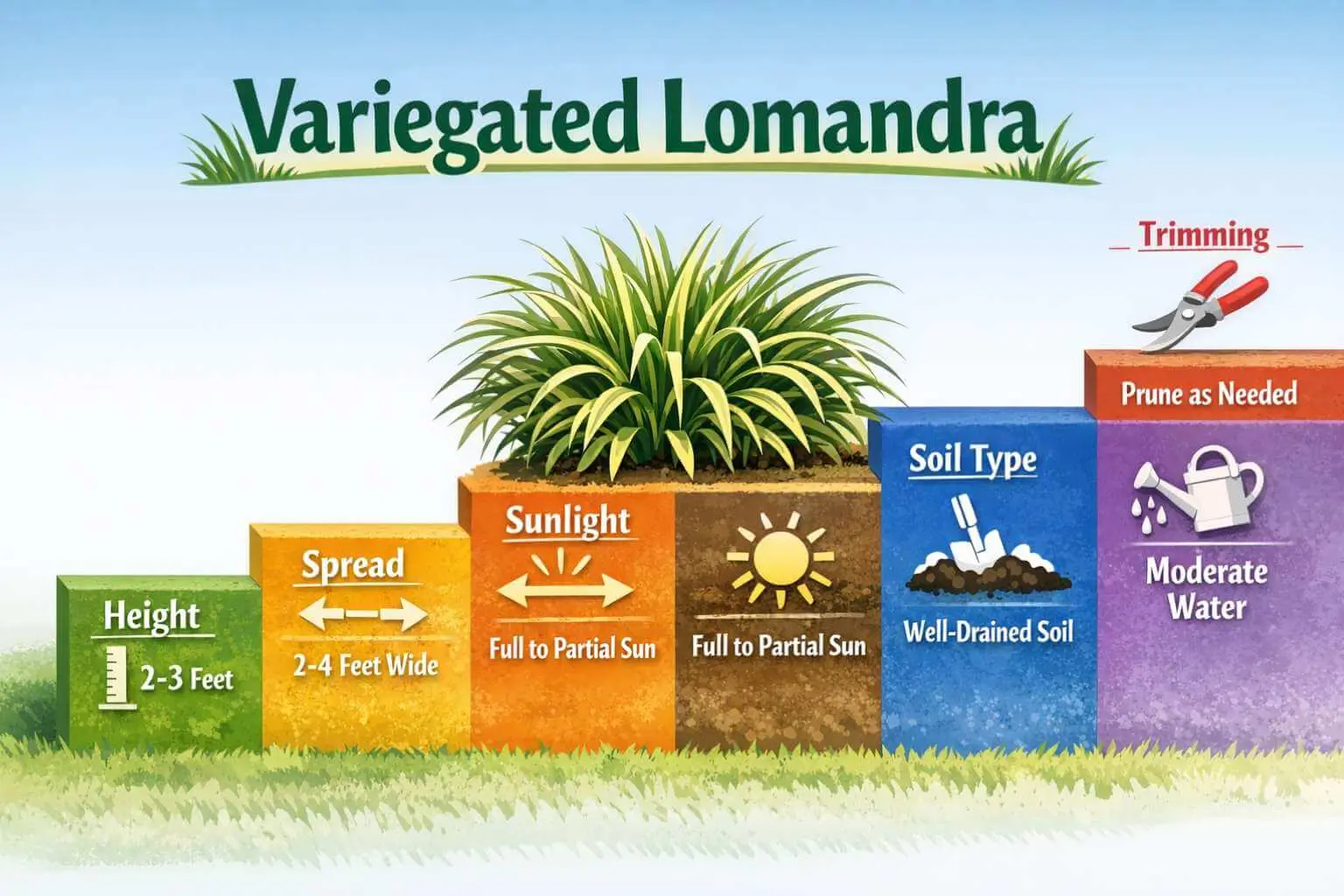
Variegated lomandra thrives in full sun to light shade. It prefers well-draining soils with moderate fertility, avoiding waterlogged conditions. Watering is necessary during establishment but minimal once the plant is mature. Maintenance includes occasional trimming of dead leaves and seasonal division for rejuvenation. Proper care ensures color retention and healthy growth. This section integrates principles relevant to general lomandra plant care and ornamental landscape use.
Transplanting Variegated Lomandra Successfully
Variegated lomandra can be transplanted when established clumps are actively growing, typically in spring or early autumn. While resilient, the plant may experience temporary stress if roots are disturbed. Careful handling preserves foliage and structural integrity.
Step-by-Step Transplanting Considerations
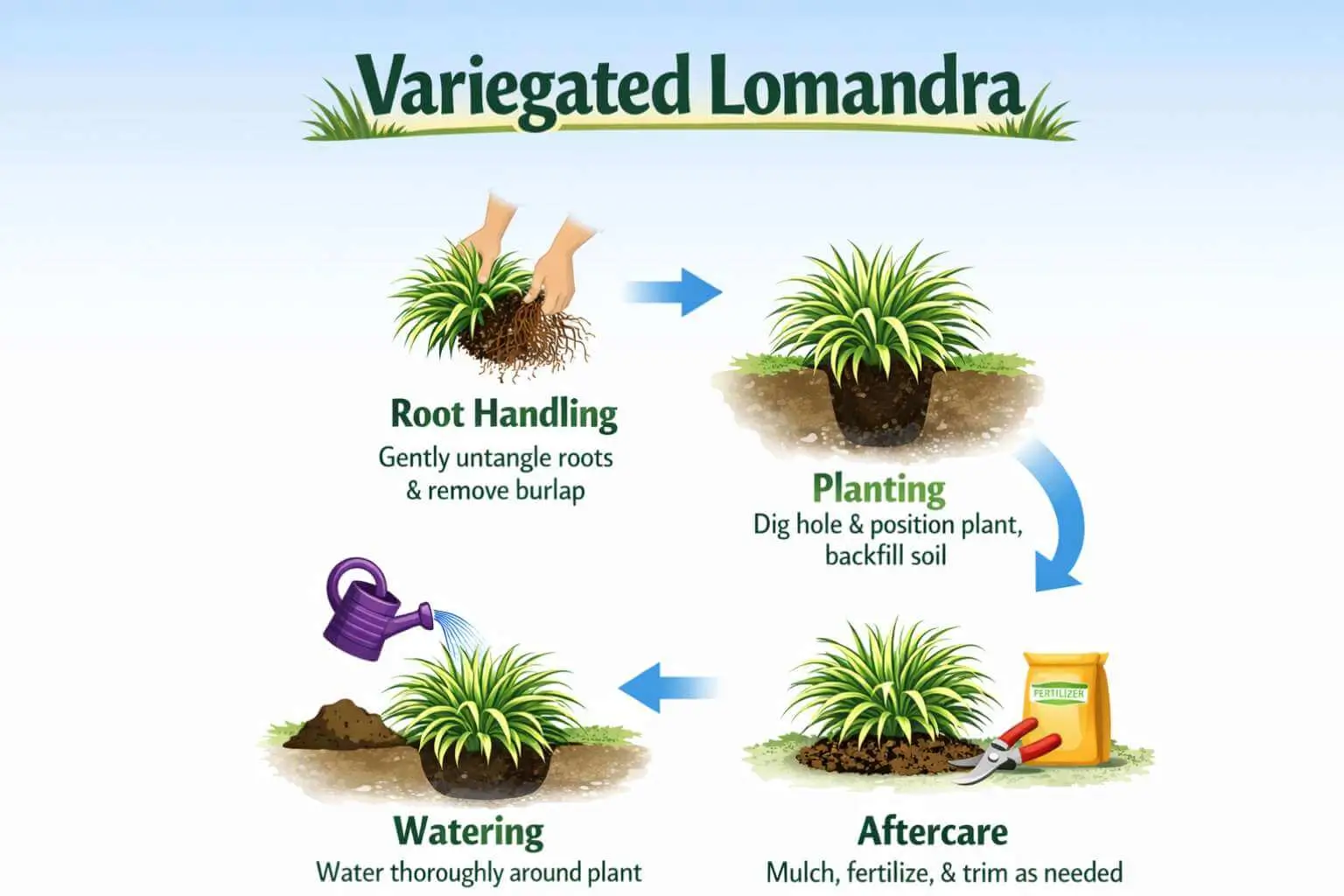
- Root Handling: Gently lift clumps, minimizing root disturbance. Avoid tearing fibrous roots.
- Planting: Place in pre-prepared soil with similar drainage and sun exposure.
- Aftercare: Water thoroughly and maintain light irrigation until recovery. Mulching helps retain moisture.
This method applies to can you transplant lomandra and how to transplant lomandra practices.
Is Variegated Lomandra Invasive?
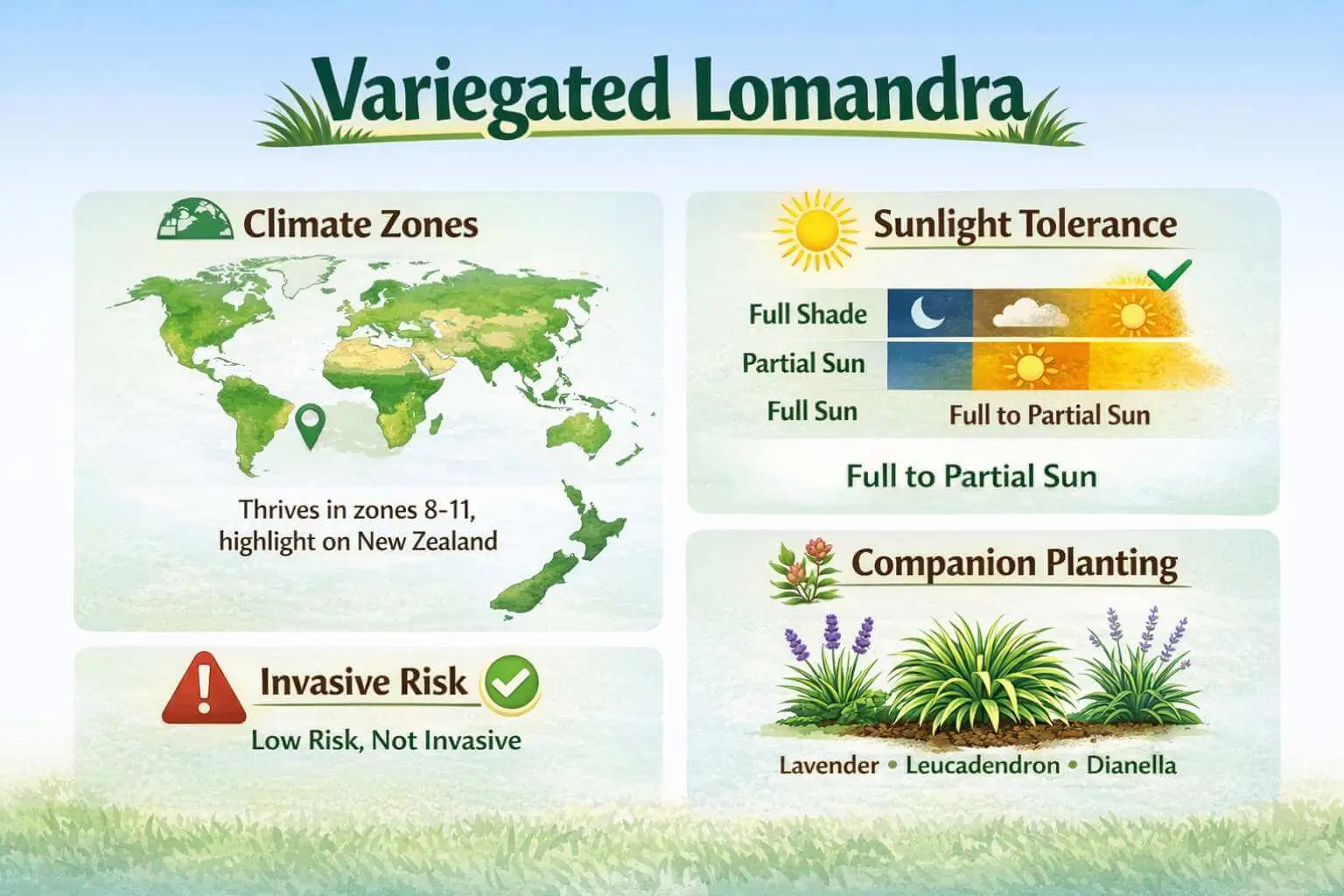
Variegated lomandra is not considered invasive in most landscapes. Cultivated varieties rarely spread aggressively outside garden settings. In contrast, some solid-green L. longifolia forms can naturalize in suitable habitats. Selecting clumping, variegated cultivars ensures ecological safety, minimizing the risk of uncontrolled spread. This directly addresses the question is lomandra invasive.
Companion Planting With Variegated Lomandra
Variegated lomandra pairs effectively with contrasting textures and colors. Platinum beauty lomandra companion plants can include low shrubs, succulents, and perennials that highlight variegation. Functional pairing also considers growth rate, maintenance, and water requirements to create balanced, visually appealing garden compositions. Variegated lomandra pairs well with plants like flax lily for added texture and color contrast Flax Lily Plant.
Regional Growing Considerations
Growing Variegated Lomandra in New Zealand
Variegated lomandra adapts well to New Zealand climates. It tolerates coastal winds, moderate frost, and a range of soils, though optimal growth occurs in full sun to partial shade. Local care practices should address irrigation and occasional pruning for ornamental consistency, reflecting considerations for variegated lomandra nz.
Conclusion: Understanding Variegated Lomandra in Landscape Design
Variegated lomandra offers structural interest, color contrast, and ecological benefits in landscapes and gardens. Understanding its varieties, growth habits, and care requirements enables informed plant selection. Gardeners can explore different cultivars, ensure proper placement, and maintain healthy plants, reinforcing sustainable and aesthetic landscape design.
FAQs
- What makes variegated lomandra different from standard lomandra?
Variegated lomandra displays multi-colored leaf patterns, whereas standard lomandra has solid green foliage. Variegation arises from selective cultivation for ornamental purposes. - How big does variegated lomandra typically grow?
Size ranges depend on cultivar: Breeze types reach 60–90 cm tall, Platinum Beauty up to 120 cm, and dwarf forms remain under 40 cm. Spread ranges from 50–150 cm. - Does variegated lomandra grow quickly?
Growth is moderate, fastest in spring and early summer. Environmental conditions such as sun exposure, soil fertility, and water availability influence overall growth rate. - Can variegated lomandra be transplanted without damage?
Yes, with careful root handling, proper soil preparation, and adequate aftercare, variegated lomandra can be transplanted successfully. - Is variegated lomandra safe to use near natural ecosystems?
Yes. Cultivated variegated varieties rarely spread outside gardens, minimizing ecological risk compared to some native L. longifolia forms. - Which garden styles benefit most from variegated lomandra?
Variegated lomandra complements contemporary, coastal, xeriscape, and mixed perennial gardens, offering visual contrast and low-maintenance structural interest.