Introduction
Bamboo plants have become a popular choice in modern homes and gardens due to their fast growth, clean appearance, and low-maintenance nature. Used for centuries in landscaping, construction, and cultural practices, bamboo plants now play a key role in contemporary indoor décor and outdoor garden design. Their versatility allows them to thrive as stylish houseplants or functional outdoor screens. Beyond aesthetics, bamboo plants carry deep symbolism and offer practical environmental benefits. Most people searching for bamboo plants want clear answers about buying the right type, learning proper care routines, and understanding what makes bamboo suitable for indoor and outdoor use. This guide covers all those needs in a simple, factual, and practical way.
What Are Bamboo Plants?
-
Overview of Bamboo as a Plant
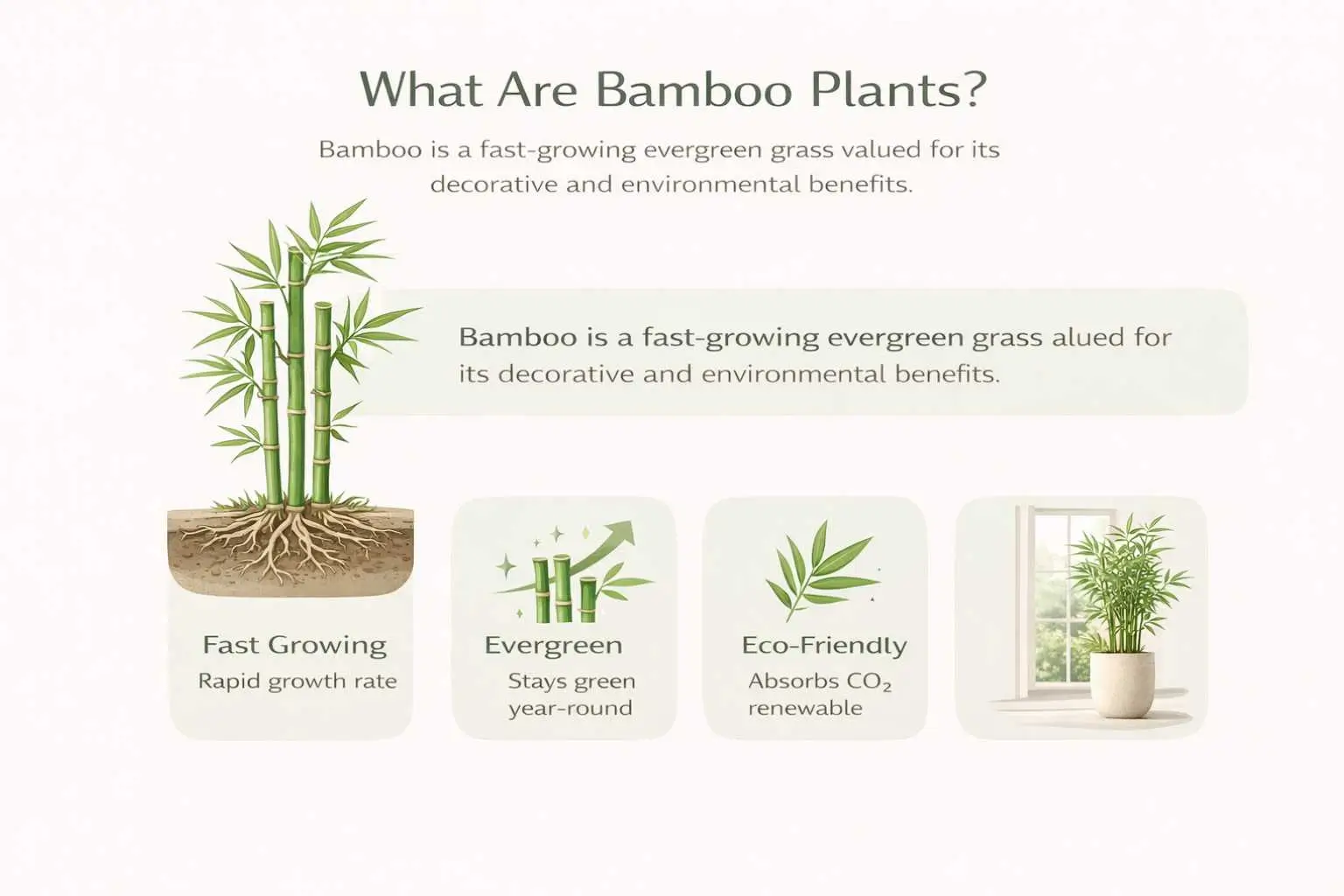
Bamboo plants belong to the grass family and are classified as fast-growing evergreen plants. Unlike trees, bamboo regenerates quickly and maintains year-round greenery, making it highly valuable for both decoration and environmental use. Some species can grow several feet in a single growing season under the right conditions. Bamboo plants are widely used for natural fencing, privacy screens, erosion control, and interior styling. Their strong root systems and tall, upright canes add structure to landscapes while also improving air quality and reducing soil erosion.
-
Bamboo Plants Meaning and Symbolism
The bamboo plants meaning is deeply rooted in many cultures, especially in Asia, where bamboo symbolizes strength, flexibility, longevity, and prosperity. Its ability to bend without breaking represents resilience and balance. In home décor and landscaping, bamboo is often used to create calm, positive spaces that reflect growth and harmony. Because bamboo plants stay green year-round, they are also associated with good luck and stability, making them a popular choice for homes, offices, and garden designs.
Types of Bamboo Plants
-
Indoor Bamboo Plants
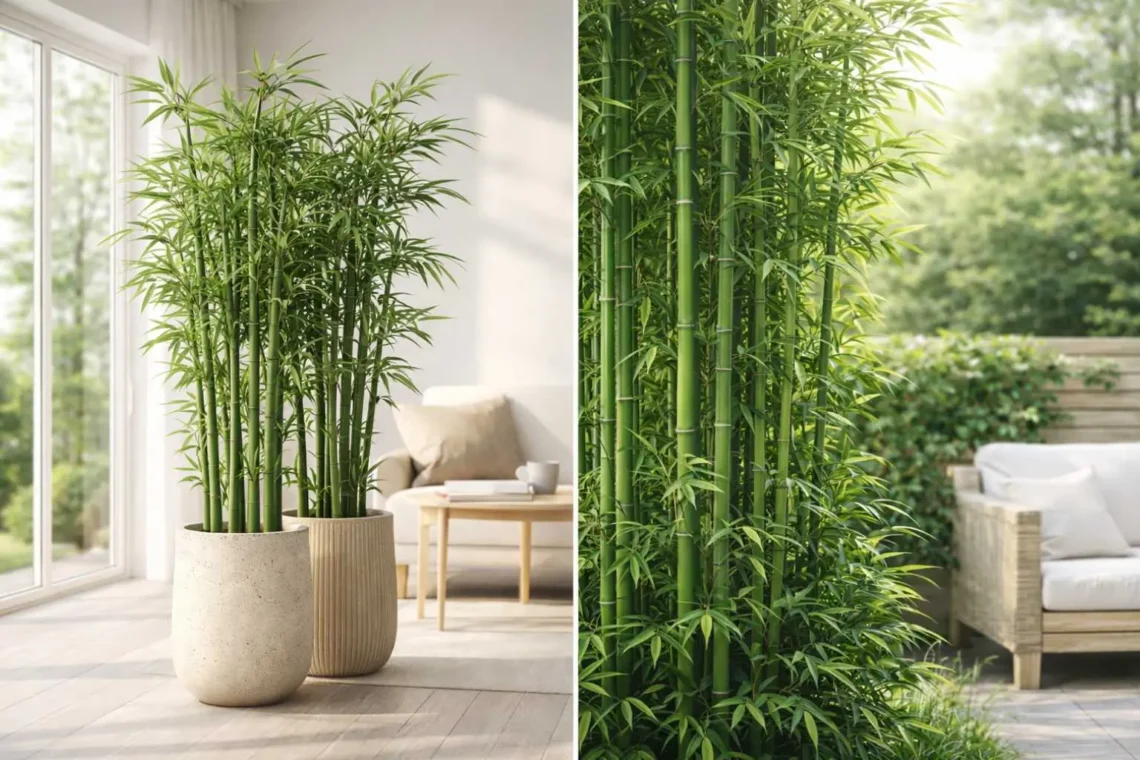
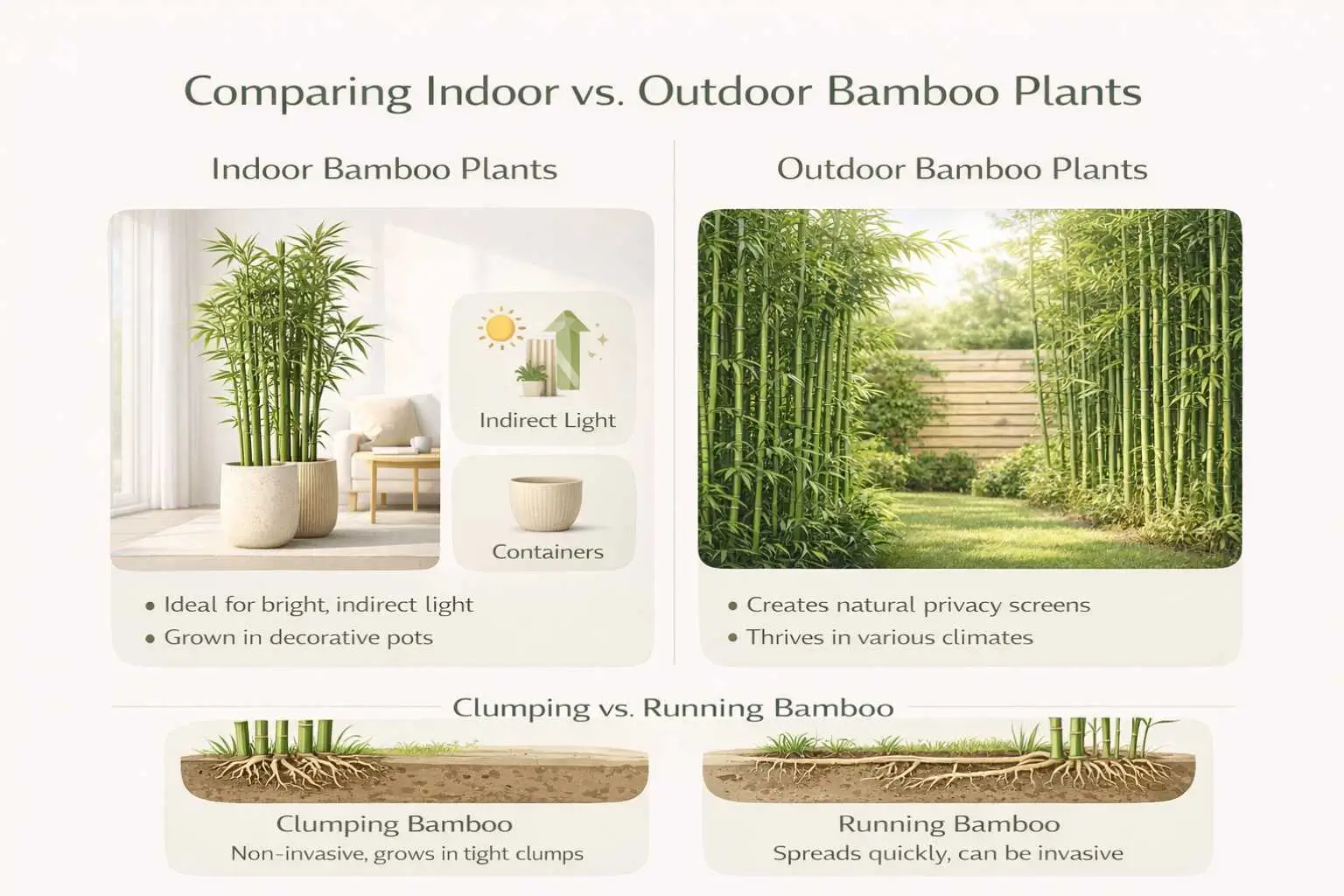
Indoor bamboo plants are selected for controlled growth, compact size, and adaptability to indoor conditions. Popular varieties include lucky bamboo and small clumping bamboo species that grow well in pots. These plants are commonly used in living rooms, offices, and entryways. Ideal placement includes areas with bright, indirect light and stable temperatures. Containers should have proper drainage, and decorative pots are often used to enhance their visual appeal. Many homeowners look for indoor bamboo plants for sale that are already potted and well-established for easy care.
-
Outdoor Bamboo Plants
Outdoor bamboo plants are commonly used in gardens, landscaping projects, and as natural privacy screens. There are two main types: clumping bamboo and running bamboo. Clumping bamboo grows in tight clusters and is easier to manage, while running bamboo spreads quickly and requires root barriers. Climate and available space play a major role when selecting outdoor bamboo plants. Warmer regions support a wider range of species, while colder climates need cold-hardy varieties.
Learn more: 7+ Stunning Reasons Sweet Flag Grass Transforms Gardens
How to Take Care of Bamboo Plants
Light, Water, and Soil Requirements
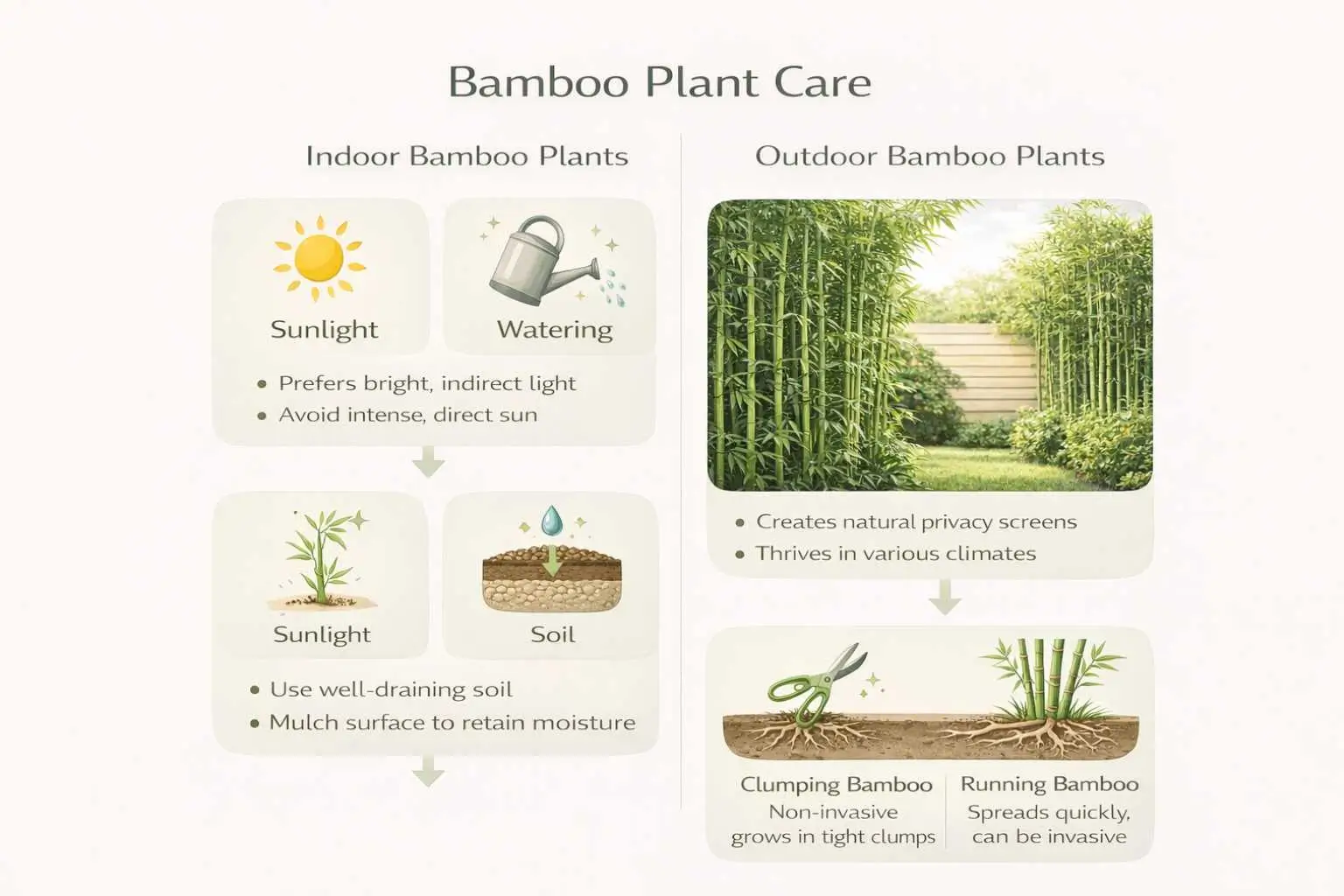
Bamboo plants have different needs depending on whether they are grown indoors or outdoors. Indoor bamboo prefers bright, indirect sunlight, while outdoor bamboo can tolerate partial to full sun depending on the species. Watering should be consistent, keeping the soil moist but not waterlogged. Overwatering can lead to root rot. Well-draining, nutrient-rich soil supports healthy growth and prevents moisture buildup around the roots.
Bamboo Plant Maintenance Tips
Proper maintenance is essential when learning how to take care of bamboo plants.
- Prune dead or weak canes to encourage healthy growth
- Trim regularly to maintain shape and size
- Use root barriers or containers to prevent overgrowth
- Adjust watering and feeding routines seasonally to match growth cycles
Where to Buy Bamboo Plants
-
Buying Bamboo Plants Locally
Local garden centers and nurseries are reliable places to find healthy bamboo plants. Shopping locally allows buyers to inspect plant quality before purchasing. Look for strong green canes, healthy leaves, and firm roots. Availability may vary by region, so searching for bamboo plants near me often helps locate nearby suppliers that stock climate-appropriate varieties.
-
Buying Bamboo Plants Online
Online plant stores and marketplaces offer a wide selection of bamboo species. Buying bamboo plants online provides convenience and access to rare varieties. However, buyers should check seller reviews, plant size details, and shipping policies. When purchasing from large platforms, including bamboo plants amazon listings, it’s important to confirm plant health guarantees and proper packaging to avoid damage during delivery.
Bamboo Plants for Sale – What to Look For
-
Indoor Bamboo Plants for Sale
When choosing indoor bamboo plants for sale, focus on plant health and structure. Healthy indoor bamboo should have vibrant green leaves, firm stems, and a well-developed root system. The pot should be appropriately sized with drainage holes to prevent excess moisture buildup.
-
Bamboo Plants for Outdoor Use
Selecting bamboo plants for outside spaces requires attention to growth habits and spacing. Choose species suited to your climate and landscape size. Growth control methods such as root barriers and spacing guidelines help prevent unwanted spreading. Knowing where to buy bamboo plants for outside use ensures access to suitable, region-adapted varieties.
Benefits of Growing Bamboo Plants
-
Aesthetic and Home Décor Benefits
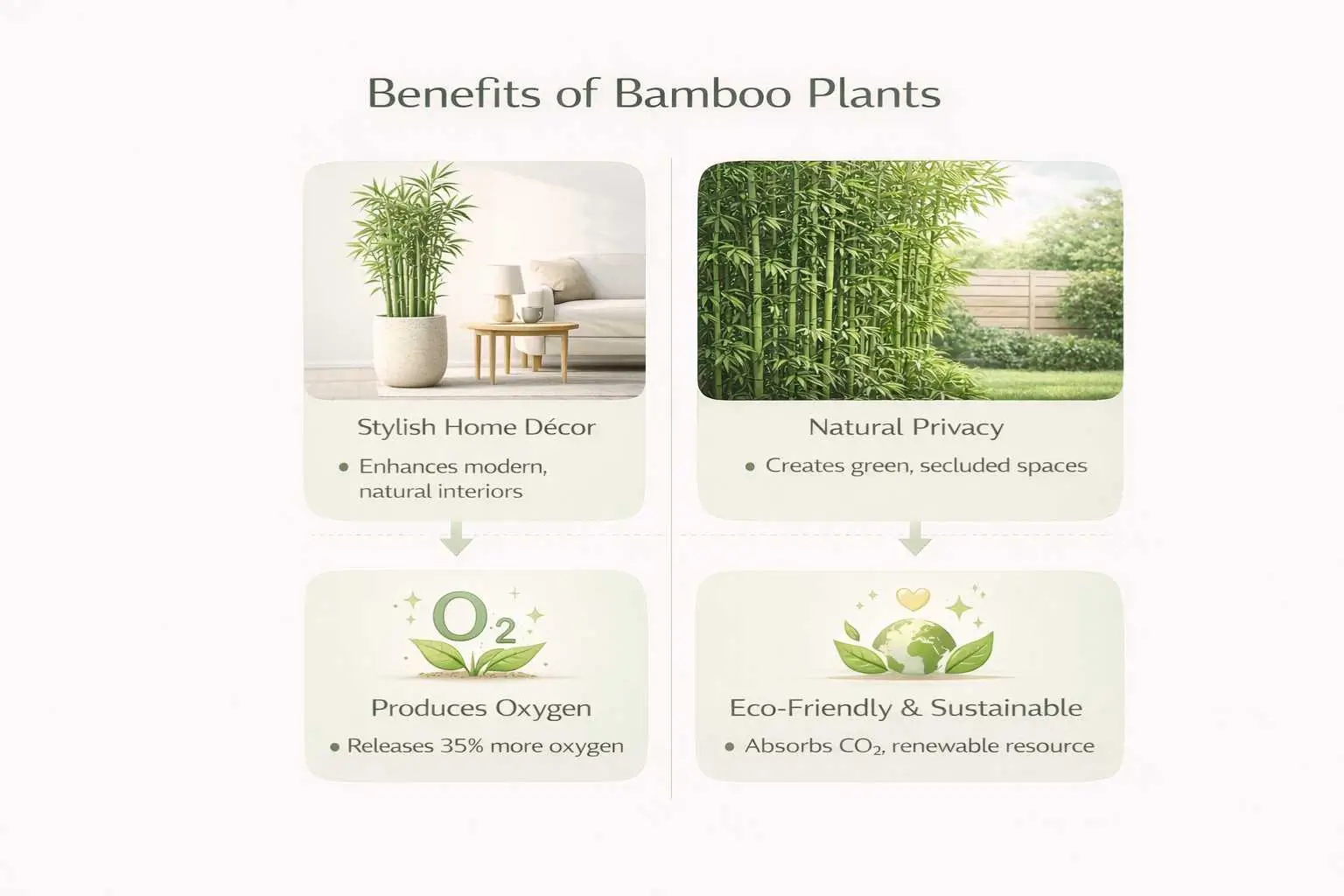
Bamboo plants offer a clean, modern look that fits minimalist and natural design styles. They add vertical interest, soft greenery, and natural privacy to both indoor and outdoor spaces. Bamboo works well in containers, garden borders, and open-plan interiors.
-
Environmental Benefits
Bamboo plants are known for high oxygen production and efficient carbon absorption. Their fast growth rate makes them a sustainable and eco-friendly plant choice. Bamboo requires fewer resources than many traditional landscaping plants, making it ideal for environmentally conscious homes.
Common Problems with Bamboo Plants
-
Yellowing Leaves and Slow Growth
Yellowing leaves are often caused by improper watering, poor drainage, or nutrient deficiencies. Slow growth may result from insufficient light or unsuitable soil conditions. Adjusting care routines usually restores healthy growth.
-
Pest and Overgrowth Issues
Common pests include spider mites and aphids, especially in indoor environments. Regular inspection and proper airflow help prevent infestations. For outdoor bamboo, controlling spread with root barriers and routine trimming prevents bamboo from spreading uncontrollably.
Conclusion & Call to Action
Bamboo plants are an excellent choice for both homes and gardens due to their fast growth, clean aesthetic, and adaptability to indoor and outdoor environments. They provide natural greenery, privacy, and environmental benefits while requiring relatively simple care when the right type is selected. By choosing a bamboo variety that suits your space, climate, and light conditions, and following a consistent care routine, bamboo plants can thrive for years. Whether used as a decorative houseplant or a functional outdoor screen, bamboo adds long-term value and visual balance. Explore bamboo plants for sale and start growing today to bring sustainable greenery into your living space.
Learn more: 8+ Fascinating Grassland Plants That Shape Our Planet
Frequently Asked Questions (FAQs)
Are bamboo plants easy to grow at home?
Yes, bamboo plants are generally easy to grow at home when matched with the right environment. Indoor varieties need indirect light and regular watering, while outdoor types require space and proper soil drainage.
Can bamboo plants survive indoors year-round?
Many bamboo plants can survive indoors year-round if they receive sufficient indirect light, stable temperatures, and consistent moisture. Indoor-specific varieties perform best in controlled conditions.
How fast do bamboo plants grow outdoors?
Outdoor bamboo plants are known for rapid growth. Depending on the species and climate, some types can grow several feet per year once established.
What is the meaning of bamboo plants in home décor?
The meaning of bamboo plants in home décor is associated with strength, balance, prosperity, and calm energy. Their evergreen appearance makes them a symbol of stability and positive growth.
Where is the best place to buy healthy bamboo plants?
Healthy bamboo plants can be purchased from reputable garden centers, local nurseries, or trusted online plant stores that provide clear plant details and quality guarantees.
Do bamboo plants need full sunlight or partial shade?
Bamboo plants generally prefer bright light. Indoor bamboo grows best in indirect sunlight, while outdoor bamboo can tolerate partial to full sun depending on the species.