Introduction
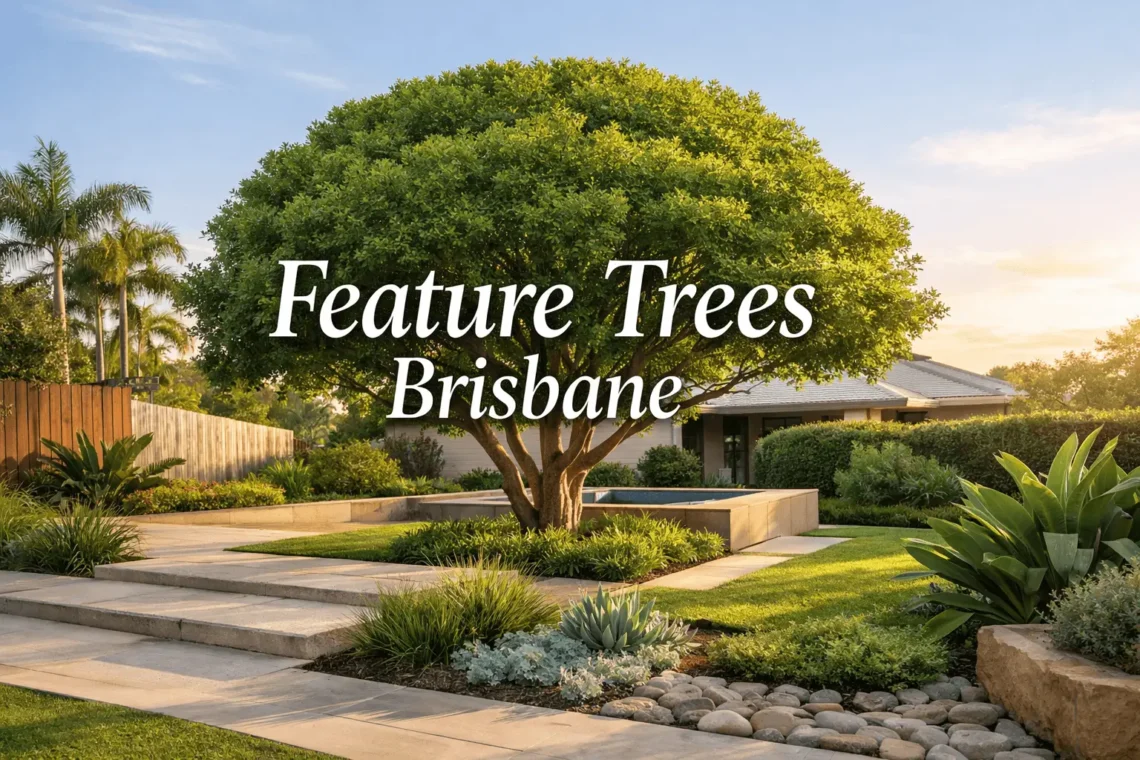
Feature trees Brisbane refers to carefully selected trees used as focal points in gardens, especially suited to Brisbane’s subtropical climate. These trees enhance visual appeal, provide shade, and define outdoor spaces in both modern and traditional landscapes. In Queensland, choosing the right feature tree involves balancing aesthetics with environmental adaptability. From compact urban yards to large residential properties, feature trees contribute structure, seasonal interest, and long-term value while supporting sustainable landscaping practices.
Quick Summary
- Feature trees in Brisbane are chosen for aesthetics, size, and climate adaptability
- Native and low-maintenance trees are ideal for Queensland conditions
- Small and dwarf varieties suit front yards and compact spaces
- Selection depends on sunlight, soil, and long-term growth needs
What Are Feature Trees and Why Are They Used in Brisbane Landscapes?
A feature tree is a visually striking tree used as a focal point in a garden, while regular trees are typically planted for general shade or coverage. Feature trees, also called statement trees, are chosen for their form, flowers, foliage, or bark. A feature tree is a carefully selected tree used to create visual focus, distinguishing it from general-purpose planting in landscape design.
In Brisbane landscapes, feature trees play a key role in both residential and urban design. They create visual hierarchy and anchor outdoor spaces.
Key roles of feature trees:
- A feature tree acts as a focal point in garden layouts
- Enhances curb appeal and property value
- Creates shade and structural balance
- Adds seasonal interest through flowers, foliage, or bark
Beautiful trees in Brisbane gardens are often selected not only for appearance but also for their ability to thrive in subtropical conditions. Feature trees are often referred to as statement or accent trees, similar to those highlighted in Accent Trees, where visual impact is the primary focus in landscape design.
Key Factors to Consider When Choosing Feature Trees in Brisbane
Choosing the right feature trees requires understanding Brisbane’s unique climate and environmental conditions. Queensland trees must handle heat, humidity, and occasional dry periods.
Important factors include:
- Heat and humidity tolerance: Essential for Brisbane’s subtropical climate
- Drought resistance: Helps trees survive dry seasons
- Root system behavior near structures: Prevents damage to foundations or paving
- Maintenance requirements: Determines long-term care needs
Other considerations:
- Soil types in Brisbane vary from sandy to clay-based
- Sunlight exposure affects growth and flowering
- Space constraints determine whether small or large trees are suitable
Selecting appropriate Brisbane trees ensures long-term health and landscape harmony.
Best Feature Trees Brisbane for Different Garden Needs
Small Feature Trees for Compact Spaces
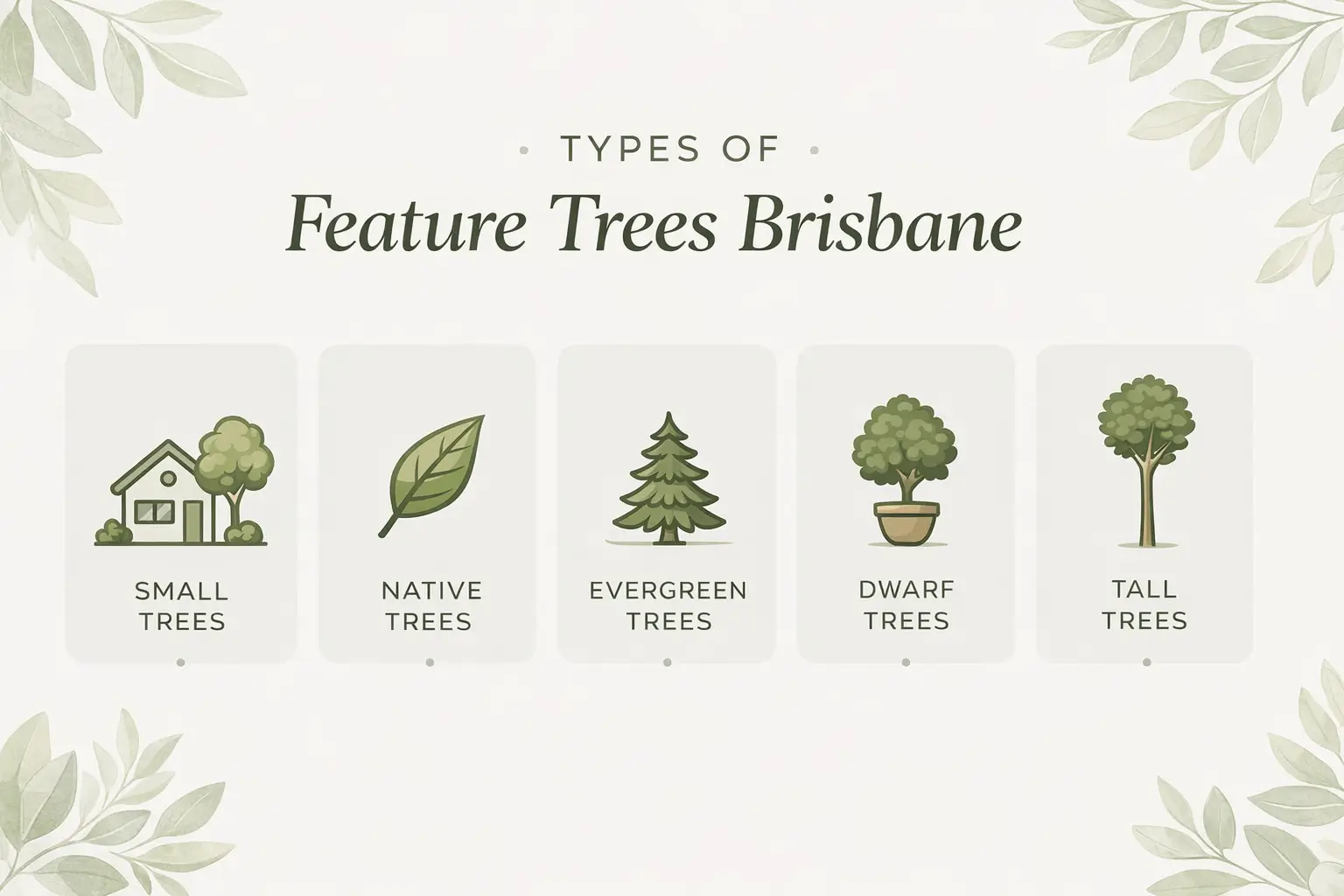
Small feature trees are ideal for suburban homes and limited spaces. They provide visual impact without overwhelming the garden.
Examples include:
- Ornamental native trees with compact growth
- Compact flowering trees for seasonal color
- Narrow canopy trees suitable for tight spaces
Small trees Brisbane homeowners choose often fit well in courtyards and front yards.
Native Trees Brisbane for Low Maintenance Landscapes
Native trees Brisbane gardeners prefer are adapted to local conditions, making them reliable and sustainable.
Key benefits:
- Adapted to Brisbane’s climate and soil
- Require less watering and fertilization
- Support local wildlife and biodiversity
Queensland native trees such as species from the Myrtaceae and Proteaceae families are commonly used for resilient landscaping. For example, species like the Brisbane Box tree are valued for their resilience and adaptability, as explained in Brisbane Box Tree, making them ideal for low-maintenance Queensland gardens.
Evergreen Feature Trees for Year-Round Appeal
Evergreen feature trees Brisbane gardens use provide consistent greenery throughout the year. They are ideal for privacy and visual continuity.
Benefits include:
- Continuous foliage coverage
- Effective screening and wind protection
- Stable structure in all seasons
Dwarf and Low Maintenance Feature Trees
Dwarf feature trees Brisbane homeowners choose are suitable for small gardens and busy lifestyles.
Advantages:
- Minimal pruning requirements
- Controlled size and shape
- Ideal for container planting or small yards
Low maintenance feature trees reduce the need for frequent care while maintaining aesthetic value.
Tall Feature Trees for Statement Landscaping
Tall feature trees Brisbane landscapes include are used in larger properties to create dramatic visual impact.
Characteristics:
- Large canopy spread
- Strong vertical presence
- Effective for shading and landscape anchoring
These trees are often used as centerpiece elements in expansive gardens.
Feature Tree for Front Yard Australia — Design Ideas
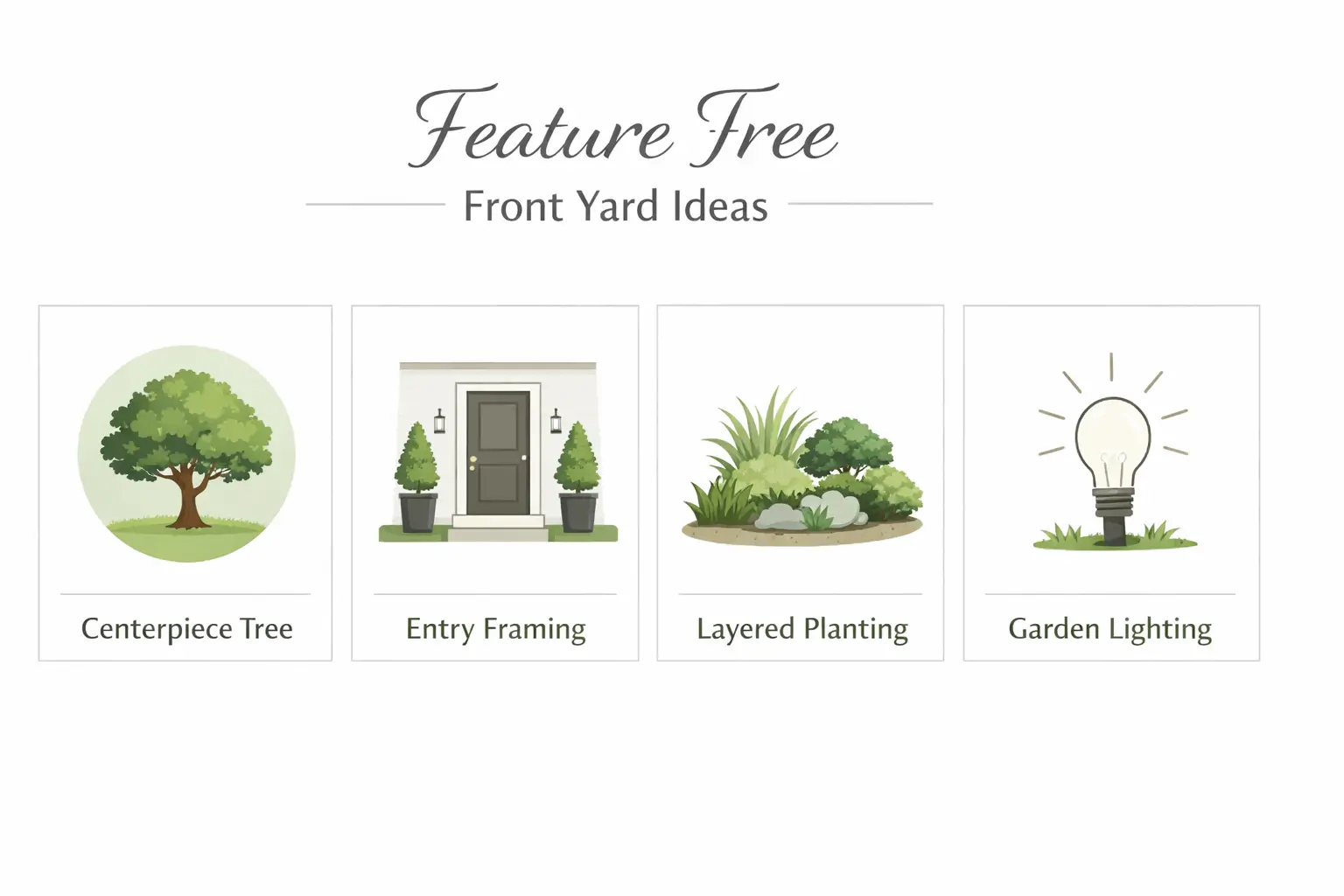
A feature tree for front yard Australia designs should create balance, enhance curb appeal, and complement the home’s architecture.
Effective design ideas:
- Centerpiece planting: Place a single tree as the focal point
- Framing entryways: Use trees symmetrically near entrances
- Pairing with shrubs and groundcovers: Adds depth and layering
- Using lighting for emphasis: Highlights structure at night
Feature tree ideas Australia homeowners use often focus on simplicity, symmetry, and long-term growth planning.
Comparison of Feature Tree Types for Brisbane Gardens
| Tree Type | Size | Maintenance | Best Use | Climate Suitability |
| Small feature trees | Compact | Low | Front yards | Excellent |
| Native trees | Medium–large | Very low | Sustainable gardens | Excellent |
| Evergreen trees | Medium | Moderate | Privacy/screens | Very good |
| Dwarf trees | Small | Very low | Small spaces | Excellent |
Small native trees Brisbane gardeners select are often the most versatile across different garden types.
Growth Rate of Feature Trees in Brisbane Conditions
Feature trees in Brisbane generally grow at slow to moderate rates, depending on species and conditions. Warm temperatures and extended growing seasons support steady development.
Factors affecting growth:
- Soil quality and drainage
- Water availability
- Sunlight exposure
- Seasonal climate variations
In subtropical climates, many trees experience faster growth during spring and summer, with slower development in cooler months.
Care Guide for Feature Trees Brisbane
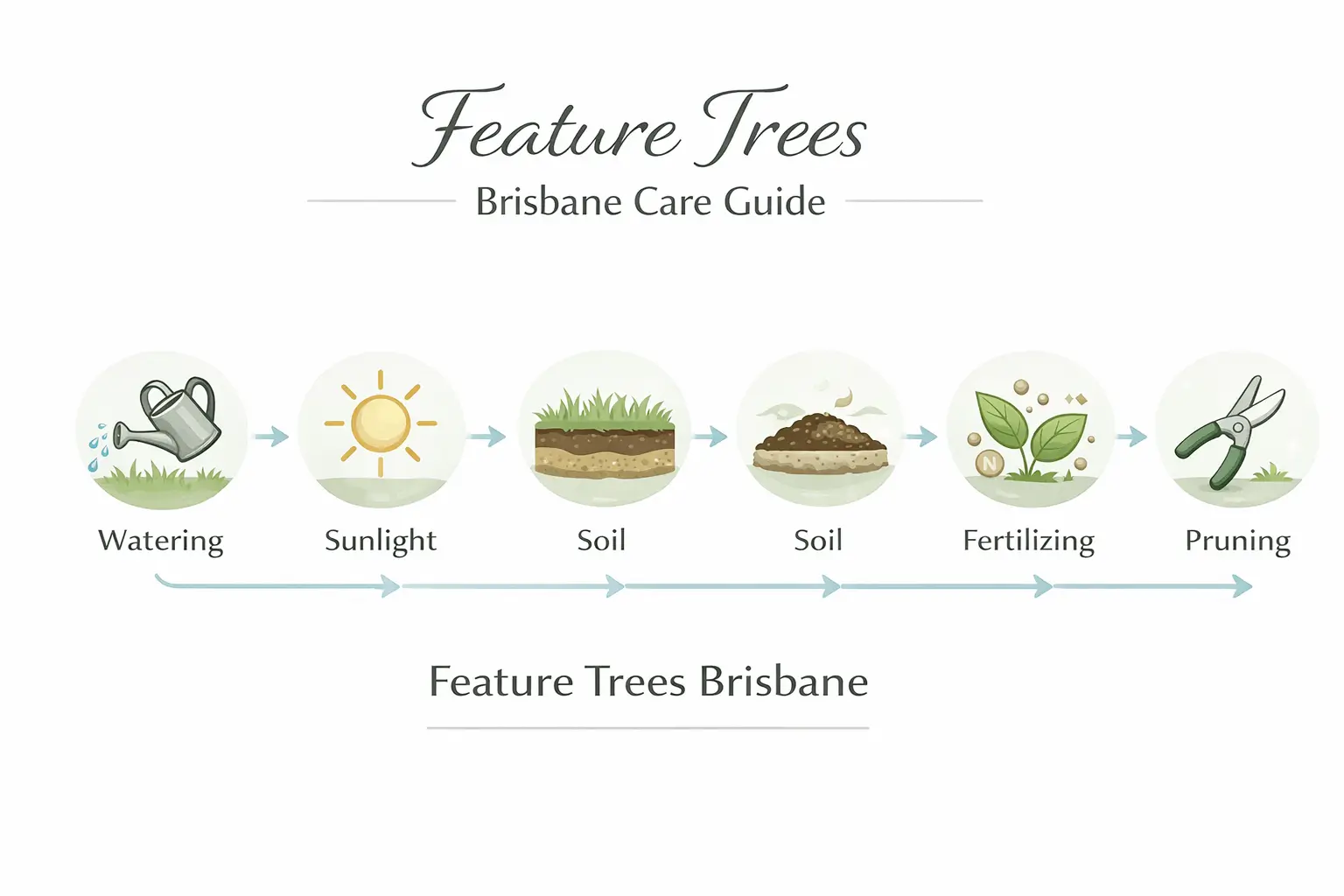
Proper care ensures healthy growth and longevity of feature trees in Brisbane gardens.
Key care requirements:
- Watering: Increase frequency during hot seasons, especially for young trees
- Sunlight: Most feature trees require full sun to partial shade
- Soil: Well-draining soil is essential for root health
- Fertilization: Apply balanced fertilizer during growing seasons
- Pruning: Maintain shape and remove dead or damaged branches
Practical tip: Overwatering is a common issue in Brisbane’s humid climate, particularly for native trees adapted to lower moisture levels.
Common Problems with Feature Trees and How to Fix Them
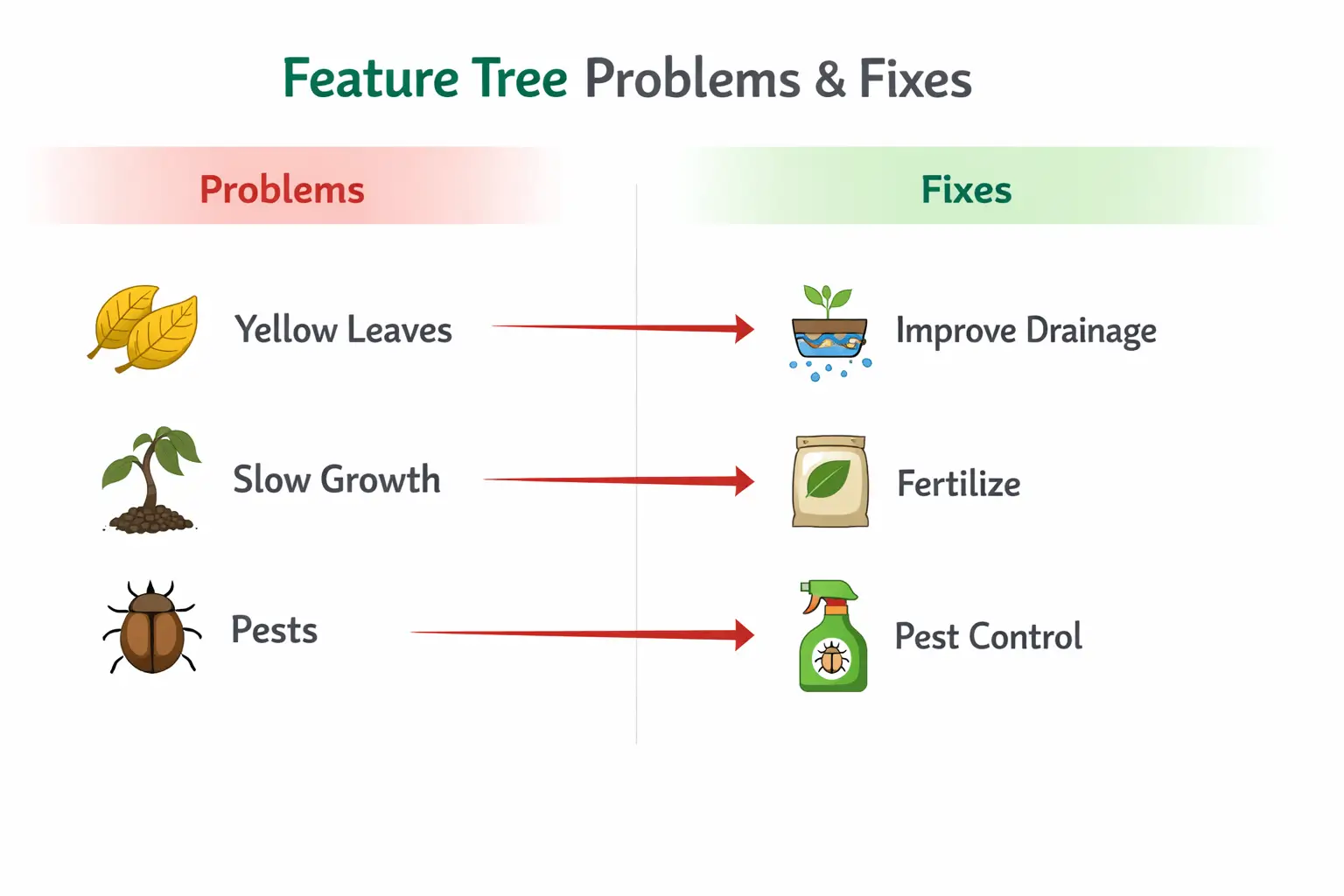
Feature trees can experience issues related to environmental stress or improper care.
Common problems and solutions:
- Yellow leaves
Cause: Overwatering or poor drainage
Fix: Improve soil drainage and reduce watering - Slow growth
Cause: Lack of nutrients or insufficient sunlight
Fix: Apply fertilizer and ensure adequate light exposure - Pest issues
Cause: Humid climate encourages pests
Fix: Use natural pest control methods and maintain plant health
Early identification and correction help maintain tree vitality.
Beginner Mistakes When Choosing Feature Trees Brisbane
Many beginners make avoidable mistakes when selecting feature trees.
Common mistakes:
- Choosing trees too large for the available space
- Ignoring root spread and potential structural impact
- Planting without considering sunlight requirements
- Overwatering native trees
Understanding these factors improves long-term success and reduces maintenance issues.
How Feature Trees Fit Into Broader Garden Design
Feature trees play a central role in overall landscape composition. They help define structure and guide visual flow.
Key design concepts:
- Landscaping layouts that position trees as focal points
- Indoor-outdoor flow connecting living spaces with gardens
- Companion planting to enhance aesthetics and biodiversity
- Garden layering techniques using trees, shrubs, and groundcovers
Integrating feature trees thoughtfully creates cohesive and functional outdoor environments.
Conclusion
Feature trees Brisbane play a vital role in creating visually striking and functional landscapes. By selecting the right tree based on size, maintenance needs, and climate suitability, homeowners can enhance their outdoor spaces while ensuring long-term growth success. Choosing native and well-adapted trees is key to achieving a sustainable and beautiful garden.
FAQs
1. What is the best feature tree for Brisbane gardens?
The best feature tree depends on space and purpose, but native and low-maintenance trees are ideal for Brisbane’s climate due to their adaptability and resilience.
2. Which small feature trees grow well in Brisbane?
Small native and compact ornamental trees grow well in Brisbane, especially in front yards and urban spaces with limited room.
3. Are native trees better for Brisbane landscapes?
Yes, native trees are better suited to local conditions, require less maintenance, and support biodiversity in Queensland environments.
4. How do I choose a feature tree for a front yard in Australia?
Choose a tree based on size, sunlight, root behavior, and visual impact to ensure it complements your home and available space.
5. How fast do feature trees grow in Brisbane?
Growth rates vary by species, but many feature trees grow moderately fast in Brisbane’s warm climate when provided with proper care.