Introduction
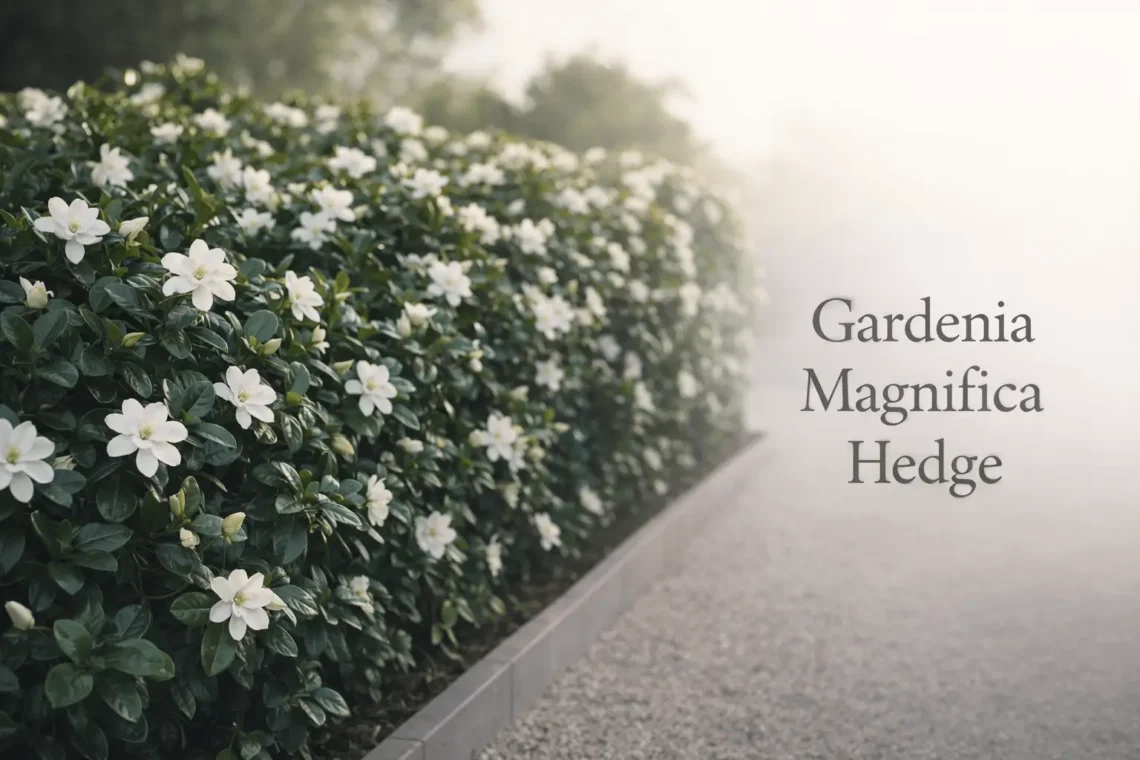
A gardenia magnifica hedge is a dense, evergreen flowering hedge valued for privacy, borders, and ornamental landscaping. This plant is widely used due to its fragrant white blooms, glossy foliage, and compact growth habit. Belonging to the Gardenia augusta / Gardenia jasminoides group, it offers both visual appeal and functional screening. Gardenia magnifica is especially popular in warm climates where it thrives as a structured hedge. This guide explains its spacing, growth rate, care needs, pruning methods, and how it compares to other gardenia varieties for hedging purposes.
Gardenia hedges are often compared with other evergreen screening options like the Carolina Cherry Laurel Hedge, which is known for faster growth but less fragrant appeal.
Quick Summary
- Gardenia magnifica hedge is a compact evergreen hedge with fragrant white flowers.
- Typically grows 1.5–2.5 meters tall, ideal for medium-height screening.
- Requires warm climates, well-drained soil, and regular pruning for shape.
- Best for formal hedges, borders, and privacy screens in small to medium gardens.
What Is a Gardenia Magnifica Hedge?
A gardenia magnifica hedge is a structured hedge formed using Gardenia augusta ‘Magnifica’, an evergreen flowering shrub known for its dense growth and fragrant blooms. Unlike standalone shrubs, it is planted in rows to create a continuous green barrier.
Botanically, gardenias belong to the genus Gardenia, a group of flowering plants known for their fragrance and evergreen foliage (see Gardenia for classification details).
Gardenias as a hedge provide both privacy and ornamental value. The defining traits include glossy evergreen foliage and highly scented white flowers. This makes gardenia magnifica suitable for formal gardenia hedge designs as well as decorative garden borders.
Key Characteristics of Gardenia Magnifica
Growth Habit and Structure
Gardenia magnifica develops a dense, bushy structure that is ideal for hedging. Its growth is upright with a slightly rounded form, allowing it to be shaped into clean, uniform hedge lines.
Flowers and Fragrance
Gardenia magnifica flowers are large, white, and intensely fragrant. Flowering peaks during spring and summer, providing seasonal visual and sensory appeal.
Foliage Features
The plant features glossy, dark green leaves that remain year-round. This evergreen foliage ensures continuous coverage and makes it effective as a gardenia hedge even outside flowering periods.
Gardenia Magnifica Hedge Size and Height
Typical Mature Height and Width
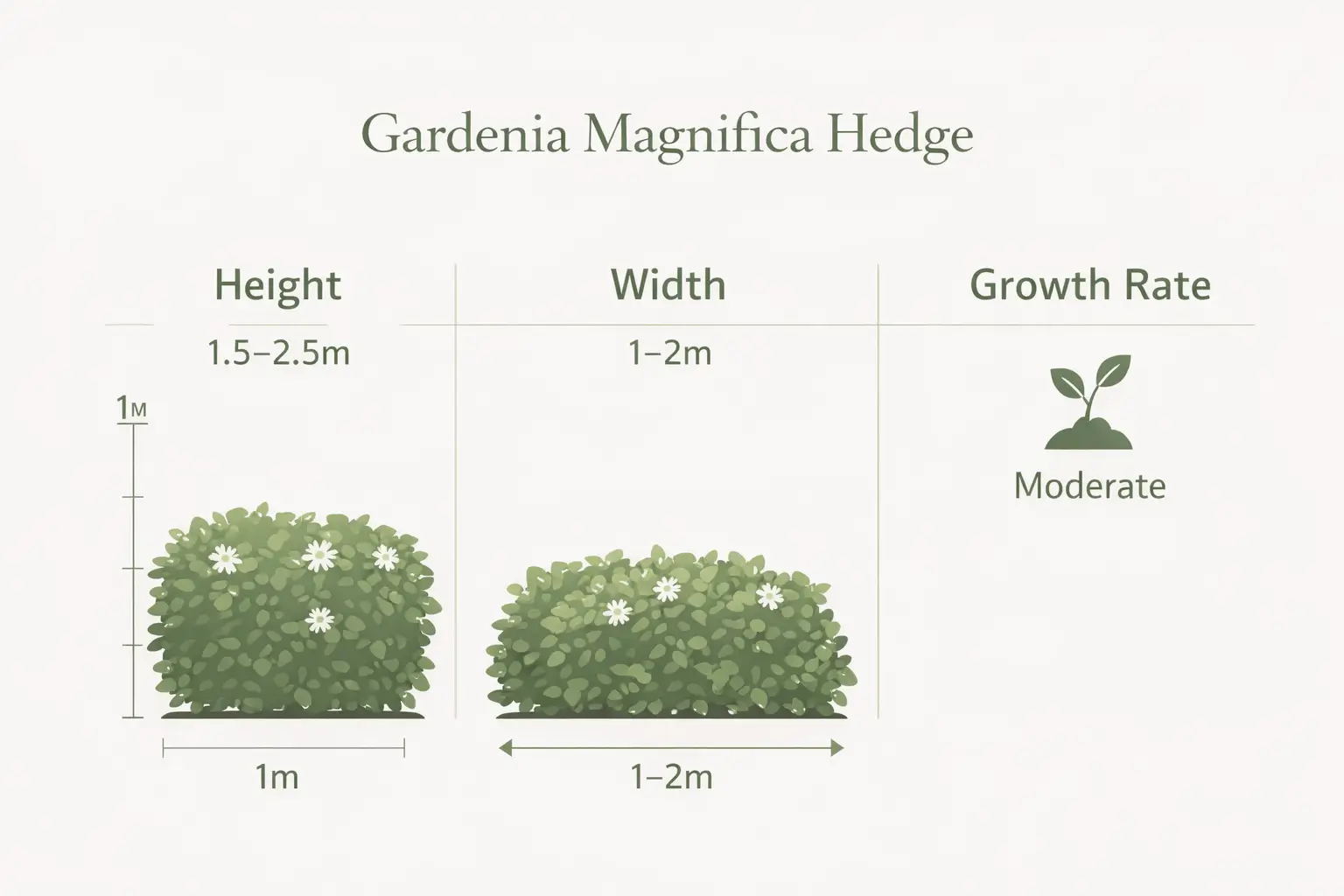
Gardenia magnifica height typically ranges from 1.5 to 2.5 meters. The width usually spreads between 1 to 2 meters depending on pruning practices and growing conditions.
Factors That Affect Size
Several factors influence gardenia magnifica size and maturity:
- Warm climates promote taller growth
- Fertile soil supports fuller development
- Frequent pruning controls height and density
Expected Size by Growing Conditions
| Condition | Height Range | Spread | Notes |
| Ideal warm climate | 2–2.5 m | 1.5–2 m | Maximum growth potential |
| Moderate climate | 1.5–2 m | 1–1.5 m | Standard hedge size |
| Heavy pruning | 1–1.5 m | 1–1.2 m | Controlled compact hedge |
Gardenia Magnifica Hedge Growth Rate
Gardenia magnifica has a moderate growth rate compared to other hedging plants. It establishes steadily and becomes denser over time rather than growing aggressively.
What Influences Growth Speed
Growth rate is affected by:
- Sunlight exposure (more light = faster growth)
- Soil quality (rich, well-drained soil improves growth)
- Consistent watering (avoiding stress supports development)
In warm, humid environments, gardenia hedge growth rate is noticeably faster.
Ideal Spacing for a Gardenia Magnifica Hedge
Recommended Plant Spacing
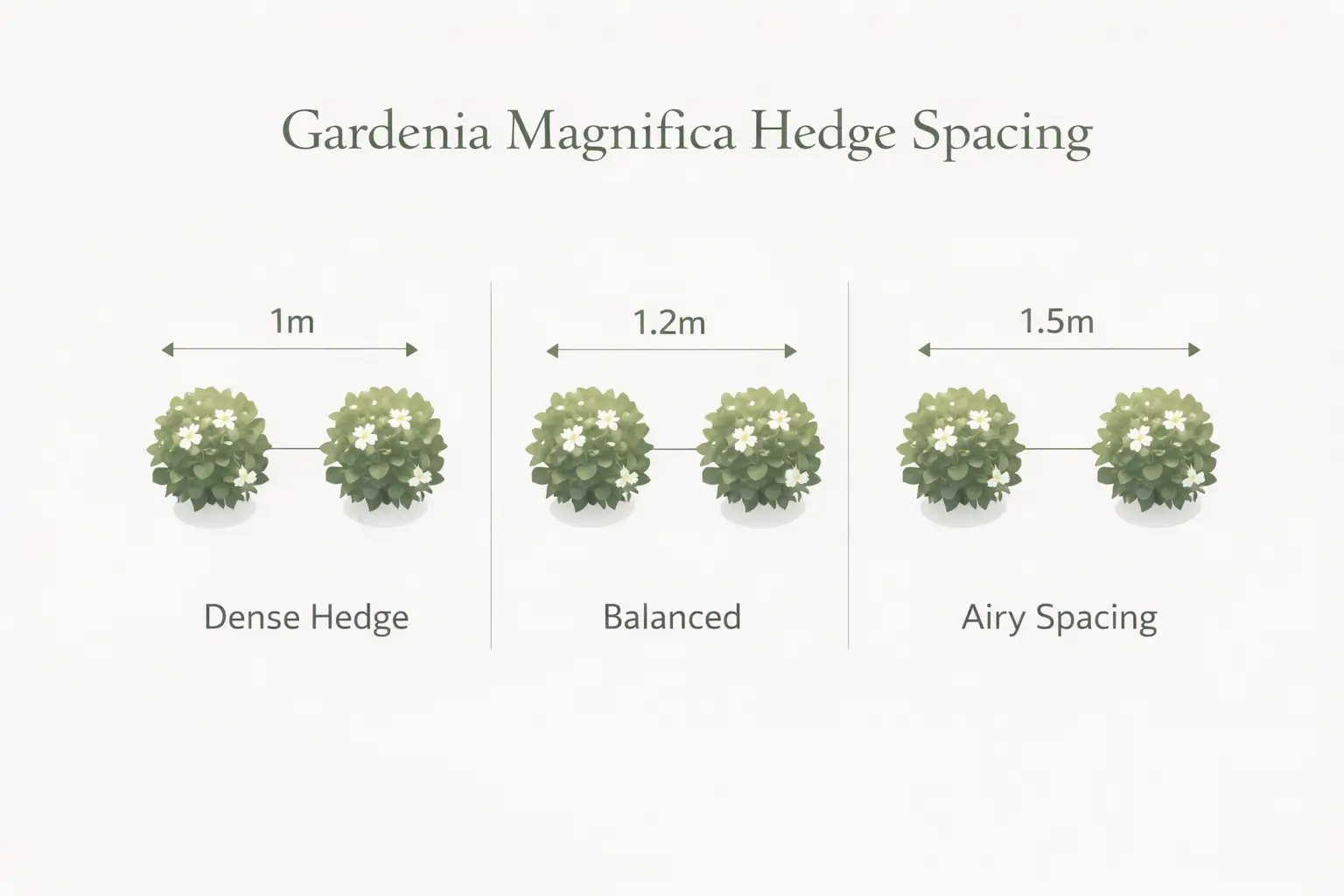
Gardenia magnifica hedge spacing should be between 1 to 1.5 meters apart. Closer spacing results in quicker hedge formation and denser coverage. Spacing principles are similar to other hedging plants, such as those explained in Waxleaf Privet Hedge Spacing, where airflow and density must be carefully balanced.
Spacing Based on Hedge Purpose
- Privacy hedge → tighter spacing (around 1 meter)
- Informal hedge → wider spacing (up to 1.5 meters)
Spacing vs Hedge Density
| Spacing | Result | Maintenance Level |
| 1 m | Dense, fast coverage | Higher |
| 1.2 m | Balanced density | Moderate |
| 1.5 m | Airy, slower fill | Lower |
Proper spacing balances airflow and density. Too close can restrict airflow, while too wide delays hedge formation.
How to Plant a Gardenia Magnifica Hedge
Step-by-Step Planting Process
- Select a site with full sun to partial shade
- Prepare well-drained, slightly acidic soil
- Dig holes matching root ball depth
- Space plants evenly
- Water thoroughly after planting
Best Time to Plant
Spring and early autumn are ideal planting times, allowing roots to establish before extreme temperatures.
Care Guide for Gardenia Magnifica Hedge
-
Watering Requirements
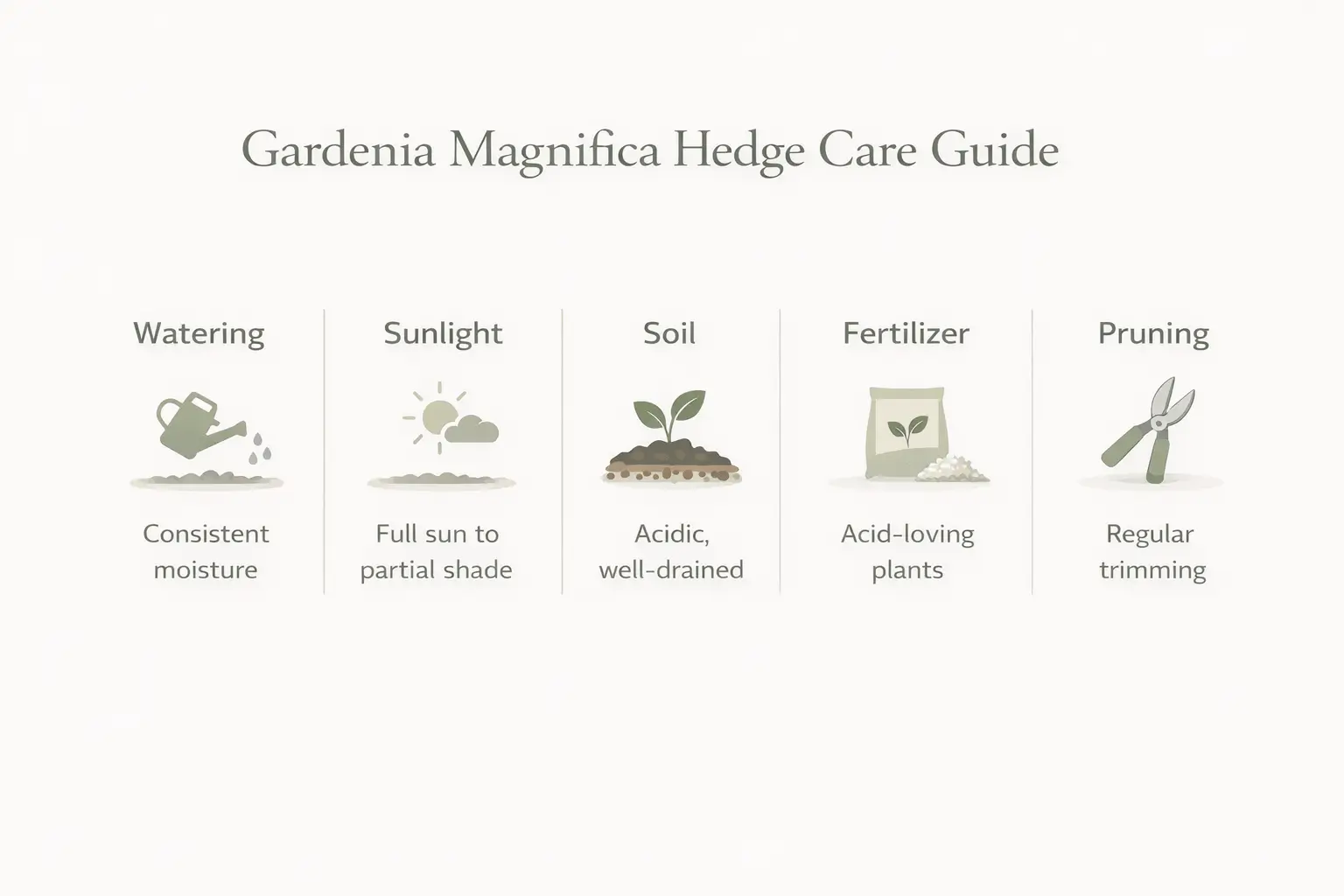
Maintain consistent soil moisture. Avoid waterlogging, as poor drainage can damage roots.
-
Light Conditions
Gardenia magnifica grows best in full sun to partial shade. Adequate sunlight supports flowering.
-
Soil Preferences
Prefers slightly acidic, well-drained soil. Soil pH plays a critical role in nutrient uptake.
-
Fertilization
Use fertilizers designed for acid-loving plants to promote healthy growth and flowering.
-
Pruning and Maintenance
Gardenia magnifica hedge pruning is essential for maintaining shape and density. Regular trimming encourages compact growth.
How to Prune a Gardenia Magnifica Hedge
When to Prune
Prune after the flowering season to avoid removing developing buds.
Pruning Techniques
- Light shaping maintains structure
- Hard pruning reduces size and rejuvenates growth
- Regular trimming encourages dense branching
Tools and Tips
- Use clean, sharp tools
- Avoid excessive pruning, which can reduce flowering
Balancing pruning ensures both density and consistent blooms.
Gardenia Magnifica vs Gardenia Florida (Comparison)
Magnifica vs Florida
| Feature | Magnifica | Florida |
| Size | Medium (1.5–2.5 m) | Smaller, compact |
| Growth habit | Dense, structured | Softer, bushier |
| Flower size | Large | Slightly smaller |
| Hedging suitability | Excellent for formal | Better for informal use |
Key Differences
Gardenia magnifica vs florida differs mainly in structure and use. Magnifica forms structured hedges, while Florida is more suitable for softer planting styles.
Which One Is Better for Hedges?
Magnifica is better for structured hedges due to its upright, dense growth. Florida suits informal gardenia hedge florida layouts.
Common Problems and Solutions (Hedge Care)
-
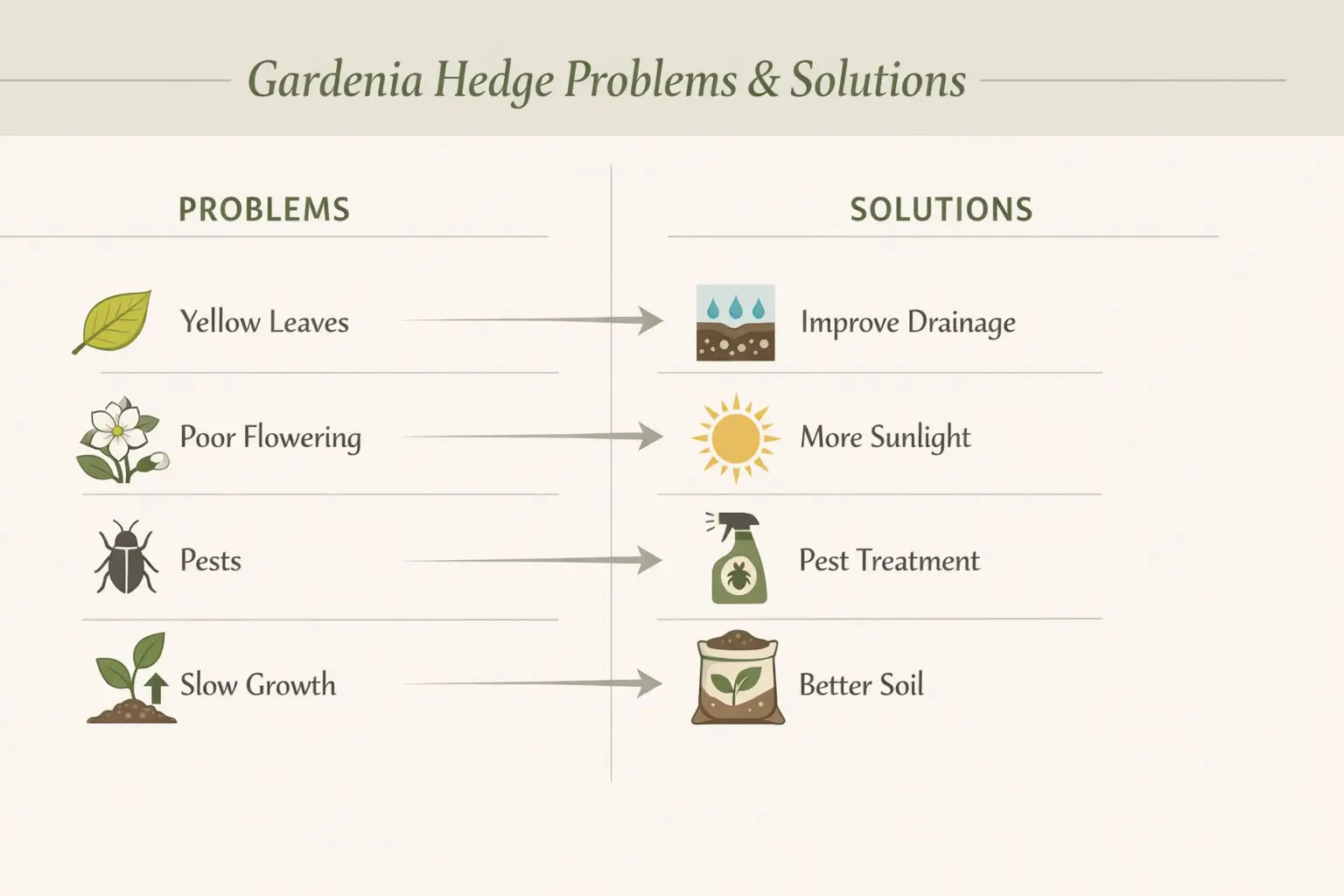
Yellow Leaves
Cause: Poor drainage or nutrient deficiency
Solution: Improve soil drainage and fertilize properly
-
Poor Flowering
Cause: Lack of sunlight or excessive pruning
Solution: Increase sunlight exposure and prune correctly
-
Slow Growth
Cause: Poor soil or cold climate
Solution: Improve soil quality and ensure suitable climate
Pest Issues
Aphids and scale insects are common. Use appropriate treatments such as horticultural oils.
Common Mistakes When Growing Gardenia Hedges
- Planting too close or too far apart
- Overwatering or poor drainage
- Pruning at the wrong time
- Ignoring soil acidity
These mistakes often reduce growth, flowering, and hedge density.
Best Uses of Gardenia Magnifica in Landscaping
Gardenia magnifica is widely used for:
- Privacy hedges
- Border planting
- Feature hedging in formal gardens
- Fragrant garden designs
Gardenia hedge plants create visually appealing and functional garden structures.
Gardenia Varieties and How Magnifica Compares
Other Common Gardenia Types
- Gardenia radicans (low-growing variety)
- Gardenia florida (compact form)
Where Magnifica Fits
Among gardenia varieties, magnifica stands out as a medium-sized option ideal for structured hedging. It bridges the gap between low groundcovers and compact shrubs.
Environmental Requirements and Limitations
Gardenia magnifica requires warm climates and is sensitive to frost. It performs best in humid environments and may struggle in cold or dry regions.
Conclusion
Gardenia magnifica hedge is a versatile, evergreen option that combines fragrance, structure, and year-round greenery. With proper spacing, pruning, and soil conditions, it forms a dense and attractive hedge. Its moderate size makes it ideal for medium-height privacy and ornamental use. Consistent care ensures healthy growth and reliable flowering.
FAQs
1. How tall does a gardenia magnifica hedge grow?
Gardenia magnifica hedge typically grows between 1.5 and 2.5 meters tall, depending on climate, soil conditions, and pruning practices.
2. What is the best spacing for a gardenia magnifica hedge?
The ideal spacing is 1 to 1.5 meters apart to achieve a dense and uniform hedge.
3. How fast does a gardenia magnifica hedge grow?
It has a moderate growth rate, with faster growth in warm climates and optimal conditions.
4. When should you prune a gardenia hedge?
Prune after the flowering season to maintain shape without reducing future blooms.
5. Is gardenia magnifica good for privacy hedges?
Yes, it forms a dense evergreen hedge suitable for medium-height privacy screening.
6. What conditions do gardenia hedges need to thrive?
They require warm climates, slightly acidic well-drained soil, consistent watering, and partial to full sunlight.