
Introduction
Growing fruit trees is the process of cultivating trees that produce edible fruits in home gardens, orchards, or containers. It involves selecting suitable varieties, planting them correctly, and maintaining optimal conditions such as soil, water, and sunlight to ensure healthy growth and fruit production. Understanding when and how to plant fruit trees, along with proper care techniques, is essential for long-term success.
Quick Summary
- Growing fruit trees requires the right timing, soil, and care practices.
- The best time to plant fruit trees depends on climate and tree type.
- Proper planting, spacing, and watering directly affect growth and yield.
- Fruit trees can be grown in gardens, containers, or small spaces with the right approach.
What Does Growing Fruit Trees Involve?
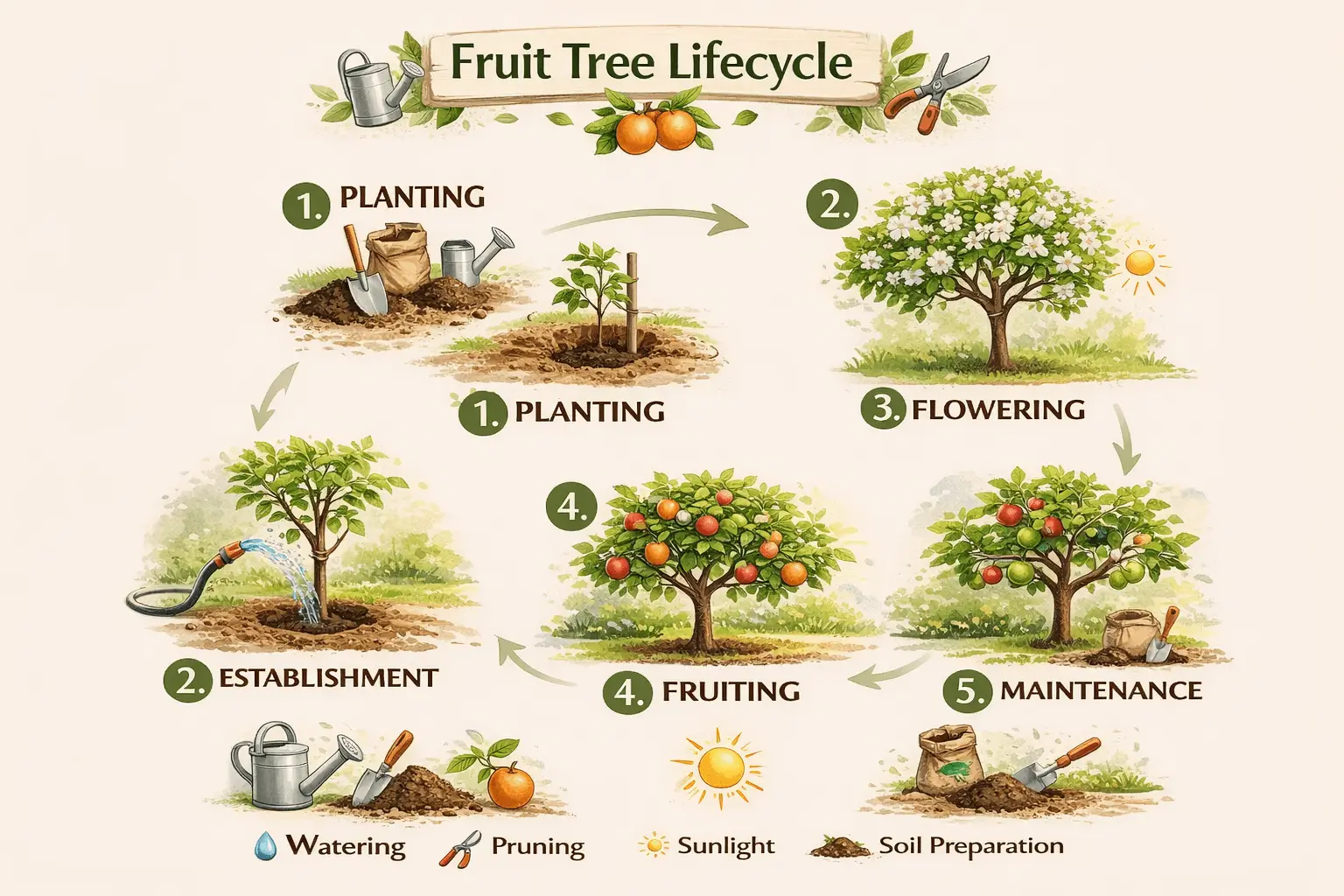
Growing fruit trees involves understanding their lifecycle and providing appropriate care at each stage. From selection to fruiting, gardeners need to consider:
- Tree selection: Choosing varieties compatible with the local climate.
- Planting vs propagation: Options include planting seeds, cuttings, or grafted trees.
- Growth phases: Trees transition from establishment to flowering and fruiting stages.
- Fruit tree garden setup: Planning space, soil preparation, and positioning for optimal growth.
Fruit tree cultivation encompasses several lifecycle stages, from planting to fruiting. For a detailed botanical overview, visit Wikipedia: Fruit tree.
When Is the Best Time to Plant Fruit Trees?
The best time to plant fruit trees varies by climate, tree type, and whether the tree is dormant or actively growing.
Seasonal Timing Explained
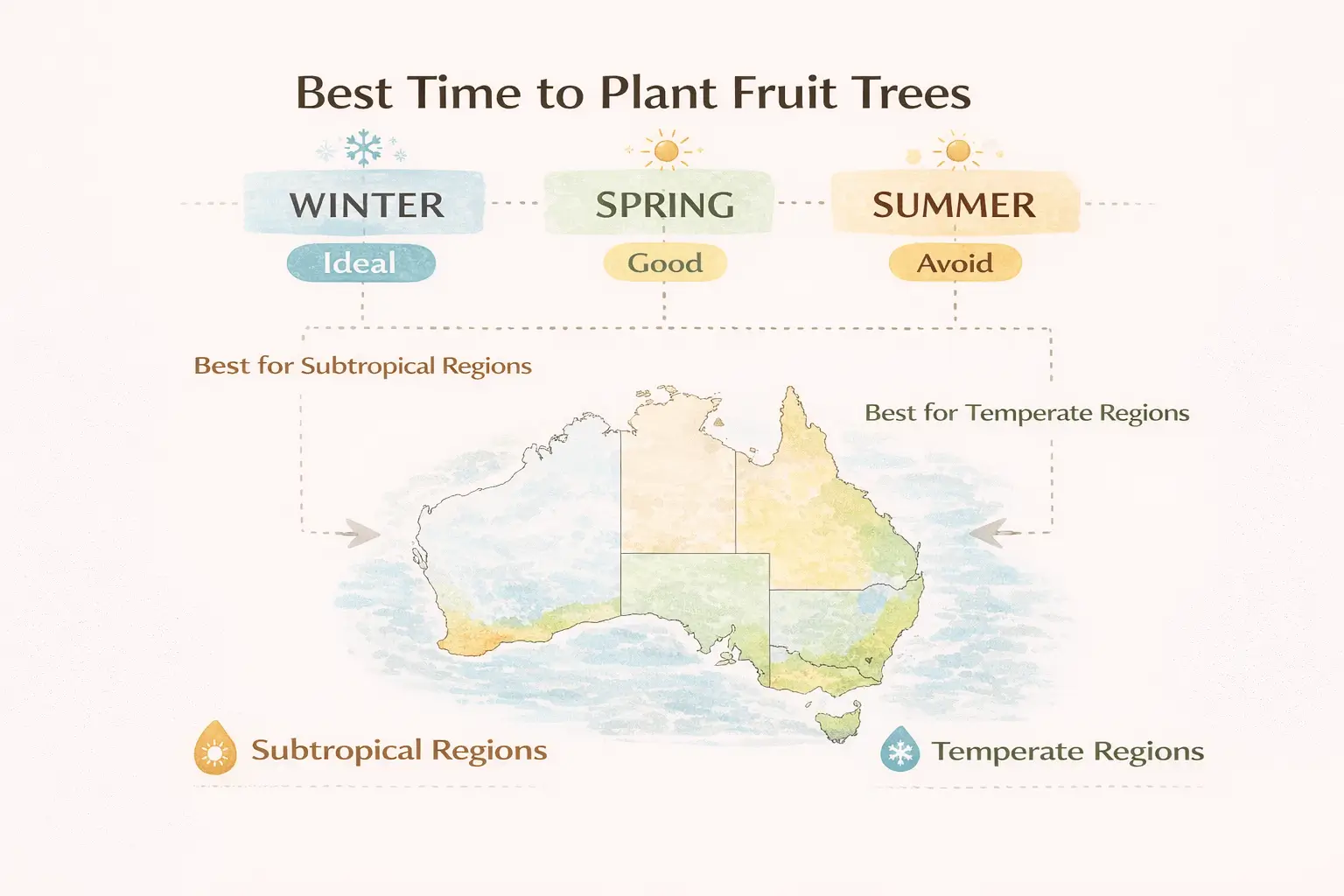
- Winter: Planting dormant trees helps reduce transplant shock and encourages root development.
- Spring: Active growth supports quick establishment and flowering.
- Climate differences: Timing depends on local conditions; colder regions benefit from late winter, while subtropical areas can plant year-round with caution.
Best Time to Plant Fruit Trees in Australia
- Queensland: Early spring to avoid heavy summer heat.
- Victoria & South Australia: Late winter to early spring for optimal root establishment.
- Subtropical vs temperate: Subtropical regions allow wider planting windows, whereas temperate areas require careful seasonal timing.
How to Plant Fruit Trees (Step-by-Step Guide)
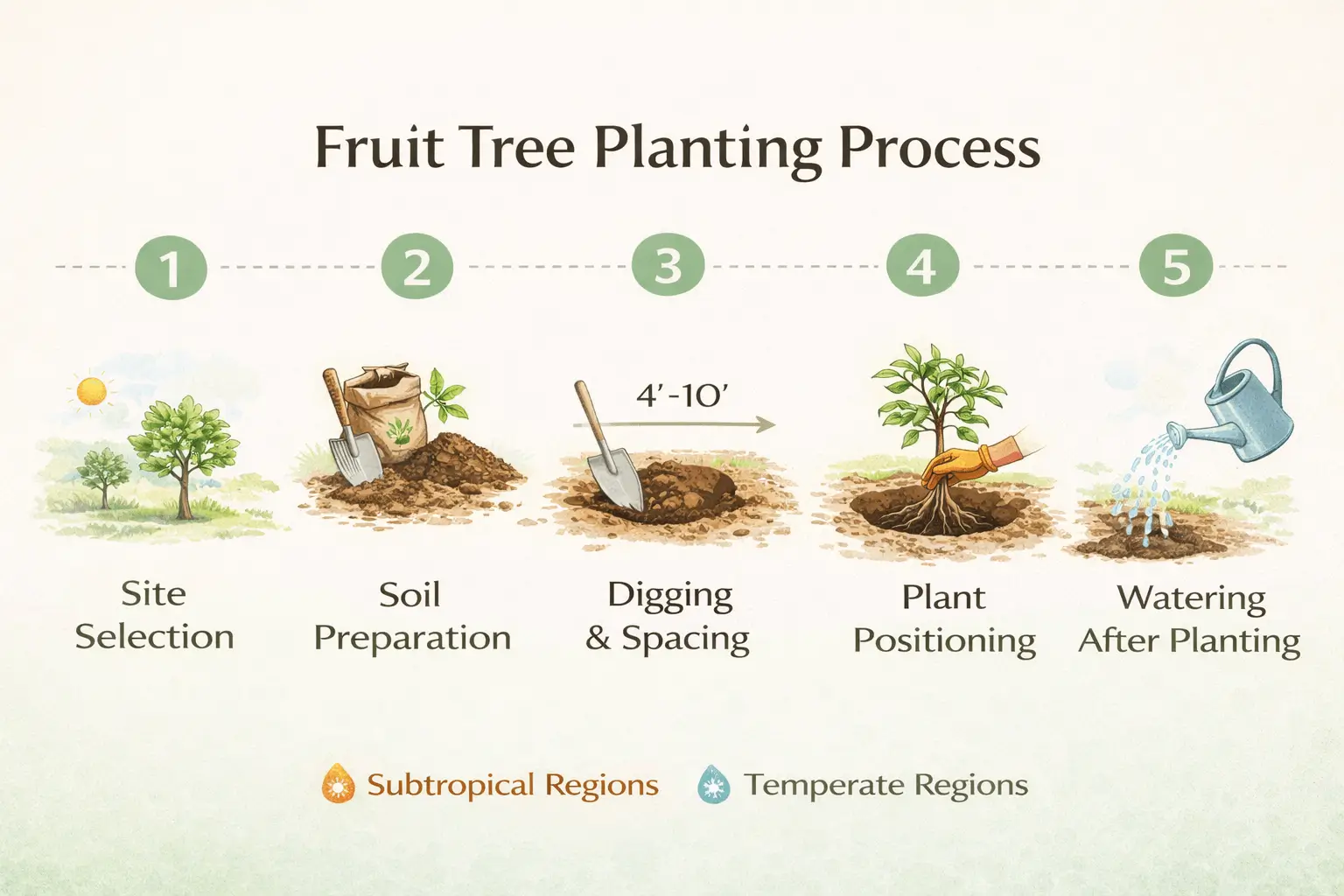
Planting fruit trees successfully requires careful preparation and technique:
- Site selection: Choose full sun with well-draining soil.
- Soil preparation: Enrich with organic matter and check pH levels.
- Digging and spacing: Dig holes twice the root ball size; follow recommended spacing.
- Plant positioning: Place the tree at the correct depth to prevent stem rot.
- Watering after planting: Thoroughly water to establish roots and reduce stress.
5 Methods of Planting Fruit Trees
- Bare-root planting: Trees planted without soil around roots; best in dormancy.
- Container planting: Ideal for small spaces or mobile setups.
- Raised bed planting: Improves drainage and soil quality.
- Espalier training: Grows trees against walls or supports.
- Direct ground planting: Standard method for garden beds and orchards.
Ideal Soil, Water, and Spacing Requirements
Proper soil, watering, and spacing ensure healthy growth and maximize yield.
Best Soil for Growing Fruit Trees
- Well-draining loamy soil is ideal.
- Adding organic matter improves fertility and root health.
How Much Water Do Fruit Trees Need?
- Young trees: Require frequent watering to establish roots.
- Mature trees: Water deeply but less often, adjusting for rainfall and climate.
- Climate influence: Hotter or drier regions need more regular watering.
Fruit Tree Spacing Guidelines
- Proper spacing prevents root competition and promotes airflow.
- General spacing ranges from 10–25 feet depending on tree size and variety.
Growing Fruit Trees in Different Environments
Fruit trees can thrive in varied spaces with proper adjustments.
Growing Fruit Trees in Pots and Containers
- Choose dwarf or small varieties suitable for pots.
- Ensure large containers with drainage holes.
- Mobility allows repositioning for sunlight or seasonal protection.
Many techniques for growing fruit trees in containers overlap with general indoor plant care; see our [Guide to House Plants] for additional tips on light, soil, and watering management.
Growing Fruit Trees Indoors and Small Spaces
- Provide sufficient light, preferably near south-facing windows.
- Consider pollination challenges; some may require hand pollination.
For indoor gardening tips and container-friendly plant choices, you can also explore our [Panda Plants: Care, Types, and Indoor Growth Guide] for detailed advice on maintaining plants in limited spaces.
Growing Fruit Trees Against Walls or Wires
- Use espalier training to save space.
- Creates decorative and productive vertical gardens.
Fast Growing Fruit Trees and Quick-Yield Options
- Examples: Citrus, papaya, fig, and banana trees.
- Fruiting timelines: Fast-growing species can produce fruit within 1–3 years.
- Growth rates depend on climate, soil, and care practices.
For gardeners seeking fast-growing options with consistent yields, consider evergreen varieties. See our [Evergreen Pear Tree: Types, Growth, and Care Explained] article for more insights.
Growing Fruit Trees from Seed vs Cuttings
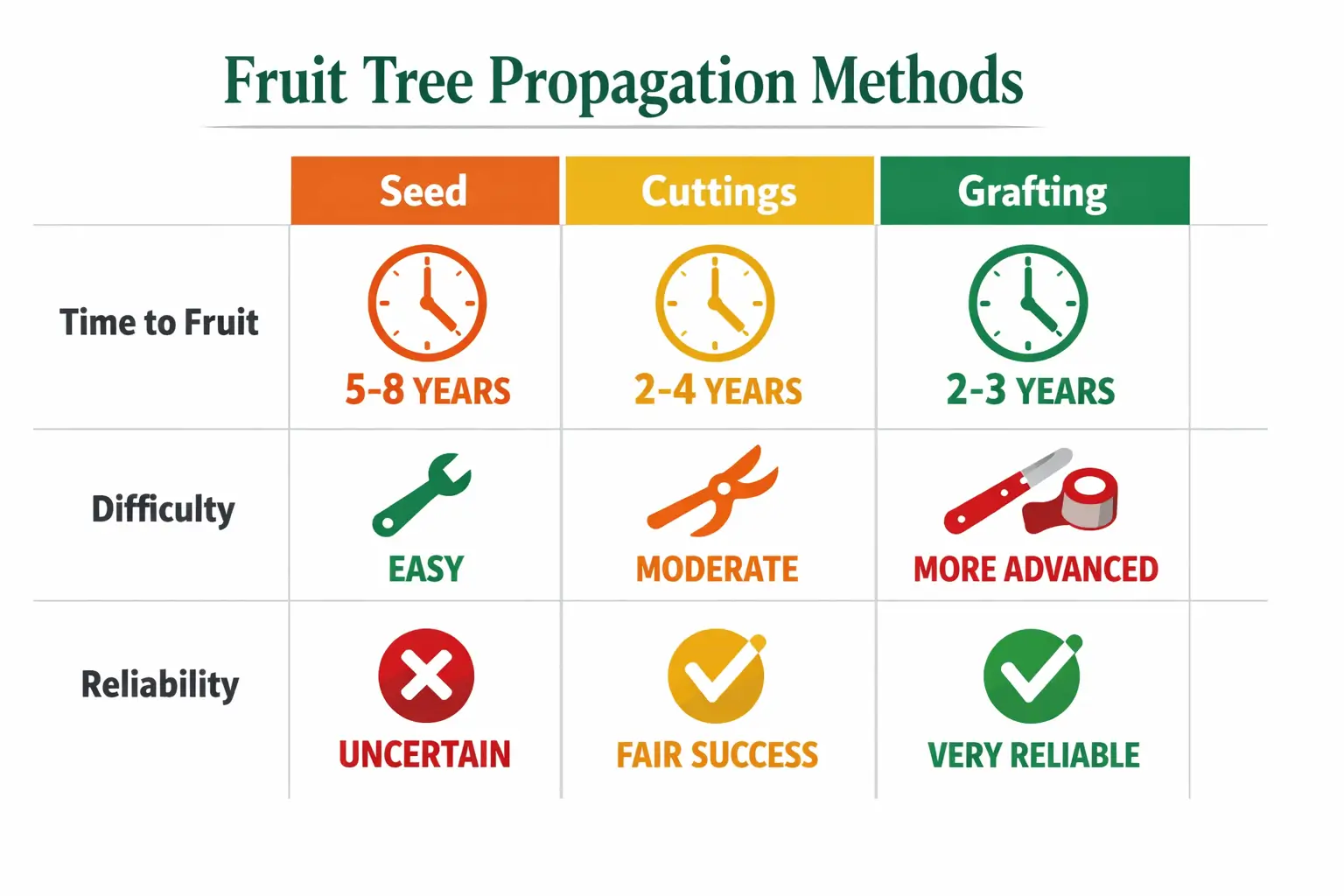
Growing from seeds or cuttings affects time to fruit and reliability.
| Method | Time to Fruit | Difficulty | Reliability |
| Seed | Long | Medium | Low |
| Cuttings | Faster | Medium | High |
| Grafting | Fastest | Advanced | Very High |
Choosing the Best Fruit Trees for Your Garden
- Easy-to-grow options: Apple, lemon, and fig.
- Drought-tolerant trees: Olive and pomegranate.
- Small-space/dwarf varieties: Suitable for patios or container gardens.
Citrus trees like the Valencia Orange are excellent options for backyard fruit gardens; learn more about their size and varieties in our [Valencia Orange Tree Size: Heights, Varieties, and Growth] guide.
Landscaping with Fruit Trees (Design Ideas)
- Mixed edible landscapes: Combine fruit trees with vegetables and herbs.
- Border planting: Use fruit trees as hedges or decorative borders.
- Patio and container gardens: Adds productivity and aesthetic appeal in small spaces.
Common Problems When Growing Fruit Trees (And Solutions)
Common Issues
- Yellowing leaves: Caused by overwatering or poor soil nutrients.
- Slow growth: Nutrient deficiencies or insufficient sunlight.
- Poor fruiting: Lack of pollination or incorrect pruning.
How to Fix and Prevent Them
- Implement a correct watering schedule.
- Improve soil with compost or organic fertilizers.
- Ensure proper pruning and adequate sunlight exposure.
Beginner Mistakes to Avoid
- Planting at the wrong time.
- Overcrowding trees and limiting airflow.
- Ignoring soil quality or pH balance.
- Overwatering or underwatering young trees.
Growth Rate and Size Expectations
Growth Rate
- Slow vs fast-growing varieties: Citrus and papaya grow quickly; apple and pear are moderate.
- Seasonal growth patterns depend on temperature and water availability.
Mature Tree Size
- Standard trees: Typically 12–25 feet in height.
- Dwarf varieties: Often 4–8 feet; suitable for containers and small gardens.
- Environmental factors such as soil fertility and pruning affect final size.
How Growing Fruit Trees Connects to Broader Gardening Practices
- Integrates indoor gardening, plant propagation, and sustainable landscaping techniques.
- Encourages biodiversity and long-term soil health.
- Supports permaculture and edible landscaping strategies.
Conclusion
Growing fruit trees successfully depends on understanding the right planting time, proper techniques, and ongoing care requirements. By selecting suitable varieties, preparing the soil, and maintaining proper watering and spacing, gardeners can create productive and sustainable fruit tree gardens in both large and small spaces.
FAQs
When is the best time to plant fruit trees?
The best time is typically during dormancy (late winter to early spring), but it varies based on climate and region.
How do you grow fruit trees successfully?
Success depends on proper planting, suitable soil, adequate sunlight, and consistent watering.
Can fruit trees be grown in pots?
Yes, especially dwarf varieties, as long as they have enough space, drainage, and nutrients.
What are the fastest growing fruit trees?
Fast-growing options include papaya, banana, and some citrus varieties, depending on climate.
How far apart should fruit trees be planted?
Spacing depends on tree size but generally ranges from 10 to 25 feet for proper growth and airflow.
Is it better to grow fruit trees from seed or cuttings?
Cuttings and grafted trees are faster and more reliable than growing from seed.