Introduction
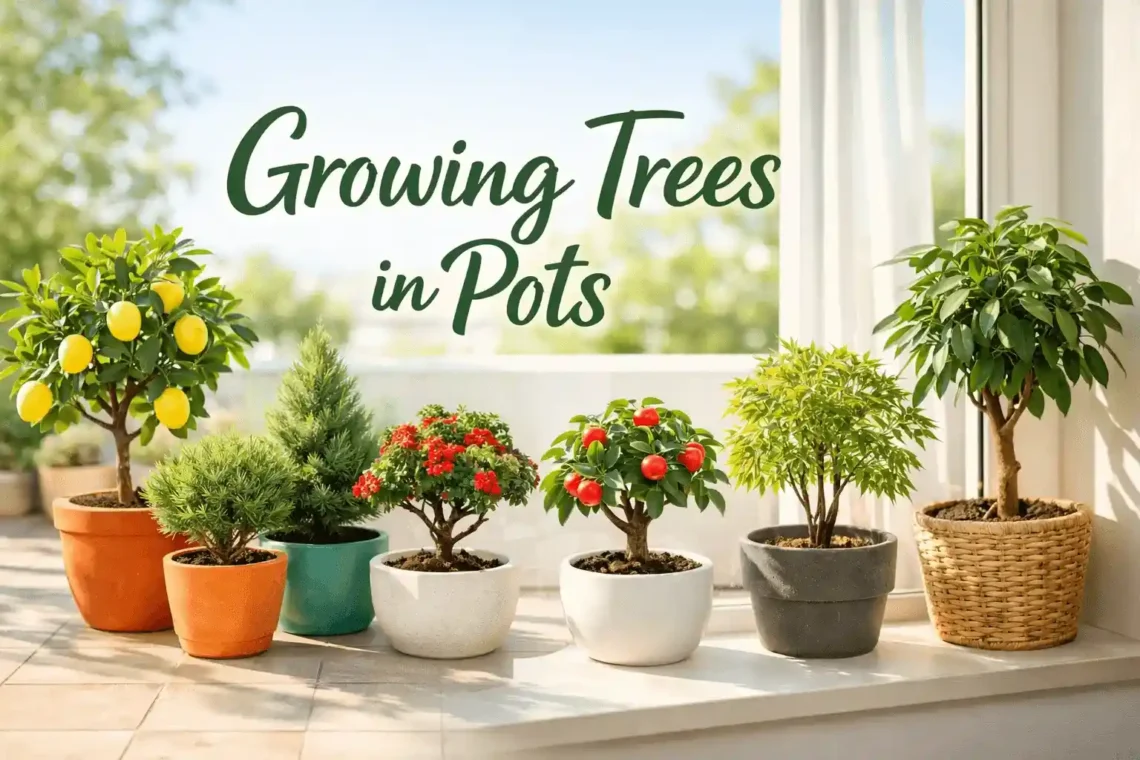
Growing trees in pots is the practice of cultivating trees in containers instead of planting them directly in the ground. This method is increasingly popular due to limited space, patio gardening, mobility, and urban landscaping needs. Container-grown trees are suitable for both indoor and outdoor environments. Success depends on selecting the right tree species, appropriate container size, and consistent care, including watering, soil management, and sunlight exposure.
Quick Summary
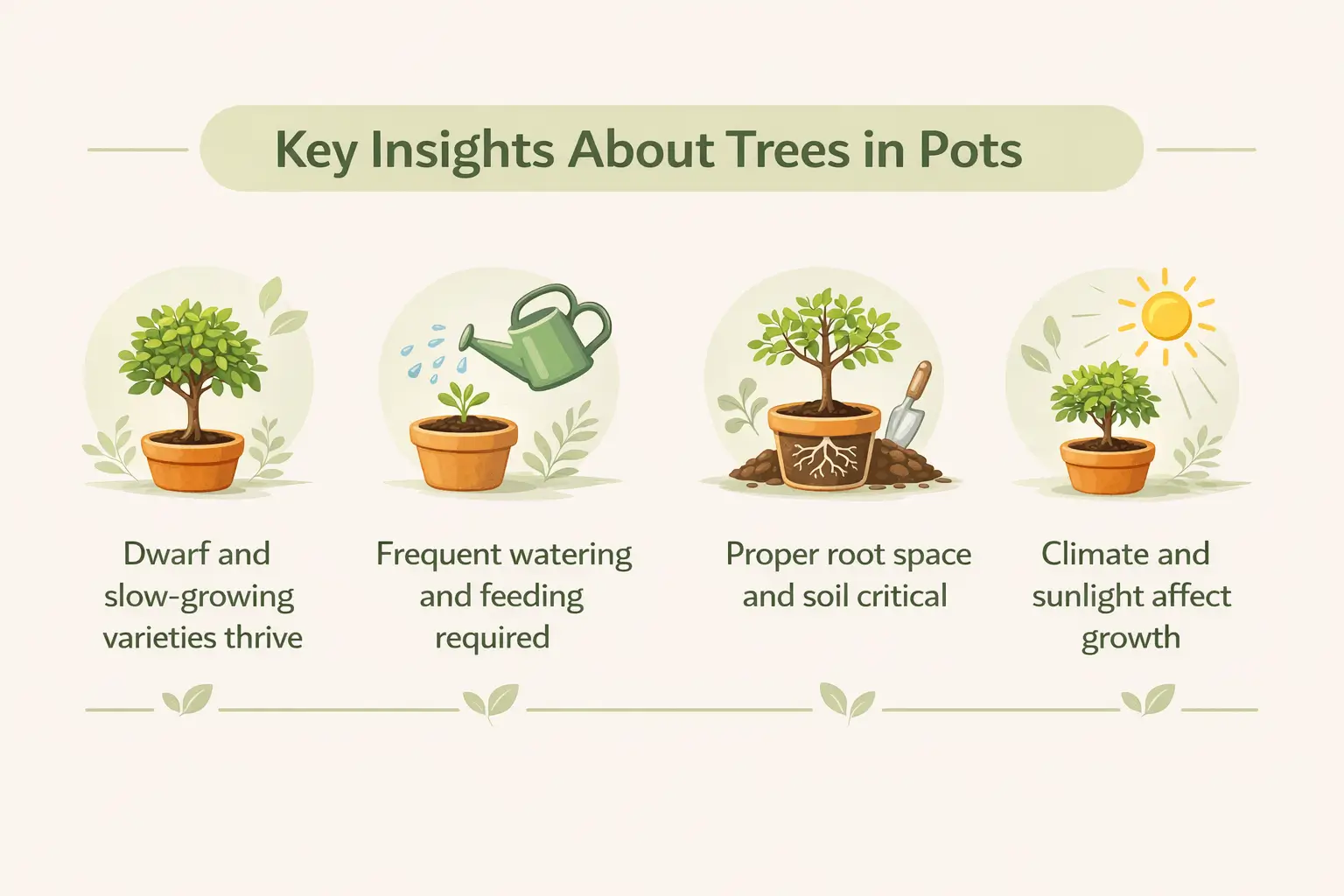
- Trees can successfully grow in containers when root space, soil, and watering are properly managed.
- Dwarf and slow-growing varieties perform best in pots.
- Container-grown trees require more frequent watering and feeding than ground-planted trees.
- Climate and sunlight conditions determine which trees thrive in pots.
What Does Growing Trees in Pots Mean?
Growing trees in pots, also known as container gardening, differs from in-ground planting because roots are restricted by the container. Root restriction affects growth, size, and maintenance needs. Terms such as “container trees,” “potted trees,” and “tree in a pot” describe this practice. Potted trees can be grown both indoors and outdoors, making them versatile for urban and small-space gardening. Growing trees in pots, also called container gardening, restricts root space but allows flexible placement [Wikipedia – Container Gardening].
Growing Trees in Pots vs Ground Planting
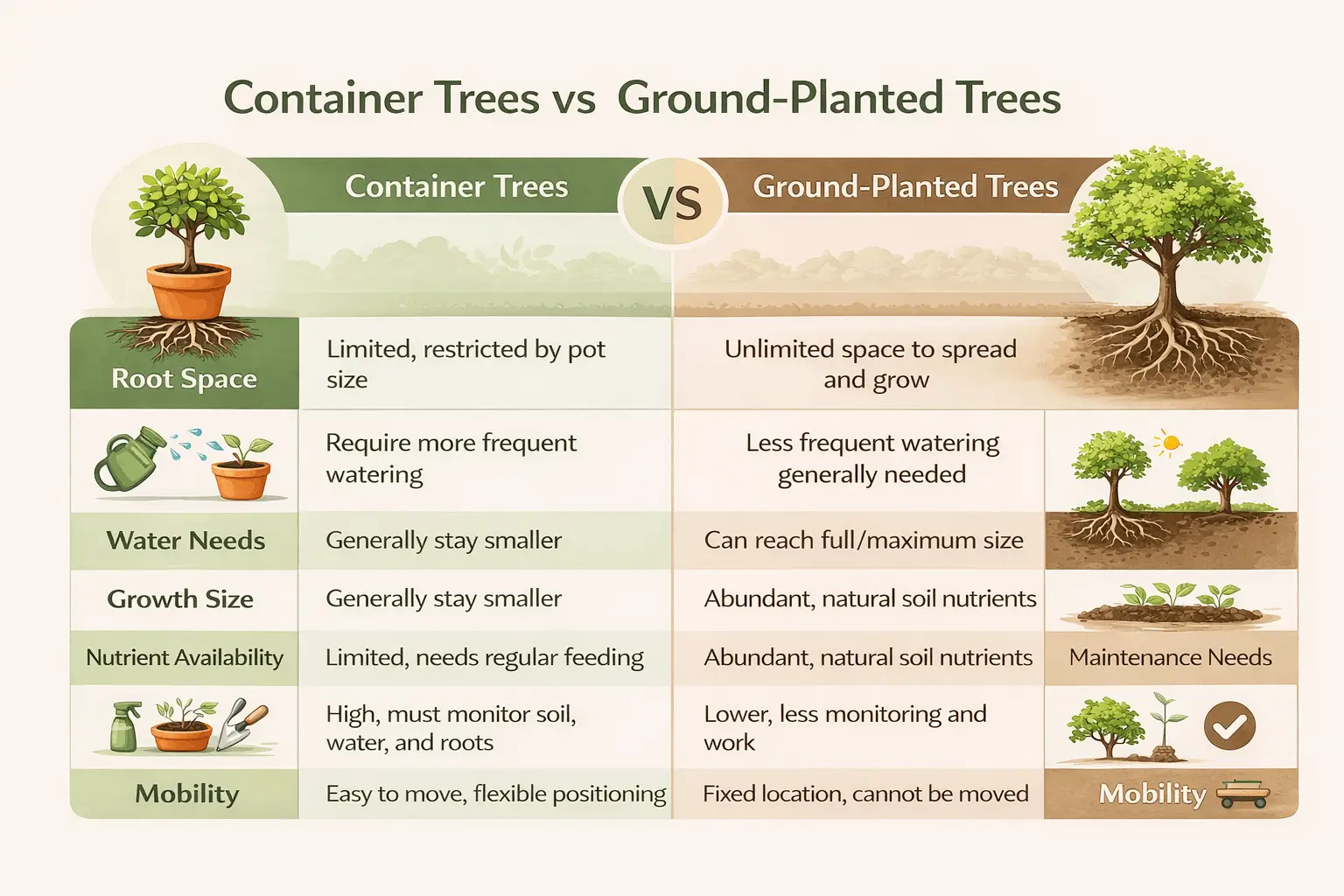
| Factor | Trees in Pots | Trees in Ground |
| Root Space | محدود | Extensive |
| Water Needs | Frequent | Moderate |
| Growth Size | Controlled | Full size |
| Nutrient Availability | Limited | Natural soil abundance |
| Maintenance Needs | Higher | Moderate |
| Mobility | High | Low |
Trees in pots have restricted root growth, require more frequent watering and fertilization, and offer controlled size. Ground-planted trees enjoy extensive root systems, natural nutrient availability, and full growth potential.
Best Types of Trees That Grow Well in Pots
Trees suitable for containers generally have dwarf growth habits, slow growth rates, and compact root systems. Container-friendly species include ornamental trees, small fruit trees, and evergreen varieties. These are ideal for trees that grow in pots, trees that grow well in pots, and trees that can grow in pots outdoors.
Small Trees for Pots
- Compact ornamental species
- Patio-friendly options suitable for small spaces
Compact and slow-growing trees like [Dwarf Olive Trees Guide] are ideal for patio or balcony containers.
Evergreen Trees for Pots
- Provide year-round foliage
- Ideal for privacy screens and structural greenery
Evergreen varieties provide year-round foliage; learn more in our [Ultimate Guide to Evergreen Trees: Proven Tips for Year-Round Greenery].
Shade Trees for Pots
- Offer filtered shade in container setups
- Suitable for patios and balconies
Tall and Large Trees in Pots (With Limitations)
- Large trees face root restriction and frequent maintenance challenges
- Careful container selection and pruning are required to manage size
Best Trees for Pots in Full Sun and Different Climates
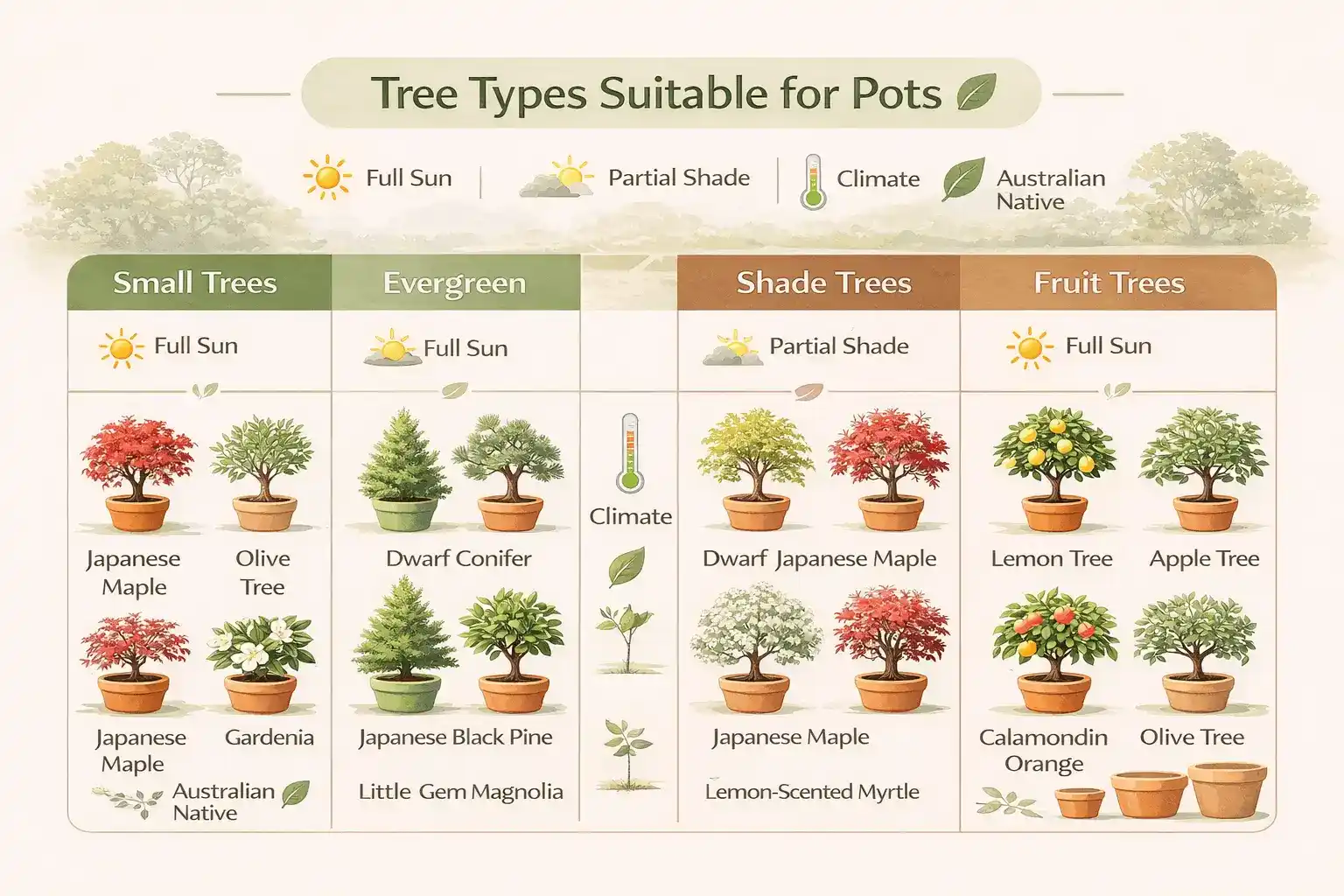
Sunlight requirements are crucial when selecting container trees. Some trees thrive in full sun, while others prefer partial shade.
Best Trees for Pots in Full Sun (General)
- Heat-tolerant and drought-resistant species
- Ideal for outdoor patios and sunny urban environments
Best Trees for Pots in Australia
- Climate-specific adaptation for Australian conditions
- Examples include best trees for pots Australia, trees that grow well in pots Australia, and best evergreen trees for pots Australia
For Australian-friendly container trees, see [7+ Smart Small Feature Trees in Australia Guide] for climate-adapted options.
Australian Native Trees Suitable for Pots
- Native species offer ecological benefits and resilience
- Suitable for australian native trees suitable for pots, native trees in pots, and small australian native flowering trees
Growing Fruit Trees in Pots
Fruit trees adapt well to containers due to controlled growth and manageable root systems. Container fruit trees can thrive with proper watering, fertilization, and sunlight exposure. This section covers growing fruit trees in pots. For more detailed tips on container fruit trees, see our [Proven Guide: Growing Fruit Trees Fast & Easily at Home].
Common Fruit Trees for Pots
- Citrus varieties:
- Growing lemon trees in pots
- Growing lime trees in pots
- Growing citrus trees in pots
- Other fruit trees:
- Growing apple trees in pots
- Growing fig trees in pots
- Growing olive trees in pots
- Growing cherry trees in pots
- Growing loquat trees in pots
Choosing the Right Pot and Container Size
Proper container selection is essential. Consider:
- Drainage to prevent waterlogging
- Material types: plastic, terracotta, or ceramic
- Size progression as the tree grows
- Integrate trees for large pots, tree in plant pot, and pots with trees
Best Soil for Growing Trees in Pots
Well-draining, nutrient-rich soil is critical.
Ideal Soil Mix:
- Organic compost
- Perlite or sand for drainage
- Nutrient-rich base
- Use best soil for growing trees in pots or soil for growing trees in pots
Care Guide for Growing Trees in Pots
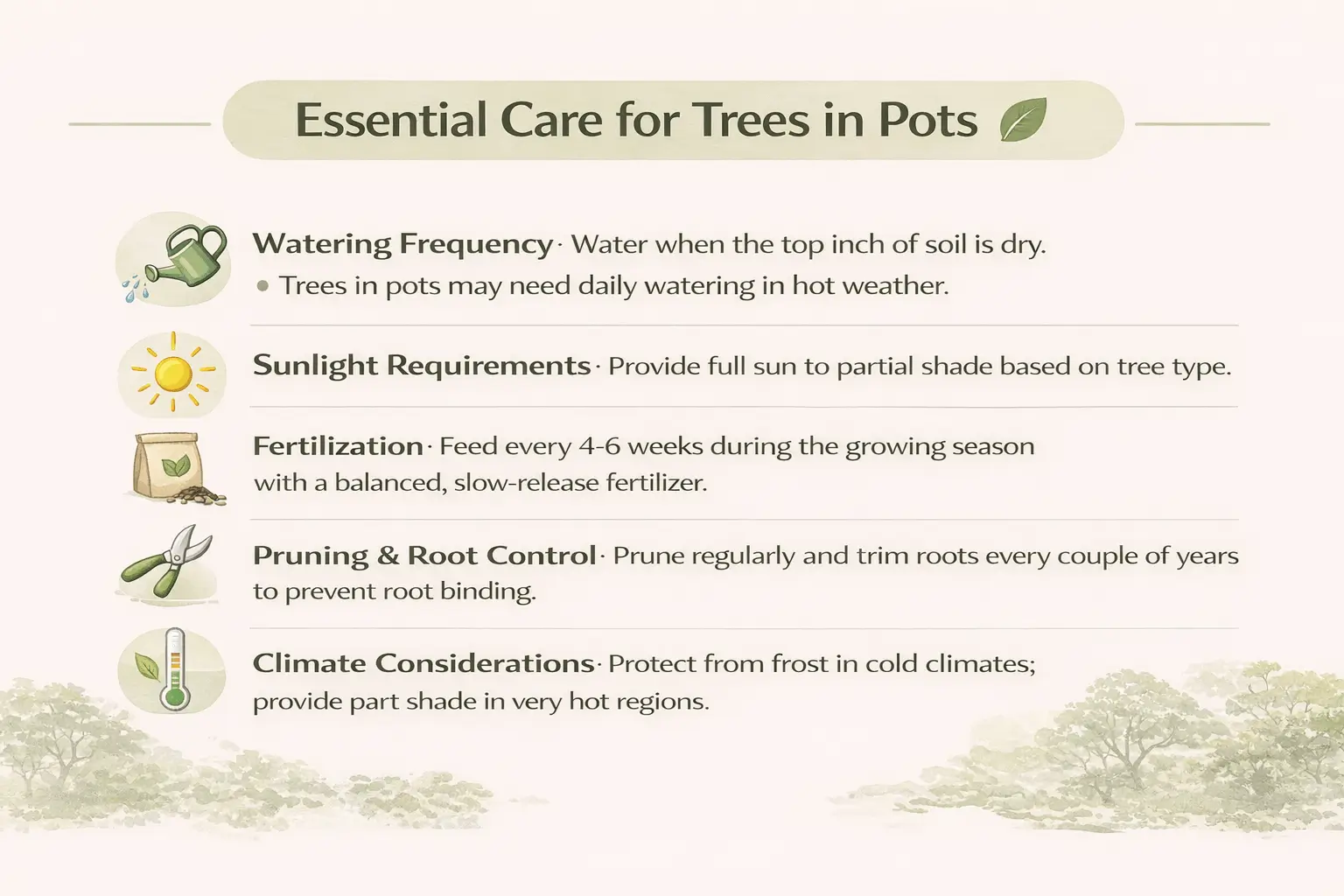
Watering Needs
Container trees need frequent but deep watering to keep roots hydrated without causing waterlogging.
Sunlight Requirements
- Full sun for heat-tolerant trees
- Partial shade for sensitive species
Fertilization
Nutrient depletion is common in containers, requiring regular feeding with balanced fertilizers.
Pruning and Root Control
Prune to prevent overgrowth and manage size; root pruning may be necessary in restricted containers.
Climate Considerations
- Indoor trees may need artificial light
- Outdoor placement should account for seasonal changes
Growth Rate of Trees in Pots
Growth depends on pot size, soil quality, and climate.
- Fast-growing trees in pots require larger containers and frequent care.
- Slow-growing trees adapt better to limited root space.
- Identify fast growing trees in pots vs fastest growing trees in pots for planning.
Common Problems When Growing Trees in Pots (And Solutions)
Problems & Fixes:
- Yellow leaves → Overwatering / poor drainage
- Stunted growth → Root-bound condition
- Dry soil → Insufficient watering
- Pest issues → Indoor/outdoor exposure
Beginner Mistakes to Avoid
- Overwatering
- Using small containers
- Ignoring drainage
- Choosing the wrong tree species
Practical Tips for Growing Trees in Pots Successfully
Tips for growing trees in pots:
- Rotate pots for even sunlight
- Repot every 2–3 years
- Use mulch for moisture retention
Indoor vs Outdoor Tree Growing in Pots
- Indoor trees: Controlled environment, limited sunlight, more regular watering
- Outdoor trees: Exposed to weather, higher sunlight, natural pollination
Uses of Potted Trees in Landscaping and Small Spaces
- Patio decoration and privacy screens
- Balcony gardening and small-space landscaping
- Integrate potted trees for patio privacy and outdoor trees in pots
Conclusion
Growing trees in pots provides flexibility and control over tree size, placement, and care. Key principles include selecting the right species, container size, soil, and consistent maintenance. Container gardening allows urban gardeners and small-space enthusiasts to enjoy trees without ground planting limitations.
FAQs
Can all trees grow in pots?
No, only trees with controlled growth or dwarf varieties adapt well.
How often should I water trees in pots?
More frequently than ground trees, depending on climate and pot size.
What size pot is best for growing a tree?
Start small and increase size as the tree grows.
Do trees in pots grow slower than in the ground?
Yes, due to restricted root space.
Which trees are best for beginners in pots?
Citrus, dwarf fruit trees, and small evergreen species.
Can trees stay permanently in pots?
Yes, with proper maintenance and occasional repotting.