

Introduction
Clay soil is a dense, fine-textured soil with high nutrient retention but poor drainage and compaction issues. Its tightly packed particles make it challenging for lawns to establish healthy roots, often leading to waterlogging, uneven growth, and slow soil warming. Knowing how to improve clay soil for lawns involves modifying its structure to enhance drainage, aeration, and root penetration. Effective techniques include aeration, adding organic matter, applying gypsum, and using soil amendments. These strategies collectively transform heavy clay into a more manageable medium for turf, ensuring robust grass growth and long-term lawn health.
Understanding Clay Soil
Properties of Clay Soil
Clay soil is characterized by small, tightly bound particles, which create a dense structure. It retains water efficiently and holds nutrients well, making it fertile. However, this density limits root penetration, restricts oxygen availability, and slows grass establishment. Lawns in clay soil often experience uneven growth due to these limitations. Understanding these properties is essential to apply targeted improvement methods that promote healthy turf development.
Challenges for Lawns
Heavy clay soil creates multiple challenges for lawns. Waterlogging is common because water drains slowly, leading to shallow root systems. Compaction from foot traffic or machinery further reduces soil porosity. Additionally, clay soils warm slowly in spring, delaying grass growth and germination. These factors collectively hinder successful lawn establishment and require specific interventions to improve performance. Heavy clay soil is prone to compaction, which limits root growth and water infiltration (learn more about soil compaction on Wikipedia).
Methods to Improve Clay Soil for Lawns
-
Aeration Techniques
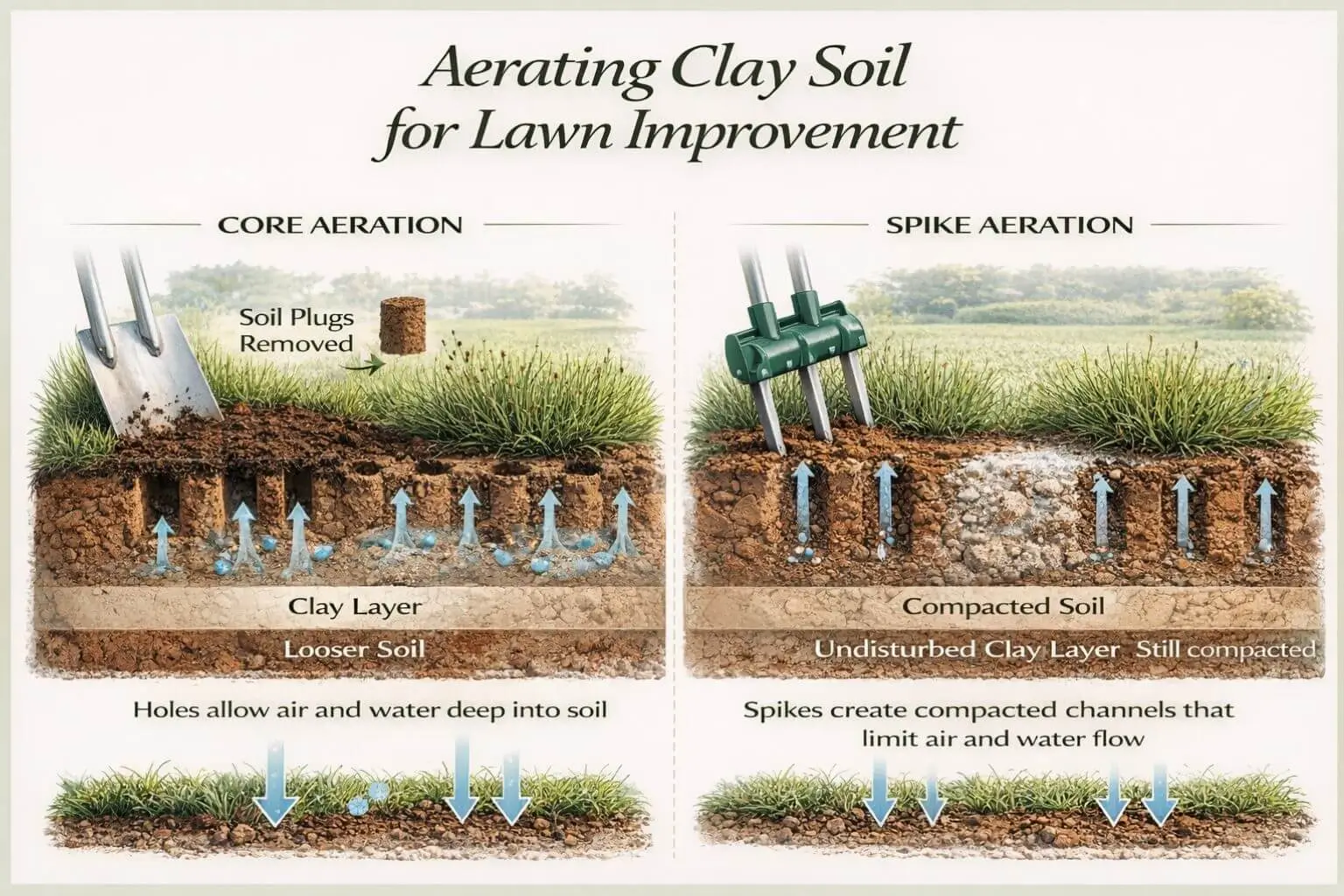
Aeration involves creating holes in the soil to reduce compaction and enhance air and water movement. Core aeration removes small plugs of soil, allowing deep penetration of water and nutrients, while spike aeration merely displaces soil. For clay lawns, aeration is recommended once or twice per year during the growing season. Regular aeration improves root development, reduces water pooling, and prepares the soil for amendments.
-
Adding Organic Matter
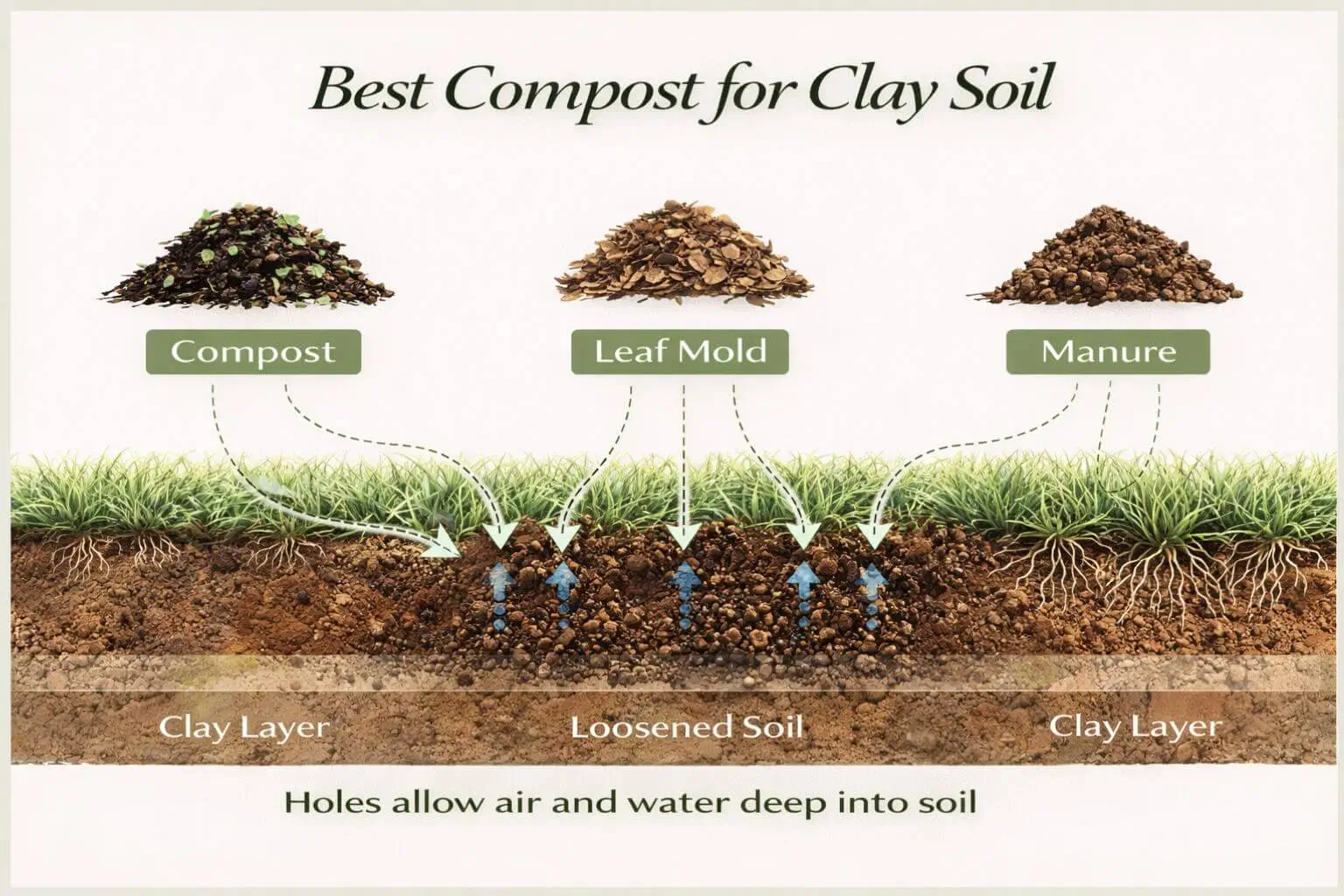
Incorporating organic matter like compost, leaf mold, or well-rotted manure loosens compacted clay. Organic matter improves soil structure, increases microbial activity, and enhances water retention without creating dense, waterlogged zones. The best compost for clay soil is coarse and fibrous, which improves drainage and root penetration. Regular incorporation acts as a long-term amendment for sustainable clay soil improvement.
-
Gypsum Application
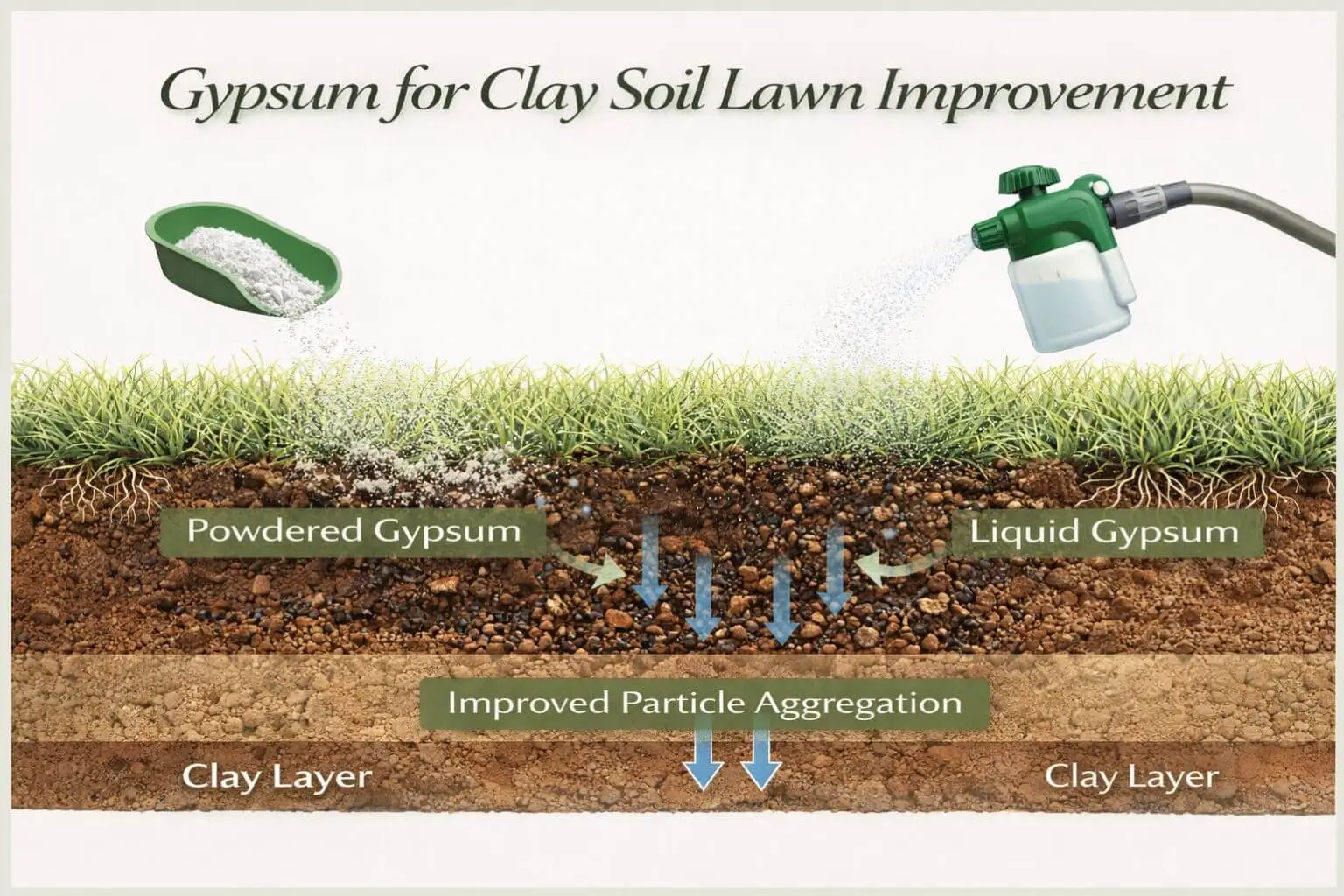
Gypsum (calcium sulfate) improves clay soil structure by displacing sodium in the soil and promoting particle aggregation. Both powdered and liquid gypsum are effective, though liquid forms penetrate faster. Gypsum enhances drainage, facilitates nutrient availability, and reduces surface crusting. Applying gypsum correctly can make clay soil more workable without significantly altering soil pH, making it a reliable method for improving clay lawns.
-
Mechanical Soil Breaking
Manual or mechanical soil breaking involves physically loosening compacted clay using spades, rototillers, or specialized equipment. This technique is most effective when soil is slightly moist and not overly wet, as excessively wet clay can smear and worsen compaction. Mechanical breaking is often combined with aeration and organic matter addition to accelerate soil improvement naturally.
-
Soil Amendments and Additives
Beyond gypsum, clay soil can benefit from organic and mineral amendments. Organic amendments like compost and biochar improve structure, while mineral amendments such as perlite or sand enhance aeration. Soil conditioners work synergistically with other methods, providing long-term stability. Choosing the right amendment depends on local soil tests and specific lawn requirements.
Planting Grass on Clay Soil
Selecting Suitable Grass Types
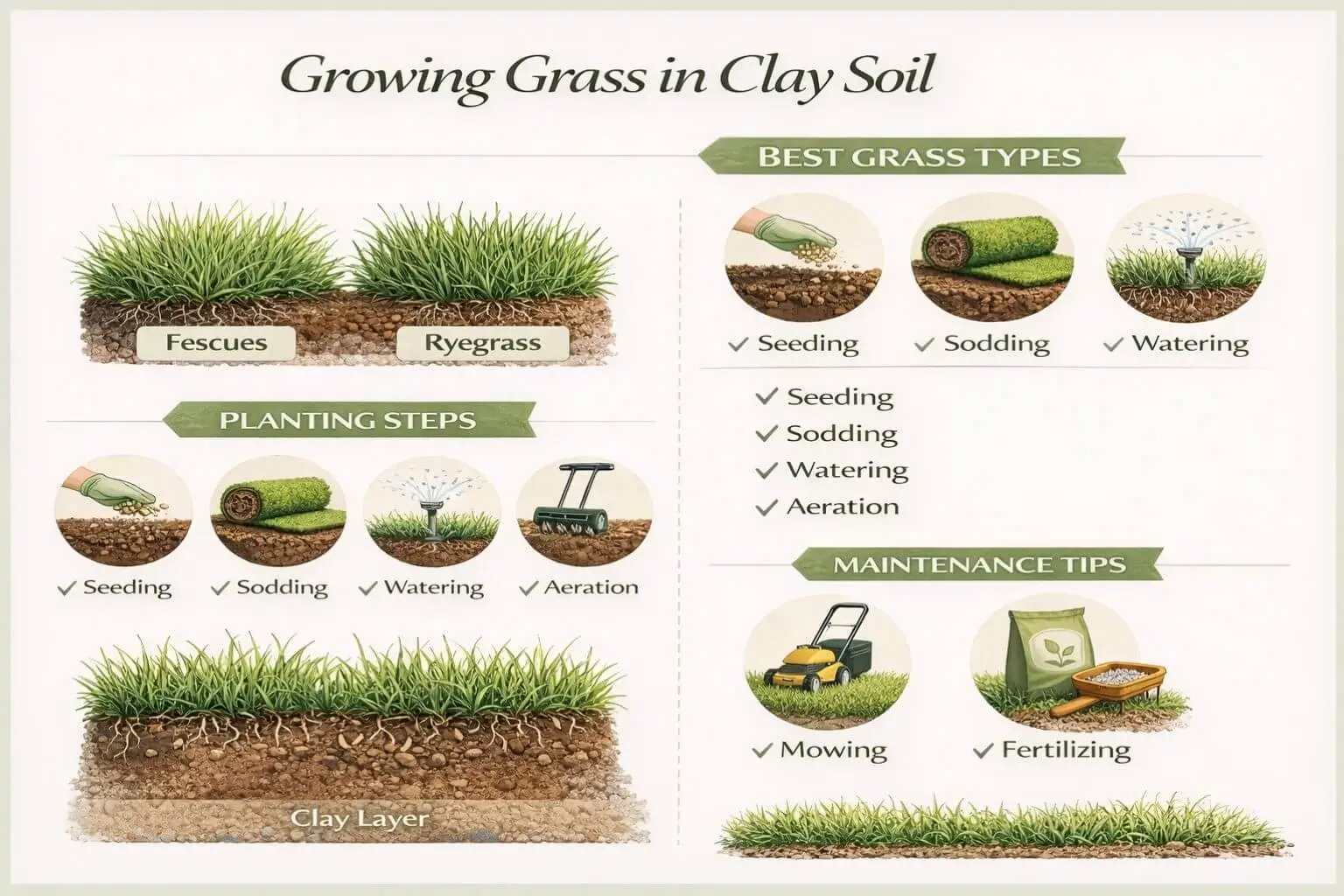
Certain grass varieties tolerate clay soil better than others. Fescues and ryegrass are common examples due to their deep roots and tolerance to heavy, moisture-retentive soils. Sun and shade considerations also matter: some grass types thrive in full sun, while others handle partial shade better. Selecting the correct variety ensures faster establishment and more resilient lawns. For clay-tolerant grass options, varieties like Zoysia Tenuifolia are highly resilient and create a dense, luxury lawn.
Planting Techniques
Proper planting techniques increase the success of growing grass on clay. Soil should be prepared by loosening and amending the top layer. Seeding or sodding should follow, with attention to consistent contact between seed and soil. Maintaining adequate moisture during germination is critical. These steps ensure uniform growth and reduce patchiness common in clay soils. Similar to the careful soil preparation recommended for planting garlic, ensuring proper soil loosening and amendments is key for successful grass seed germination in clay soils.
Lawn Maintenance on Clay Soil
Maintaining a clay lawn involves careful watering, mowing, and fertilization. Avoid overwatering, which worsens compaction, and mow at appropriate heights to reduce stress. Periodic aeration and topdressing with compost help maintain improved soil structure. Over time, consistent care reinforces the effectiveness of initial soil improvement measures.
Regional Considerations
Clay soil behavior varies with climate and local soil types. In the UK, heavy rainfall requires extra drainage measures when improving clay soil for lawns. In Australia, hot, dry conditions necessitate water retention strategies alongside soil amendments. Adjusting techniques to local conditions ensures optimal lawn performance and sustainable soil health.
Conclusion
Improving clay soil for lawns requires a combination of methods: aeration, organic matter addition, gypsum application, mechanical soil breaking, and targeted soil amendments. Selecting clay-tolerant grass varieties and applying proper planting and maintenance techniques further ensures lawn success. Monitoring soil condition and adjusting practices over time allows for sustained improvement, resulting in healthy, resilient turf suitable for any climate.
FAQs
- How does gypsum help improve clay soil for lawns?
Gypsum helps break up compacted clay, improving drainage and root penetration without altering soil pH. - Can I grow grass directly on clay soil?
Yes, but selecting clay-tolerant grass and preparing the soil with amendments significantly improves success. - What is the fastest way to break down clay soil naturally?
Incorporating organic matter and aerating regularly helps loosen clay naturally over time. - Which grass seeds are best for clay soil?
Varieties like fescues and ryegrass tolerate heavy soil, retain moisture, and grow well in clay conditions. - How often should I aerate a clay lawn?
Aeration is recommended once or twice a year during the growing season to reduce compaction and improve drainage. - Can gypsum be used in liquid form on clay lawns?
Yes, liquid gypsum penetrates soil faster and is effective on compacted clay.