
Introduction
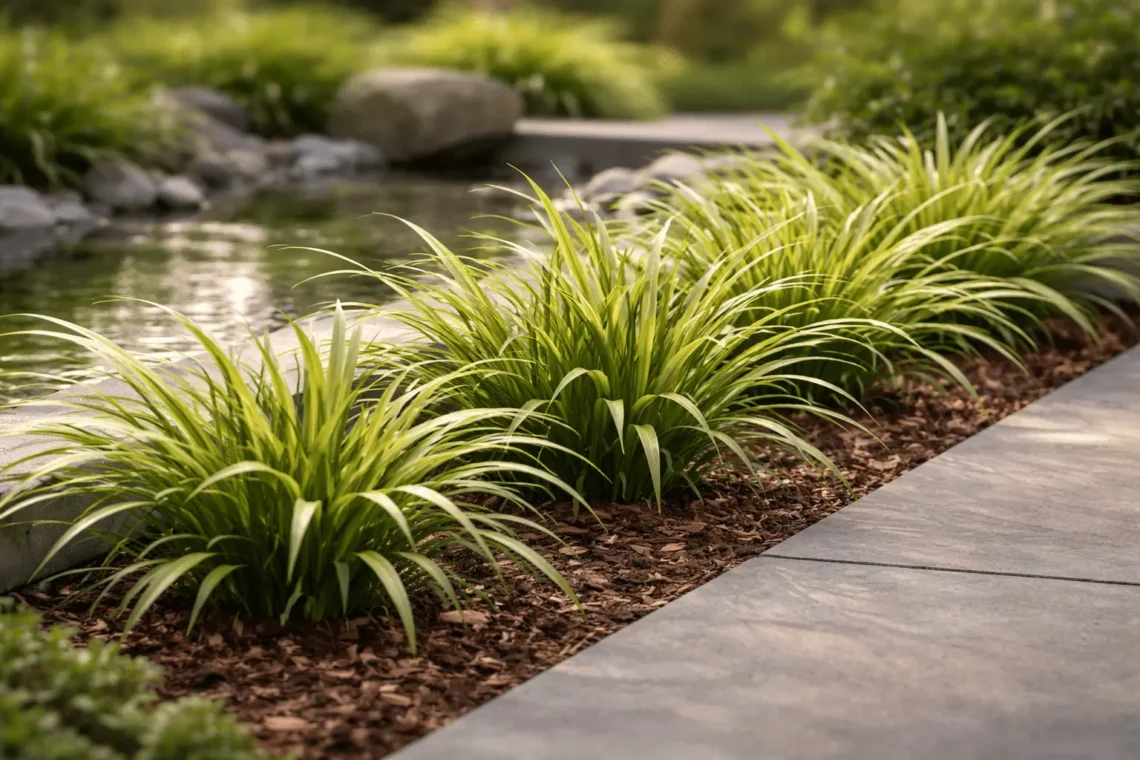
Japanese sweet flag is a compact, ornamental, grass-like plant widely appreciated for its neat form, evergreen foliage, and adaptability in landscape design. Known botanically as Acorus gramineus, Japanese sweet flag has gained strong popularity among gardeners due to its refined appearance and low-maintenance nature. Although it resembles ornamental grasses, it offers a softer texture and more controlled growth habit, making it suitable for a wide range of settings. Japanese sweet flag is especially valued in gardens, borders, and containers where consistent moisture is available. Its ability to thrive near water features, along pathways, and in decorative pots makes it a reliable choice for both modern and traditional garden layouts.
What Is Japanese Sweet Flag?
Botanical Overview
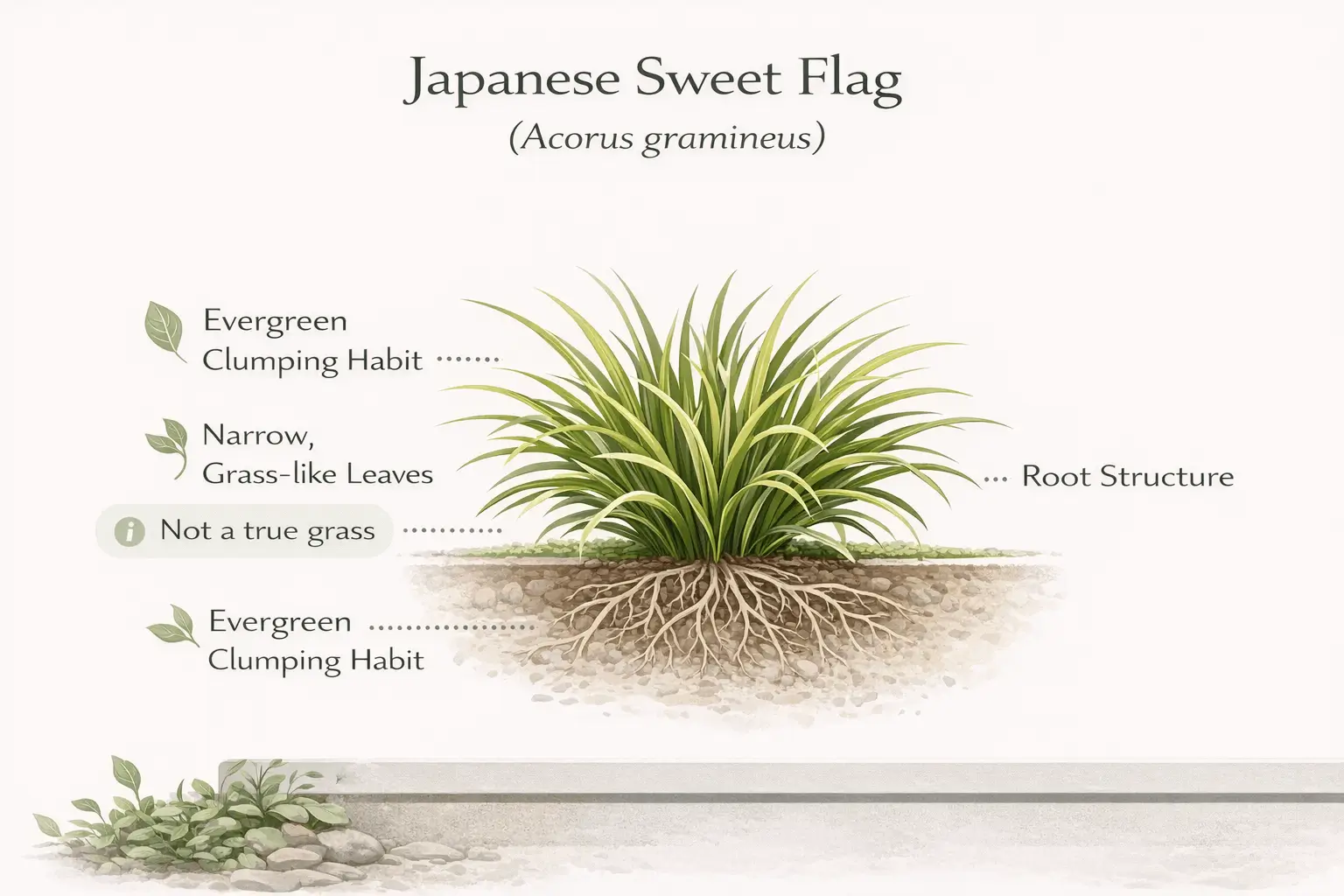
Japanese sweet flag is scientifically classified as Acorus gramineus and is commonly referred to as sweet flag grass, Japanese sweet flag grass, or simply flag grass. Despite its narrow, arching leaves and clumping habit, it is not a true grass. The plant is an evergreen perennial with a grass-like appearance, forming dense tufts of slender foliage that remain attractive throughout the year in suitable climates. Its slow to moderate growth rate and tidy structure contribute to its ornamental value.
Origin and Natural Habitat
Japanese sweet flag originates from East Asia, where it naturally grows in regions with high moisture availability. In the wild, it is commonly found along stream banks, marshy areas, and water-adjacent landscapes. These natural conditions explain the plant’s preference for consistently moist soil and its tolerance for shallow water environments. This habitat adaptability makes Japanese sweet flag particularly effective in gardens designed to mimic natural or waterside settings.
Types and Varieties of Japanese Sweet Flag
Ogon Sweet Flag
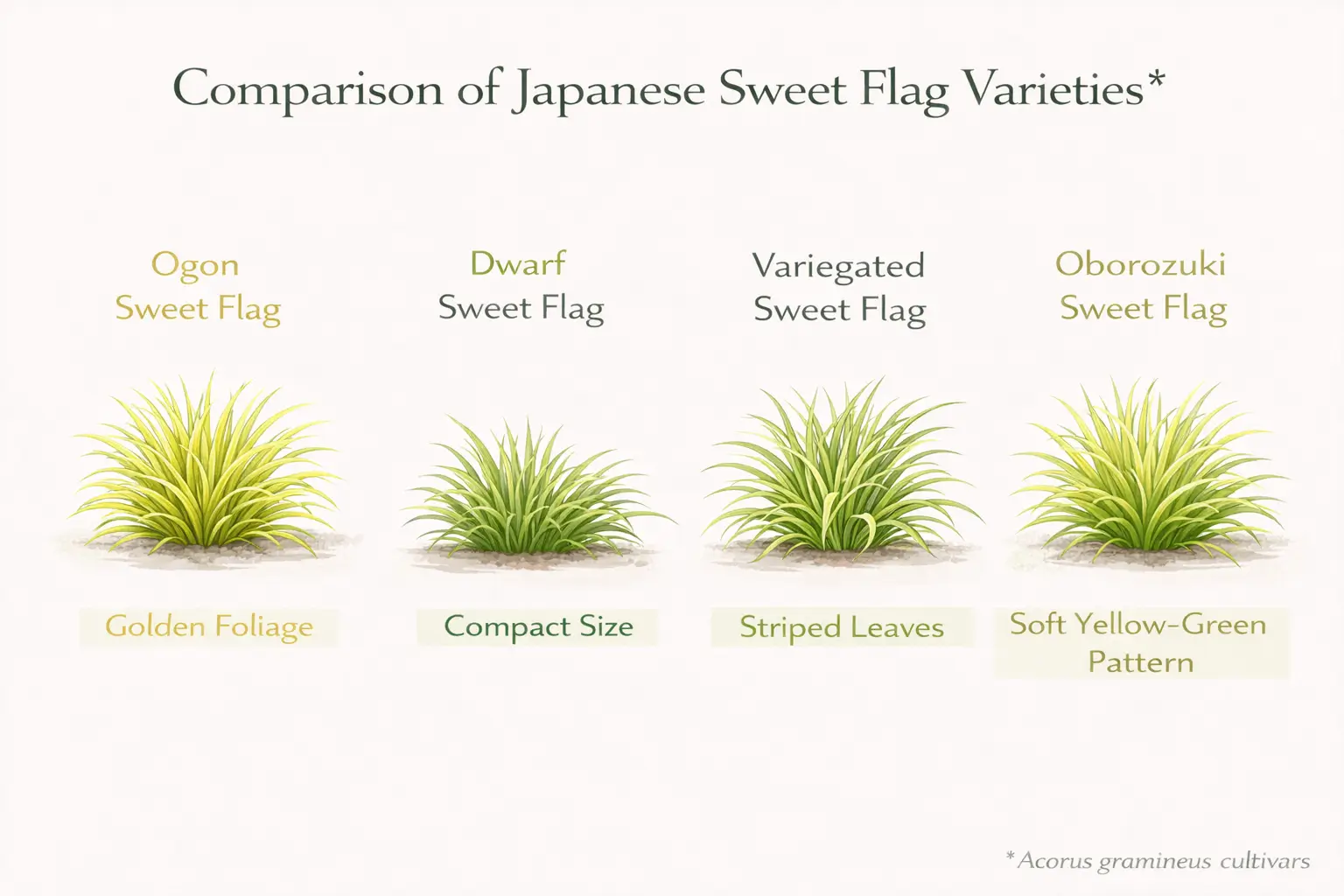
Ogon sweet flag is recognized for its striking golden-yellow foliage, which provides strong visual contrast in landscape designs. The bright coloration remains vibrant in partial shade and adds light to shaded garden areas. Sweet flag Ogon is frequently used as an accent plant along borders, near ponds, and in mixed container arrangements where its color can stand out against darker foliage.
Dwarf Sweet Flag
Dwarf sweet flag features a compact growth habit, making it ideal for limited spaces. Its shorter height and dense form allow it to fit easily into small gardens, narrow borders, and container plantings. Dwarf sweet flag is particularly useful where a low-growing, orderly plant is required without frequent trimming.
Variegated Sweet Flag
Variegated sweet flag displays distinctive striped foliage, typically combining green with creamy white or yellow margins. This visual pattern adds texture and movement to garden borders and pond edges. Acorus variegated sweet flag is often used to soften hard lines in landscape designs while maintaining a clean, structured appearance.
Oborozuki Sweet Flag
Oborozuki sweet flag is known for its subtle and refined color pattern, featuring pale yellow centers with soft green margins. The muted tones provide an elegant aesthetic suitable for decorative landscaping. It works well in minimalist gardens, water features, and container displays where understated beauty is preferred.
How to Grow Japanese Sweet Flag
Light Requirements
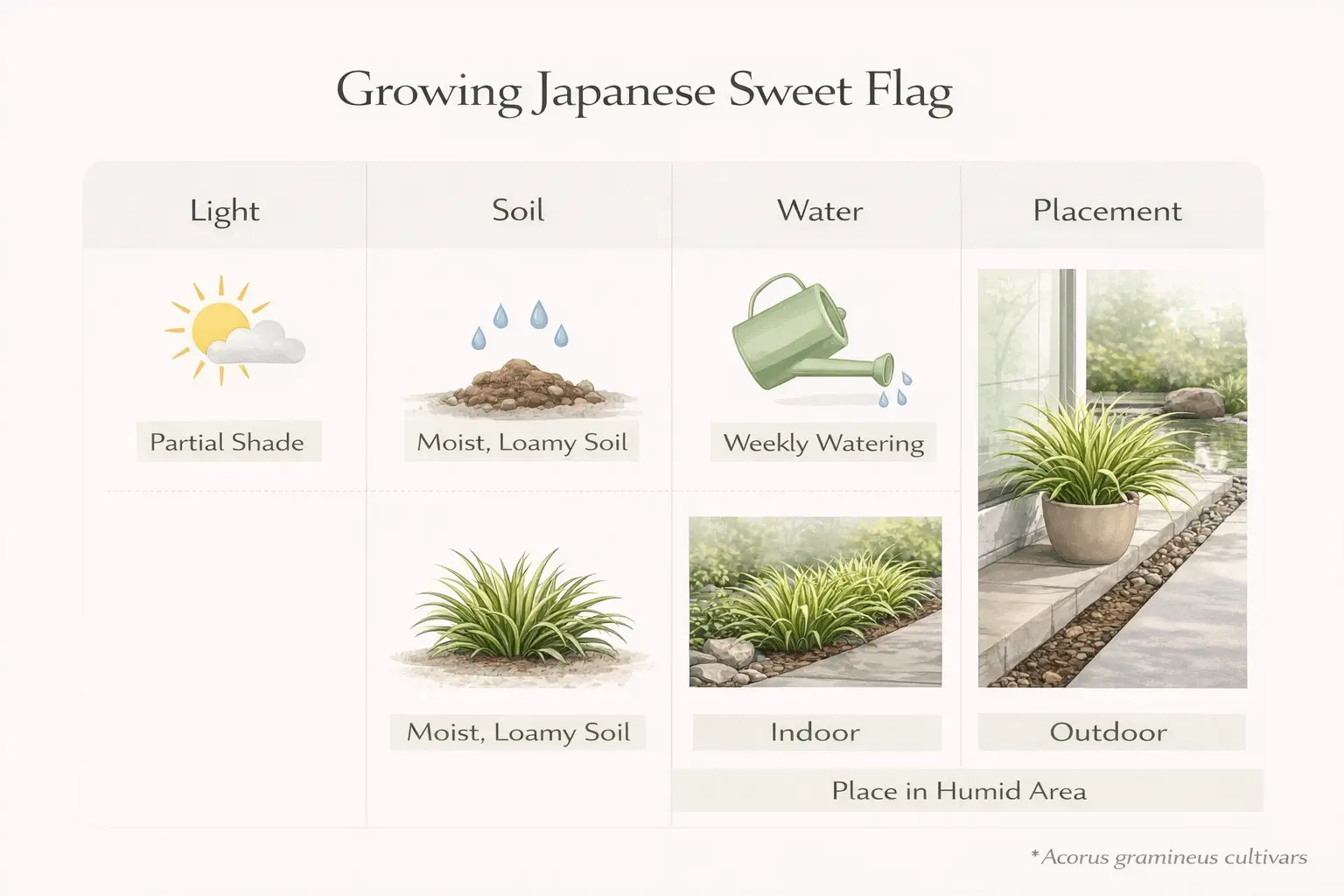
Japanese sweet flag grows best in partial shade to bright indirect light. It can tolerate full sun in cooler climates if adequate moisture is maintained. For indoor placement, bright indirect light near a window is ideal. Outdoors, filtered sunlight or morning sun with afternoon shade supports healthy growth and prevents leaf scorching.
Soil and Moisture Needs
The sweet flag Acorus plant prefers rich, well-draining soil that retains moisture. Loamy or organically amended soil works best. Consistently moist conditions are essential, as dry soil can quickly stress the plant. While it tolerates wet soil, proper drainage prevents stagnation in container-grown specimens.
Watering Schedule
Acorus sweet flag grass requires regular watering to maintain evenly moist soil. In garden settings, watering frequency depends on rainfall and soil type, but the soil should never dry out completely. In containers, watering may be needed more frequently, especially during warm weather, to avoid drought stress.
Japanese Sweet Flag Plant Care
Fertilization
Sweet flag Acorus gramineus has light feeding requirements. A balanced, slow-release fertilizer applied during the growing season is sufficient. Over-fertilization should be avoided, as it can lead to weak growth and reduced foliage quality.
Pruning and Maintenance
Pruning needs for Acorus grass are minimal. Occasional trimming of damaged or yellowing leaves helps maintain a clean appearance. Cutting back old foliage in early spring encourages fresh, compact growth and preserves the plant’s shape.
Seasonal Care
Japanese sweet flag is generally winter-hardy in mild to moderate climates. In colder regions, growth may slow, but foliage often remains evergreen. Seasonal changes may affect color intensity, with brighter tones appearing during cooler periods. Mulching helps protect roots in colder conditions.
Landscaping and Decorative Uses
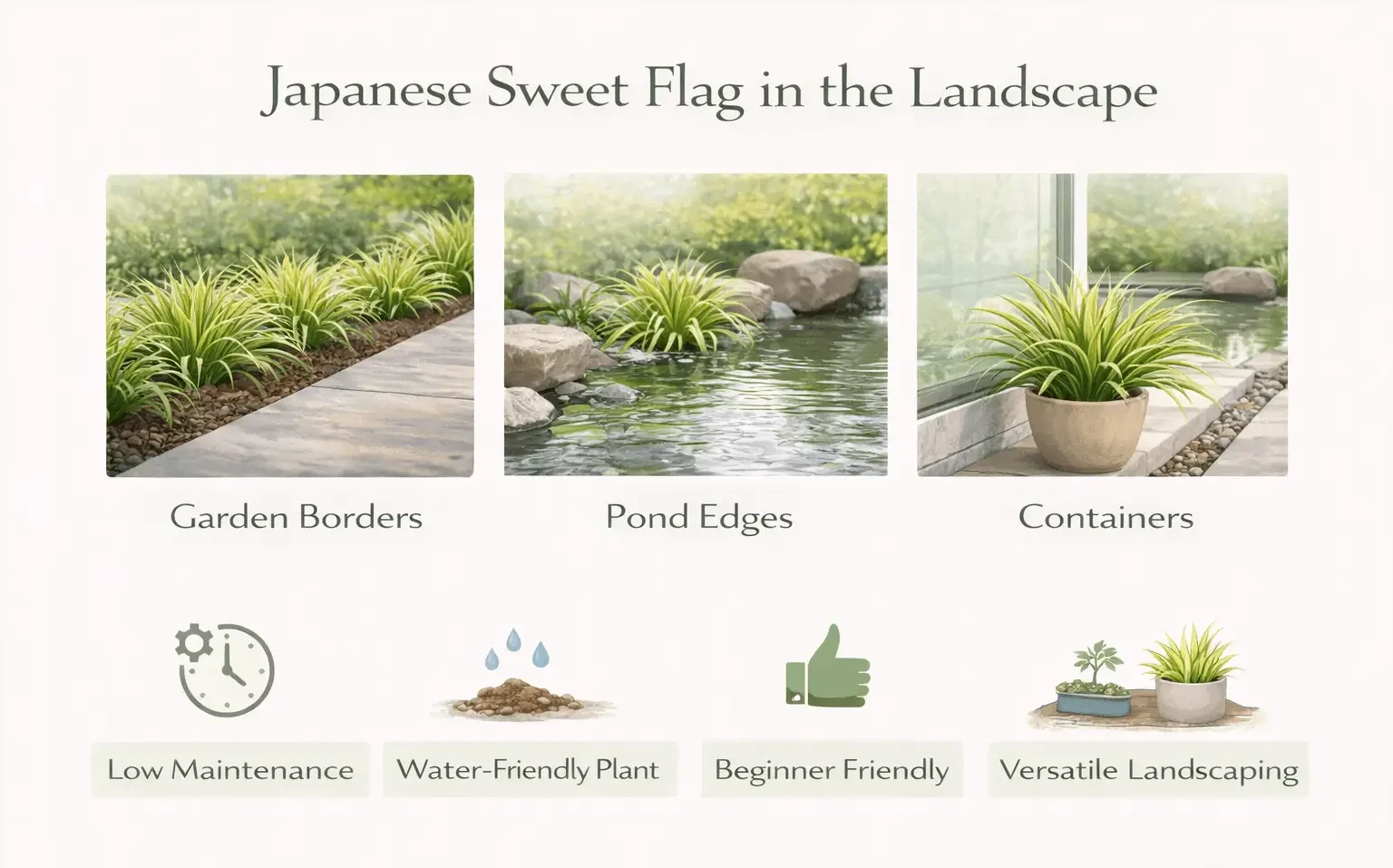
Garden Borders and Ground Cover
Flag grass is commonly used to edge pathways and define garden borders. Its uniform height and clumping habit create clean lines without aggressive spreading, making it suitable for structured designs.
Water Gardens and Pond Edges
Acorus sweet flag thrives near water features due to its natural tolerance for moist soil. It stabilizes pond edges and integrates seamlessly into water garden designs.
Container Gardening
Ogon plant varieties grow well in pots when moisture is maintained. Containers allow flexible placement on patios, balconies, and entryways while showcasing foliage color and texture.
Benefits of Japanese Sweet Flag
Low Maintenance Ornamental Value
Japanese sweet flag grass is beginner-friendly due to its simple care needs, slow growth, and resistance to most pests. It requires minimal pruning and adapts well to various environments.
Versatile Landscape Plant
Sweet flag grass adapts easily to different landscape designs, from formal borders to naturalistic water gardens. Its flexibility, combined with multiple attractive varieties, makes it a dependable ornamental choice across garden styles.
Conclusion
Japanese sweet flag is an excellent choice for gardens due to its evergreen foliage, refined grass-like form, and adaptability to moist environments. It offers consistent visual appeal with minimal maintenance, making it suitable for borders, containers, and water-adjacent landscapes. Choosing the right variety enhances results—ogon sweet flag adds bright color contrast, while dwarf sweet flag fits compact spaces and container designs. Long-term success depends on maintaining consistently moist soil, providing appropriate light, and performing light seasonal maintenance. When these basic care needs are met, Japanese sweet flag remains a reliable and attractive ornamental plant year-round.
Read Also: 7 Stunning Purple Trailing Lantana Benefits for Easy Landscaping
FAQs About Japanese Sweet Flag
Is japanese sweet flag a true grass?
No, japanese sweet flag is not a true grass. Although it has a grass-like appearance, it belongs to the Acorus genus and differs botanically from ornamental grasses.
Can japanese sweet flag grow indoors?
Yes, japanese sweet flag can grow indoors when placed in bright, indirect light and kept in consistently moist soil. It performs well in containers near windows or bright rooms.
How fast does acorus gramineus grow?
Acorus gramineus has a slow to moderate growth rate. It gradually forms dense clumps rather than spreading aggressively, making it easy to manage in gardens and pots.
Does japanese sweet flag need full sun or shade?
Japanese sweet flag grows best in partial shade to bright indirect light. It can tolerate full sun in cooler climates if soil moisture is consistently maintained.
Is sweet flag ogon suitable for water gardens?
Yes, sweet flag Ogon is well-suited for water gardens. Its tolerance for wet soil makes it ideal for pond edges and moist landscape areas.



2 Comments on “9 Stunning Reasons to Grow Japanese Sweet Flag at Home”