Introduction
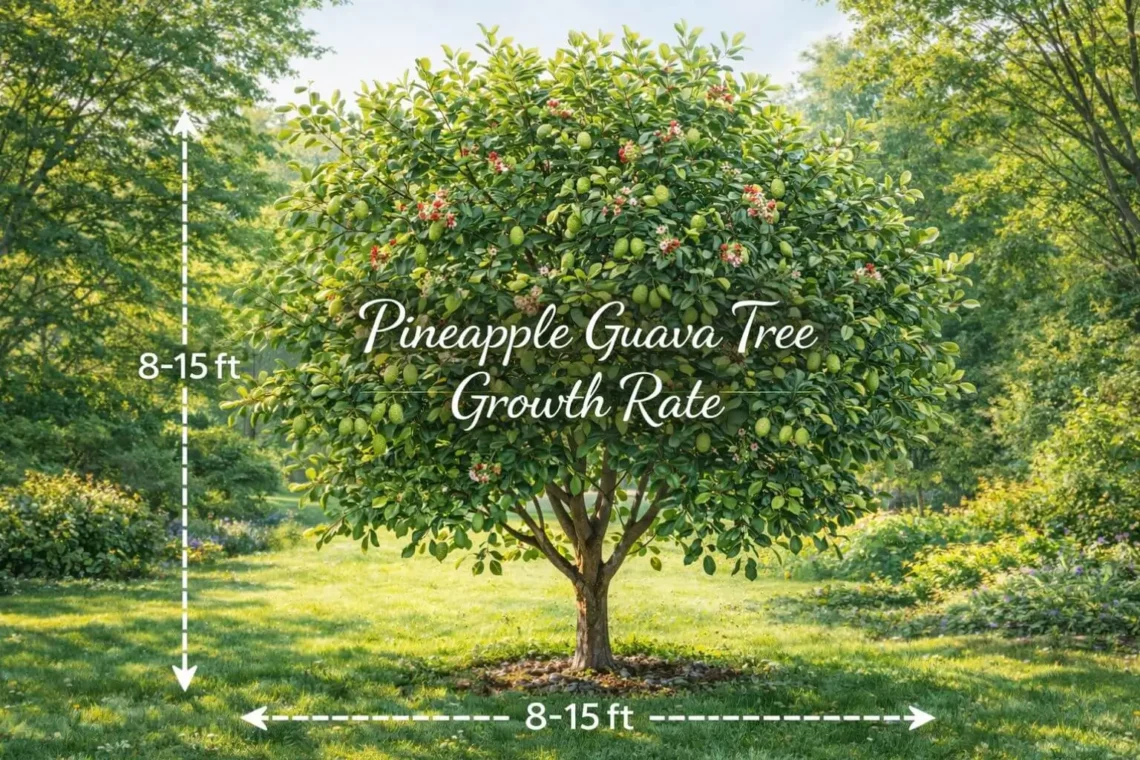
Pineapple guava tree growth rate is an important consideration for gardeners and horticulturists aiming to optimize fruit production and landscape planning. Pineapple guava (Acca sellowiana) is a subtropical evergreen shrub known for its aromatic fruit and attractive foliage. Typical growth patterns include moderate annual increases in height and width, which can vary depending on care and environment. Key factors influencing pineapple guava growth rate per year include climate conditions, soil quality, propagation method, and ongoing maintenance such as pruning and fertilization. Understanding these factors helps ensure healthy, productive trees. Pineapple guava (Acca sellowiana) is a subtropical evergreen shrub known for its aromatic fruit and attractive foliage; for more detailed botanical information, see Acca sellowiana on Wikipedia.
Understanding Pineapple Guava Growth
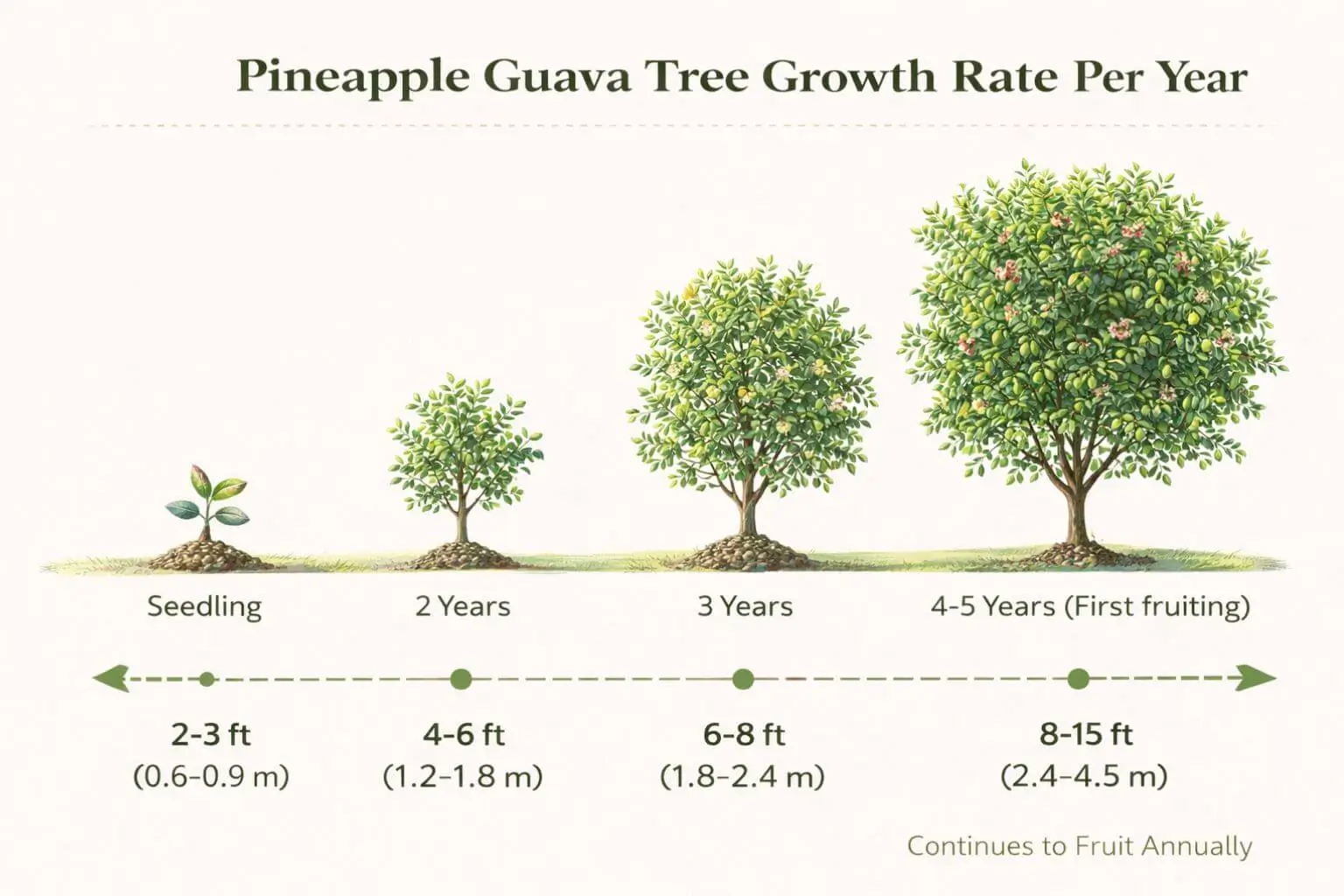
On average, pineapple guava trees grow 12–24 inches per year under optimal conditions. Seed-grown trees often start slower, while cuttings may establish more quickly. Yearly growth patterns show consistent increases in height and spread during spring and summer, with slower development in colder months. Mature trees can reach heights of 12–15 feet and widths of 10–12 feet, providing substantial coverage in gardens. The pineapple guava tree growth rate average can differ significantly between individual plants depending on propagation and environmental conditions. Knowing how big do pineapple guava trees get allows gardeners to plan spacing and pruning schedules effectively.
Factors Affecting Growth Rate
-
Climate & Hardiness Zones
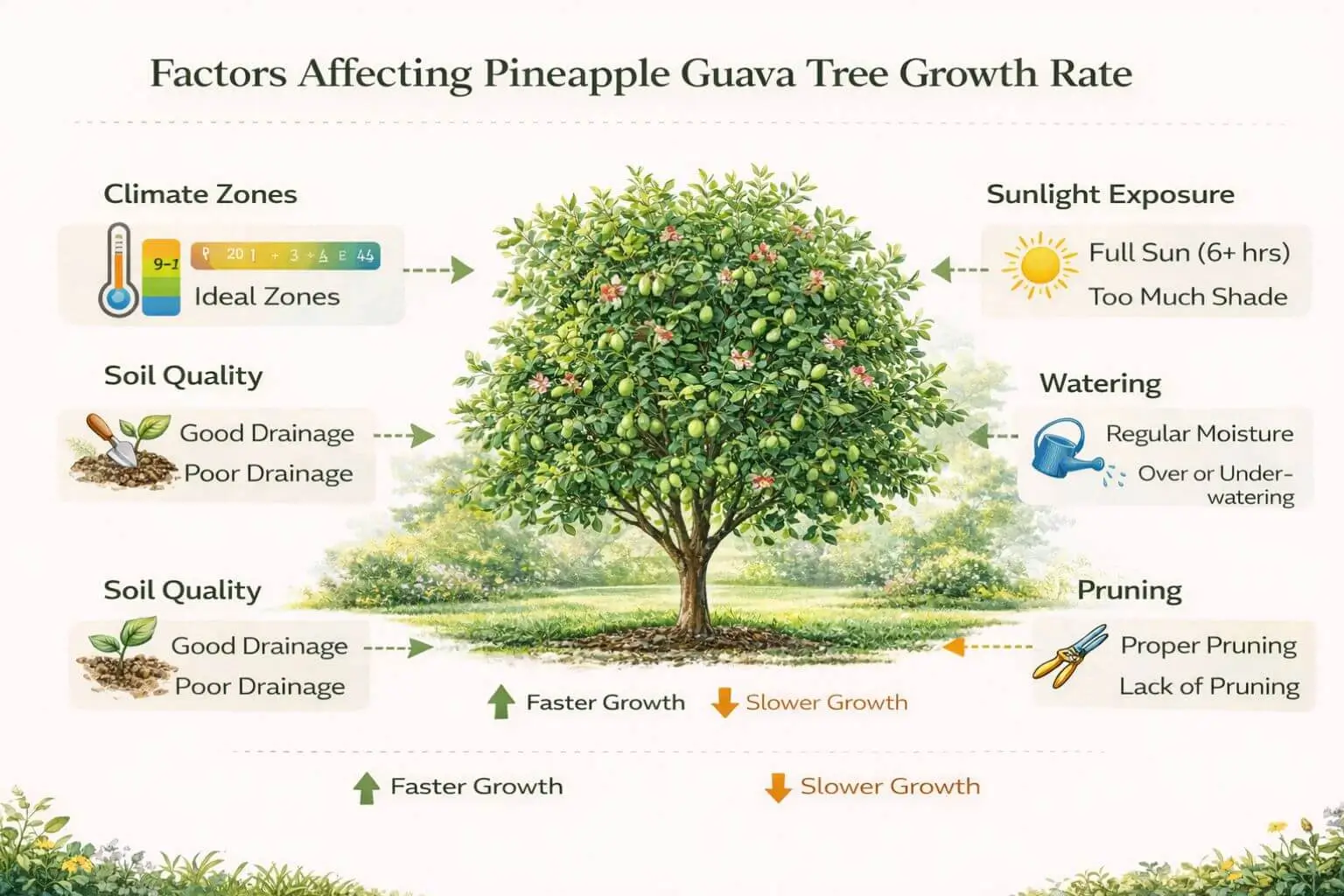
Pineapple guava trees are hardy in USDA zones 7–9. Growth is limited in regions with extreme cold, as frost can damage new shoots. Cold hardiness directly affects the pineapple guava tree growth rate, slowing development during low-temperature periods.
-
Soil Quality & Sunlight
Nutrient-rich, well-draining soil supports faster growth. Adequate sunlight promotes photosynthesis, boosting pineapple guava growing speed and overall tree health. Insufficient light can stunt development and reduce fruit yield.
-
Watering and Care Practices
Regular irrigation and fertilization influence growth rate significantly. Pruning encourages branching and improves air circulation, which maintains consistent pineapple guava tree growth. Over- or under-watering can negatively impact growth and fruit production.
Propagation and Its Impact on Growth
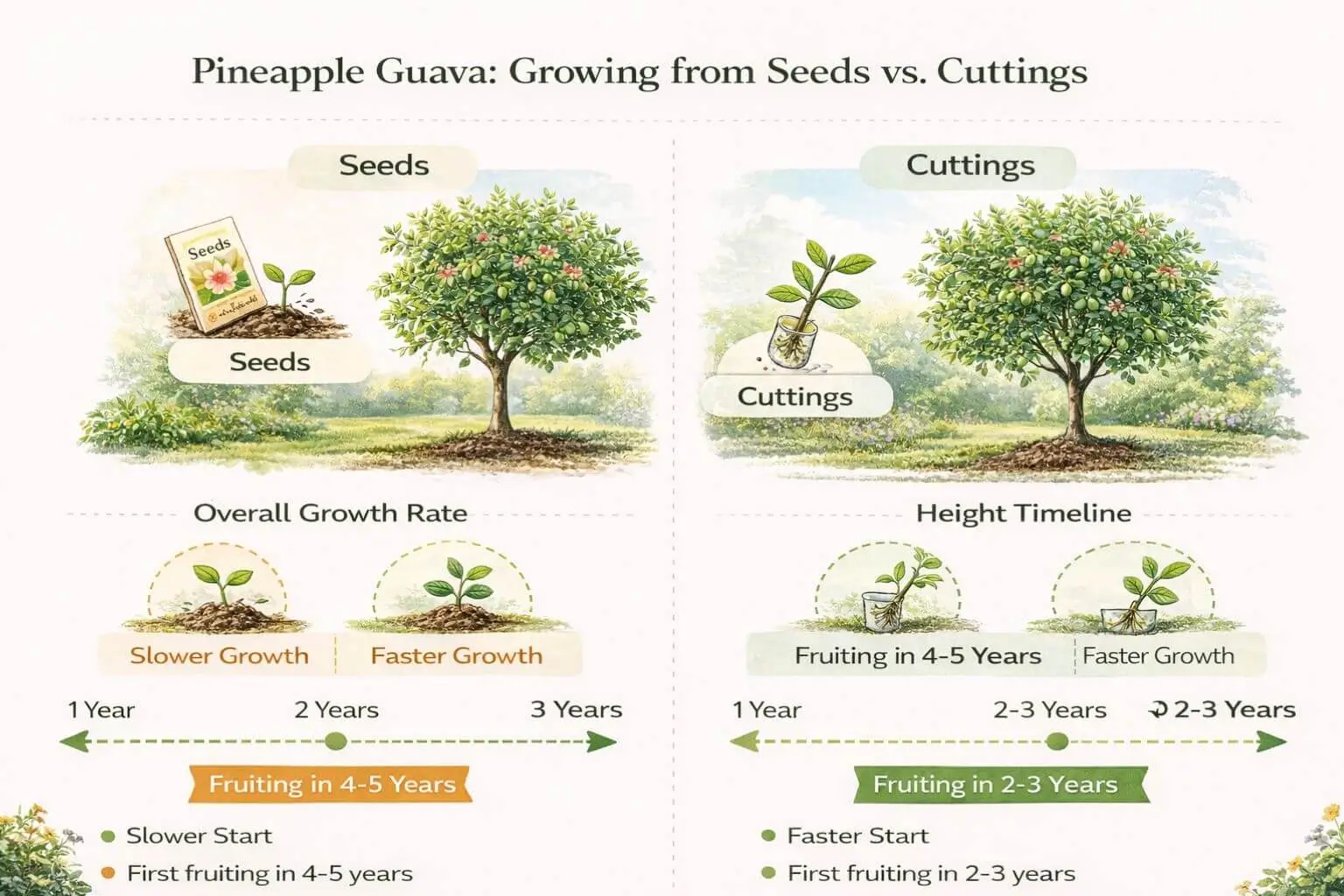
Propagation method plays a crucial role in growth speed and final tree size. Pineapple guava from seed typically grows slower and may take 5–8 years to reach fruiting maturity. Cuttings, by contrast, often establish faster, reaching productive stages sooner. Seedlings show gradual growth, with pineapple guava tree growth rate from seed averaging less per year compared to propagated trees. For hedges, growth timelines may vary, with regular pruning required to maintain uniform height. Understanding guava tree growth rate by propagation method helps in planning both individual trees and dense plantings.
Growth Patterns Over Time
Pineapple guava growth varies by month and stage of maturity. Young trees expand slowly during the first 1–2 years, with accelerated growth in subsequent years. Fast-growing varieties may reach fruiting size sooner, while slower-growing types require patience. Height and width increase progressively, with hedges requiring more lateral management than solitary garden trees. Monitoring pineapple guava tree growth rate by month and stage provides insight into expected development and helps anticipate maintenance needs. For gardeners interested in fast-growing plants similar to pineapple guava, explore the Japanese Sweet Flag Grass to learn how it thrives in various climates.
Common Growth Challenges
Stunted or slow growth may result from soil deficiencies, pest infestations, or improper pruning. Signs of poor health include dropping leaves, uneven development, and reduced fruit size. Awareness of these issues allows corrective action to restore optimal growth. Pineapple guava tree problems are often preventable through proper care, balanced nutrition, and monitoring for environmental stressors. Recognizing pineapple guava tree growth rate not growing or dropping leaves early ensures timely intervention.
Measuring and Monitoring Growth
Tracking growth involves measuring tree height and width periodically, maintaining growth charts, and estimating annual increments. Using formulas for pineapple guava tree growth rate calculation and recording data ensures accurate planning for garden space. Monitoring allows gardeners to adjust care practices to maintain steady development. Pineapple guava tree growth rate measurement provides benchmarks for both seedlings and mature plants, while growth charts and data visualization assist in long-term planning. To optimize your garden space around pineapple guava trees, consider pairing with Dymondia ground cover, which thrives alongside shrubs while maintaining healthy growth.
Pineapple Guava Growth in Different Regions
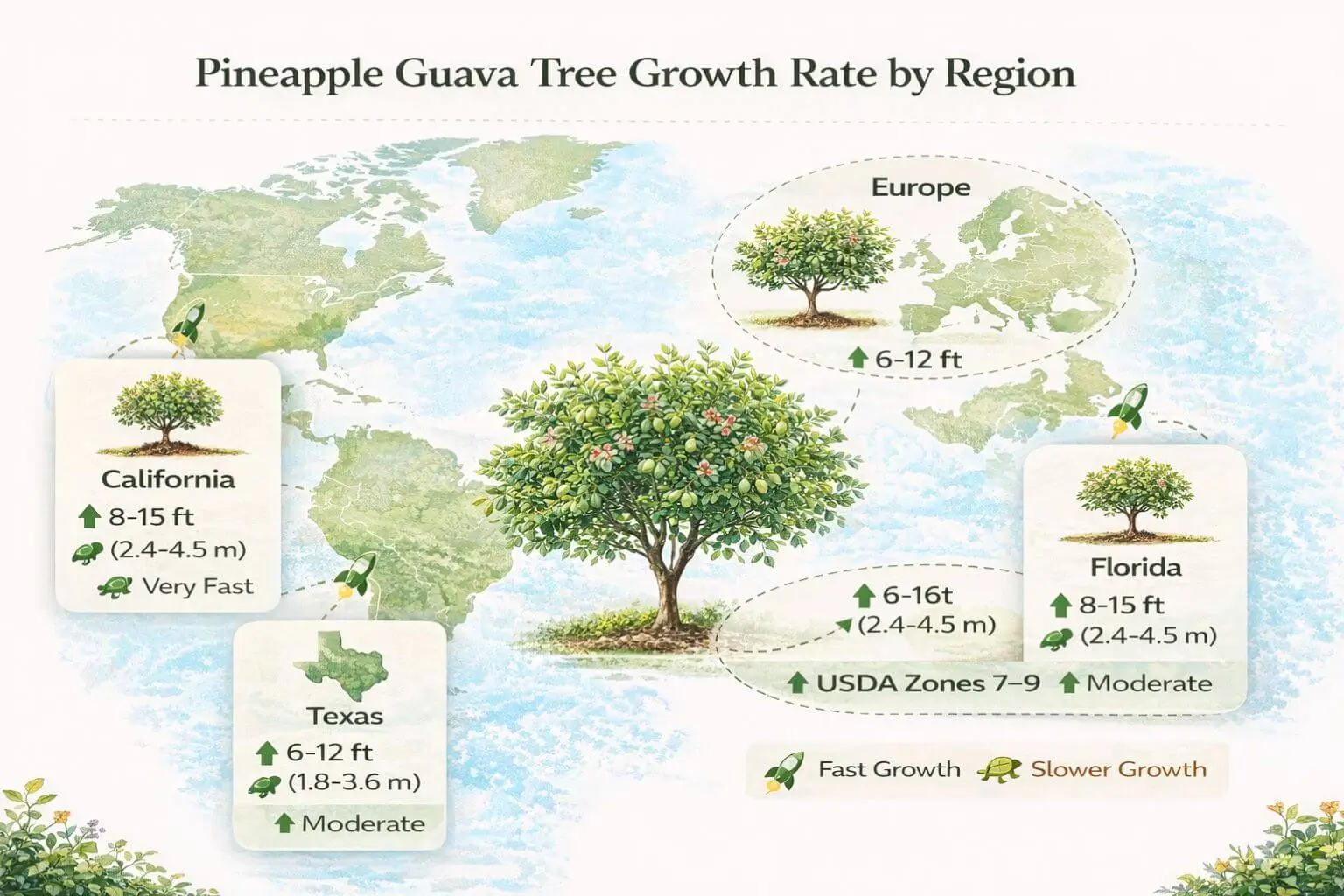
Growth rates vary significantly by region. In California, pineapple guava trees benefit from mild winters and long growing seasons, supporting faster growth. Florida and Texas provide subtropical climates that encourage consistent development, although high humidity can introduce pests. In Europe, zone 7/8 conditions are suitable, but colder winters can slow growth. Understanding pineapple guava tree growth rate in specific locations allows gardeners to adapt planting, pruning, and care schedules to local conditions.
Conclusion
Pineapple guava tree growth rate depends on climate, soil, sunlight, propagation, and maintenance. Observing, measuring, and adjusting care ensures healthy, productive trees. Gardeners and horticulturists who account for growth patterns, regional differences, and propagation methods can achieve optimal growth and fruit production. Consistent monitoring and informed care practices maximize the potential of pineapple guava in home gardens and commercial plantings.
FAQ
- What is the average growth rate of a pineapple guava tree?
Pineapple guava trees typically grow 12–24 inches per year, depending on climate and care. - How long does it take for a pineapple guava tree to reach full size?
Trees usually reach maturity and full fruiting potential in 5–8 years. - Does propagation method affect growth rate?
Yes, trees grown from cuttings often grow faster and fruit sooner than seed-grown trees. - Which conditions slow down pineapple guava growth?
Poor soil, insufficient sunlight, inadequate watering, frost damage, and lack of pruning can slow growth. - Can pineapple guava trees grow in colder climates?
They are hardy to USDA zones 7–9, but growth may be slower in colder regions.