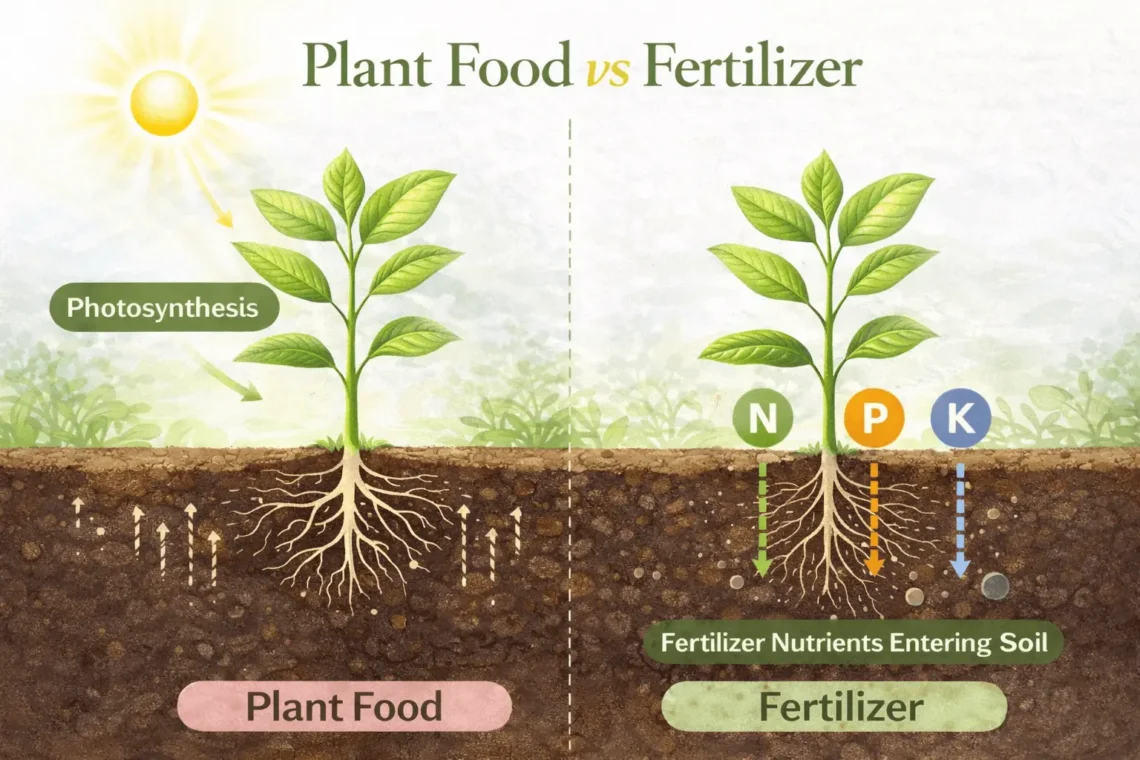
Introduction: Understanding Plant Food vs Fertilizer
The topic plant food vs fertilizer often causes confusion among gardeners because the terms are frequently used interchangeably. Scientifically, however, plants actually produce their own food through photosynthesis, a process where sunlight, carbon dioxide, and water are converted into sugars that fuel plant growth.
Fertilizers do not directly feed plants. Instead, plant fertilizer provides essential nutrients that plants need to grow and carry out biological processes such as photosynthesis and root development.
Many gardening products marketed as plant food fertilizer or food for plants are actually fertilizers that supply nutrients like nitrogen, phosphorus, and potassium. Understanding the difference between fertilizer and plant food helps gardeners choose the right nutrients and avoid common plant care mistakes.
What Is Plant Food in Gardening?
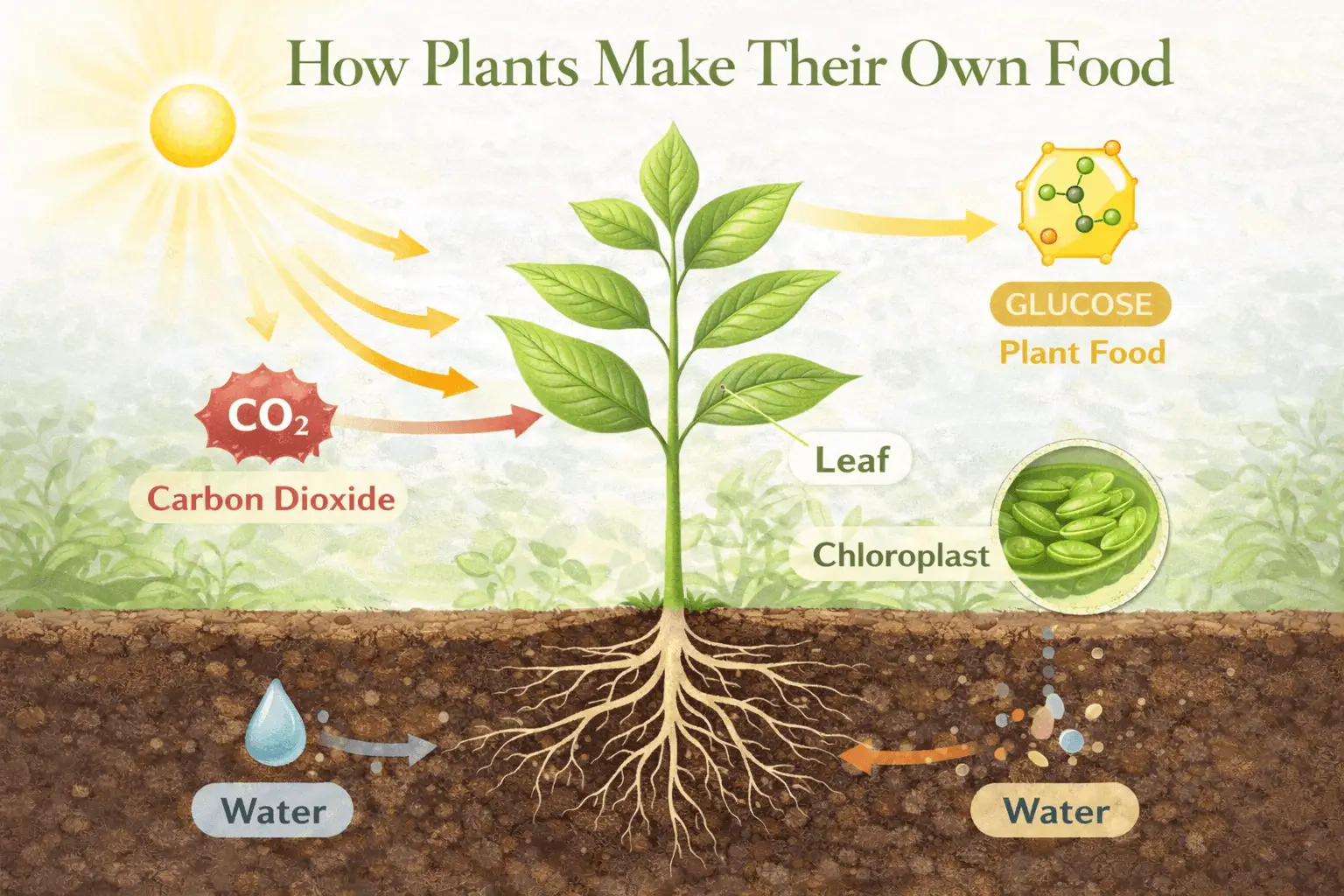
Plant food refers to the energy-rich sugars and carbohydrates that plants produce during photosynthesis. These sugars are generated in the leaves when plants absorb sunlight, carbon dioxide, and water, converting them into glucose that fuels growth and metabolism. Plant food refers to the energy-rich sugars and carbohydrates that plants produce during photosynthesis. During this biological process, plants convert sunlight, carbon dioxide, and water into glucose that fuels growth and metabolism.
Natural Plant Food vs Commercial Plant Food Products
Scientifically, plant food is produced inside the plant itself, not added from outside sources. However, many commercial products labeled as plant food are actually fertilizers designed to provide nutrients that support this food-producing process.
For example, products marketed as:
- Liquid plant food
- House plant food
- Plant food for indoor plants
typically contain nutrient solutions rather than actual plant food.
Why the Confusion Exists
The confusion arises because companies often use the term plant food fertilizer to make products sound more intuitive to consumers. While plants make their own food through photosynthesis, fertilizers provide the nutrients that enable plants to create that food efficiently.
What Is Fertilizer and How Does It Work?
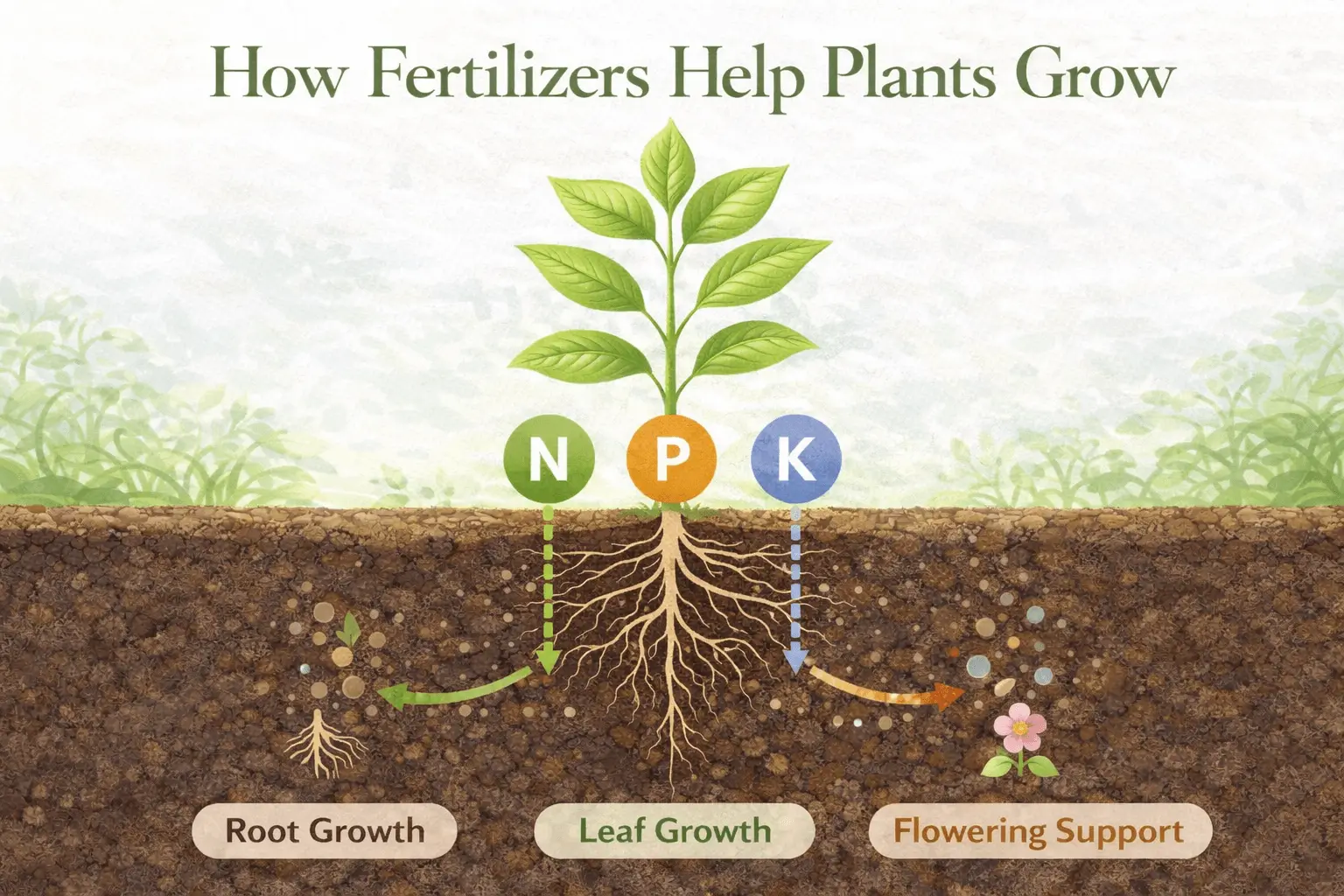
Fertilizer is a substance added to soil or water that supplies essential nutrients required for plant growth. These nutrients support plant development but are not food themselves.
Key Nutrients in Fertilizers
Most fertilizers contain three primary macronutrients commonly listed as NPK:
- Nitrogen (N) – promotes leaf and stem growth
- Phosphorus (P) – supports root development and flowering
- Potassium (K) – improves overall plant health and stress resistance
These nutrients help plants grow stronger and more productive.
How Fertilizers Support Plant Growth
Fertilizers enhance several biological processes, including:
- Root expansion and establishment
- Foliage and stem growth
- Flowering and fruit production
Examples of common fertilizer products include:
- Gardening fertilizer
- Fertilizer for indoor plants
- Houseplant fertilizer
- Plant fertilizer indoor solutions
These products help replenish nutrients that naturally decline in soil over time.
Difference Between Plant Food and Fertilizer
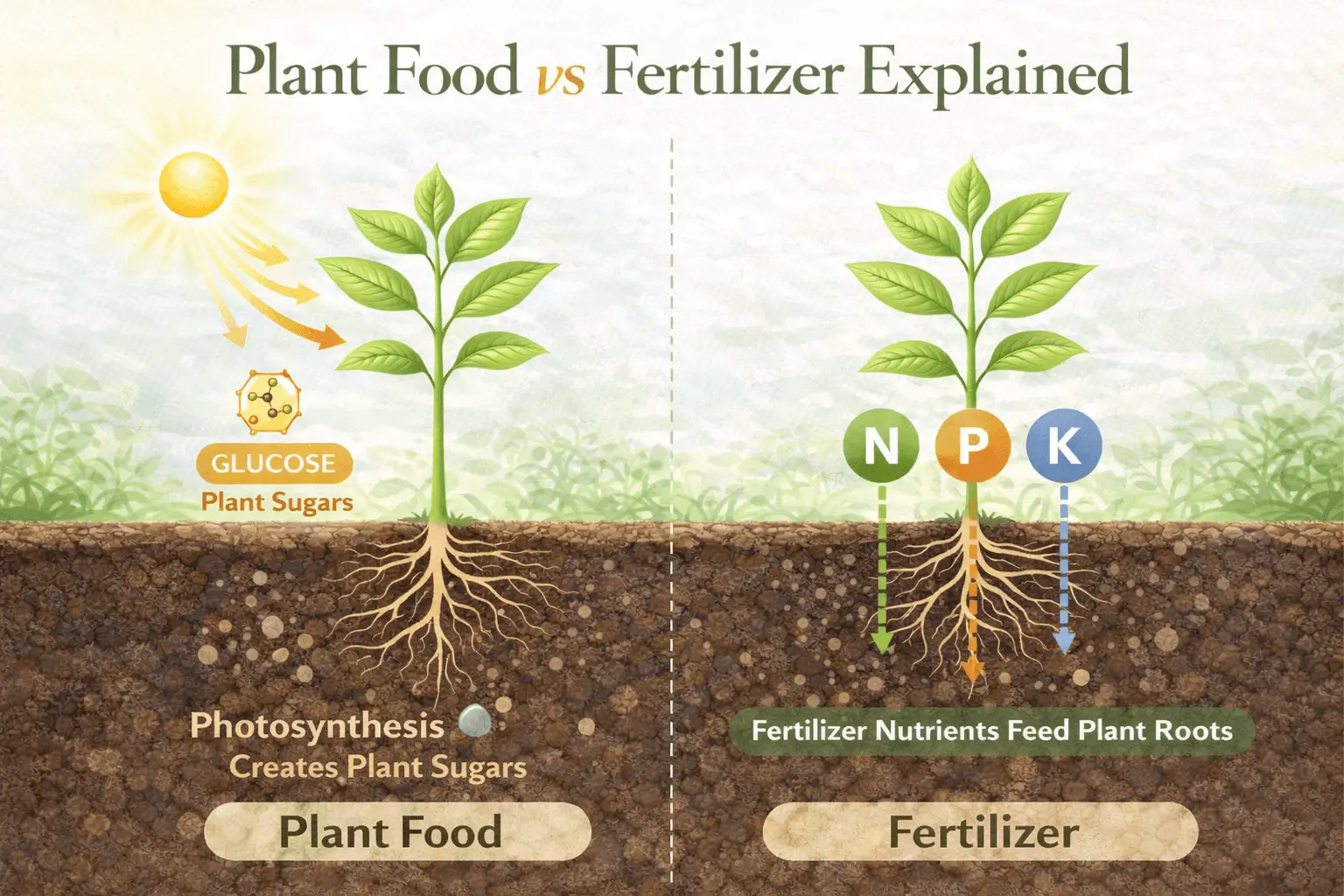
The difference between plant food vs fertilizer lies in how plants obtain and use energy for growth.
Biological Difference
Plants make their own food. Through photosynthesis, plants convert sunlight into sugars that fuel cellular activity and growth.
Fertilizers provide nutrients. These nutrients help plants carry out biological processes but do not serve as food themselves.
Why Terms Are Often Used Interchangeably
In everyday gardening language, products labeled as plant food are usually fertilizers. This marketing terminology explains why many people search for:
- difference between fertilizer and plant food
- what is the difference between plant food and fertilizer
- fertilizer vs plant food
In practice, the product sold as plant food is typically a fertilizer containing essential nutrients.
Are Plant Food and Fertilizer the Same Thing?
Many gardeners ask whether plant food is the same as fertilizer. Scientifically, the answer is no.
Plant food refers to the sugars plants produce during photosynthesis, while fertilizers provide nutrients needed for growth.
Why Gardening Guides Use Both Terms
Gardening guides and product labels often use the terms interchangeably because fertilizers help plants grow and produce food internally.
Common search questions include:
- Is plant food the same as fertilizer?
- Is fertilizer the same as plant food?
- Are fertilizer and plant food the same?
In practical gardening terms, most plant food products are fertilizers designed to provide nutrients for healthy plant development.
Liquid Plant Food vs Fertilizer: Are They Different?
Liquid plant food typically refers to liquid fertilizers dissolved in water for easy application. These solutions deliver nutrients quickly because plants absorb them through soil moisture or root systems.
Liquid vs Granular Fertilizers
Two common fertilizer forms are:
Liquid fertilizers
- Absorb quickly
- Easy to dilute and apply
- Common for indoor plants
Granular fertilizers
- Release nutrients slowly
- Often used in outdoor gardens
- Provide longer-lasting feeding
When Liquid Nutrients Work Best
Liquid fertilizers are especially useful for:
- Container plants
- Houseplants
- Newly transplanted plants
Gardeners frequently use plant food liquid products when fertilizing indoor plants, because nutrients can be applied more precisely and evenly.
Plant Food vs Fertilizer for Indoor Plants
Indoor plants grow in confined containers where soil nutrients gradually become depleted. Unlike garden soil, potting mixes do not replenish nutrients naturally.
Why Indoor Plants Need Fertilizer
Houseplants rely on added nutrients because watering slowly washes minerals out of the soil.
For this reason, gardeners often use:
- Indoor plant fertilizer
- Best fertilizer for indoor plants
- House plant food vs fertilizer products
These fertilizers supply essential nutrients that maintain healthy foliage and steady growth.
Nutrient Needs in Containers
Indoor plants typically require balanced nutrients and controlled feeding schedules. Without fertilization, plants may develop slow growth, pale leaves, or weak stems due to nutrient deficiencies. Indoor plants growing in containers often require regular nutrient supplementation because potting soil loses nutrients over time. For example, houseplants like ivy varieties need balanced feeding to stay healthy, as explained in our guide on Indoor plants growing in containers often require regular nutrient supplementation because potting soil loses nutrients over time. For example, houseplants like ivy varieties need balanced feeding to stay healthy, as explained in our guide on Swedish Ivy Plant Care.
Can You Use Plant Food and Fertilizer at the Same Time?
Most plant food products already contain fertilizer nutrients, so using additional fertilizer simultaneously may cause overfertilization.
Risks of Excess Fertilizer
Overfeeding plants can lead to:
- Salt buildup in soil
- Root damage
- Leaf burn
- Reduced plant health
Safe Feeding Practices
Gardeners should follow recommended fertilizer schedules and dilution instructions. For many indoor plants, feeding once every two to four weeks during the growing season provides adequate nutrients without risking nutrient overload.
Common Beginner Mistakes When Feeding Plants
Many plant problems occur because beginners misunderstand how fertilizers work.
Overfertilizing Indoor Plants
Applying fertilizer too frequently is one of the most common mistakes. Excess nutrients can damage roots and cause yellow or burnt leaf edges.
Feeding During Dormancy
Plants typically require less nutrition during winter dormancy. Fertilizing during this period may stress plants rather than support growth.
Confusing Fertilizer With Plant Food
Some gardeners assume fertilizers directly feed plants, leading to excessive application. Remember that plants make their own food through photosynthesis.
Skipping Soil Testing
Outdoor gardeners sometimes apply fertilizer without understanding soil nutrient levels. Testing soil helps prevent nutrient imbalances and unnecessary fertilization.
Types of Fertilizers Used for Plants
Several fertilizer types are used in gardening depending on plant needs and soil conditions.
All-Purpose Plant Food
All-purpose fertilizers contain balanced nutrients suitable for many plant species. These products are commonly used for general plant care.
Organic Fertilizers
Organic fertilizers are derived from natural sources such as compost, manure, or plant materials. They release nutrients gradually and improve soil health.
Liquid Fertilizers
Liquid fertilizers deliver nutrients quickly and are commonly used for houseplants and container gardening.
Slow-Release Fertilizers
Slow-release fertilizers gradually supply nutrients over time, reducing the need for frequent applications.
Gardeners often choose fertilizers based on plant type, growth stage, and soil quality when selecting the best fertilizer for plants. Different plants respond to fertilizers in different ways. Heavy-feeding plants such as vegetables often require more nutrients during the growing season, which is why proper fertilization is essential when following a Tomatoes Plant Care Guide.
Fertilizing Indoor Plants: Best Practices
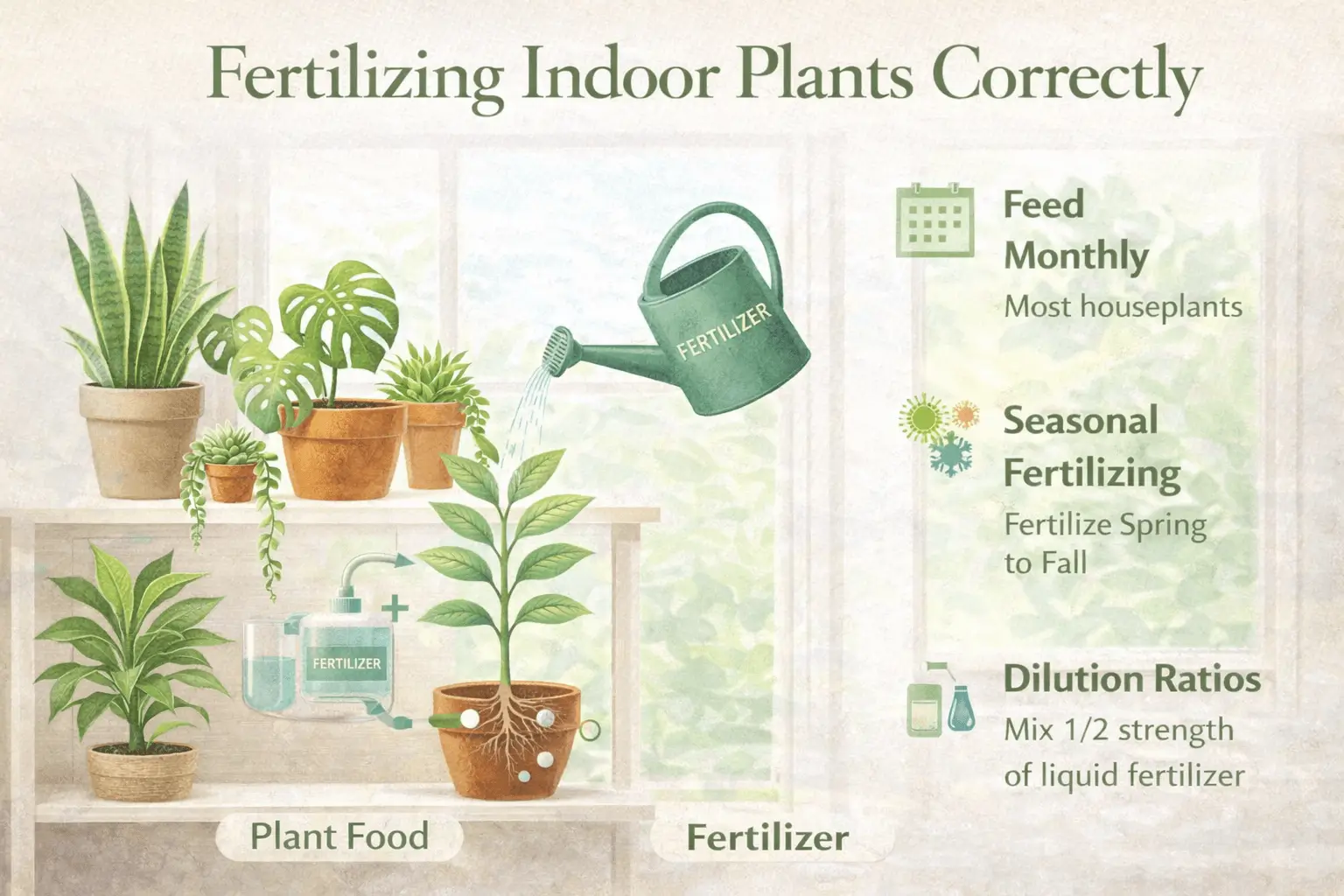
Proper fertilization helps houseplants maintain steady growth and healthy foliage.
Use Balanced Nutrients
Many houseplants benefit from balanced fertilizers with equal ratios of nitrogen, phosphorus, and potassium.
Adjust Feeding Seasonally
Plants typically require fertilizer during spring and summer when growth is most active. Feeding can be reduced or paused during winter dormancy.
Dilute Fertilizers Properly
Diluting fertilizer solutions prevents nutrient burn and protects delicate roots.
Products commonly used include houseplant fertilizer, fertilizer indoor plants, and balanced indoor plant fertilizer formulas designed for container plants.
Conclusion: Plant Food vs Fertilizer Explained Simply
Understanding plant food vs fertilizer helps gardeners provide the right support for healthy plant growth. Plants naturally produce their own food through photosynthesis, converting sunlight into sugars that fuel growth. Fertilizers do not feed plants directly. Instead, they supply essential nutrients such as nitrogen, phosphorus, and potassium that help plants grow stronger and carry out biological processes. In everyday gardening language, many products labeled as plant food are actually fertilizers. Knowing this distinction allows gardeners to use nutrients more effectively and avoid common fertilization mistakes.
FAQs
What is the difference between plant food and fertilizer?
Plant food is the energy plants produce through photosynthesis, while fertilizer provides the nutrients plants need to grow and support that process.
Is plant food the same as fertilizer?
In gardening products, plant food typically refers to fertilizers that supply essential nutrients such as nitrogen, phosphorus, and potassium.
Do indoor plants need fertilizer or plant food?
Indoor plants usually require fertilizer because nutrients in potting soil gradually become depleted over time.
Can you use plant food and fertilizer together?
Most plant food products already contain fertilizer nutrients, so using both together can lead to overfertilization and potential plant damage.
What is the best fertilizer for indoor plants?
Balanced fertilizers with equal NPK ratios or specialized houseplant fertilizers are commonly recommended for indoor plants.
How often should you fertilize plants?
Most plants benefit from fertilization during active growing seasons, typically every two to four weeks depending on plant type and fertilizer strength.