
Introduction
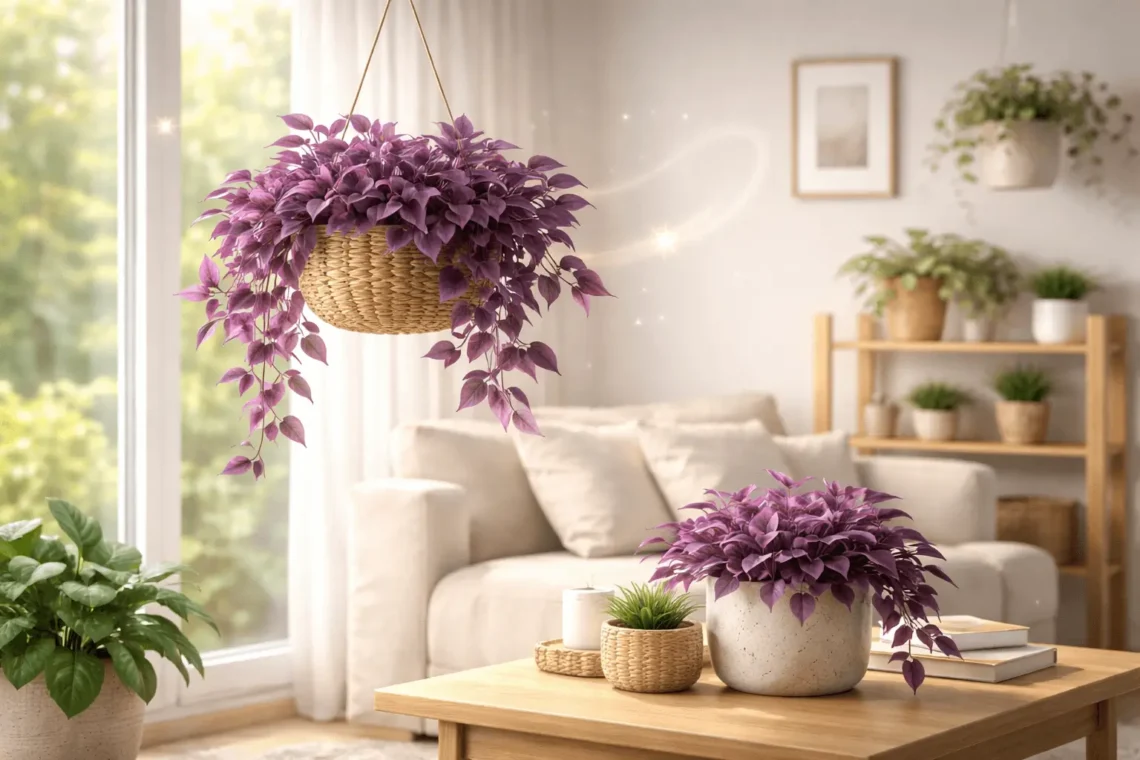
Purple heart plant indoor benefits make this striking houseplant a favorite choice for modern homes and workspaces. Known for its deep purple foliage and trailing growth habit, the purple heart plant adds instant color while also contributing to a healthier indoor environment.
Tradescantia pallida, commonly called the Purple Heart or Purple Queen plant, is a fast-growing ornamental plant valued for both beauty and function. Its vibrant leaves act as a natural décor element while supporting better air quality and indoor humidity balance.
The purple heart plant is ideal for indoor spaces because it thrives in pots, hanging baskets, and tabletop containers with minimal care. While it grows well outdoors as ground cover, it adapts exceptionally well to indoor conditions, making it a versatile and rewarding houseplant.
What Is a Purple Heart Plant?
The purple heart plant is a popular ornamental species admired for its bold purple foliage, trailing growth habit, and easy-care nature. Scientifically known as Tradescantia pallida, this plant belongs to the spiderwort family and is widely grown as both an indoor houseplant and an outdoor landscape plant. Its vibrant color, fast growth, and adaptability make it a favorite choice for homes, offices, and gardens alike.
Understanding Tradescantia Pallida (Purple Queen Plant)
Tradescantia pallida is a hardy, fast-growing perennial plant known for its long, narrow, pointed leaves and rich purple coloration.
Botanical profile
- Botanical name: Tradescantia pallida
- Family: Commelinaceae (Spiderwort family)
- Growth type: Trailing and spreading perennial
- Foliage color: Deep purple to violet
- Growth speed: Fast-growing
Common names
- Purple Heart plant
- Purple Queen plant
- Purple Spiderwort
- Wandering Jew (in some regions)
Native habitat and growth behavior
The purple heart plant is native to the Gulf Coast region of eastern Mexico. In its natural habitat, it grows as a ground-cover plant, spreading quickly across the soil surface. Its trailing stems root easily at the nodes, allowing it to form dense mats of foliage. This same growth behavior makes it perfect for hanging baskets and container gardening indoors.
Is Purple Heart Plant Indoor or Outdoor?
The purple heart plant is highly versatile and grows successfully in both indoor and outdoor environments, depending on climate and care conditions.
Purple heart plant indoor or outdoor comparison
- Indoors: Grown as a decorative houseplant in pots and hanging baskets
- Outdoors: Used as a ground cover, border plant, or landscaping accent
Indoor adaptability
The purple heart plant adapts exceptionally well to indoor conditions. It thrives in containers, tolerates indoor temperatures, and grows well in bright indirect light. Its low maintenance needs make it suitable for apartments, offices, and homes with limited gardening experience.
Outdoor landscaping uses
Outdoors, the purple queen plant is commonly used in:
- Garden borders
- Rock gardens
- Hanging baskets on patios
- Landscaping beds
Ground cover purple heart plant
In warm climates, the purple heart plant is widely used as a ground cover. Its spreading growth helps suppress weeds, retain soil moisture, and add vibrant color to garden landscapes.
Purple Heart Plant Indoor Benefits
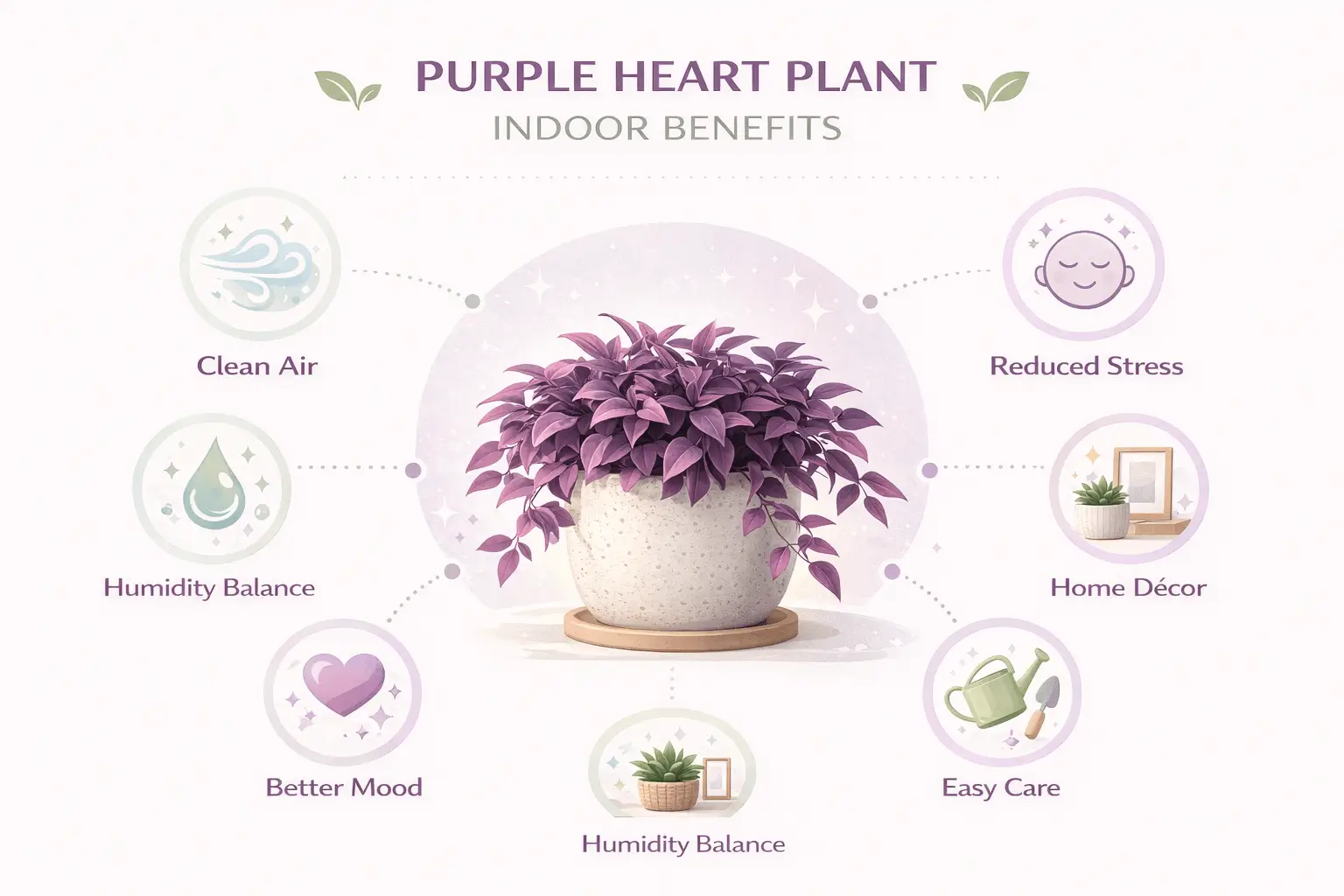
The purple heart plant offers a powerful combination of visual beauty and functional health benefits, making it one of the most valuable indoor plants for homes and offices. Its air-purifying qualities, calming presence, and low-maintenance nature make it an excellent choice for everyday indoor living.
Natural Air Purifier
The purple heart plant helps improve indoor air quality by filtering common airborne pollutants and refreshing enclosed spaces.
- Improves indoor air quality by reducing airborne impurities
- Absorbs toxins released from furniture, paint, and household products
- Adds oxygen through natural photosynthesis, creating a fresher indoor atmosphere
By placing purple heart plants in living rooms, bedrooms, or offices, you can enjoy cleaner and healthier air throughout the day.
Boosts Mental Wellness & Mood
The purple heart plant is known for its positive effect on mental well-being and emotional balance.
- Acts as a natural stress-reducing plant
- Creates a soothing and calming indoor environment
- Enhances mood with its vibrant purple color and living presence
Indoor plants like the purple queen plant help reduce mental fatigue, making them ideal for workspaces and relaxation areas.
Decorative Home Aesthetic
The bold purple foliage of the purple heart plant adds a striking visual element to interior décor.
- Rich purple leaves create a unique color contrast in modern interiors
- Works beautifully as a statement décor plant
- Ideal for desks, shelves, side tables, and hanging baskets
Its trailing stems make it perfect for vertical styling, adding depth and texture to indoor spaces.
Low Maintenance Indoor Plant
The purple heart plant is a beginner-friendly houseplant that thrives with minimal attention.
- Requires basic watering and lighting care
- Tolerates indoor temperature variations
- Grows well in containers with simple soil mixes
Its hardy nature makes it suitable for busy homeowners and first-time plant growers.
Supports Indoor Humidity
The purple heart plant contributes to a healthier indoor climate by helping regulate moisture levels.
- Improves indoor moisture balance
- Reduces dryness caused by air conditioning and heating systems
- Supports a comfortable breathing environment
By releasing moisture into the air through transpiration, the purple heart plant helps maintain a balanced and refreshing indoor atmosphere.
Read Also: 7 Powerful Spider Plant Indoor Benefits for a Healthier Home
Purple Heart Plant Indoor Care Guide
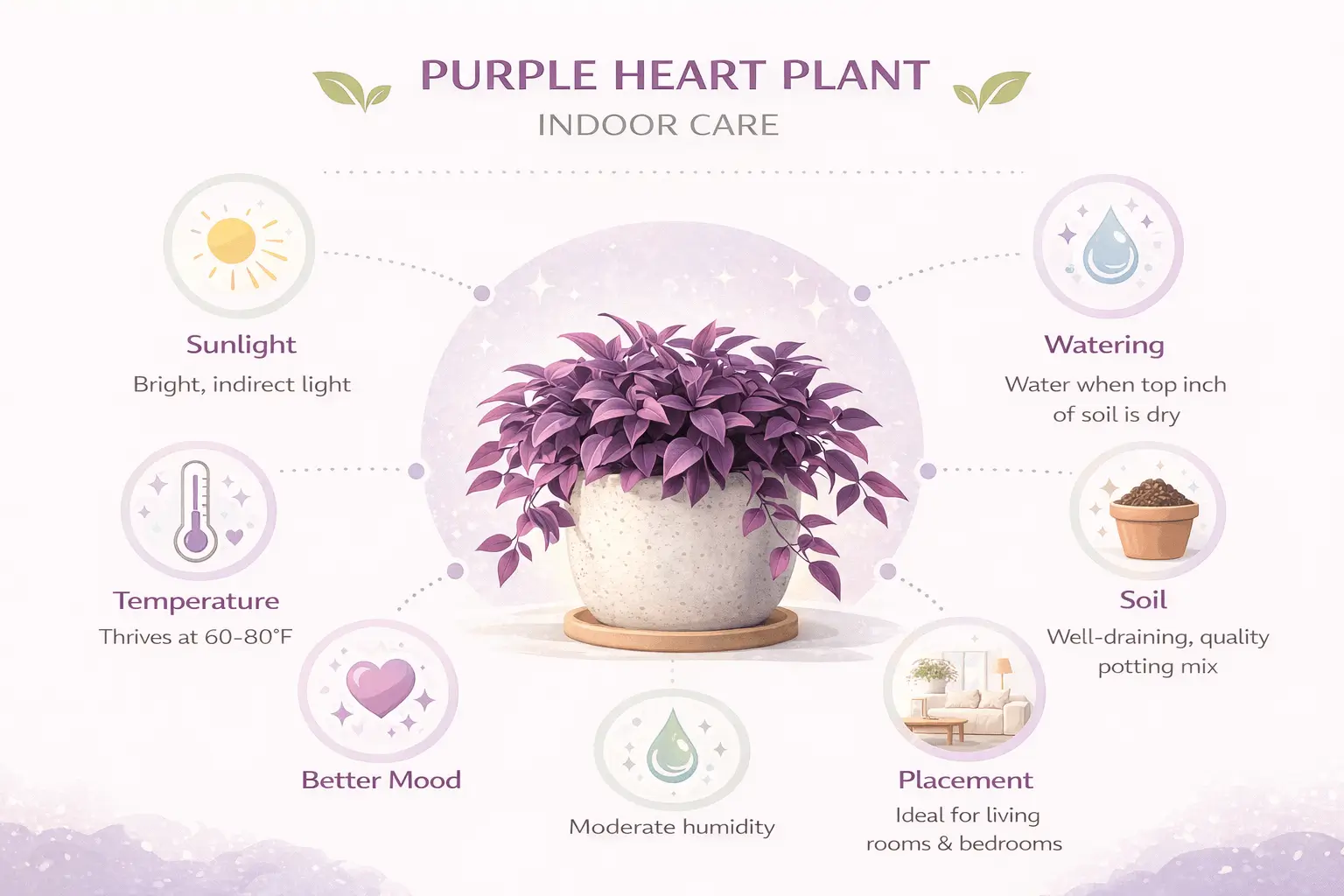
Proper care is essential to enjoy long-lasting purple foliage and healthy growth. The purple heart plant thrives indoors when its basic light, water, temperature, and humidity needs are met consistently.
Purple Heart Plant Sun or Shade Requirements
The purple heart plant grows best in bright, indirect sunlight, which helps maintain its rich purple color and compact growth.
- Place near an east- or south-facing window with filtered light
- Avoid harsh direct sun, which can scorch the leaves
- Low light may cause fading of the purple color and leggy growth
- Best indoor placement includes window sills, bright corners, and well-lit shelves
Balanced lighting ensures vibrant foliage and steady growth indoors.
Purple Heart Plant Care Indoors (Water & Soil)
A proper watering routine and soil mix are essential for healthy root development and long-term growth.
Well-draining soil mix
- Use a light, well-draining potting mix
- Add perlite or sand to improve aeration
- Avoid heavy garden soil that retains excess moisture
Watering schedule
- Water when the top 1–2 inches of soil feel dry
- Reduce watering during winter months
- Always allow excess water to drain out of the pot
Avoid overwatering
- Soggy soil leads to root rot
- Yellowing leaves often indicate excess moisture
- Ensure the pot has proper drainage holes
Purple Heart Plant in Water — Can It Grow?
The purple heart plant can grow successfully in water, making it ideal for hydroponic indoor displays.
Can purple heart plant grow in water?
Yes, the purple heart plant roots easily in water and continues to grow without soil.
Hydroponic propagation
- Cut a healthy stem below a node
- Place the cutting in a glass of clean water
- Change the water every 5–7 days
- Roots develop within 1–2 weeks
Indoor vase growth method
- Use a clear glass container
- Keep in bright indirect light
- Add liquid fertilizer monthly for long-term growth
Temperature & Humidity Needs
The purple heart plant prefers stable indoor conditions similar to typical home environments.
Ideal room temperature
- Best range: 18°C to 27°C (65°F to 80°F)
- Protect from cold drafts and sudden temperature drops
- Keep away from heaters and air conditioners
Humidity preferences
- Thrives in moderate indoor humidity
- Benefits from occasional misting in dry climates
- Performs well in kitchens and bathrooms with natural moisture
Maintaining comfortable indoor conditions ensures steady growth and vibrant foliage year-round.
How to Grow Purple Heart Plant Indoors
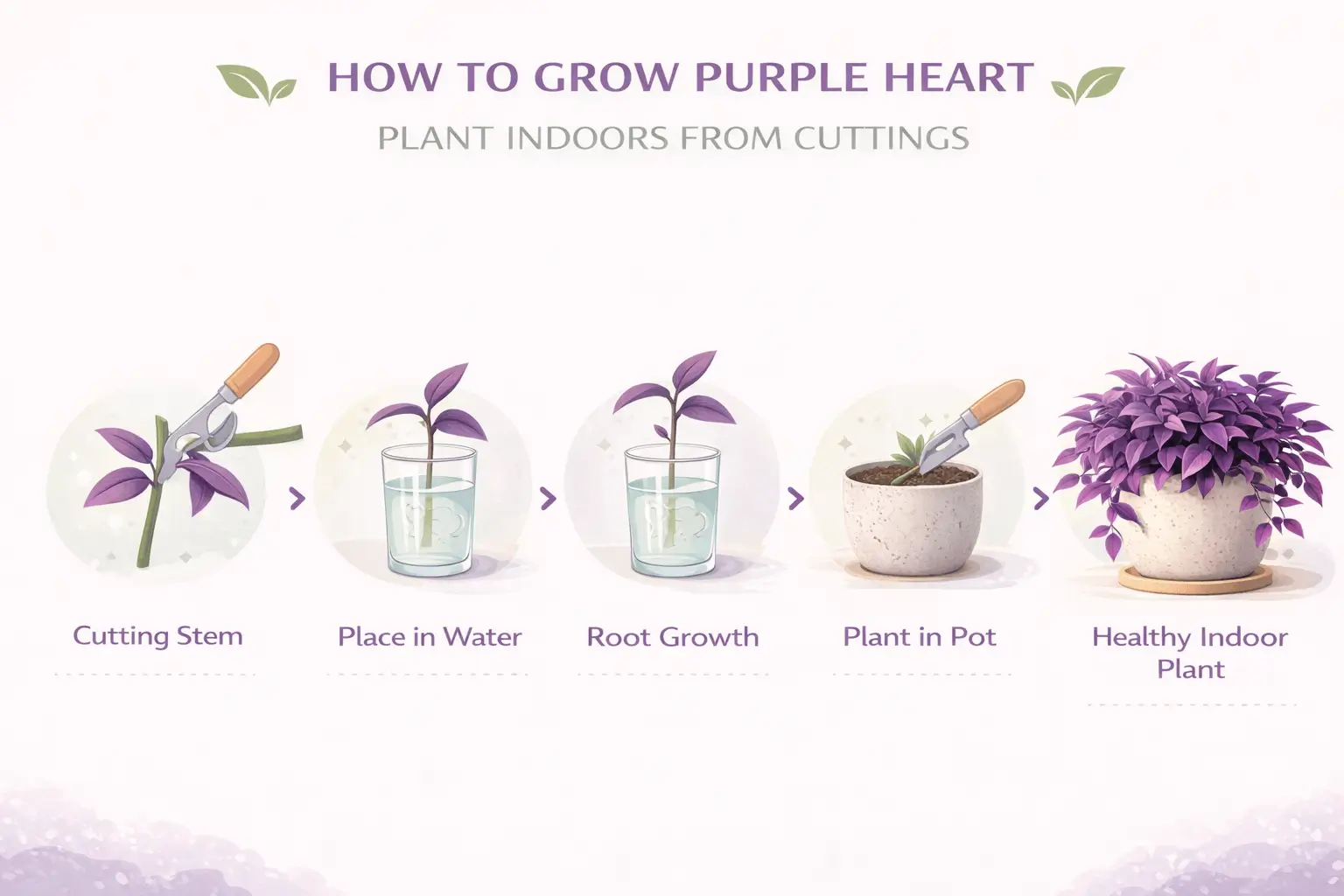
Growing a purple heart plant indoors is simple, fast, and highly rewarding. With the right propagation method, container choice, and placement, this vibrant houseplant quickly becomes a thriving indoor feature.
How to Grow Purple Heart Plant from Cuttings
The purple heart plant is most easily grown through stem cuttings, making it perfect for beginner gardeners.
Step-by-step indoor propagation
- Select a healthy stem with at least 2–3 leaf nodes
- Cut just below a node using clean scissors
- Remove the lower leaves to expose the stem
- Place the cutting in soil or water
- Keep in bright indirect light
- Roots develop within 7–14 days
Soil vs water method
- Soil method
- Plant the cutting directly into moist, well-draining soil
- Keep the soil lightly moist for the first two weeks
- New growth appears once roots are established
- Plant the cutting directly into moist, well-draining soil
- Water method
- Place the cutting in a glass of clean water
- Change water every 5–7 days
- Transfer to soil once roots reach 2–3 inches, or keep growing in water
- Place the cutting in a glass of clean water
Growing Purple Heart in Pots & Containers
Choosing the right pot and container ensures strong root development and healthy long-term growth.
Pot size selection
- Start with a small to medium-sized pot
- Allow room for root expansion
- Repot every 1–2 years as the plant grows
Drainage importance
- Always use pots with drainage holes
- Prevents water accumulation and root rot
- Use saucers to collect excess water
Purple Heart Indoors Placement Tips
Proper placement helps maintain vibrant color and balanced growth.
Living room
- Place near bright windows with filtered sunlight
- Ideal for shelves, coffee tables, and hanging baskets
Bedroom
- Position near a window with indirect light
- Adds calming color and improves air freshness
Office desk
- Place near natural light or bright indoor lighting
- Enhances focus and workspace aesthetics
Caring for Purple Heart Plant Long-Term
Long-term care keeps the purple heart plant healthy, compact, and visually striking. Regular pruning, pinching, and proper flower care help maintain its shape and encourage continuous growth indoors.
How to Prune Purple Heart Plant
Pruning is essential for maintaining a full, bushy appearance and preventing the plant from becoming leggy.
Pruning benefits
- Promotes fresh new growth
- Keeps the plant compact and well-shaped
- Removes weak, damaged, or overgrown stems
- Improves air circulation around the foliage
Encouraging bushy growth
- Trim long trailing stems every 4–6 weeks
- Cut just above a leaf node to stimulate branching
- Use clean, sharp scissors to avoid plant damage
- Replant cuttings to create a fuller pot
How to Pinch Purple Heart Plant
Pinching is a simple technique used to control shape and improve plant density.
Pinching for shape control
- Pinch off the growing tips using your fingers
- Focus on the longest and weakest stems
- Encourage side shoots for a fuller appearance
Preventing legginess
- Regular pinching prevents long, thin stems
- Keeps the plant compact and attractive
- Supports balanced indoor growth
Purple Heart Flower Care
With proper care, the purple heart plant produces small, delicate pink or purple flowers indoors.
Encouraging blooms indoors
- Provide bright indirect sunlight
- Maintain a consistent watering routine
- Feed monthly with a balanced liquid fertilizer
Seasonal flowering tips
- Flowers appear mainly in spring and summer
- Increase light exposure during growing seasons
- Reduce feeding in winter when growth slows
Consistent care ensures long-lasting foliage color and healthy seasonal blooms.
Common Problems & Solutions
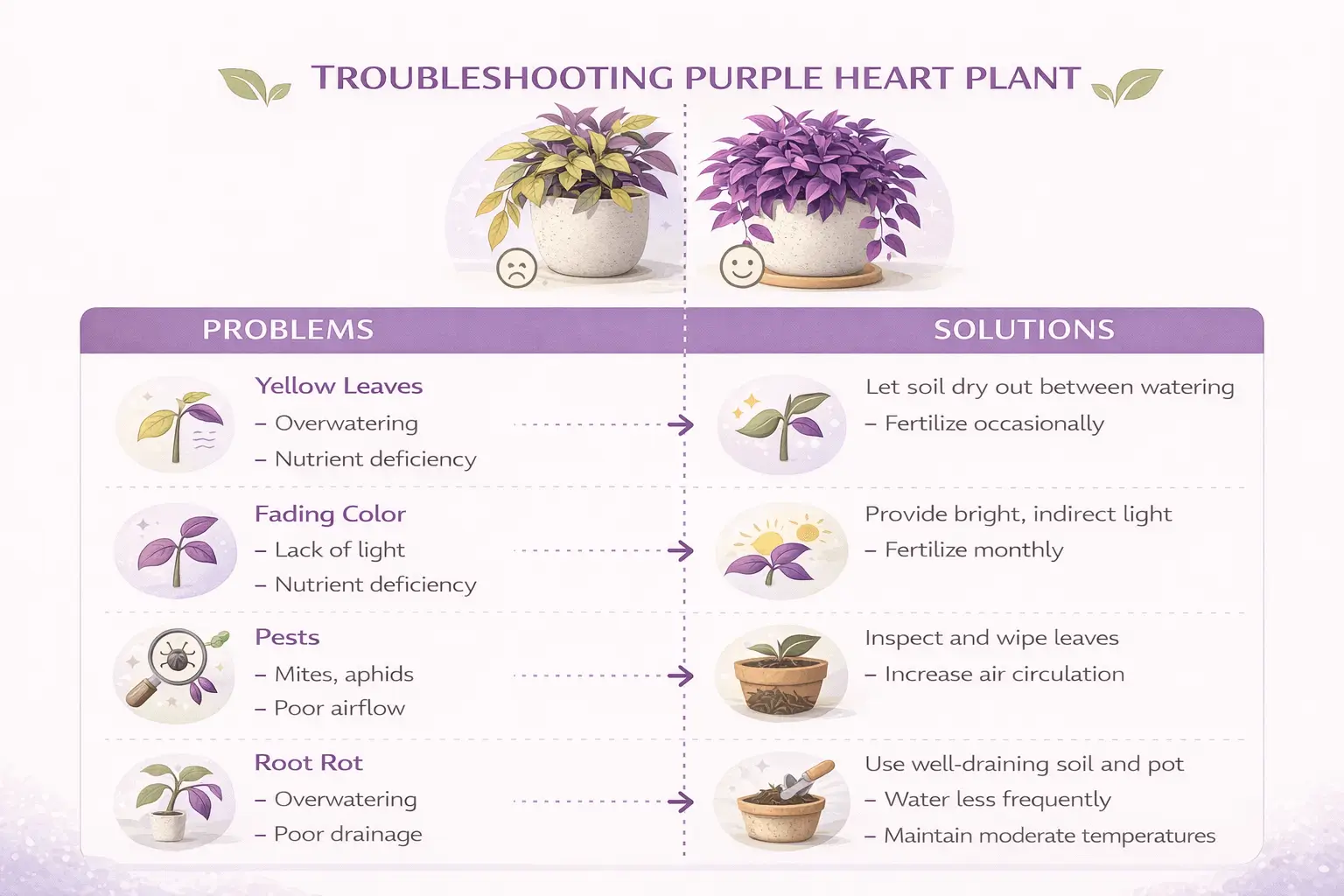
Although the purple heart plant is a hardy houseplant, improper care can lead to common growth problems. Identifying issues early and correcting them quickly helps restore healthy growth and vibrant foliage.
Why Is My Purple Heart Plant Dying?
If your purple heart plant is declining, the cause is usually related to water, light, or root health.
Overwatering issues
- Constantly wet soil suffocates roots
- Leads to yellowing leaves and stem collapse
- Always allow soil to dry slightly between watering
Poor lighting
- Low light causes faded purple color
- Stems become long and weak
- Move the plant to brighter indirect sunlight
Root rot
- Caused by waterlogged soil and poor drainage
- Roots turn brown, soft, and mushy
- Repot into fresh, well-draining soil and trim damaged roots
Yellow Leaves, Fading Color & Wilting
Leaf problems are usually signs of nutritional imbalance or watering mistakes.
Nutrient deficiency
- Pale or yellow leaves indicate lack of nutrients
- Feed monthly with a balanced liquid fertilizer
- Use diluted fertilizer to prevent root burn
Improper watering
- Underwatering causes wilting and dry leaf edges
- Overwatering leads to yellow, soft leaves
- Maintain a consistent watering routine based on soil dryness
Pest & Disease Management
Indoor purple heart plants can occasionally attract pests and fungal problems.
Spider mites
- Cause fine webbing on leaves
- Leaves appear speckled and dull
- Treat with neem oil or insecticidal soap
Mealybugs
- Appear as white cotton-like clusters
- Weaken plant growth by sucking sap
- Remove manually and apply neem oil
Fungal issues
- Develop in high humidity and poor airflow
- Cause leaf spots and stem rot
- Improve ventilation and avoid wet foliage
Prompt care adjustments restore plant health and prevent long-term damage.
Purple Heart Plant Benefits for Home & Office
The purple heart plant is more than just a decorative houseplant. Its air-purifying ability, calming presence, and low-maintenance care make it an excellent choice for both home and professional environments.
Bedroom Benefits
Keeping a purple heart plant in the bedroom helps create a healthier and more relaxing sleeping space.
- Improves air quality by filtering indoor pollutants
- Increases oxygen levels through natural photosynthesis
- Supports a fresher and cleaner sleeping environment
- Promotes relaxation with its calming purple foliage
A healthier bedroom atmosphere contributes to deeper, more restful sleep and overall well-being.
Office & Workspace Benefits
The purple heart plant is ideal for desks, meeting rooms, and home offices where focus and mental clarity are essential.
- Enhances concentration and productivity
- Reduces stress and mental fatigue
- Creates a refreshing and visually pleasing workspace
- Adds natural color to professional interiors
Placing a purple heart plant near your workstation helps maintain a balanced, energized, and comfortable work environment.
Landscaping vs Indoor Growing
The purple heart plant performs beautifully in both outdoor landscapes and indoor spaces. Understanding its outdoor landscaping role and ideal companion plants helps you maximize its visual and functional benefits.
Landscaping Purple Queen Plant
The purple queen plant is widely used in outdoor gardens for its fast growth, rich color, and strong ground-cover ability.
Outdoor landscaping uses
- Borders along walkways and garden paths
- Rock gardens and raised beds
- Hanging baskets on patios and balconies
- Accent plant in flower beds
Ground cover benefits
- Spreads quickly to cover bare soil
- Suppresses weed growth naturally
- Protects soil from erosion
- Adds vibrant purple contrast to green landscapes
In warm climates, the purple heart plant forms dense mats that create striking color carpets in garden designs.
What to Plant With Purple Heart
Pairing the purple heart plant with the right companion plants enhances its visual impact both indoors and outdoors.
Companion plants (outdoor)
- Green spider plant
- Ornamental grasses
- Coleus
- Silver-leaf plants
Indoor plant combinations
- Snake plant
- Pothos
- Peace lily
- ZZ plant
These combinations create beautiful color contrast while maintaining similar light and care requirements.
Landscaping vs Indoor Growing
The purple heart plant performs beautifully in both outdoor landscapes and indoor spaces. Understanding its outdoor landscaping role and ideal companion plants helps you maximize its visual and functional benefits.
Landscaping Purple Queen Plant
The purple queen plant is widely used in outdoor gardens for its fast growth, rich color, and strong ground-cover ability.
Outdoor landscaping uses
- Borders along walkways and garden paths
- Rock gardens and raised beds
- Hanging baskets on patios and balconies
- Accent plant in flower beds
Ground cover benefits
- Spreads quickly to cover bare soil
- Suppresses weed growth naturally
- Protects soil from erosion
- Adds vibrant purple contrast to green landscapes
In warm climates, the purple heart plant forms dense mats that create striking color carpets in garden designs.
What to Plant With Purple Heart
Pairing the purple heart plant with the right companion plants enhances its visual impact both indoors and outdoors.
Companion plants (outdoor)
- Green spider plant
- Ornamental grasses
- Coleus
- Silver-leaf plants
Indoor plant combinations
- Snake plant
- Pothos
- Peace lily
- ZZ plant
These combinations create beautiful color contrast while maintaining similar light and care requirements.
Purple Heart Plant Care Summary
The purple heart plant is an excellent choice for anyone looking for a stylish, low-maintenance indoor plant with multiple benefits.
- Easy-care houseplant that thrives with basic light and watering
- Beautiful purple foliage that adds bold color to any indoor space
- Air-purifying benefits that help improve indoor air quality
- Perfect for beginners due to its hardy nature and fast growth
With minimal effort, the purple heart plant delivers long-lasting beauty, healthier air, and a refreshing indoor atmosphere.
How to Style Purple Heart Plant in Your Home
The Purple Heart plant is not just beneficial for indoor air and mood—it’s also a stunning decorative element. Its deep purple foliage creates a beautiful contrast against neutral walls, wooden furniture, and modern interiors. Whether placed in hanging planters, shelf corners, or near windows, it instantly enhances the visual appeal of any room. If you want to create a more balanced and stylish setup, exploring modern home decor ideas can help you combine plants with textures, lighting, and furniture for a cohesive look.
Small touches like color coordination, pot selection, and placement height can make a big difference in how this plant fits into your overall interior design.
Conclusion — Why You Should Grow Purple Heart Plant Indoors
Purple heart plant indoor benefits make this vibrant houseplant a perfect addition to any modern home or workspace. Its rich purple foliage enhances interior décor, while its air-purifying ability and humidity-supporting nature contribute to a healthier indoor environment.
As an ideal indoor décor plant, the purple heart plant fits beautifully in living rooms, bedrooms, and offices, adding bold color with minimal effort. Its easy care routine and fast propagation make it suitable for beginners and experienced plant lovers alike.
With health and beauty combined in one stunning plant, the purple heart plant delivers both visual charm and everyday wellness. Start growing your own purple heart plant today and enjoy a fresher, more colorful indoor space.
Read Also: 7+ Powerful Elephant Ear Plant Indoor Benefits You’ll Love
FAQs
Is purple heart plant good for indoors?
Yes, the purple heart plant is an excellent indoor plant. It adapts well to indoor environments, grows easily in pots and hanging baskets, and requires minimal care. Its vibrant purple foliage enhances home décor while contributing to a healthier indoor atmosphere.
Does purple heart plant purify air?
The purple heart plant helps improve indoor air quality by absorbing airborne impurities and releasing oxygen through natural photosynthesis. It supports a fresher and cleaner indoor environment, making it a valuable houseplant for homes and offices.
Can purple heart plant grow in water indoors?
Yes, the purple heart plant can grow successfully in water indoors. It roots easily in a glass container and continues growing hydroponically. With regular water changes and occasional liquid fertilizer, it can thrive long-term without soil.
How much sunlight does purple heart plant need indoors?
The purple heart plant needs bright, indirect sunlight indoors. Placing it near a window with filtered light helps maintain its deep purple color and compact growth. Avoid harsh direct sunlight, which can scorch the leaves.
Is purple heart plant safe for bedrooms?
Yes, the purple heart plant is safe for bedrooms. It helps improve air quality, increases oxygen levels, and creates a calming environment that supports better sleep and relaxation.
How often should I water my purple heart plant indoors?
Water the purple heart plant when the top 1–2 inches of soil feel dry. On average, watering once a week is sufficient, but frequency may vary based on temperature, humidity, and light conditions. Always avoid overwatering to prevent root rot.


7 Comments on “Purple Heart Plant Indoor Benefits for Homes & Offices”