Introduction
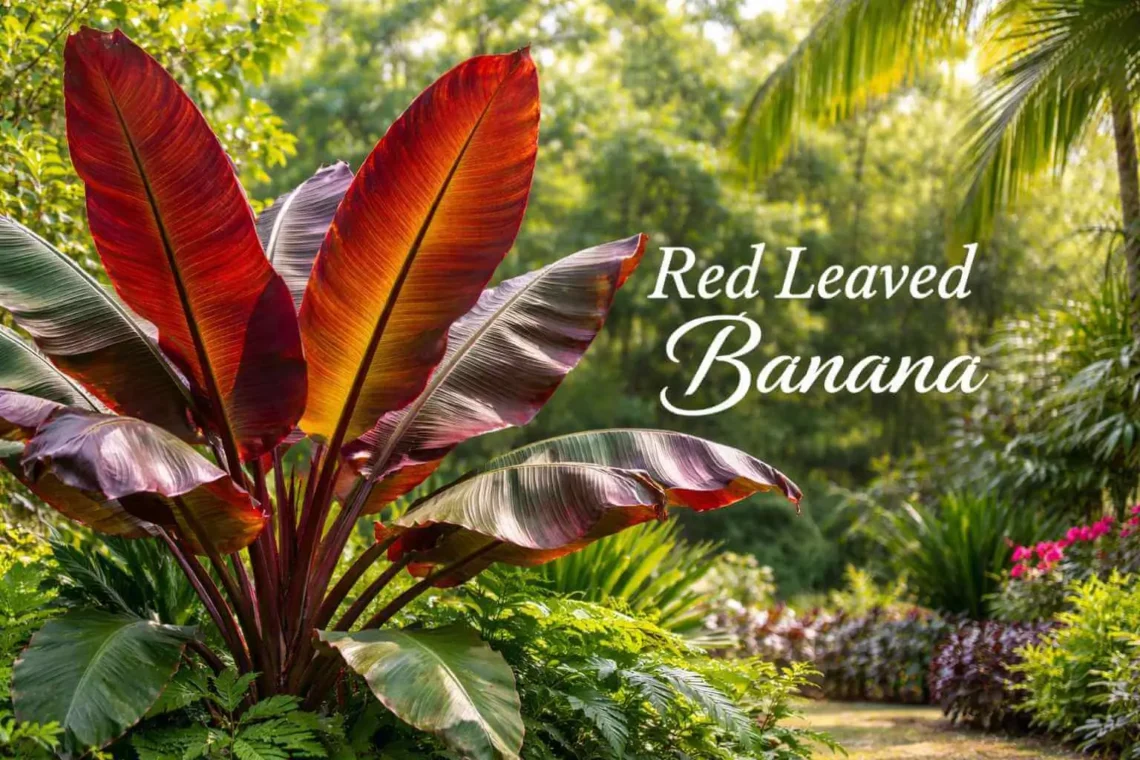
A red leaved banana plant is a banana cultivar known for its distinctive reddish foliage and ornamental appeal. Unlike typical green banana trees, red-leaved varieties display vibrant red or burgundy leaves that enhance garden aesthetics. These plants originate from tropical and subtropical regions, including parts of Africa and Southeast Asia, where cultivars like the Abyssinian red banana were first cultivated. Red-leaved banana trees thrive in warm, humid environments with well-draining soil and consistent sunlight. They include both ornamental and edible types, providing unique visual appeal and, in some cases, flavorful fruit. Proper care ensures healthy growth and leaf coloration. Like other ornamental tropical plants, such as the Elephant Ear Plant, red-leaved banana trees can thrive indoors with proper care and lighting.
Understanding Red Leaved Bananas
Red-leaved bananas are distinct from conventional banana plants due to their pigmentation, growth habits, and leaf structure. Their red foliage results from anthocyanin pigments, which offer both ornamental beauty and protection against intense sunlight. These bananas may be grown for visual appeal or fruit production, depending on the cultivar.
Botanical Characteristics
Red-leaved banana plants feature broad, deep red to burgundy leaves, often with a slight metallic sheen. Mature plants can reach heights of 8–15 feet, depending on species, while stalks are sturdy and sometimes tinged with red. Growth patterns vary: some species grow in clumps with multiple stems, while others develop as solitary plants. These characteristics affect both landscape placement and maintenance. Red-leaved banana plants belong to the genus Musa, the same as common edible bananas (Banana on Wikipedia), but they are distinguished by their red foliage and ornamental traits.
Common Varieties
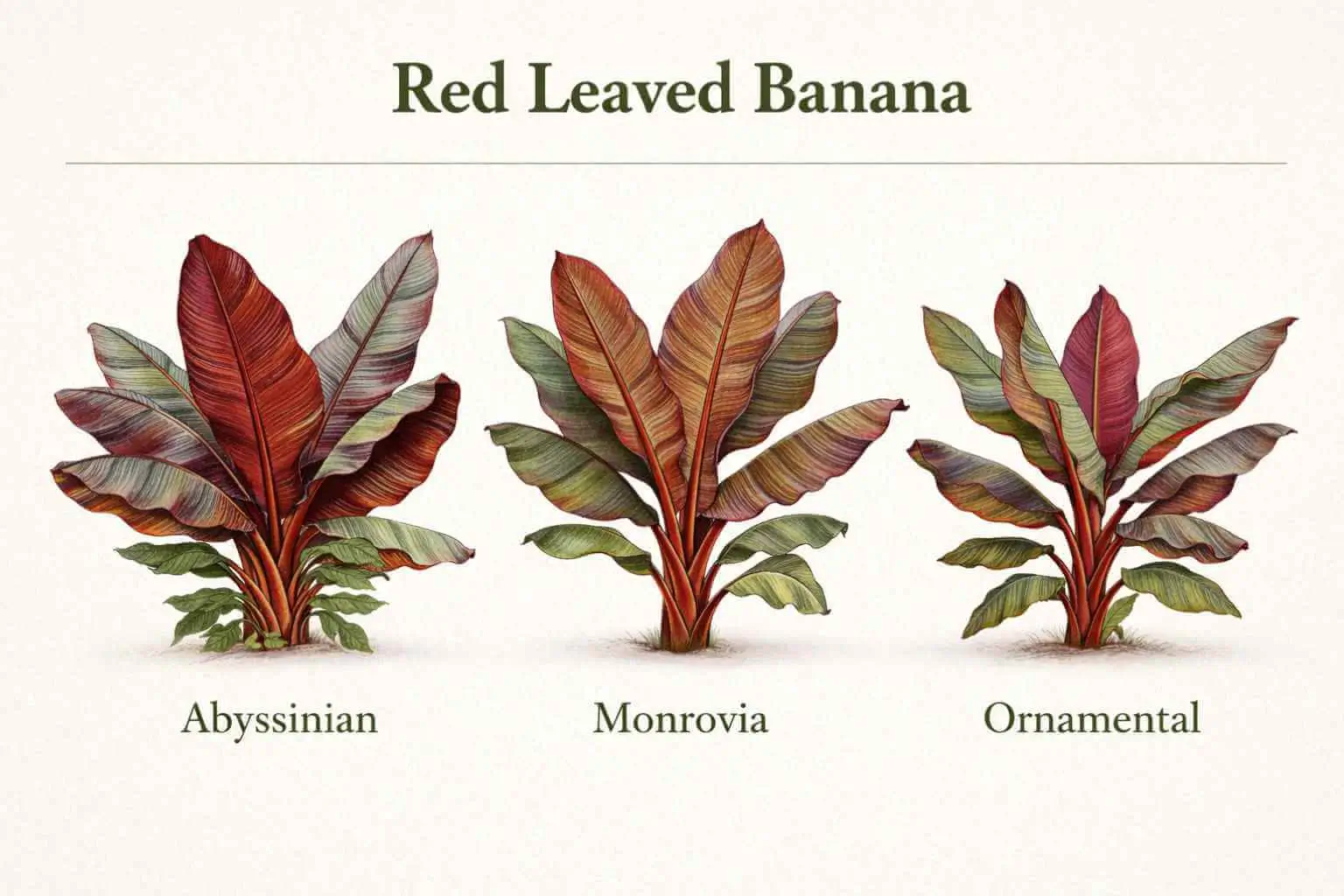
The Abyssinian red banana is an edible cultivar producing small, sweet red bananas. Ornamental red banana plants, often labeled as Monrovia red leaved banana, are primarily cultivated for their foliage rather than fruit. Each variety differs in leaf coloration, size, and suitability for indoor or outdoor growth. Ornamental types are ideal for tropical gardens, while edible varieties require more space and care for fruiting.
Red Leaved Banana Plant Care
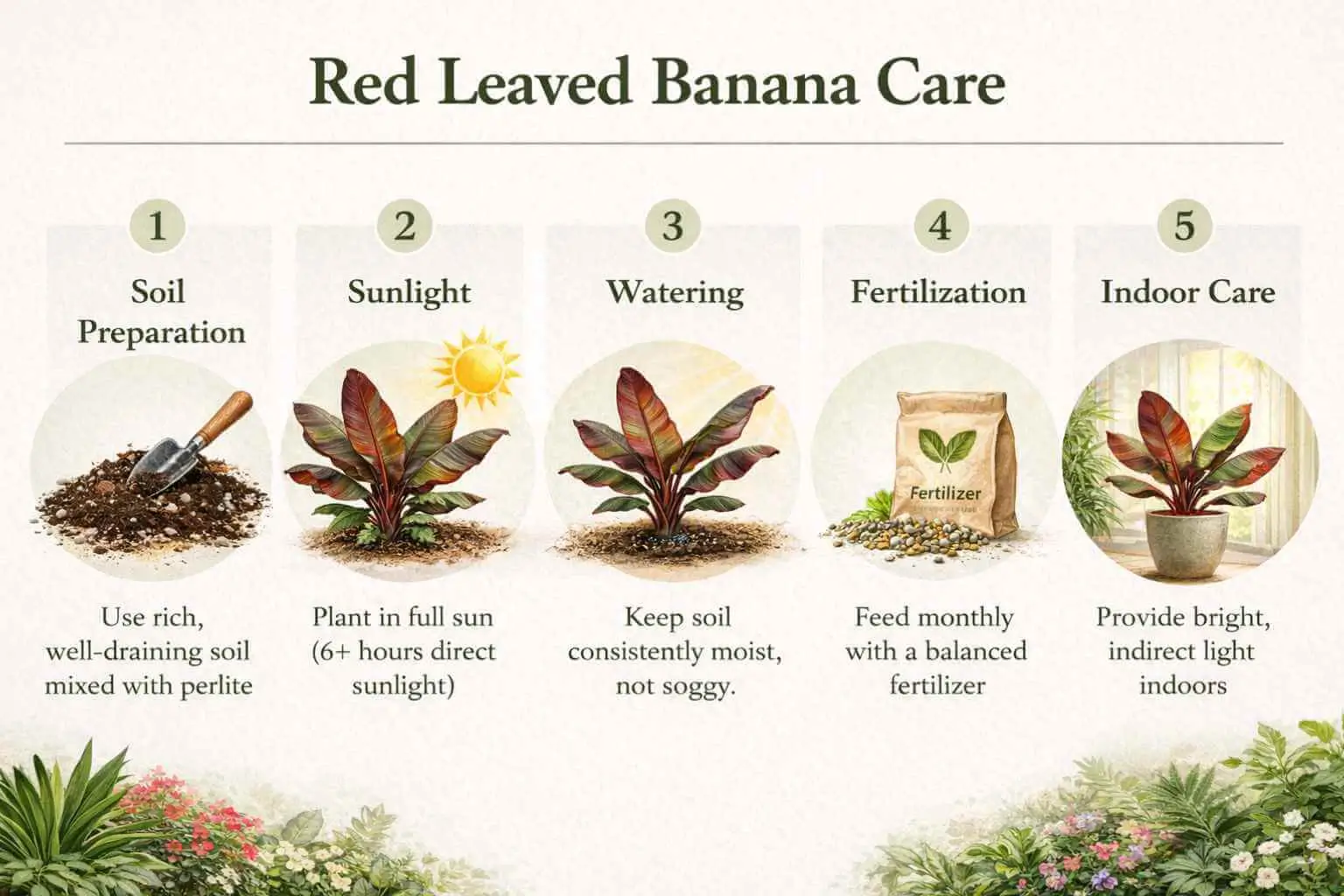
Red-leaved banana plants require specific care for optimal growth. Attention to soil, sunlight, watering, and seasonal conditions ensures strong foliage and, where applicable, fruit production. For indoor cultivation, red-leaved bananas, similar to Purple Heart Plants, require bright indirect light and humidity control to maintain vibrant foliage.
-
Soil and Sunlight Requirements
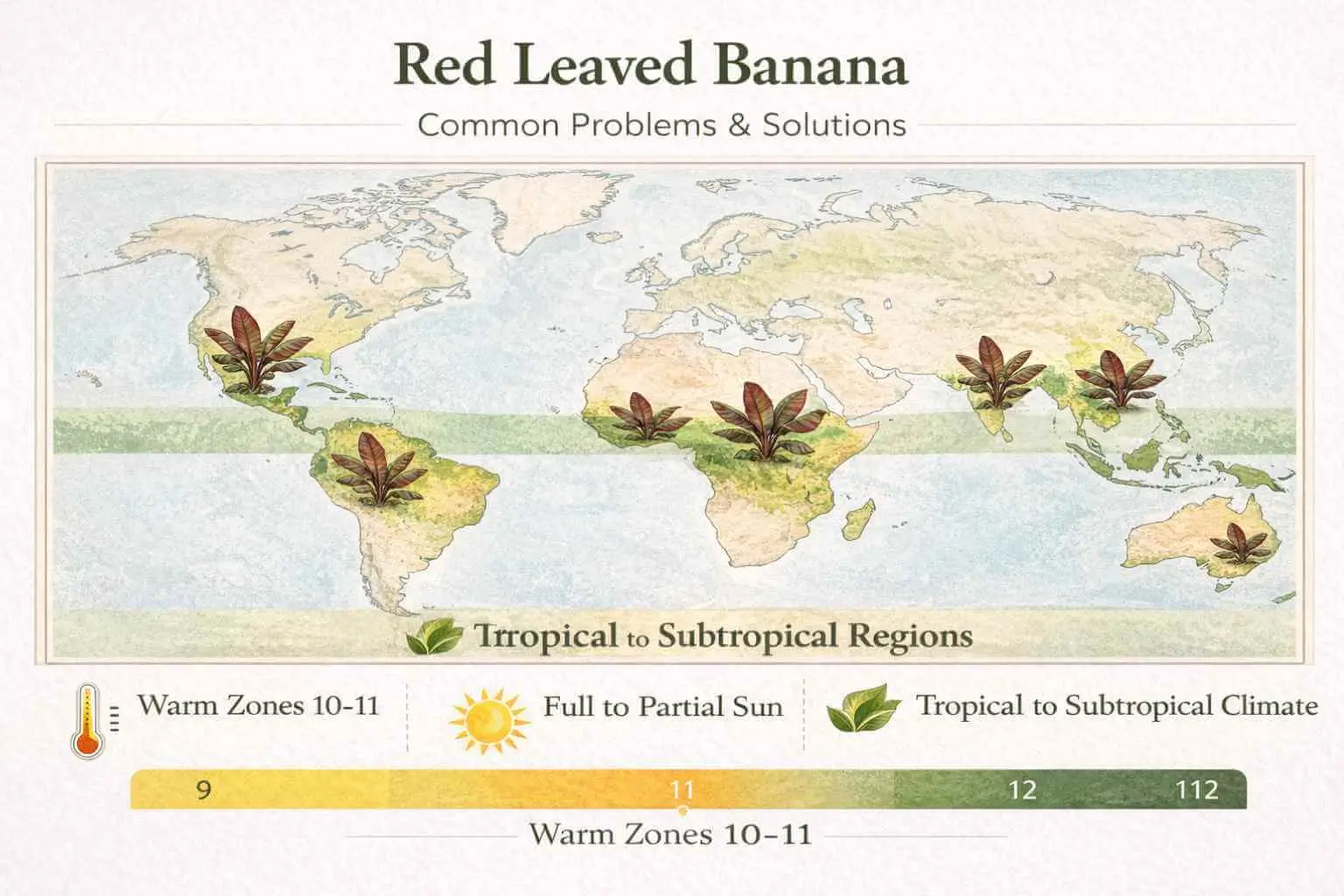
These bananas prefer well-draining, fertile soil with a slightly acidic to neutral pH (6.0–7.0). Sandy loam or organic-rich soil promotes root development. Red-leaved banana trees thrive in full sun, although partial shade is tolerated in extremely hot climates to prevent leaf scorching. Proper sunlight exposure maintains leaf coloration and supports photosynthesis.
-
Watering and Fertilization
Red-leaved bananas need consistent watering but must avoid waterlogging to prevent root rot. During active growth, water 2–3 times per week, adjusting for rainfall and temperature. Fertilize monthly with a balanced fertilizer high in potassium to support flowering and fruiting. Organic compost can supplement nutrients for ornamental types.
-
Winter and Indoor Care
In colder climates, red-leaved bananas should be overwintered indoors or in greenhouses. Reduce watering frequency during dormant months and maintain temperatures above 10°C (50°F). Indoor growth requires bright, indirect light and humidity control to prevent leaf desiccation. Container planting allows mobility for frost protection.
-
Common Problems and Solutions
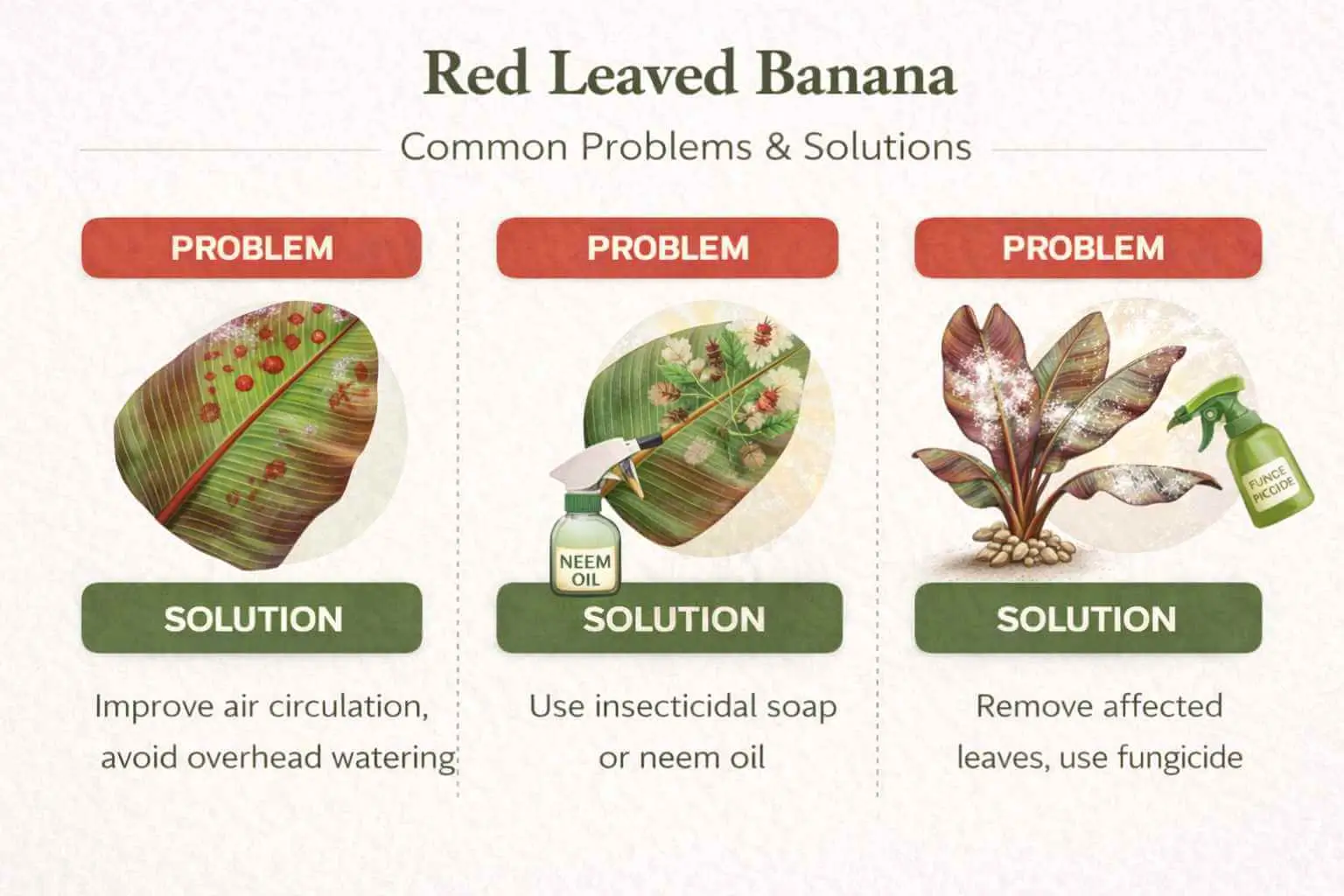
Red-leaved bananas may develop red spots on leaves due to fungal infections, pests, or environmental stress. Preventative measures include adequate spacing, proper watering, and regular inspection. Treatment involves fungicides for fungal infections and insecticidal soap for pests. Avoid over-fertilization, which can exacerbate leaf damage.
Red Bananas as Fruit
Certain red-leaved banana varieties produce edible red bananas, valued for their sweet flavor and nutritional benefits. They are rich in potassium, vitamin C, and dietary fiber.
Fruit Characteristics
Red bananas are typically smaller than standard yellow bananas, with reddish-purple skin and creamy, pale flesh. Ripening deepens color and sweetness. These bananas are highly nutritious, providing antioxidants and natural sugars suitable for raw consumption or cooking.
How to Select, Ripen, and Eat Red Bananas
Choose bananas that are firm but beginning to soften, with evenly colored skin. Ripen at room temperature to enhance sweetness. Red bananas can be eaten raw, sliced into salads, or blended into smoothies. Cooking options include baking, frying, or adding to desserts.
Red Banana Uses and Recipes
Red bananas are versatile in culinary applications. They can be incorporated into smoothies, puddings, muffins, and traditional dishes. Leaves of the plant are sometimes used for wrapping food in tropical cooking, serving as a natural, aromatic alternative to foil or parchment.
Growing Red Leaved Bananas from Planting to Harvest
Propagation of red-leaved bananas occurs via rhizomes or tissue culture. Rhizome division is common for home growers, ensuring genetic consistency. Planting in fertile soil with adequate sunlight accelerates growth. Maturity is reached in 9–18 months, depending on climate and care, with plants achieving full height before flowering and fruiting. Continuous care, including watering, fertilization, and pest management, ensures a healthy plant lifecycle.
Conclusion
Red-leaved banana plants offer both ornamental and edible value, with unique foliage and, in some varieties, flavorful red bananas. Proper soil, sunlight, watering, and seasonal care support vibrant growth. Exploring different cultivars allows gardeners to enjoy indoor or outdoor cultivation, combining aesthetic appeal with functional fruit production.
FAQ
- What is a red leaved banana?
A red-leaved banana is a banana plant with reddish foliage, often grown for ornamental purposes or for its edible red bananas. - How do I care for a red-leaved banana plant?
Red-leaved bananas require well-draining soil, regular watering, fertilization, and adequate sunlight. In colder climates, indoor or overwintering care is necessary. - Do red banana trees produce fruit?
Yes, many varieties like the Abyssinian red banana produce edible red bananas, although ornamental types may not fruit. - Why do my red banana leaves have red spots?
Red spots can indicate fungal infections, pest damage, or stress due to environmental factors like insufficient light or improper watering. - How can I eat or cook red bananas?
Red bananas can be eaten raw when ripe, or cooked in desserts, smoothies, or traditional recipes. Ripen them at room temperature for best flavor.