Introduction
Sedum brevifolium is a low-growing succulent ground cover, prized for its ornamental appeal and hardy nature. This versatile plant thrives in rock gardens, alpine settings, and container arrangements, offering year-round interest. Belonging to the Crassulaceae family, sedum brevifolium features compact rosettes, fleshy leaves, and drought-tolerant stems that make it ideal for sustainable landscaping. Its growth habits and care requirements are straightforward, making it suitable for both novice and experienced gardeners. Several sedum brevifolium varieties exist, each with unique foliage colors and seasonal transformations. Incorporating sedum brevifolium into landscapes ensures a low-maintenance, aesthetically pleasing ground cover.
Sedum Brevifolium Overview
-
Botanical Description
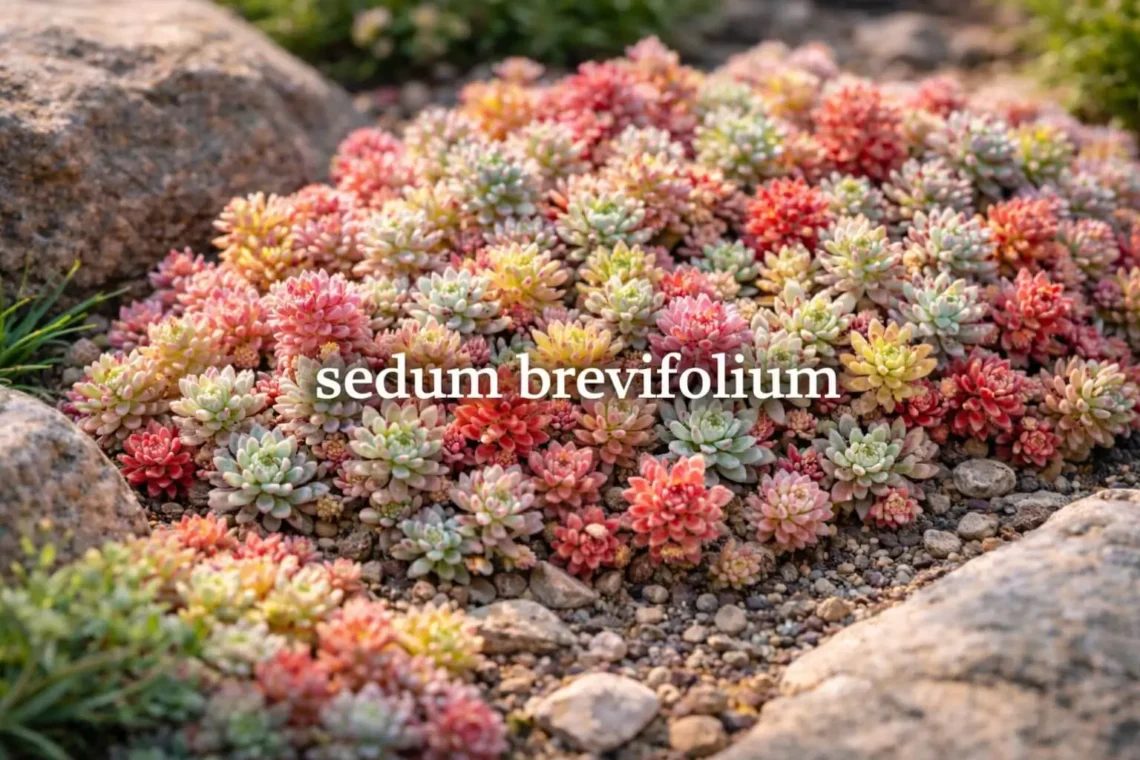
Sedum brevifolium forms tight rosettes with succulent, fleshy leaves and creeping stems that root easily. The leaves are small, thick, and slightly pointed, often displaying seasonal color variations. Several varieties add ornamental diversity, including sedum brevifolium var quinquefarium, sedum album brevifolium, and sedum sempervivoides, each differing slightly in leaf shape, color, and growth habit.
-
Natural Habitat & Distribution
Native to alpine and rocky regions, sedum brevifolium thrives in temperate climates with well-draining soils and moderate sunlight. Its natural distribution includes Europe and parts of Asia, favoring rock gardens, stone crevices, and alpine slopes. Its adaptability makes it an excellent choice for ornamental landscapes and sustainable sedum brevifolium ground cover.
-
Growth Characteristics
Sedum brevifolium typically grows 5–10 cm in height and spreads horizontally, forming dense mats. Its dwarf stature and low-maintenance nature make it ideal for green roofs, rockeries, and borders. Key characteristics include sedum brevifolium growth habits, sedum brevifolium dwarf, and sedum brevifolium low-growing tendencies, ensuring minimal upkeep while providing aesthetic appeal.
Varieties and Cultivars
-
Popular Varieties
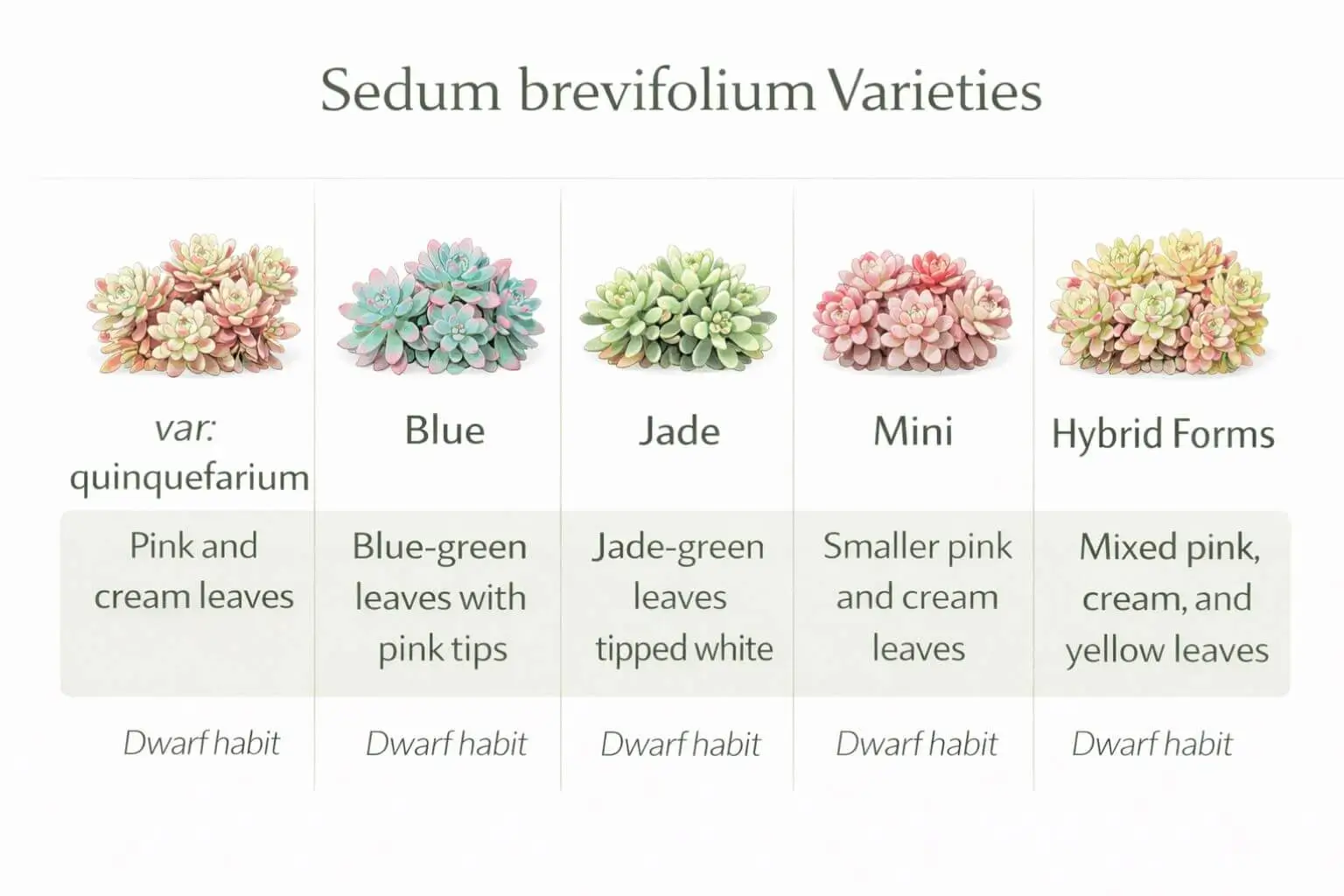
Some of the most popular varieties include sedum brevifolium var quinquefarium, blue and jade cultivars, and hybrid forms. Other noteworthy types are sedum brevifolium hybridum and sedum brevifolium mini, which offer compact growth suitable for containers or artistic landscaping.
-
Bonsai and Decorative Forms
Sedum brevifolium is also used in bonsai arrangements and rockeries, where its miniature rosettes create visually striking designs. Its adaptability allows gardeners to craft artistic ground cover with low-maintenance succulents.
-
Color and Seasonal Changes
Foliage colors vary seasonally, ranging from pink, red, rose, rubrum, blue, to yellow. Seasonal shifts in color enhance visual interest, with colder months often intensifying reds and pinks. These transformations make sedum brevifolium a dynamic choice for year-round landscaping.
Planting and Care
-
Soil and Light Requirements
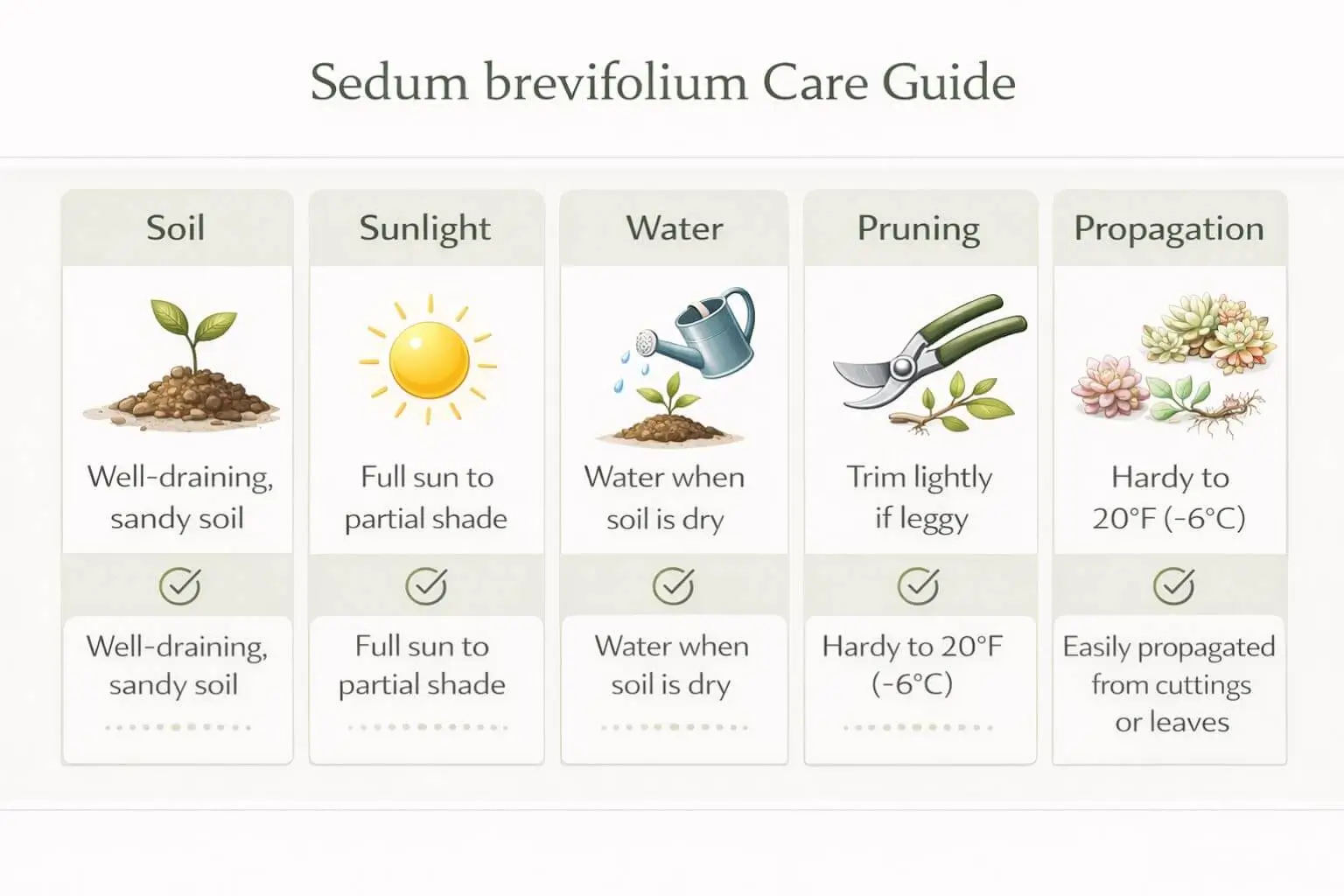
Sedum brevifolium thrives in well-draining soil, such as sandy or rocky mixes. It prefers sunny or partial shade locations, optimizing growth and coloration. Key terms include sedum brevifolium standort and sedum brevifolium sun, highlighting site-specific preferences.
-
Watering and Maintenance
This succulent is drought-tolerant and should be watered sparingly. Overwatering can lead to root rot. Regular care includes occasional pruning, monitoring for pests, and ensuring proper drainage. Related care keywords: sedum brevifolium pflege, pflegeanleitung, haltung.
-
Propagation Methods
Propagation is simple via leaf cuttings, offsets, or division, typically performed in spring or summer. Keywords to note: sedum brevifolium propagation, bewurzeln, emphasizing its ease of rooting and multiplication.
-
Seasonal Care
Sedum brevifolium is frost-hardy (frostsicher, winterhart), tolerating cold climates with minimal protection. Pruning enhances growth and appearance, guided by terms sedum brevifolium schneiden, zurückschneiden.
Landscaping and Uses
-
Ground Cover Applications
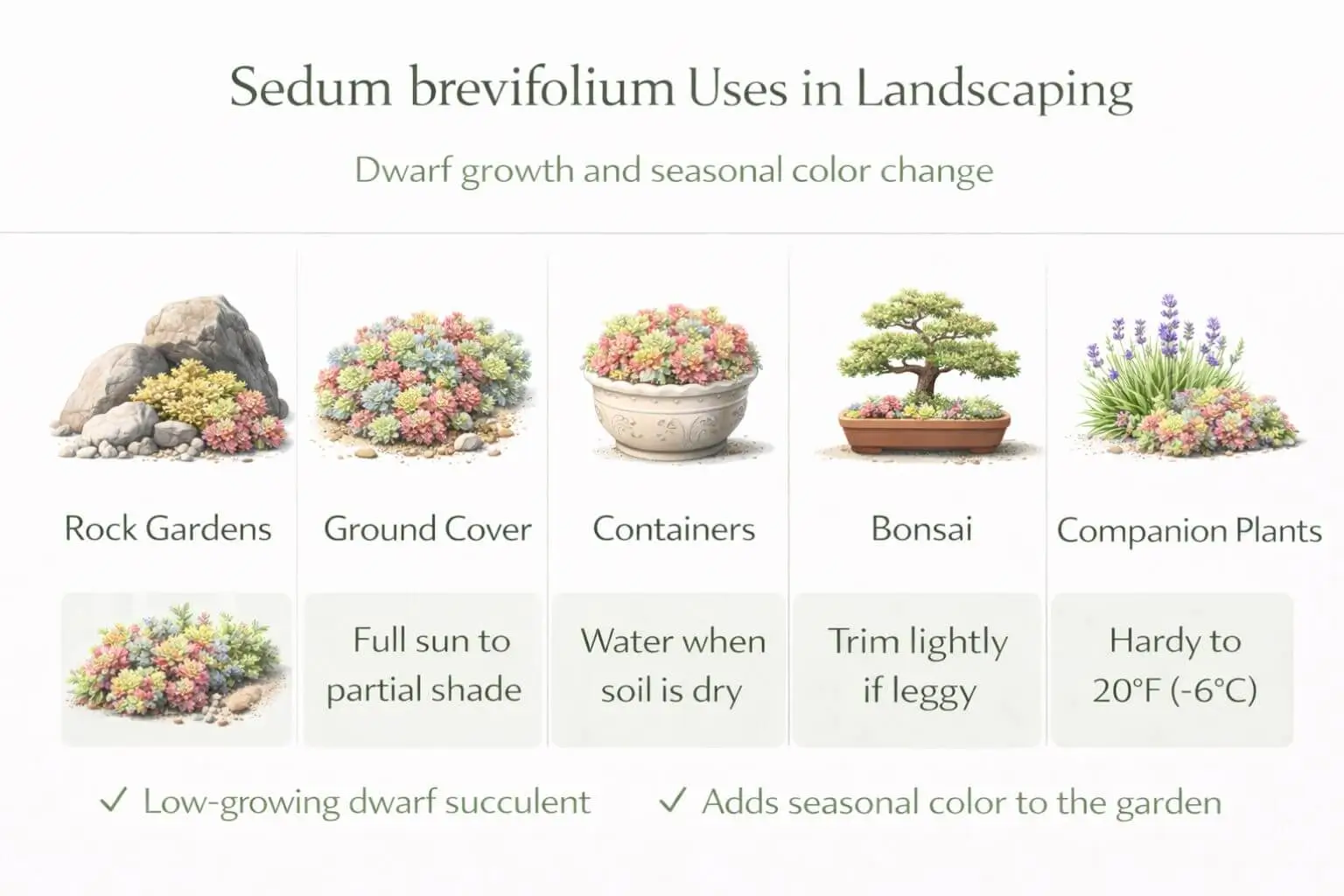
Ideal for rock gardens, green roofs, and creeping ground cover, sedum brevifolium provides erosion control and year-round color. SEO and entity keywords: sedum brevifolium ground cover, sedum begrünung, stonecrop ground cover.
Gardeners exploring alternative low-growing plants may also appreciate Dymondia Ground Cover, especially when comparing drought-tolerant, lawn-free ground cover options with sedum brevifolium.
-
Container and Indoor Planting
Works well in pots, bonsai, and decorative containers, including terraces and indoor arrangements. Related keywords: sedum brevifolium im kübel, topf, bonsai.
-
Companion Plants
Pairs effectively with other succulents and low-growing perennials, such as sedum sempervivum, sedum spurium, and sedum cauticola, creating diverse textures and colors in gardens and containers.
When pairing sedum brevifolium with complementary succulents, Narrow Leaf Chalksticks offers insight into creating visually balanced, drought-tolerant plant combinations.
Flowering, Fruits, and Seasonal Features
-
Flowering Time
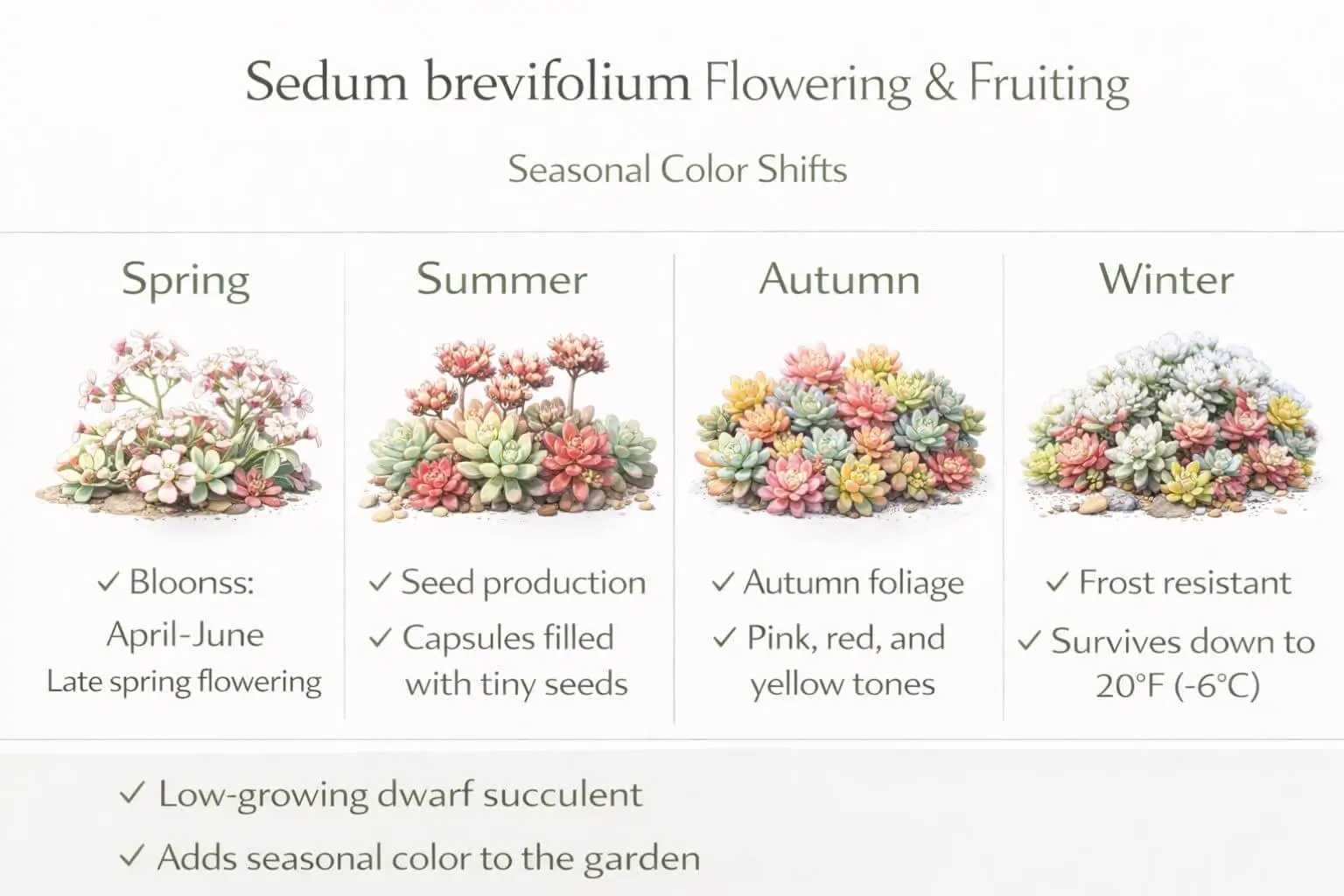
Sedum brevifolium produces small, star-shaped flowers during blütezeit, ranging in soft pink to yellow hues. This enhances its ornamental appeal and supports pollinators.
-
Fruit and Seed Production
Following flowering, it may produce fruits (sedum brevifolium frucht) containing seeds suitable for propagation, adding versatility to garden expansion.
-
Color Changes Across Seasons
Cold and frost can intensify foliage colors, turning rosettes red or pink in autumn. Seasonal changes enhance visual impact and overall landscape aesthetics.
Common Problems and Diseases
-
Pests and Diseases
Sedum brevifolium is generally resistant but can encounter fungal infections or insect infestations. Monitoring and proper drainage help prevent issues. Related keyword: sedum brevifolium krankheiten.
-
Environmental Stress
Overwatering, poor drainage, and extreme frost can stress the plant. Maintaining appropriate conditions ensures healthy growth and long-lasting ground cover.
Conclusion
Sedum brevifolium is a hardy, low-maintenance succulent ideal for ground cover, bonsai, and decorative plantings. Its colorful rosettes, dwarf growth habits, and seasonal variations make it an attractive choice for sustainable landscaping. Explore its varieties, learn proper care, and incorporate this succulent into gardens for lasting beauty and ecological benefits.
FAQs
- What is sedum brevifolium?
A succulent ground cover in the Crassulaceae family, known for compact rosettes and low-growing stems. - How do I care for sedum brevifolium?
Plant in well-draining soil, provide sunlight, water sparingly, and prune as needed. - Is sedum brevifolium frost-hardy?
Yes, most varieties are frost-resistant (frostsicher, winterhart) and survive winter with minimal protection. - How can I propagate sedum brevifolium?
Through leaf cuttings, offsets, or stem divisions, usually in spring or summer. - What are the best uses for sedum brevifolium in landscaping?
Ideal for rock gardens, ground cover, container planting, and bonsai arrangements. - Which varieties of sedum brevifolium are most popular?
Var quinquefarium, blue, jade, mini, and hybrid forms are popular for ornamental purposes.