Understanding Self Pollinating Dragon Fruit
Self pollinating dragon fruit refers to dragon fruit varieties that can fertilize their own flowers and produce fruit without pollen from another plant. This trait makes them especially valuable for home gardeners who may only grow one plant.
Dragon fruit plants belong to the cactus family and are scientifically classified within the genera Hylocereus and Selenicereus. These climbing cacti produce large, fragrant flowers that bloom at night. Because the flowers open after sunset and close by morning, they rely on nighttime pollination.
Understanding self pollination is important because some dragon fruit varieties require pollen from another plant to produce fruit. Self pollinating types simplify the growing process.
The plant lifecycle includes several visible stages such as dragon fruit flower bud development, flower bloom, pollination, fruit formation, and fruit ripening. Observing these stages helps gardeners understand when pollination occurs and how fruit production develops.
What Is Self Pollinating Dragon Fruit?
Self pollinating dragon fruit describes a plant capable of fertilizing its own flowers using its own pollen. This occurs when the pollen from the flower’s male reproductive structures successfully reaches the female reproductive structures of the same flower or plant.
Dragon fruit flowers contain both male and female reproductive parts. The stamens produce pollen, while the stigma and ovary form the female reproductive structure that develops into fruit after fertilization.
A plant is considered self pollinating when pollen transfer can occur without requiring pollen from another cultivar. In contrast, some varieties are self-sterile, meaning they need pollen from another dragon fruit plant to produce fruit. Some well-known dragon fruit cultivars differ in their pollination ability. For example, varieties like Dark Star have unique pollination characteristics and fruit traits explained in this guide on Dark Star Dragon Fruit.
Dragon fruit, commonly known as pitaya, belongs to climbing cactus species in the genera Hylocereus and Selenicereus that produce large night-blooming flowers. Gardeners often ask whether dragon fruit plants self pollinate or require cross pollination. The answer depends on the specific cultivar, as both self-fertile and cross-pollinated varieties exist.
How Dragon Fruit Pollination Works
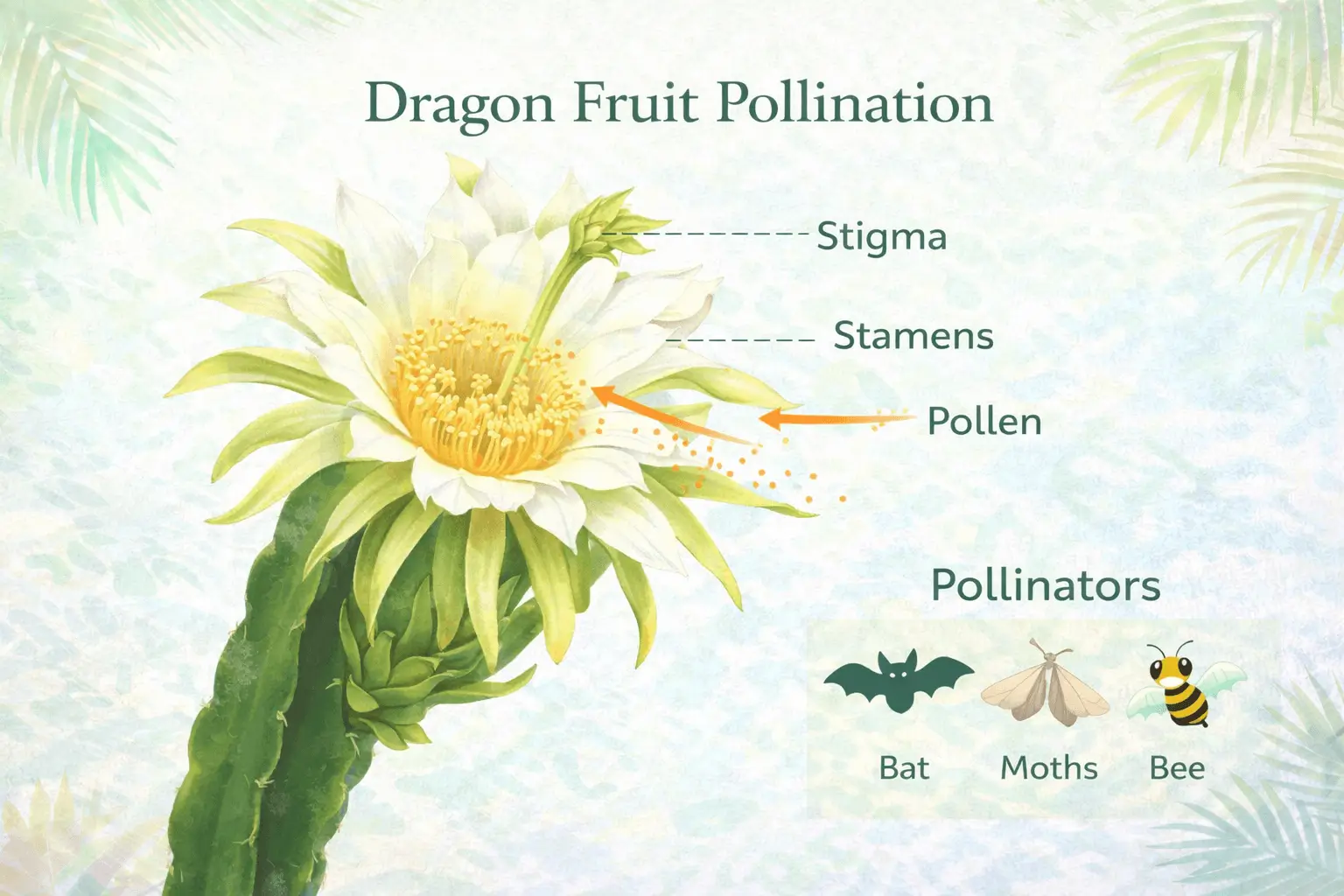
Dragon fruit pollination occurs when pollen from the flower’s male structures reaches the female stigma and fertilizes the ovary, allowing fruit development to begin.
The flowers open at night and produce a strong fragrance that attracts nocturnal pollinators. In natural environments, moths and bats are the primary pollinators. Early morning visitors such as bees may also contribute if flowers remain open.
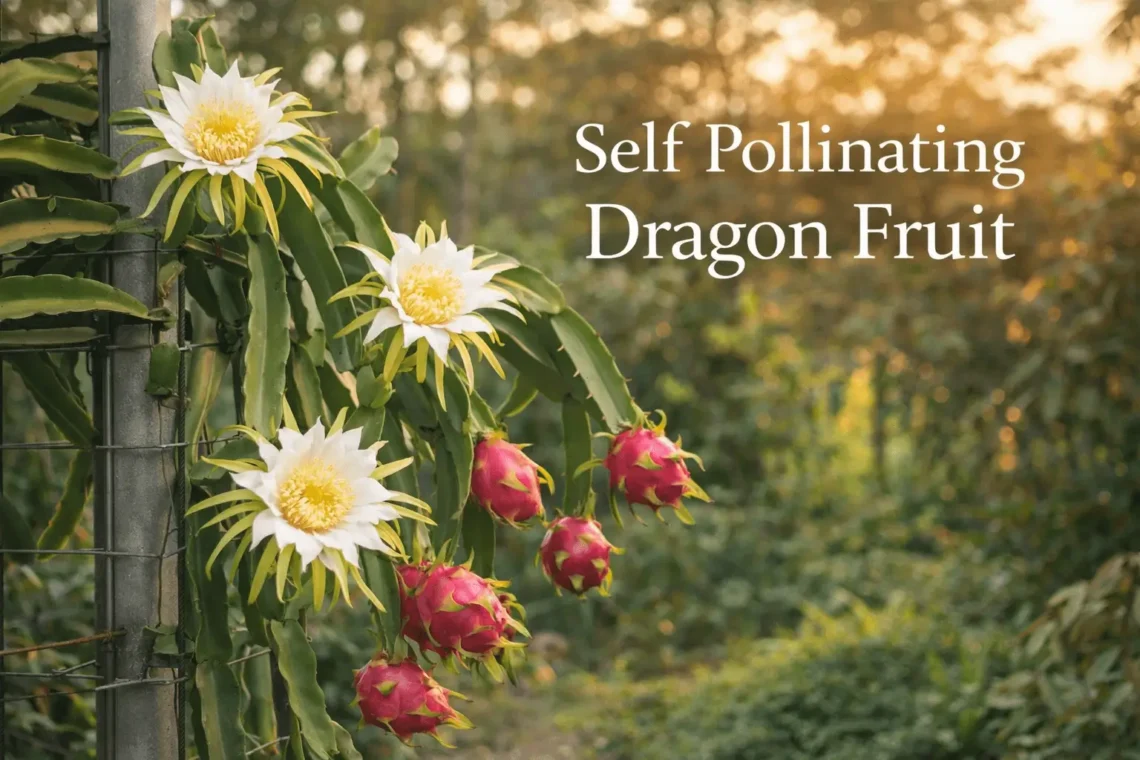
Dragon fruit plants develop flower buds several weeks before blooming. These buds gradually enlarge until they open overnight into large white flowers that can measure up to 12 inches wide.
The pollination window is short. Flowers usually open for only one night, typically beginning after sunset and closing the following morning. During this period, pollen must reach the stigma for fertilization to occur.
Once successful pollination happens, the flower begins transforming into fruit.
Dragon Fruit Flower Stages
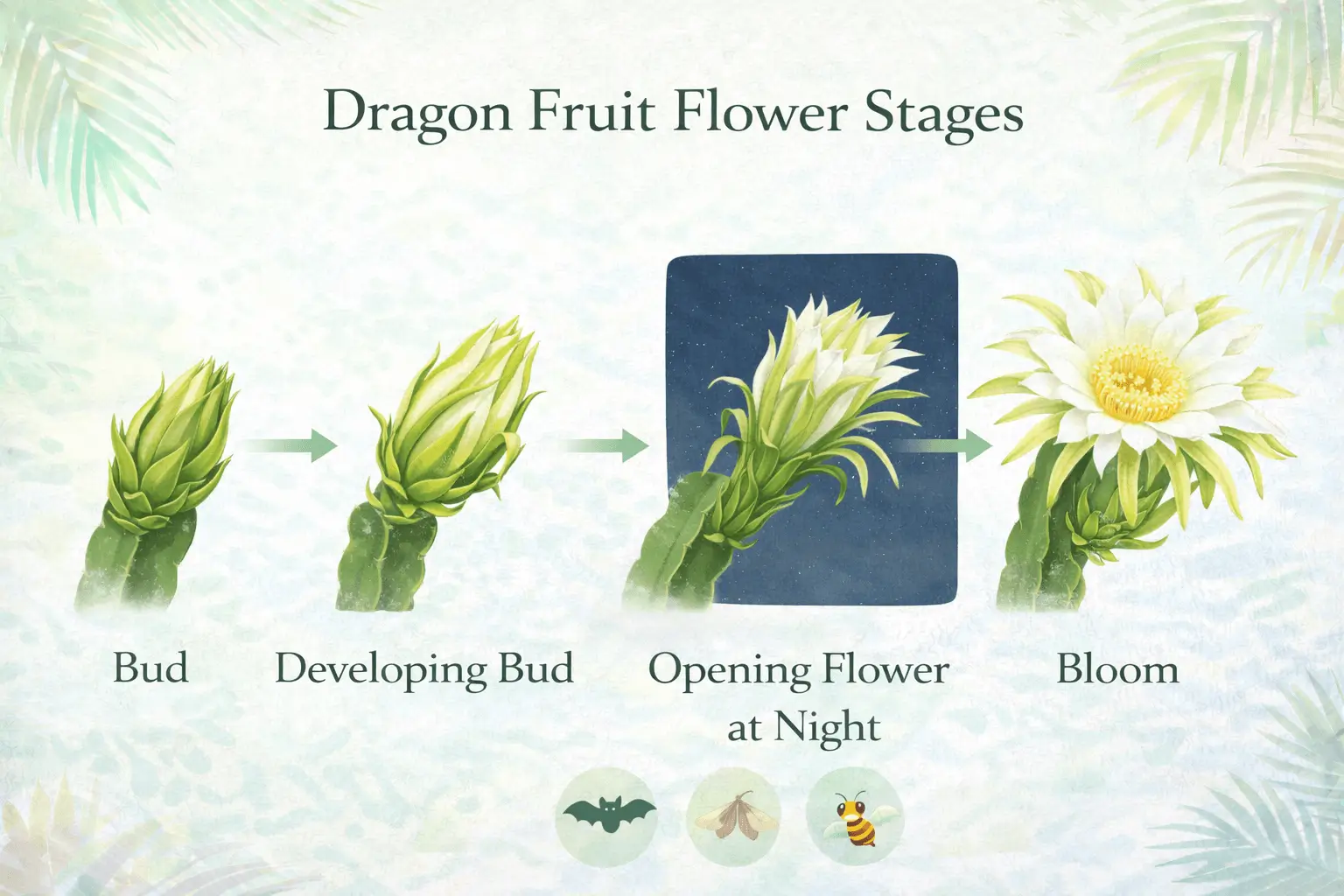
Dragon Fruit Bud Stages
Dragon fruit flowers develop through a series of visible stages starting with small buds emerging from the cactus stems. These buds slowly enlarge and become elongated as they mature.
Dragon Fruit Flower Bud Stages
During the flower bud stage, the outer bracts begin separating slightly as the bud prepares to open. The bud becomes larger and thicker, signaling that blooming is approaching.
Red Dragon Fruit Flower Stages
For red dragon fruit varieties, the flower stages follow the same pattern. Once the bud fully matures, the flower opens at night into a large white bloom with long yellow stamens and a central stigma.
Pollination occurs during peak bloom when pollen is released and available to fertilize the flower.
Stages of Dragon Fruit Growth
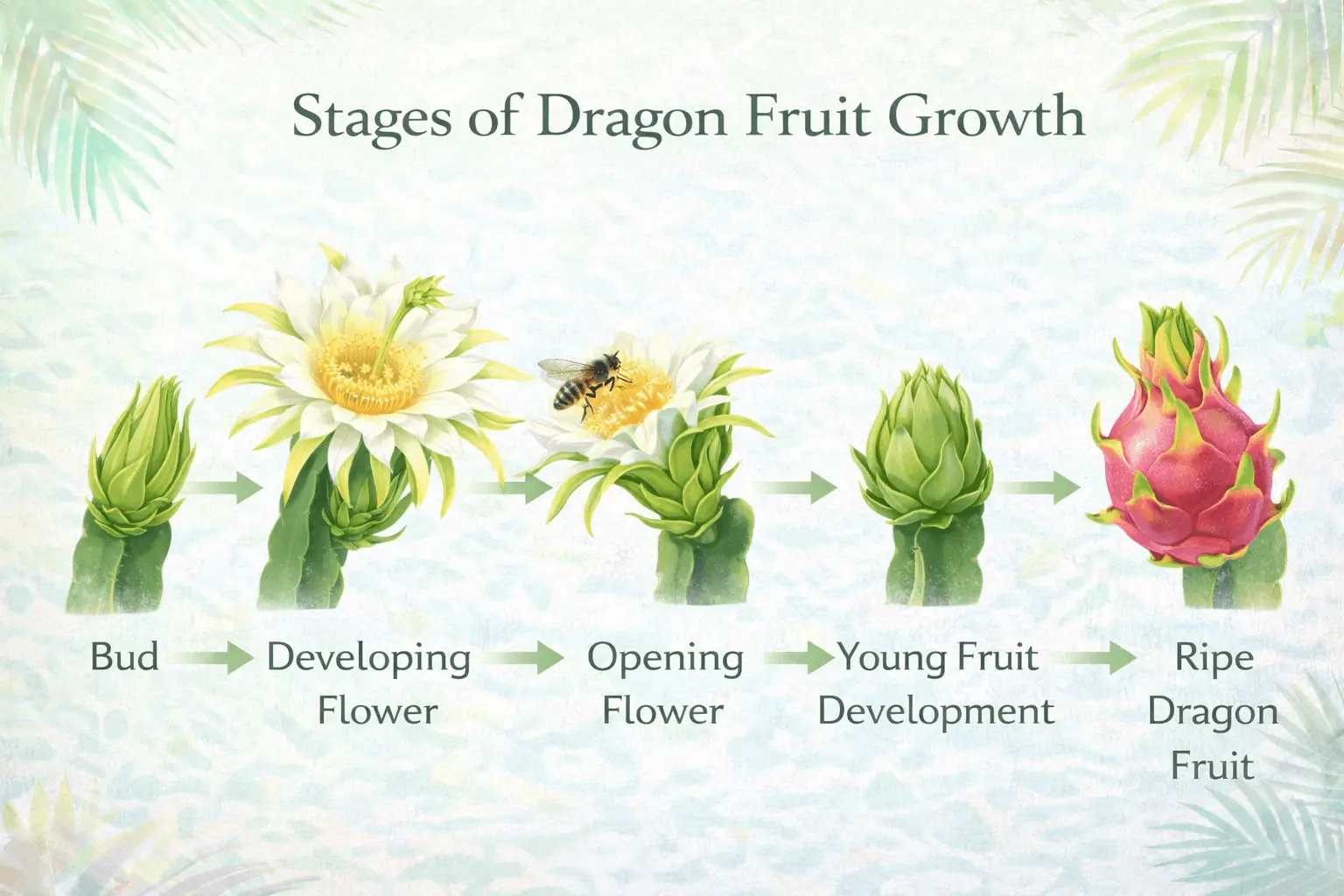
The stages of dragon fruit growth begin with flowering and end with fully ripened fruit.
-
Flower Bud Formation
The plant first produces visible buds along mature stems. Bud formation often occurs during warm growing seasons.
-
Flower Bloom
Once buds mature, flowers open overnight. This is when pollination must occur.
-
Pollination
Successful pollination allows the ovary of the flower to begin developing into fruit.
-
Fruit Formation
After pollination, the base of the flower begins swelling. This signals that fruit development has started.
-
Fruit Ripening
Dragon fruit typically ripens 30 to 50 days after flowering, depending on the variety and growing conditions.
Dragon Fruit Season and Fruit Production
Dragon fruit production is seasonal in many regions, although the exact timing depends on climate.
In warm tropical climates, dragon fruit plants can produce multiple harvests per year. In cooler subtropical regions, fruit production often occurs during warmer months.
Many gardeners ask whether dragon fruit is seasonal. The answer is yes, although plants may produce several flowering cycles during the growing season.
Flowering usually begins in late spring and can continue through early autumn in suitable climates.
When Is Dragon Fruit in Season?
Dragon fruit season varies across different growing regions.
In tropical climates, fruit production can occur almost year-round because warm temperatures support continuous growth and flowering.
In subtropical climates, dragon fruit season typically occurs from late spring through early fall.
Red dragon fruit varieties often follow the same seasonal pattern, with peak harvest periods during the warmest months.
The exact timing of when dragon fruit is in season depends on temperature, daylight length, and plant maturity. Seasonal harvest times can also vary by region. For example, the growing calendar in Australia is explained in detail in this guide on When Is Dragon Fruit in Season in Australia?
Plant Size
Dragon fruit plants are climbing cacti that grow long, trailing stems.
When supported by a trellis or post system, dragon fruit vines commonly reach 10 to 20 feet in height. The stems may spread several feet outward as they branch.
Plants grown in containers tend to remain smaller due to limited root space. Garden-grown plants typically achieve larger sizes because they have more space for root development.
Environmental conditions such as sunlight, soil quality, and temperature strongly influence final plant size.
Growth Rate
Dragon fruit cactus is considered a moderate to fast-growing plant when grown in warm climates with adequate sunlight.
Active growth usually occurs during warm seasons when temperatures remain above 65°F (18°C). During these periods, plants produce new stems, buds, and flowers.
Several factors affect growth speed:
- Warm temperatures
- Strong sunlight exposure
- Proper watering
- Well-draining soil
Slow growth often occurs when plants experience cooler temperatures or insufficient sunlight.
Dragon Fruit Care Guide
-
Light Requirements
Dragon fruit plants prefer full sun to partial sun. At least six hours of sunlight daily helps encourage flowering and fruit production.
-
Watering Needs
Although dragon fruit is a cactus, it requires moderate watering. Soil should dry slightly between watering sessions to prevent root rot.
-
Soil Preferences
Dragon fruit grows best in well-draining sandy or cactus-type soil with good aeration.
-
Fertilization
Balanced fertilizers during active growth help support flowering and fruit production.
-
Pruning
Pruning helps control vine length and encourages stronger branching, which can improve fruit yield.
-
Climate Tolerance
Dragon fruit thrives in warm tropical and subtropical climates but may require protection from frost.
Common Problems When Growing Dragon Fruit
Flowers Not Producing Fruit
If flowers do not develop into fruit, the cause is often insufficient pollination. Immature plants or unfavorable environmental conditions may also prevent fruit formation.
Poor Flower Development
Weak flowers may occur when plants receive insufficient sunlight or lack essential nutrients.
Slow Plant Growth
Slow growth is often linked to poor soil drainage, cool temperatures, or inadequate sunlight.
Improving sunlight exposure, soil quality, and watering practices usually resolves these issues.
Common Beginner Mistakes With Dragon Fruit Plants
Many new gardeners encounter problems due to simple mistakes.
- One common mistake is assuming all dragon fruit varieties are self pollinating. Some cultivars require cross pollination.
- Overwatering is another frequent issue because dragon fruit plants are cacti and prefer well-drained soil.
- Insufficient sunlight can limit flowering and fruit production. Dragon fruit plants grow best in bright conditions.
- Failing to provide structural support for climbing stems may also reduce productivity.
- Finally, missing the short pollination window can result in flowers failing to produce fruit.
Self Pollinating vs Cross Pollinating Dragon Fruit Varieties
- Self pollinating dragon fruit varieties can produce fruit using their own pollen. This makes them easier for home gardeners who grow only one plant.
- Cross pollinating varieties require pollen from another compatible cultivar. Without cross pollination, these plants may produce little or no fruit.
- Some growers intentionally cross pollinate different varieties because it can increase fruit size and improve yields.
- For beginners, self pollinating varieties are generally the easiest option.
Dragon Fruit Nutrition and Health Benefits
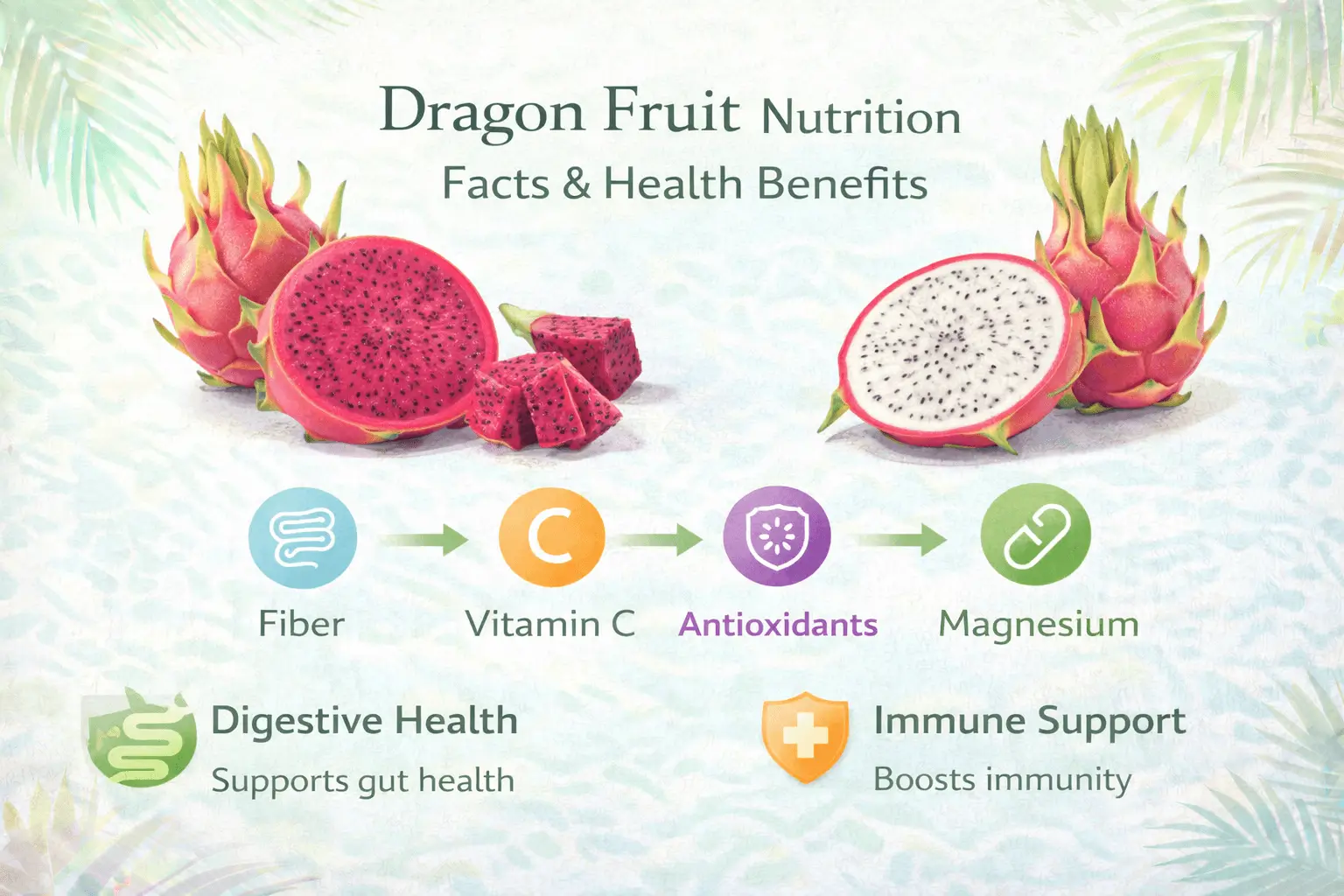
Dragon fruit, also known as pitaya, contains several beneficial nutrients.
Key nutrients found in dragon fruit include:
- Fiber
- Vitamin C
- Magnesium
- Antioxidants
Dragon fruit nutrition supports digestive health due to its fiber content. Antioxidants present in the fruit help protect cells from oxidative stress.
Red dragon fruit varieties also contain natural pigments called betalains, which contribute to antioxidant activity.
Because it is low in calories and rich in nutrients, dragon fruit is considered a healthy fruit option for many diets.
Conclusion: Why Self Pollinating Dragon Fruit Is Ideal for Home Gardeners
Self pollinating dragon fruit plants offer a practical option for gardeners who want reliable fruit production with minimal pollination requirements.
These plants produce large night-blooming flowers capable of fertilizing themselves, allowing fruit development without needing another variety nearby.
Understanding the plant’s flower stages, pollination process, growth stages, and seasonal patterns helps gardeners improve fruit production and maintain healthy plants.
With proper sunlight, well-drained soil, and moderate watering, dragon fruit plants can grow successfully in many warm climates.
FAQs
What is a self pollinating dragon fruit plant?
A self pollinating dragon fruit plant can fertilize its own flowers without requiring pollen from another plant. This allows the plant to produce fruit even when grown alone.
Do all dragon fruit plants self pollinate?
No. Some dragon fruit varieties are self fertile, while others require cross pollination from another compatible plant to produce fruit.
How can you tell if a dragon fruit flower has been pollinated?
After successful pollination, the base of the flower begins swelling within a few days. This swelling indicates that fruit development has started.
How long does it take for dragon fruit to grow after flowering?
Dragon fruit usually develops and ripens within 30 to 50 days after flowering, depending on the variety and environmental conditions.
Is dragon fruit seasonal?
Yes. In many regions, dragon fruit is harvested during warm months. Tropical climates may produce fruit nearly year-round, while subtropical regions have defined growing seasons.
What nutrients are found in dragon fruit?
Dragon fruit contains fiber, vitamin C, magnesium, antioxidants, and beneficial plant compounds that support overall health.