Introduction
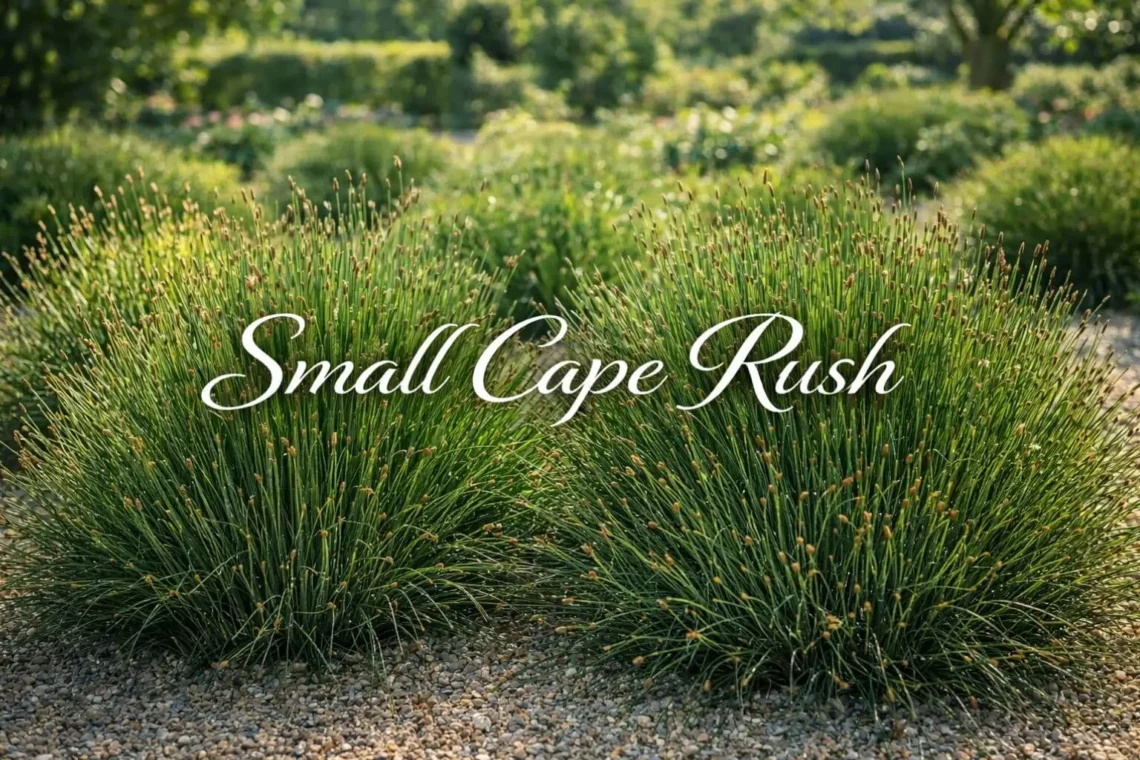
Small cape rush is a compact ornamental grass native to South Africa, scientifically classified as Chondropetalum tectorum. It is valued in both ecological and landscaping contexts for its dense clumping habit, drought tolerance, and aesthetic appeal. The species includes dwarf forms, often referred to as small cape rush, which contrast with larger varieties such as Chondropetalum elephantinum. Key distinctions involve growth size, leaf texture, and overall landscape function. In horticulture, understanding small cape rush size, small cape rush plant characteristics, and the terminology around dwarf versus standard forms is essential for effective cultivation and design application. Small cape rush, scientifically known as Chondropetalum tectorum (Wikipedia), is valued in both ecological and landscaping contexts for its dense clumping habit and aesthetic appeal.
Botanical Classification of Small Cape Rush
Genus and Species Overview
Small cape rush belongs to the genus Chondropetalum, which includes several reed-like ornamental grasses. The species Chondropetalum tectorum encompasses both standard and dwarf forms. Dwarf varieties, sometimes labeled as chondropetalum tectorum small cape rush, provide a compact option suitable for low borders and container gardening. The genus is closely related to Elegia tectorum, which shares similar clumping habits and foliage patterns, reinforcing its classification as a small, decorative grass for ornamental purposes.
Differences Between Varieties
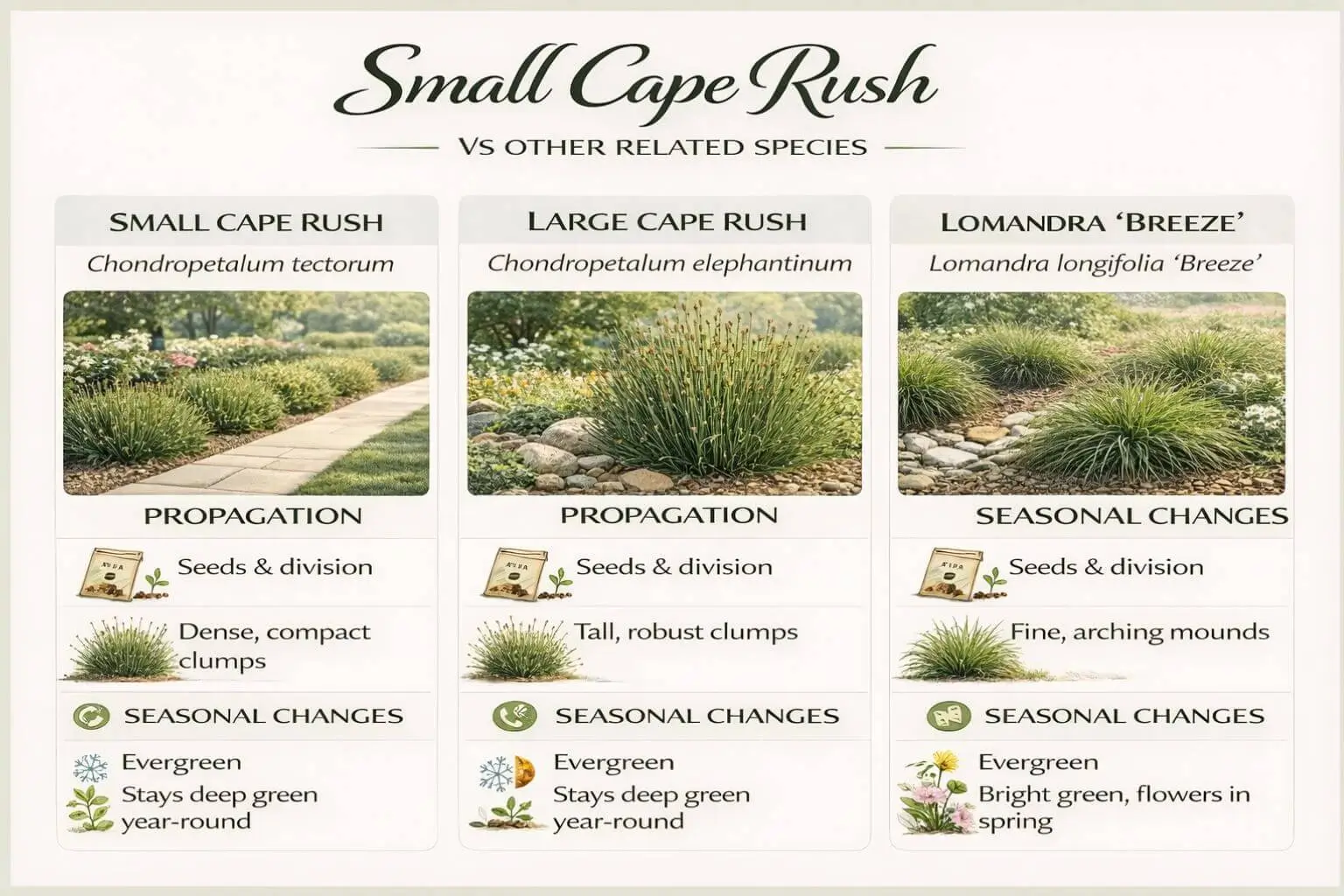
Small cape rush differs from larger varieties such as large cape rush and Chondropetalum elephantinum in both height and spread. While the large forms can exceed 1.5 meters, small cape rush remains under 60 cm, forming tight, manageable clumps. Leaf density and color may vary slightly, with dwarf forms exhibiting finer blades and a more uniform green tone. These differences influence planting choices, as small cape rush is ideal for compact garden spaces, while large cape rush suits screening and large-scale landscape projects.
Physical Characteristics and Growth
Size and Form
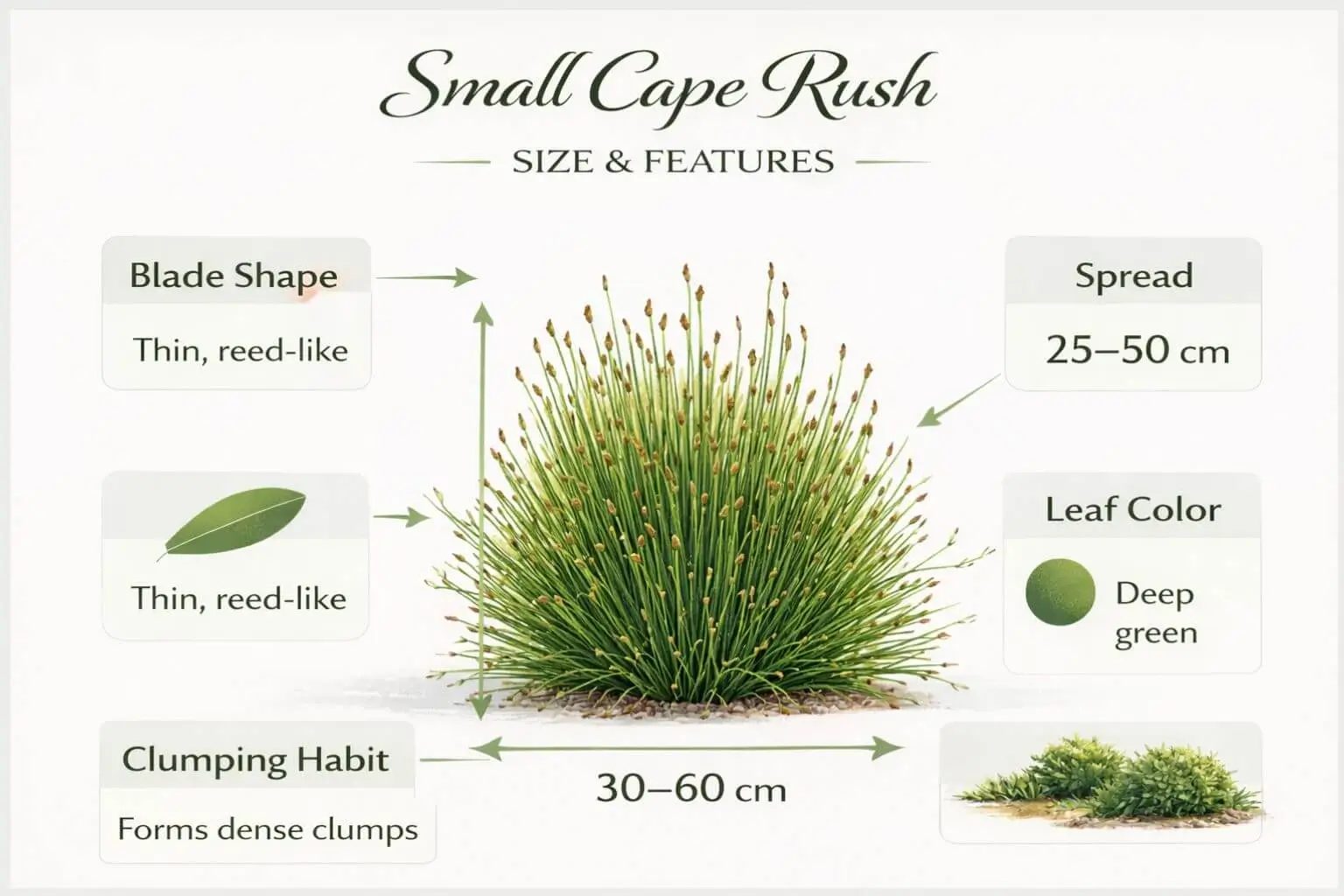
Small cape rush generally grows between 30–60 cm in height with a spread of 25–50 cm, providing a neat, rounded clumping form. Compared with other cape rush varieties, its compact stature makes it suitable for edging, container planting, and low-maintenance gardens. Dwarf mat rush forms are particularly prized for their uniform growth and ability to maintain structural integrity in confined spaces. For more dwarf ornamental grasses with similar compact growth, see our article on Dwarf Mat Rush.
Leaf and Stem Features
The grass features narrow, cylindrical blades with a slightly rough texture. Leaf color ranges from deep green to bluish-green, depending on environmental conditions. Stems are erect, supporting the foliage in dense clumps. Seasonal growth patterns include active growth in spring and summer, with partial dormancy in winter. Flowering is rare in dwarf forms but can occur under optimal conditions, producing subtle, reed-like inflorescences.
Cultivation and Care
Planting Conditions
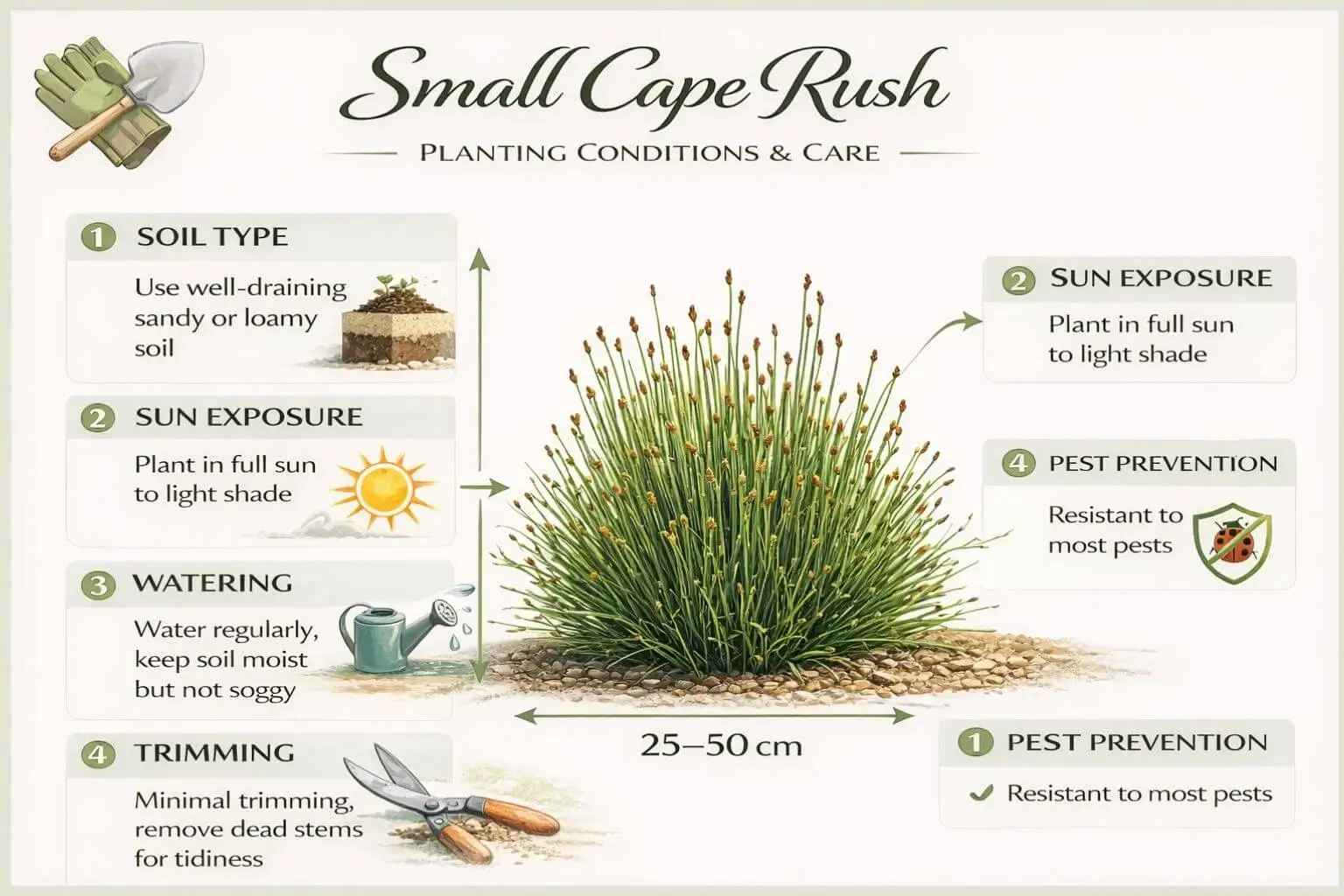
Small cape rush thrives in well-drained sandy or loamy soil. Full sun to partial shade is recommended, with partial shade helping prevent leaf scorch in hot climates. It can be planted directly in the ground or grown in containers. Proper spacing ensures adequate airflow, reducing the risk of fungal diseases. Cape rush care includes attention to soil pH and drainage, while Chondropetalum tectorum care emphasizes sun exposure and avoiding waterlogging.
Maintenance Practices
Regular watering during the establishment phase is essential, though mature plants are drought-tolerant. Occasional trimming maintains the desired shape and removes dead foliage. Pest and disease management is generally minimal, but monitoring for fungal infections or scale insects is advisable. Fertilization with a low-nitrogen formula enhances growth without promoting excessive leaf elongation.
Landscape and Design Uses
Garden Design
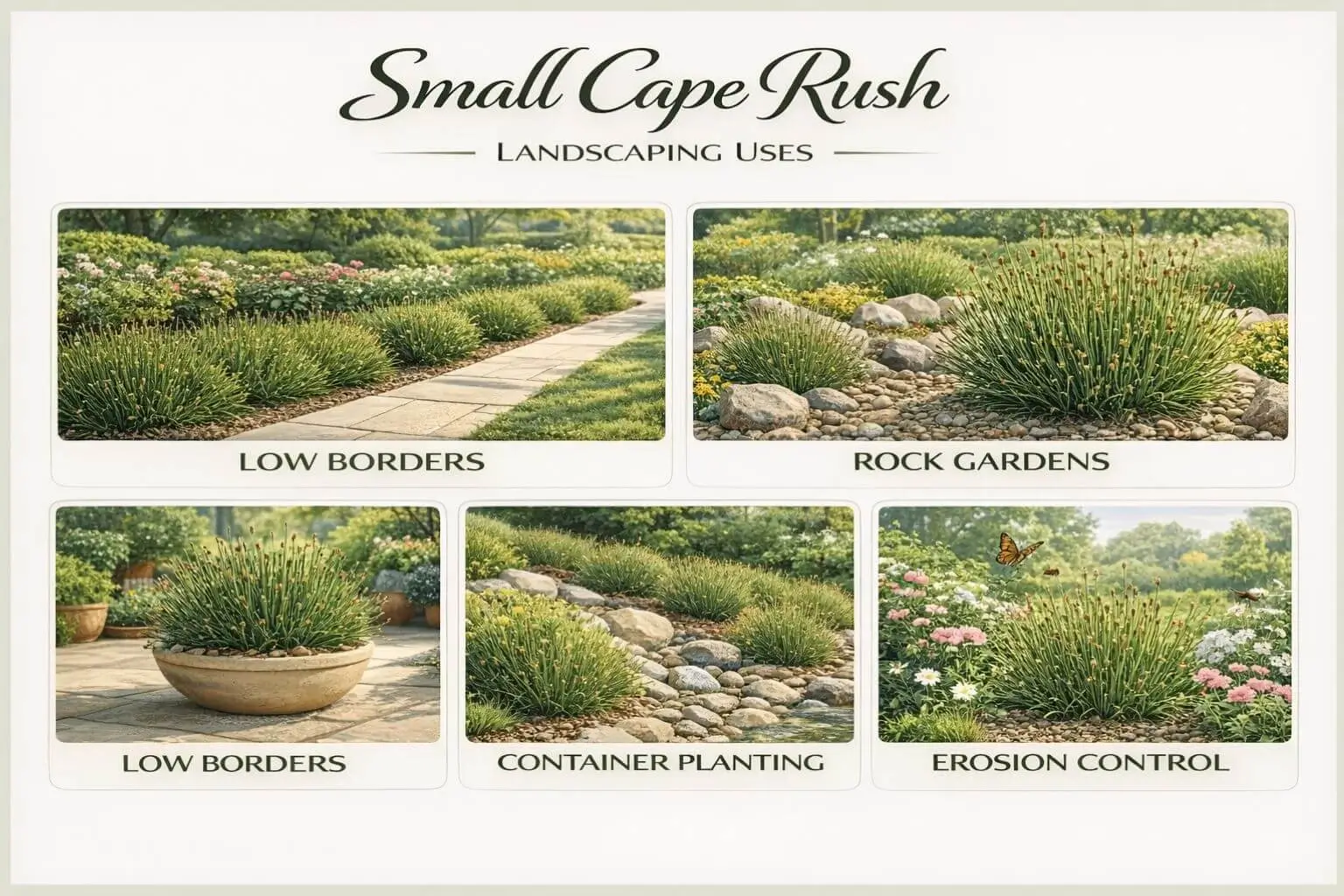
Small cape rush is suitable for low borders, rock gardens, and small-scale plantings. Its compact habit allows it to be used as a ground cover or to create textural contrast with larger shrubs and ornamental grasses. It can also be combined with succulents and low-maintenance perennials to create layered visual interest. Small cape rush can be combined with other ornamental grasses for layered design, such as Sweet Flag Grass, to create texture and visual interest in borders or rock gardens.
Habitat and Environmental Benefits
Ecologically, small cape rush supports pollinators and provides erosion control along slopes or water features. It contributes to naturalistic landscaping by mimicking the plant structure of native South African fynbos. Its low water requirement and dense growth make it effective for soil stabilization and creating microhabitats for insects and small wildlife.
Comparison With Similar Species
Dwarf vs. Standard Varieties
Dwarf small cape rush grows slowly and remains compact, while standard varieties like large cape rush exhibit rapid vertical growth and wider clumps. Aesthetic differences include blade thickness, color intensity, and the overall mass of foliage. Small forms are preferred in formal garden designs and container planting, whereas large forms serve screening or ornamental reed functions.
Related Species
Other species that share morphological traits include Chondropetalum elephantinum, Lomandra breeze, and Lomandra longifolia. While these species may resemble small cape rush, they differ in growth habit, leaf texture, and environmental adaptability. Correct identification is crucial for achieving desired garden outcomes and ecological benefits.
Propagation and Growth Conditions
Propagation Methods
Propagation of small cape rush can be achieved via seeds or division. Seeds should be sown in sandy soil during the active growing season. Divisions involve separating clumps from mature plants and replanting them in prepared soil. Chondropetalum tectorum small cape rush establishes quickly when transplanted with adequate moisture and sun exposure.
Seasonal Growth Patterns
Growth is most active in spring and summer, with partial dormancy during cooler months. Flowering, when it occurs, typically follows rainfall events or periods of increased humidity. Environmental triggers, such as temperature and light intensity, influence both growth rate and dormancy duration.
Common Challenges and Solutions
Environmental Factors
Small cape rush tolerates drought and a range of sun exposures but performs best in full sun with well-drained soil. Excessive shade can reduce foliage density, while overly wet soils may cause root rot. Soil pH should remain near neutral to slightly acidic for optimal nutrient uptake.
Pest and Disease Management
While generally resilient, small cape rush may be affected by fungal infections or scale insects. Preventive strategies include adequate spacing, good drainage, and regular inspection. Removing dead or decaying leaves reduces fungal risk, and applying horticultural oils can mitigate insect infestations.
Conclusion
Small cape rush is a versatile, low-maintenance ornamental grass suitable for both decorative and ecological purposes. Its compact growth, drought tolerance, and aesthetic appeal make it an ideal choice for borders, containers, and naturalistic landscapes. By understanding its cultivation, propagation, and design uses, gardeners can maximize its ecological benefits while enhancing the visual quality of gardens and outdoor spaces. Explore the potential of small cape rush to create resilient, attractive, and functional plantings.
FAQs
- What is a small cape rush?
Small cape rush is a compact ornamental grass species, scientifically known as Chondropetalum tectorum, valued for its low-growing clumps and decorative foliage. - How tall does small cape rush grow?
Typically, it reaches a height of 30–60 cm (12–24 inches), making it smaller than standard cape rush varieties. - What conditions are ideal for growing small cape rush?
It thrives in well-drained soil, full sun to partial shade, and moderate watering. It is drought-tolerant once established. - How do you propagate small cape rush?
Propagation can be done by seed or division. Seeds should be sown in sandy soil, while divisions should be planted during the active growing season. - What are the differences between small cape rush and large cape rush?
Small cape rush grows compact and is suitable for low borders, whereas large cape rush (Chondropetalum elephantinum) grows taller and wider, ideal for screening or large landscape applications.