Introduction
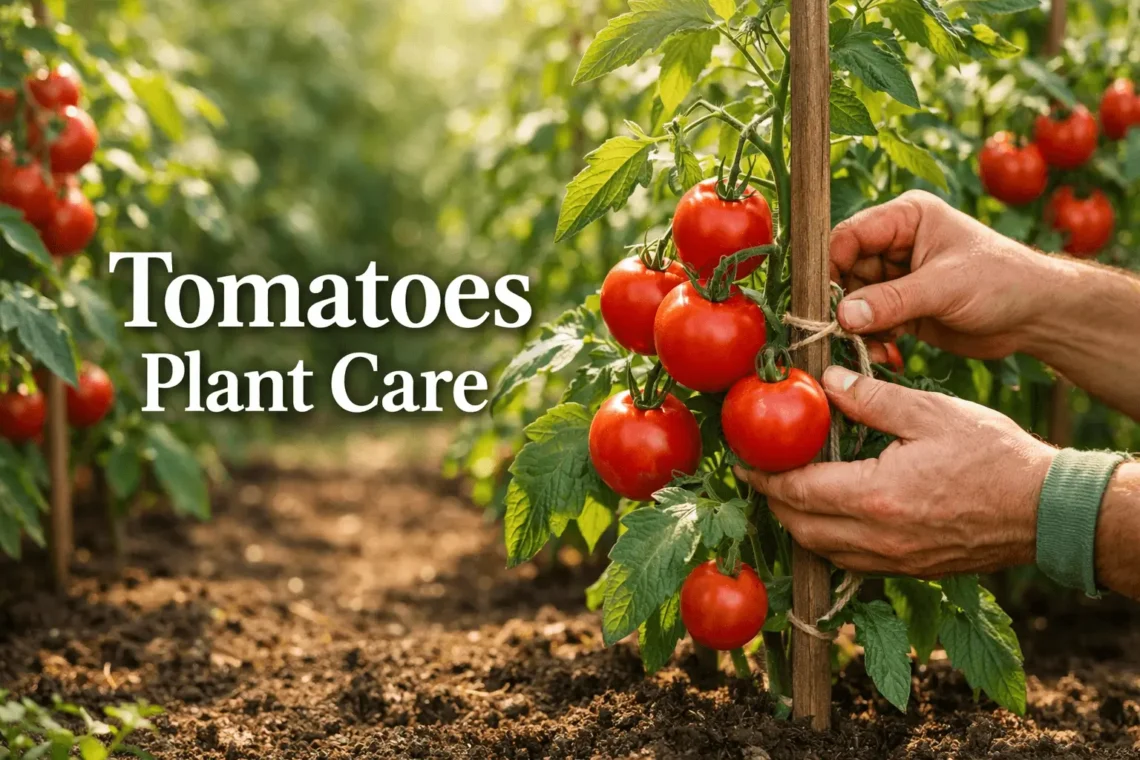
Tomatoes plant care involves understanding how tomato plants grow and what environmental conditions help them produce healthy fruit. Whether tomatoes are grown in garden beds, containers, indoors, or greenhouses, they require the right balance of sunlight, water, nutrients, and pruning. Proper tomato plants care ensures steady growth and productive harvests throughout the season.
A complete tomato plant care guide focuses on the plant lifecycle—from planting and early growth to flowering and fruiting. By learning how to care for growing tomato plants and adjusting conditions such as soil quality, watering schedules, and pruning methods, gardeners can support healthier plants and better fruit production.
Understanding Tomato Plants and How They Grow
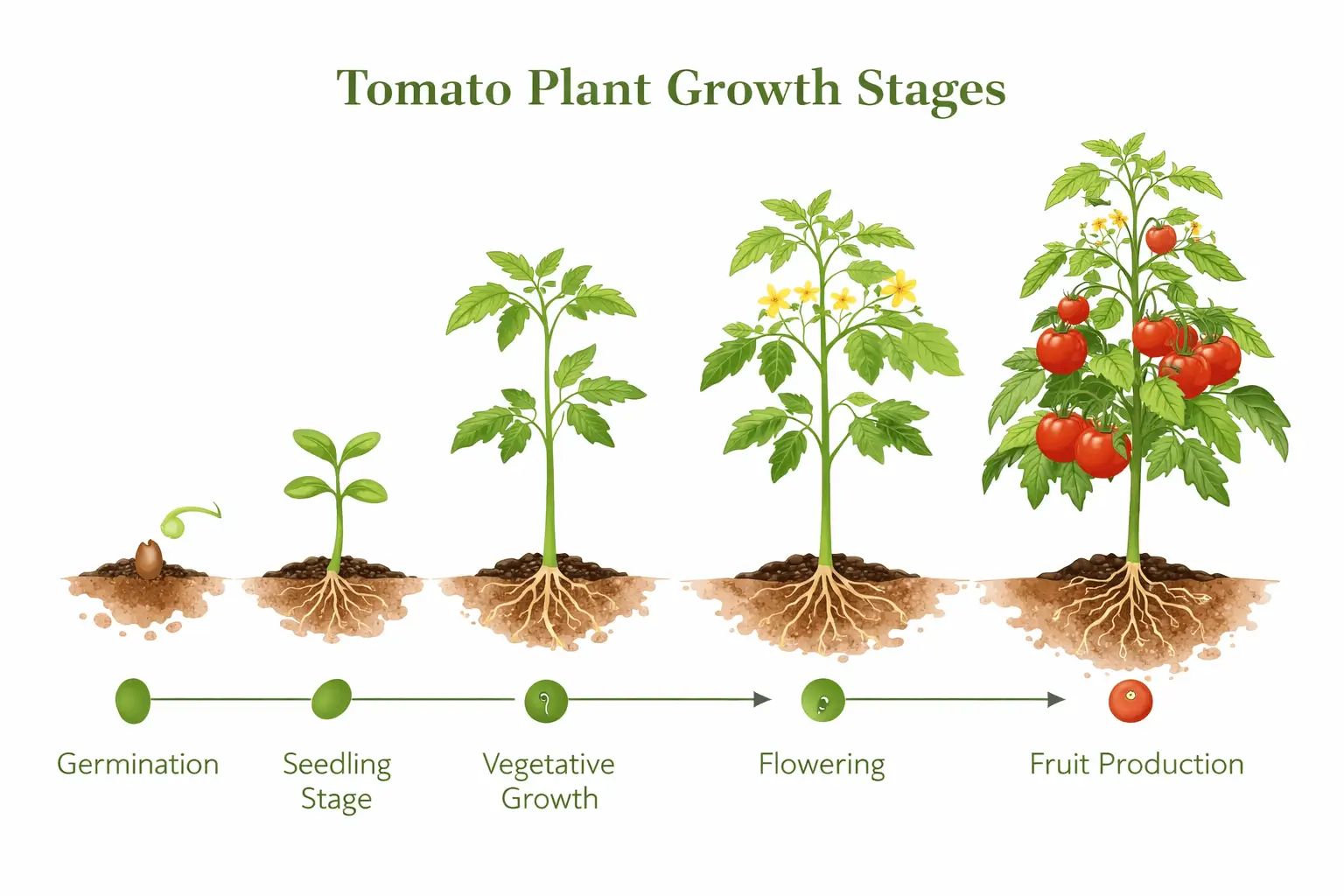
Tomato Plant Growth Stages
Tomato plants follow a natural growth cycle consisting of several key stages. Understanding these stages helps gardeners manage tomato plants care more effectively.
Germination
Tomato seeds typically germinate within 5–10 days under warm conditions. During this stage, seeds sprout and develop their first small leaves.
Seedling Stage
Seedlings grow their first true leaves and begin establishing a root system. Adequate sunlight and moderate watering are essential during this stage.
Vegetative Growth
The plant produces more stems and leaves as it builds structure. Strong vegetative growth supports later fruit production.
Flowering and Fruit Production
Tomato plants begin forming yellow flowers that eventually develop into fruit. Proper care for tomato plant growth during this stage supports healthy fruit development.
Tomatoes (Solanum lycopersicum) are fruiting plants in the nightshade family that are widely cultivated for food crops around the world, as explained in this overview of the tomato plant.
Tomato Growing Season and Climate Requirements
Tomatoes are considered a warm-season crop, meaning they grow best in warm temperatures without frost.
The typical tomato growing season begins after the last frost in spring and continues through summer. Many regions grow tomatoes from late spring to early fall.
Tomatoes grow best in temperatures between 21–29°C (70–85°F). Growth slows when temperatures drop below 15°C (60°F) or exceed 32°C (90°F).
Understanding when to plant tomatoes is essential. Seeds are often started indoors several weeks before the outdoor growing season begins. Once temperatures stabilize, seedlings can be transplanted into the garden.
Knowing when tomatoes grow best allows gardeners to avoid frost damage and improve overall plant development.
Plant Size
Tomato plants vary widely in size depending on the variety and growing conditions.
Most tomato plants grow between 90 cm and 2 meters tall, with a spread of about 60–90 cm. Proper spacing helps maintain airflow and reduces the risk of disease.
There are two main growth types:
Determinate tomatoes grow to a fixed height and produce fruit over a shorter period. These plants are often compact and suitable for smaller gardens.
Indeterminate tomatoes continue growing and producing fruit throughout the growing season. These plants can grow taller and require staking or support.
Tomatoes plants care also depends on whether plants are grown in containers or garden beds. Container plants may remain smaller due to limited root space, while garden plants often reach their full potential.
Growth Rate
Tomato plants grow relatively quickly compared to many garden vegetables.
Most tomato plants take 60–85 days from planting to harvest, although this can vary depending on the variety and environmental conditions.
Cherry tomatoes often mature faster, while larger varieties like Roma or beefsteak tomatoes may take slightly longer.
Several factors influence tomato growing speed, including:
- Soil fertility
- Sunlight availability
- Consistent watering
- Temperature conditions
Providing stable growing conditions helps optimize the timeline for growing tomatoes successfully.
Care Guide: Essential Tomatoes Plant Care Requirements
-
Sunlight and Temperature Needs
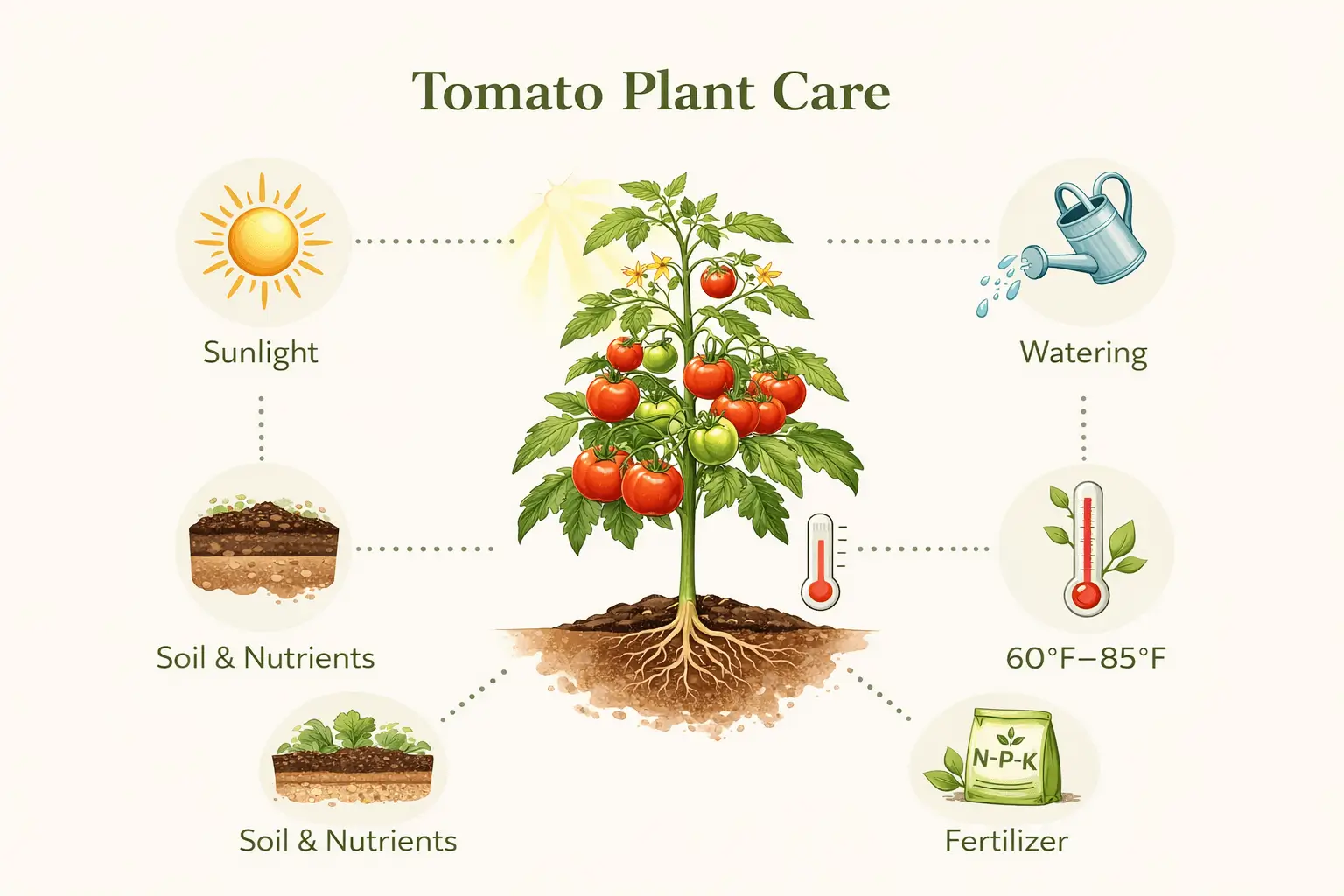
Tomatoes require full sun for optimal growth. Plants should receive at least 6–8 hours of direct sunlight per day.
Warm temperatures promote strong growth and fruit development. Prolonged cold conditions may slow plant growth or damage flowers.
-
Watering Tomato Plants Correctly
Consistent watering is critical for healthy tomato plants.
Tomatoes generally need watering two to three times per week, depending on soil moisture and weather conditions. The goal is to keep soil evenly moist without allowing it to become waterlogged.
Overwatering may lead to root rot, while underwatering can stress plants and reduce fruit production.
-
Soil and Nutrients for Healthy Growth
Tomatoes prefer well-drained soil rich in organic matter.
Adding compost improves soil structure and supports root development. Healthy soil also helps maintain proper nutrient balance throughout the growing season.
-
Fertilizing Tomato Plants
Tomato plants benefit from balanced fertilization during their growth cycle.
Early growth stages typically require balanced fertilizers, while fruiting plants may benefit from slightly higher phosphorus levels to support flower and fruit production.
Regular fertilization ensures steady plant growth and strong yields.
Growing Tomatoes in Pots and Containers
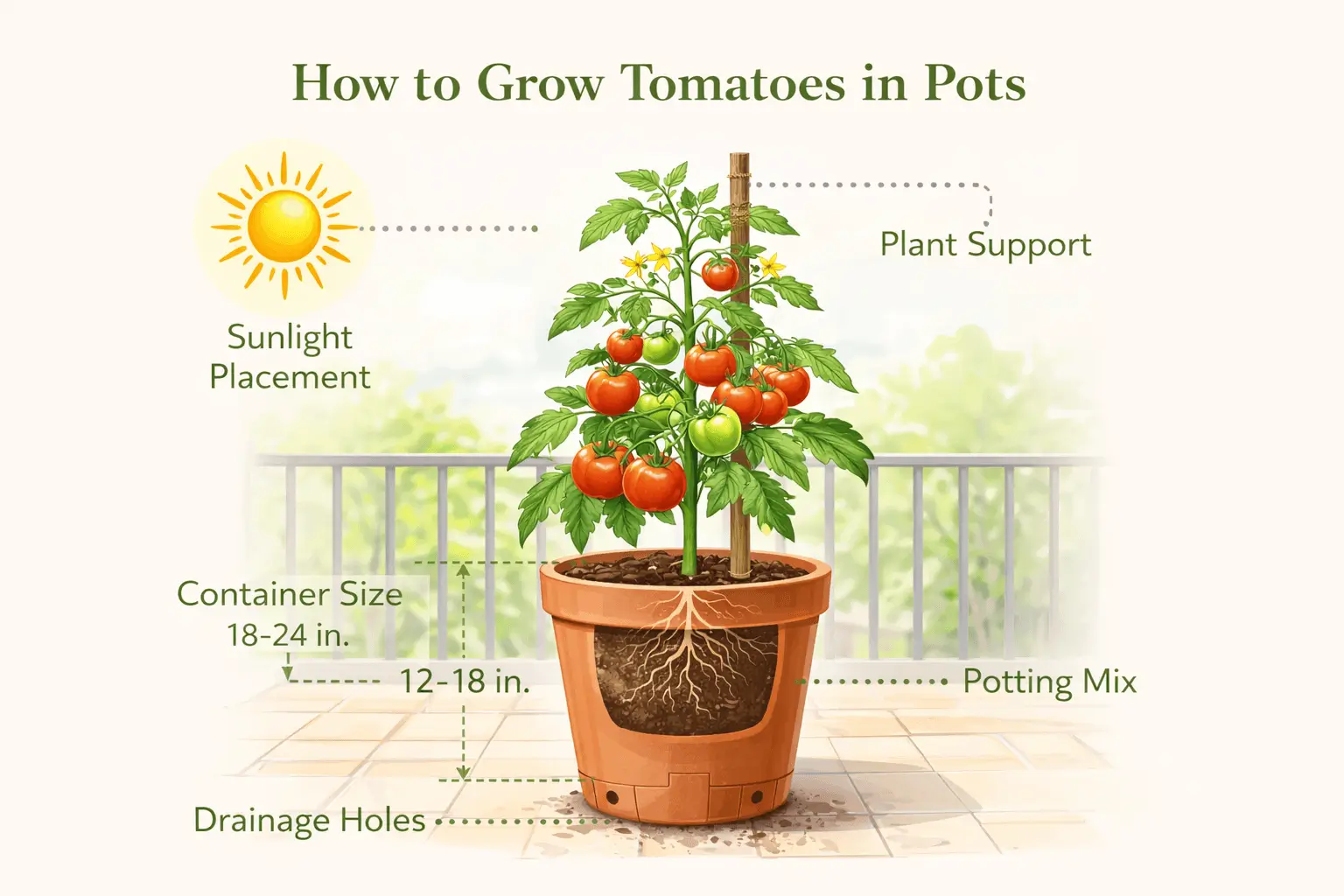
How to Grow Tomatoes in Pots Successfully
Growing tomatoes in pots is a practical option for small gardens, balconies, or patios.
Containers should be at least 30–40 cm wide and include proper drainage holes. Good drainage prevents water buildup that may harm plant roots.
Using a high-quality potting mix designed for vegetables improves root health and plant stability.
Planting Tomatoes in Pots Step-by-Step
Container planting involves several simple steps.
- Choose a large container with drainage holes.
- Fill the pot with nutrient-rich potting mix.
- Plant the tomato seedling deeply to encourage strong root development.
- Place the container in a location that receives full sunlight.
Proper container placement ensures healthy tomato plant development.
Common Container Growing Challenges
Growing tomatoes in pots can present unique challenges.
Container soil dries faster than garden soil, requiring more frequent watering. Nutrient depletion can also occur more quickly, making fertilization important for sustained plant growth.
Planting Tomatoes in the Ground
How to Plant Tomatoes in the Ground Properly
Planting tomato plants in the ground begins with preparing healthy soil.
Garden soil should be loosened and enriched with compost before planting. Tomato seedlings are typically planted deeper than their original container depth to encourage strong root growth.
You can apply similar soil preparation techniques used in vegetable gardening, such as those explained in How to Plant Garlic, which also highlights the importance of well-prepared soil for healthy root development.
Spacing Tomato Plants for Healthy Growth
Proper spacing between plants is essential.
Tomatoes generally require 45–90 cm of space between plants depending on the variety. Adequate spacing improves airflow and helps prevent fungal diseases.
Tomato Plant Pruning and Training
-
Why Pruning Tomato Plants Is Important
Pruning tomato plants helps improve airflow, reduce disease risk, and direct plant energy toward fruit production.
Well-maintained plants often produce healthier fruit and grow more efficiently.
-
How to Prune Tomato Plants Safely
Pruning usually involves removing small shoots called suckers that grow between the main stem and branches.
Gardeners typically prune indeterminate varieties to control plant size and improve fruit quality.
-
Should You Prune Tomato Plants?
Pruning is beneficial for many tomato plants, particularly tall indeterminate varieties.
However, determinate varieties often require minimal pruning because their growth pattern is naturally compact.
Growing Tomatoes in a Greenhouse
Benefits of Greenhouse Tomato Growing
Growing tomatoes in greenhouse environments allows gardeners to control temperature, humidity, and light conditions.
Greenhouses also extend the growing season by protecting plants from cold temperatures and harsh weather.
Common Problems With Growing Tomatoes in a Greenhouse
Despite its advantages, greenhouse growing can introduce challenges.
High humidity may increase the risk of fungal diseases. Pollination can also become limited if insects are not present.
Maintaining proper airflow and temperature control helps prevent these problems.
Tomato Companion Plants and Garden Pairings
Companion planting can support tomato plant health and improve garden productivity.
Several plants are commonly grown alongside tomatoes because they may help repel pests or enhance plant growth.
Popular tomato companion plants include:
- Basil, which may help repel insects
- Marigolds, known for pest-repelling properties
- Onions and garlic, which may discourage certain pests
These tomatoes plant companions contribute to a more balanced garden ecosystem.
How to Make Tomato Plants Grow Faster
Several factors influence how quickly tomato plants grow.
Sunlight, warm temperatures, and fertile soil all play important roles in plant development.
To boost tomato plant growth:
- Ensure plants receive adequate sunlight
- Fertilize regularly during the growing season
- Maintain consistent watering schedules
- Prune excess growth to improve airflow
Healthy soil and proper care practices help tomato plants grow faster and produce fruit more efficiently.
Common Tomato Plant Problems and How to Fix Them
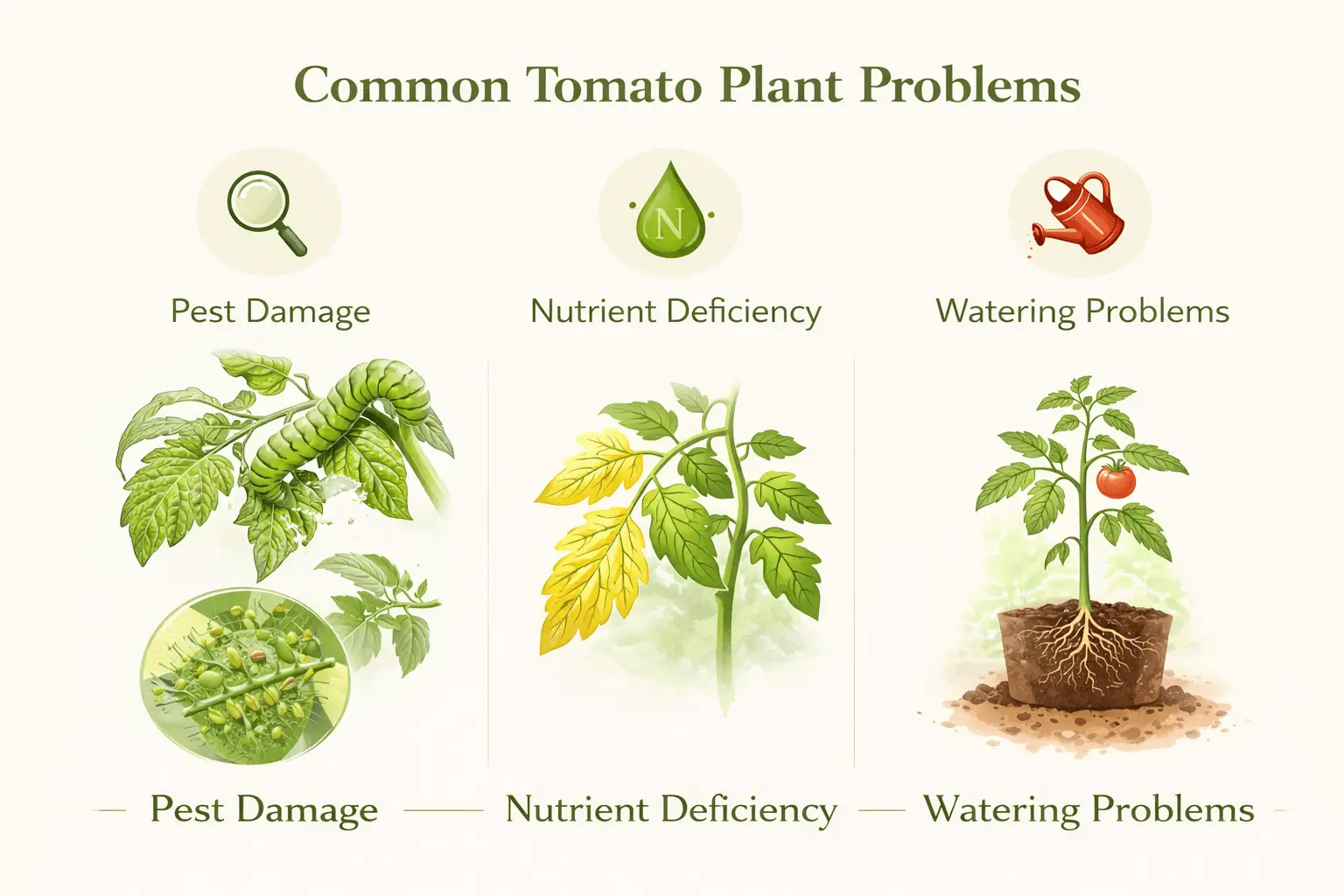
Tomato Plant Leaves Turning Yellow
Yellowing leaves often result from overwatering, nutrient deficiencies, or poor soil drainage.
Adjusting watering schedules and improving soil health typically resolves the issue.
Pests and Diseases Affecting Tomato Plants
Common tomato plant pests include aphids and tomato hornworms.
Fungal diseases may also develop when plants experience poor airflow or excessive moisture.
Preventive care such as proper spacing and regular monitoring helps reduce pest problems.
If pests such as aphids appear on tomato plants, early treatment is important. This guide on Aphids on Plants explains practical ways to control infestations and protect plant health.
Slow Plant Growth or Poor Fruit Production
Slow growth may occur when plants lack sunlight, nutrients, or consistent watering.
Correcting these environmental factors usually improves plant development and fruit yield.
Beginner Mistakes When Growing Tomatoes
Growing tomatoes for beginners often involves a learning curve.
Common mistakes include:
- Overwatering plants
- Planting tomatoes too early in cold soil
- Spacing plants too closely together
- Skipping pruning or plant support
Avoiding these mistakes helps new gardeners maintain healthier tomato plants.
Tomato Varieties and Their Care Differences
Different tomato varieties may require slightly different care practices.
Cherry tomatoes plant care often involves managing vigorous growth and providing support for climbing vines.
Roma tomatoes plant care focuses on consistent watering to support dense fruit production.
San Marzano tomatoes plant care benefits from warm temperatures and fertile soil.
Heirloom tomatoes plant care may require careful monitoring because some heirloom varieties are more sensitive to disease.
Understanding these differences allows gardeners to adapt care strategies to each tomato type.
Conclusion
Tomatoes plant care becomes easier when gardeners understand the natural lifecycle of tomato plants and their environmental needs. Providing full sunlight, maintaining consistent watering, using nutrient-rich soil, and pruning when necessary helps plants grow strong and produce healthy fruit.
Whether tomatoes are grown in containers, garden beds, or greenhouse environments, proper care practices support consistent growth and productive harvests. With attention to plant health, spacing, and environmental conditions, tomato plants can thrive throughout the growing season.
FAQs
How often should tomato plants be watered?
Tomato plants generally need consistent watering several times per week depending on soil conditions, climate, and plant size.
What is the best way to care for tomato plants?
The best care includes full sunlight, well-drained soil, regular watering, proper pruning, and balanced fertilization.
Can tomatoes grow well in pots?
Yes, tomatoes grow well in containers if the pot is large enough, has good drainage, and receives plenty of sunlight.
How long does it take for tomato plants to produce fruit?
Most tomato plants begin producing fruit about 60–85 days after planting, depending on the variety and growing conditions.
Do tomato plants need pruning?
Pruning is helpful for many varieties, especially indeterminate tomatoes, because it improves airflow and directs energy toward fruit production.