Introduction: What Is the Tristania Tree?
The tristania tree refers to a group of evergreen trees that were historically classified under the genus Tristania. In modern botany, most of these species have been reclassified under the genus Lophostemon, though the original name remains widely used in horticulture and public reference. The term is commonly associated with well-known native trees such as the Brisbane box and brush box. The tristania tree is valued for its dense canopy, durability, and adaptability to urban conditions. Many gardeners recognize the tristania tree as the Brisbane box, which is detailed further in our guide on Brisbane Box Tree. Today, the name functions as a practical identifier rather than a strict taxonomic label, making it useful in landscaping, environmental planning, and general botanical discussion. This definition reflects both historical usage and current scientific understanding.
Botanical Classification and Naming
Historically, the tristania tree was formally placed within the genus Tristania based on observable traits such as flower structure and bark texture. Advances in botanical research, particularly comparative morphology and genetic analysis, led to a reclassification of many species into the genus Lophostemon. Despite this change, “tristania tree” continues to be used in landscaping, arboriculture, and common language.
The persistence of the term is due to long-standing familiarity and its continued use in urban planning documents, nursery catalogs, and non-technical references. Supporting species-related terms are often mapped to both names to maintain clarity across scientific and practical contexts.
-
Relationship Between Tristania and Lophostemon
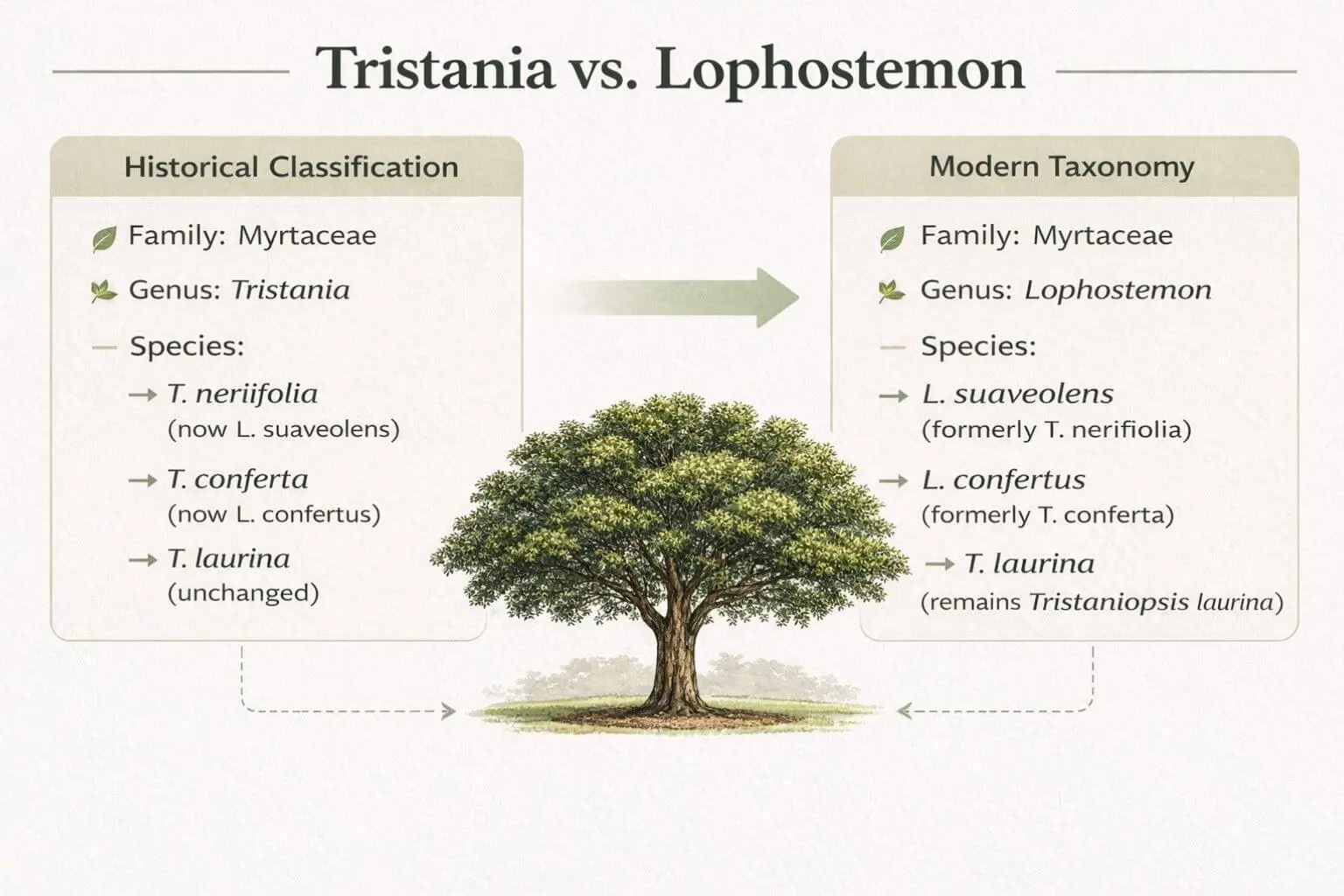
Species were reclassified to better reflect evolutionary relationships and shared genetic traits. This shift created ongoing confusion, particularly in gardening and landscaping, where older naming conventions are still common. As a result, both names are often used interchangeably, even though Lophostemon is the accepted scientific classification.
Native Range and Natural Habitat
The tristania tree is native to eastern regions of Australia, where it occurs naturally in coastal forests, open woodlands, and riparian zones. These trees are well adapted to warm temperate and subtropical climates. They tolerate a range of soil types, including sandy and clay-based soils, provided drainage is adequate. Their natural habitat often includes areas with periodic rainfall and moderate humidity, contributing to their resilience in urban environments.
Physical Characteristics of the Tristania Tree
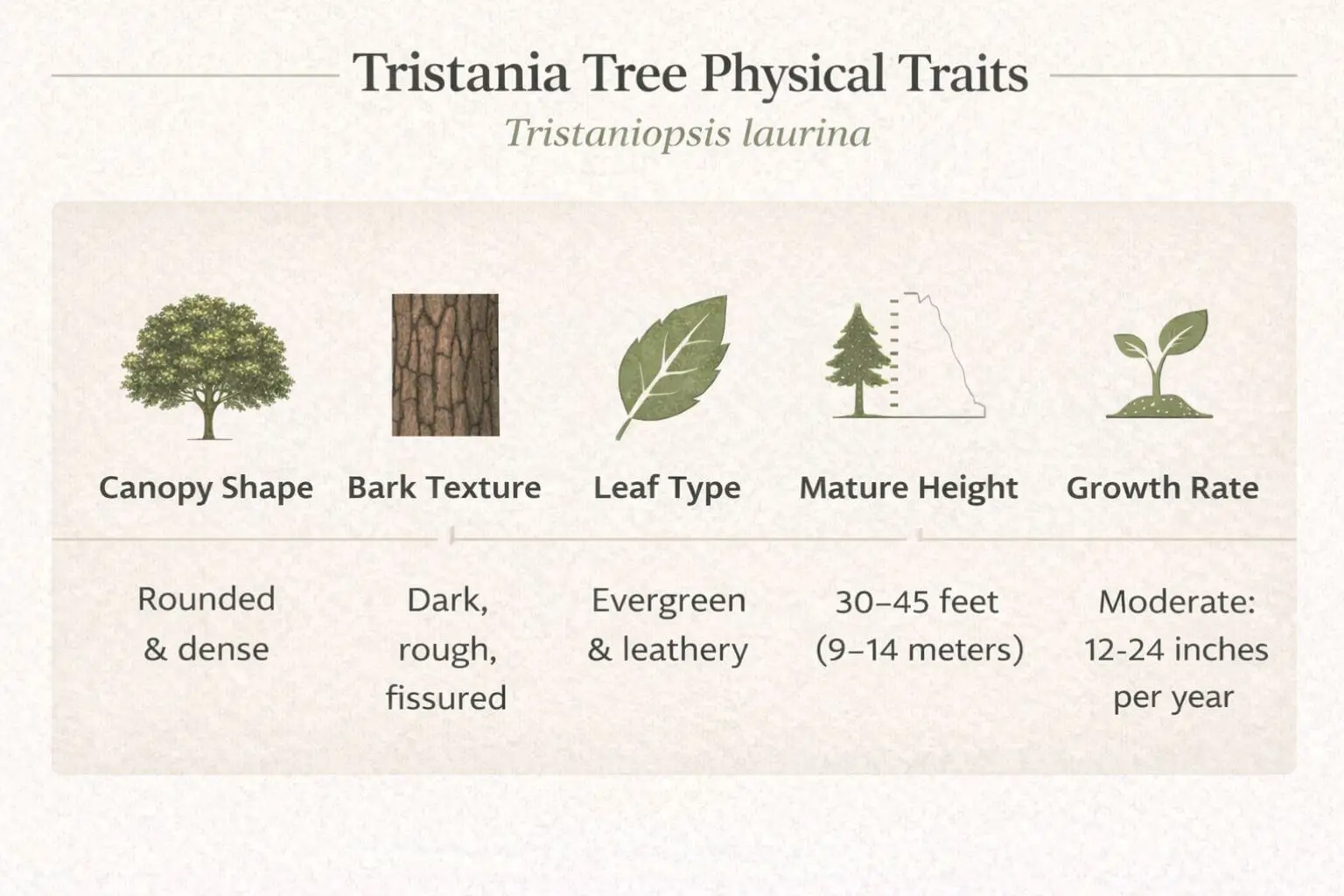
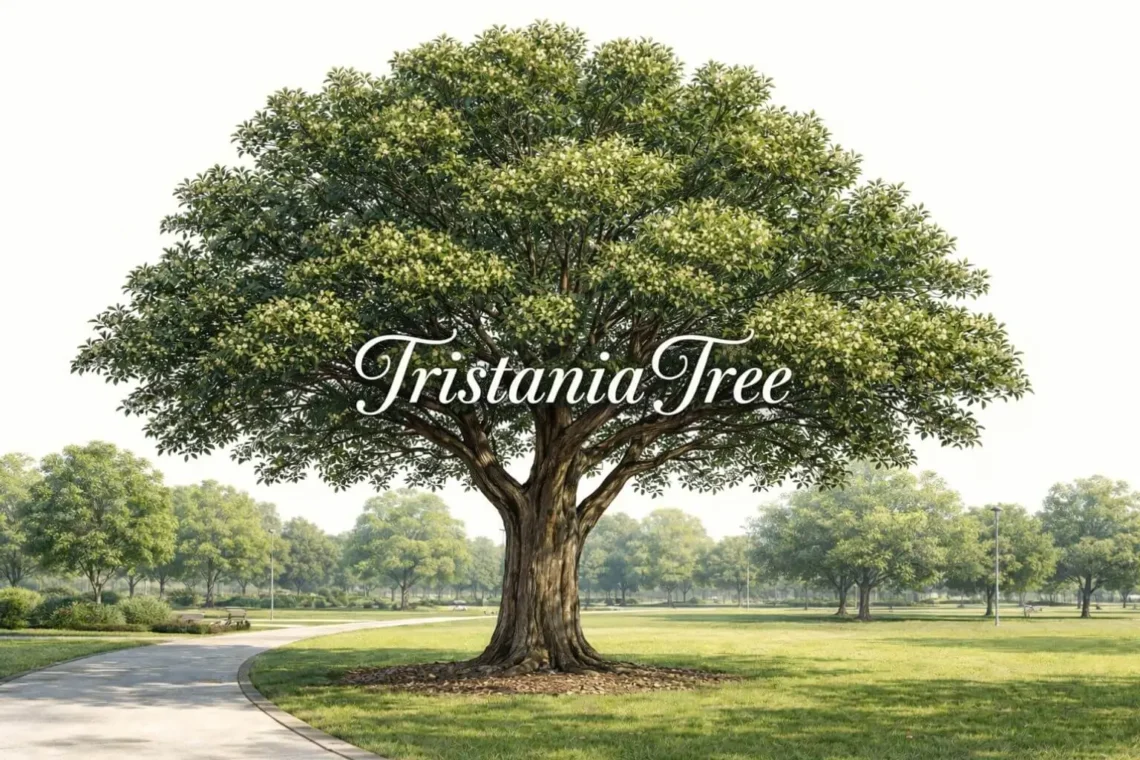
The tristania tree typically develops a strong upright form with a broad, rounded canopy. Bark texture varies by species but commonly appears fibrous or flaky, often shedding in small patches. The foliage is evergreen, with glossy green leaves that maintain year-round coverage. While appearance varies slightly among species, the overall visual impression is of a dense, structured tree suited to large open spaces.
-
Tristania Tree Height and Spread
Mature height ranges from medium-sized to very tall trees, depending on species and growing conditions. Canopy spread is generally wide, providing extensive shade. Final size is influenced by soil depth, moisture availability, and available space for root expansion.
-
Tristania Tree Growth Rate
Growth rate is considered moderate. Trees establish steadily rather than rapidly, with consistent annual growth. Warmer climates and well-drained soils support healthier and more predictable development.
Root System and Structural Behavior
The tristania tree develops a strong, spreading root system designed to support its substantial canopy. Roots may extend close to the surface while also developing deeper structural anchors. This dual structure enhances stability but requires careful placement in urban settings. When planted too close to infrastructure, roots can interfere with pavements or underground services, making site selection critical.
Flowers, Fruit, and Seasonal Changes
Flowering typically occurs in warmer months and is characterized by clusters of small, pale flowers with prominent stamens. These flowers contribute modest visual interest and support local pollinators. The tree produces small woody capsules rather than fleshy fruit. Seasonal changes are subtle, as evergreen foliage remains consistent throughout the year, reinforcing its role as a stable landscape element.
Common Tristania Tree Species Explained
Several species are commonly referenced under the tristania tree name. While similar in structure, they differ in leaf shape, size, and preferred growing conditions.
-
Tristania conferta (Brisbane Box / Brush Box)
This is the most widely recognized species. It is known for its tall growth, straight trunk, and dense canopy. The bark is dark and textured, and the tree performs well in urban environments.
-
Tristania laurina
This species is generally smaller, with narrower leaves and a more compact form. It is often noted for ornamental suitability in confined spaces.
-
Other Referenced Species
Tristania whiteana, Tristania obovata, and Tristania elegant are names still encountered in older references. These variations reflect historical naming rather than current taxonomic consensus.
Advantages and Disadvantages of the Tristania Tree
A balanced evaluation helps clarify where the tristania tree performs best and where limitations exist.
-
Pros of the Tristania Tree
The tree offers excellent shade, long lifespan, and strong tolerance to urban stressors such as pollution and compacted soils. Its evergreen canopy provides consistent environmental benefits.
-
Cons and Limitations
Large mature size can be restrictive in small spaces. Root spread may pose challenges near infrastructure, and routine maintenance is required to manage canopy size.
Common Problems and Constraints
Potential issues include root-related structural interference, susceptibility to certain pests under stress conditions, and limited suitability for narrow planting zones. These factors must be considered in urban planning and landscape design.
Tristania Tree Uses in Landscaping and Urban Environments
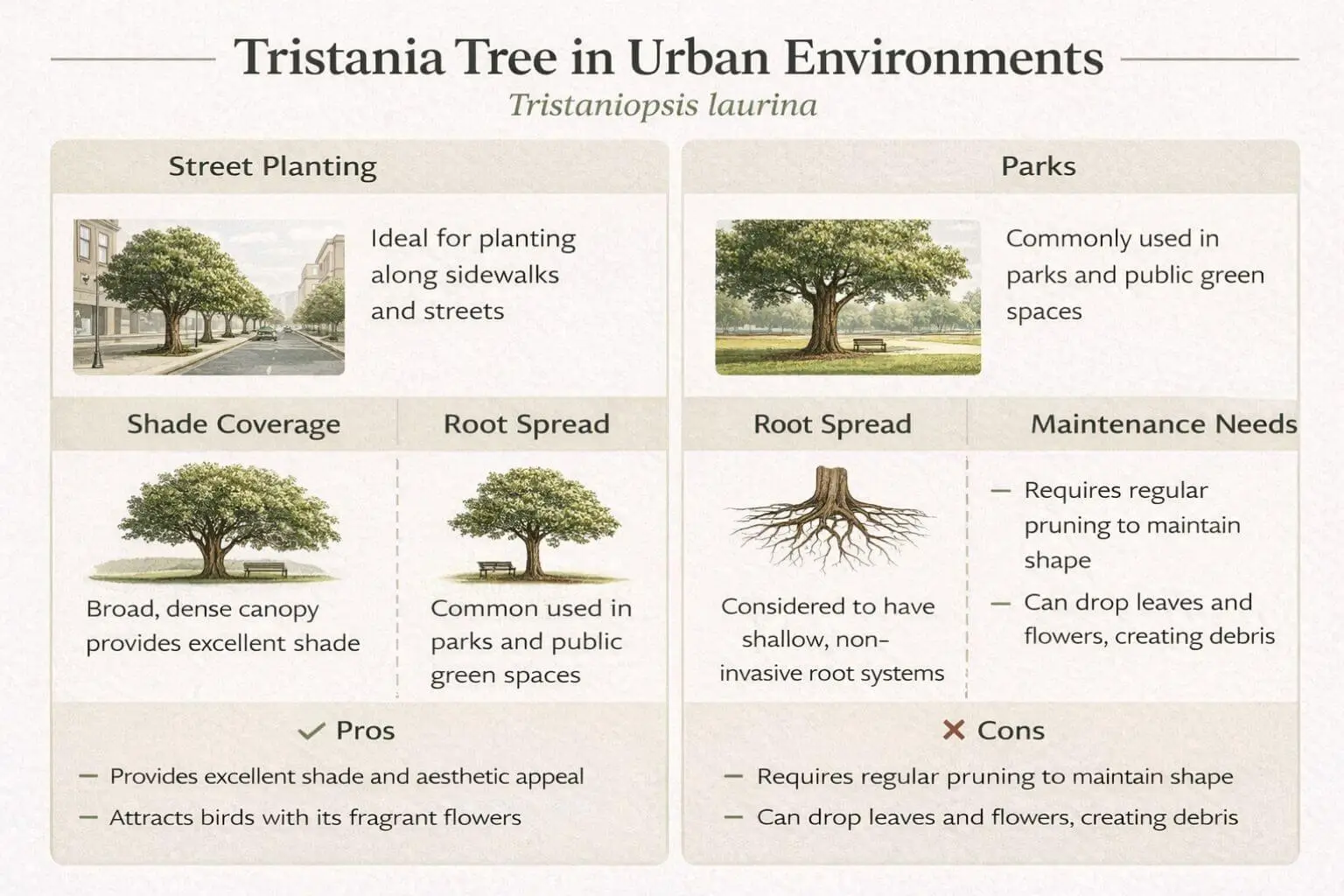
The tristania tree is widely used as a street tree and in parks due to its durability and shade capacity. Its structural strength and adaptability make it suitable for long-term public planting where space allows.
Comparison With Other Australian Box Trees
Compared with other native box trees, the tristania tree generally offers a denser canopy and greater height potential. This comparison helps differentiate it from similar species used in Australian landscapes. When considering similar native trees for landscaping, the Australian Brush Cherry offers unique benefits, which you can explore in Australian Brush Cherry.
How to Identify a Tristania Tree
Identification relies on observing leaf texture, bark appearance, evergreen habit, and overall growth form. A broad canopy, glossy leaves, and fibrous bark are key indicators.
Conclusion: Understanding the Tristania Tree
Understanding the tristania tree requires recognizing both its historical classification and modern botanical context. Clear knowledge of its characteristics, uses, and limitations supports informed decisions in landscaping and environmental planning. Continued exploration of native Australian trees enhances ecological awareness and practical application.
FAQ — Tristania Tree
- What is the tristania tree commonly known as today?
The tristania tree is commonly known as the Brisbane box or brush box, with most species now classified under the genus Lophostemon. - How tall does a tristania tree grow?
A mature tristania tree can reach significant heights, often ranging from medium to very tall depending on species and growing conditions. - Does the tristania tree have invasive roots?
The root system is generally strong and spreading, which can be problematic in confined urban spaces if not properly planned. - Is the tristania tree fast growing?
Growth rate is moderate, with steady development over time rather than rapid short-term growth. - Why is the tristania tree popular in Australian cities?
Its durability, shade canopy, and tolerance to urban conditions make it a reliable long-term street and park tree. - Are all tristania trees the same species?
No, the term “tristania tree” refers to multiple closely related species that share similar traits but differ botanically.