Introduction
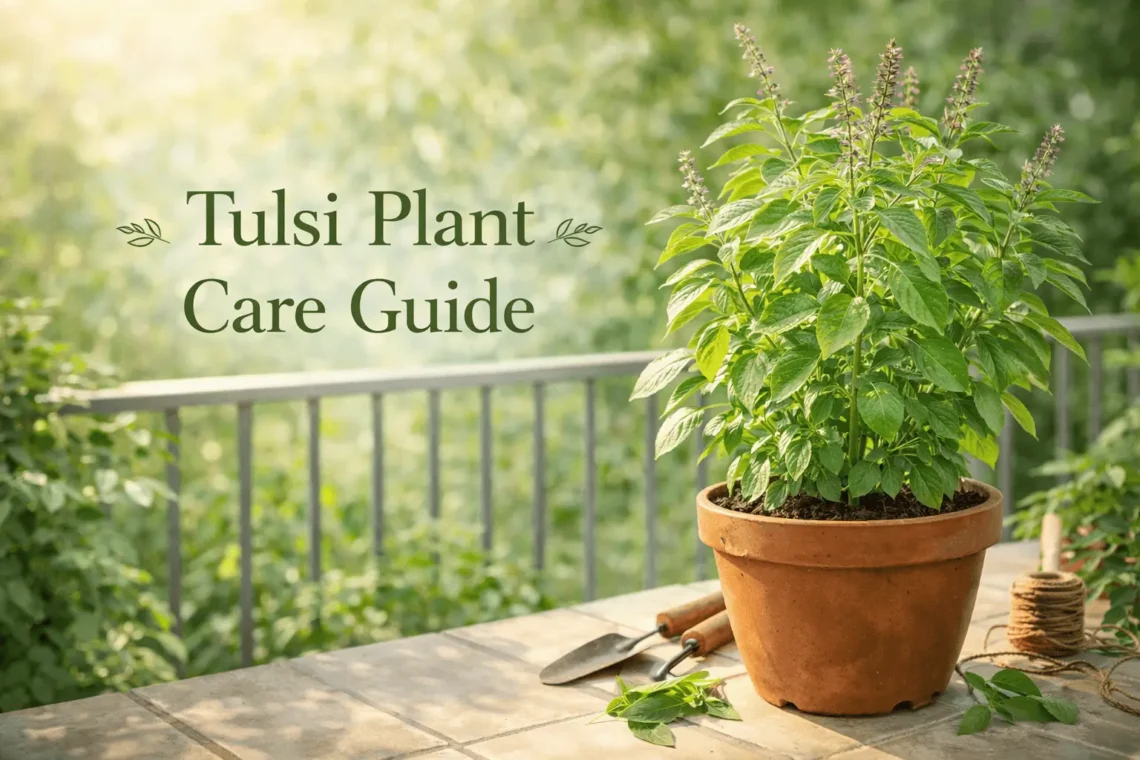
Tulsi plant care involves understanding the basic needs of holy basil (Ocimum tenuiflorum), a widely grown medicinal and sacred herb. With the right watering routine, sunlight exposure, pruning, and soil conditions, tulsi plants can grow vigorously both indoors and outdoors.
The tulsi plant, often called holy basil, is commonly cultivated in homes and gardens for its herbal benefits, aromatic leaves, and cultural significance. Proper holy basil plant care includes maintaining balanced moisture, providing sufficient sunlight, trimming regularly, and enriching the soil with organic nutrients. Whether practicing indoor tulsi plant care or maintaining tulsi plant care at home in a garden, understanding these fundamentals helps ensure healthy growth and abundant leaves.
Understanding the Tulsi Plant (Holy Basil)
Tulsi, also known as holy basil, is an aromatic herb belonging to the basil family (Lamiaceae) and scientifically classified as Ocimum tenuiflorum and is valued for its medicinal, culinary, and spiritual importance. Native to the Indian subcontinent and Southeast Asia, the holy basil plant grows well in warm climates and is widely cultivated as a household herb.
Common Types of Tulsi Plants
Krishna Tulsi
Krishna tulsi has darker purple-green leaves and a stronger aroma. Proper krishna tulsi plant care involves warm temperatures, moderate watering, and well-drained soil.
Rama Tulsi
Rama tulsi features bright green leaves and a milder fragrance. It is commonly grown in home gardens and adapts well to both pots and outdoor planting.
Shyam Tulsi
Shyam tulsi resembles Krishna tulsi but may have deeper purple stems and leaves. Similar shyam tulsi plant care requirements include strong sunlight and regular pruning.
Indian Tulsi varieties
Several indian tulsi plant care practices apply across varieties, including consistent sunlight, balanced watering, and organic soil nutrients to support leaf growth.
Ideal Growing Conditions for Tulsi
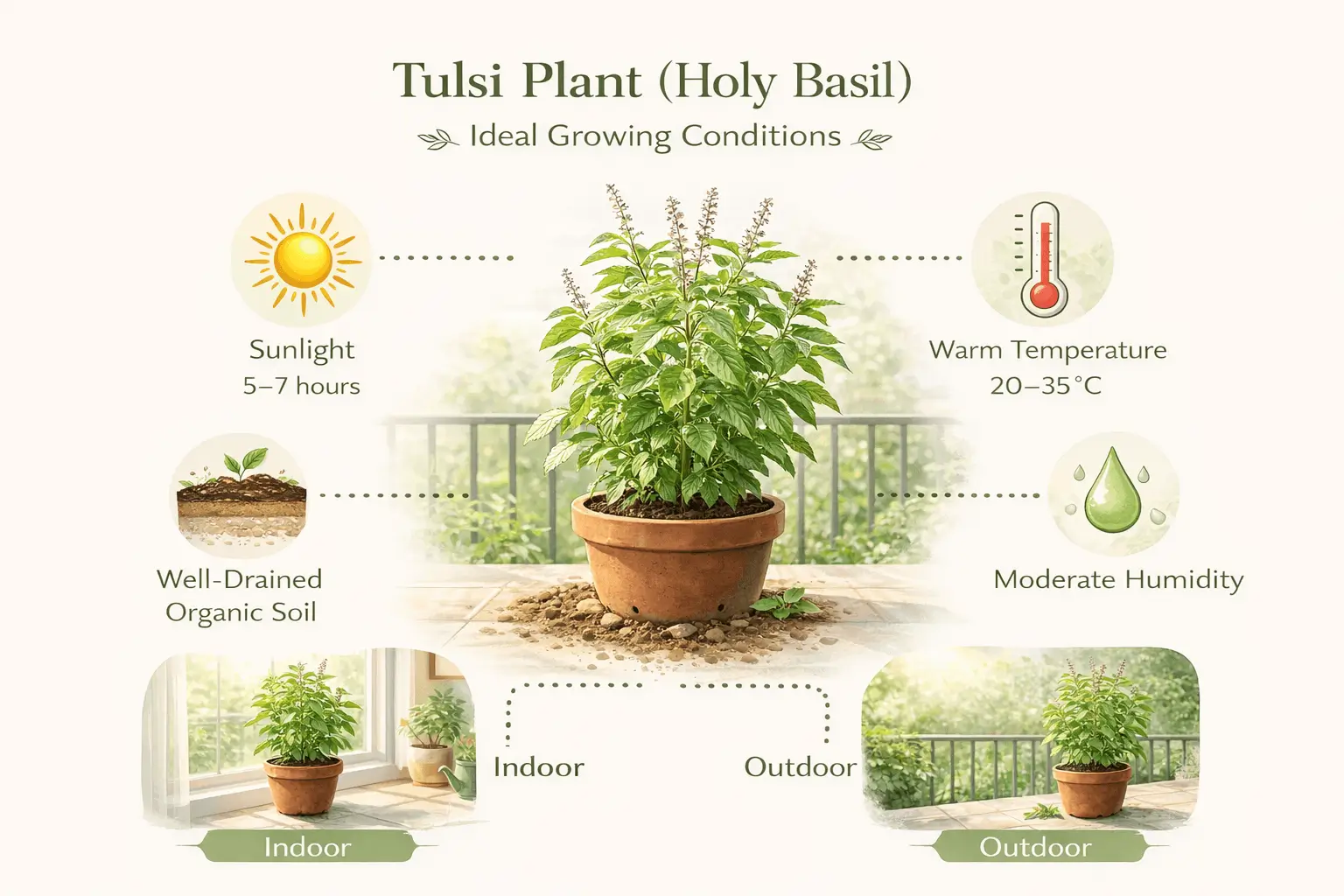
Understanding holy basil growing conditions helps gardeners provide an environment that supports healthy plant development.
-
Sunlight Requirements
Tulsi grows best in full sun to partial sun, receiving around 5–7 hours of direct sunlight daily. Adequate light supports strong leaf production and prevents leggy growth.
-
Temperature and Climate Needs
Tulsi thrives in warm climates with moderate humidity. Ideal temperatures range between 20–35°C (68–95°F). Cold conditions or frost can damage the plant.
-
Soil Conditions
Tulsi prefers well-drained soil rich in organic matter. A loose soil structure prevents waterlogging while allowing roots to access nutrients efficiently.
Both tulsi plant care outdoor and indoor cultivation rely on maintaining proper drainage, warmth, and consistent light.
Tulsi Plant Size
Tulsi plants typically reach 1–3 feet (30–90 cm) in height when grown under favorable conditions.
Indoor tulsi plants may remain slightly smaller due to limited sunlight and container space. Outdoor garden plants often grow taller and develop a bushy growth habit.
Several factors influence plant size, including:
- Amount of sunlight
- Frequency of pruning
- Soil nutrients and organic matter
- Container size for potted plants
Regular trimming encourages lateral branching, helping the plant grow fuller rather than tall and sparse.
Growth Rate and Growth Stages of Tulsi
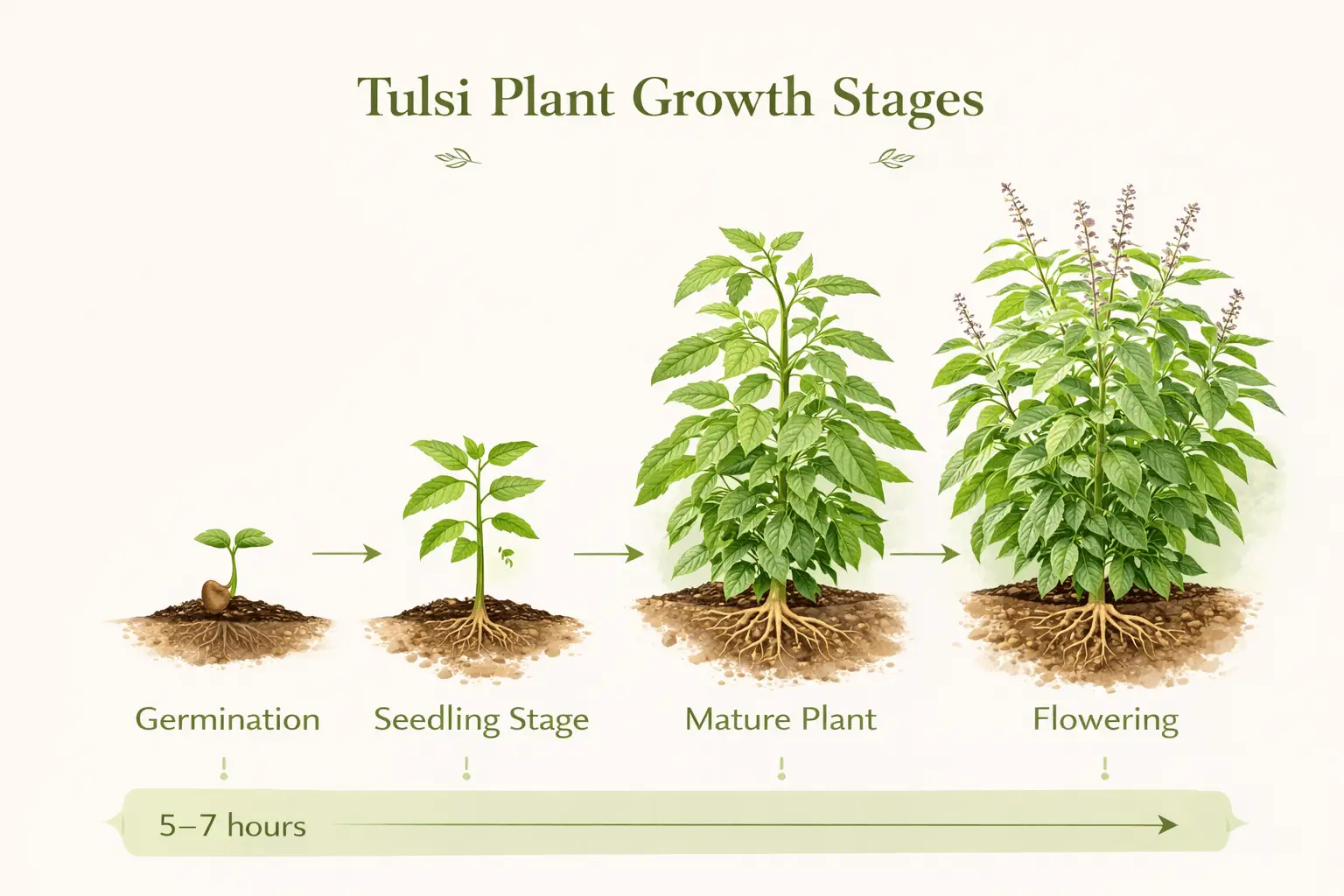
Tulsi plants grow relatively quickly when environmental conditions are favorable.
-
Germination Stage
Seeds usually germinate within 7–14 days in warm soil with consistent moisture.
-
Early Seedling Stage
Young seedlings develop their first true leaves and require gentle watering and indirect sunlight.
-
Mature Leaf Production Stage
During this stage the plant produces abundant leaves, which are commonly harvested for herbal use.
-
Flowering Stage
As the plant matures, it produces small purple or white flowers. Many gardeners prune flower buds to maintain leaf production.
These stages represent the typical tulsi plant growth stages from seed to mature herb.
How to Grow Tulsi Plant at Home
Tulsi can be grown easily from seeds or young nursery plants.
-
Growing Tulsi from Seeds
To grow tulsi from seeds, place seeds in moist, well-drained soil and keep them in a warm location. Lightly cover the seeds and maintain gentle watering until germination occurs.
Many gardeners successfully practice growing tulsi from seeds in small trays before transplanting them.
-
Planting Tulsi in Pots
When growing holy basil in pots, use containers with drainage holes and a potting mix containing compost or organic matter. A pot around 8–12 inches deep usually provides enough root space.
-
Growing Tulsi Indoors
For growing holy basil indoors, place the plant near a sunny window. Indoor plants benefit from consistent watering, adequate airflow, and occasional pruning to maintain shape.
Learning how to grow tulsi plant indoor allows gardeners to keep the herb year-round. If you enjoy growing herbs indoors, you may also find this guide on Panda Plants helpful for understanding how other indoor plants adapt to indoor environments.
Tulsi Plant Care Guide
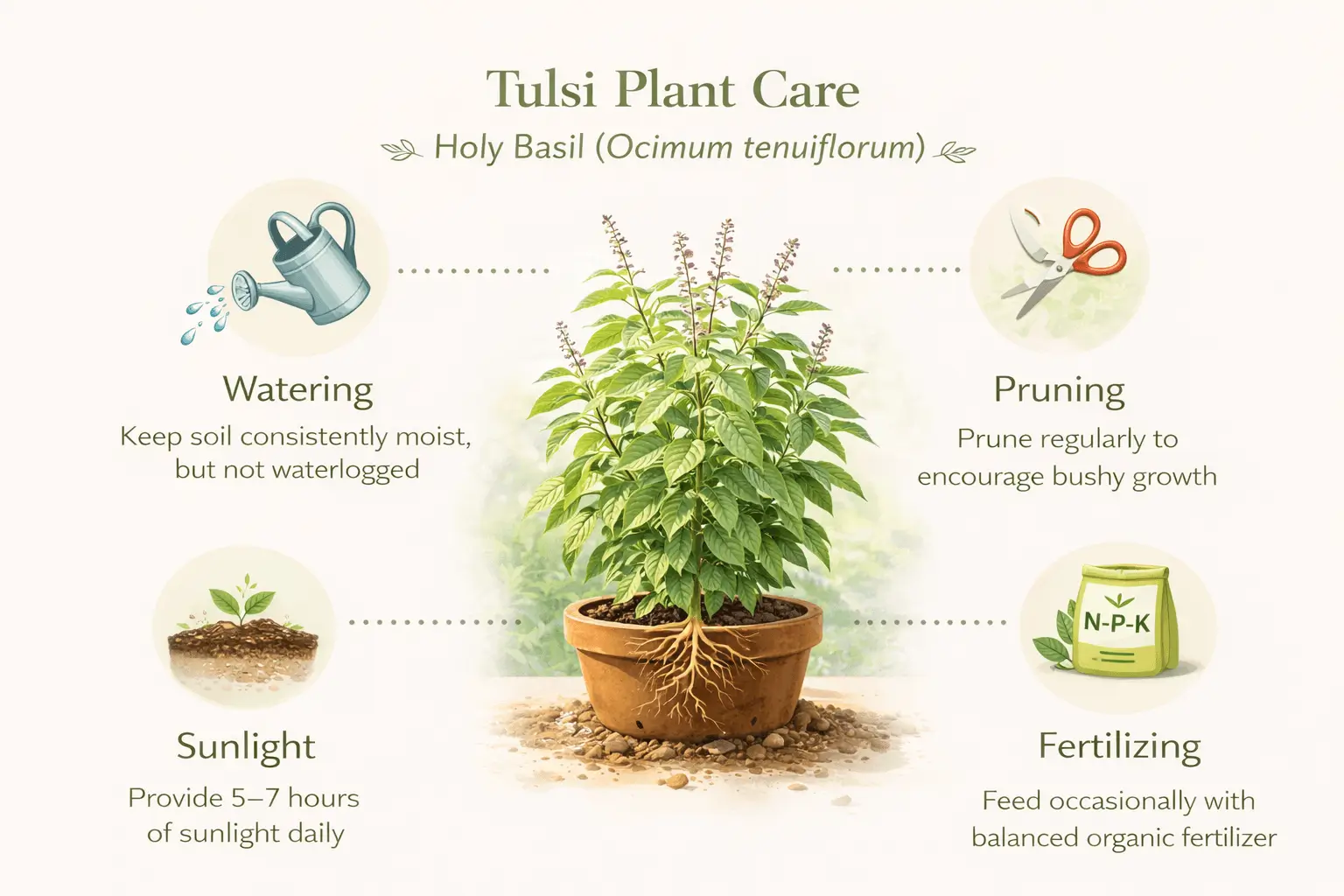
Proper daily care keeps tulsi plants healthy and productive.
-
Water Requirements
Tulsi prefers slightly moist soil, but excessive water can cause root problems. Understanding tulsi plant water requirements helps prevent overwatering.
-
Light Requirements
Daily sunlight is essential for healthy leaves and strong stems. Plants grown in shade may become weak and sparse.
-
Soil and Fertilization
Organic fertilizers improve soil nutrients and encourage steady growth. Gardeners often use compost or manure to enrich soil.
Knowing what fertilizer to use for tulsi plant helps maintain healthy foliage.
-
Pruning and Maintenance
Regular trimming prevents flowering and encourages branching. Proper how to take care of tulsi plant practices include removing dry leaves and shaping the plant periodically.
Homemade Fertilizers for Tulsi Plants
Natural fertilizers help maintain soil fertility and support steady growth.
Organic Fertilizers for Tulsi
Common organic fertilizers include:
- Compost
- Vermicompost
- Organic manure
These materials provide slow-release nutrients that strengthen roots and foliage.
Homemade Fertilizer Options
Several natural solutions support plant health:
- Banana peel fertilizer provides potassium.
- Epsom salt for tulsi plant can supply magnesium when used sparingly.
- Iron-rich organic compost improves leaf color and vitality.
Using homemade fertilizer for tulsi plant supports sustainable gardening practices.
How to Prune Tulsi Plant for Bushy Growth
Pruning encourages dense growth and prevents the plant from becoming tall and sparse.
To prune tulsi plant properly:
- Identify the top growth tips.
- Cut just above a pair of leaves.
- Remove flower buds regularly.
- Repeat trimming every few weeks.
Consistent pruning tulsi plant methods stimulate side branches, which helps make tulsi plant bushy and productive.
Seasonal Tulsi Plant Care
Tulsi care requirements may vary slightly throughout the year.
Tulsi Plant Care in Winter
Tulsi prefers warm temperatures and may struggle in cold weather. Proper tulsi plant care in winter involves moving plants indoors or protecting them from frost.
These tulsi plant care tips in winter help maintain healthy leaves during colder months.
Tulsi Plant Care in Summer
During hot weather, plants may require slightly more frequent watering. Good airflow and partial afternoon shade help prevent heat stress.
Following tulsi plant care in summer practices keeps the plant vigorous during high temperatures.
Common Tulsi Plant Problems and Solutions
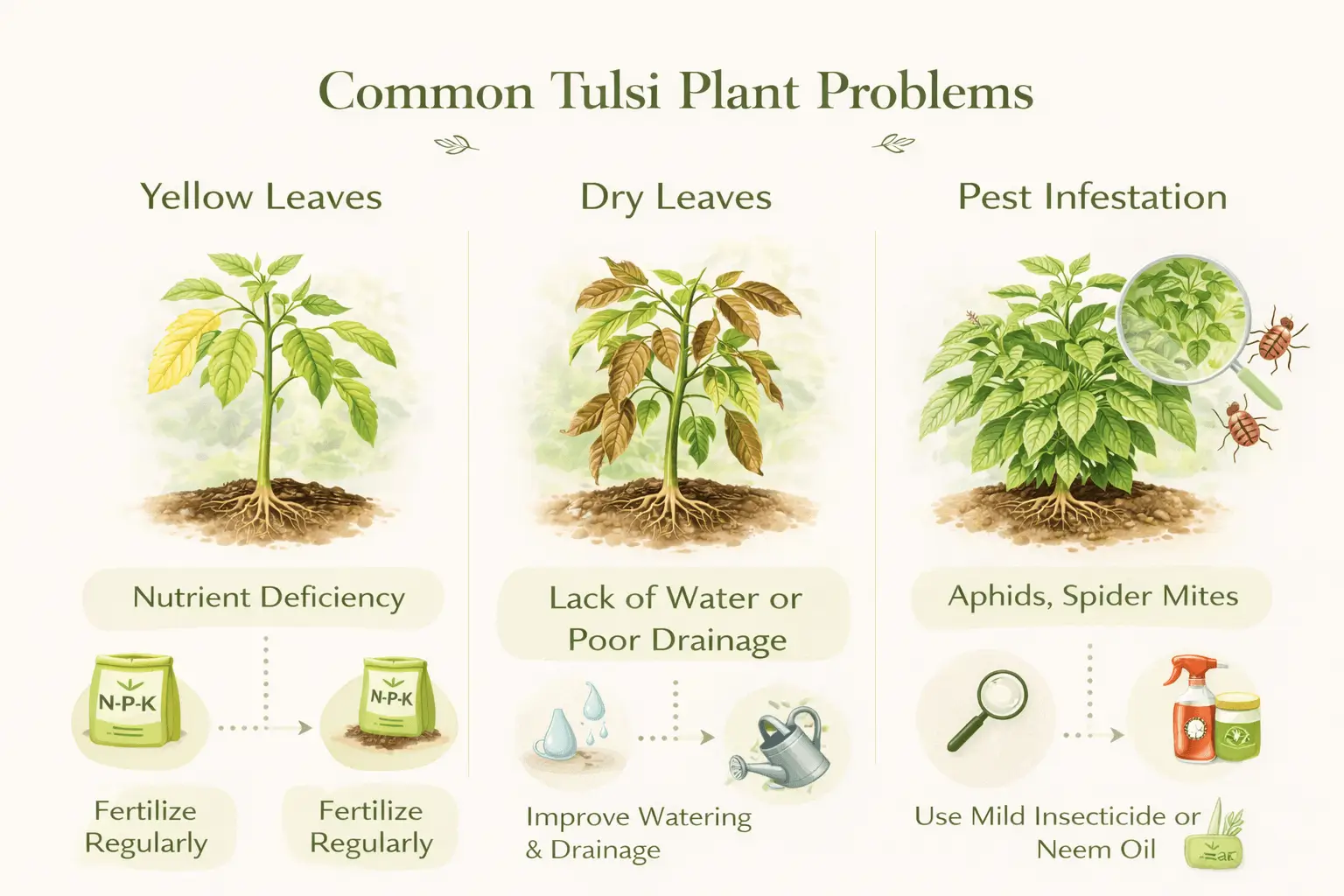
Gardeners may encounter several common issues while growing tulsi.
-
Leaves Turning Yellow or Dry
Yellow leaves are often caused by overwatering or poor drainage. Allowing soil to dry slightly between watering can prevent root stress.
-
Slow Plant Growth
Slow growth often occurs when plants receive insufficient sunlight or nutrients.
-
Pest and Disease Issues
Common pests include aphids and spider mites. Regular inspection and gentle washing of leaves can help control infestations. These steps improve dry tulsi plant care and help restore plant health. Common pests include aphids and spider mites. If aphids appear on your plant, this guide on Aphids on Plants explains effective methods to control them naturally.
Beginner Mistakes When Growing Tulsi
Many tulsi plant problems result from simple care mistakes.
Common beginner mistakes include:
- Overwatering the plant
- Providing insufficient sunlight
- Neglecting regular pruning
- Using compact or poorly draining soil
Correcting these issues improves air circulation, root health, and overall plant vitality.
Tulsi Plant Benefits and Uses
Tulsi is valued for its herbal, medicinal, and culinary uses.
Health and Herbal Benefits
Many people value tulsi plant benefits due to its traditional use in herbal remedies. Tulsi leaves are commonly used in natural health preparations.
Culinary and Tea Uses
Holy basil leaves are widely used in herbal beverages. Tulsi tea benefits include aromatic flavor and traditional wellness support.
The plant’s leaves can also be used in herbal infusions and natural home remedies.
Conclusion
Tulsi plant care becomes simple when gardeners understand the plant’s natural growing conditions. Providing sufficient sunlight, balanced watering, regular pruning, and nutrient-rich soil allows holy basil plants to grow strong and productive.
Whether grown indoors in containers or outdoors in garden beds, tulsi adapts well when basic care practices are followed. By learning how to grow tulsi from seeds, maintain healthy soil, prune regularly, and adjust seasonal care, gardeners can keep their tulsi plants lush and thriving throughout the year.
FAQs
How often should you water a tulsi plant?
Tulsi plants prefer slightly moist soil and should typically be watered when the top layer of soil becomes dry. Overwatering should be avoided because it can cause root rot and yellow leaves.
Can tulsi grow indoors successfully?
Yes, tulsi can grow indoors successfully when placed near a sunny window that receives several hours of direct sunlight. Adequate light, proper drainage, and occasional pruning help maintain healthy indoor growth.
How do you make a tulsi plant grow bushier?
Regular pruning of the top stems encourages lateral branching. Removing the growing tips stimulates side shoots, resulting in a fuller and bushier plant.
What is the best fertilizer for tulsi plants?
Organic compost, vermicompost, and natural fertilizers such as banana peel compost provide nutrients that support healthy leaf growth and root development.
Why are my tulsi plant leaves turning yellow?
Yellow leaves usually occur due to overwatering, poor drainage, or lack of sunlight. Adjusting watering frequency and improving soil drainage can help resolve the issue.
Can tulsi survive winter?
Tulsi prefers warm climates and may struggle in cold temperatures. Moving the plant indoors or protecting it from frost can help it survive winter conditions.