Introduction
Dragon fruit is a tropical cactus fruit recognized for its bright pink skin, mild sweetness, and unique appearance. Understanding when dragon fruit is in season in Australia helps consumers buy fresher fruit and allows gardeners to understand the plant’s natural fruiting cycle. Dragon fruit, also called pitaya, belongs to climbing cactus species in the genus Hylocereus (now often classified under Selenicereus). In Australia, the fruit is grown mainly in warm regions such as Queensland and northern New South Wales. Like most tropical fruits, dragon fruit follows a seasonal production cycle, where flowering occurs during warm months and fruit ripens several weeks later.
Dragon Fruit Season in Australia
When Is Dragon Fruit in Season in Australia?
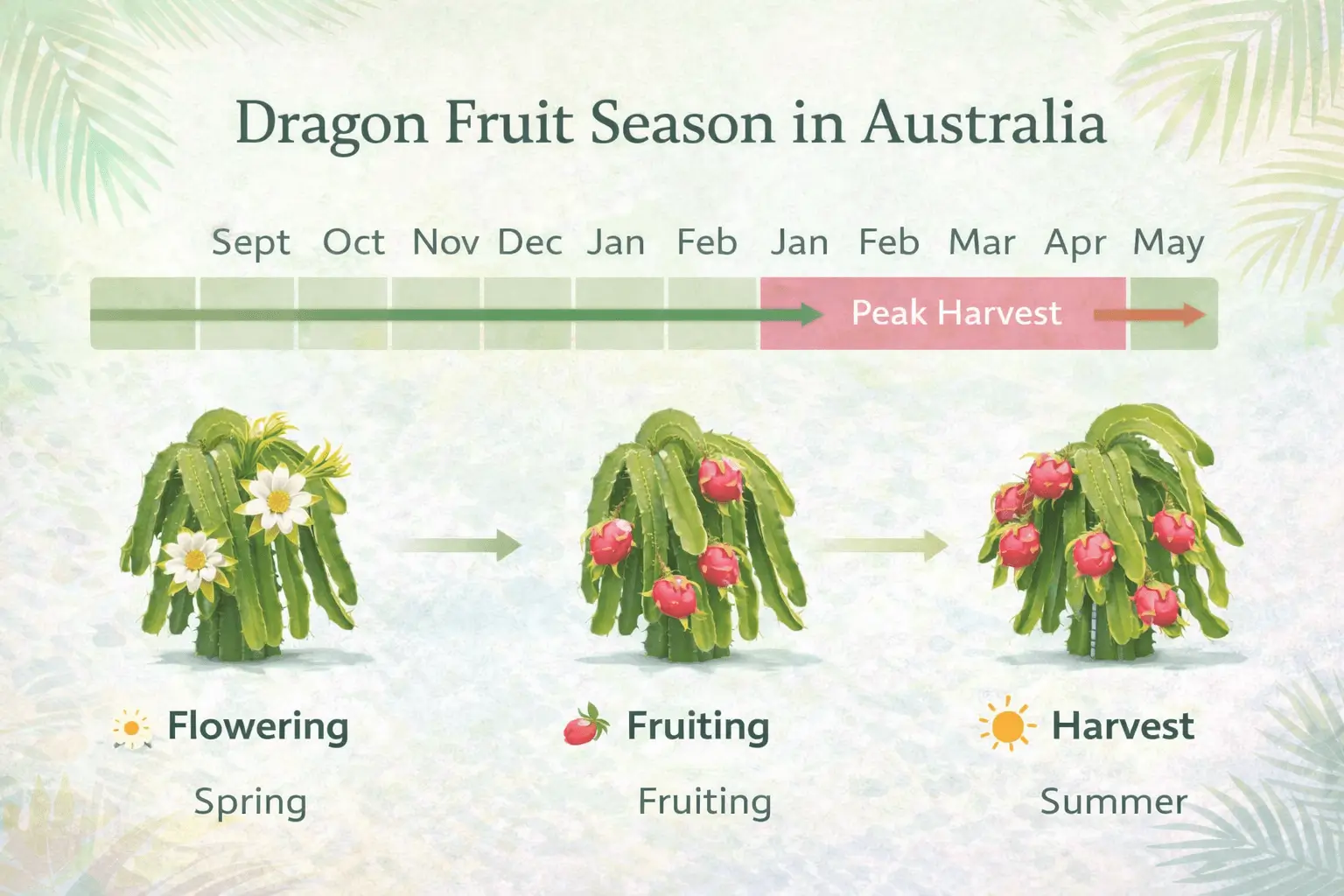
Dragon fruit in Australia generally reaches peak harvest between December and April, although the exact timing varies depending on regional climate and growing conditions. This period represents the main dragon fruit season, when warm temperatures encourage flowering and fruit development.
Dragon fruit is considered a summer fruit, thriving during long daylight hours and warm nights. Flowering typically begins in late spring or early summer, followed by several harvest waves throughout the warm season. Because plants can produce multiple flowering cycles, growers often harvest fruit several times between early summer and autumn.
In Australia, the season for dragon fruit begins as the cactus produces its first flowers in warm conditions. As temperatures increase, fruit begins to ripen in stages. This explains why dragon fruit in season may appear in markets for several months.
For gardeners and buyers asking what time of year dragon fruit is in season, the general answer is summer through early autumn, although local weather patterns may shift harvest timing slightly.
Dragon Fruit Season by Australian Region
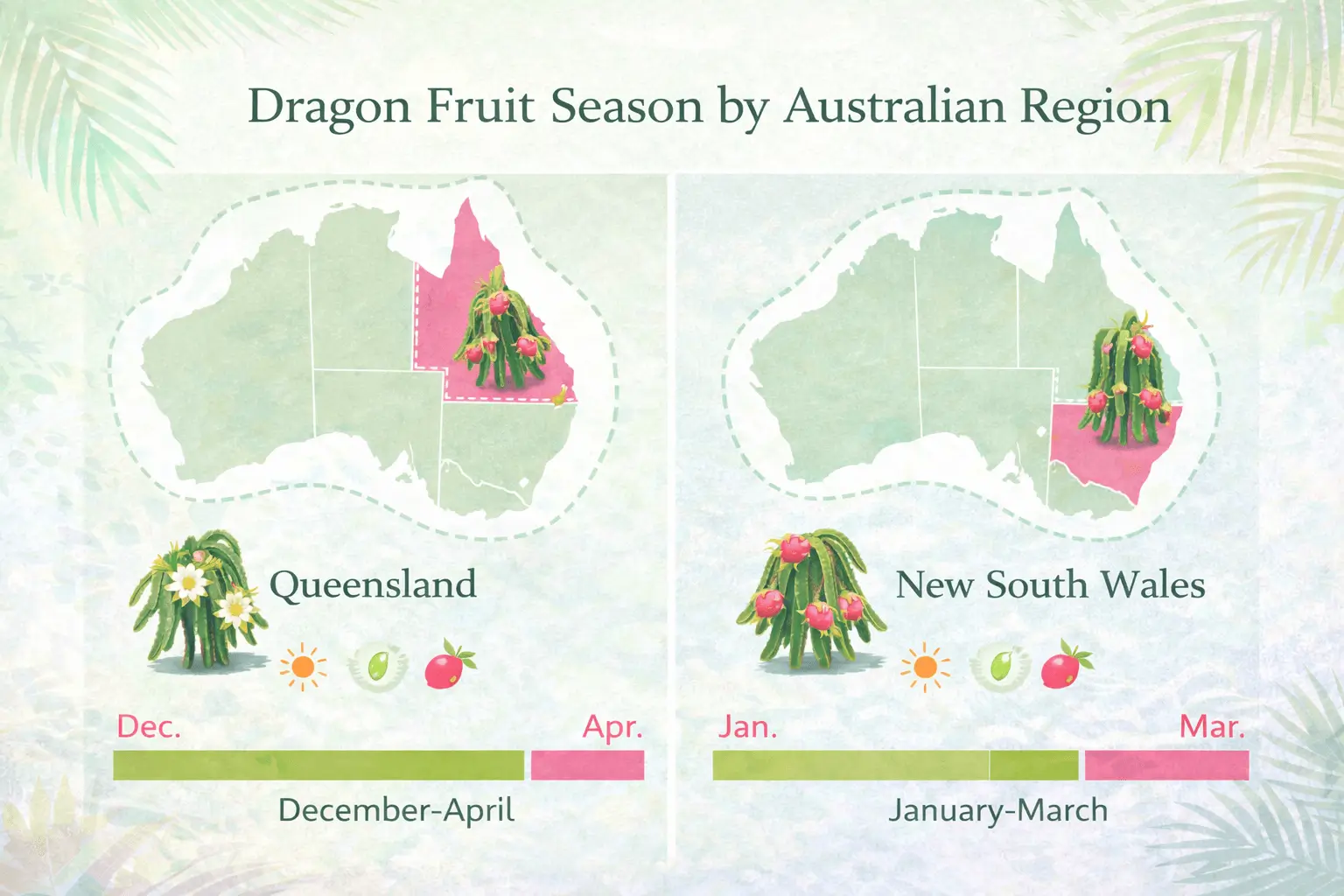
Different climates across Australia influence the timing and productivity of dragon fruit harvests.
Dragon Fruit Season in Queensland (QLD)
Queensland is the primary commercial production region for dragon fruit in Australia. The warm tropical and subtropical climate provides ideal conditions for cactus growth and fruit development.
The dragon fruit season QLD typically runs from December through April, although flowering can begin earlier in particularly warm years. Regions such as Far North Queensland and the Sunshine Coast provide the heat, humidity, and long growing seasons that dragon fruit plants prefer.
The warm nights and high sunlight levels in Queensland allow plants to produce multiple flowering cycles during the season. As a result, farmers often harvest dragon fruit in several waves over several months.
Dragon Fruit Season in New South Wales (NSW)
Dragon fruit can also grow successfully in warmer parts of New South Wales, particularly coastal and subtropical areas. However, production volumes are smaller than in Queensland due to cooler winters.
If gardeners ask when is dragon fruit in season in Australia NSW, the harvest window usually occurs between January and March. This slightly shorter season reflects the cooler climate compared with tropical regions.
Growers in northern NSW often rely on protected planting locations, such as sunny garden walls or sheltered farms, to maintain the warmth needed for flowering and fruit development.
Is Dragon Fruit a Seasonal Fruit?
Yes, dragon fruit is considered a seasonal fruit, meaning it develops and ripens during a specific period of the year.
The fruiting cycle of tropical cactus species depends heavily on environmental signals such as temperature, daylight length, and seasonal rainfall. When warm temperatures and long daylight hours occur, dragon fruit plants begin forming flower buds that later produce fruit.
Gardeners often ask does dragon fruit have a season or are dragon fruits seasonal. The answer is yes—dragon fruit is typically harvested during warm months when growing conditions are optimal.
There is clearly a season for dragon fruit, although the exact timing may vary depending on the climate where the plant grows. In tropical environments, the season can extend longer because flowering cycles occur more frequently.
Dragon Fruit Flowering and Growth Stages
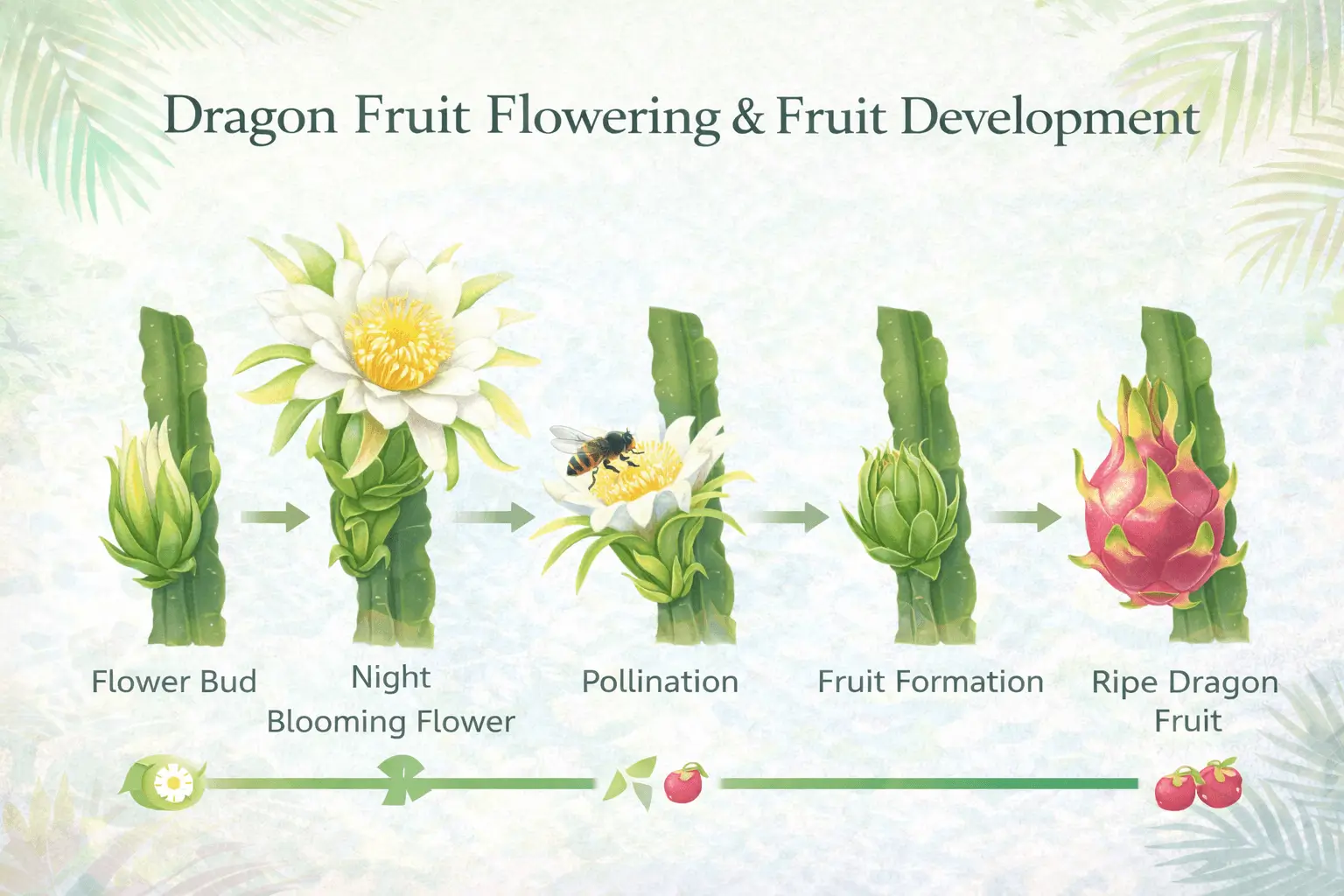
Dragon fruit production begins with one of the most dramatic flowering events among fruit plants.
Dragon Fruit Flower Stages
Dragon fruit plants produce large white flowers that open only at night. These striking blooms are sometimes called night-blooming cactus flowers.
The dragon fruit flower stages begin with small bud formation along the cactus stems. These buds grow larger over several weeks before opening into enormous fragrant flowers that can reach 25–30 cm in diameter.
During the dragon fruit flower bud stages, the buds gradually elongate before blooming for a single night. Pollination usually occurs during this short window, often with the help of moths, bats, or manual pollination.
In red-fleshed varieties, the red dragon fruit flower stages follow a similar pattern. Once pollination occurs, the flower closes and the fruit begins forming immediately.
Stages of Dragon Fruit Growth
After flowering, fruit development progresses quickly.
The stages of dragon fruit growth typically include:
- Bud formation
- Flowering
- Pollination
- Fruit formation
- Fruit expansion
- Ripening
After successful pollination, the fruit begins forming within days. The dragon fruit stages of growth from flower to harvest usually take 30 to 50 days.
During the early dragon fruit bud stages, small green fruits form at the flower base. These fruits gradually enlarge and develop their characteristic pink skin and leafy scales.
Plant Size
- Dragon fruit plants are climbing cactus vines that can grow quite large when mature.
- When supported by a trellis or post system, dragon fruit plants typically reach 3 to 6 meters in height. The stems branch outward as the plant matures, forming a dense canopy that produces flowers and fruit.
- Commercial growers usually train plants onto vertical posts with a circular support frame at the top. This structure allows stems to hang down, encouraging better flowering and easier fruit harvesting.
- Although dragon fruit is mainly grown outdoors in warm climates, it can occasionally be grown indoors in large containers in very bright environments.
- Environmental factors such as sunlight, pruning, soil quality, and irrigation can strongly influence the final plant size.
Growth Rate
Dragon fruit plants have a moderate to fast growth rate when grown in warm conditions.
Young plants often grow rapidly during spring and summer, especially when they receive strong sunlight and well-draining soil. Growth slows significantly during cooler seasons.
Most dragon fruit plants begin producing fruit one to two years after planting, although this depends on growing conditions and plant health.
Temperature, sunlight exposure, and proper drainage all influence how quickly the cactus grows and begins flowering.
Care Guide for Dragon Fruit Plants
Proper plant care plays a major role in successful flowering and fruit production.
-
Light Requirements
Dragon fruit plants grow best in full sun or partial sun. They generally require at least six hours of direct sunlight daily.
In very hot climates, partial afternoon shade may help prevent sunburn on younger plants.
-
Watering Needs
Although dragon fruit is a cactus, it requires moderate watering compared with desert cacti.
Plants should be watered regularly during the growing season, but soil must drain well. Overwatering can lead to root rot and fungal disease.
-
Soil Preferences
Dragon fruit plants prefer well-draining soil, such as sandy soil or cactus potting mix.
Good drainage is essential because cactus roots are sensitive to waterlogged conditions.
-
Climate Tolerance
Dragon fruit grows best in warm climates with temperatures between 18°C and 32°C.
The plants are sensitive to frost and prolonged cold temperatures. In cooler regions, protection from winter frost is often necessary. Different cultivars may also have slightly different care requirements, such as the Dark Star Dragon Fruit, which growers often choose for its vigorous growth and sweet fruit.
Red Dragon Fruit Season and Varieties
Some dragon fruit varieties produce deep red or magenta flesh, while others produce white flesh.
Although both types typically follow similar seasonal patterns, the red dragon fruit season may occasionally differ slightly depending on the cultivar.
Popular dragon fruit varieties grown in Australia include both red-fleshed and white-fleshed pitaya. These varieties generally ripen during the same summer harvest window.
Common Problems That Affect Dragon Fruit Production
Several factors can affect dragon fruit yield and harvest success.
Why Dragon Fruit Plants May Not Produce Fruit
A dragon fruit plant may fail to produce fruit for several reasons.
Common causes include insufficient pollination, lack of sunlight, immature plants, and cold temperatures. Young plants often require at least one growing season before they begin flowering.
Poor soil drainage or nutrient deficiencies can also reduce fruit production.
How to Improve Fruit Production
Gardeners can improve dragon fruit harvests with a few practical adjustments.
Providing strong trellis support allows the plant to grow properly and produce more flowers. Hand pollination during flowering can also increase fruit set.
Balanced fertilization and consistent sunlight exposure are also important for strong flowering cycles.
Health Benefits and Nutrition of Dragon Fruit
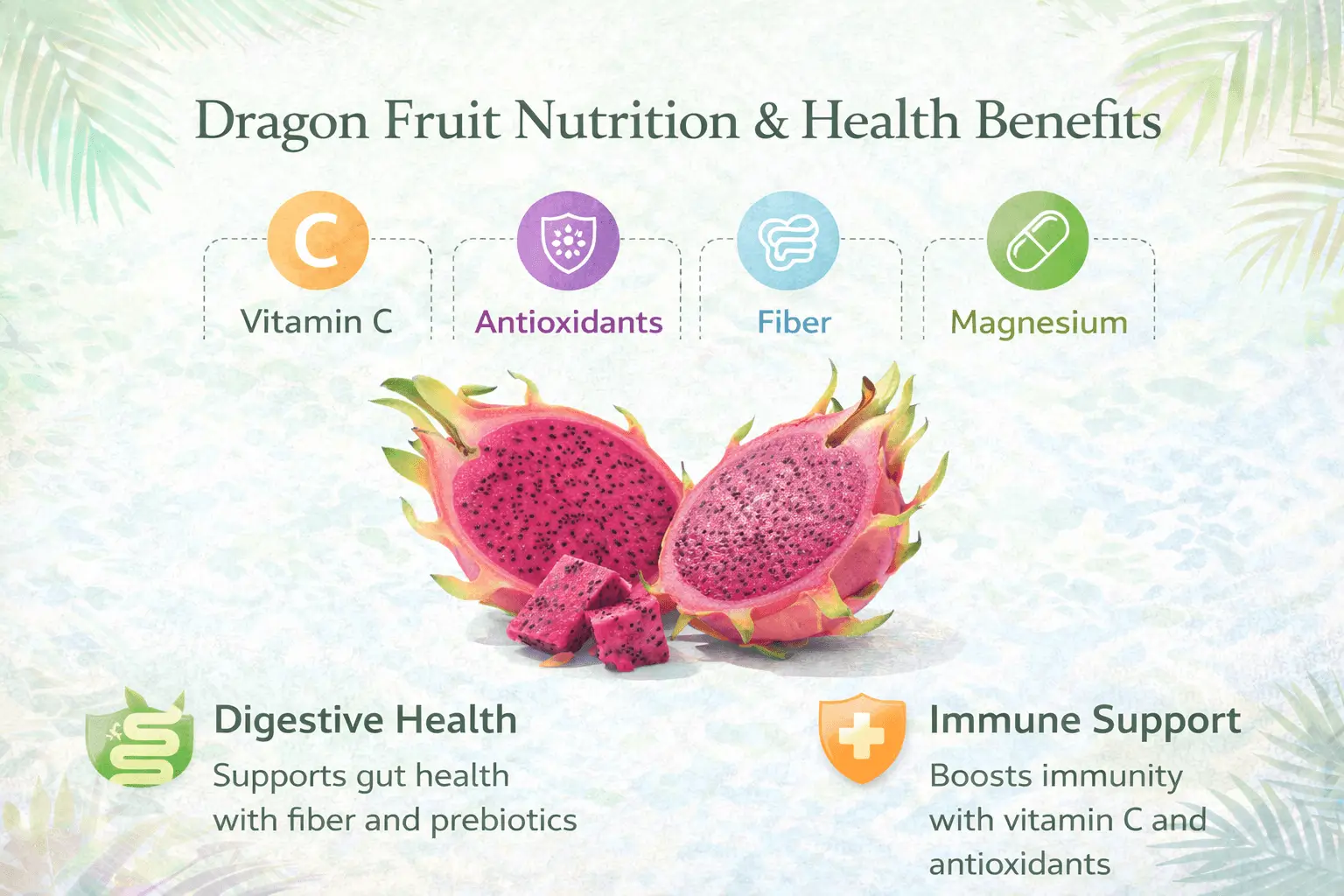
- Dragon fruit is valued not only for its appearance but also for its nutritional value.
- Many people ask is dragon fruit good for you, and the answer is yes. Dragon fruit contains several nutrients that support overall health.
- The dragon fruit nutrition facts include high levels of vitamin C, antioxidants, fiber, and beneficial plant compounds. These nutrients contribute to immune health and digestive function.
- The benefits of dragon fruit include improved digestion due to its fiber content and antioxidant support that may help reduce oxidative stress.
- The fruit also contains small amounts of iron, magnesium, and other minerals. Because of its nutrient profile, many people consider pitaya benefits important for maintaining a balanced diet.
- Red-fleshed varieties may contain higher antioxidant levels, contributing to additional red dragon fruit benefits.
Some dragon fruit varieties have unique characteristics in size and flavor, such as the Orange Giant Dragon Fruit, which is known for its large fruit and strong tropical taste.
Beginner Mistakes When Growing Dragon Fruit
Many beginner gardeners experience challenges when growing dragon fruit plants.
One common mistake is overwatering, which can damage cactus roots and prevent healthy growth. Another issue is insufficient trellis support, which causes stems to grow poorly and reduces flowering.
Growing dragon fruit in climates that are too cold can also limit fruit production. In addition, lack of pollination can prevent fruit from forming even when plants flower.
Understanding these common mistakes can help growers maintain healthier plants and improve fruit harvests.
Conclusion
Understanding when dragon fruit is in season in Australia allows consumers to enjoy the fruit at peak freshness and helps gardeners better manage plant care and harvest expectations. In most Australian regions, dragon fruit ripens between December and April, with flowering beginning earlier in the warm season. By recognizing the plant’s seasonal cycle, growth stages, and care requirements, growers and buyers can better understand how this tropical cactus produces fruit and how to support healthy production.
FAQs
When is dragon fruit in season in Australia?
Dragon fruit is typically in season in Australia between December and April, depending on regional climate and local growing conditions.
Is dragon fruit a seasonal fruit?
Yes, dragon fruit is a seasonal fruit that develops during warm months when temperatures and sunlight encourage flowering and fruit formation.
When does dragon fruit flower in Australia?
Dragon fruit plants usually flower during late spring and summer, producing large night-blooming flowers that open for one night before fruit begins forming.
How long does dragon fruit take to grow after flowering?
After flowering and successful pollination, dragon fruit typically takes 30 to 50 days to mature and become ready for harvest.
Can dragon fruit grow in New South Wales?
Yes, dragon fruit can grow in warmer parts of New South Wales, especially coastal and subtropical regions where winters are mild and frost is limited.