Introduction
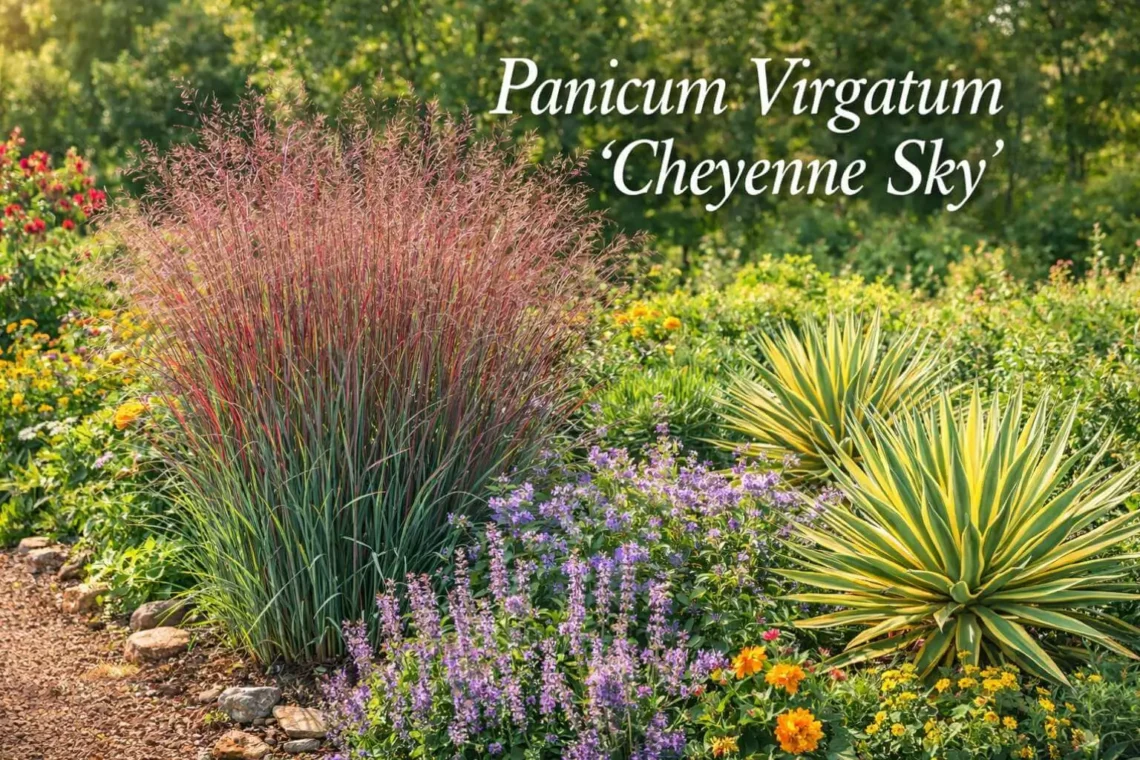
Panicum virgatum ‘Cheyenne Sky’ is a popular ornamental switchgrass known for its striking color-changing foliage and upright growth habit. Valued in landscaping, borders, and ornamental gardens, it provides year-round visual interest with steel-blue leaves in summer that transition to coppery tones in fall. This cultivar enhances both formal and naturalistic designs, making it a versatile choice for gardeners seeking aesthetic appeal and low-maintenance grasses.
Overview of Panicum Virgatum ‘Cheyenne Sky’
Panicum virgatum ‘Cheyenne Sky’ typically reaches heights of 4–5 feet with a spread of 2–3 feet, forming a graceful clumping habit. Its foliage features a steel-blue hue that brightens under full sun exposure. Native to North American prairies, it adapts well to various climates, tolerating drought, heat, and cold while thriving in USDA hardiness zones 4–9. This upright grass combines resilience with ornamental beauty, making it suitable for diverse landscape applications. Like other ornamental grasses such as Sweet Flag Grass, Cheyenne Sky provides year-round visual interest and versatile landscape appeal. Panicum virgatum, commonly known as switchgrass, is a native North American prairie grass with several ornamental cultivars like Cheyenne Sky (Wikipedia).
Growth and Care Requirements
-
Soil and Sunlight Needs
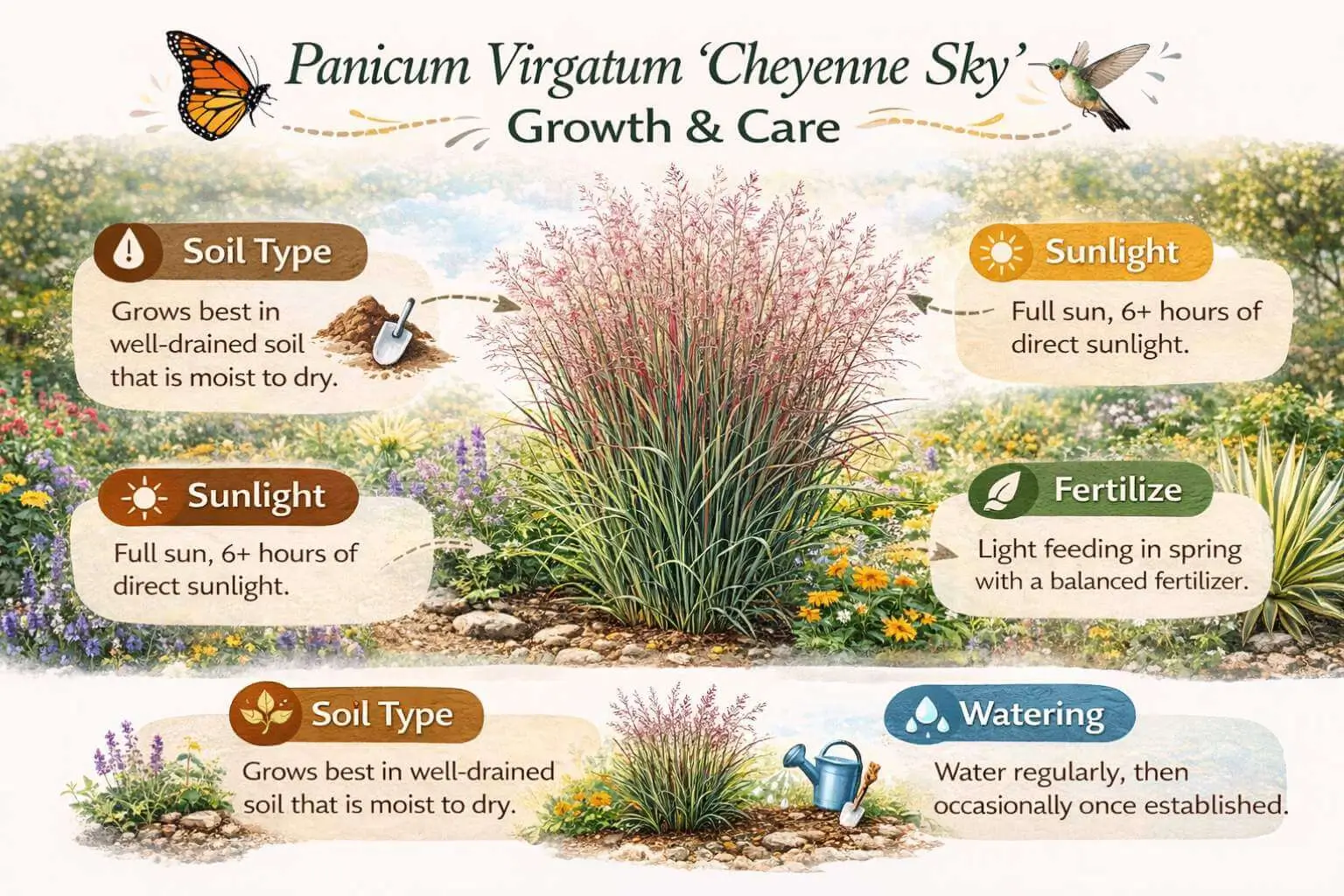
Cheyenne Sky switchgrass prefers well-drained soils, including sandy loam or moderately fertile garden soils. While it tolerates partial shade, full sun exposure ensures optimal growth and vibrant foliage color. Good drainage prevents root rot, and slightly acidic to neutral pH supports overall health. Ensuring adequate sunlight enhances upright form and seasonal color transitions.
-
Watering and Fertilization
During establishment, water Cheyenne Sky weekly to encourage deep root development. Mature plants are moderately drought-tolerant, requiring occasional supplemental irrigation during prolonged dry periods. Fertilize in early spring with balanced slow-release fertilizer to support vigorous foliage growth. Avoid over-fertilization, which can lead to excessive leaf growth at the expense of structural form.
-
Seasonal Maintenance
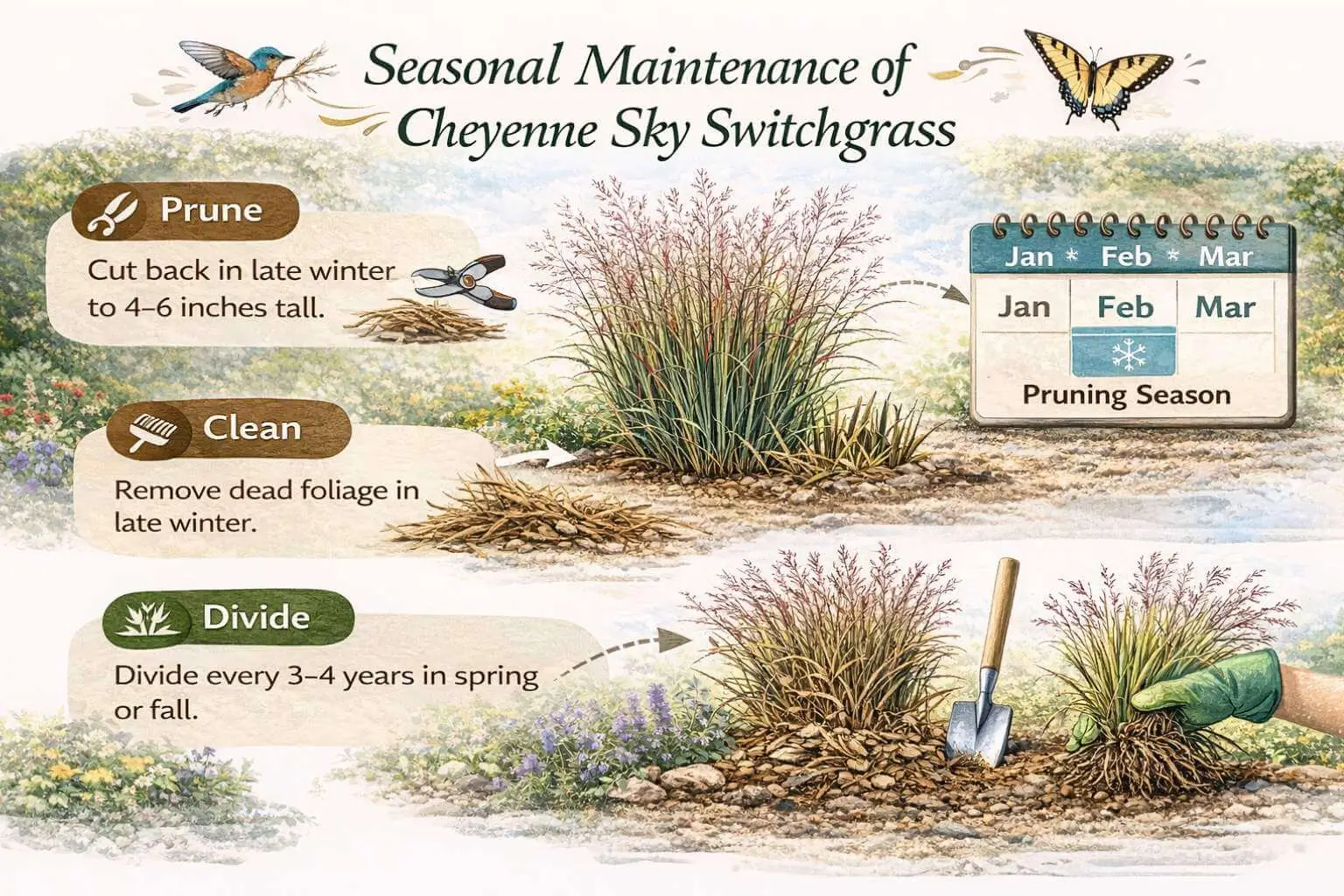
Cutting back Cheyenne Sky in late winter or early spring promotes fresh growth and maintains aesthetic form. Remove dead foliage to improve airflow and reduce disease risk. Dividing clumps every 3–4 years can rejuvenate older plants. Seasonal pruning also supports compact growth and enhances the steel-blue foliage display throughout summer and fall.
Common Problems and Troubleshooting
Overwatering and poorly drained soils can cause yellowing leaves or root rot in Cheyenne Sky switchgrass. Pests are generally minimal but may include grasshoppers or aphids. Fungal diseases can appear in overly moist conditions. Monitoring for stunted growth, discoloration, or wilting helps identify issues early. Corrective measures include improving drainage, adjusting watering schedules, and removing affected foliage promptly.
Invasiveness and Environmental Considerations
Cheyenne Sky is not considered invasive in home gardens. It forms tight clumps rather than aggressive spreads, unlike some switchgrass cultivars. Compared to varieties such as Shenandoah, Cheyenne Sky remains contained when planted responsibly. Gardeners should still provide adequate spacing to allow air circulation and avoid overcrowding, ensuring ecological balance and sustainable growth.
Varieties and Comparisons
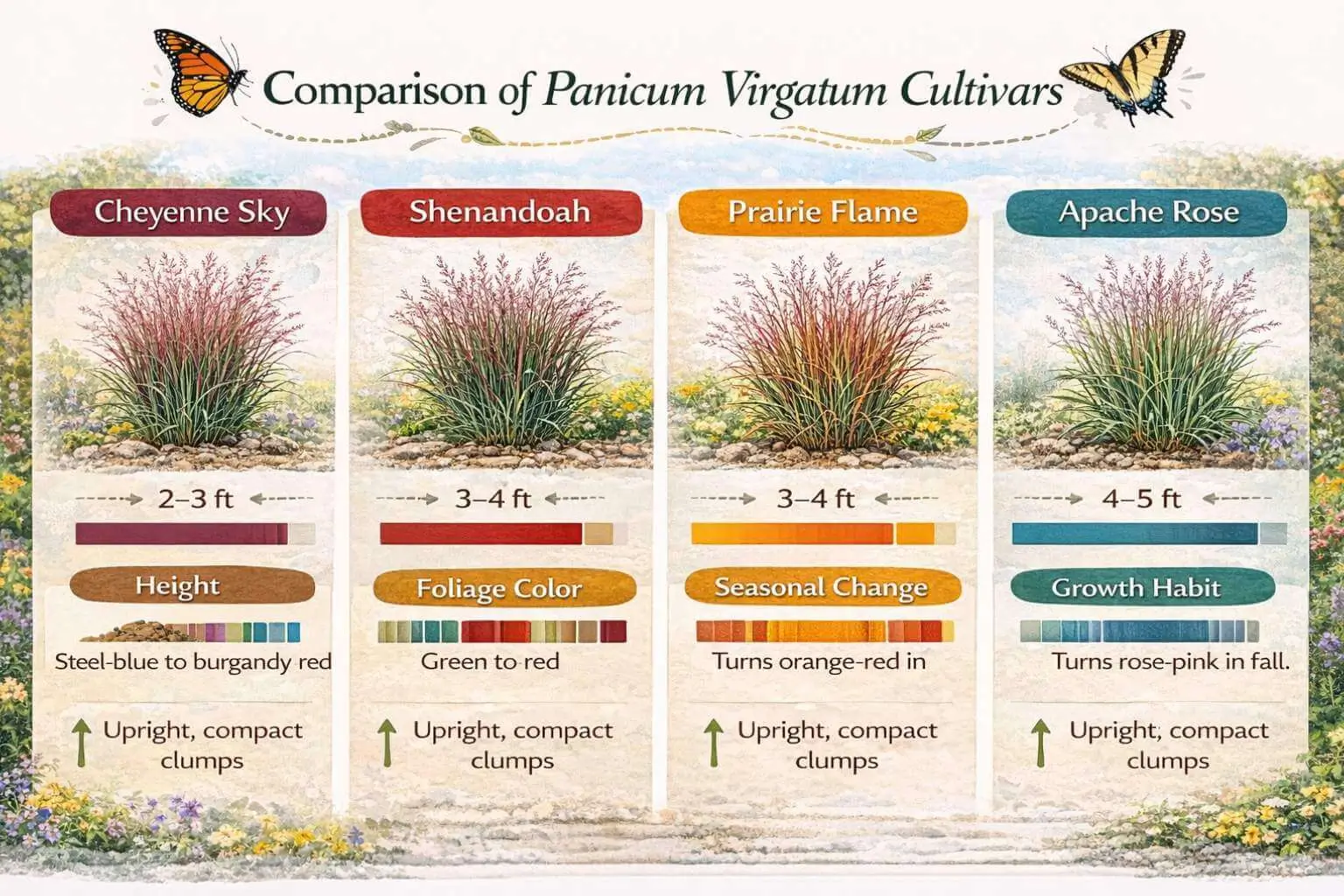
Compared to Cheyenne Sky, Shenandoah exhibits reddish-purple foliage in summer, while Prairie Flame features fiery red tones in fall. Apache Rose offers a taller profile with pinkish leaves. Cheyenne Sky is distinguished by its steel-blue summer color and moderate height, making it ideal for structured borders or mixed ornamental grass plantings. Selecting a cultivar depends on desired height, color, and seasonal visual impact.
Landscaping Uses and Design Ideas
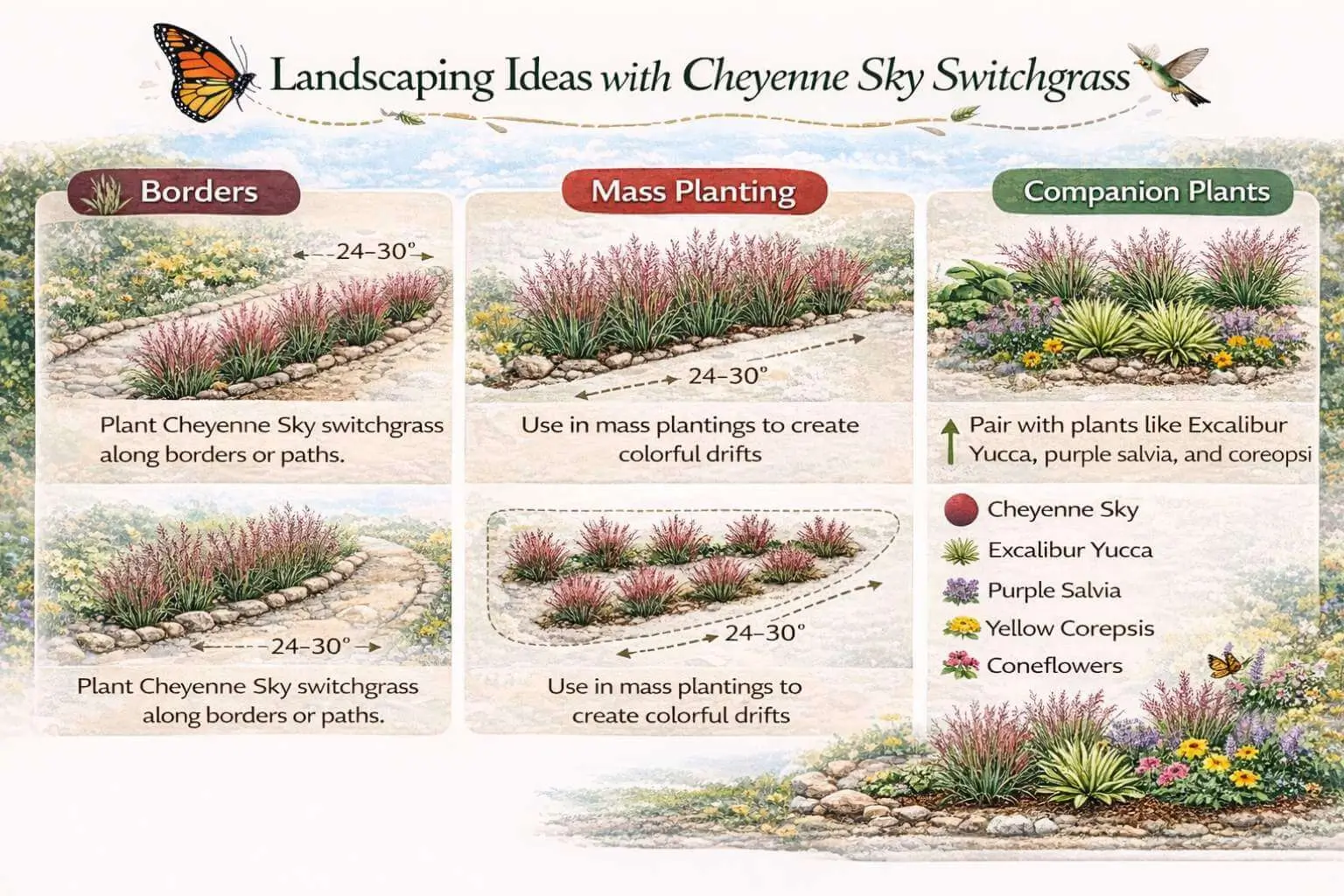
Cheyenne Sky performs well in mass plantings, garden borders, and naturalistic landscapes. Recommended spacing is 2–3 feet apart for airflow and optimal growth. It pairs effectively with other ornamental grasses and structural plants like Excalibur Yucca, enhancing texture and vertical interest. Its upright habit and seasonal foliage color transitions make it suitable for both formal designs and prairie-style plantings. For creating dynamic garden textures, Cheyenne Sky pairs well with other decorative grasses, including Korean Grass Lawn, offering layered foliage and seasonal color.
Availability and Propagation
Propagation is achieved via division in early spring or by nursery-purchased plants. Seeds are available but may require stratification for successful germination. For successful establishment, select a sunny site with well-drained soil and water consistently until roots are established. Cheyenne Sky switchgrass is widely available for sale at garden centers and online nurseries.
Conclusion
Panicum virgatum ‘Cheyenne Sky’ is a versatile ornamental grass offering year-round visual interest, manageable growth, and adaptability to diverse garden conditions. Key considerations include proper spacing, seasonal pruning, and attention to soil drainage. Its aesthetic appeal, coupled with sustainable growth habits, makes it an excellent choice for borders, mass plantings, and mixed ornamental gardens.
FAQs
- How tall does Panicum virgatum ‘Cheyenne Sky’ grow?
Cheyenne Sky typically reaches 4–5 feet tall with a 2–3 feet spread. Foliage may vary seasonally, displaying steel-blue leaves in summer that shift to coppery tones in fall. - Is Cheyenne Sky switchgrass invasive in home gardens?
No, it forms tight clumps rather than spreading aggressively. Proper spacing ensures containment, and it is less invasive compared to cultivars like Shenandoah. - When should I cut back Cheyenne Sky switchgrass?
Prune in late winter or early spring to remove dead foliage, improve airflow, and encourage fresh growth. Seasonal cutting maintains structure and enhances foliage color. - What soil and sunlight conditions are best for Cheyenne Sky switchgrass?
Well-drained soils such as sandy loam and full sun exposure support optimal growth. Partial shade is tolerated, but full sun enhances color and upright habit. - How does Cheyenne Sky compare to other switchgrass varieties like Shenandoah or Apache Rose?
Cheyenne Sky has steel-blue summer foliage and moderate height, Shenandoah shows reddish-purple leaves, and Apache Rose grows taller with pinkish tones. Choice depends on desired color, height, and seasonal interest.