Introduction
Orange giant dragon fruit is a distinctive variety of dragon fruit (pitaya) known for its large fruit size, bright exterior color, and tropical flavor profile. As interest in exotic fruits and specialty pitaya cultivars grows, gardeners and fruit enthusiasts are increasingly curious about how orange giant dragon fruit compares with other varieties such as yellow, red, or purple dragon fruit. Understanding its characteristics, pollination behavior, growth habits, and care requirements helps growers determine whether this variety is suitable for home gardens or tropical landscapes.
This guide explains what orange giant dragon fruit is, how it grows, how it differs from other dragon fruit types, and what gardeners should know before cultivating it.
What Is Orange Giant Dragon Fruit?
Orange giant dragon fruit refers to a large-fruiting dragon fruit cultivar belonging to the pitaya cactus group, primarily within the genera Hylocereus and Selenicereus. These climbing cactus species produce brightly colored fruits with edible pulp and seeds.
Dragon fruit plants belong to the cactus family Cactaceae. Unlike desert cacti, pitaya species are climbing tropical cacti that grow long segmented stems and attach themselves to supports using aerial roots.
Orange giant dragon fruit is typically considered a large dragon fruit variety because it produces fruits larger than many standard pitaya cultivars. It belongs to the broader group of pitaya fruits that includes yellow pitaya (Selenicereus megalanthus), purple flesh dragon fruit, and red dragon fruit varieties. Orange giant dragon fruit sits within a much larger family of pitaya cultivars grown worldwide, each with its own naming quirks and growing traits. For a deeper breakdown of how it fits among related pitaya types, browse the Dragon Fruit Pitaya Variety Database on Notion.
Dragon fruit plants are also known for their dramatic night-blooming flowers. These large white blossoms open after sunset and are pollinated by nocturnal animals such as moths and bats. Dragon fruit belongs to climbing cactus species in the genera Hylocereus and Selenicereus, commonly known as pitaya.
Physical Characteristics of Orange Giant Dragon Fruit
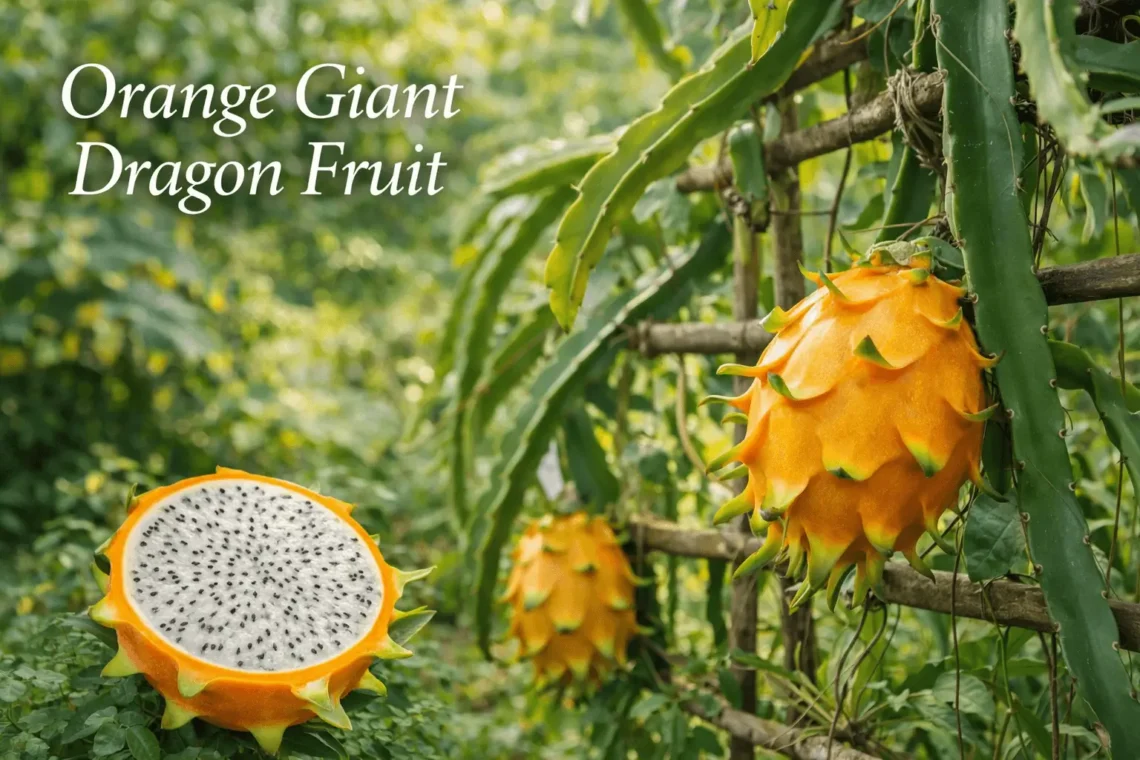
- Orange giant dragon fruit is recognizable by its vibrant exterior and larger fruit size compared with many standard pitaya varieties.
- The fruit typically features bright orange or orange-red skin with leaf-like scales that extend outward from the fruit surface. These scales are characteristic of dragon fruit and give the fruit its distinctive appearance.
- Fruit size can vary depending on the cultivar and growing conditions, but giant dragon fruit varieties are generally larger than standard dragon fruit types. Larger fruits may also contain more pulp relative to their skin.
- The interior flesh may vary in color depending on the cultivar, with some dragon fruit species producing white, red, or purple flesh. The pulp contains numerous tiny black seeds evenly distributed throughout the fruit.
- The texture of dragon fruit pulp is soft, juicy, and slightly gelatinous. This texture is similar to other varieties such as purple-fleshed dragon fruit, yellow dragon fruit, and red dragon fruit.
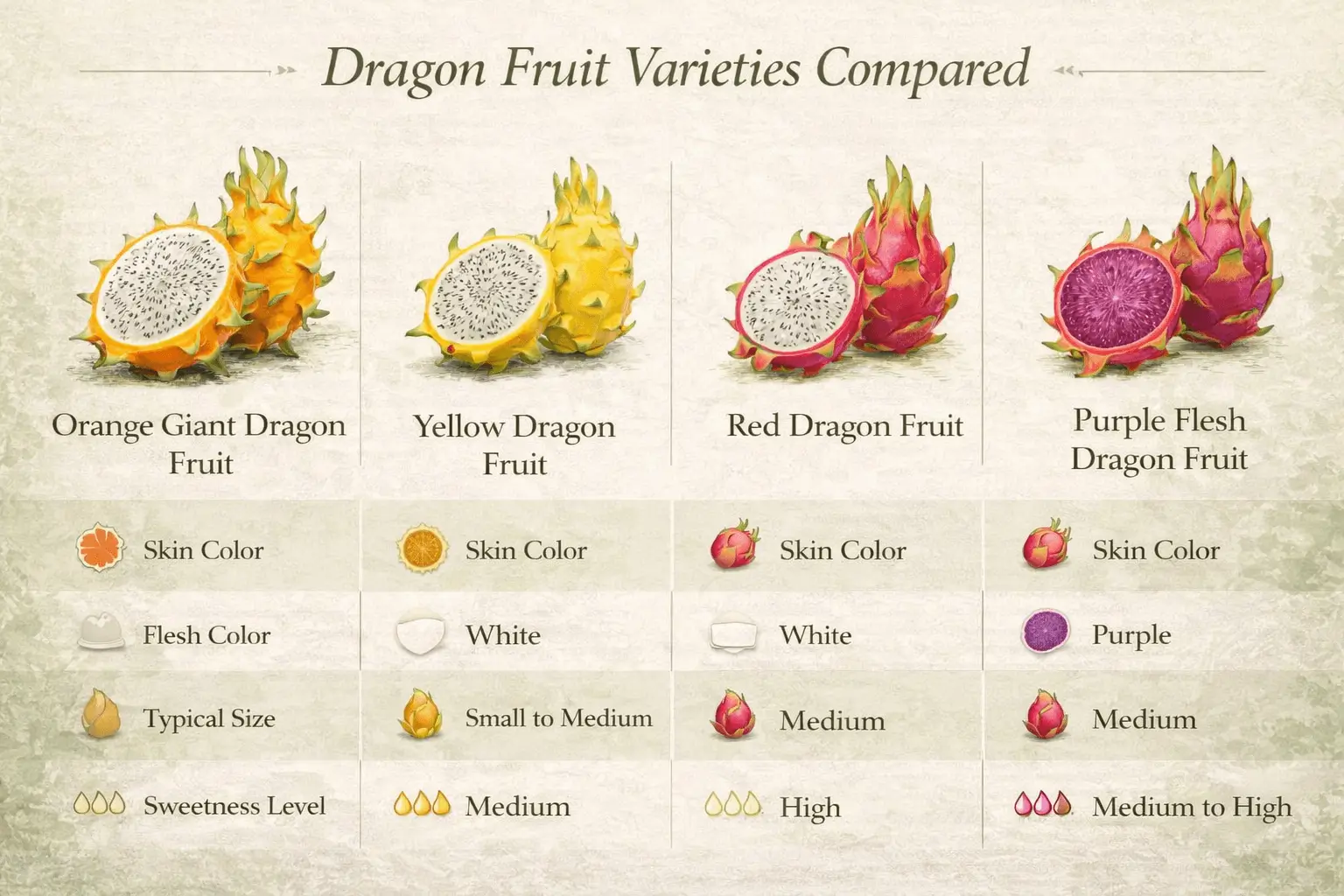
Comparing skin color, flesh tone, and fruit size across cultivars side-by-side makes it easier to see where Orange Giant stands out. This dragon fruit variety comparison spreadsheet lays out those traits for quick reference.
Orange Giant Dragon Fruit Taste and Flavor Profile
Orange giant dragon fruit usually has a mildly sweet and refreshing flavor. The taste is often described as subtly tropical with a clean, hydrating quality.
The pulp has a smooth, juicy texture with small edible seeds that provide a gentle crunch. Many people compare the texture of dragon fruit pulp to kiwi fruit.
Flavor intensity depends heavily on ripeness. Fully ripe fruits tend to have stronger sweetness and aroma, while underripe fruits can taste mild.
Compared with yellow pitaya fruit, which is often the sweetest dragon fruit type, orange giant dragon fruit typically has a milder sweetness. Purple flesh dragon fruit varieties may offer a richer berry-like flavor, while red dragon fruit varieties often fall between mild and moderately sweet.
Dragon fruit is commonly eaten fresh but can also be blended into smoothies, fruit bowls, juices, or tropical desserts.
Is Orange Giant Dragon Fruit Self-Pollinating or Self-Fertile?
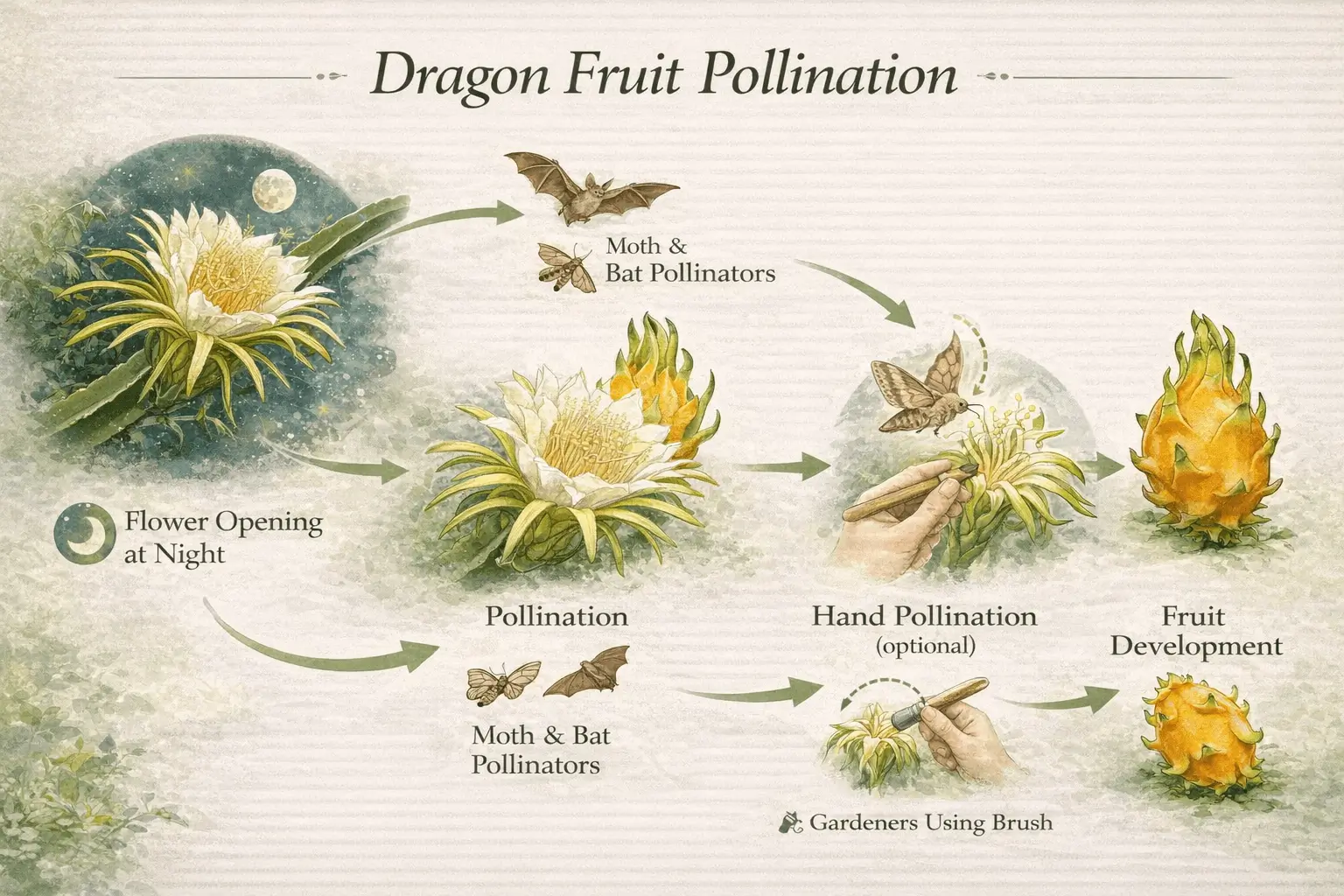
Self-pollinating plants can fertilize themselves without requiring pollen from another plant, while self-fertile plants can produce fruit using their own pollen. In dragon fruit cultivation, these concepts are closely related but technically distinct.
Some orange giant dragon fruit varieties are self-fertile and capable of producing fruit on their own. However, many dragon fruit cultivars benefit from cross-pollination between different varieties.
Cross-pollination often improves fruit development, leading to larger fruit size and better yields.
Dragon fruit flowers open at night and rely on nocturnal pollinators such as moths and bats. In home gardens, growers sometimes perform hand pollination by transferring pollen from one flower to another using a small brush.
Hand pollination can significantly improve fruit production, especially in regions where natural pollinators are limited.
Orange Giant Dragon Fruit Seeds and Fruit Structure
Dragon fruit pulp contains numerous tiny black seeds embedded throughout the fruit. These seeds are edible and contribute a subtle crunchy texture.
The seeds contain small amounts of beneficial fatty acids, including omega-3 and omega-6, as well as dietary fiber and antioxidants.
Dragon fruit seeds also play a role in plant reproduction. While commercial growers typically propagate dragon fruit using stem cuttings, seeds can be used to grow new plants.
Seed structure and distribution are generally similar across dragon fruit varieties, including purple dragon fruit and yellow pitaya.
Plant Size
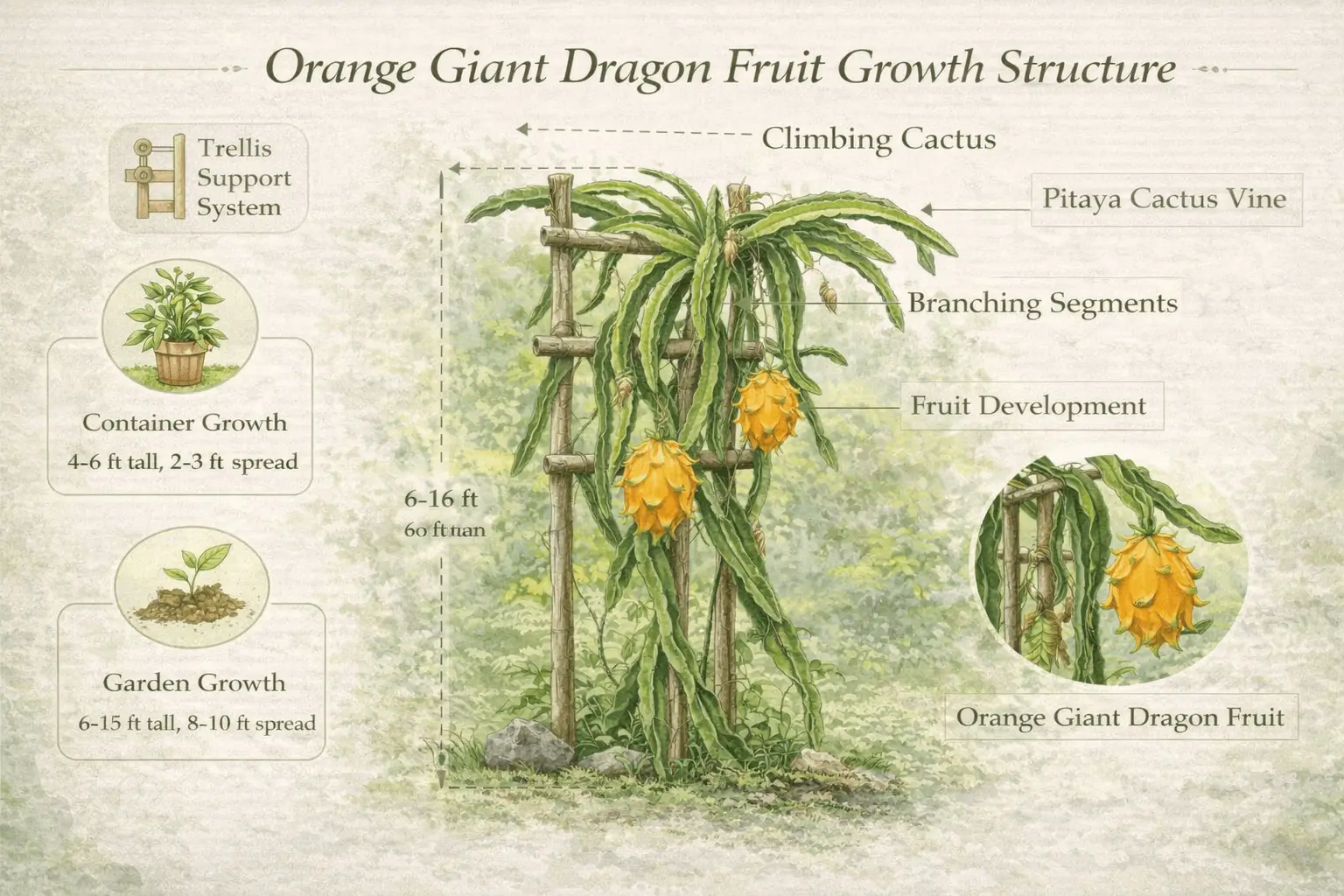
Dragon fruit plants are climbing cactus vines that can grow quite large when mature. Like many fruit-bearing plants, understanding mature plant size helps gardeners plan proper spacing and support structures. Similar considerations apply when growing fruit trees such as the Valencia orange tree, which also requires adequate space for healthy growth. A fully developed pitaya plant may reach heights of 15 to 20 feet when supported by a trellis or vertical post.
The stems grow in segmented triangular shapes and branch frequently as the plant matures. These branches often cascade over the top of support structures where fruit develops.
Plants grown in containers tend to remain smaller, often reaching heights of 6 to 10 feet depending on container size and pruning.
Outdoor plants grown in warm climates can spread widely and produce many fruiting stems. Strong structural support is essential because mature plants become heavy.
Growth Rate
Dragon fruit plants are considered fast-growing cactus vines when grown under suitable conditions. In warm climates, young plants may grow several feet per year.
Growth usually accelerates during warm seasons when temperatures remain between 65°F and 85°F (18°C to 29°C).
Environmental conditions strongly influence growth rate. Adequate sunlight, well-draining soil, balanced nutrients, and consistent watering support vigorous growth.
Excess moisture or poorly drained soil can slow plant development and increase the risk of disease.
Care Guide
-
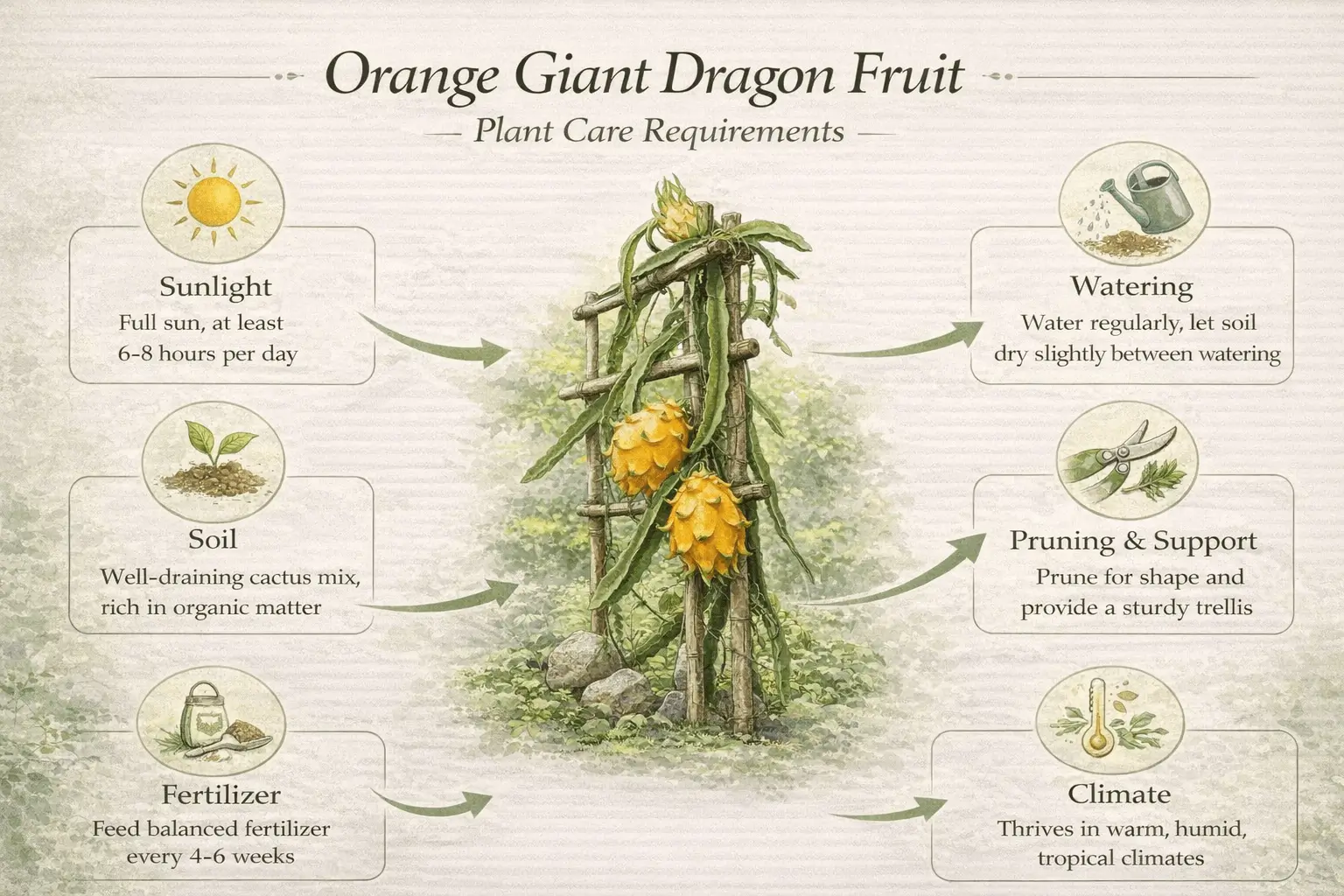
Light Requirements
Dragon fruit plants grow best in full sun or bright partial sun. Most pitaya plants require at least six to eight hours of sunlight daily.
-
Watering Needs
Although dragon fruit plants are cacti, they still require moderate watering during the growing season. Soil should be lightly moist but never saturated.
-
Soil Preferences
Well-draining soil is essential for dragon fruit cultivation. Sandy soils or cactus soil mixes help prevent water accumulation around the roots.
-
Fertilization
Balanced fertilizers containing nitrogen, phosphorus, and potassium support healthy vine growth and fruit production.
-
Pruning and Support
Pruning helps maintain plant structure and encourages branching. Dragon fruit vines are commonly trained on trellises or vertical posts.
-
Climate Tolerance
Dragon fruit plants thrive in warm tropical and subtropical climates. They are sensitive to frost and can be damaged by freezing temperatures.
Orange Giant Dragon Fruit vs Other Dragon Fruit Varieties
Orange giant dragon fruit differs from other dragon fruit varieties primarily in fruit size and visual appearance.
Yellow dragon fruit varieties, such as Selenicereus megalanthus, are typically smaller but significantly sweeter. Purple dragon fruit varieties are known for their deep-colored flesh and richer flavor.
Cultivars such as Desert King dragon fruit and Purple Haze dragon fruit have unique traits such as increased cold tolerance or strong sweetness.
Compared with these varieties, orange giant dragon fruit is primarily valued for its larger fruit size and attractive color.
Pollination requirements may also differ among cultivars, with some varieties being more self-fertile than others. Since Orange Giant is a trade name rather than one fixed cultivar, growers benefit from cross-checking it against other large-fruiting types before buying. Use the interactive dragon fruit cultivar selector to filter varieties by pollination type, flesh color, and fruit size side by side.
Common Problems When Growing Dragon Fruit
-
Poor Fruit Set
Poor fruit set is often caused by insufficient pollination. If flowers are not pollinated successfully, fruits may fail to develop.
-
Stem Rot or Overwatering
Dragon fruit plants are sensitive to overly wet soil conditions. Poor drainage or excessive watering can cause stem rot.
-
Slow Growth
Slow plant growth may occur when plants receive inadequate sunlight or are exposed to low temperatures.
-
Pest Issues
Common pests affecting dragon fruit plants include aphids, scale insects, and mealybugs. Regular monitoring helps prevent infestations. Like many garden plants, pitaya vines may attract pests such as aphids or scale insects. Learning how to identify and manage aphids on plants early can help prevent damage to stems and flowers.
Dragon Fruit Benefits and Nutritional Value
Dragon fruit provides several nutritional benefits. It contains vitamin C, antioxidants, and dietary fiber that contribute to overall health.
The fruit also has high water content, making it hydrating and refreshing. Antioxidants present in dragon fruit may help protect cells from oxidative stress.
Because of its tropical origin and distinctive appearance, dragon fruit is commonly classified as an exotic fruit.
Dragon Fruit in the Global Tropical Fruit Market
Dragon fruit cultivation has expanded significantly in recent decades due to growing global demand.
Major producing regions include Vietnam, Thailand, Ecuador, Colombia, and several countries in Central America.
Certain varieties such as Ecuadorian yellow dragon fruit and Palora dragon fruit are known for their exceptional sweetness and export value.
Warm climates, fertile soils, and consistent sunlight contribute to the production of high-quality pitaya fruit in these regions.
Conclusion
Orange giant dragon fruit represents one of the more intriguing pitaya types, combining the dramatic appearance of dragon fruit with large fruit size and tropical sweetness. Understanding how it differs from other dragon fruit varieties, how it grows, and what conditions it requires allows gardeners and fruit enthusiasts to appreciate its unique characteristics. With proper pollination, warm growing conditions, and well-drained soil, dragon fruit plants can thrive and produce striking fruits that highlight the diversity of tropical cactus fruits.
FAQs
What does orange giant dragon fruit taste like?
Orange giant dragon fruit typically has a mild, refreshing sweetness with a juicy pulp. The texture is smooth with small crunchy seeds, and the flavor is lighter compared with sweeter yellow dragon fruit.
Is orange giant dragon fruit self pollinating?
Some varieties are self-fertile, but many dragon fruit plants produce better yields when cross-pollinated with another compatible pitaya variety.
What is the largest dragon fruit variety?
Several dragon fruit cultivars produce large fruits, including certain giant pitaya types. Fruit size varies depending on cultivar, pollination, and growing conditions.
Is dragon fruit considered an exotic fruit?
Dragon fruit is considered an exotic fruit because it originates from tropical cactus species and has a distinctive appearance and flavor uncommon in temperate fruits.
What is the difference between yellow dragon fruit and red dragon fruit?
Yellow dragon fruit usually has yellow skin with white flesh and is known for strong sweetness. Red dragon fruit typically has red or pink skin and may contain white or red flesh with a milder sweetness.