Introduction
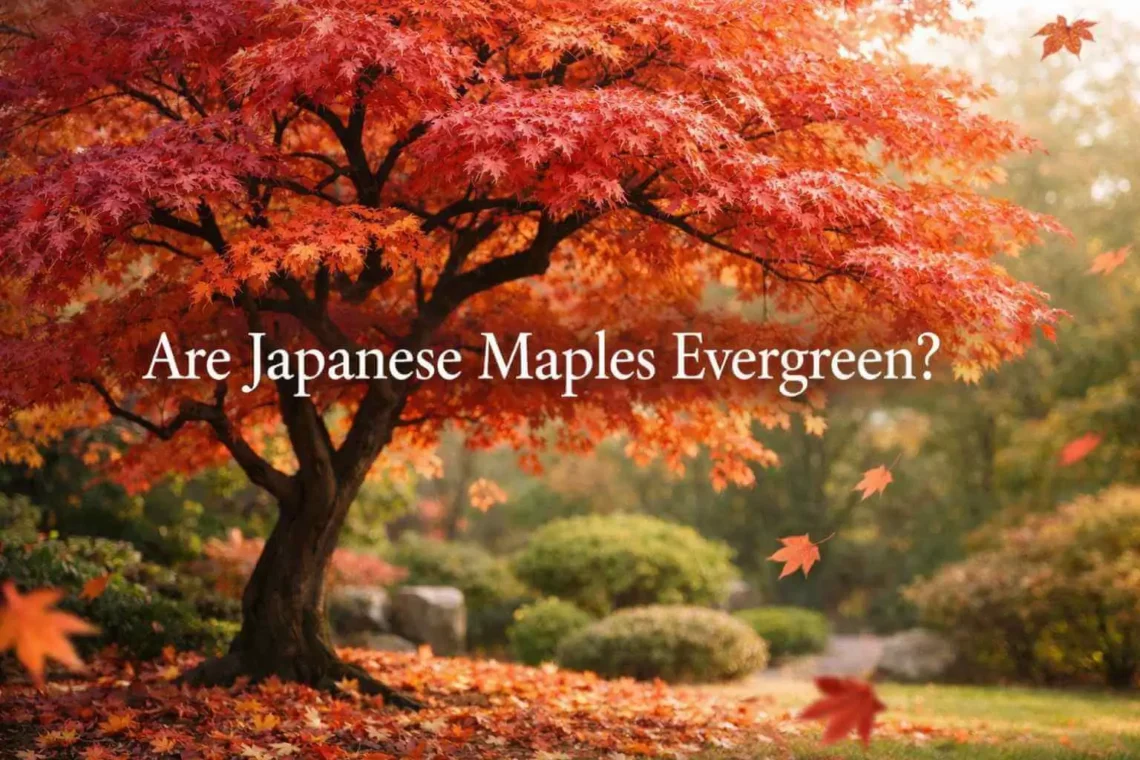
Are Japanese maples evergreen is a common question among gardeners, especially those new to ornamental trees. The short answer is no—Japanese maples are not evergreen. Most varieties belong to the species Acer palmatum, which is classified as a deciduous tree. This means they naturally lose their leaves during part of the year. Understanding this distinction is essential for proper care and realistic expectations. Seasonal behavior may vary depending on climate, particularly in regions like Australia where winters are milder, but the fundamental growth cycle remains the same across environments. Most varieties belong to the species Acer palmatum, a deciduous ornamental tree native to Japan.
Quick Summary
- Japanese maples are deciduous trees, not evergreen
- They lose their leaves seasonally, especially in winter
- Leaf drop timing varies by climate (e.g., Australia vs colder regions)
- No true evergreen Japanese maple varieties exist
Are Japanese Maples Evergreen or Deciduous?
Japanese maples are deciduous trees, meaning they shed their leaves annually rather than keeping them year-round.
Key Points
- Japanese maple trees are deciduous
- They do not retain leaves throughout the year
- Seasonal dormancy is a natural and necessary phase
Explanation
In plant classification, trees fall into two main categories:
- Evergreen trees retain foliage year-round
- Deciduous trees lose leaves during specific seasons
Japanese maples clearly fall into the deciduous category. This includes all cultivars of Acer palmatum. The confusion often arises because their foliage can remain vibrant for extended periods in mild climates, but they still follow a deciduous growth cycle. To better understand how Japanese maples differ from evergreen trees, see this detailed breakdown of deciduous vs evergreen trees.
Do Japanese Maples Lose Their Leaves? (Seasonal Behavior Explained)
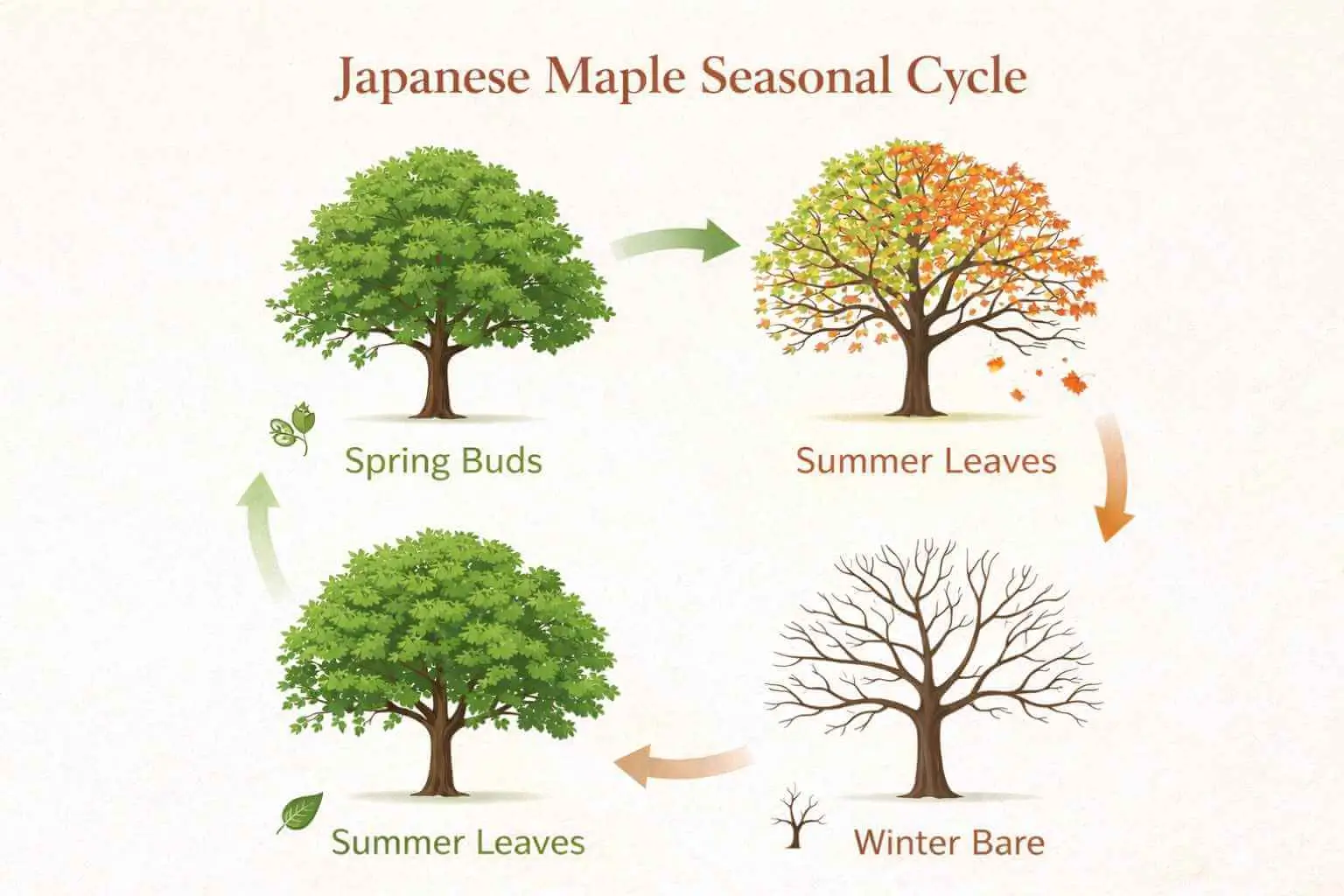
Yes, Japanese maples lose their leaves annually as part of their natural seasonal cycle, typically during late autumn or early winter.
Seasonal Changes
- Autumn color transition: Leaves change from green or red to vibrant shades of orange, crimson, or gold
- Leaf drop timing: Occurs from late autumn into early winter
- Dormancy phase: Trees enter a resting period during winter
This cycle helps conserve energy and protects the tree from cold or dry conditions.
When Do Japanese Maples Lose Their Leaves?
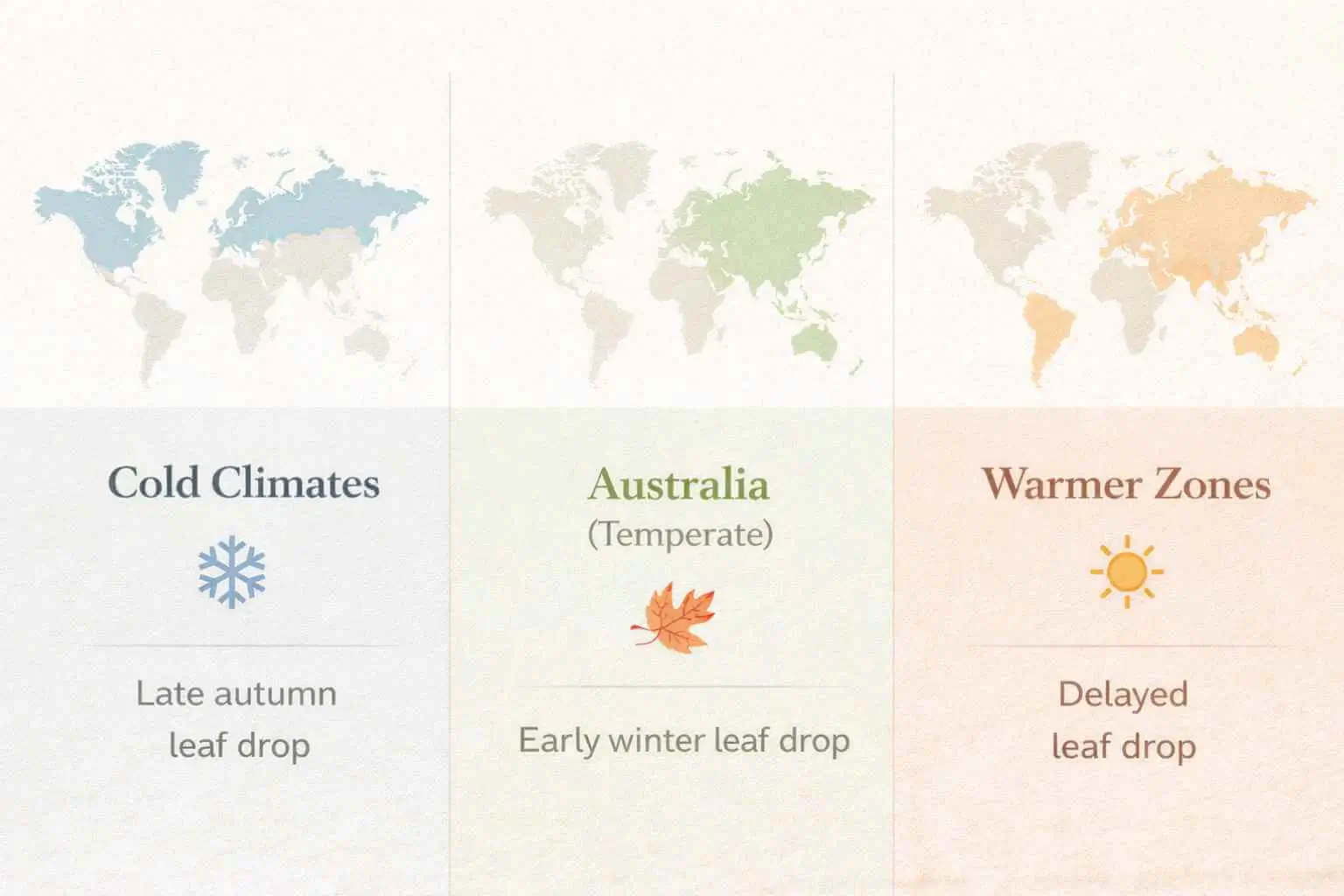
Japanese maples typically lose their leaves in late autumn, though exact timing depends on climate, temperature, and daylight changes.
Leaf Drop Timing by Region
| Region | Typical Leaf Drop Time |
| Cold climates | Late autumn |
| Australia (temperate) | Late autumn to early winter |
| Warmer zones | Slightly delayed |
Environmental Triggers
- Decreasing daylight hours
- Lower temperatures
- Seasonal hormonal changes within the tree
In Australia, especially in cities like Sydney or Adelaide, leaf drop may occur slightly later due to milder winters.
Are Japanese Maples Evergreen in Australia?
No, Japanese maples are not evergreen in Australia; they remain deciduous regardless of location.
Key Insights
- They still lose leaves annually
- Seasonal changes may be less dramatic in warmer regions
- Dormancy periods can be shorter
In Australian climates, including Sydney, Perth, and Adelaide, Japanese maples adapt by adjusting timing rather than changing their fundamental nature. If you’re specifically looking for trees that stay green year-round in Australian climates, consider these trees that don’t drop leaves.
Why People Think Japanese Maples Are Evergreen
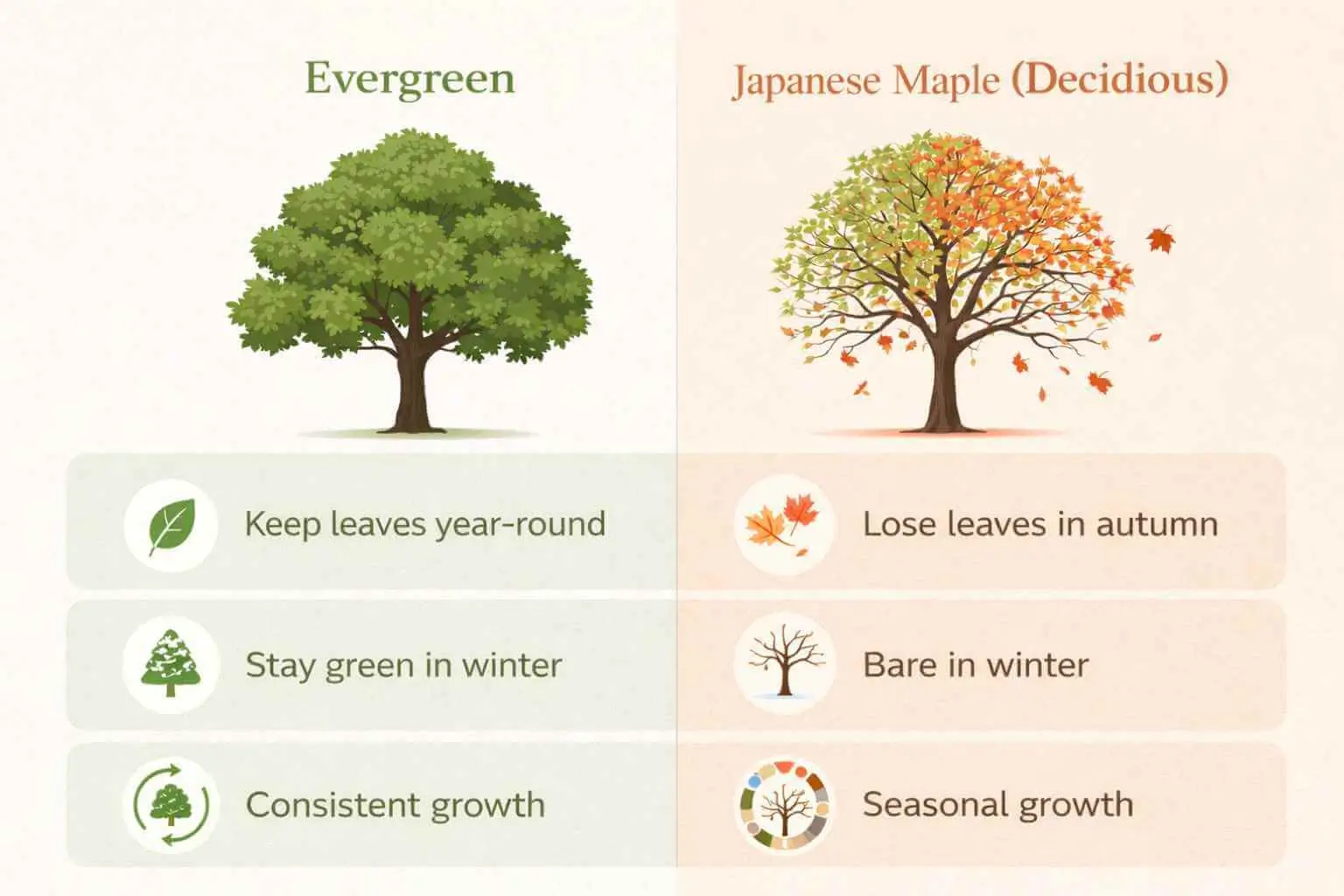
Japanese maples are sometimes mistaken for evergreen trees due to their appearance and environmental factors.
Common Reasons
- Extended leaf retention in mild climates
- Dense and lush foliage
- Confusion with unrelated evergreen maple species
Comparison — Evergreen vs Deciduous Trees
| Feature | Evergreen Trees | Japanese Maples |
| Leaf retention | Year-round | Seasonal |
| Winter appearance | Green foliage | Bare branches |
| Growth cycle | Continuous | Dormant in winter |
There are no true evergreen varieties of Japanese maple trees. This confusion isn’t unique—many ornamental trees like crepe myrtle also raise similar questions about whether they are evergreen or deciduous.
Japanese Maple Tree Characteristics (Beyond Leaf Type)
Size and Growth
- Dwarf varieties remain compact
- Full-size trees range from 1 to 10 meters tall
- Growth rate is slow to moderate
Root System
- Shallow and non-invasive
- Suitable for containers and small spaces
- Sensitive to compacted or poorly drained soil
Japanese maples are widely used in landscaping due to their manageable size and aesthetic appeal.
Japanese Maple Care and Growing Conditions (Australia Focus)
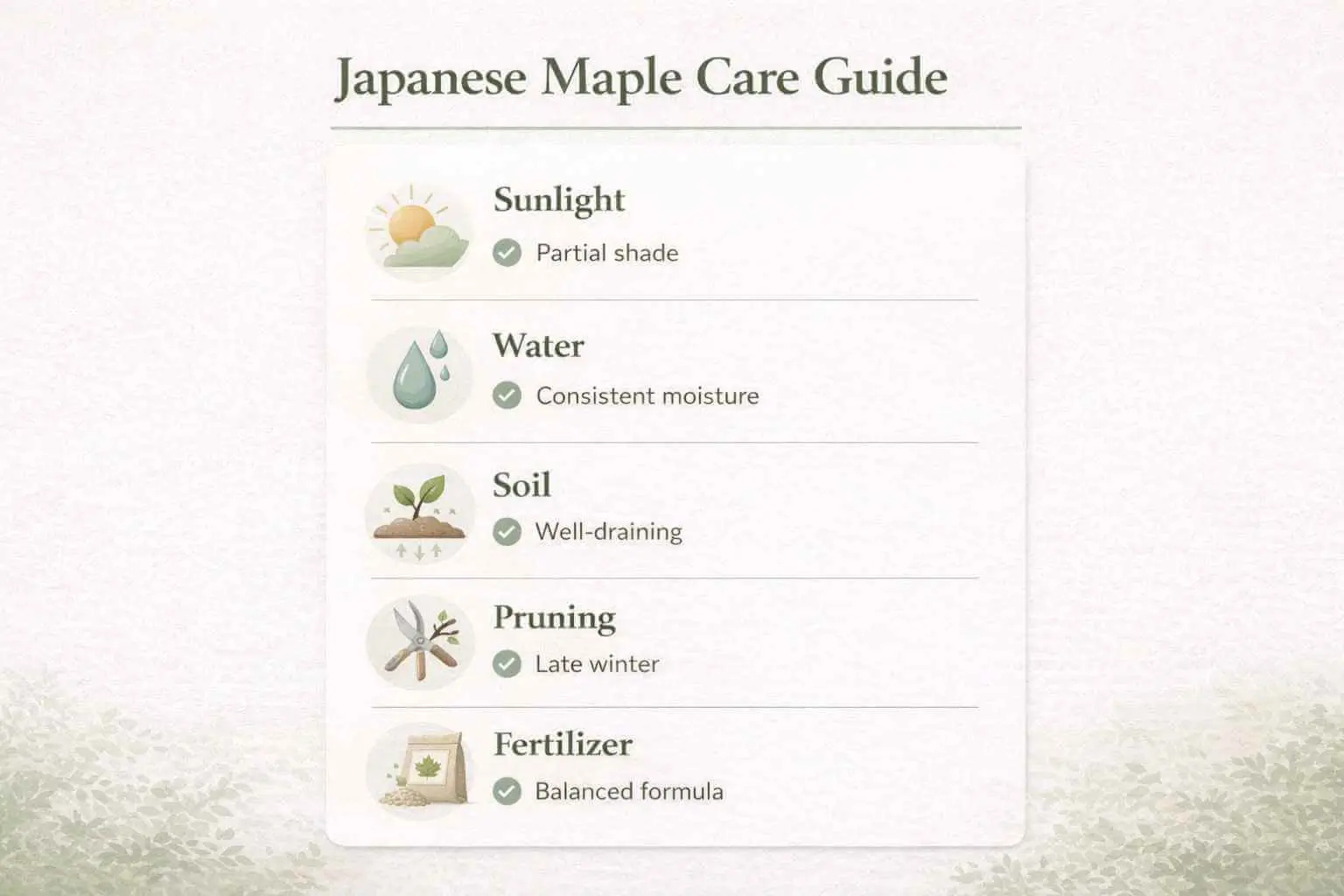
Ideal Growing Conditions
- Light: Partial shade is ideal
- Soil: Well-draining, slightly acidic
- Water: Consistent moisture without waterlogging
Planting and Maintenance
- Plant in autumn or early spring
- Prune in late winter before new growth
- Apply balanced fertilizer during the growing season
Proper care ensures healthy foliage and stable growth, especially in warmer climates.
Common Problems and Mistakes (Problem-Solution Section)
Problem: Leaves Dropping Too Early
- Cause: Heat stress or insufficient watering
- Solution: Increase watering and provide shade
Problem: Leaf Burn in Full Sun
- Cause: Excessive direct sunlight
- Solution: Move to partial shade or use protective covering
Problem: Slow Growth
- Cause: Poor soil quality or root stress
- Solution: Improve soil conditions and fertilize appropriately
Beginner gardeners often overlook environmental stress factors, which directly impact tree health.
Special Varieties: Weeping, Dwarf, and Green Bark Japanese Maples
Weeping Japanese Maple
- Graceful, cascading branches
- Ideal for ornamental landscaping
Dwarf Varieties
- Compact size
- Suitable for small gardens or containers
Green Bark Japanese Maple
- Distinctive green bark visible in winter
- Adds year-round visual interest
Each variety offers unique visual and functional benefits for garden design.
Growing Japanese Maples in Pots
Japanese maples grow well in containers, making them ideal for urban or small-space gardening.
Key Points
- Choose well-draining soil
- Water regularly but avoid overwatering
- Ensure pot size supports root development
Container growth requires more attention but offers flexibility in placement.
Environmental Limitations & Seasonal Care
Key Considerations
- Sensitive to extreme heat in Australian summers
- Varying frost tolerance depending on cultivar
- Requires seasonal adjustments in watering and care
Adapting care routines based on climate conditions helps maintain long-term health.
Conclusion
Japanese maples are not evergreen; they are deciduous trees that naturally lose their leaves each year. This seasonal leaf drop is a vital part of their growth cycle and should not be mistaken for a problem. Whether grown in colder climates or regions like Australia, their behavior remains consistent, though timing may vary. Understanding their lifecycle, environmental needs, and care requirements allows for healthier growth and better landscape results. The key takeaway is simple: leaf loss is normal, necessary, and essential for a thriving Japanese maple. For a broader understanding of how different plants fit into indoor and outdoor spaces, explore this complete guide to plants for homes and gardens.
FAQs
Are Japanese maples evergreen in the winter?
No, Japanese maples are deciduous and lose their leaves during winter dormancy.
Do Japanese maples keep their leaves year round?
No, they shed their leaves annually as part of their natural growth cycle.
Are any Japanese maple trees evergreen?
No, there are no true evergreen varieties of Japanese maple.
When do Japanese maples lose their leaves in Australia?
They typically lose their leaves in late autumn to early winter, depending on regional climate.
Is Acer palmatum evergreen?
No, Acer palmatum is a deciduous tree.
Can Japanese maples grow in full sun in Australia?
They prefer partial shade; full sun can lead to leaf burn, especially in hot climates.