Introduction
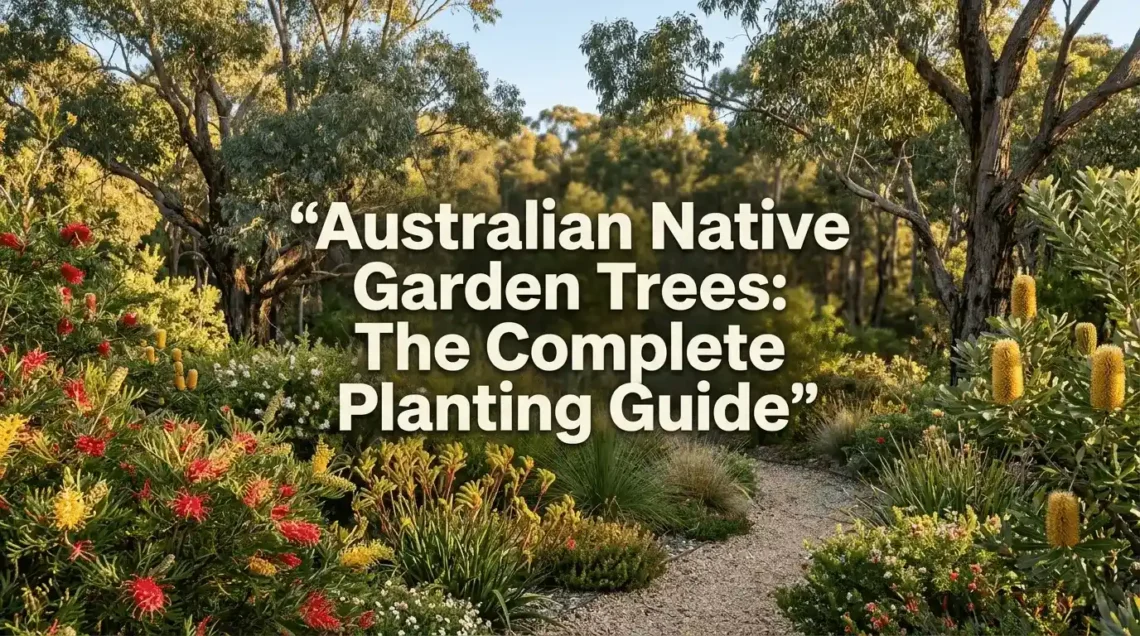
Australian native garden trees are one of the smartest choices any homeowner can make. They’re adapted to our soils, our droughts, and our wildlife — which means less work and more reward for you. This guide covers everything from choosing the right species to caring for established trees. Each section introduces a key topic and links you to a deeper cluster article where you need it. Whether you’re starting a new garden or refreshing an existing one, this is your roadmap to a thriving native landscape.
By Greenery Inside | Plant Care & Gardening Expert
Last Updated: August 2026
What Are Australian Native Garden Trees?
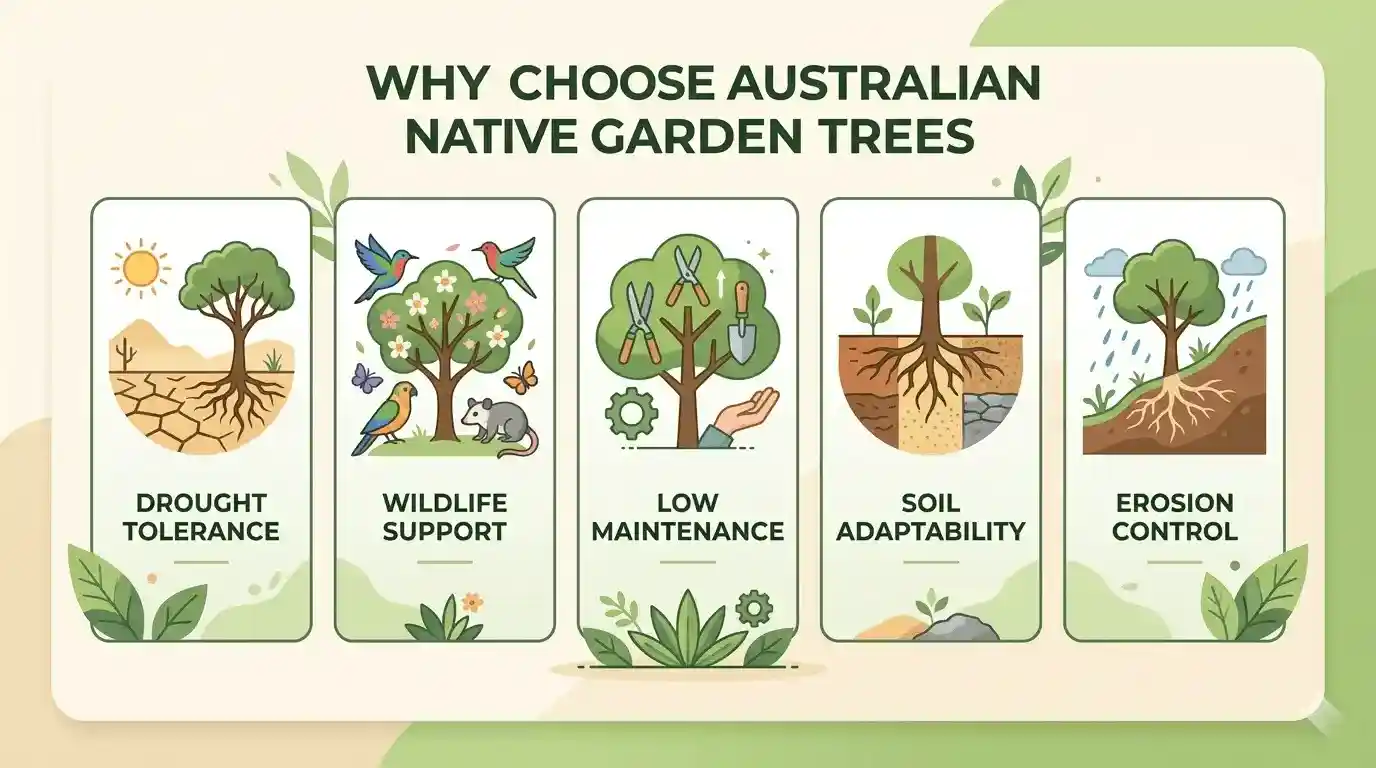
Australian native garden trees are species that evolved naturally on this continent, shaped by millions of years of harsh sun, poor soils, and irregular rainfall. They form the backbone of low-maintenance, ecologically rich gardens that support local birds, insects, and pollinators. Learn more about the broader Flora of Australia and how native species evolved to survive harsh Australian conditions.
Key benefits of growing Australian native trees:
- Drought-tolerant once established — drastically reducing your watering needs
- Adapted to local soils including clay, sand, and nutrient-poor profiles
- Support native wildlife including honeyeaters, lorikeets, and native bees
- Lower maintenance compared to exotic species
- Excellent for erosion control and carbon sequestration
Quick Australian Native Garden Trees Checklist
| Factor | Key Focus |
| Climate zone | Match species to your region (tropical, temperate, arid) |
| Soil type | Test for clay, sandy, or loamy soil before planting |
| Water access | Choose drought-tolerant species for low-rainfall areas |
| Mature size | Check height and spread to avoid overcrowding |
| Root system | Keep invasive rooters away from pipes and foundations |
| Sun exposure | Full sun vs dappled shade affects species selection |
| Wildlife goals | Select flowering species to attract birds and pollinators |
| Purpose | Decide between shade, screening, feature, or windbreak |
🌿 For a full overview of species suited to your region, explore “Native Trees of Australia.”
🌿 Understanding Your Australian Native Tree Environment
Climate and Rainfall
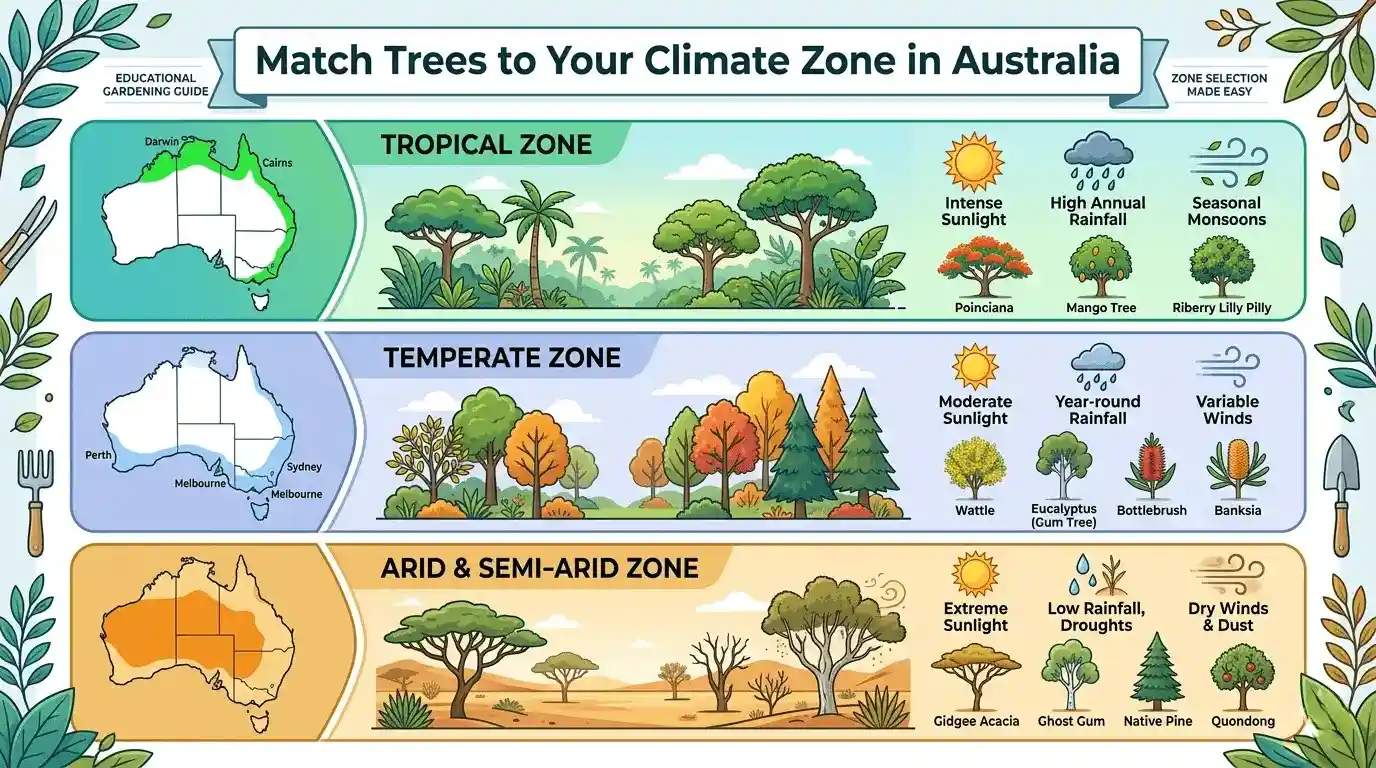
Australia spans multiple climate zones, and native tree performance is tightly linked to where you live. A species thriving in subtropical Brisbane may struggle in frosty Canberra. Always confirm your climate zone before purchasing.
Soil Conditions
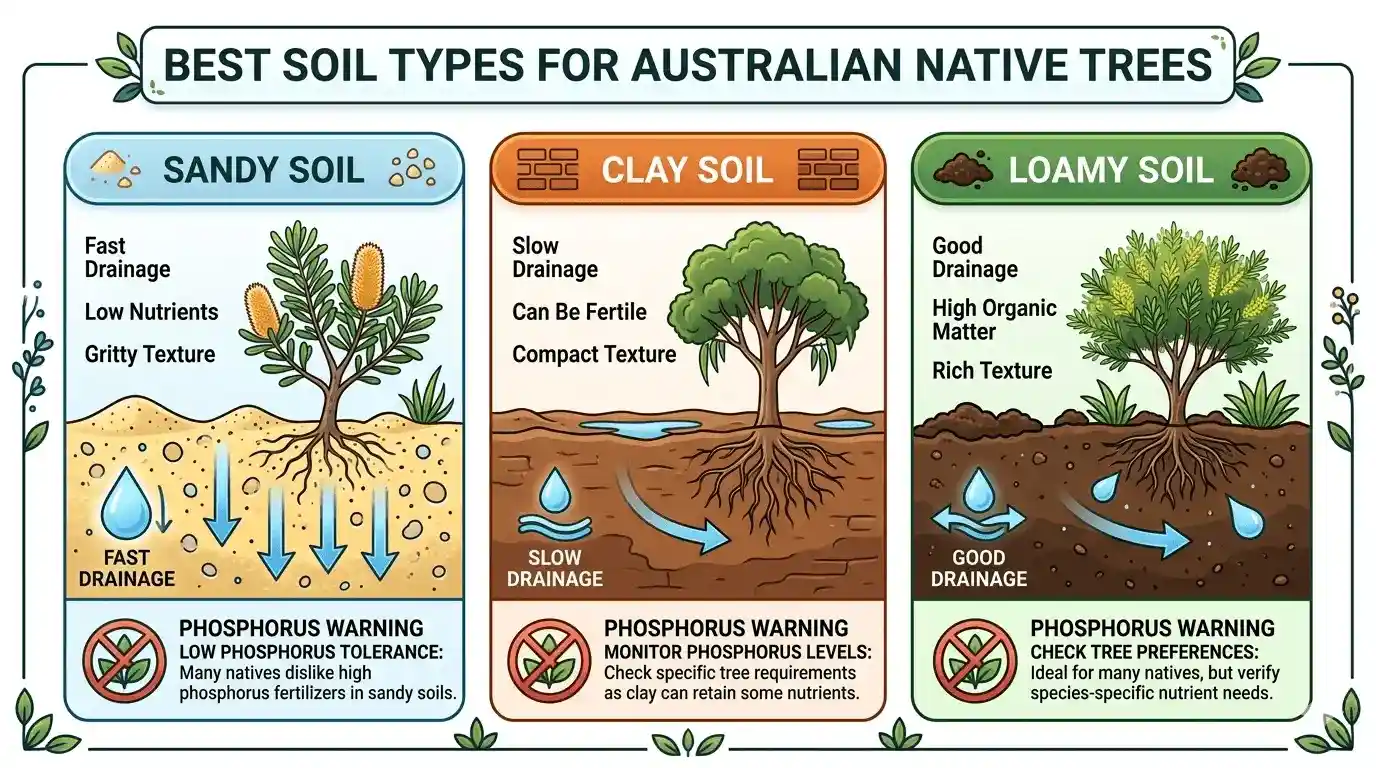
Most Australian natives prefer free-draining, low-fertility soils — the kind that would stress exotic plants. Avoid over-fertilising; too much phosphorus can be toxic to species in the Proteaceae family, including banksias and grevilleas.
Sun and Wind Exposure
Full sun suits the majority of native trees, but wind exposure matters too. Coastal gardens and hilltop blocks need tough, wind-hardy selections.
🌿 For trees that thrive in exposed coastal conditions, explore “Wind Tolerant Trees Australia.”
🌱 Soil Preparation and Planting
Preparing the Ground
Native trees rarely need rich soil, but they do need good drainage. Loosen compacted soil and avoid adding heavy composts or fertilisers high in phosphorus. A light mulch layer is ideal for moisture retention.
Planting Technique
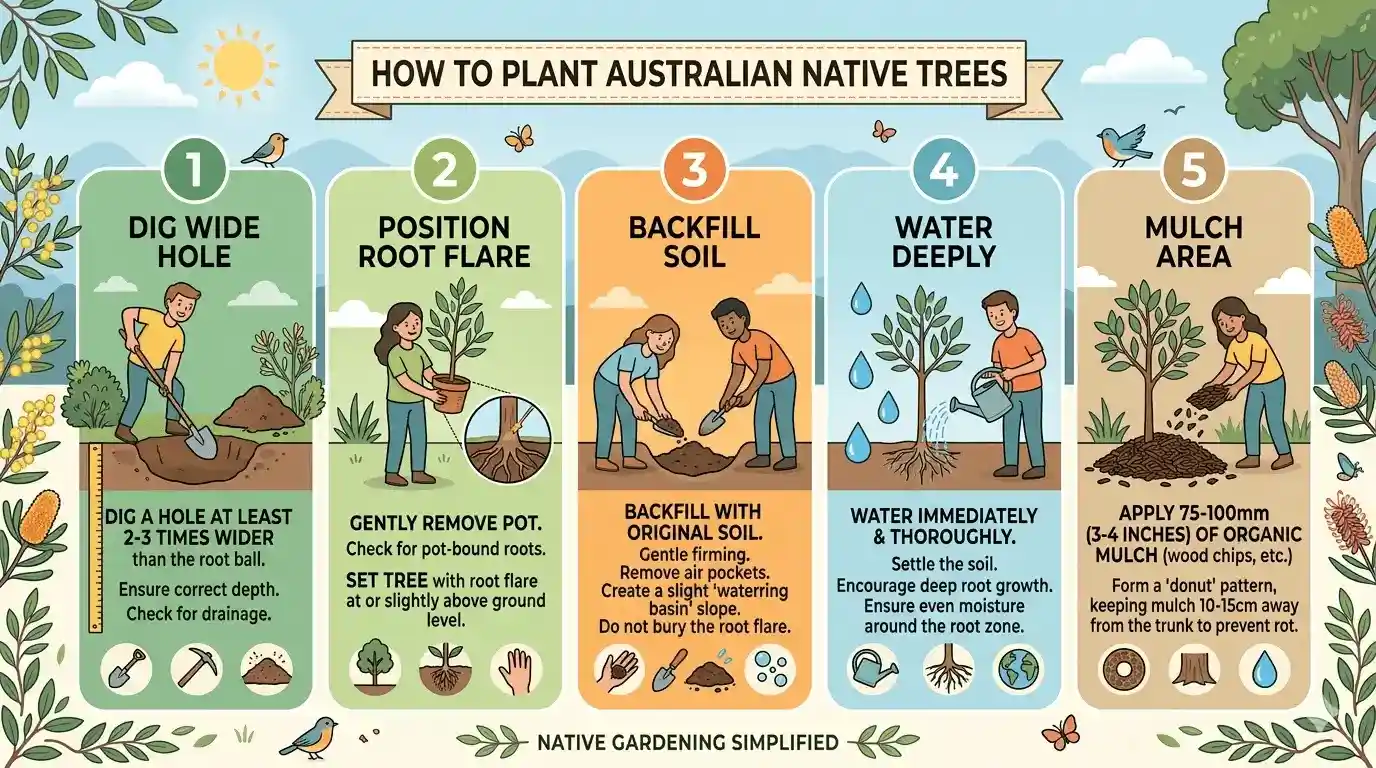
Dig your hole no deeper than the root ball but two to three times as wide. Position the tree so the root flare sits at or slightly above ground level. Water in well at planting, then reduce frequency as roots establish.
What to Avoid
Avoid planting natives in heavily amended or over-watered garden beds. Adding too much fertiliser, especially phosphorus, causes leaf burn and root damage in sensitive Proteaceae species.
🌿 For trees that handle challenging soils, explore “Best Trees for Clay Soil Australia.”
🌿 For growing natives successfully in containers, explore “Growing Trees in Pots.”
💧 Watering Australian Native Trees
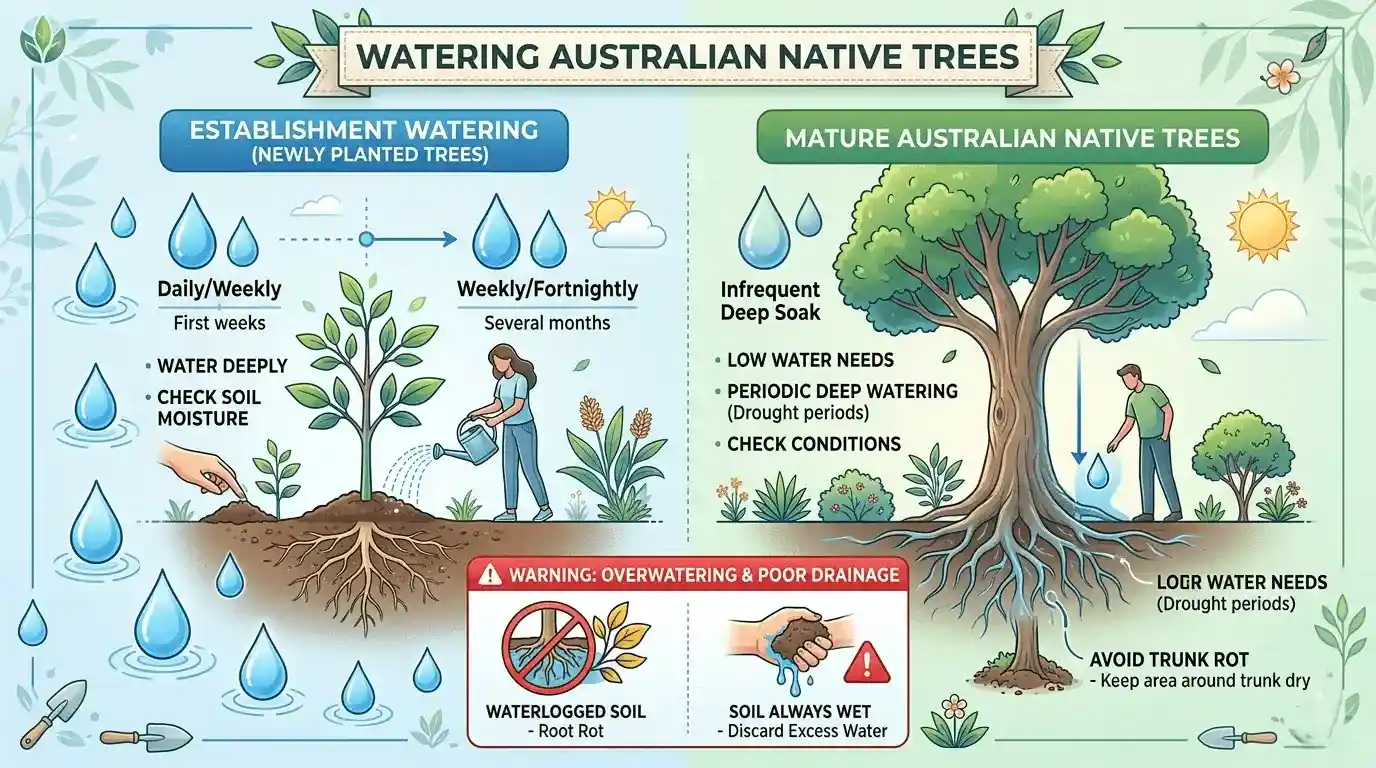
Establishment Watering
Newly planted native trees need consistent moisture for the first one to two growing seasons. Deep, infrequent watering encourages deep root development. Aim for once or twice a week in warmer months, tapering off in winter.
Mature Tree Watering
Once established, most Australian native trees are highly drought-tolerant and require little supplemental irrigation. Overwatering is a more common killer than underwatering once roots are established.
Signs of Overwatering
- Yellowing leaves with no other cause
- Soft, mushy roots at the base
- Fungal growth at the soil line
- Wilting despite wet soil
Signs of Underwatering
- Dry, brown leaf tips curling inward
- Premature leaf drop
- Cracked, dry soil around the root zone
- Slow new growth or no growth
🌿 For species that thrive in boggy ground, explore “Trees That Like Wet Feet Australia.”
🌿 For plants suited to damp spots in your garden, explore “Plants That Like Wet Soil Australia.”
🌾 Feeding and Fertilising Native Trees
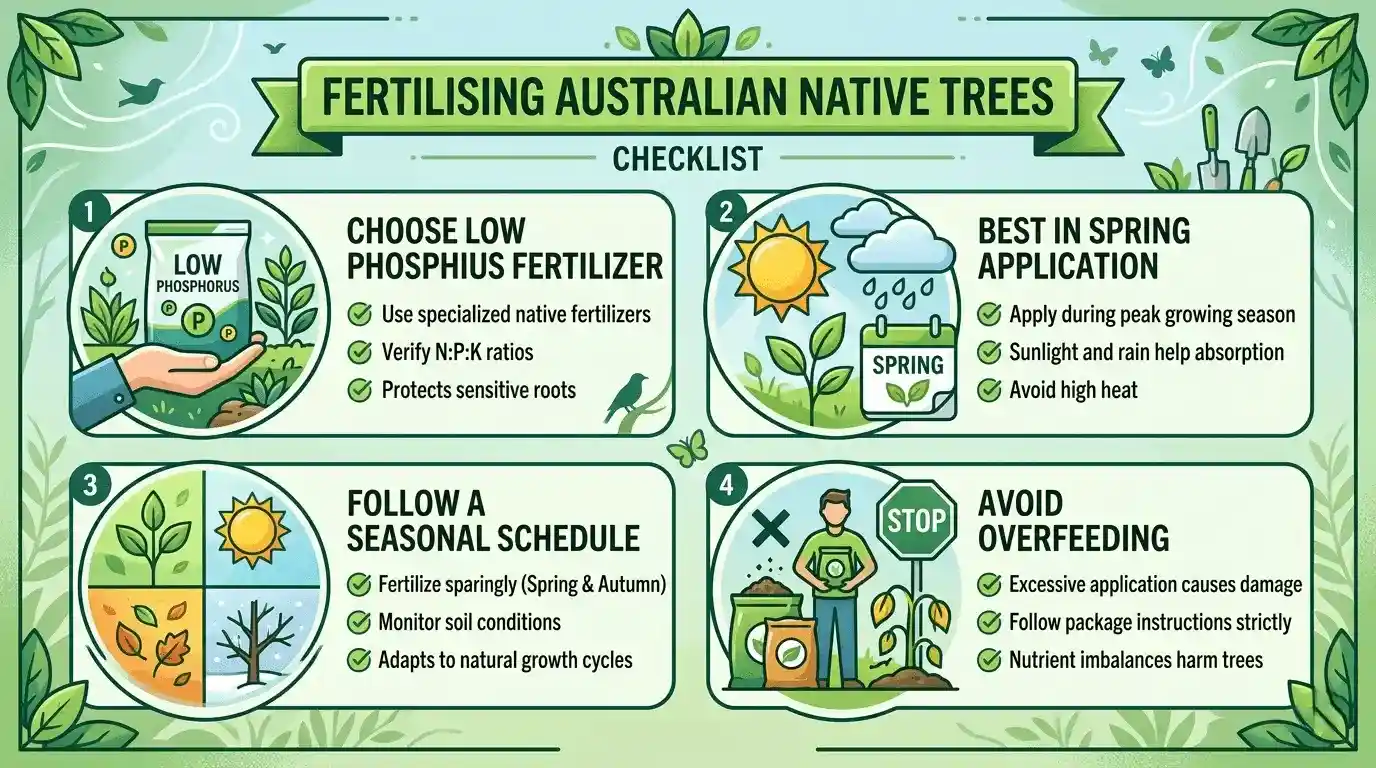
What Nutrients Natives Actually Need
Australian natives evolved in nutrient-poor soils and have adapted accordingly. A slow-release native-specific fertiliser low in phosphorus is all most species need, applied once in spring.
When and How to Fertilise
Apply native fertiliser in early spring just before new growth begins. Avoid fertilising in autumn or winter. Always water after applying granular fertiliser to reduce root burn risk.
Seasonal Schedule
Spring is the primary feeding window — apply a native-formula slow-release granule. Summer needs no feeding; focus on watering. Autumn and winter are rest periods; no fertiliser required.
🌿 For shrubs that pair well with native trees and share feeding requirements, explore “Australian Native Screening Trees.”
🌿 For structurally similar species with low-nutrient needs, explore “Banksia Tree Varieties.”
Pruning and Shaping Native Trees
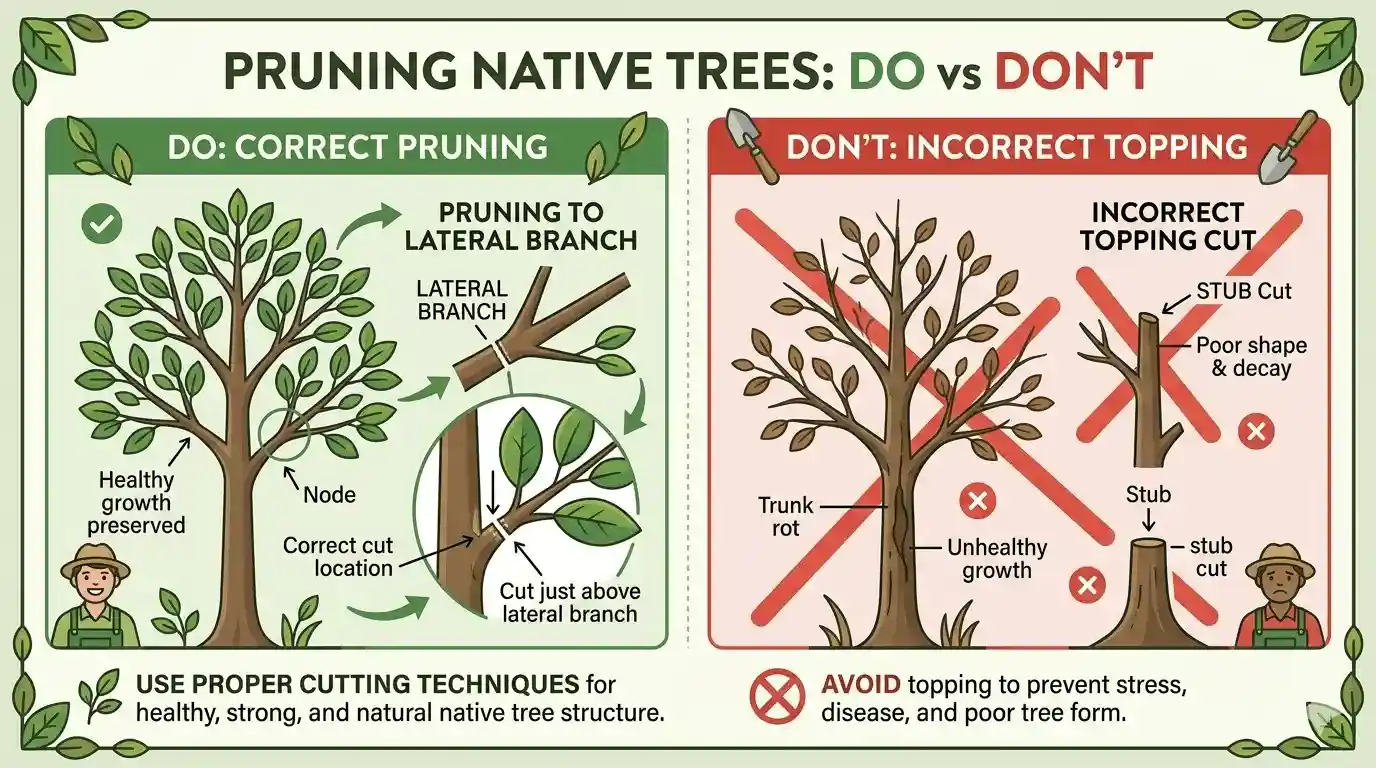
When to Prune
Most Australian native trees are best pruned after flowering to avoid cutting off next season’s buds. For non-flowering species, late winter before spring growth is ideal. Avoid heavy pruning in extreme heat or frost.
Formative Pruning vs Maintenance Pruning
Formative pruning during the first two to three years shapes the tree’s structure for life. Maintenance pruning involves removing dead, crossing, or damaged branches to keep the canopy healthy and open.
Never Top a Native Tree
Topping — cutting back the main trunk or leader — causes irreversible structural damage and stress. It leads to weak, fast-growing regrowth that is prone to breakage and disease. Always prune to a lateral branch or growth point.
🌿 For the right tools to prune cleanly without damaging bark, explore “Plant Shears vs Scissors.”
🌿 For native trees suited to formal shaping and hedging, explore “Best Hedging Trees.”
🐞 Pest and Disease Management
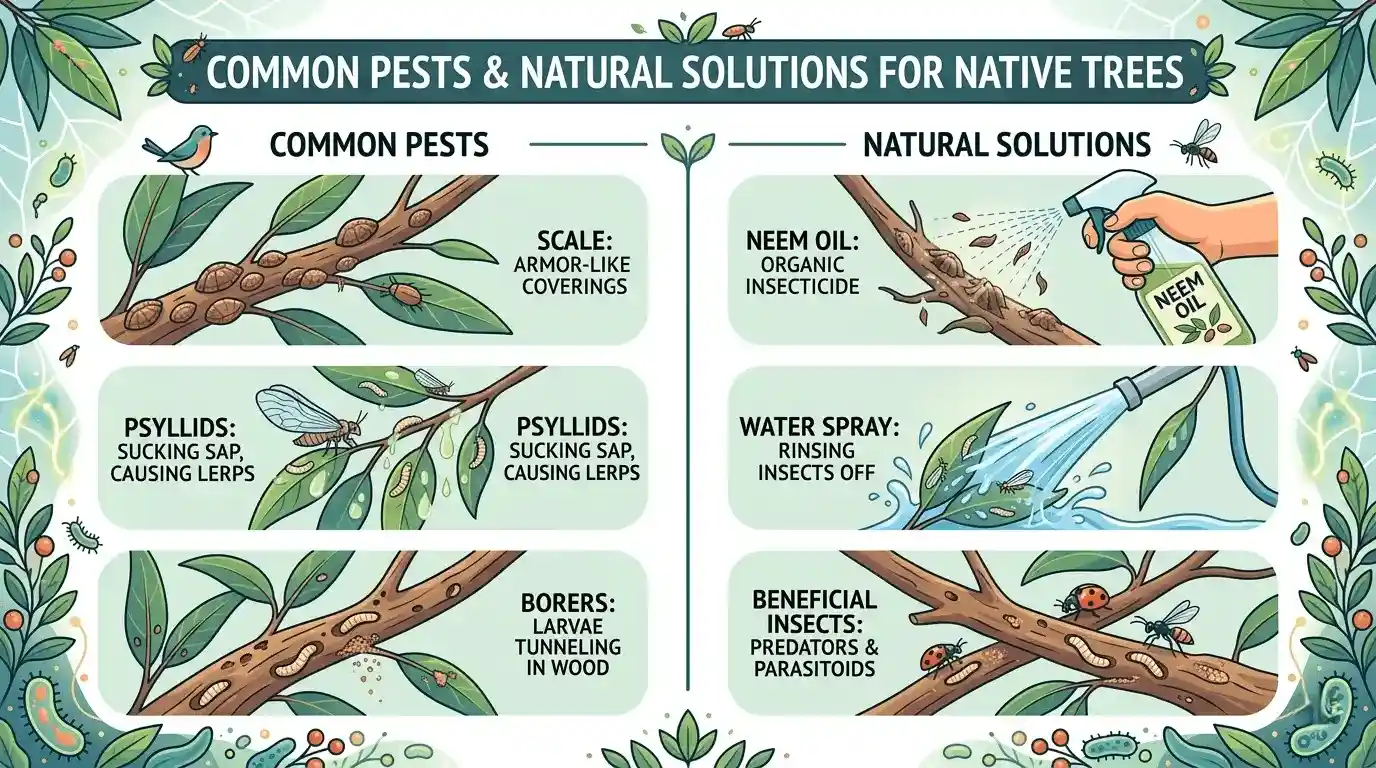
Common Pests
Australian native trees are generally pest-resistant, but a few issues do appear. Scale insects and lerp psyllids are the most common culprits, coating leaves and stems with a sticky residue. Borers can attack stressed or drought-weakened trees, tunnelling into trunks and branches.
Organic Solutions
- Blast scale with a strong jet of water to dislodge colonies
- Apply neem oil spray for soft-bodied insect control
- Introduce or encourage ladybirds and parasitic wasps as biological controls
- Remove and destroy heavily infested branches before pests spread
- Maintain tree vigour through correct watering — stressed trees attract pests
🌿 For identifying what’s living in your garden, explore “Common Garden Bugs.”
🌿 For native ground covers that support beneficial insect populations, explore “Shade Loving Australian Natives.”
🪴 Growing Native Trees in Containers
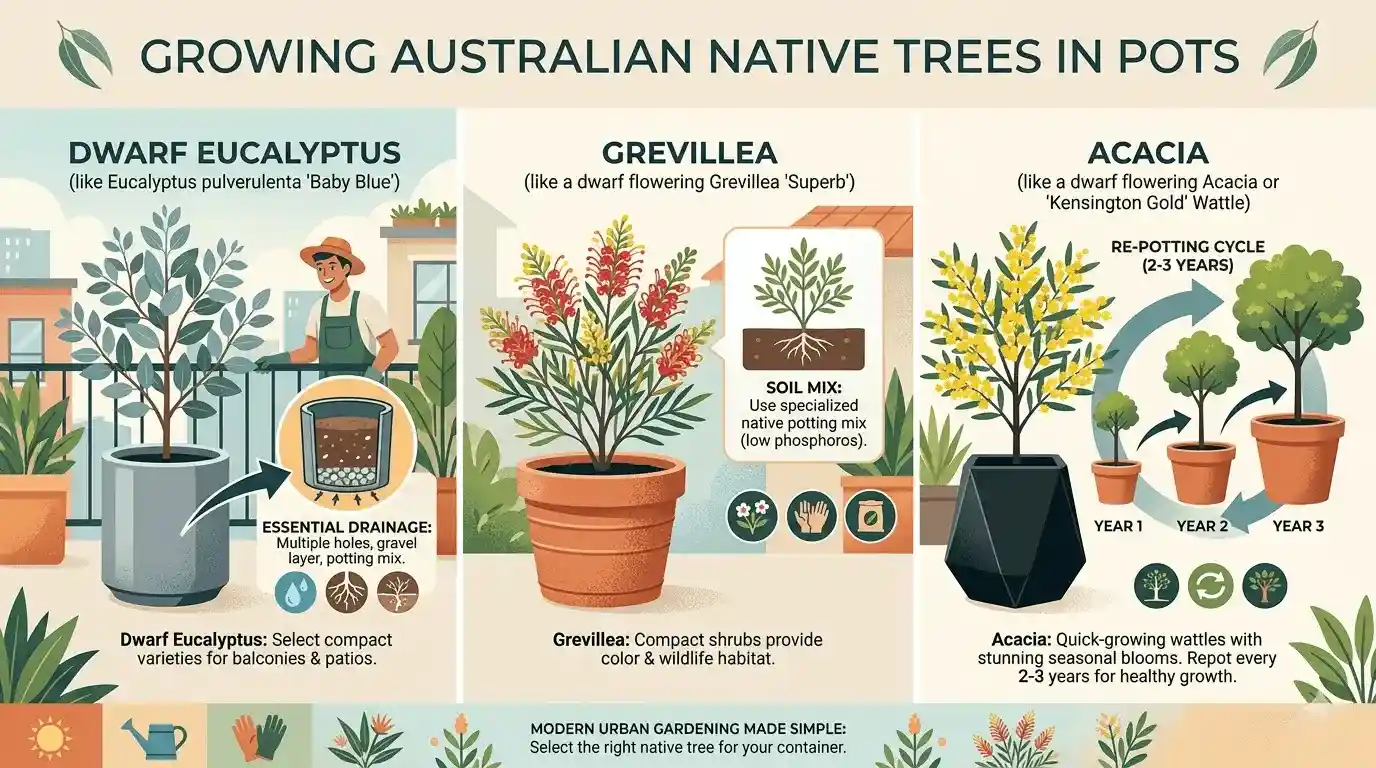
Many Australian native trees adapt beautifully to container growing, making them ideal for courtyards, balconies, and small gardens. Choose a quality native potting mix, ensure excellent drainage, and repot every two to three years to prevent root binding.
Best Australian native trees for pots:
- Dwarf Eucalyptus — compact, fast-growing, fragrant foliage
- Dwarf Hakea Laurina — stunning pincushion flowers, slow-growing
- Acacia Cognata Dwarf — graceful weeping form, year-round interest
- Banksia Ericifolia Dwarf — dramatic flower spikes, bird-attracting
- Grevillea Elegance — prolific flowering, low-maintenance in pots
🌿 For detailed guidance on container-growing techniques, explore “Growing Trees in Pots.”
🪴 Best Flowering Natives for Pots and Small Spaces
Not every native garden starts with a tree. Many of the best-loved Australian natives are compact shrubs and flowering feature plants that thrive in pots, courtyards, and tight garden beds alongside your trees.
Banksia for Bold Pot Colour
For a showstopping potted feature with tall, torch-like flower spikes, few natives compete with a hybrid banksia bred specifically for size and colour impact.
🌿 For size, care, and pruning specifics, explore “Banksia ‘Giant Candles’.”
Compact Acacia for Year-Round Foliage
A weeping, fine-textured dwarf acacia adds movement and softness to pots and small borders without the size of a full acacia tree.
🌿 For growth habit and care tips, explore “Acacia Cognata Dwarf.”
Choosing and Setting Up Native Pots
Before filling pots with any native shrub, the container, potting mix, and drainage setup matter as much as the plant choice.
🌿 For a complete guide to potting mix, container size, and species selection, explore “Australian Native Plants in Pots.”
🌼 Seasonal Australian Native Garden Trees Calendar
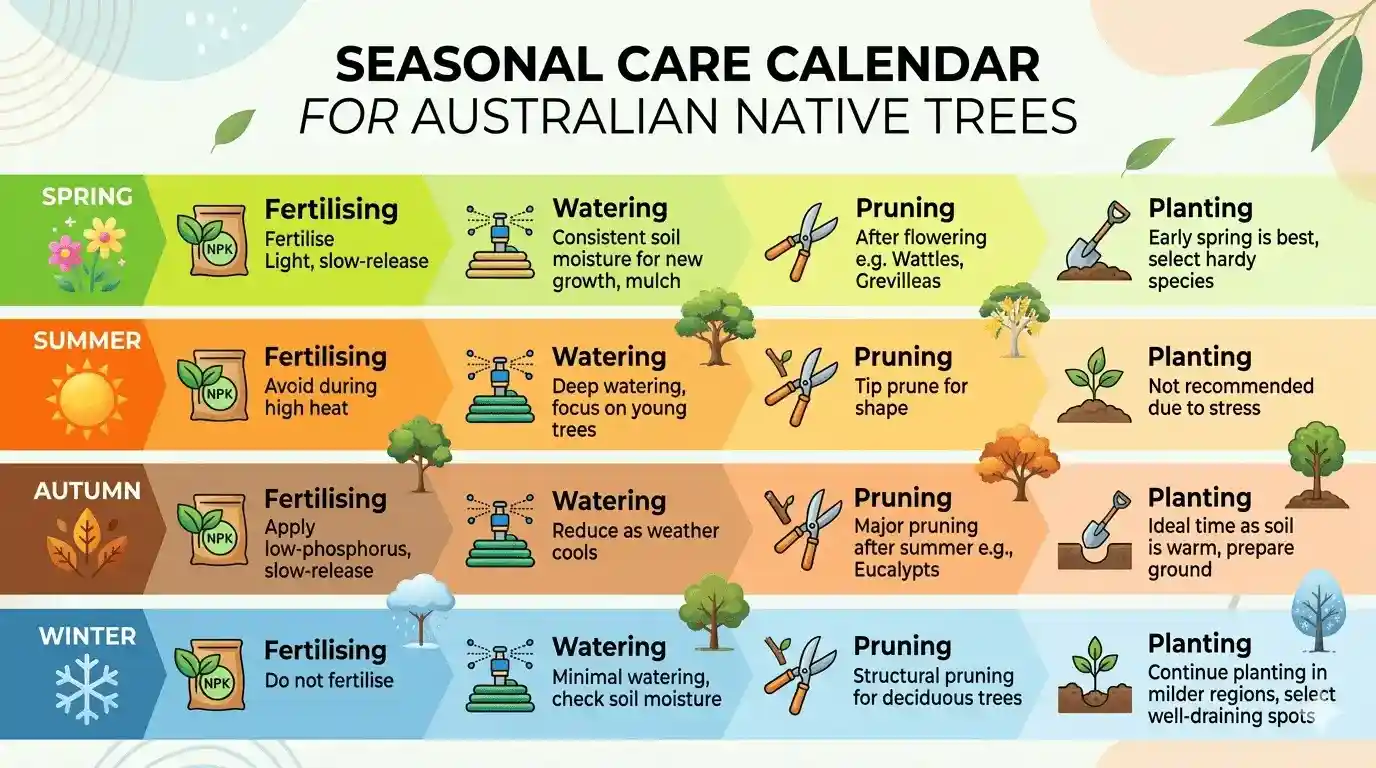
Australian native trees follow seasonal rhythms tied to temperature and rainfall cues. Understanding what each season demands helps you stay one step ahead of your tree’s needs.
🌸 Spring — The most active growth period. New foliage and flowering begin. Apply slow-release native fertiliser and begin formative pruning after flowering finishes.
☀️ Summer — Focus shifts to watering and pest monitoring. Mulch deeply to conserve soil moisture and keep roots cool during heat events.
🍂 Autumn — Wind down feeding. Check for structural issues and remove any dead wood before winter sets in.
❄️ Winter — Minimal maintenance period. Ideal time for planting bare-rooted specimens and light structural pruning in frost-free areas.
| Season | Key Tasks | Purpose |
| Spring | Fertilise, post-bloom prune, plant | Support new growth |
| Spring | Monitor for pests | Catch early infestations |
| Summer | Deep water, mulch, pest control | Heat and drought stress |
| Summer | Avoid fertilising | Prevent root burn |
| Autumn | Remove dead wood, reduce watering | Prepare for dormancy |
| Autumn | Plant new trees | Cooler soil aids establishment |
| Winter | Structural pruning, bare-root planting | Shape and expand the garden |
| Winter | Inspect for borers or disease | Treat before spring |
🌿 For frost-hardy native selections in cold climates, explore “Frost Tolerant Trees Australia.”
🌿 For native trees with excellent summer presence, explore “Tree in Summer.”
Common Australian Native Garden Tree Mistakes to Avoid
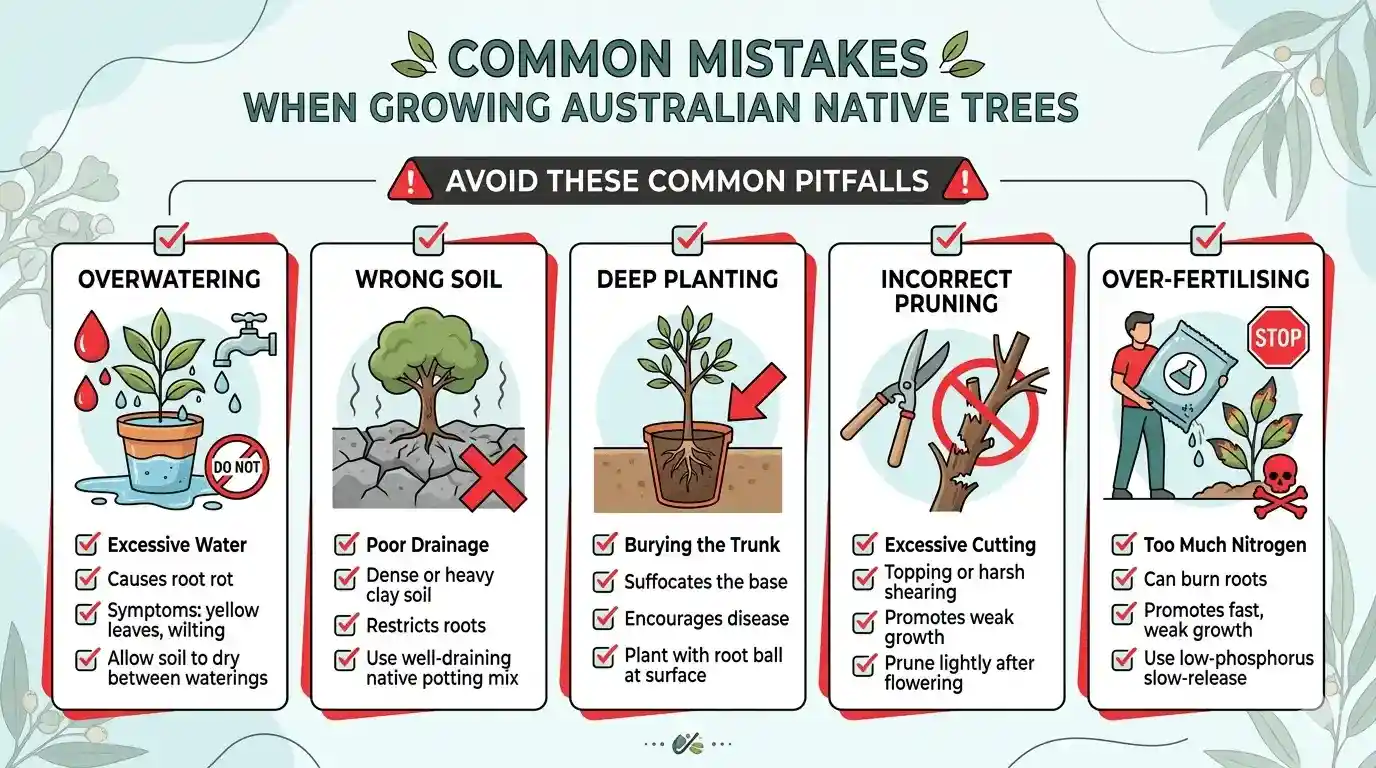
- Over-fertilising with phosphorus — toxic to banksias, grevilleas, and most Proteaceae
- Planting too deep — burying the root flare causes collar rot and slow decline
- Overwatering established trees — root rot is the leading cause of native tree death
- Choosing the wrong species for climate — always confirm suitability for your region
- Ignoring mature size — many “small” natives grow much larger than expected
- Pruning at the wrong time — cutting before flowering removes next season’s buds
- Neglecting mulch — bare soil causes moisture loss and root temperature stress
Beginner vs Experienced Native Tree Approach
Beginner Focus
- Start with one or two proven, tough species like lilly pillys or small grevilleas
- Choose container-grown trees from a reputable native nursery
- Water consistently for the first full year before reducing frequency
- Avoid any fertiliser for the first 12 months after planting
Experienced Focus
- Layer multiple species for year-round ecological value and visual interest
- Propagate from cuttings or seed to expand the garden economically
- Design with mature canopy shapes in mind, not just juvenile appearance
- Integrate natives with rainwater harvesting systems for fully self-sustaining planting
🌍 Sustainable and Eco-Friendly Practices
Choosing Australian native trees is already one of the most sustainable gardening decisions you can make. They reduce irrigation needs, eliminate the need for synthetic fertilisers, and create corridors for local wildlife to shelter, feed, and breed.
Take it further by composting garden waste, collecting rainwater for supplemental irrigation, and avoiding synthetic pesticides in favour of biological controls. A native garden that supports the local ecosystem is one of the most meaningful contributions any gardener can make.
🌿 For a modern approach to designing a sustainable native garden, explore “Modern Australian Native Garden.”
🌸 Native Shrubs, Screens and Accent Plants to Pair With Your Trees
A native tree rarely stands alone. Layering in flowering shrubs and understorey plants beneath and around your trees builds a richer, more wildlife-friendly garden — and softens the transition between canopy and ground.
Fine-Leaved Screening and Textural Shrubs
For a soft, weeping screen with fine grey-green foliage that pairs well under open-canopy trees, a hakea species offers texture without bulk.
🌿 For growing conditions and screening uses, explore “Willow Leaf Hakea.”
Grevillea for Groundcover and Bird Attraction
Low, spreading grevilleas fill the gap between trees and lawn while drawing honeyeaters into the garden.
🌿 For care and companion planting ideas, explore “Grevillea Sericea.”
Agonis for Colour Contrast
A burgundy-foliaged agonis introduces year-round colour contrast against the greens and greys typical of a native garden.
🌿 For size, colour, and placement tips, explore “Agonis ‘Burgundy’.”
Callistemon for Classic Native Flowering
Bottlebrush remains one of the most reliable flowering natives for attracting birds and adding traditional Australian garden character beneath taller trees.
🌿 For care and flowering tips, explore “Callistemon ‘White Anzac’.”
🪴 Troubleshooting Common Native Tree Problems
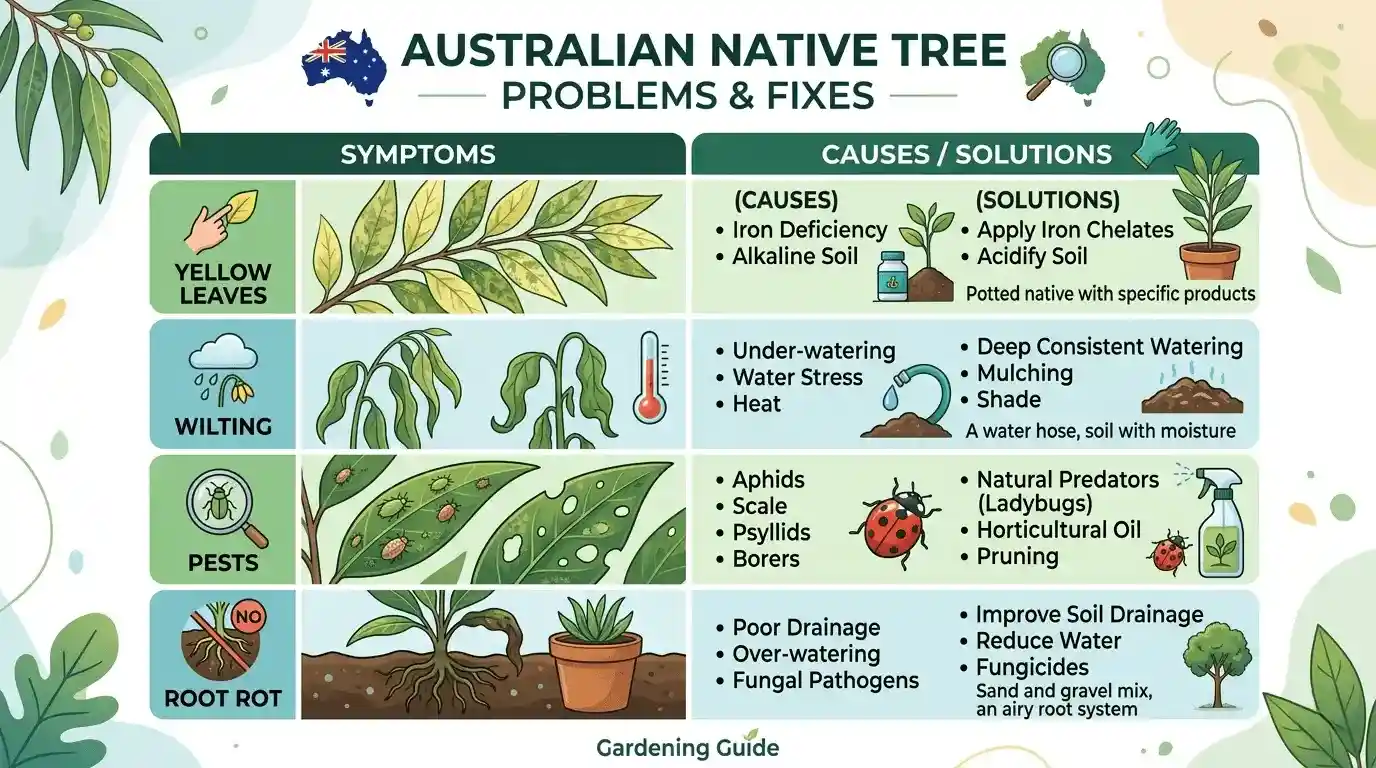
| Symptom | Likely Cause | Quick Fix |
| Yellow leaves, no pest | Overwatering or waterlogged roots | Improve drainage, reduce watering |
| Brown leaf tips | Underwatering or salt stress | Deep water and flush soil |
| No flowering | Pruned at wrong time or too much shade | Adjust pruning timing, increase light |
| Sticky residue on leaves | Scale or psyllid infestation | Neem oil spray, water blast |
| Wilting despite moist soil | Root rot from poor drainage | Improve drainage, treat with fungicide |
| Holes in trunk | Borer damage | Remove affected wood, treat entry points |
| Pale, washed-out foliage | Phosphorus toxicity from fertiliser | Flush soil, stop fertilising |
| Premature leaf drop | Heat or transplant stress | Mulch, reduce sun exposure if possible |
🌿 For a comprehensive guide to identifying tree health issues, explore “Grass Tree Problems.”
Explore Detailed Australian Native Tree Guides
Here are all the cluster articles in this content hub, grouped by topic:
Trees for Australian Gardens
- English Ivy Hanging Plant
- Dwarf Olive Trees
- Small Feature Trees Australia
- Trees With Purple Flowers Australia
- Best Trees for Clay Soil Australia
- Wind Tolerant Trees Australia
Australian Native Plants & Shrubs
Native Flowers, Ground Covers & Garden Plants
Hedges, Screening & Privacy Trees
- Australian Native Screening Trees
- Lilly Pilly Varieties
- Best Lilly Pilly for Hedge
- Tall Narrow Shrubs Australia
- Lemon Myrtle Hedge
Edible Gardens, Tools & General Care
🦘 Kangaroo Paw and Companion Planting for Native Gardens
Kangaroo paw is one of the most recognisable Australian natives and a natural companion for the trees and shrubs covered in this guide — its upright, colourful flower stems add a vertical accent at ground level beneath open-canopy trees.
Choosing the Right Kangaroo Paw Variety
A compact, landscape-hardy anigozanthos cultivar suits mass planting and border use around tree bases.
🌿 For growth habit and care, explore “Anigozanthos ‘Landscape Gold’.”
What to Plant With Kangaroo Paw
Pairing kangaroo paw with the right companion species improves disease resistance (particularly ink spot) and creates a more balanced native garden bed.
🌿 For full companion planting combinations, explore “What to Plant With Kangaroo Paw.”
Groundcover and Border Accents
Rounding out the garden bed, a low-growing native groundcover fills gaps and suppresses weeds around trees and shrubs.
🌿 For details on growth habit and uses, explore “Nivea Plant.”
🌿 Final Thoughts
Australian native garden trees are more than just plants — they’re an investment in your local ecosystem and a simpler, more sustainable way to garden. Once established, they reward you with beauty, wildlife, and resilience that exotic alternatives can rarely match.
Start small if you need to. Choose one or two species suited to your climate and soil, care for them well in the first year, and let them do what they’ve evolved to do. Your garden — and your local wildlife — will thank you for it.
🌿 FAQs – Australian Native Garden Trees
- What is the fastest-growing Australian native tree?
Species like Acacia (wattles) and some eucalypts are among the fastest-growing natives, often reaching several metres within the first few years under good conditions.
- Are Australian native trees hard to grow?
Most are surprisingly easy once established. The key is choosing a species suited to your climate and soil, watering consistently for the first year, and avoiding over-fertilising.
- Do Australian native trees need fertiliser?
Rarely. Most natives thrive in low-nutrient soils. If you do fertilise, use a slow-release native-formula product that is low in phosphorus.
- Can I grow Australian native trees in small gardens?
Absolutely. There are excellent dwarf and compact native species suited to small courtyards, narrow garden beds, and even pots.
- What Australian native trees attract birds?
Flowering species like banksias, grevilleas, callistemons, and melaleucas are among the best for attracting honeyeaters, lorikeets, and other native birds.