Introduction
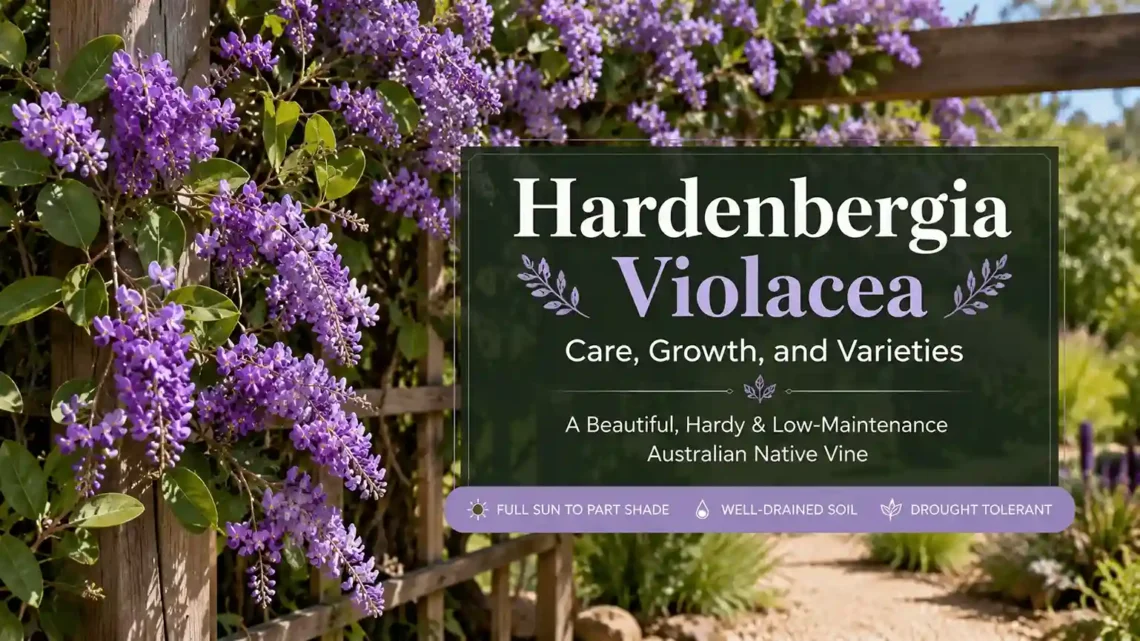
Hardenbergia violacea is an Australian native flowering vine widely known as coral pea, purple coral pea, and lilac vine hardenbergia violacea. This evergreen climber is valued for its vibrant pea-shaped flowers, drought tolerance, and ability to cover fences, pergolas, and trellises quickly. Gardeners often choose the plant for ornamental landscaping because it combines attractive flowering displays with relatively low maintenance requirements. Belonging to the Hardenbergia violacea family within the Fabaceae, or pea family, the species adapts well to warm climates and native-style gardens. Its vigorous climbing habit and resilience make it popular in both residential landscapes and large-scale drought-tolerant planting projects.
Quick Summary
- Hardenbergia violacea is a fast-growing Australian native climber known for purple, pink, or white pea-shaped flowers.
- Commonly called coral pea or purple coral pea, it is widely used for fences, trellises, pergolas, and ground cover.
- The plant thrives in warm climates, tolerates drought once established, and adapts to various garden settings.
- Popular cultivars include Hardenbergia violacea Happy Wanderer, Hardenbergia violacea Alba, and Hardenbergia violacea Rosea.
- Proper sunlight, drainage, and pruning improve flowering performance and long-term plant health.
What Is Hardenbergia Violacea?
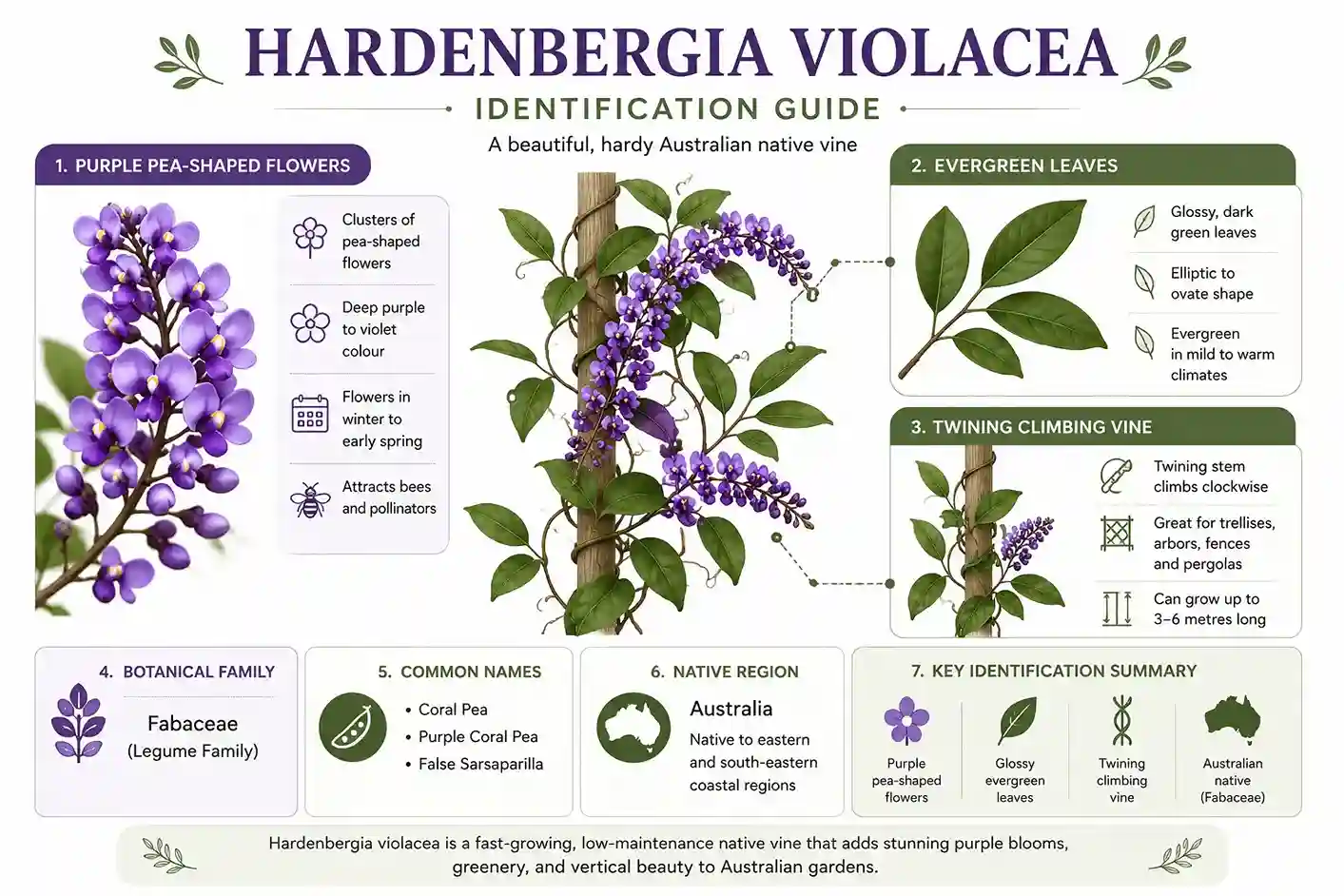
Hardenbergia violacea is a flowering evergreen climber native to Australia and belongs to the Fabaceae pea family. The species is commonly known as coral pea, purple coral pea, false sarsaparilla, and native sarsaparilla due to the historical use of its roots as a substitute for true sarsaparilla. Hardenbergia violacea belongs to the Fabaceae family, commonly known as the pea family, which includes many flowering legumes.
The name “false sarsaparilla Hardenbergia violacea” developed because Indigenous Australians and early settlers sometimes used the plant’s roots in traditional preparations similar to sarsaparilla-based drinks. Despite the similar use, the plant is botanically unrelated to true sarsaparilla species.
Hardenbergia naturally grows in woodlands, forests, and coastal regions throughout eastern and southern Australia. It plays an ecological role by supporting pollinators and stabilizing soil in native landscapes.
Key Botanical Facts
- Botanical family: Fabaceae
- Scientific name: Hardenbergia violacea
- Native origin: Australia
- Common names: Coral pea, purple coral pea, false sarsaparilla, native sarsaparilla
- Growth habit: Evergreen climbing vine or sprawling ground cover
- Flower colors: Purple, pink, white
Plant Characteristics and Growth Habit
Leaves, Flowers, and Vine Structure
Hardenbergia violacea produces glossy green leaves and clusters of pea-shaped flowers that bloom heavily in late winter and spring. The flowers resemble sweet pea blossoms and are commonly purple, although white and pink cultivars are also available.
The hardenbergia vine is known for its vigorous climbing habit. It climbs by twining stems around fences, wires, and trellises. As an evergreen climber, the plant retains foliage year-round in mild climates.
The hardenbergia plant develops flexible stems that spread rapidly when supported. Purple hardenbergia selections are especially popular for ornamental screening and vertical gardening.
Common characteristics include:
- Dense evergreen foliage
- Twining climbing stems
- Cascading flowering growth
- Long flowering season
- Fast establishment in warm climates
Mature Size and Spread
Hardenbergia violacea can reach significant size when grown outdoors with proper support and favorable conditions.
| Typical Size and Growth Conditions of Hardenbergia Violacea | |
| Height | 10–15 feet |
| Spread | 6–10 feet |
| Growth form | Climbing vine or ground cover |
| Sun requirements | Full sun to partial shade |
| Climbing support needs | Trellises, fences, pergolas |
Indoor specimens generally remain smaller because container growth restricts root expansion. Outdoor plants in warm climates grow much more vigorously.
Environmental factors affecting mature size include:
- Sunlight exposure
- Soil drainage
- Available climbing support
- Water availability
- Pruning frequency
Hardenbergia Violacea Varieties and Cultivars
Hardenbergia violacea varieties differ mainly in flower color, growth vigor, and mature size. Several cultivars are widely used in ornamental landscaping because of their adaptability and flowering performance.
Popular cultivars include:
- Hardenbergia violacea Happy Wanderer
- Hardenbergia violacea Alba
- Hardenbergia alba
- Hardenbergia violacea White Out
- Hardenbergia violacea Rosea
- Hardenbergia violacea Meema
- Hardenbergia violacea Mini Haha
Purple, White, and Pink Flowering Types
Purple cultivars remain the most recognizable form of hardenbergia violacea. They create bold flowering displays and suit native-style landscapes.
White cultivars such as Hardenbergia violacea alba and Hardenbergia violacea white out provide brighter visual contrast in shaded or minimalist gardens. Pink selections like Hardenbergia violacea rosea offer softer ornamental color for decorative planting schemes.
These flowering types differ primarily in aesthetics rather than basic care requirements.
Compact vs Vigorous Growing Cultivars
Some hardenbergia cultivars are vigorous climbers, while others remain compact and suitable for containers or smaller gardens.
| Comparison: Popular Hardenbergia Violacea Cultivars | |||
| Variety | Flower Color | Growth Habit | Best Use |
| Happy Wanderer | Purple | Vigorous climber | Trellises |
| Alba | White | Moderate climber | Bright garden accents |
| Rosea | Pink | Ornamental vine | Decorative planting |
| Mini Haha | Compact purple | Smaller growth | Containers |
Compact forms perform best in pots, balconies, and confined planting spaces. Vigorous cultivars are better suited for large fences, pergolas, and screening applications.
Ideal Growing Conditions for Hardenbergia Violacea
Climate and Hardiness Zones
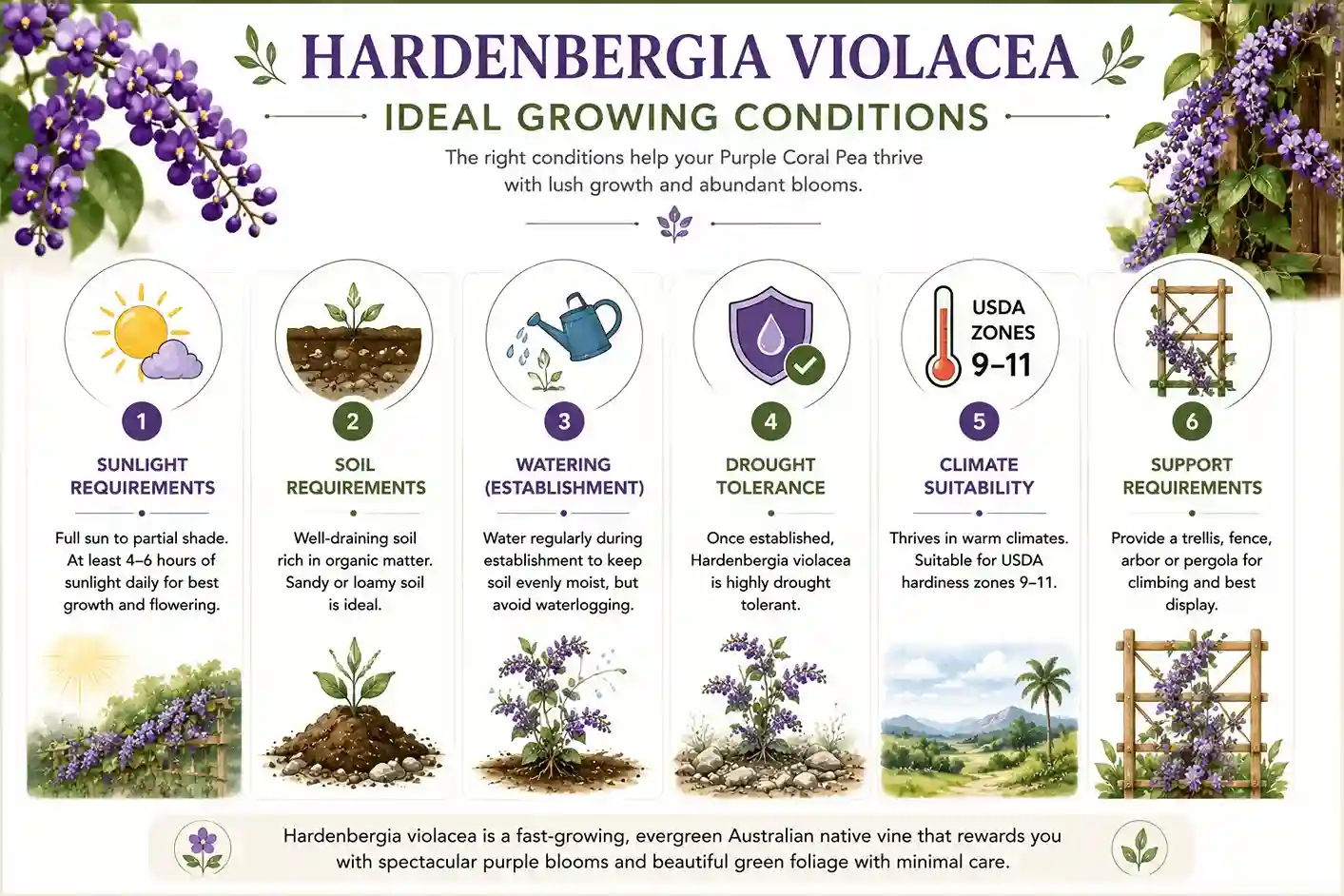
Hardenbergia violacea grows best in warm temperate and Mediterranean-style climates. It performs well in USDA hardiness zones 9–11 and tolerates moderate heat once established.
The plant can survive light frost, but prolonged freezing temperatures may damage foliage and stems. In colder regions, winter protection improves survival rates.
Heat tolerance is generally excellent when roots are established and soil drainage remains adequate.
Sunlight and Soil Requirements
Hardenbergia produces the strongest flowering display in full sun. Partial shade is tolerated, but excessive shade often reduces flowering and causes leggy growth.
The plant prefers:
- Well-draining soil
- Slightly acidic to neutral pH
- Moderate moisture during establishment
- Air circulation around roots
Heavy clay soil commonly causes drainage problems and root stress. Although Hardenbergia flowers best in full sun, it can also pair well with other shade-tolerant Australian natives in mixed landscape designs.
Watering and Fertilization Needs
Newly planted hardenbergia requires regular watering until roots establish properly. Mature plants become drought tolerant and need less frequent irrigation.
Overwatering is one of the most common beginner mistakes. Constantly wet soil can lead to root rot and yellow leaves.
Native Australian plants such as hardenbergia generally prefer low fertilizer levels. Excess fertilizer, especially nitrogen-heavy products, may reduce flowering and encourage excessive leafy growth.
Care Essentials
- Best sunlight exposure: Full sun
- Preferred soil type: Well-draining sandy or loamy soil
- Water frequency: Moderate during establishment, reduced afterward
- Mulching benefits: Conserves moisture and protects roots
- Fertilizer caution: Avoid excessive nitrogen fertilizers
How to Grow and Train a Hardenbergia Vine
Hardenbergia vine growth improves significantly when proper support and early training are provided. The plant readily climbs fences, pergolas, trellises, and wires using twining stems.
Planting Tips for Beginners
The best planting seasons are spring and early autumn when temperatures remain moderate.
Helpful planting tips include:
- Space plants 4–6 feet apart
- Improve drainage before planting
- Water deeply after planting
- Install support structures early
- Avoid compacted heavy clay soil
A common beginner mistake is planting the vine without support. Young hardenbergia climbing stems establish more effectively when trained early.
Training and Pruning Methods
Training a Hardenbergia violacea climber involves gently tying stems to supports until natural twining begins.
Pruning should occur after flowering finishes. Light pruning encourages bushier growth and improves airflow.
Proper pruning helps:
- Control excessive growth
- Improve flowering
- Prevent leggy stems
- Maintain desired shape
Excess fertilizer often causes vigorous leafy growth with fewer flowers.
Common Problems With Hardenbergia Violacea
Yellow Leaves and Poor Growth
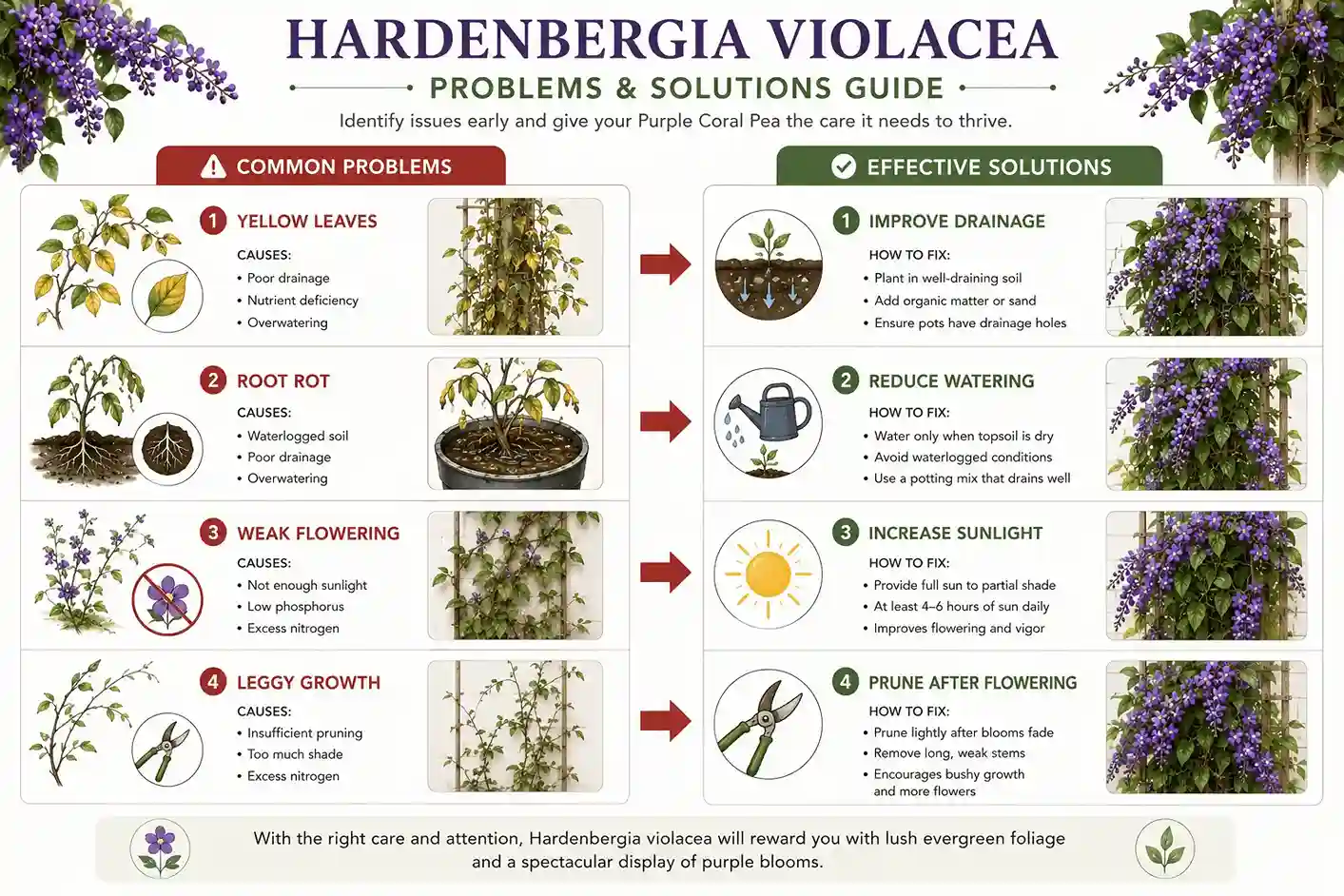
Hardenbergia violacea leaves usually turn yellow because of poor drainage, overwatering, nutrient imbalance, or excessive shade.
Common causes include:
- Waterlogged soil
- Root stress
- Lack of sunlight
- Poor nutrient availability
Improving drainage and reducing irrigation often resolves yellowing foliage.
Pests and Diseases
The plant is relatively hardy but may experience occasional pest or disease issues.
Common problems include:
- Aphids
- Scale insects
- Root rot
- Fungal infections in poorly ventilated conditions
Most fungal problems develop in overly wet soil or crowded planting conditions.
Why a Coral Pea Plant Stops Flowering
A coral pea plant typically stops flowering because of insufficient sunlight, improper pruning, excessive nitrogen fertilizer, or environmental stress.
Pruning at the wrong time can remove flower buds before blooming season begins.
| Common Hardenbergia Problems and Fixes | ||
| Problem | Likely Cause | Solution |
| Yellow leaves | Poor drainage | Improve soil drainage |
| Weak flowering | Too much shade | Increase sunlight |
| Root rot | Overwatering | Reduce watering |
| Leggy growth | Lack of pruning | Prune after flowering |
Uses of Hardenbergia Violacea in Landscaping
Hardenbergia violacea uses range from ornamental climbing displays to practical erosion control in low-maintenance gardens.
Trellises, Fences, and Pergolas
The plant is widely used in vertical gardening because of its rapid climbing ability and dense foliage coverage.
Popular applications include:
- Fence screening
- Pergola coverage
- Decorative archways
- Trellis planting
For gardeners using coral pea as a dense screening plant, understanding hedge training methods can also improve long-term structure and coverage.
Ground Cover and Erosion Control
When unsupported, hardenbergia spreads across the ground and forms dense coverage. This growth habit helps suppress weeds and stabilize soil on slopes.
Its drought tolerance makes it valuable in low-water landscapes.
Wildlife and Pollinator Benefits
Coral pea flowers attract bees and beneficial pollinating insects during the flowering season.
Landscaping Benefits
- Native garden use
- Drought-tolerant landscaping
- Privacy screening
- Pollinator support
- Low-maintenance gardens
Hardenbergia Comptoniana vs Violacea
Hardenbergia comptoniana vs violacea comparisons usually focus on flower appearance, growth vigor, and leaf shape.
| Feature | Hardenbergia violacea | Hardenbergia comptoniana |
| Flower color | Purple, pink, white | Purple-red |
| Growth habit | Vine/climber | Vigorous climber |
| Common garden use | Ornamental trellis vine | Large coverage areas |
| Leaf appearance | Narrower leaves | Broader leaves |
Hardenbergia comptoniana generally grows more aggressively and suits larger landscapes. Hardenbergia violacea is more commonly used in ornamental home gardens.
Can Hardenbergia Violacea Grow in Containers?
Yes, Hardenbergia violacea can grow successfully in containers when proper drainage and support are provided.
Compact cultivars like Mini Haha are especially suitable for pots and balconies.
Important container-growing considerations include:
- Use large containers with drainage holes
- Choose free-draining potting mix
- Water more frequently during hot weather
- Prune regularly to maintain size
- Provide climbing support early
Many generic plant guides overlook the importance of drainage in containers. Poor drainage is one of the main reasons container-grown coral pea plants decline.
Seasonal Care for Hardenbergia Violacea
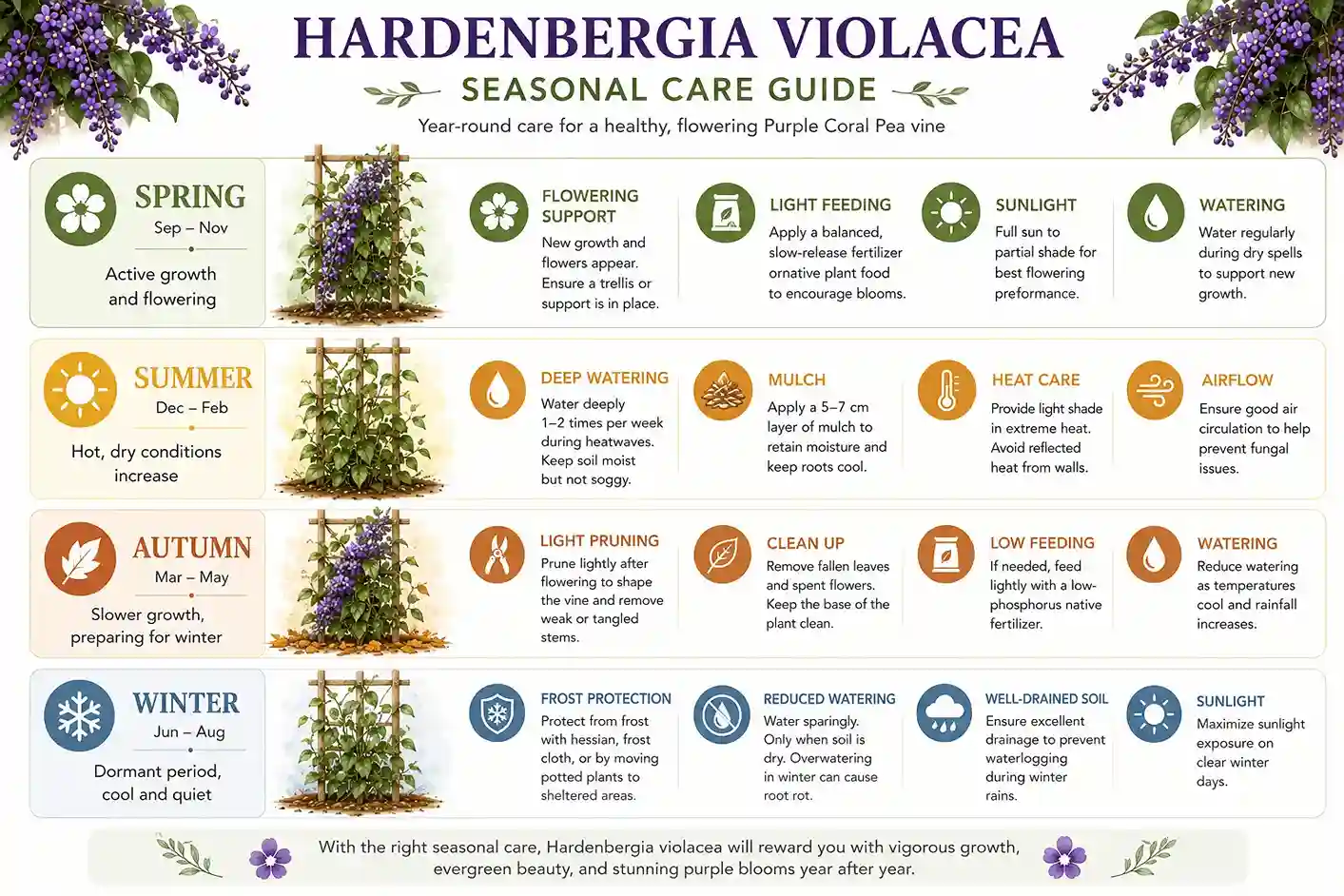
Seasonal maintenance helps maintain healthy foliage and reliable flowering.
| Seasonal Care Schedule for Coral Pea | |
| Season | Main Care Tasks |
| Spring | Flowering support and feeding |
| Summer | Deep watering during heat |
| Autumn | Light pruning |
| Winter | Frost protection |
Spring is the primary flowering period, while summer care focuses on moisture management during heat.
In colder climates, winter frost protection may include mulching roots or covering young plants.
Where Hardenbergia Violacea Fits in Native Gardening
Hardenbergia violacea plays an important role in native Australian landscaping because it combines ornamental value with drought tolerance and pollinator support.
The plant suits:
- Native garden designs
- Water-wise landscapes
- Pollinator-friendly planting
- Low-maintenance climber collections
The vine is especially effective in modern Australian native garden designs that combine drought-tolerant plants with pollinator-friendly landscaping.
It also connects naturally with broader gardening topics such as indoor plant care considerations, plant troubleshooting, native landscaping, and climbing vine maintenance. Because of its resilience and adaptability, hardenbergia remains a practical choice for sustainable gardening projects. Hardenbergia violacea also works well in broader residential landscapes focused on low-maintenance planting, native species, and ornamental climbers, making it a useful addition to a complete guide to plants for homes and gardens.
Conclusion
Hardenbergia violacea is a versatile Australian native climber valued for its colorful flowers, evergreen foliage, and low-maintenance growth habit. Commonly known as coral pea or purple coral pea, the plant performs well on fences, trellises, pergolas, and even in containers with proper care.
Successful growth depends on full sun, good drainage, moderate watering, and timely pruning after flowering. Whether used in native gardens, drought-tolerant landscapes, or ornamental vertical displays, Hardenbergia violacea remains a reliable and attractive flowering vine for many garden settings.
FAQs
What is the common name of Hardenbergia violacea?
The common names of Hardenbergia violacea include coral pea, purple coral pea, false sarsaparilla, and native sarsaparilla. These names refer to its pea-shaped flowers and historical use as a substitute for sarsaparilla.
How fast does Hardenbergia violacea grow?
Hardenbergia violacea is considered a fast-growing climber in warm climates. Growth speed depends on sunlight, soil drainage, watering, and support structures. Established plants can quickly cover trellises and fences.
Can Hardenbergia violacea tolerate frost?
Yes, Hardenbergia violacea tolerates light frost, but prolonged freezing temperatures may damage foliage and stems. Young plants benefit from winter protection in colder regions.
Why are my Hardenbergia violacea leaves turning yellow?
Yellow leaves are commonly caused by overwatering, poor drainage, nutrient imbalance, or excessive shade. Improving soil drainage and adjusting watering practices usually helps restore healthy growth.
What is the difference between Hardenbergia violacea and Hardenbergia comptoniana?
Hardenbergia violacea typically has narrower leaves and comes in purple, pink, or white flowering forms. Hardenbergia comptoniana grows more vigorously and usually produces purple-red flowers with broader leaves.
Does Hardenbergia violacea need full sun?
Yes, full sun encourages the best flowering performance. Partial shade is tolerated, but too much shade can reduce blooming and create weak, leggy growth.
Can coral pea grow in pots?
Yes, coral pea grows well in containers when planted in free-draining soil with adequate support. Compact cultivars such as Mini Haha are especially suitable for pots and balconies.