Introduction
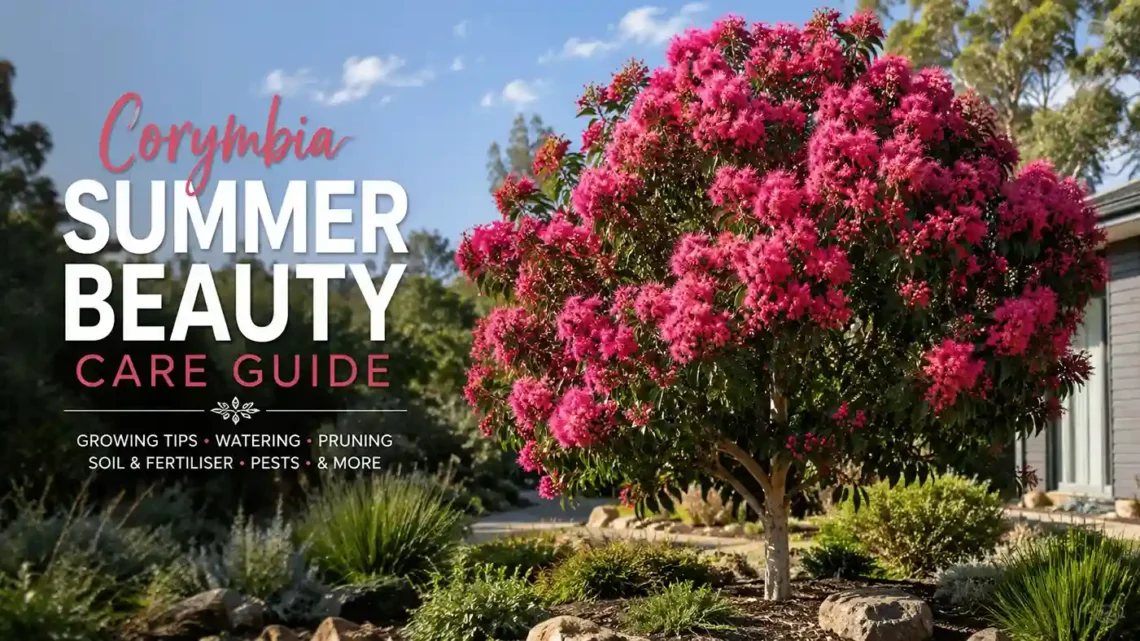
Corymbia Summer Beauty is a compact ornamental flowering gum tree valued for its vivid pink blossoms, manageable size, and adaptability to a wide range of garden conditions. Botanically known as Corymbia ficifolia ‘Summer Beauty’, this grafted hybrid cultivar is widely grown in Australian landscapes because it offers reliable flowering and controlled growth compared to seed-grown flowering gums.
The tree is especially suitable for home gardeners, landscapers, and native plant enthusiasts looking for a decorative native feature tree that fits smaller spaces. Its long-lasting summer flowers, wildlife attraction, and drought tolerance make it a practical choice for modern urban gardens and native landscape designs.
Quick Summary
- Corymbia Summer Beauty (Corymbia ficifolia ‘Summer Beauty’) is a grafted dwarf flowering gum producing masses of deep pink to coral flowers.
- It typically reaches 2–4 metres in height, making it ideal for small gardens and urban landscapes.
- It performs best in full sun with well-drained soil and low-to-moderate watering once established.
- It is a grafted cultivar, which ensures reliable flowering performance and a compact growth habit.
What Is Corymbia Summer Beauty?
Corymbia Summer Beauty is a grafted ornamental cultivar of Corymbia ficifolia, commonly known as the Red Flowering Gum. It is specifically developed to provide consistent flower colour, compact growth, and improved reliability in home landscapes. Gardeners looking for compact native gum trees may also explore other varieties in this guide to dwarf eucalyptus trees.
This cultivar is produced through grafting, where the upper flowering portion of the plant is joined to a stronger rootstock. In ornamental gum trees, grafting helps improve flowering performance, root stability, and overall plant uniformity. For gardeners, this means more predictable results compared to seed-grown trees.
Corymbia Summer Beauty is also commonly referred to as:
- Summer Beauty flowering gum
- Eucalyptus Summer Beauty
- Dwarf flowering gum
The species was previously classified within the Eucalyptus genus before being reclassified into Corymbia. Despite the botanical change, many gardeners still refer to these trees as flowering eucalyptus varieties because of their familiar gum tree appearance and eucalyptus blossoms. Corymbia Summer Beauty is a cultivated form of Corymbia ficifolia, commonly known as the Red Flowering Gum.
Corymbia Summer Beauty Plant Features and Identification
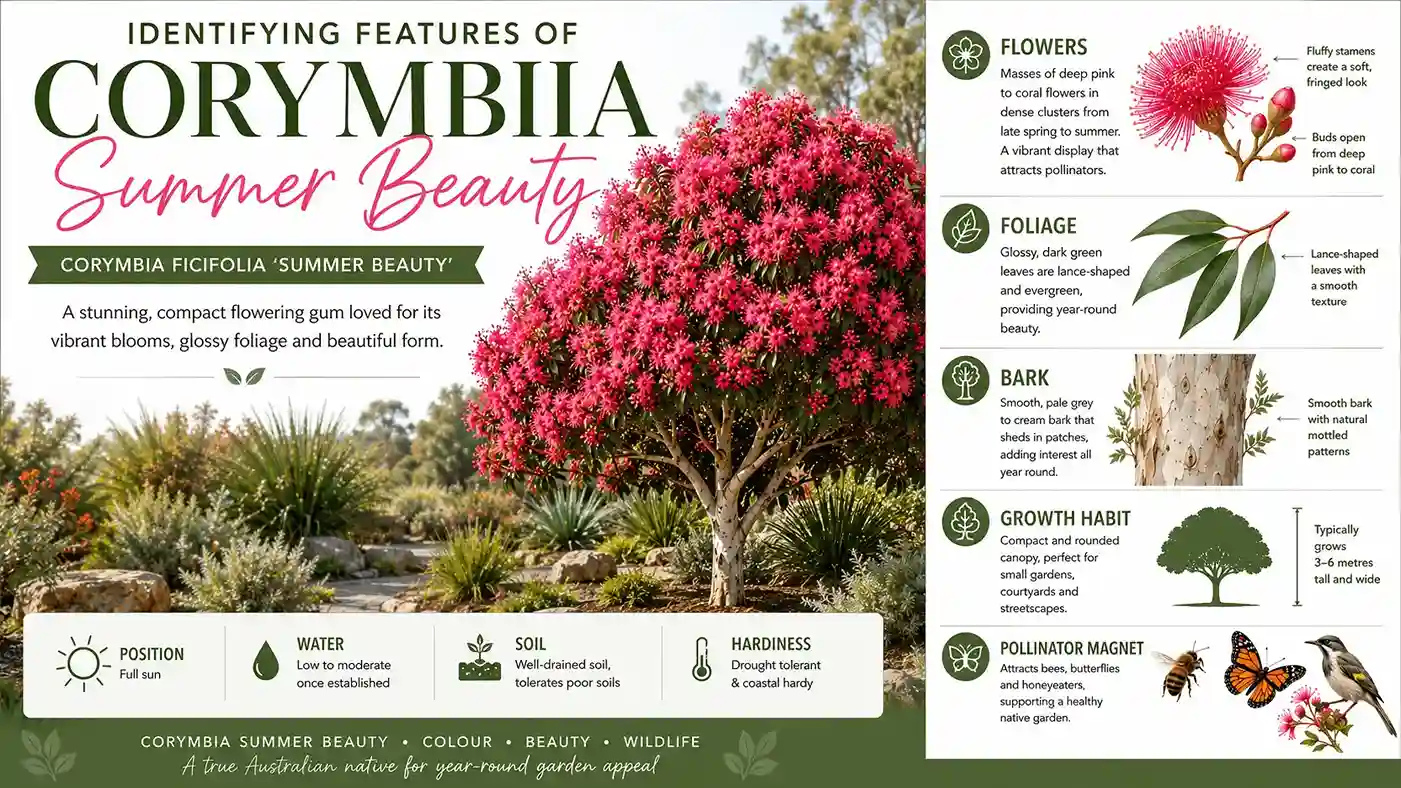
Corymbia Summer Beauty is known for its vibrant deep pink to coral-pink flowers that appear in large clusters called corymbs. The colourful blooms contrast strongly against the glossy dark green foliage, creating a striking ornamental display during summer. The vivid coral-pink blooms also pair beautifully with other Australian native pink flowering plants commonly used in wildlife-friendly landscapes.
The tree develops a rounded canopy with relatively dense foliage, making it suitable as a feature tree in compact gardens. Its bark is generally smooth but may become slightly fibrous as the tree matures.
Flowering primarily occurs during summer, although some trees may produce lighter repeat blooming under ideal conditions. The nectar-rich blossoms attract pollinators including bees, butterflies, honeyeaters, and lorikeets.
Key Features
- Deep pink to coral flower clusters (corymbs)
- Glossy dark green foliage
- Smooth to slightly fibrous bark
- Compact, rounded canopy
- Prolific summer bloomer attractive to native wildlife
Corymbia Summer Beauty Size and Growth Rate
Mature Height and Width
Corymbia Summer Beauty typically grows between 2–4 metres tall with a spread of around 2–3 metres. Its naturally compact growth habit classifies it as a dwarf flowering gum, making it suitable for smaller residential gardens, courtyards, patios, and even large containers.
Compared to the full-species Corymbia ficifolia, which may reach 8–10 metres in favourable conditions, Summer Beauty remains significantly smaller and easier to manage. Grafted trees also tend to maintain a more predictable mature size than seed-grown plants.
Because of its compact form, it is commonly used in:
- Small suburban gardens
- Poolside landscapes
- Urban streetscapes
- Decorative lawn plantings
- Native garden borders
Growth Rate
Corymbia Summer Beauty has a moderate growth rate. Most plants spend the first 1–2 years developing a stable root system before accelerating foliage and canopy growth.
The tree grows most actively during spring and summer when temperatures are warmer and daylight hours are longer. Growth speed can vary depending on:
- Soil quality
- Drainage conditions
- Water availability
- Climate zone
- Sun exposure
Healthy plants established in full sun and well-drained soil generally show faster and more consistent growth.
Why Is Corymbia Summer Beauty Grafted?
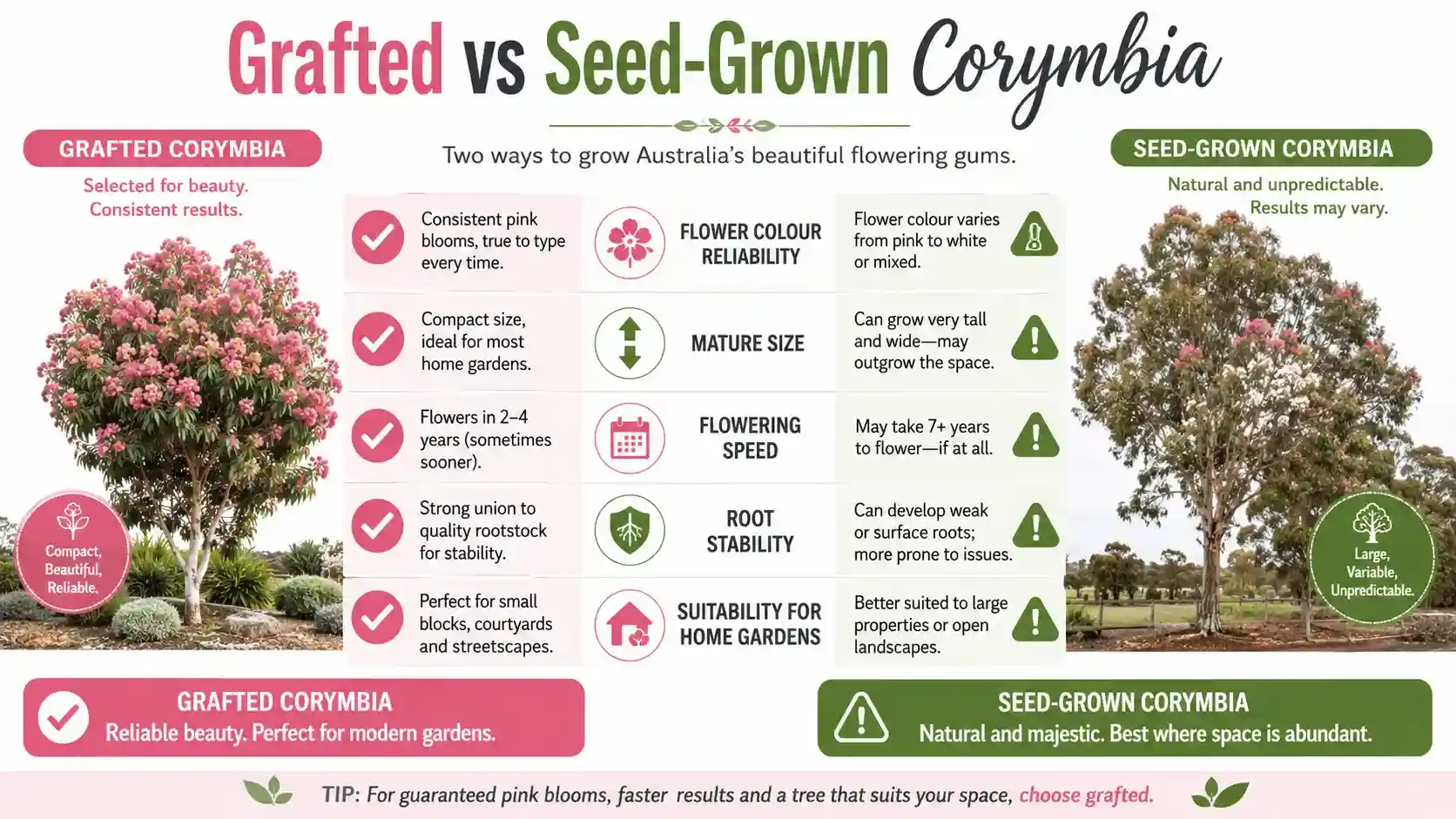
Grafting is a horticultural process where one plant section is joined onto the rootstock of another compatible plant. In ornamental gum trees, grafting is widely used to improve plant reliability and landscape performance.
Corymbia ficifolia cultivars such as Summer Beauty are grafted because seed-grown flowering gums often produce unpredictable results. Flower colour, tree size, flowering intensity, and growth habits can vary significantly from seed-grown specimens.
Grafted Corymbia cultivars provide:
- Reliable flower colour
- More compact growth
- Faster flowering
- Stronger root systems
- Better consistency for landscaping
For home gardeners, purchasing a grafted Corymbia Summer Beauty ensures the plant maintains the characteristics associated with the cultivar name.
Comparison Block — Grafted vs. Seed-Grown Corymbia
| Feature | Grafted Corymbia | Seed-Grown Corymbia |
| Flower colour reliability | ✅ Consistent | ❌ Variable |
| Mature size | ✅ Predictable and compact | ❌ Can grow large |
| Time to first flower | ✅ Faster (1–2 years) | ❌ Slower (3–5+ years) |
| Root system stability | ✅ Stronger rootstock | Variable |
| Recommended for home gardens | ✅ Yes | ⚠️ With caution |
Corymbia Summer Beauty Care Guide
Sunlight Requirements
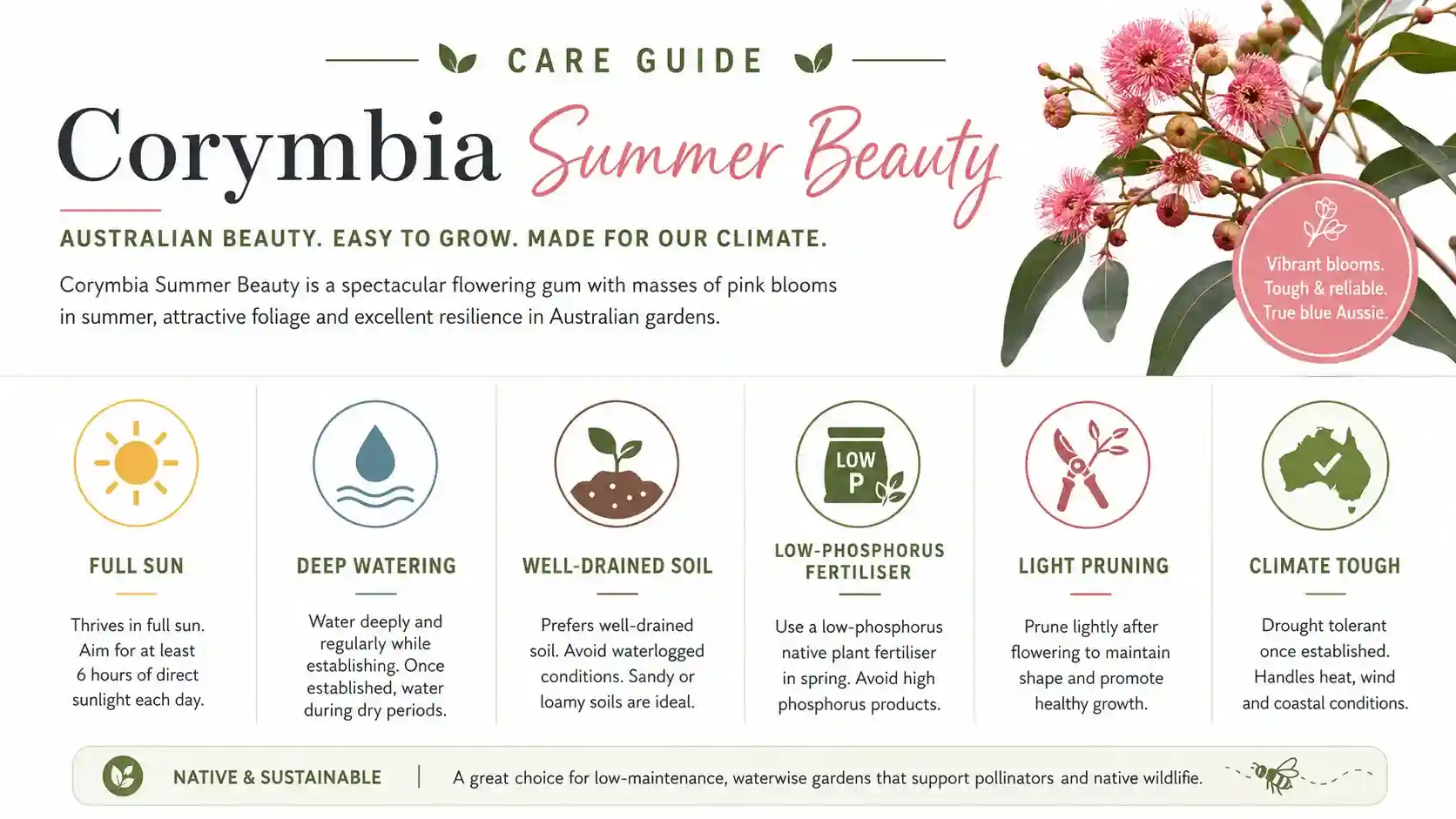
Corymbia Summer Beauty requires full sun for healthy growth and reliable flowering. A minimum of six hours of direct sunlight daily is recommended. Trees planted in shaded positions often develop weaker growth and reduced flowering. In Australian gardens, north-facing or west-facing planting positions usually provide the best sun exposure.
Watering Requirements
This flowering gum becomes drought-tolerant once fully established, usually after one to two growing seasons. During the establishment period, regular deep watering is important to encourage strong root development.
Deep watering is generally more effective than frequent shallow watering because it promotes deeper root growth. However, the soil should never remain waterlogged, as overly wet conditions increase the risk of root problems.
Soil Preferences
Corymbia Summer Beauty grows best in well-drained soils, particularly sandy loam or loamy soil types. Slightly acidic to neutral soil pH levels are generally preferred.
Heavy clay soils may retain excessive moisture and should be improved with organic matter or raised planting beds before planting.
Mulching around the base of the tree helps:
- Retain soil moisture
- Regulate root temperature
- Suppress weed growth
- Improve soil structure over time
Fertilising
Low-phosphorus native plant fertiliser is recommended for Corymbia species. Excess phosphorus can damage sensitive native roots and may lead to nutrient toxicity.
Fertilising during spring and early summer supports healthy foliage growth and flowering performance.
Pruning
Minimal pruning is usually required. Light tip pruning after flowering can help maintain a balanced canopy shape and encourage denser growth.
Avoid heavy pruning into mature wood, as recovery may be slow. Removing spent flower heads may also encourage repeat blooming in favourable conditions.
Climate Tolerance
Corymbia Summer Beauty performs best in temperate to subtropical climates. It is commonly grown successfully in:
- Brisbane
- Coastal Queensland
- New South Wales
- Mild Victorian regions
The tree tolerates light frost but may struggle in regions with prolonged freezing conditions. Poorly drained tropical climates with excessive humidity can also increase disease risks.
Corymbia Summer Beauty vs. Summer Red — What’s the Difference?
Corymbia Summer Beauty and Summer Red are both grafted Corymbia ficifolia cultivars developed for ornamental landscaping. The main difference between the two is flower colour.
Summer Beauty produces deep pink to coral flowers, while Summer Red displays brighter orange-red to scarlet blooms. Both cultivars are compact compared to the full species, although Summer Red may grow slightly larger under ideal conditions.
Gardeners often choose between them based on colour preference and overall landscape style.
Comparison Table — Summer Beauty vs. Summer Red
| Feature | Corymbia Summer Beauty | Corymbia Summer Red |
| Flower colour | Deep pink / coral | Orange-red / scarlet |
| Mature height | 2–4 metres | 3–5 metres |
| Best climate | Temperate to subtropical | Temperate to subtropical |
| Grafted cultivar | ✅ Yes | ✅ Yes |
| Wildlife attraction | High | High |
| Garden use | Feature tree, pots | Feature tree, screening |
Landscaping Uses for Corymbia Summer Beauty
Corymbia Summer Beauty is widely used as a feature tree because of its compact size and bright flowering display. Its controlled growth habit makes it highly suitable for smaller landscapes where larger gum trees may become impractical.
Common landscaping applications include:
- Feature tree planting
- Garden border specimens
- Poolside planting
- Large decorative containers
- Native wildlife gardens
The tree also works well as a driveway feature or compact street tree in warmer climates. Its nectar-rich flowers support biodiversity by attracting honeyeaters, lorikeets, butterflies, and native bees. It combines effectively with other Australian native plants such as grevilleas, banksias, lomandras, and kangaroo paws. Because of its manageable size and ornamental flowering display, Corymbia Summer Beauty is often considered one of the best small feature trees for Australian gardens.
Ideal Planting Scenarios
- Small suburban gardens with limited space
- Native wildlife gardens
- Low-maintenance landscape designs
- Patio or large container growing
- Feature specimen tree in lawn areas
Common Corymbia Summer Beauty Problems and How to Fix Them
Why Is My Corymbia Summer Beauty Not Flowering?
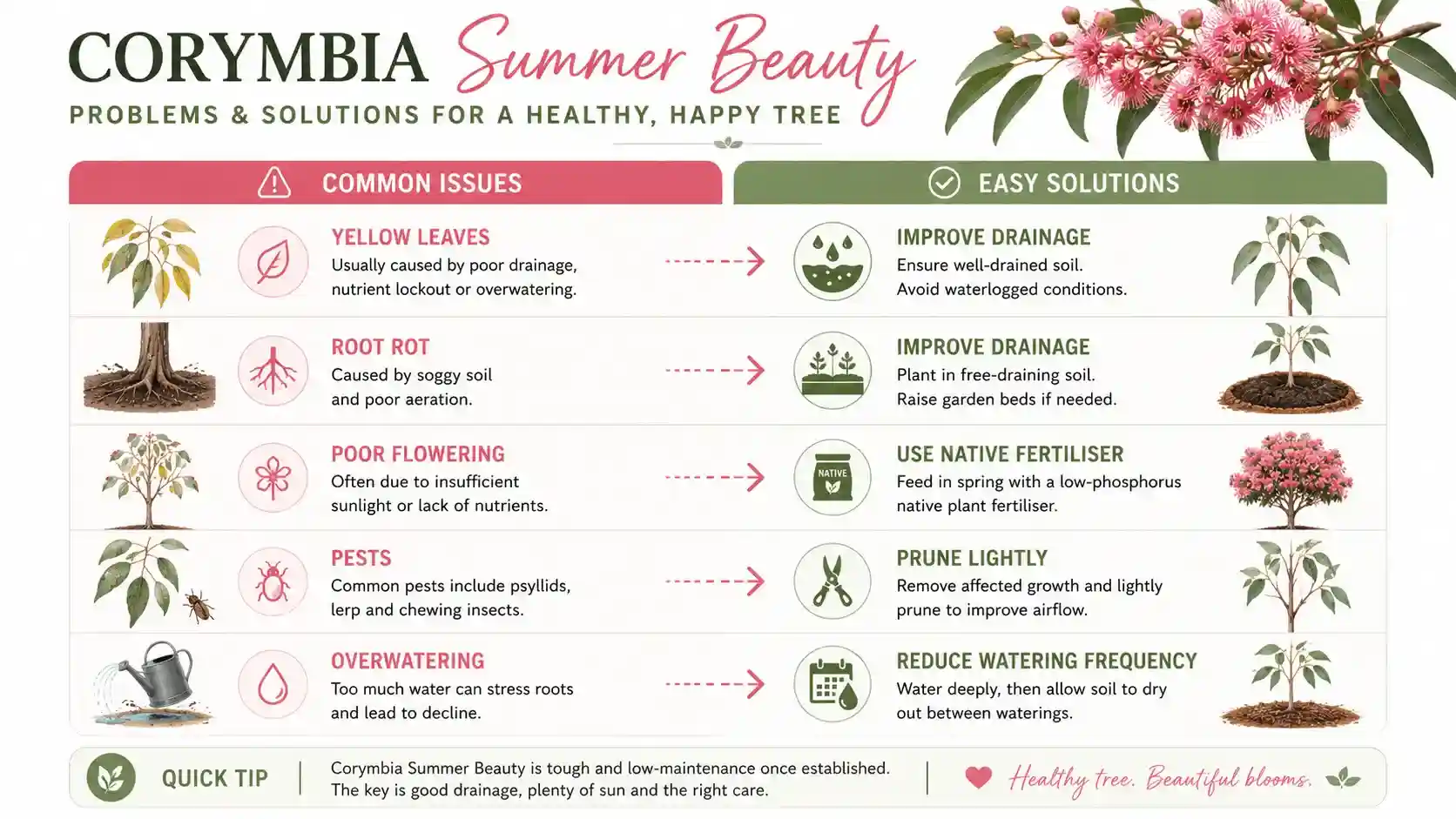
Insufficient sunlight is one of the most common reasons Corymbia Summer Beauty fails to flower properly. Over-fertilising with high-phosphorus fertilisers, incorrect pruning, or plant immaturity may also reduce blooming.
To improve flowering:
- Plant in full sun
- Use native low-phosphorus fertiliser
- Avoid hard pruning
- Allow young plants time to mature
Starting with a properly positioned grafted plant helps prevent many flowering issues.
Yellowing Leaves
Yellow leaves may result from overwatering, poor drainage, phosphorus toxicity, or nutrient imbalances. Waterlogged soil is particularly harmful to Corymbia roots.
Solutions include:
- Improving drainage
- Reducing watering frequency
- Using native-specific fertiliser
- Allowing soil to partially dry between watering
Proper soil preparation before planting significantly reduces future problems.
Root Rot and Drainage Issues
Corymbia species are vulnerable to Phytophthora root rot in poorly drained soils. Symptoms may include wilting, yellowing foliage, and sudden plant decline even when soil remains moist.
Improving drainage immediately is critical. Raised planting beds or mound planting may help reduce moisture retention around the roots.
Well-drained soil remains the best long-term prevention strategy.
Pest Issues
Common pests affecting Corymbia Summer Beauty include:
- Psyllids
- Borers
- Scale insects
Psyllids often cause leaf distortion, while borers may create holes in stems or branches. Scale insects appear as small raised bumps attached to stems and leaves.
Organic horticultural oils, pruning affected growth, and improving overall plant health may help manage minor infestations. Severe pest problems may require professional horticultural advice.
Beginner Mistakes When Growing Corymbia Summer Beauty
Many growing problems result from incorrect planting conditions or misunderstanding the care needs of grafted flowering gums.
A common beginner mistake is planting the tree in partial shade while expecting heavy flowering. Another frequent issue is using standard fertiliser instead of low-phosphorus native formulations.
Overwatering established plants, planting in heavy clay, and purchasing seed-grown trees instead of confirmed grafted specimens can also lead to disappointing results.
Top 5 Beginner Mistakes
- Planting in insufficient sunlight
- Using high-phosphorus fertiliser
- Overwatering an established tree
- Purchasing non-grafted specimens expecting compact size
- Neglecting drainage preparation before planting
Corymbia Summer Beauty and Broader Native Garden Design
Corymbia Summer Beauty fits naturally within Australian native garden designs because it combines ornamental value with ecological benefits. Its nectar-rich flowers help support pollinators and native bird populations throughout the flowering season.
The tree pairs effectively with drought-tolerant Australian natives including:
- Grevilleas
- Banksias
- Lomandras
- Kangaroo paws
Because of its manageable size, it also suits modern courtyard gardens and large outdoor containers. This flexibility allows gardeners to integrate native biodiversity into both compact urban gardens and larger landscape designs. Corymbia Summer Beauty works especially well in modern Australian native garden layouts that focus on biodiversity, drought tolerance, and layered planting.
Conclusion
Corymbia Summer Beauty is a highly valued grafted dwarf flowering gum known for its compact growth, vivid pink flowers, and reliable landscape performance. Its manageable size makes it suitable for small gardens, urban spaces, and native planting schemes where larger gum trees may not fit comfortably. The tree performs best in full sun with well-drained soil and careful watering during establishment. Choosing grafted specimens helps ensure predictable flowering, compact growth, and stronger overall performance. For gardeners planning broader indoor-outdoor greenery combinations, this flowering gum also complements many plants commonly used in homes and gardens.
With its ornamental appeal, wildlife benefits, and adaptability across many Australian climates, Corymbia Summer Beauty remains an excellent choice for both modern landscapes and traditional native gardens.
FAQs
How tall does Corymbia Summer Beauty grow?
Corymbia Summer Beauty typically grows between 2–4 metres tall with a spread of around 2–3 metres. It is classified as a dwarf flowering gum because of its compact growth habit. Grafted plants generally maintain more predictable sizing than seed-grown flowering gums.
Is Corymbia Summer Beauty a grafted tree?
Yes, Corymbia Summer Beauty is a grafted cultivar of Corymbia ficifolia. Grafting helps improve flower colour consistency, growth control, and root system strength. When purchasing, gardeners should confirm the plant is grafted to ensure reliable performance.
What is the difference between Corymbia Summer Beauty and Summer Red?
The main difference is flower colour. Summer Beauty produces deep pink to coral flowers, while Summer Red develops orange-red or scarlet blooms. Summer Red may also grow slightly larger under ideal conditions, although both remain compact compared to the full species.
What are the common problems with Corymbia Summer Beauty?
Common problems include poor flowering, yellowing leaves, root rot, and pest infestations. These issues are often linked to insufficient sunlight, poor drainage, overwatering, or incorrect fertiliser use. Well-drained soil and full sun help prevent most problems.
How do I care for Corymbia Summer Beauty?
Corymbia Summer Beauty requires full sun, well-drained soil, moderate watering during establishment, and low-phosphorus native fertiliser. Minimal pruning is needed, and established plants become relatively drought-tolerant.
Can Corymbia Summer Beauty grow in a pot or container?
Yes, Corymbia Summer Beauty can grow successfully in large containers because of its compact size. Pots should have excellent drainage, and container-grown plants may require more regular watering than garden-planted trees.
Where is the best place to plant Corymbia Summer Beauty in Australia?
The best planting locations are sunny areas with free-draining soil in temperate to subtropical regions. It performs well in Brisbane, coastal Queensland, New South Wales, and milder parts of Victoria. Avoid heavily shaded or poorly drained sites.