Introduction
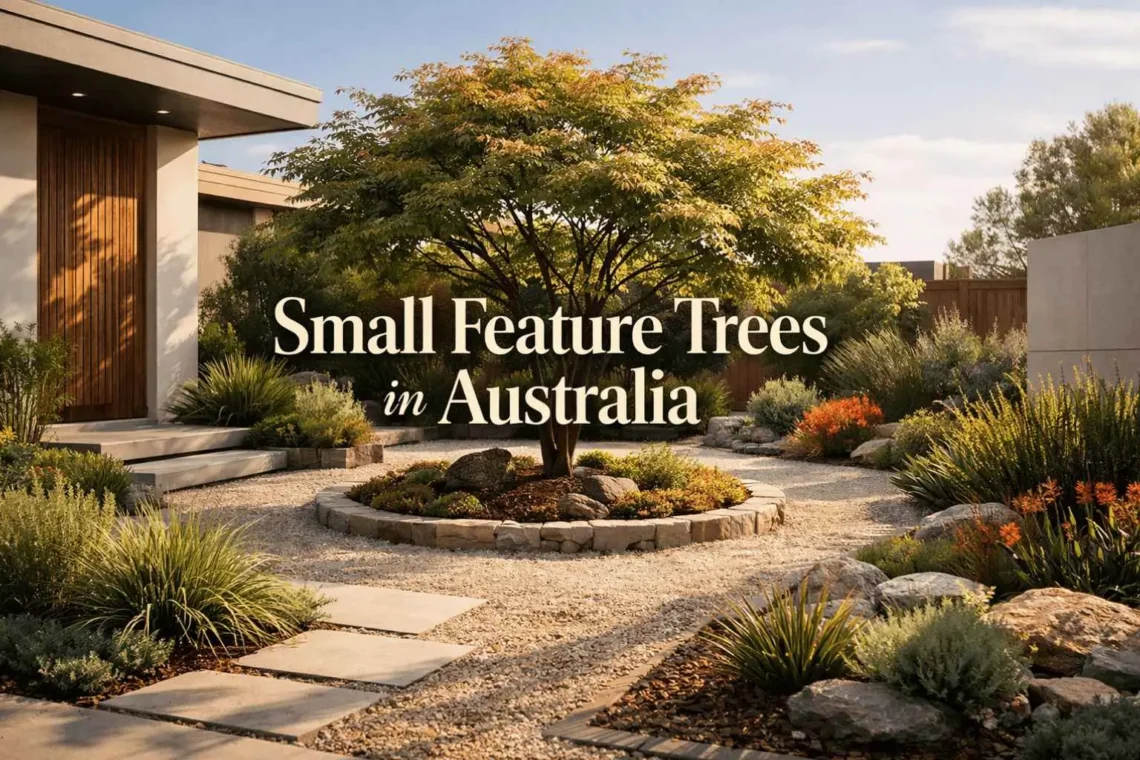
Small feature trees in Australia are compact, visually striking trees used to create focal points in gardens, especially in limited spaces like front yards and small landscapes. These trees are selected for their manageable size, aesthetic appeal, and adaptability to Australian climates, making them suitable for both decorative and functional garden design.
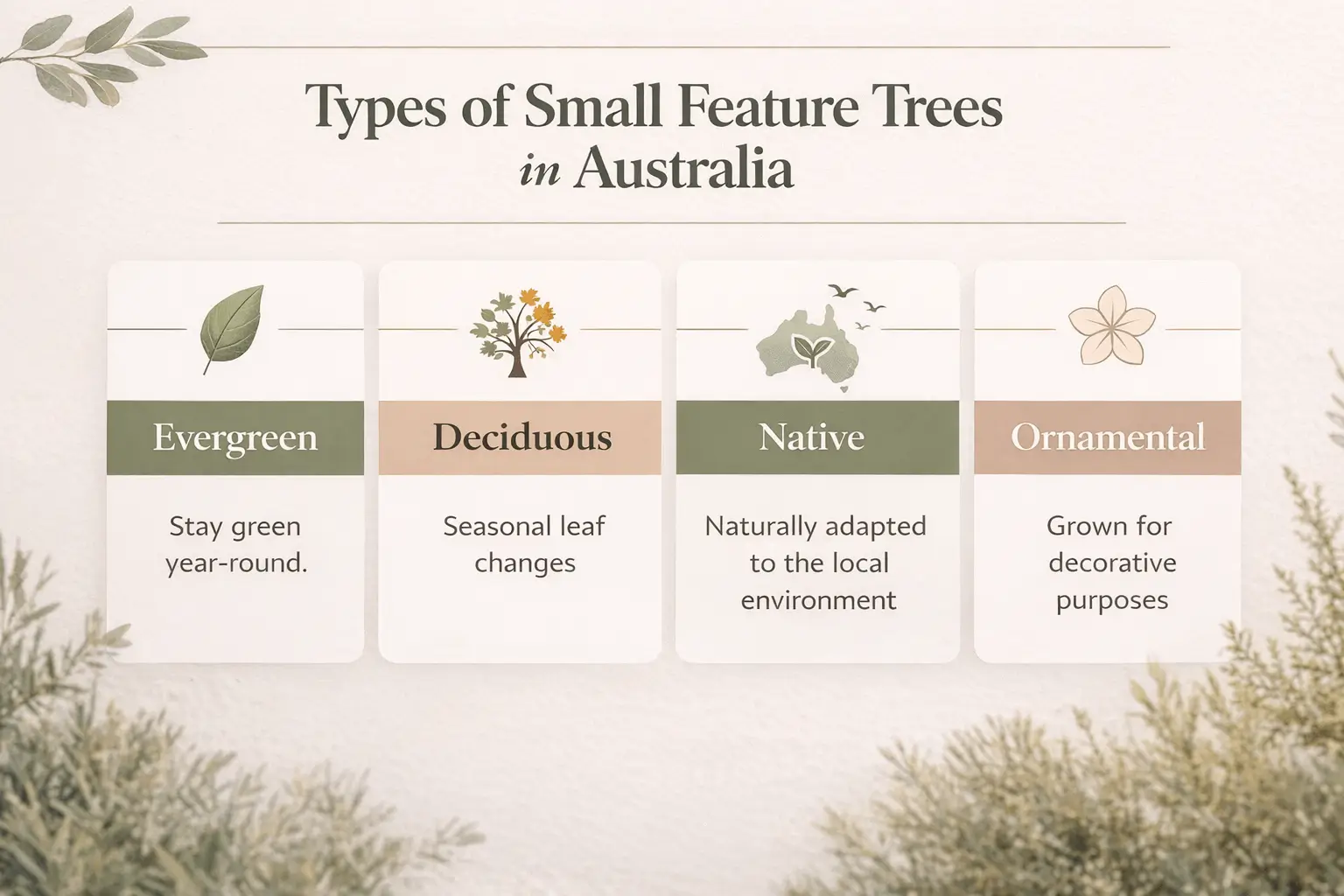
They can be evergreen or deciduous, native or ornamental, and are commonly chosen for shade, structure, privacy, or seasonal interest. Their versatility allows them to fit into modern, native, or mixed landscape styles while maintaining balance and proportion in smaller outdoor spaces.
Quick Summary
- Small feature trees provide structure, shade, and a focal point in compact Australian gardens
- Available in evergreen, deciduous, native, and ornamental varieties
- Suitable for front yards, fence lines, and limited garden spaces
- Selection depends on sunlight, space availability, and maintenance needs
What Is a Feature Tree and Why It Matters in Small Gardens
A feature tree, also known as a statement or specimen tree, is a single tree chosen for its visual impact and ability to draw attention within a landscape. It serves as the focal point around which the rest of the garden is designed. Feature trees are often grouped under broader landscape elements like accent trees, which are used to highlight focal points and add structure—similar to ideas explored in Accent Trees.
In small gardens, feature trees play a critical role in organizing space and creating visual balance. Unlike screening trees, which are planted in groups for privacy, feature trees are typically planted individually to stand out. In landscape design, a feature tree functions as a focal point, a concept widely used in structured garden planning (see Landscape design).
Key functions include:
- Acting as a visual anchor in the garden layout
- Enhancing curb appeal, especially in front yards
- Providing structure in both modern and native Australian landscapes
Types of Small Feature Trees in Australia
Evergreen vs Deciduous Feature Trees
Evergreen trees retain their foliage throughout the year, while deciduous trees shed their leaves seasonally. This difference affects maintenance, visual consistency, and seasonal variation.
| Type | Leaf Retention | Maintenance | Best Use |
| Evergreen small trees | Year-round foliage | Low | Privacy, structure |
| Deciduous small trees Australia | Seasonal leaf drop | Moderate | Shade, seasonal color |
Evergreen trees provide consistent greenery and are often preferred for low-maintenance gardens. Deciduous trees offer seasonal interest, including color changes and improved sunlight during winter. For gardeners who prefer minimal cleanup, evergreen options are especially useful, and you can explore practical examples in Trees That Don’t Drop Leaves in Australia.
Native vs Ornamental Feature Trees
Small Australian native feature trees are adapted to local climates, making them more resilient and easier to maintain. Ornamental trees, often non-native, are selected for their flowers, foliage, or unique shapes.
Key differences:
- Native trees: drought-tolerant, eco-friendly, and require less maintenance
- Ornamental trees: valued for aesthetic features such as blooms and foliage color
Best Small Feature Trees for Australian Front Yards
Small feature trees for front yards in Australia must balance size, root spread, and visual symmetry. They should complement the entrance while fitting within limited space.
Suitable options include:
- Trees for narrow spaces that grow upright without spreading widely
- Trees placed near entryways for visual impact and welcoming appearance
- Trees suited for urban front gardens with compact root systems
If you’re looking for region-specific inspiration, guides like Feature Trees Brisbane highlight suitable varieties for Australian urban landscapes.
Small Feature Trees by Size Category
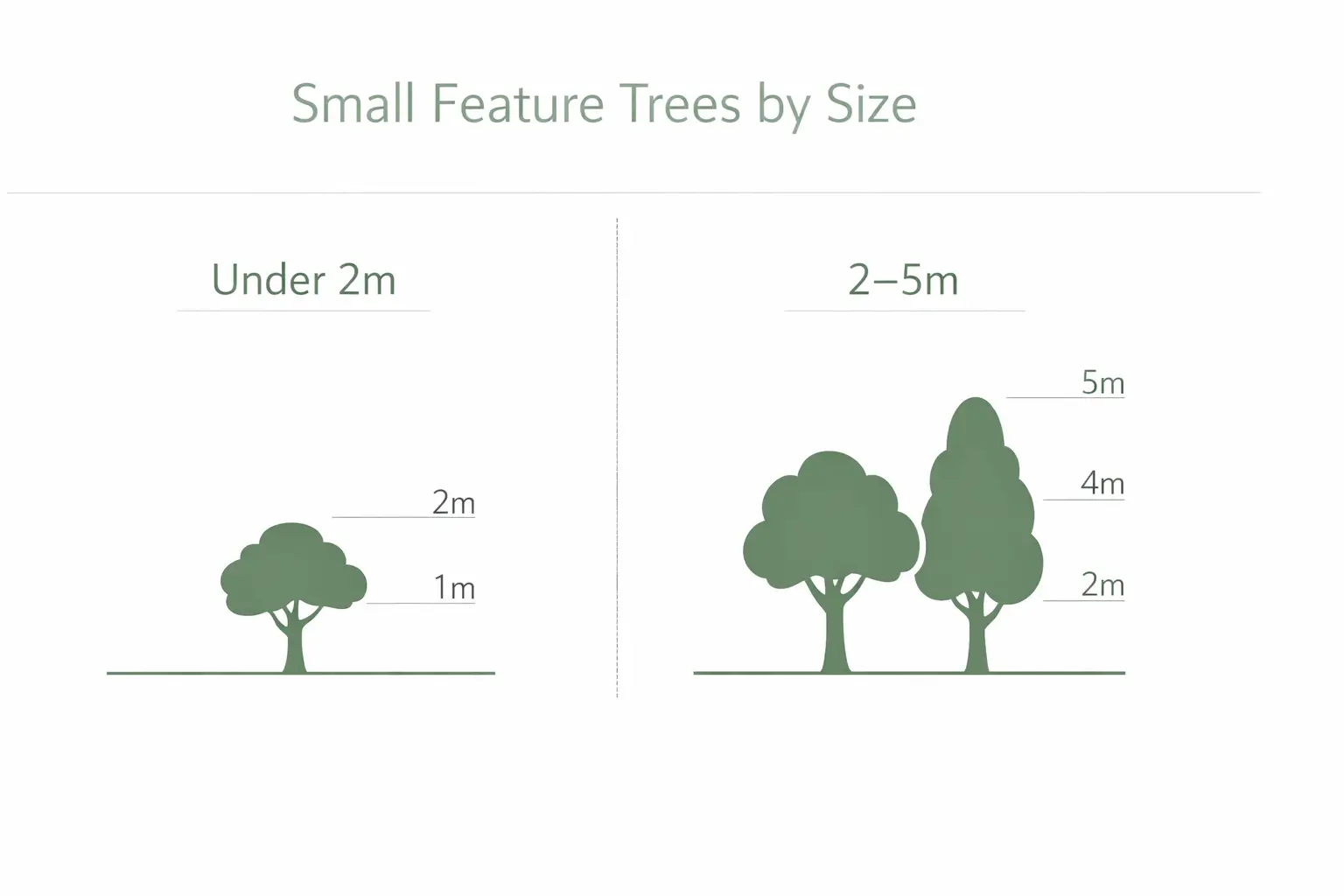
Very Small Trees for Compact Gardens (Under 2 Metres)
Very small trees are ideal for tight spaces where height and spread must be controlled. These are often dwarf or slow-growing species.
Characteristics:
- Typically under 2 metres in height
- Require minimal pruning
- Suitable for courtyards, patios, and small garden beds
Tall Small Feature Trees (2–5 Metres Range)
These trees provide more vertical presence while remaining manageable for residential gardens.
Key considerations:
- Offer a balance between height and canopy spread
- Suitable for creating shade without overwhelming space
- Ideal for structured landscaping designs
Best Small Evergreen Trees in Australia
Small evergreen trees in Australia are preferred for year-round greenery and consistent visual appeal. They maintain structure in the landscape regardless of season.
Benefits include:
- Ideal for low maintenance gardens
- Suitable for fence lines and privacy
- Provide consistent color and form throughout the year
These trees are particularly useful in modern landscapes where uniformity and simplicity are important.
Small Feature Trees for Specific Conditions
Full Sun Conditions
Small feature trees suitable for full sun conditions are those that can tolerate high temperatures and direct sunlight. Many Australian native trees perform well in these environments due to their natural adaptation.
Fence Line & Narrow Spaces
Trees for fence lines must have controlled growth and narrow canopies to avoid crowding or structural damage.
Best characteristics:
- Upright growth habit
- Non-invasive root systems
- Minimal lateral spread
Small Backyards & Limited Space
Trees for small backyards must maximize visual impact while minimizing space usage.
Important factors:
- Compact canopy
- Slow growth rate
- Adaptability to confined areas
Low Maintenance Small Feature Trees in Australia
Low maintenance small feature trees are those that require minimal watering, pruning, and pest control. Non-deciduous trees are often preferred because they reduce leaf litter.
Key factors to consider:
- Water requirements should be low once established
- Minimal pruning needed to maintain shape
- Natural resistance to pests and diseases
These trees are ideal for homeowners seeking easy-care landscaping solutions.
Common Mistakes When Choosing Small Feature Trees
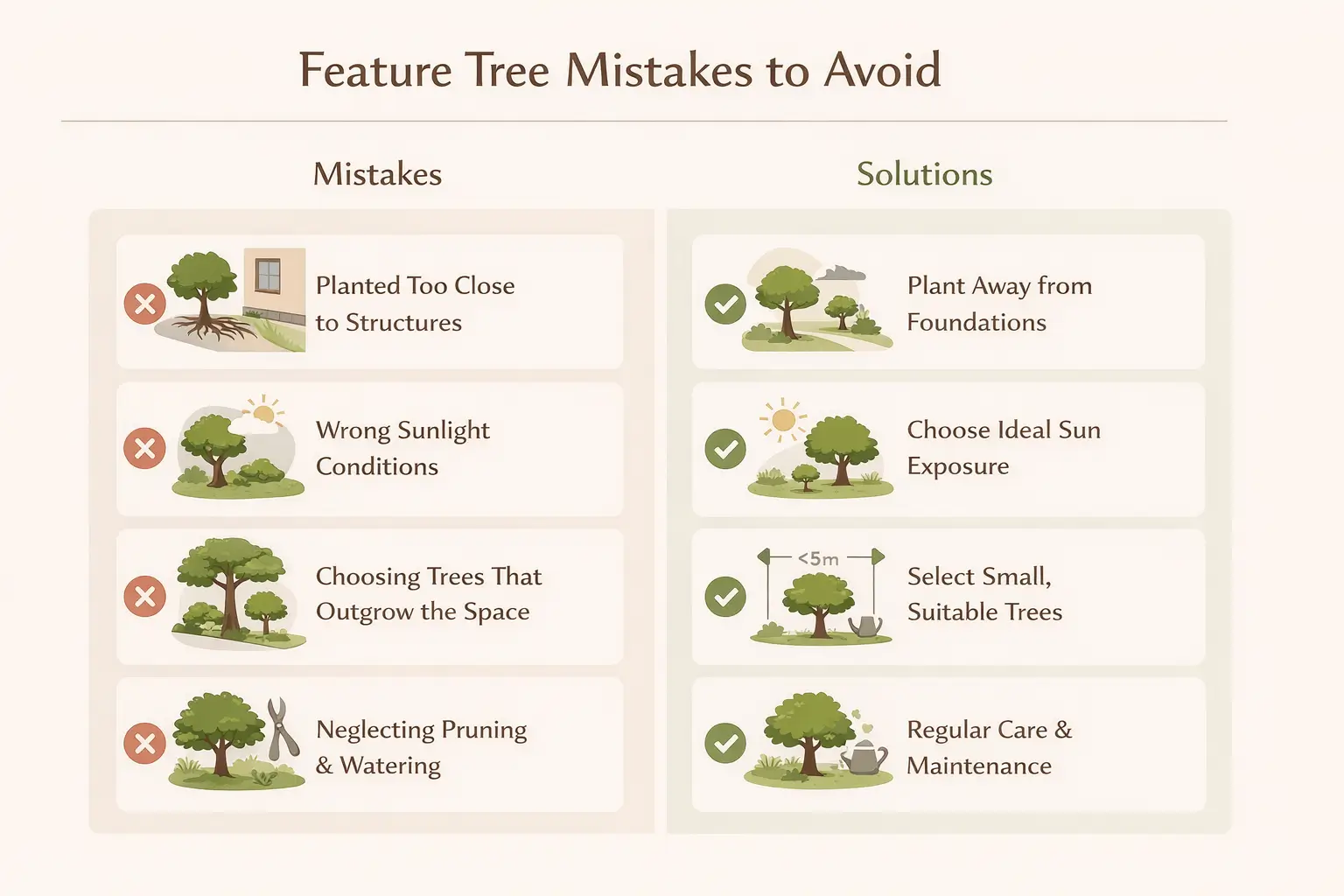
Choosing the wrong tree can lead to long-term maintenance issues and poor garden performance. Common mistakes include:
- Selecting trees that outgrow the available space
- Ignoring root spread near buildings or pathways
- Choosing trees unsuitable for the available sunlight
- Overlooking ongoing maintenance requirements
Avoiding these mistakes ensures better growth and long-term success.
Problem–Solution Guide for Small Feature Trees
Why Is My Small Tree Not Growing Well?
Poor growth is usually caused by unsuitable soil, inadequate sunlight, or restricted root space. These factors limit nutrient absorption and overall development.
Why Are Leaves Turning Yellow?
Yellowing leaves often indicate overwatering or nutrient deficiencies. Poor drainage can also lead to root stress and reduced plant health.
How to Fix and Prevent Issues
To improve tree health:
- Adjust watering frequency to match soil conditions
- Improve soil drainage and structure
- Select tree species suited to local climate conditions
How to Choose the Best Feature Tree for Your Garden
Selecting the right feature tree requires evaluating both environmental conditions and design preferences.
Key considerations:
- Garden size and layout
- Sunlight exposure throughout the day
- Preference for evergreen or deciduous trees
- Expected maintenance level
- Choice between native and ornamental varieties
A structured approach ensures the tree fits both practical and aesthetic needs.
Comparison: Feature Trees vs Screening Trees
| Feature Trees | Screening Trees |
| Used as focal point | Used for privacy |
| Decorative purpose | Functional barrier |
| Usually planted individually | Planted in rows |
| Smaller canopy | Dense foliage |
Feature trees are chosen for visual appeal, while screening trees serve a functional role in blocking views or creating privacy.
Where to Plant a Feature Tree in Your Landscape
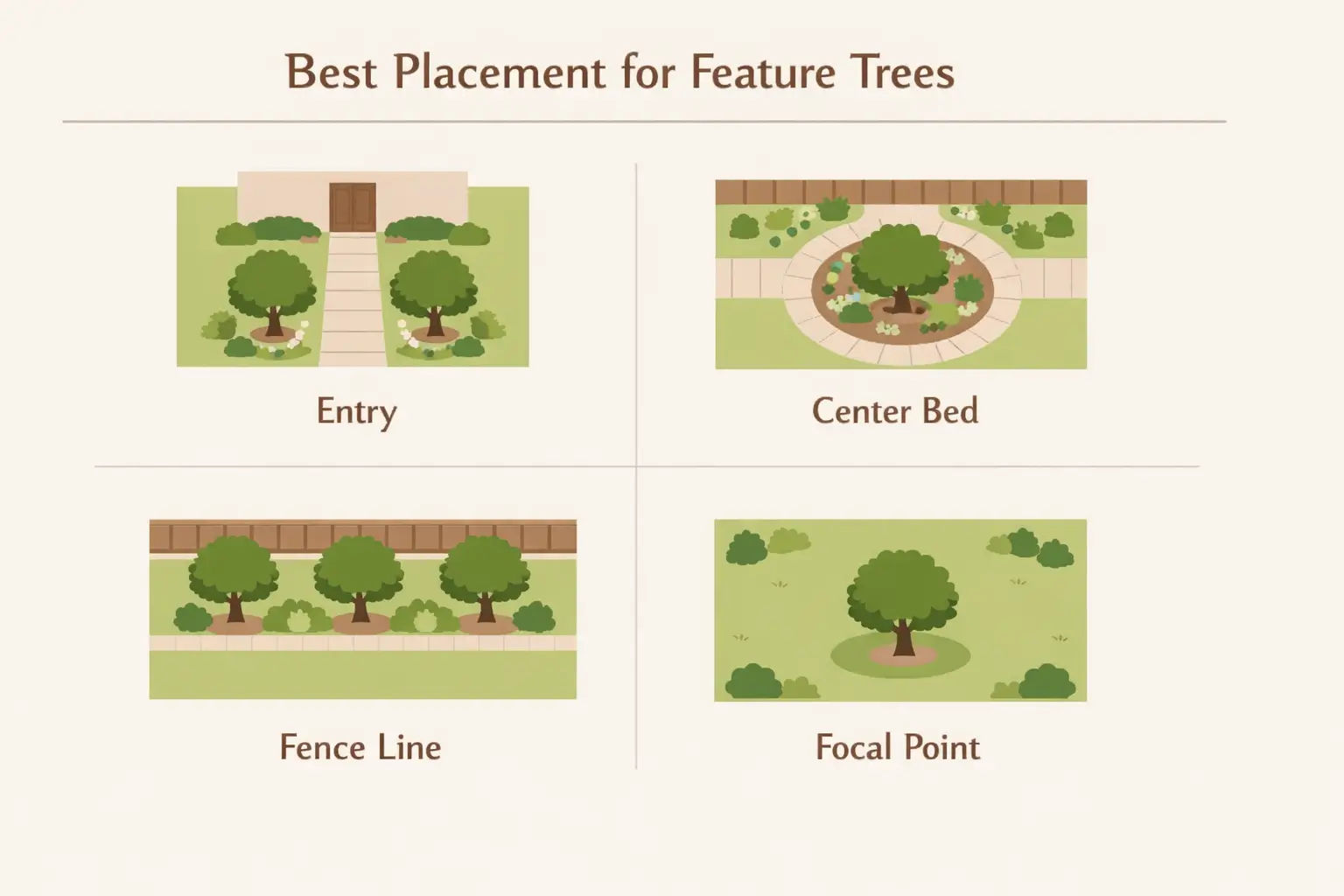
Proper placement enhances the visual impact and functionality of a feature tree.
Recommended locations:
- Near entrances to create a strong first impression
- At the center of garden beds for balance
- Along fence lines to add structure
- As standalone focal points within open spaces
Strategic placement ensures the tree integrates effectively into the landscape design. Feature trees can also enhance entryways and driveways, similar to layout strategies shown in Driveway Trees Ideas.
Conclusion
Small feature trees in Australia provide a practical and visually impactful solution for enhancing gardens, particularly in compact spaces. By selecting the appropriate type—whether evergreen, native, or ornamental—and matching it to environmental conditions and design goals, it is possible to create a balanced and low-maintenance landscape.
Careful planning, proper placement, and awareness of growth habits ensure long-term success and visual harmony in any garden setting.
FAQs
What are the best small feature trees in Australia for front yards?
Small evergreen and native trees are often the best choice for front yards because they provide consistent structure and require minimal maintenance.
What trees stay small and are easy to manage?
Dwarf and slow-growing tree species remain compact and require less pruning, making them easier to maintain.
Are evergreen trees better than deciduous trees for small gardens?
Evergreen trees are better for year-round appearance and privacy, while deciduous trees offer seasonal variation and shade benefits.
Can small feature trees be planted near fence lines?
Yes, but it is important to choose narrow-growing trees with controlled root systems to prevent structural damage.
What is the ideal height for a small feature tree in Australia?
Most small feature trees range between 2 to 5 metres, depending on the size of the garden and design requirements.