Introduction
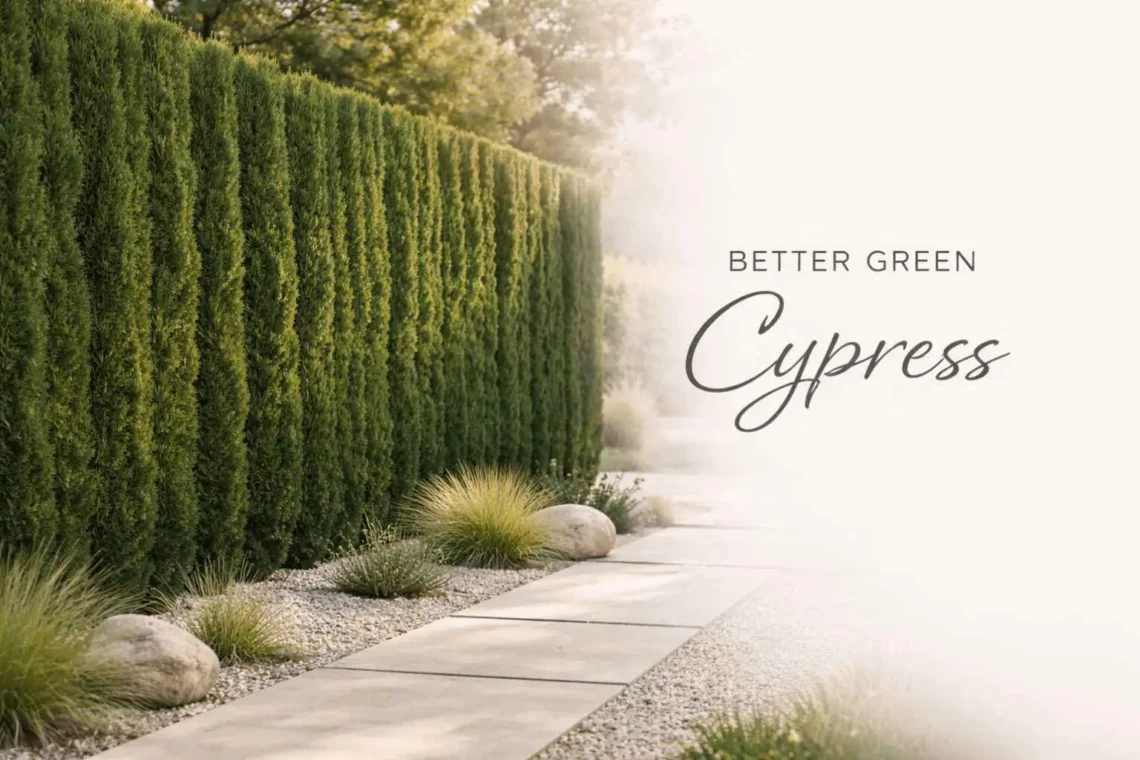
Better green cypress refers to improved forms of Cupressocyparis leylandii, a fast-growing evergreen widely used for hedging. In Australia, popular selections like leighton green cypress and other better green cypress varieties are valued for dense screening, rapid growth, and adaptability.
These trees—often called leyland cypress, leylandii tree, or cypress hedge Australia—are commonly planted for privacy, windbreaks, and landscaping structure. However, understanding their growth, care needs, and potential problems is essential before planting. These trees—often called leyland cypress, leylandii tree, or cypress hedge Australia—are commonly planted for privacy, windbreaks, and landscaping structure, similar to other options covered in our Best Hedging Trees: 6+ Essential Types for Privacy guide.
Quick Summary
- Better green cypress is a fast-growing hybrid conifer used for hedging and privacy screens
- Includes popular forms like leighton green hedge and improved leylandii selections
- Known for rapid growth but can face issues like canker disease and root spread
- Best suited for large spaces with proper spacing and maintenance
What Is Better Green Cypress? (Definition & Classification)
Better green cypress refers to improved cultivars of Cupressocyparis leylandii, a hybrid conifer developed for fast growth and dense evergreen foliage. It is widely used for hedging due to its ability to form thick, uniform screens quickly.
Botanically, it is classified as:
- × Cuprocyparis leylandii (also written as Cupressus × leylandii)
- A hybrid between:
- Monterey cypress (Cupressus macrocarpa)
- Nootka cypress (Callitropsis nootkatensis)
Common naming variations include:
- Leyland cypress
- Leylandii
- Leighton green cypress
- Cypress green hedge
These trees are preferred for landscaping because of their dense foliage and fast vertical growth, making them ideal for privacy hedges. Better green cypress refers to improved cultivars of Cupressocyparis leylandii, a hybrid conifer widely used for hedging due to its dense and fast-growing nature.
Better Green Cypress Varieties Explained
Better green cypress includes several cultivated forms designed for improved performance in hedging and landscaping.
Key Varieties
Leighton Green Cypress
- Dense, rich green foliage
- Upright growth habit
- Ideal for formal hedging
Other Improved Leylandii Types
- Selected for disease tolerance
- Slight variations in foliage texture and color
- Used for both hedges and feature planting
Key Differences
- Foliage density: Some varieties are thicker and better for screening
- Growth habit: Upright vs slightly spreading
- Usage:
- Dense hedge → Leighton Green
- Feature tree → Other improved cultivars
Growth Rate and Mature Size
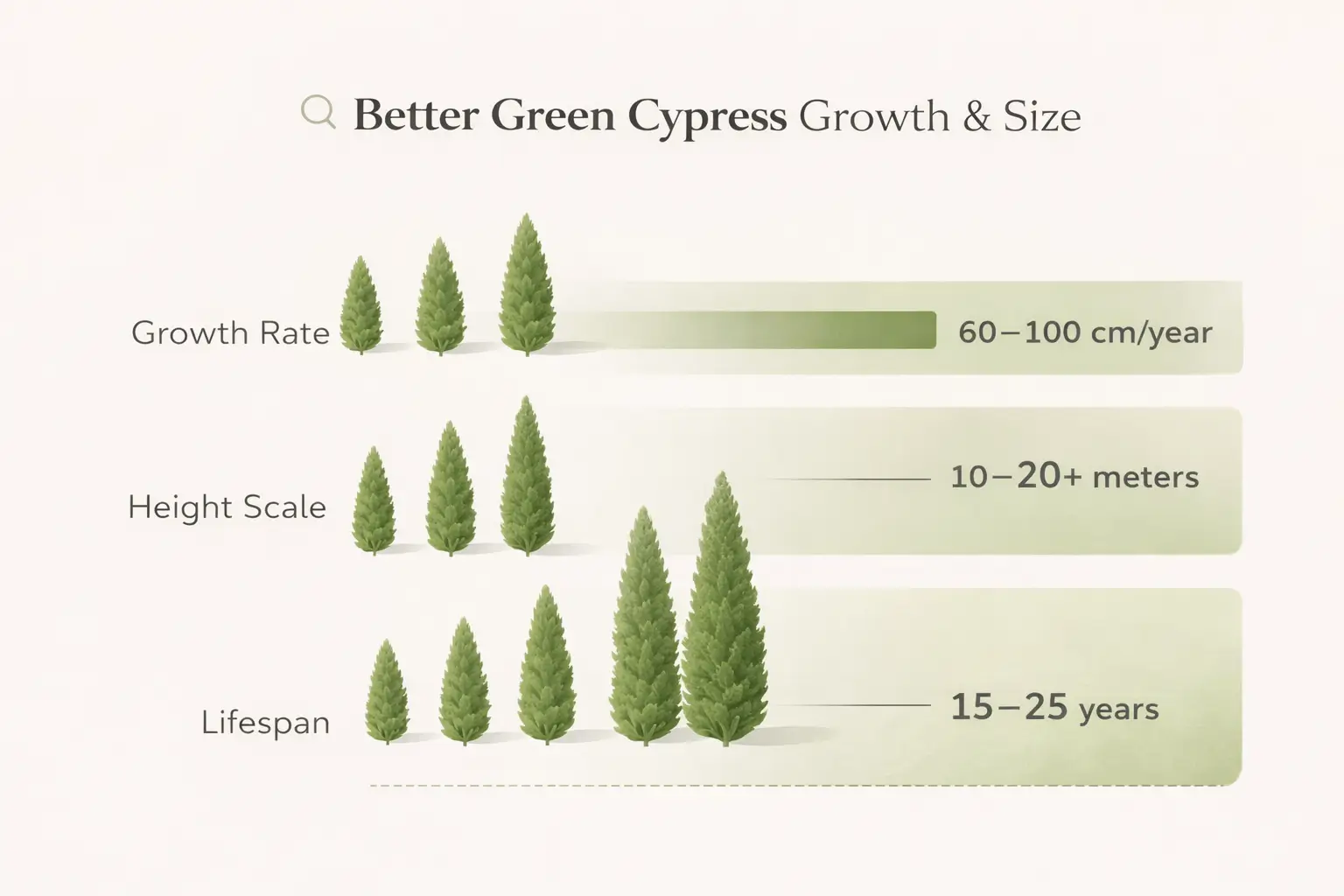
Better green cypress is known for extremely rapid growth, making it one of the fastest hedge options available.
Key Growth Facts
- Growth rate: 60–100 cm per year
- Mature height: 10–20+ meters
- Spread: 3–5 meters if unpruned
- Lifespan: 15–25 years (depends on care and conditions)
Environmental Influence
Growth speed and size depend on:
- Soil quality
- Water availability
- Sun exposure
- Pruning frequency
In fertile, well-watered conditions, growth can be even faster, requiring more maintenance.
Spacing and Hedge Planning
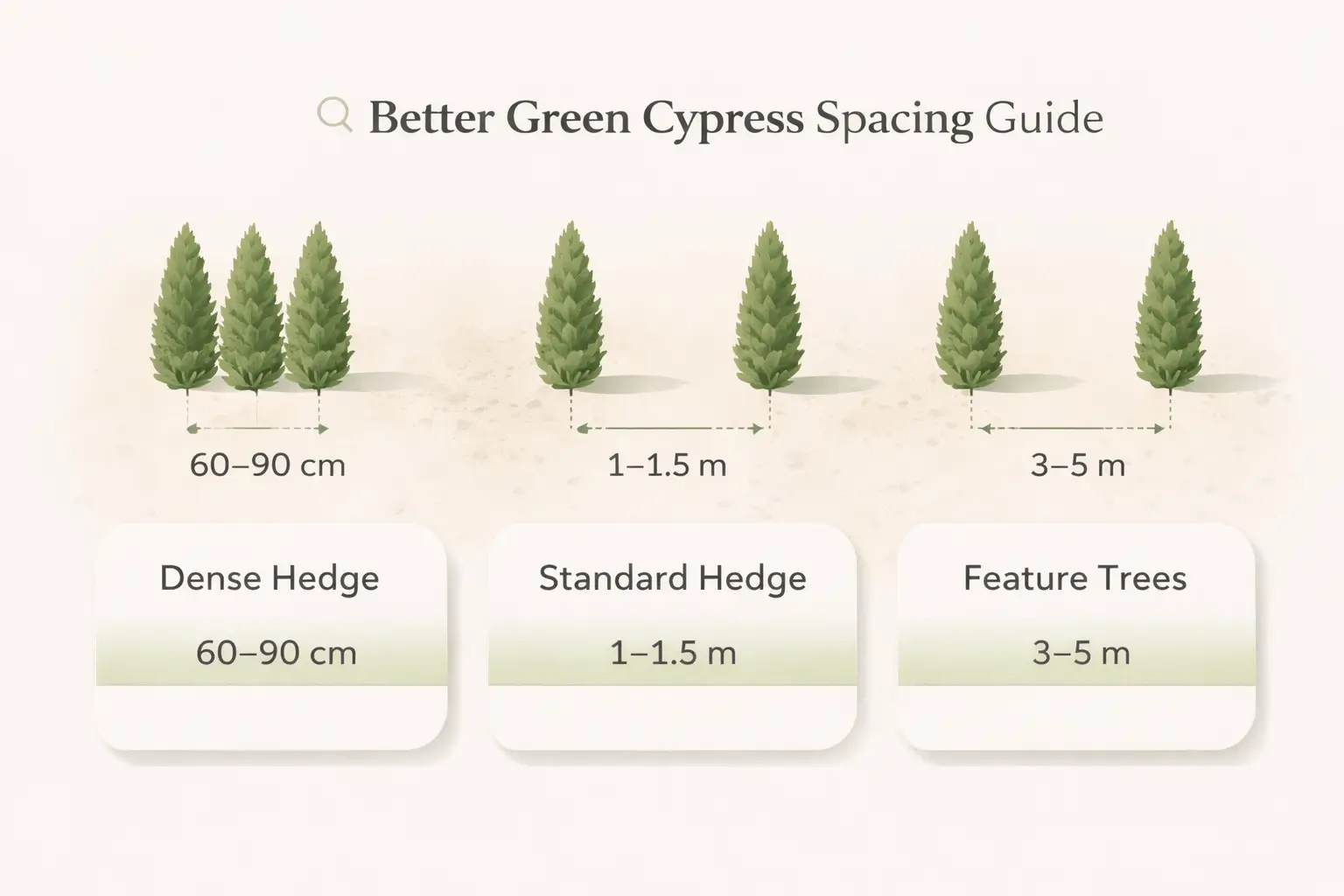
Recommended Spacing Guide
| Use Case | Spacing Distance | Result |
| Dense hedge | 60–90 cm | Thick privacy screen |
| Standard hedge | 1–1.5 m | Balanced growth |
| Feature trees | 3–5 m | Full natural shape |
Practical Insight
Planting too close is a common mistake. While it creates instant density, it leads to poor airflow, disease risk, and uneven growth over time.
Care Guide: How to Grow Better Green Cypress
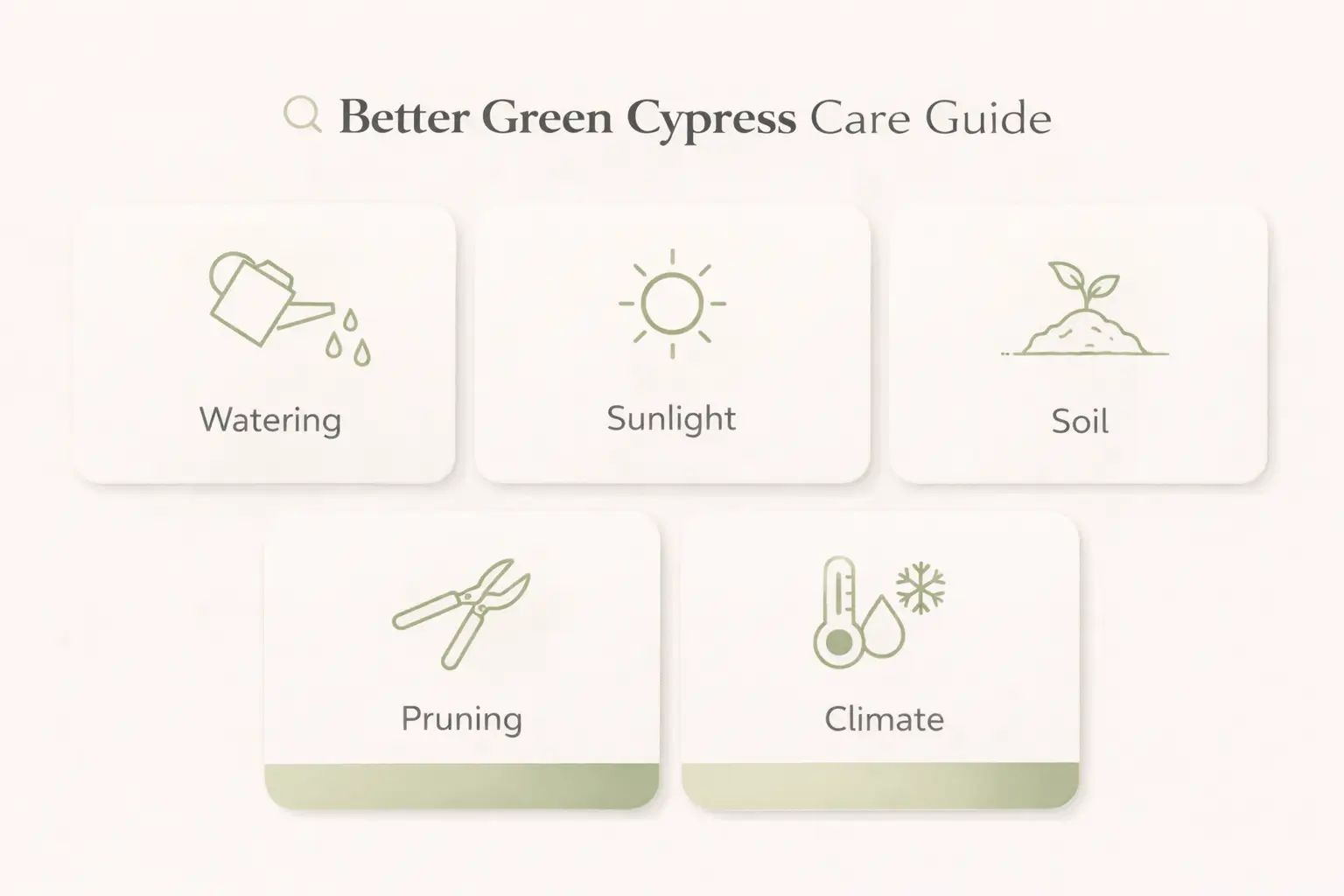
Watering
- Regular watering during establishment (first 6–12 months)
- Reduce frequency once roots are established
Light
- Requires full sun for optimal growth
- Partial shade may reduce density
Soil
- Must be well-drained
- Avoid heavy clay or waterlogged soil
Pruning
- Frequent trimming required for hedge shape
- Best done 2–3 times per year
Climate
- Suitable for temperate regions
- Performs well in many Australian climates
Practical Tip
Consistent pruning from an early stage prevents overgrowth and reduces long-term maintenance issues.
Common Problems with Better Green Cypress
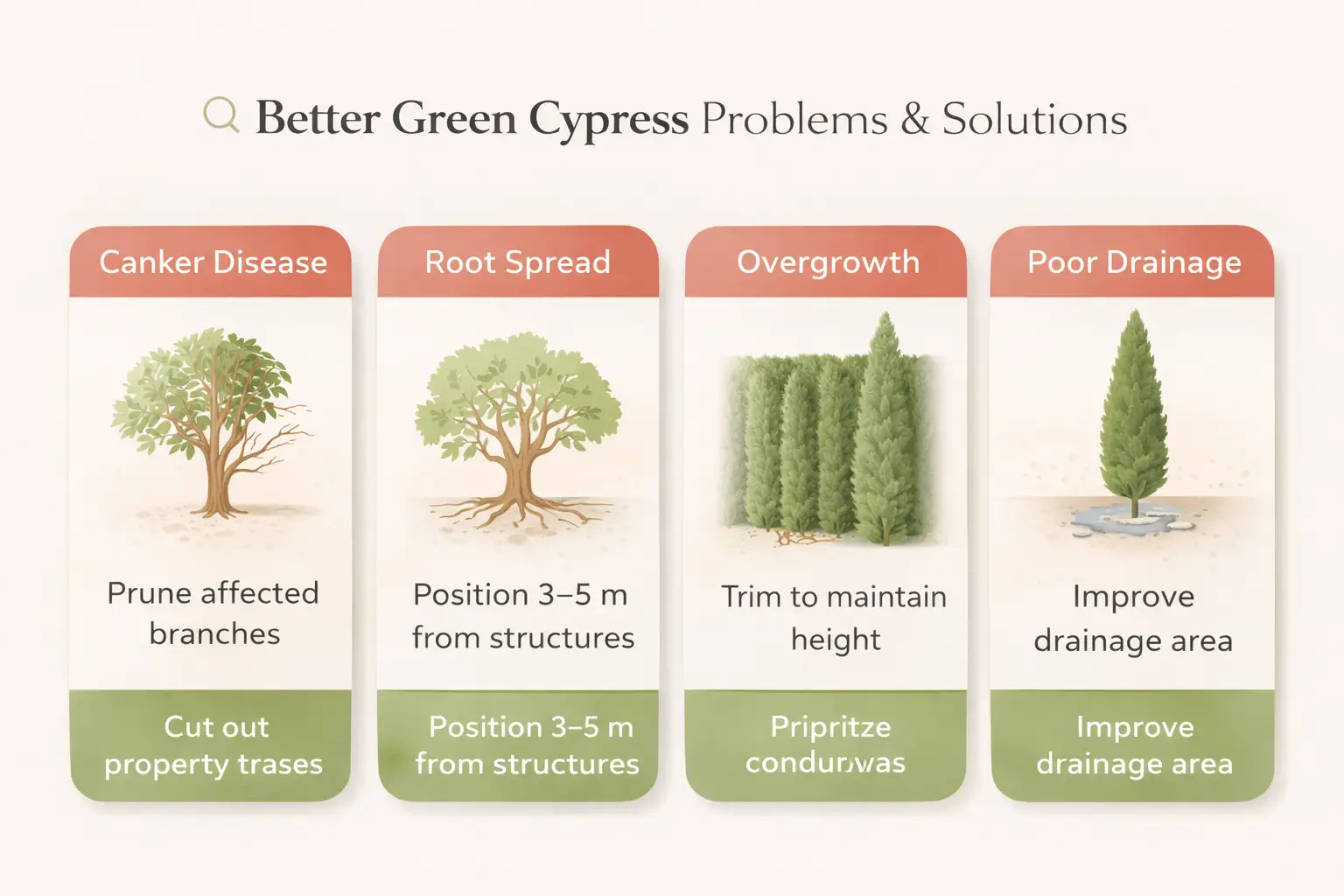
1. Cypress Canker Disease
Cypress canker is a fungal disease that causes branch dieback and browning foliage.
Symptoms:
- Brown or yellow patches
- Dead branches
- Progressive dieback
Management:
- Prune infected areas
- Improve airflow
- Avoid excessive watering
2. Root System Concerns
Better green cypress roots are not aggressively invasive but can spread widely.
Key Issues:
- Can compete with nearby plants
- May affect nearby structures if planted too close
If you’re concerned about root spread near structures, see our detailed breakdown in Are Leighton Green Roots Invasive? 5+ Essential Facts for a deeper explanation.
3. Overgrowth & Maintenance Issues
Fast growth leads to:
- Frequent pruning requirements
- Height control challenges
- Dense shading of surrounding plants
Pros and Cons of Better Green Cypress
Pros
- Extremely fast-growing hedge
- Dense evergreen foliage
- Effective wind and noise barrier
Cons
- Susceptible to canker disease
- Requires frequent pruning
- Shorter lifespan than some conifers
Better Green Cypress vs Alternatives
Comparison: Leyland Cypress vs Green Giant Arborvitae
| Feature | Leyland Cypress | Green Giant Arborvitae |
| Growth Rate | Very fast | Fast |
| Disease Resistance | Moderate | Higher |
| Maintenance | High | Moderate |
| Lifespan | Shorter | Longer |
Key Insight
If disease resistance and longevity are priorities, Green Giant Arborvitae is often preferred. For rapid screening, Leyland Cypress remains a strong choice. For alternative fast-growing screening plants suited to warmer climates, explore 7+ Essential Tropical Privacy Plants for Fast Screening.
Color and Aesthetic Value of Cypress Green
Cypress green is a deep, natural evergreen shade associated with lush foliage and structured landscapes.
Color Pairings
- Neutral tones: beige, cream, stone
- Earthy browns
- Dark greens for layered planting
This color works well in both modern and natural garden designs, providing a strong visual backdrop.
Beginner Mistakes to Avoid
Common Errors
- Planting too close together
- Ignoring regular pruning
- Overwatering young plants
- Planting too close to buildings
Practical Insight
Most long-term problems with better green cypress come from poor planning rather than plant limitations.
Environmental Limitations & Suitability
Key Considerations
- Best suited for large gardens
- Not ideal for small residential yards
- Sensitive to poor drainage
- Requires space for root and canopy expansion
Suitability Summary
Better green cypress performs best where:
- Space is not restricted
- Soil drains well
- Regular maintenance is possible
Conclusion
Better green cypress is a powerful choice for fast-growing hedges and privacy screens, especially in Australian landscapes. While varieties like leighton green cypress offer dense growth and quick results, they require proper spacing, regular maintenance, and disease management. Choosing the right variety and understanding its limitations ensures long-term success.
FAQs
1. What is better green cypress used for?
It is mainly used for hedging, privacy screens, and windbreaks due to its dense and fast-growing foliage.
2. How fast does better green cypress grow?
It can grow up to 60–100 cm per year under ideal conditions with proper sunlight, water, and soil conditions.
3. What are common leighton green problems?
Common issues include cypress canker disease, excessive growth requiring pruning, and root spread concerns when planted too close together.
4. Are leighton green roots invasive?
They are not highly invasive but can spread widely, so adequate spacing from structures and other plants is recommended.
5. Which is better: leyland cypress or green giant arborvitae?
Green Giant Arborvitae is generally more disease-resistant and longer-lived, while Leyland Cypress grows slightly faster and forms dense hedges quickly.