According to Greenery Inside, yes—monstera plants thrive in humidity between 60-80%, mimicking their native tropical rainforest habitat. They can tolerate average household humidity around 40-50%, but levels below 40% often cause brown, crispy leaf edges and slower growth. Misting, pebble trays, or humidifiers help replicate these optimal indoor conditions.
Sudden humidity swings, such as those from winter heating systems, stress monstera plants more than consistently moderate humidity does. Grouping plants together naturally raises ambient moisture without extra equipment. However, high humidity paired with poor airflow increases the risk of fungal leaf spot and root rot.
By Greenery Inside | Plant Care & Gardening Expert
Last Updated: August 2026
Quick Summary
- Monsteras generally perform best around 60–80% relative humidity, although established plants can adapt to lower household humidity.
- Monsteras are tropical plants native to forested regions of the Americas, where atmospheric humidity is typically higher than in many homes.
- Persistently dry air can contribute to crispy brown leaf edges and increased moisture loss.
- Humidifiers, plant grouping, pebble trays, and suitable bathroom locations can increase local humidity.
- High humidity must be balanced with good airflow and well-drained soil to reduce disease and root-rot risks.
Why Monsteras Need Humidity (Their Natural Habitat)
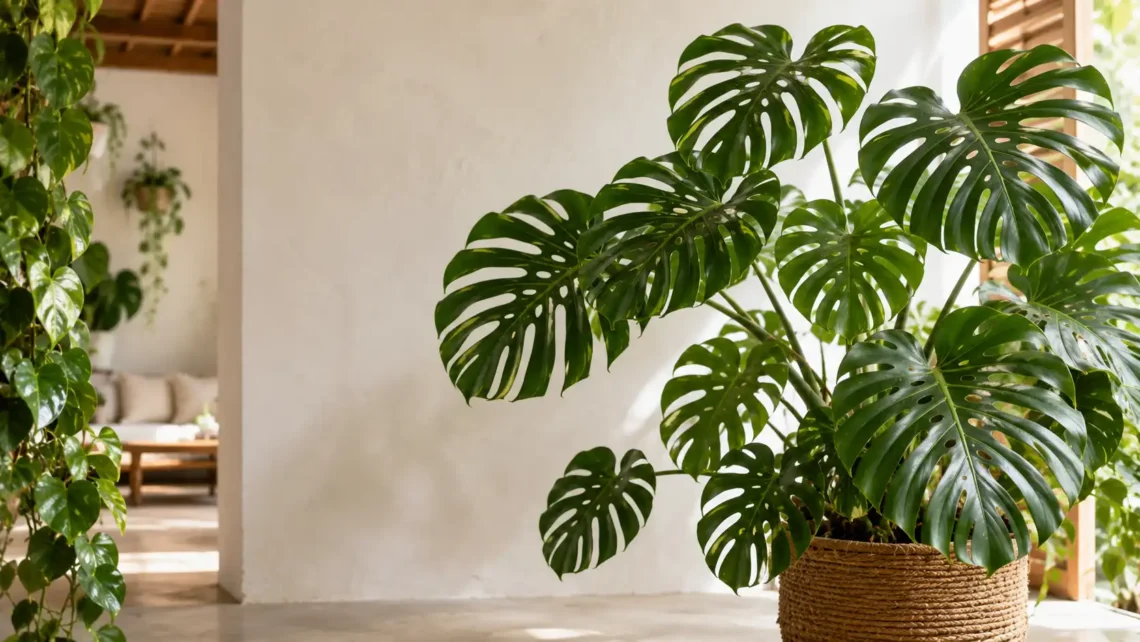
Monsteras are tropical climbing plants in the family Araceae. Their natural environments are warm, forested regions of tropical Central and South America, where they grow among other vegetation rather than in dry indoor air.
As a tropical houseplant, Monstera shares many environmental preferences with other indoor plants discussed in our guide to house plants, particularly the importance of matching light, temperature, watering, and humidity to a plant’s natural growing conditions.
Is a Monstera a Tropical Plant?
Yes. Monstera is a tropical plant genus, and Monstera deliciosa is one of the most commonly grown species. For additional botanical background, see the Monstera deliciosa reference on Wikipedia. In nature, these plants climb or grow through humid forest environments and develop large foliage under filtered light.
How Rainforest Conditions Shape Monstera’s Needs
Humidity influences transpiration, the process through which plants lose water vapor through leaf pores. When surrounding air is very dry, transpiration can increase, causing foliage to lose water more rapidly. This is why tropical foliage plants can show dry, crispy margins when indoor air becomes excessively dry.
However, humidity is only one part of the growing environment. A Monstera kept in high humidity but poorly drained, constantly wet soil can develop serious problems.
The same principle applies to other tropical aroids, including Anthurium Crystallinum, which also benefits from an environment that balances humidity with appropriate light, moisture, and airflow.
Do Monstera Plants Like Humidity? (Direct Answer)
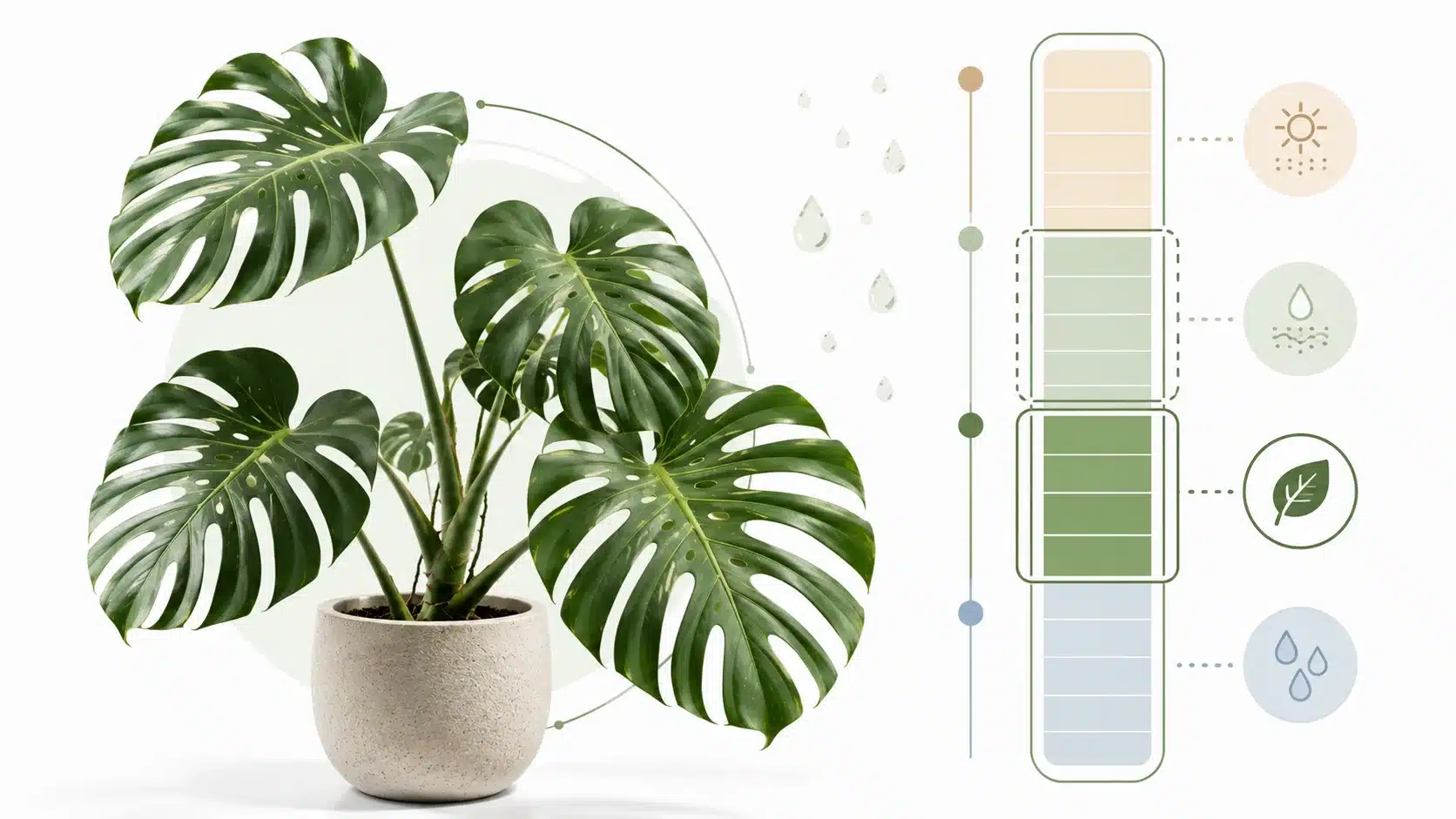
Yes, Monstera plants like humidity, with roughly 60–80% relative humidity providing favorable conditions for many indoor specimens. They can tolerate ordinary household humidity, but plants exposed to persistently dry air may develop crispy leaf edges or increased water stress. The RHS specifically describes Monstera deliciosa and variegated forms as plants that enjoy moderate to high humidity.
A practical indoor target is:
- 60–80%: Excellent range for vigorous tropical growth.
- 40–60%: Usually workable for an adaptable indoor Monstera.
- Below 40%: Greater risk of dry-air stress, particularly in warm rooms.
- Very high humidity: Requires good ventilation to prevent persistently damp foliage and disease problems.
Signs conditions are reasonably suitable include firm leaves, normal new growth, and the absence of widespread crispy margins.
Monstera Humidity Requirements by Variety
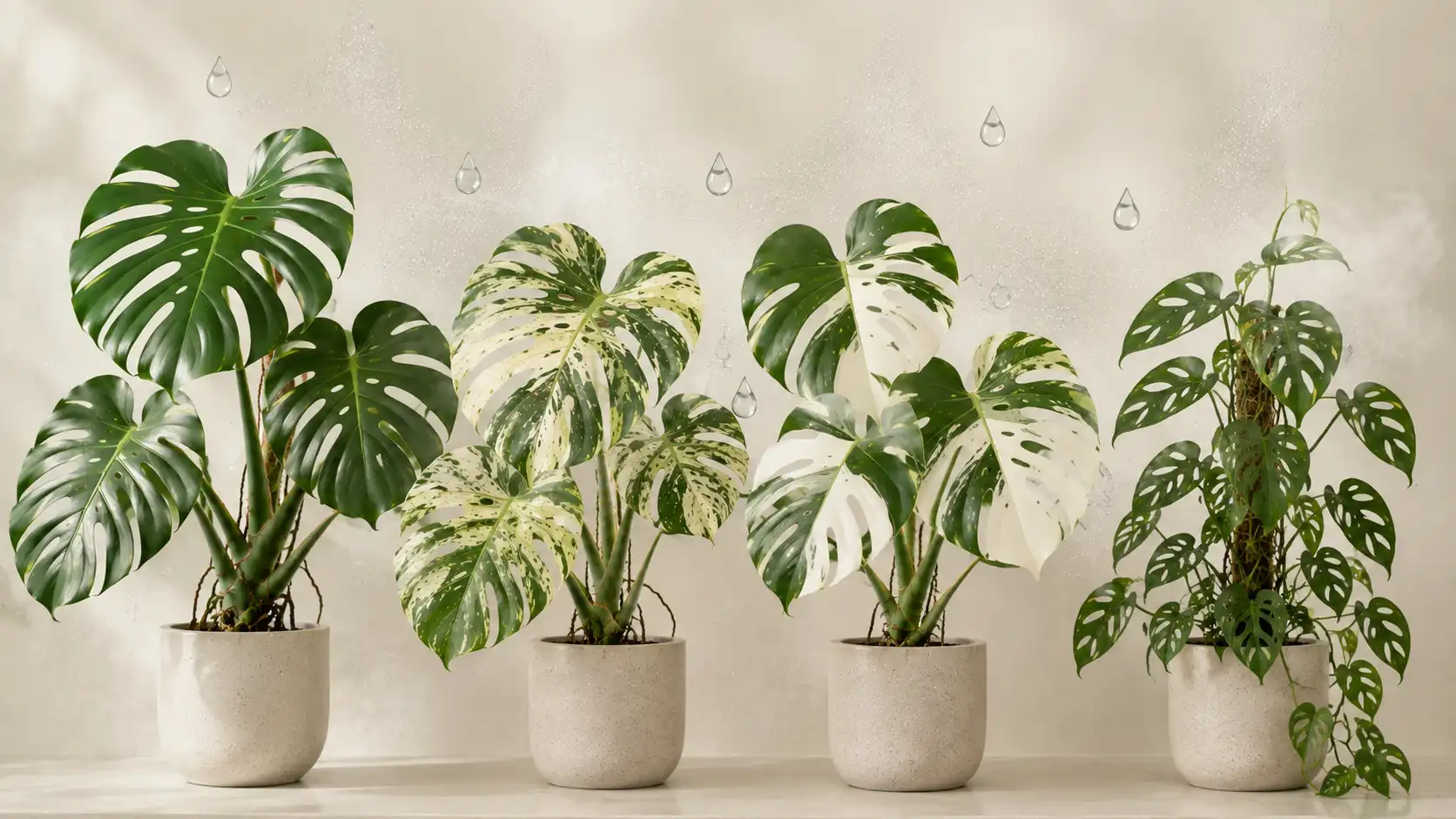
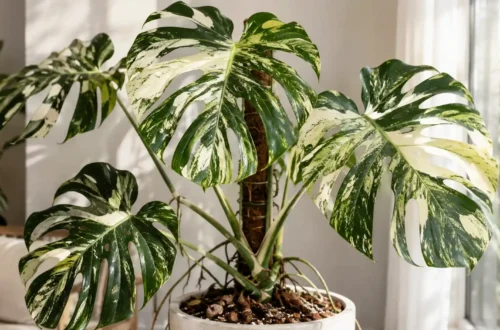
Different Monstera varieties do not have scientifically established humidity requirements that differ dramatically from one another. A practical target of approximately 60–80% is suitable for M. deliciosa and many cultivated forms. Variegated plants such as Thai Constellation and Albo should be given stable growing conditions, but their variegation does not justify treating them as a separate humidity category.
| Monstera variety | Practical humidity target | Sensitivity |
| Monstera deliciosa | 60–80% | Moderate |
| Thai Constellation | 60–80% | Moderate–high |
| Albo / M. deliciosa ‘Albo-Variegata’ | 60–80% | Moderate–high |
| Monstera adansonii | 60–80% | Moderate |
Variegated cultivars can be less forgiving of poor overall growing conditions, so stable humidity should be considered alongside appropriate light, warmth, watering, and drainage.
Monstera Ideal Temperature (Humidity + Temperature Work Together)
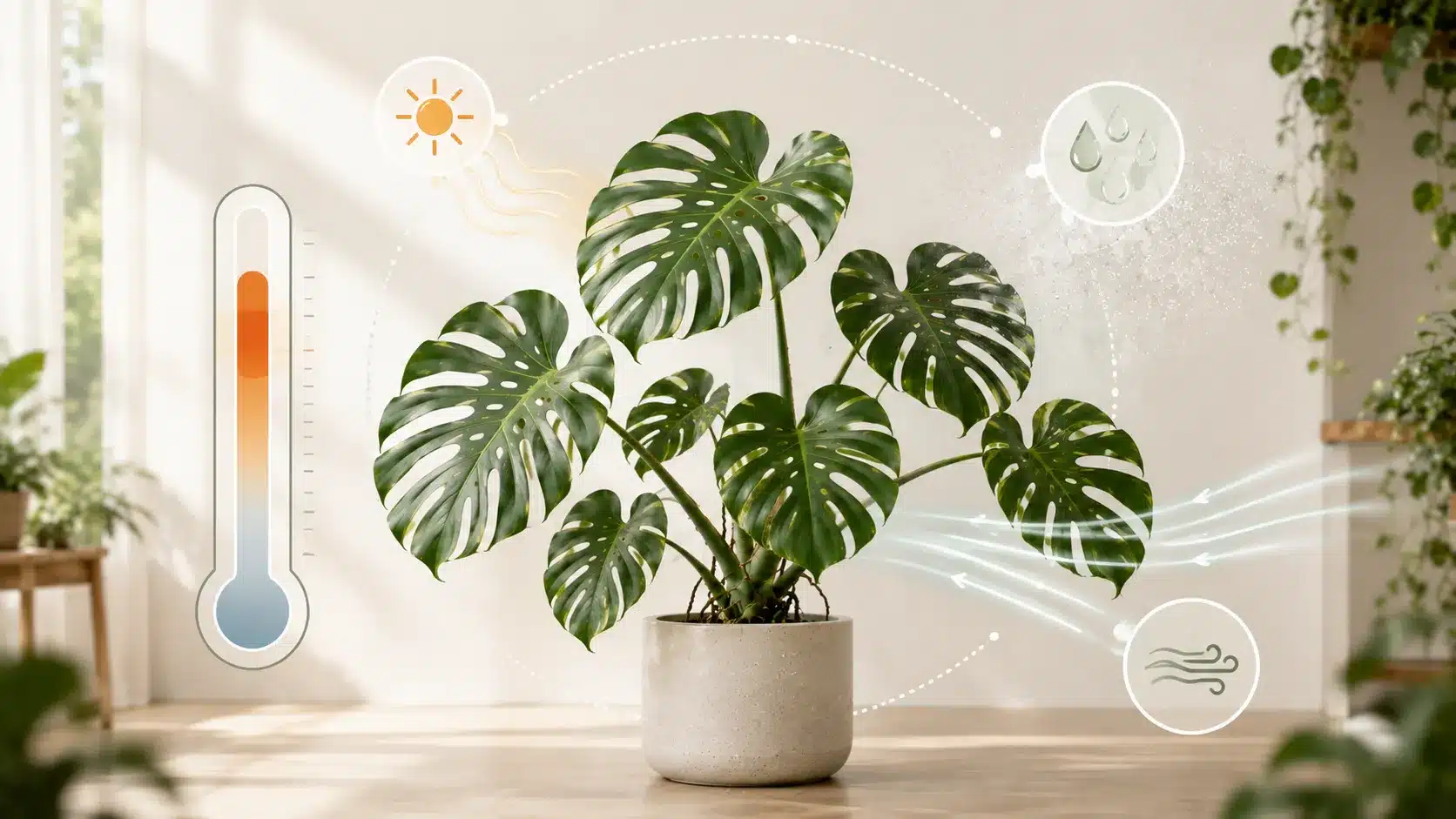
Monsteras prefer warm, stable conditions rather than cold rooms or sudden temperature changes. The RHS gives 18–25°C (65–77°F) as a suitable general growing range for Swiss cheese plants, while its guidance for variegated Monstera recommends approximately 18–27°C.
- Ideal general range: about 18–27°C.
- Night temperatures: Keep comfortably warm and avoid cold drafts.
- Cold exposure: Can cause stress and foliage damage.
- Best combination: Warm temperatures, suitable humidity, bright indirect light, and good airflow.
Humidity and temperature interact because warmer air and active growth can increase water loss. In our experience growing tropical foliage indoors, stabilizing the room environment is usually more useful than trying to achieve one perfect humidity number.
How to Increase Humidity for Your Monstera
The most reliable way to raise humidity around a Monstera is to use a humidifier and monitor the room with a hygrometer. Other methods can create smaller local increases.
- Humidifier: Most effective for maintaining a consistently higher room humidity.
- Group plants: Plants placed together can create a more humid local microclimate.
- Pebble tray: A tray of moist pebbles can modestly increase humidity immediately around the plant.
- Bathroom placement: A naturally humid bathroom can work when there is sufficient light and ventilation.
- Avoid HVAC vents: Direct air from heaters or air conditioners can rapidly dry or stress foliage.
The RHS also recommends grouping plants and using trays of damp pebbles as ways to improve humidity. These humidity-management principles are also useful when caring for other humidity-loving tropical aroids, such as Philodendron Verrucosum, which benefits from a warm, humid growing environment with adequate air circulation.
Do Monsteras Like Bathrooms?
Yes, a Monstera can do well in a bathroom because bathrooms often have higher humidity than living rooms. The location still needs adequate indirect light and ventilation. A dark bathroom or one with continuously stagnant, wet air is not automatically a good environment.
Comparison — Monstera Humidity Needs vs. Ideal Range
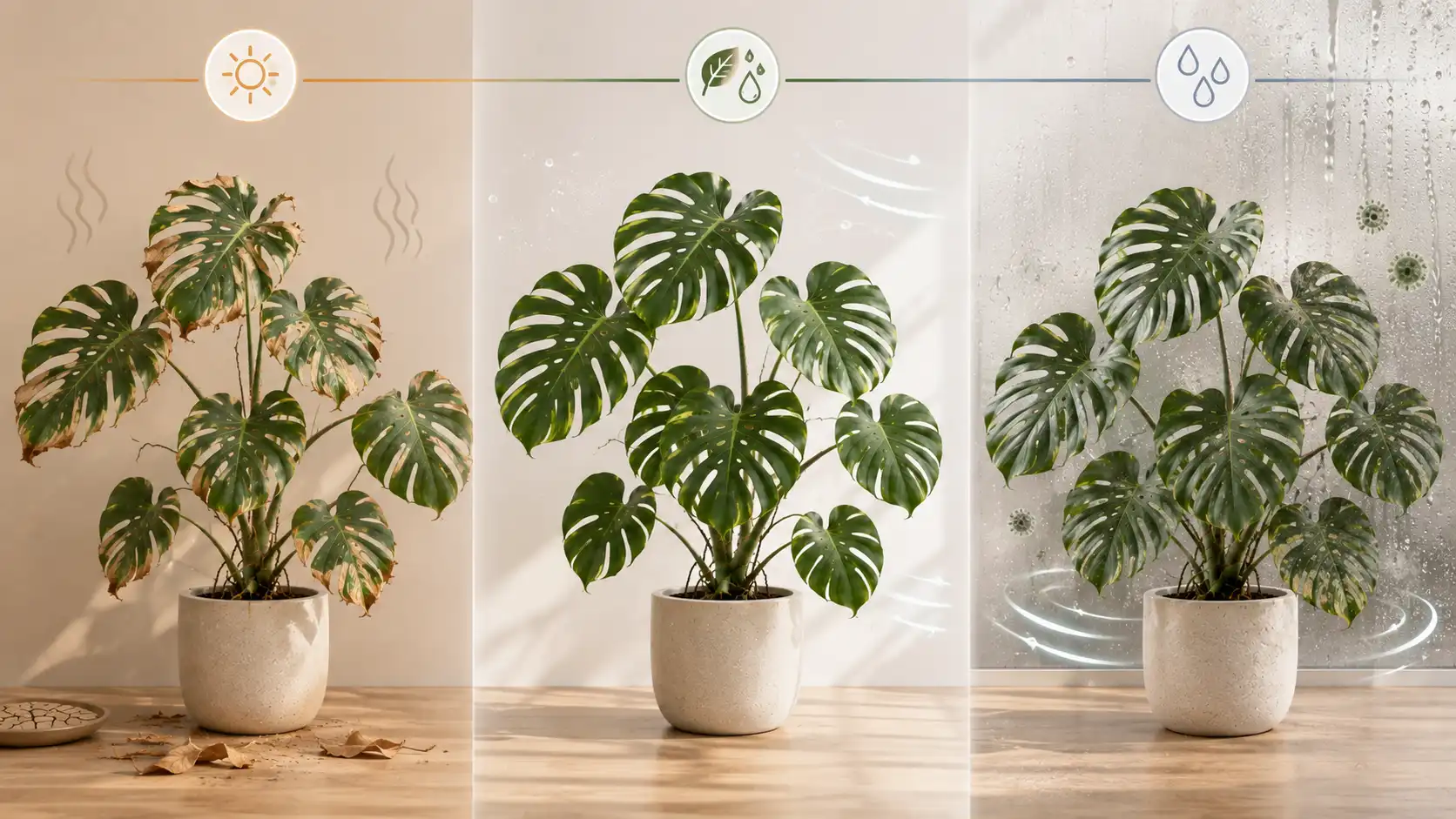
| Humidity level | Effect on Monstera | Practical response |
| Below 40% | Dry-air stress becomes more likely | Increase humidity gradually |
| 40–60% | Generally acceptable for many indoor plants | Monitor foliage and growth |
| 60–80% | Favorable for tropical Monstera growth | Maintain airflow and consistent conditions |
| Excessively high | Damp conditions can encourage disease if airflow is poor | Improve ventilation and avoid constantly wet foliage |
Greenery Inside recommends adjusting humidity based on the plant’s symptoms and the entire growing environment rather than chasing a precise percentage.
Common Problems From Incorrect Humidity
Crispy or Browning Leaf Edges (Too Dry)
Crispy brown tips and margins are commonly associated with low air humidity, although underwatering, salt buildup, excessive light, and root problems can produce similar symptoms.
Why it happens: Dry air can increase water loss through the foliage.
How to fix it: Check soil moisture, move the plant away from drying vents, and gradually increase humidity if the room is consistently dry.
How to prevent it: Keep environmental conditions stable and avoid letting the plant repeatedly become severely dry.
Root Rot or Mold (Too Humid + Poor Airflow)
High humidity alone does not automatically cause root rot. Root rot is more strongly associated with excessive moisture around roots, poor drainage, and prolonged waterlogging. Persistently damp foliage combined with inadequate airflow can also increase disease risk.
Why it happens: Water remains around roots or foliage for too long.
How to fix it: Improve drainage, allow the appropriate portion of the potting mix to dry before watering again, and improve airflow.
How to prevent it: Never treat high humidity as a substitute for proper watering and drainage.
Humidity should also be considered alongside other environmental factors; our Anthurium Clarinervium care guide explains how light, soil, and watering work together to maintain healthy tropical foliage.
Beginner Mistakes With Monstera Humidity
Common mistakes include:
- Over-misting without airflow: Wet leaves do not necessarily mean adequately humid air.
- Placing the plant beside an AC or heater: Constant airflow can create a much drier microclimate.
- Ignoring seasonal changes: Indoor humidity can fall significantly during heating seasons.
- Watering more because humidity is low: Humidity and soil moisture are different variables; increasing watering can cause root problems.
- Chasing 80% humidity without ventilation: High humidity is not beneficial when the growing medium remains waterlogged or air circulation is poor.
As of August 2026, the most useful approach remains consistent environmental management: provide suitable humidity while maintaining drainage, airflow, warmth, and appropriate light rather than relying on misting alone.
Conclusion
Do Monstera plants like humidity? Yes. Monsteras are tropical plants that generally appreciate humid air, with approximately 60–80% relative humidity being a useful target for strong indoor growth. Nevertheless, many Monsteras adapt to ordinary household humidity. If your plant develops crispy edges, first check humidity alongside watering, light, temperature, and root health. A humidifier is usually the most consistent solution, while plant grouping, pebble trays, and a suitable bathroom can provide smaller humidity improvements. The key is balance: humid air, warm conditions, good airflow, and well-drained soil work together.
FAQs
Do Monsteras like humidity or dry air?
Monsteras prefer humid air rather than very dry air because they are tropical forest plants. They can tolerate ordinary household conditions, but persistently dry air may contribute to crispy leaf edges and increased water stress.
What is the best humidity level for a Monstera?
A practical target is 60–80% relative humidity for vigorous Monstera growth. Lower household humidity can still be tolerated, particularly when watering, temperature, light, and airflow are well managed.
Can a Monstera survive in low humidity?
Yes, a Monstera can survive and often grow in lower household humidity, but very dry conditions can increase foliage stress. If brown, crispy edges appear, assess humidity along with watering, root health, light, and temperature.
Does misting actually help Monstera humidity?
Misting can temporarily wet the foliage but usually does not provide the same sustained humidity increase as a humidifier. For consistent humidity, a humidifier, suitable plant grouping, or a naturally humid room is generally more practical.
How long do Monstera plants like humidity to stay elevated?
Monsteras benefit from consistently suitable humidity rather than occasional short humidity spikes. Maintaining a stable moderate-to-high humidity level is preferable to heavily misting the plant occasionally and allowing the surrounding air to become very dry afterward.