

Introduction
Wind tolerant trees in Australia are species adapted to withstand strong winds, coastal exposure, and harsh environmental conditions such as salt spray, drought, and poor soils. These trees play a critical role in protecting landscapes, improving plant survival, and stabilizing outdoor environments. In regions where wind is a constant challenge, selecting the right trees can reduce damage to property, gardens, and crops. Many Australian native species naturally thrive in these conditions, making them reliable choices for windbreaks and screening. Understanding how these trees function helps create resilient, long-lasting landscapes.
Quick Summary
- Wind tolerant trees are adapted to survive strong winds, coastal conditions, and dry climates.
- They are ideal for windbreaks, privacy screening, and protecting gardens or homes.
- Australian native coastal trees are often the most reliable due to natural adaptation.
- Fast-growing windbreak trees provide quicker protection but may need more maintenance.
What Are Wind Tolerant Trees and Why They Matter
Wind tolerant trees are species specifically adapted to survive and perform well in areas exposed to strong or persistent winds. These “windy trees” possess structural traits that allow them to bend rather than break and remain stable in challenging conditions.
Key Structural Adaptations
- Flexible branches that reduce breakage
- Deep or wide-spreading root systems for anchorage
- Narrow or waxy leaves to reduce wind resistance
- Strong trunk structure
These adaptations make them particularly suitable for Australian climates, where drought, heat, and coastal winds are common.
Why They Matter
- Reduce wind speed and protect structures
- Prevent soil erosion in exposed landscapes
- Improve survival of surrounding plants
- Create a stable microclimate around homes and gardens
Where Wind Tolerant Trees Are Most Useful
Wind tolerant trees are essential in environments where wind exposure affects plant health and structural stability.
Key Use Scenarios
- Coastal gardens: Handle salt spray and strong ocean winds
- Rural properties and farms: Protect crops and livestock
- Suburban front yards: Reduce wind impact in open areas
- Exposed properties: Shield against prevailing winds
In coastal trees Australia landscapes, selecting trees suitable for windy coastal areas ensures long-term resilience.
Key Features of Wind Resistant and Hardy Trees
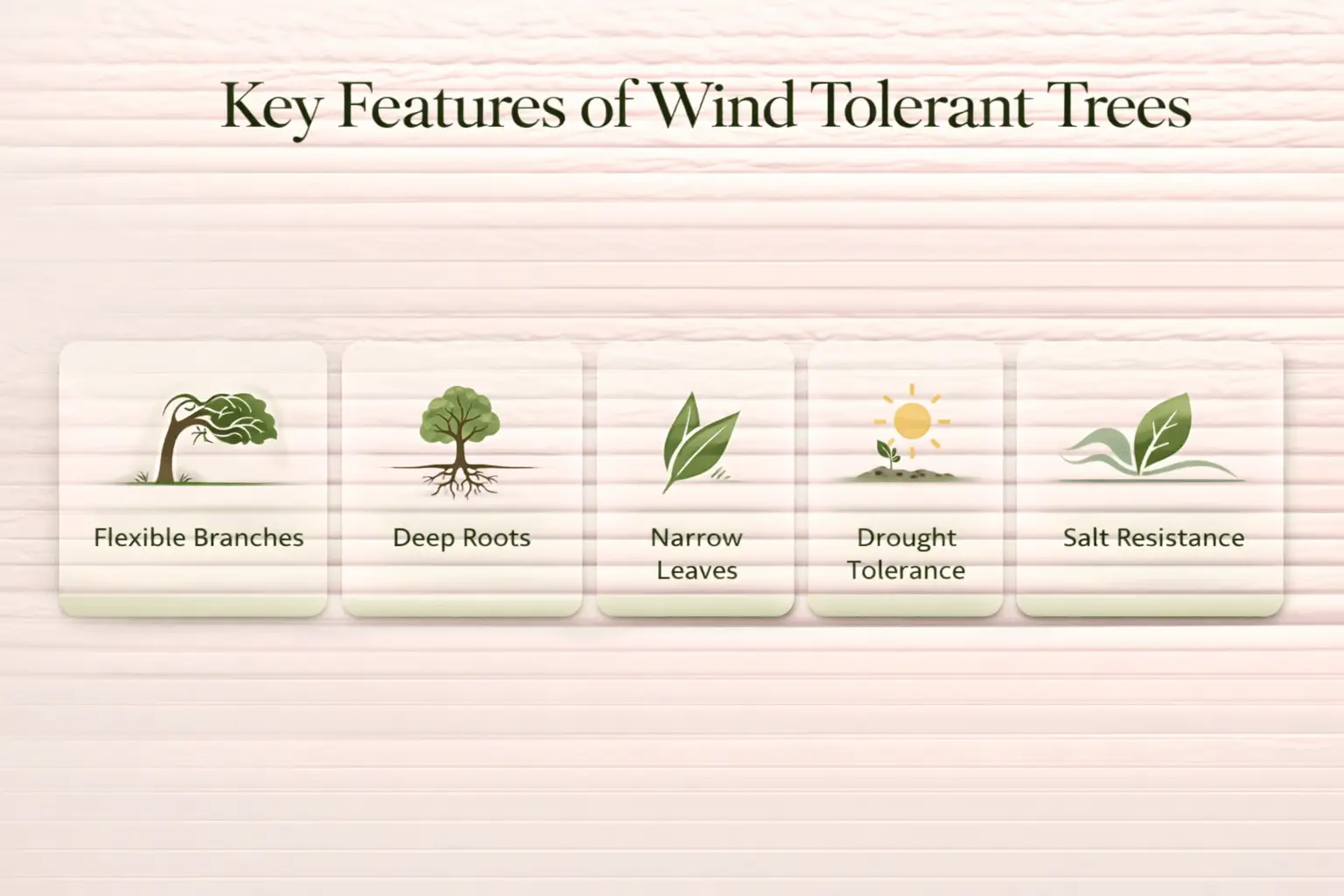
Wind resistant trees share several biological and structural features that allow them to thrive in harsh conditions.
Core Characteristics
- Flexible trunks and branches that absorb wind force
- Deep or spreading roots for stability
- Small, narrow, or waxy leaves to reduce drag
- Drought tolerance, common in Australian natives
- Salt tolerance for coastal environments
These features are often found in hardy trees Australia and drought tolerant trees, making them highly reliable choices.
Best Types of Wind Tolerant Trees in Australia
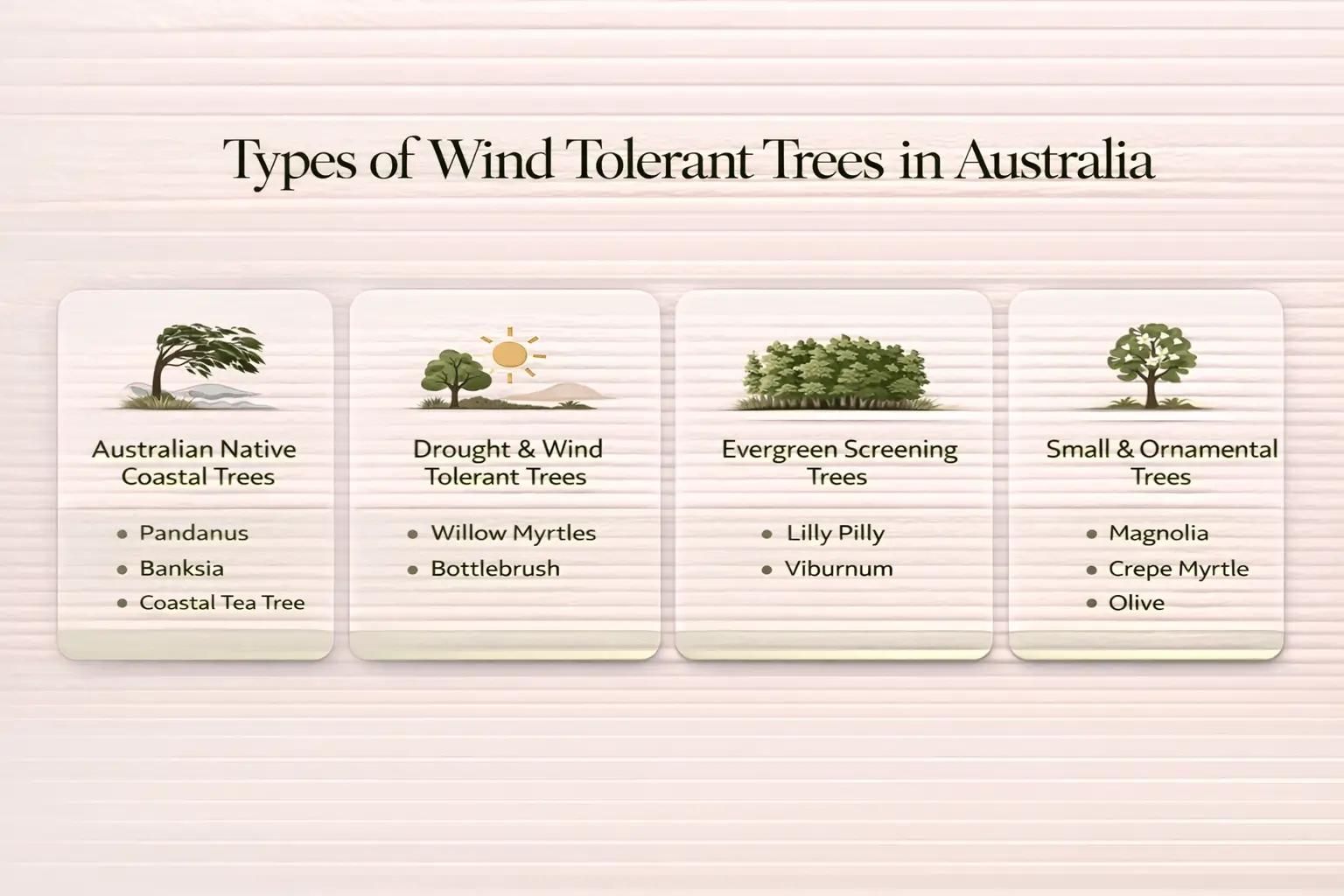
Different categories of trees serve different wind protection needs depending on climate and landscape.
Australian Native Coastal Trees
These trees are naturally adapted to coastal environments.
- Tolerate salt spray and sandy soils
- Thrive in exposed beachside landscapes
- Require minimal maintenance once established
Popular native choices such as Lilly Pilly are widely used in windbreaks, and exploring 7+ Essential Lilly Pilly Varieties for Hedges & Screening helps identify the most suitable types for different conditions.
Drought and Wind Tolerant Trees
Suitable for inland areas with dry conditions and strong winds.
- Adapted to low water availability
- Include fast growing drought tolerant trees Australia
- Provide long-term resilience
Evergreen Screening Trees
Provide consistent year-round protection.
- Maintain foliage throughout the year
- Ideal for privacy and wind screening
- Commonly used as screening tree solutions
Evergreen species are commonly used for privacy and protection, and selecting the right varieties becomes easier with guides like 6+ Smart Australian Native Screening Trees for Privacy, which highlight reliable options for long-term wind resistance.
Small and Ornamental Wind Tolerant Trees
Designed for compact spaces and residential landscapes.
- Suitable for front yards
- Include wind tolerant small trees Australia
- Add aesthetic value while providing protection
Windbreak Trees Explained (How They Work)
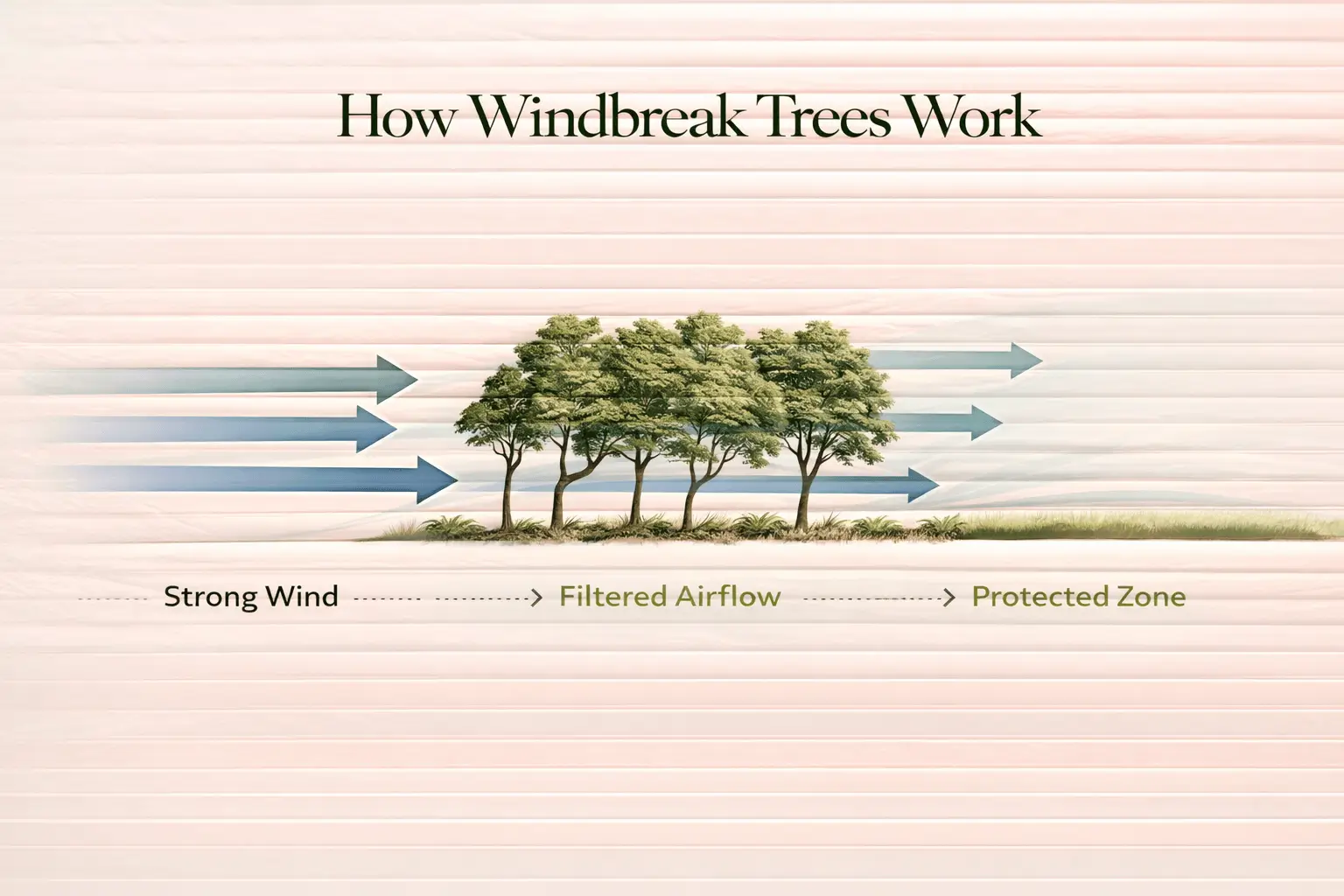
Windbreak trees reduce wind speed by filtering airflow rather than blocking it completely. A properly designed windbreak slows wind gradually, preventing turbulence that can damage plants and structures.
Key Concepts
- Reduce wind speed instead of creating barriers
- Prevent strong gusts from causing damage
- Improve growing conditions for crops and gardens
Windbreak trees, wind barrier trees, and wind break trees all function on this same principle. This principle is similar to a Windbreak, where vegetation is used to reduce wind speed and protect surrounding environments.
How to Choose the Best Tree for a Windbreak
The best tree for a windbreak depends on environmental conditions and intended use.
Key Selection Factors
- Growth rate: fast growing windbreak trees vs slower, stable trees
- Height and density for effective coverage
- Evergreen vs deciduous depending on year-round needs
- Climate compatibility (coastal, inland, frost-prone areas)
Choosing trees for windbreaks Australia requires matching species to local conditions.
Fast Growing Windbreak Trees (Quick Protection Options)
Fast-growing windbreak trees provide rapid shelter but may require additional maintenance.
Key Characteristics
- Establish quickly and provide early protection
- Require pruning to maintain structure
- Often have weaker wood compared to slower-growing species
These trees are useful when immediate wind protection is needed.
Comparison: Windbreak Tree Types
| Type | Growth Speed | Best Use | Pros | Limitations |
| Fast-growing windbreak trees | Fast | Quick shelter | Rapid results | Shorter lifespan |
| Native coastal trees | Moderate | Coastal areas | Salt + wind resistant | Slower growth |
| Evergreen screening trees | Moderate | Privacy + wind | Year-round cover | Requires spacing |
| Drought tolerant trees | Moderate | Dry inland areas | Low water needs | Slower establishment |
How to Plant Windbreak Trees Properly
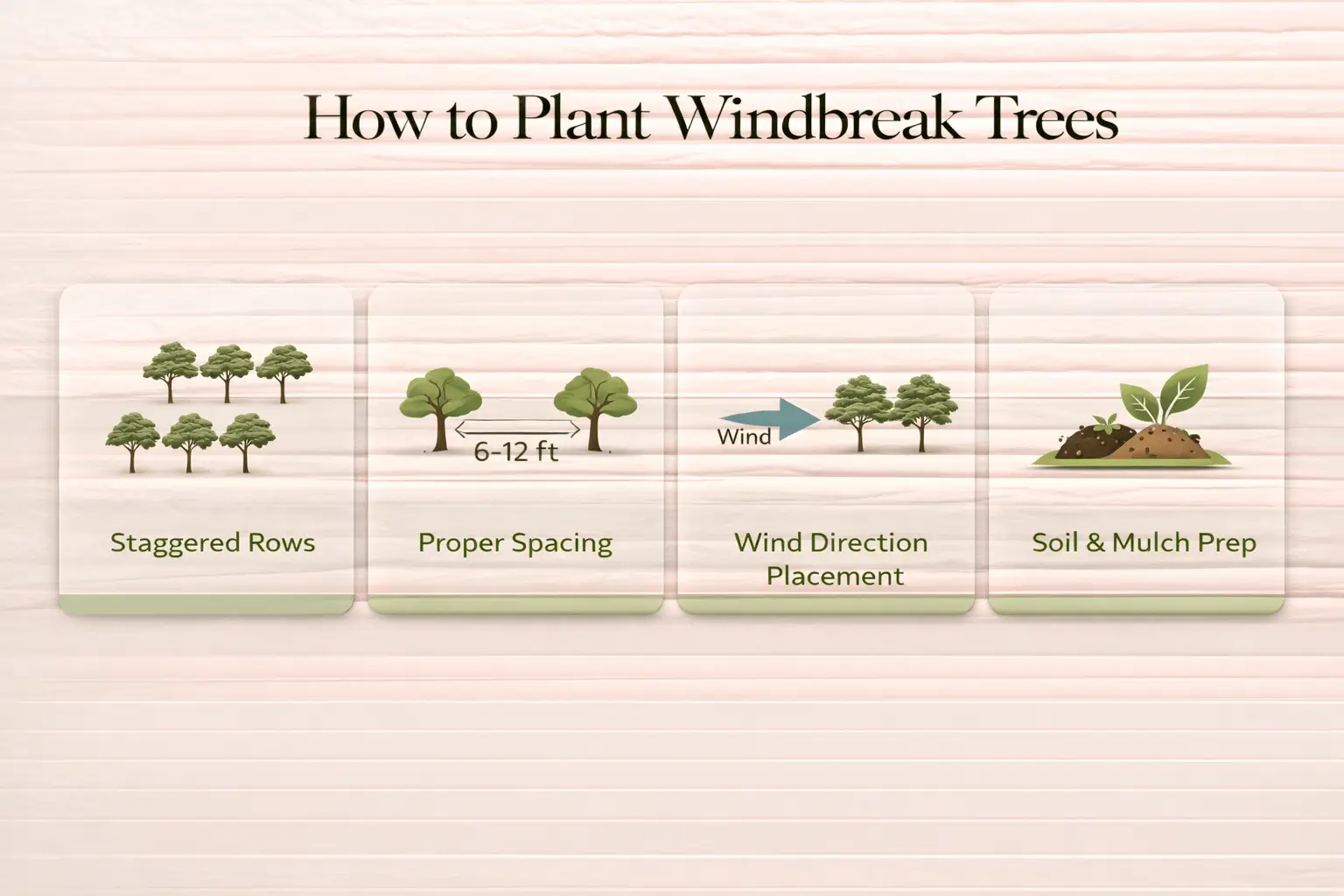
Proper planting is essential for creating an effective windbreak.
Steps to Follow
- Plant in staggered rows instead of a single line
- Space trees based on mature width
- Position rows perpendicular to prevailing wind direction
- Prepare soil and apply mulch for better establishment
Care Guide for Wind Tolerant Trees
Maintaining wind tolerant trees ensures long-term performance and stability.
Key Care Practices
- Water deeply during establishment phase
- Use well-draining soil to prevent root issues
- Prune regularly to strengthen structure
- Protect young trees from extreme wind exposure
- Apply minimal fertilizer, especially for native species
Coastal vs Inland Wind Conditions (Important Differences)
Wind conditions vary significantly between coastal and inland environments.
Coastal Conditions
- High salt exposure
- Sandy, nutrient-poor soils
- Strong, frequent gusts
Inland Conditions
- Dry winds and heat stress
- Risk of frost in some regions
- Lower humidity
Selecting coastal plants Australia or inland-adapted species ensures better survival.
Common Problems and How to Fix Them
Weak Growth in Strong Winds
Cause: Shallow roots or poor soil
Fix: Improve soil quality and provide early staking
Leaf Burn (Coastal Areas)
Cause: Salt spray
Fix: Use coastal trees Australia and rinse foliage occasionally
Tree Leaning or Breakage
Cause: Poor planting or spacing
Fix: Correct positioning and use layered windbreak design
Beginner Mistakes to Avoid
Avoiding common mistakes improves windbreak effectiveness.
Common Errors
- Planting a solid wall instead of a filtered windbreak
- Choosing only fast-growing but weak species
- Ignoring spacing and mature tree size
- Not matching trees to climate conditions
Choosing Between Trees vs Wind Tolerant Plants
Trees
- Provide height and long-term protection
- Ideal for windbreak trees and screening
Shrubs and Windbreak Plants
- Fill lower gaps in windbreaks
- Improve overall wind resistance
Using both creates a more effective layered system.
Layering trees with shrubs improves wind resistance, and options listed in 7+ Essential Tropical Privacy Plants for Fast Screening can effectively fill lower gaps in a windbreak.
Top Use Cases for Wind Tolerant Trees
Wind tolerant trees serve multiple practical purposes in landscaping.
Common Applications
- Privacy screening in residential areas
- Farm windbreaks for crops and livestock
- Garden protection from wind damage
- Driveway and boundary planting
For dense and effective barriers, choosing from the Best Hedging Trees: 6+ Essential Types for Privacy can significantly improve both wind reduction and visual screening.
Conclusion
Wind tolerant trees in Australia play a critical role in protecting landscapes from harsh winds, improving plant survival, and creating stable outdoor environments. By selecting appropriate native, drought-tolerant, and fast-growing species and planting them correctly, it is possible to build an effective and durable windbreak suited to specific climate conditions.
FAQs
What are the best wind tolerant trees in Australia?
Australian native coastal trees and drought tolerant species are among the best because they are naturally adapted to withstand harsh wind and environmental conditions.
What is the fastest growing windbreak tree?
Fast-growing windbreak trees, including certain eucalyptus and acacia species, provide rapid shelter but often require maintenance to manage structure and longevity.
Can wind tolerant trees survive coastal conditions?
Yes, coastal trees Australia are specifically adapted to tolerate salt spray, sandy soils, and strong winds, making them ideal for seaside environments.
How far apart should windbreak trees be planted?
Spacing depends on species, but staggered rows with appropriate gaps allow airflow reduction while preventing turbulence and overcrowding.
Are there small wind tolerant trees for front yards?
Yes, wind tolerant small trees and ornamental species are suitable for front yards and smaller landscapes, offering both protection and visual appeal.
Do windbreak trees reduce noise as well?
Windbreak trees can slightly reduce noise when dense, but their primary function is to reduce wind speed and protect surrounding areas.