Introduction
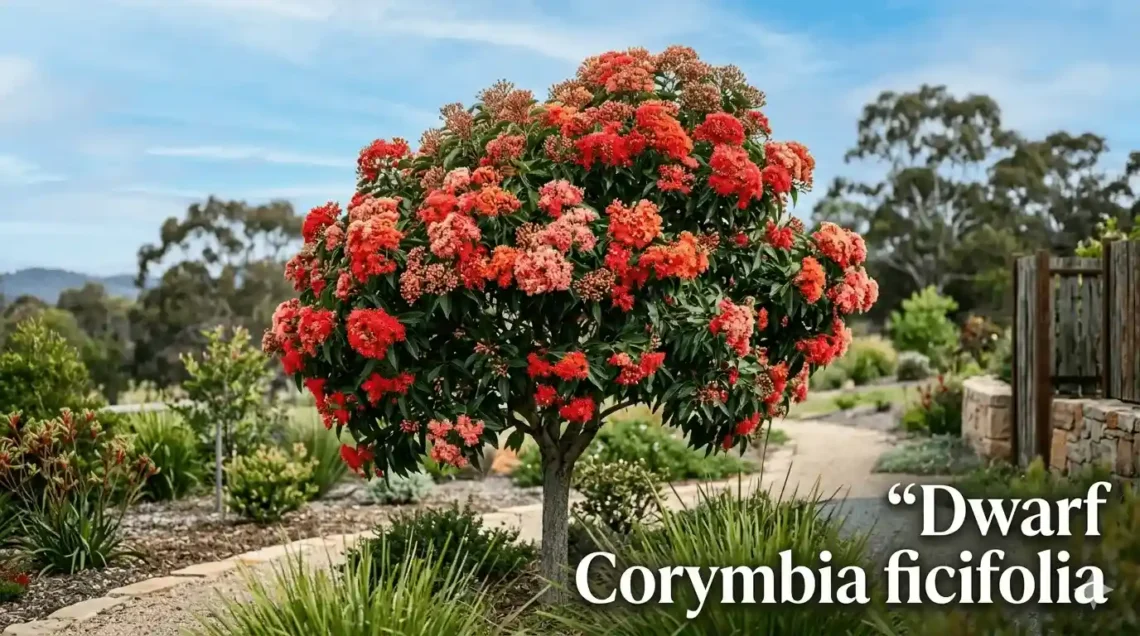
Dwarf Corymbia ficifolia refers to compact cultivars of Corymbia ficifolia, the red flowering gum native to Western Australia, bred specifically for smaller gardens while retaining vibrant summer blooms. These dwarf flowering gum trees produce striking clusters of red, orange, and pink flowers and typically grow under 6 meters tall. As grafted varieties, they maintain a controlled size and improved disease resistance. Ideal for urban landscapes, patios, and compact outdoor spaces, they offer strong ornamental value without overwhelming the environment, making them a practical choice for modern garden design. Dwarf Corymbia ficifolia is often used in modern landscaping designs alongside other compact ornamental trees.
Quick Summary
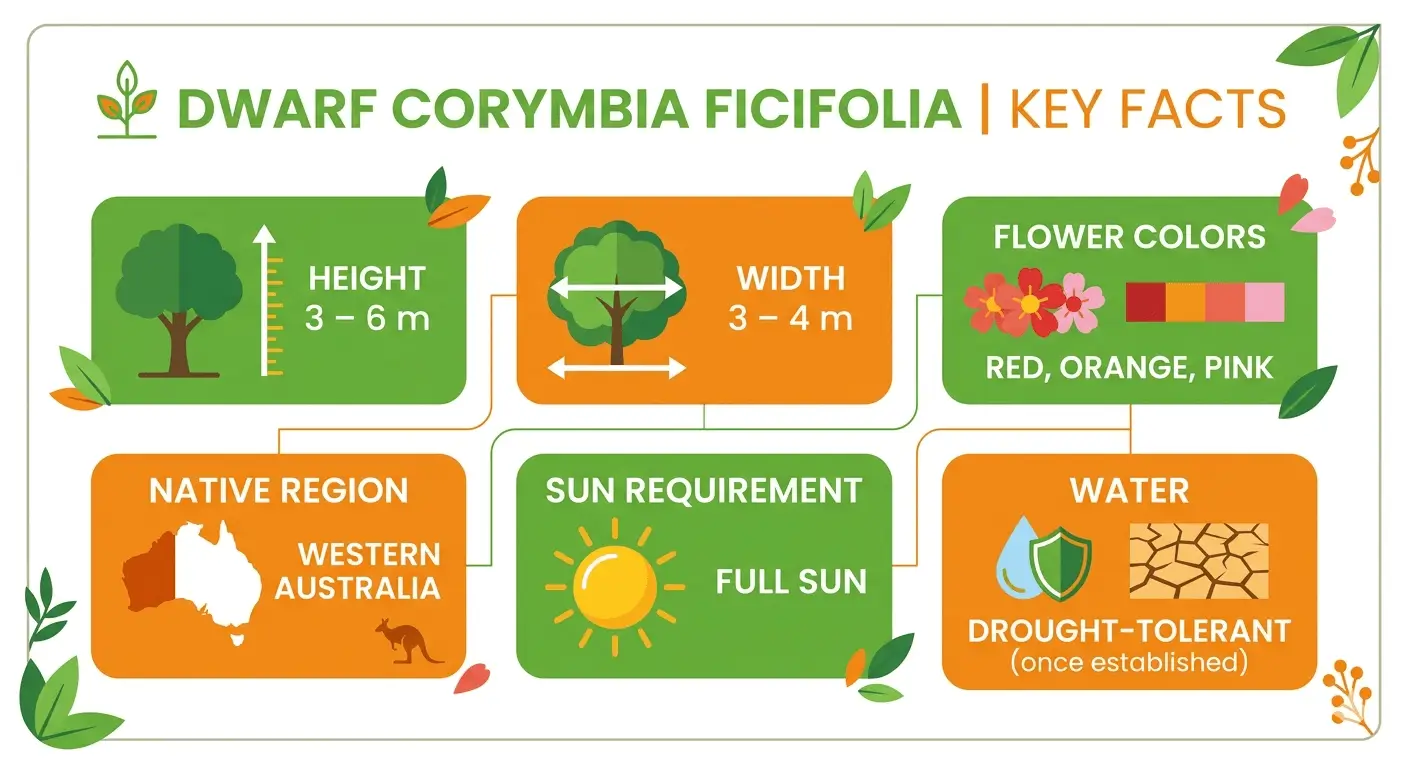
- Dwarf Corymbia ficifolia cultivars grow 3–6m tall and 3–4m wide with bright summer flowers.
- Native to southwest Western Australia; grafting ensures compact growth and resilience.
- Require full sun and well-drained soil; drought-tolerant once established but frost-sensitive when young.
- Attract birds and pollinators; suitable for small gardens, containers, and streetscapes.
What Is Dwarf Corymbia?
Dwarf Corymbia is a compact form of Corymbia ficifolia, a small tree endemic to Western Australia, known for its urn-shaped fruits and dense clusters of terminal flowers. Previously classified under the Eucalyptus genus, it was reclassified into Corymbia based on botanical differences. The genus Corymbia was separated from Eucalyptus based on genetic and structural differences in Australian native trees.
These plants are commonly called flowering gum trees because of their prominent, nectar-rich blooms that attract birds and pollinators. Dwarf forms are created through grafting selected cultivars onto hardy rootstocks, resulting in shorter internodes and controlled growth. As a native Australian flowering species, Dwarf Corymbia ficifolia belongs to a broader group of resilient native plants commonly used in sustainable gardens.
Key Characteristics
- Known as dwarf flowering gum or flowering gum tree
- Produces vivid summer flowers in red, orange, or pink
- Compact size due to grafting techniques
- Retains the ornamental traits of standard Corymbia ficifolia
Key Varieties and Cultivars
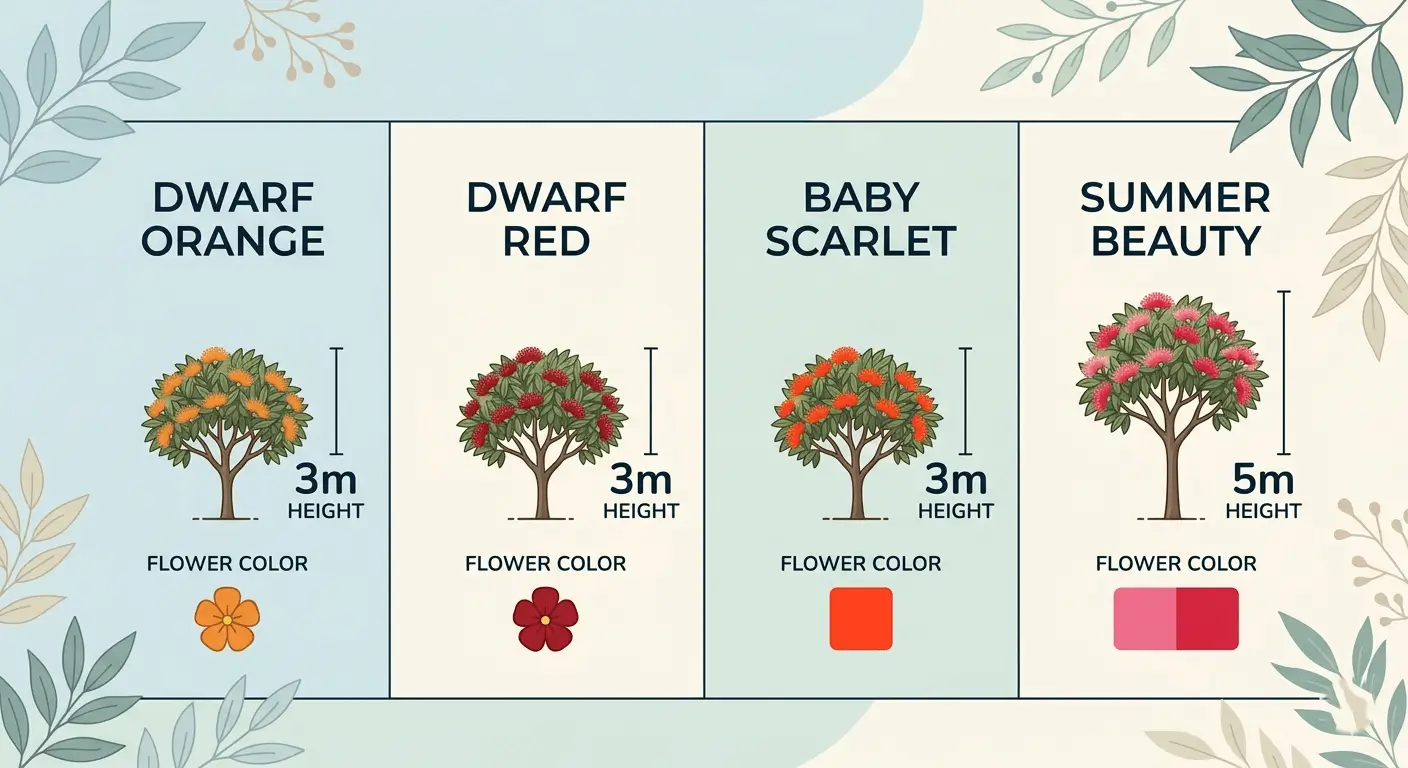
Dwarf Corymbia ficifolia includes several popular cultivars bred for size control and vibrant flowering.
Cultivar Comparison Table
| Cultivar | Mature Size (H x W) | Flower Color | Notes |
| Dwarf Orange | 3m x 2–3m | Orange | Grafted, early flowering; pot-suited |
| Dwarf Red | 3m x 3m | Red | Compact crown, coastal tolerant |
| Baby Orange/Scarlet | 3m x 3m | Orange/Red | Ideal for small gardens |
| Summer Beauty/Red | 5m x 4m | Pink/Red | Hybrid with C. ptychocarpa |
Key Features
- Grafted cultivars ensure predictable dwarf size
- Flowering period typically occurs in summer (December–February)
- Varieties include dwarf red flowering gum, dwarf orange flowering gum, and baby scarlet flowering gum
- Hybrids improve adaptability and flowering performance
Plant Size
Dwarf Corymbia ficifolia typically reaches 3–6 meters in height and 3–4 meters in width, making it significantly smaller than standard Corymbia ficifolia, which can grow up to 8–10 meters.
Size Variations
- Smaller cultivars: around 3m tall
- Larger dwarf hybrids: up to 5–6m tall
- Container-grown plants: usually limited to around 2–3m
Influencing Factors
- Soil quality and drainage
- Climate conditions (temperature and rainfall)
- Sunlight availability
Indoor growth is uncommon but possible in large containers with sufficient light.
Growth Rate
Dwarf Corymbia ficifolia has a slow to moderate growth rate, typically reaching maturity within 5–10 years. Growth is most active during spring and summer.
Growth Influences
- Faster growth in full sun and sandy soils
- Slower development in heavy clay or poorly drained soils
- Seasonal dormancy or reduced growth in cooler months
Consistent conditions significantly improve growth performance and flowering.
Care Guide
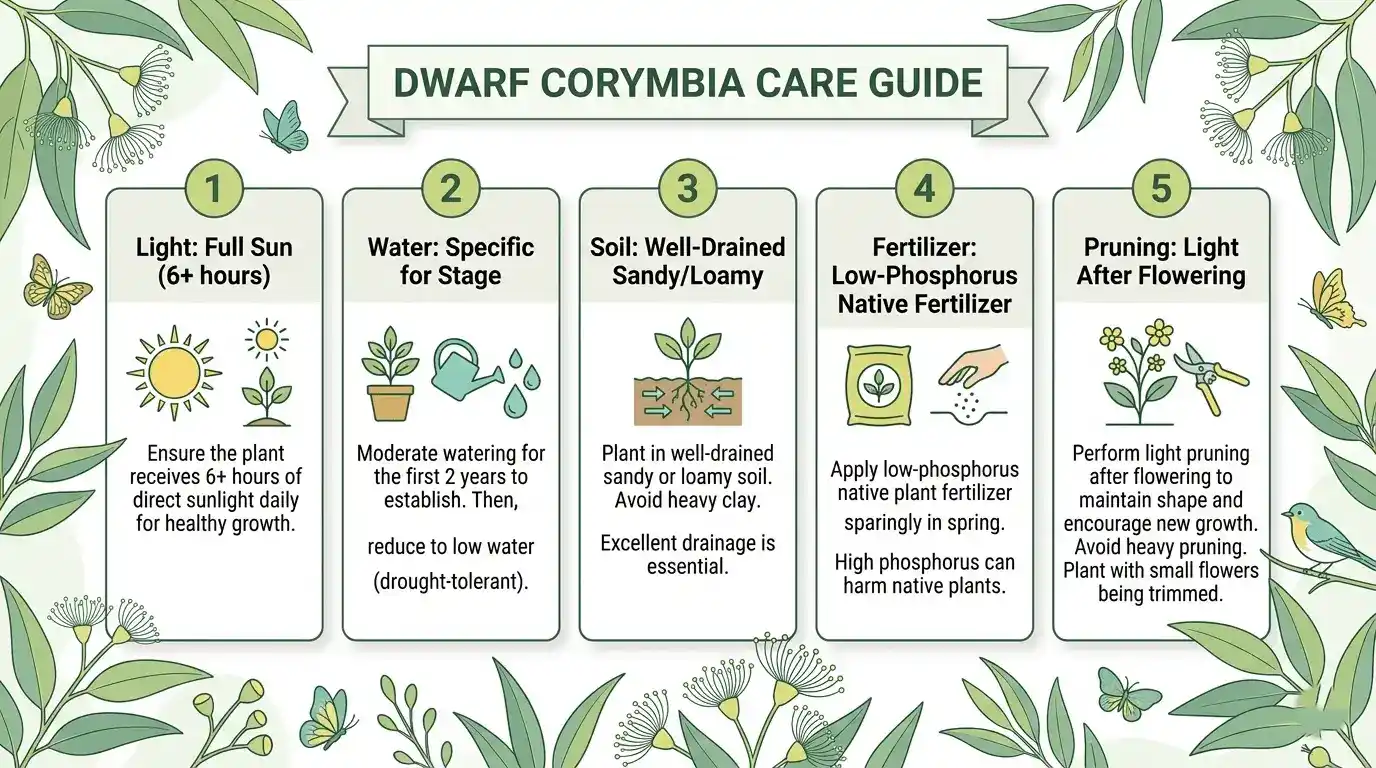
Watering
- Water regularly during the first 1–2 years
- Once established, the plant becomes drought-tolerant
- Deep watering during prolonged dry periods is beneficial
Light
- Requires full sun (at least 6 hours daily)
- Can tolerate partial shade but may reduce flowering
Soil
- Prefers well-drained sandy or loamy soil
- Neutral pH is ideal
- Poor drainage increases risk of root rot
Fertilizer
- Use low-phosphorus fertilizers formulated for native plants
- Apply after flowering for best results
Pruning
- Light pruning after flowering
- Shape the plant early to maintain structure
Climate
- Best suited to warm climates (zones 9–11)
- Young plants are frost-sensitive
- Performs well in coastal environments
Proper care techniques for Dwarf Corymbia are similar to other drought-tolerant and ornamental flowering plants commonly grown in Australian gardens.
Common Problems and Troubleshooting
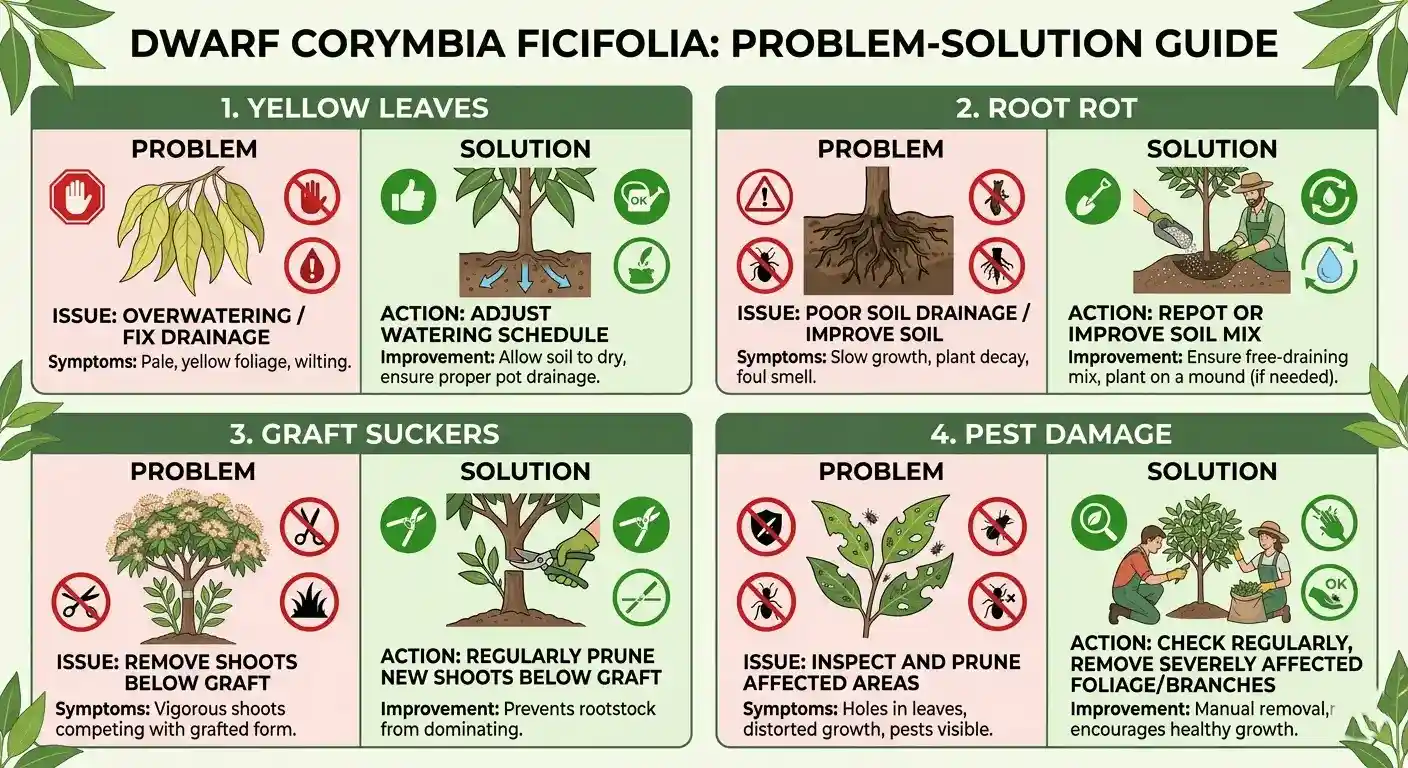
Common Issues and Solutions
- Graft Failure (Suckering Rootstock)
- Cause: Rootstock shoots overtaking graft
- Solution: Remove suckers immediately
- Yellow Leaves
- Cause: Overwatering, poor drainage, or excess phosphorus
- Solution: Adjust watering and use native fertilizer
- Root Rot
- Cause: Waterlogged soil
- Solution: Improve drainage and reduce watering frequency
- Pests (e.g., Longicorn Beetle)
- Cause: Wood-boring insects
- Solution: Monitor tree health and remove affected branches
Prevention Tips
- Avoid high-phosphorus fertilizers
- Ensure proper drainage
- Regularly inspect graft union and foliage
Comparisons with Standard Flowering Gum
Key Differences Table
| Feature | Dwarf Corymbia ficifolia | Standard Corymbia ficifolia |
| Height | 3–6m | 8–10m+ |
| Growth Habit | Compact, grafted | Variable, natural growth |
| Suitability | Small gardens, pots | Large landscapes |
| Maintenance | Easier | Moderate |
Additional Comparison
- Dwarf forms are more predictable in size due to grafting
- Standard trees may vary widely in growth and form
- Other species like Corymbia citriodora dwarfs tend to grow taller and have different foliage traits
Content Differentiation: Varieties and Environmental Limits
Lesser-Known Cultivars
- Fairy Floss – soft pink flowers
- Other hybrids offer varied color tones and improved resilience
Environmental Limits
- Not suitable for heavy frost conditions
- Struggles in poorly drained or alkaline soils
Seasonal Care Insights
- Apply mulch during winter to protect roots
- Reduce watering in cooler months
Propagation
- Typically propagated through grafting rather than seeds
- Ensures true-to-type growth and size control
Conclusion
Dwarf Corymbia ficifolia is a compact, ornamental tree that delivers vibrant summer flowers while remaining suitable for smaller spaces. Its grafted nature ensures consistent size, improved resilience, and reliable flowering. With proper care—full sun, well-drained soil, and appropriate watering—it thrives in urban and coastal environments. This makes it an excellent choice for gardeners seeking a visually striking yet manageable flowering tree.
While primarily an outdoor ornamental species, Dwarf Corymbia ficifolia can also be compared with other plants in broader gardening systems like a complete guide to house plants for understanding plant care principles.
FAQs
What is the mature size of dwarf Corymbia ficifolia?
Dwarf Corymbia ficifolia typically grows between 3–6 meters tall and 3–4 meters wide, making it ideal for small gardens and urban landscapes.
How do you care for dwarf flowering gum trees?
Plant in full sun with well-drained soil, water regularly during the first two years, and use low-phosphorus fertilizer designed for native plants.
Why are leaves on my dwarf Corymbia turning yellow?
Yellow leaves are usually caused by overwatering, poor drainage, or excess phosphorus. Adjust watering practices and switch to native plant fertilizers.
When does dwarf Corymbia ficifolia flower?
Flowering occurs in summer, typically from December to February, producing vibrant red, orange, or pink blooms.
Can dwarf Corymbia grow in pots?
Yes, smaller cultivars such as Dwarf Orange can grow successfully in large containers if placed in full sun and provided with proper drainage.