Introduction
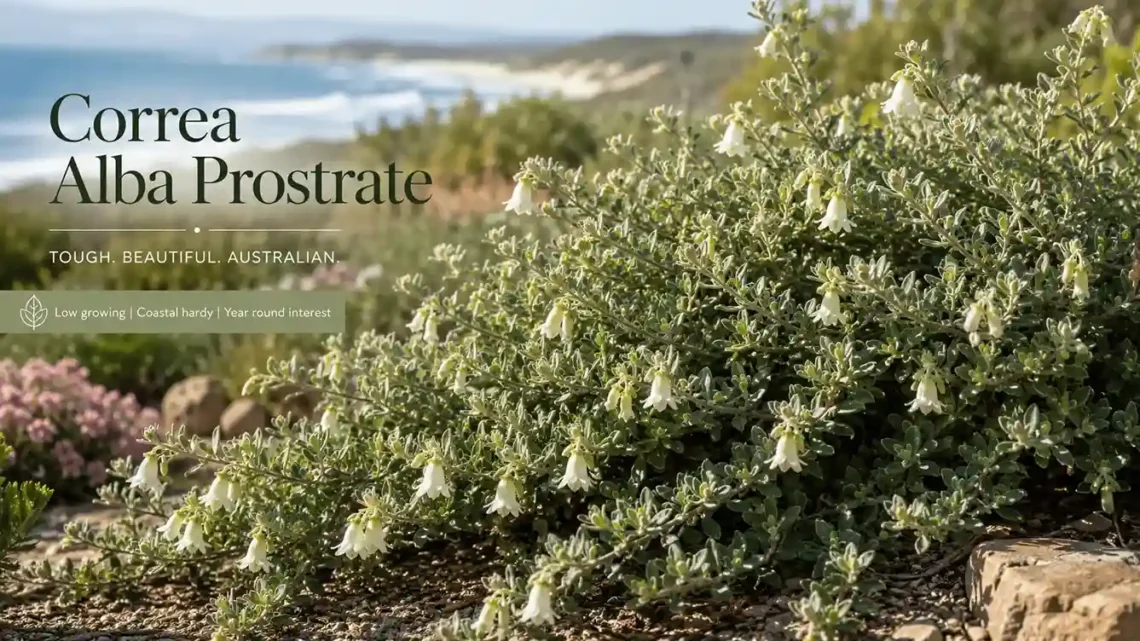
Correa alba prostrate is a low-growing Australian native shrub valued for its spreading growth habit, evergreen foliage, and adaptability in challenging landscapes. Often used as a correa ground cover, this prostrate form differs from upright forms of Correa alba by growing outward rather than vertically. Gardeners frequently choose it for coastal gardens, native landscapes, erosion control, and low-maintenance planting schemes. Commonly associated with names such as coastal correa, white correa, native fuchsia, and Australian native fuchsia, this versatile plant combines ornamental appeal with practical landscape performance. Its ability to tolerate wind, salt exposure, and periods of drought makes it a popular choice throughout many Australian regions. If you’re exploring a wider range of plants for landscaping and home gardens, see our comprehensive Plants for Homes and Gardens Guide for additional growing and design inspiration.
Quick Summary
- Correa alba prostrate is a spreading, low-growing form of white correa commonly used as a ground cover.
- It is valued for coastal tolerance, evergreen foliage, and bird-attracting flowers.
- Mature size, spacing, pruning, and cultivar selection affect overall landscape performance.
- Several Correa species and cultivars provide different growth habits, flower colors, and maintenance requirements.
- It performs well in native gardens, coastal landscapes, and erosion-control plantings.
What Is Correa Alba Prostrate?
Correa alba prostrate is a ground-hugging form of Correa alba, an Australian native shrub belonging to the Rutaceae family. Unlike upright selections, the prostrate form spreads horizontally to create dense foliage coverage. Correa alba belongs to the broader Correa plant group, part of the Australian native shrub genus known for its bird-attracting flowers and environmental adaptability.
The plant features small grey-green leaves, creamy white flowers, and a naturally compact growth habit. Its flowers appear primarily during cooler months and attract nectar-feeding birds. It is commonly known as white correa because of its pale flowers. Correa alba belongs to the broader Correa genus, a group of native shrubs known for their distinctive bell-shaped correa flowers and wildlife value.
Correa Alba Origin and Natural Habitat
Correa alba originates from coastal regions of southern Australia. It naturally occurs along shorelines, dunes, rocky cliffs, and coastal scrublands. Its adaptation to exposed environments has made it one of the most resilient coastal correa species. Natural populations thrive in areas with:
- Salt-laden winds
- Sandy soils
- Excellent drainage
- Seasonal rainfall variations
These adaptations contribute to its popularity in coastal landscapes.
Correa Alba Prostrate Size and Growth Habit
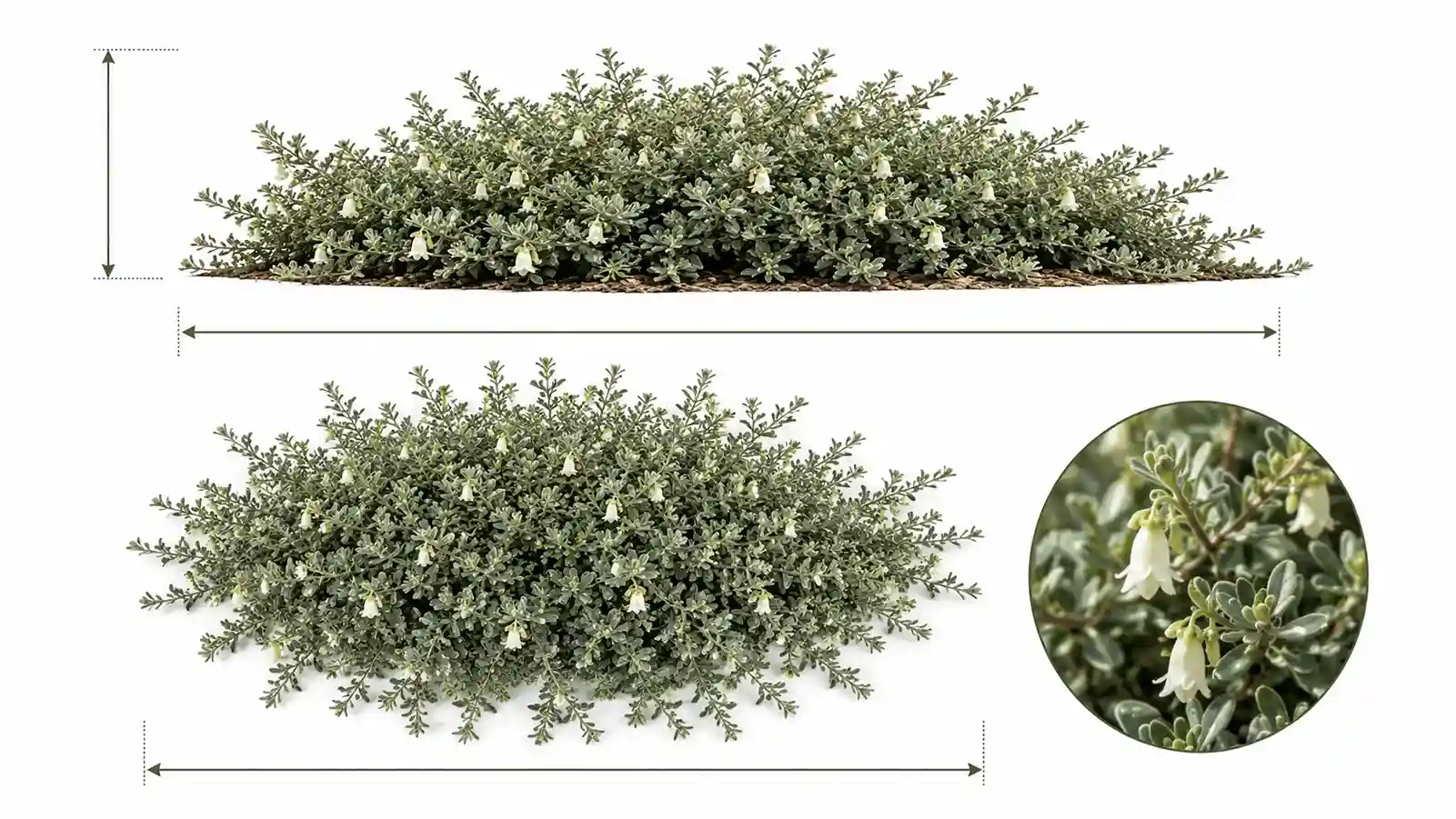
Correa alba prostrate typically develops a broad, spreading canopy rather than upright growth. Mature plants often spread significantly wider than their height.
The exact size depends on:
- Soil fertility
- Sun exposure
- Climate
- Water availability
- Cultivar selection
Its dense branching structure makes it effective for covering bare ground and suppressing weeds.
Correa Alba Prostrate Height
Most correa alba prostrate plants reach approximately 20–60 cm (8–24 inches) in height at maturity. Young plants remain compact during establishment. As they mature, lateral growth increases substantially while height remains relatively limited. Cooler climates may produce slightly lower growth, while warmer regions with favorable conditions can support larger plants.
Plant Size Comparison Table
| Plant Type | Typical Height | Typical Spread | Common Use |
| Correa alba prostrate | 20–60 cm | 1–3 m | Ground cover |
| Correa alba dwarf | 30–80 cm | 60 cm–1.5 m | Small gardens |
| Standard Correa alba | 1–3 m | 1–3 m | Shrub borders |
| Correa reflexa prostrate | 20–50 cm | 1–2 m | Native ground cover |
Correa Alba Prostrate Varieties and Cultivars
Correa alba prostrate varieties differ in foliage color, growth density, mature size, and environmental adaptability.
Choosing the right cultivar helps gardeners achieve specific goals such as:
- Dense ground coverage
- Coastal performance
- Decorative foliage
- Compact growth
Cultivar selection influences both maintenance requirements and landscape appearance.
Correa Alba Star Showers
Correa alba Star Showers is a popular prostrate cultivar known for its dense spreading habit and abundant white flowers.
Characteristics include:
- Vigorous ground-cover growth
- Attractive silver-green foliage
- Reliable flowering
- Coastal tolerance
It performs particularly well in large landscape plantings and erosion-control projects.
Correa Alba St Andrews
Correa alba St Andrews is valued for its neat growth habit and attractive foliage texture. Compared with some broader-spreading cultivars, it often displays a more refined appearance suitable for residential gardens. Its adaptability makes it useful for both coastal and inland landscapes.
Correa Alba Dwarf
Correa alba dwarf forms are selected for compact growth and reduced maintenance.
They are often preferred when:
- Space is limited
- Smaller garden beds are used
- Container planting is desired
- Formal native landscapes are planned
Dwarf forms generally require less pruning than larger spreading selections.
Correa Alba Var. Pannosa Prostrate
Correa alba var. pannosa prostrate is recognized for its distinctive foliage texture and adaptation to harsh coastal conditions. The leaves often display a slightly felted appearance that helps reduce moisture loss and improve environmental tolerance. This variety performs especially well in exposed coastal sites.
Correa Alba Prostrate Spacing and Planting Guidelines
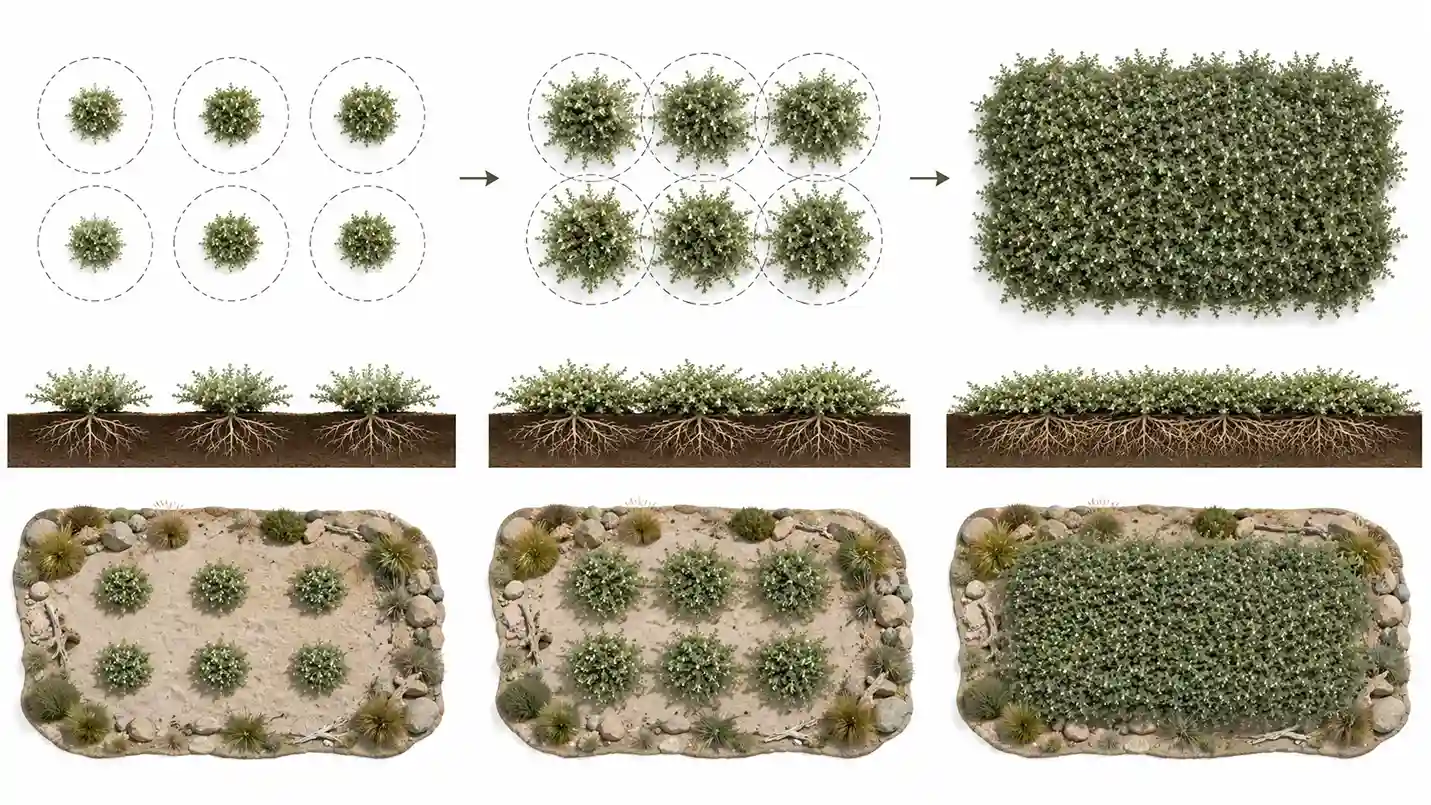
Proper spacing allows plants to develop healthy coverage without excessive competition.
Recommended spacing:
- Ground cover plantings: 1–1.5 m apart
- Mass landscaping: 1–2 m apart
- Coastal gardens: 1–1.5 m apart
- Erosion-control projects: 1–1.2 m apart
Spacing may vary depending on the selected cultivar and desired coverage speed.
Best Planting Conditions
Correa alba prostrate performs best when planted in:
- Full sun to partial shade
- Free-draining soil
- Coastal or exposed locations
- Areas with good airflow
Although adaptable, poor drainage remains one of the most common causes of plant decline.
Complete Care Guide for Correa Alba Prostrate
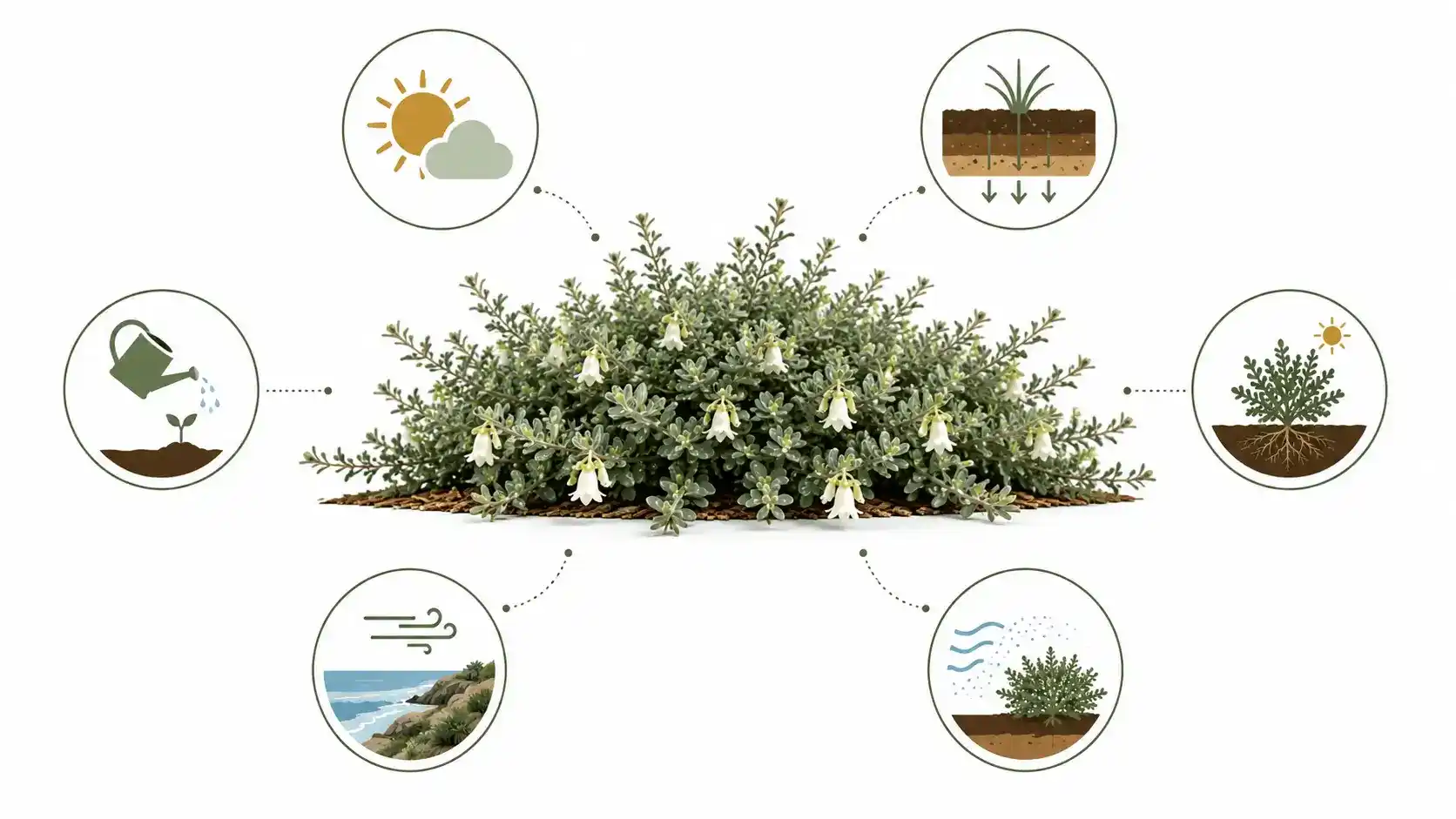
Water Requirements
Newly planted specimens require regular watering during establishment. Once mature, correa alba prostrate becomes relatively drought tolerant.
Seasonal adjustments include:
- Increased watering during prolonged heat
- Reduced watering during cool, wet periods
Light Requirements
Correa alba prostrate grows best in full sun or partial shade.
Full sun generally promotes:
- Denser growth
- Increased flowering
- Better foliage development
Partial shade remains suitable in hotter climates.
Soil Preferences
Well-drained soil is essential.
Suitable soil types include:
- Sandy soils
- Loamy soils
- Coastal soils
- Gravelly soils
Heavy clay soils should be improved to enhance drainage. While correa alba prostrate prefers free-draining conditions, gardeners working with moisture-retentive sites may benefit from exploring plants covered in the Ultimate 8+ Plants That Like Wet Soil Australia Guide.
Fertilization
Correa alba generally has modest nutrient requirements.
Apply native plant fertilizers sparingly and avoid excessive phosphorus levels, which may negatively affect many Australian native plants.
Climate Tolerance
This species demonstrates strong tolerance to:
- Heat
- Coastal winds
- Salt spray
- Moderate frost
Its resilience contributes to its popularity in challenging environments.
Correa Alba Prostrate Pruning and Maintenance
Pruning helps maintain shape, encourage branching, and improve overall appearance.
Benefits include:
- Denser growth
- Improved airflow
- Better ground coverage
- Removal of damaged stems
Light maintenance pruning is usually sufficient.
How to Prune Without Reducing Flowering
To prune without reducing flowering, lightly trim plants immediately after the primary flowering period.
Steps include:
- Remove damaged branches.
- Trim excessive growth lightly.
- Avoid cutting deeply into old wood.
- Maintain natural form.
- Remove dead material regularly.
Common mistakes include heavy pruning before flowering and excessive cutting into mature stems.
Common Uses of Correa Alba Prostrate in Landscaping
Correa alba prostrate serves both ornamental and practical landscape functions.
Common uses include:
- Ground cover
- Coastal planting
- Slope stabilization
- Native garden design
- Wildlife-friendly landscapes
Its low-maintenance nature and spreading growth habit make it an excellent choice for landscapes inspired by a Modern Australian Native Garden: 10+ Smart Design Ideas Guide.
Correa Ground Cover Applications
As a correa ground cover, this plant forms dense vegetation that helps suppress weeds and reduce maintenance.
Benefits include:
- Reduced weed growth
- Soil stabilization
- Improved moisture retention
- Attractive year-round appearance
Coastal Garden Uses
Correa alba prostrate excels in coastal gardens because of its natural tolerance to:
- Salt spray
- Strong winds
- Sandy soils
- Coastal exposure
Its evergreen foliage provides year-round structure. In coastal landscapes, correa alba prostrate is often combined with species such as those featured in the Silver Saltbush Guide: 7+ Essential Growing & Care Tips for year-round texture and salt tolerance.
Native Garden Designs
This species pairs well with other Australian natives.
Popular companions include:
- Grevilleas
- Westringias
- Banksias
- Lomandras
These combinations create diverse, wildlife-friendly landscapes. Correa alba prostrate pairs well with many other Australian natives, making it a valuable addition to collections featured in our 8+ Essential Shade Loving Australian Natives Guide.
Correa Alba Prostrate vs Other Correa Varieties
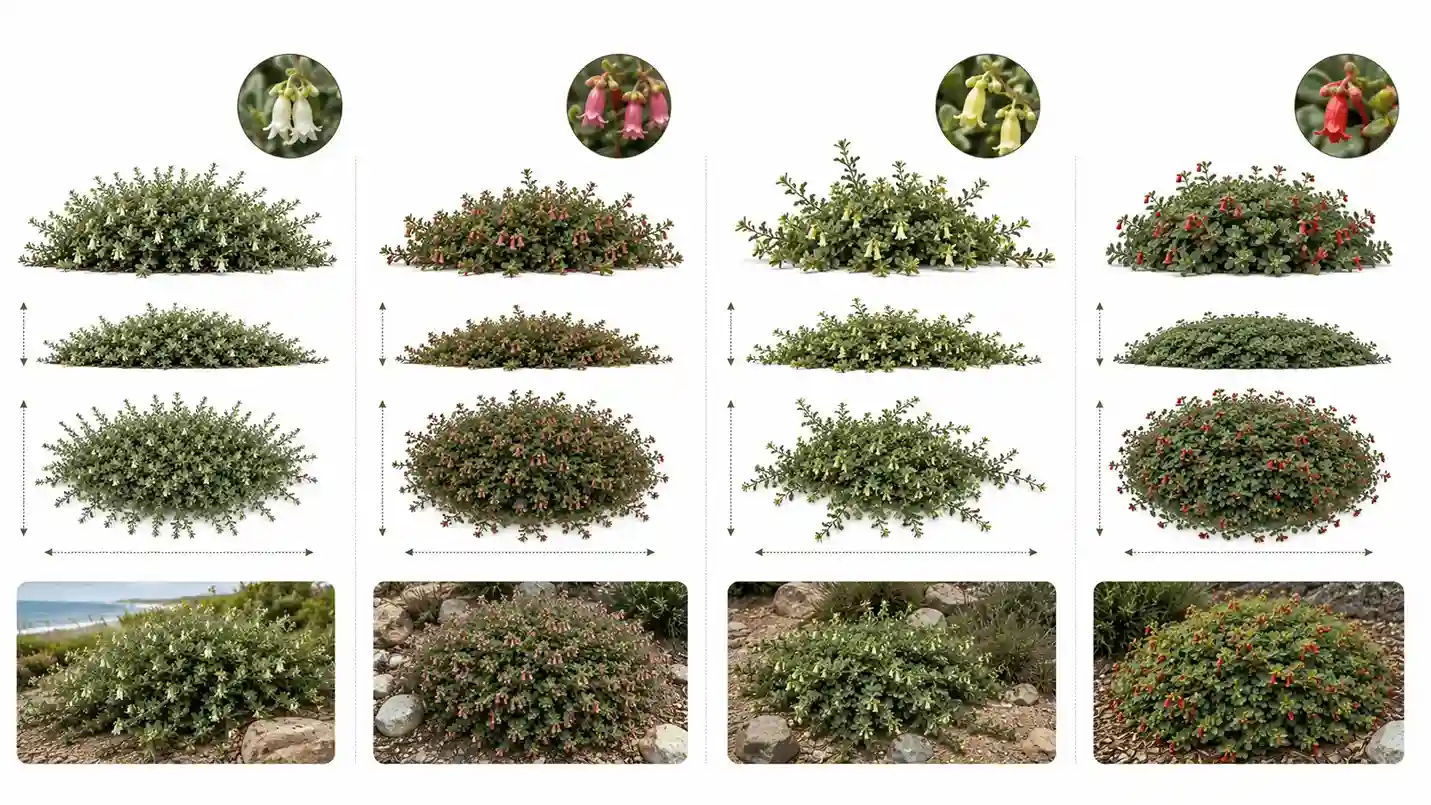
Correa species vary significantly in growth habit, flower color, and landscape application. Understanding these differences helps gardeners select the most suitable plant.
Comparison Table: Popular Correa Types
| Correa Type | Growth Habit | Flower Color | Typical Size | Landscape Use |
| Correa alba prostrate | Spreading | White | Low and wide | Ground cover |
| Correa reflexa | Upright shrub | Red, pink, green | Medium | Feature shrub |
| Correa reflexa prostrate | Spreading | Red to pink | Low | Ground cover |
| Correa decumbens | Trailing | Red-green | Low | Rockeries |
| Correa nummularifolia | Compact | Pink-red | Small shrub | Borders |
| Correa reflexa nummularifolia | Dense shrub | Red | Compact | Native gardens |
Correa Alba Prostrate vs Correa Reflexa Prostrate
Correa alba prostrate produces white flowers and silver-green foliage, while Correa reflexa prostrate typically displays red or pink tubular flowers. Correa alba prostrate is often preferred for coastal conditions, whereas Correa reflexa prostrate is commonly chosen for stronger floral color.
Correa Alba Prostrate vs Correa Decumbens
Correa alba prostrate generally provides broader ground coverage. Correa decumbens is often used in rockeries and smaller native landscapes. Both species tolerate dry conditions but differ in flower appearance and growth density.
Correa Alba Prostrate vs Correa Nummularifolia
Correa nummularifolia typically forms a more compact shrub. Correa alba prostrate offers greater spreading ability and superior coverage for larger landscape areas. Maintenance requirements are relatively similar.
Related Correa Cultivars and Species Worth Knowing
Several related Correa cultivars provide additional landscaping options and flowering characteristics.
Correa Dusky Bells
Correa Dusky Bells is known for its attractive bell-shaped flowers and long flowering period. It typically forms a compact shrub rather than a true ground cover.
Correa Reflexa Dusky Bells
Correa reflexa Dusky Bells combines colorful flowers with a bushier habit. Compared with prostrate correa forms, it serves more effectively as a feature shrub.
Correa Dusky Bells Hedge
Correa Dusky Bells can be used as a low informal hedge due to its dense branching structure. Unlike correa alba prostrate, it is primarily selected for vertical screening rather than ground coverage.
Common Problems and Growing Mistakes
Most issues arise from unsuitable growing conditions rather than serious pests or diseases. Proper site selection prevents many common problems.
Poor Growth or Sparse Coverage
Common causes include:
- Insufficient sunlight
- Poor soil preparation
- Underwatering during establishment
- Excessive competition from weeds
Solutions involve improving growing conditions and allowing adequate establishment time.
Root and Drainage Problems
Excess moisture can lead to root decline.
Warning signs include:
- Yellowing leaves
- Reduced vigor
- Dieback
Improving drainage and reducing irrigation usually helps prevent problems.
Reduced Flowering
Reduced flowering may result from:
- Excess shade
- Heavy pruning
- Nutrient imbalance
- Environmental stress
Correcting these issues often restores flowering performance.
Seasonal Care Considerations
Seasonal adjustments help maintain healthy growth and flowering.
Spring and Summer Care
Focus on:
- Monitoring moisture levels
- Managing heat stress
- Checking new growth
- Removing damaged stems
Autumn and Winter Care
Many Correa plants flower during cooler months.
Maintenance priorities include:
- Observing flowering performance
- Light post-flowering pruning
- Monitoring drainage during wet periods
How Correa Alba Prostrate Supports Native Wildlife
Correa alba prostrate supports native wildlife by providing nectar, shelter, and habitat resources.
Its flowers attract:
- Honeyeaters
- Native birds
- Beneficial pollinators
As a native fuchsia or correa native fuchsia, it plays an important ecological role within Australian native landscapes. Wildlife-friendly plantings that include Correa species contribute to greater biodiversity and support local ecosystems.
Conclusion
Correa alba prostrate is a versatile Australian native plant valued for its spreading growth habit, evergreen foliage, and excellent coastal performance. Its ability to function as an effective correa ground cover makes it useful for erosion control, weed suppression, and low-maintenance landscaping. Selecting appropriate varieties, providing proper spacing, and following sound care practices help maximize long-term performance. For gardeners seeking a resilient, wildlife-friendly, and attractive native ground cover, correa alba prostrate remains one of the most dependable options available.
FAQs
What is the mature size of correa alba prostrate?
Most correa alba prostrate plants reach 20–60 cm in height and can spread between 1–3 meters depending on growing conditions and cultivar selection.
How tall does correa alba prostrate grow?
Correa alba prostrate typically grows between 20 and 60 cm tall, making it suitable for ground-cover applications.
How far apart should correa alba prostrate plants be spaced?
Most plantings benefit from spacing of approximately 1–1.5 meters, although spacing can vary based on landscape goals and cultivar size.
Is correa alba prostrate suitable for coastal gardens?
Yes. Correa alba prostrate is highly suitable for coastal gardens because it tolerates salt spray, strong winds, sandy soils, and coastal exposure.
When should correa alba prostrate be pruned?
Light pruning is best performed after the main flowering period to encourage dense growth while preserving future blooms.
What is the difference between correa alba prostrate and correa reflexa prostrate?
Correa alba prostrate typically produces white flowers and silver-green foliage, while correa reflexa prostrate usually has red or pink flowers and a different ornamental appearance.
Does correa alba prostrate attract birds and pollinators?
Yes. The flowers attract nectar-feeding birds and various pollinators, making the plant valuable in wildlife-friendly gardens.
Which correa variety is best for ground cover?
Correa alba prostrate and selected forms of correa reflexa prostrate are among the best choices for ground-cover applications due to their spreading growth habits.