Introduction: What Is Dwarf Hakea Laurina?
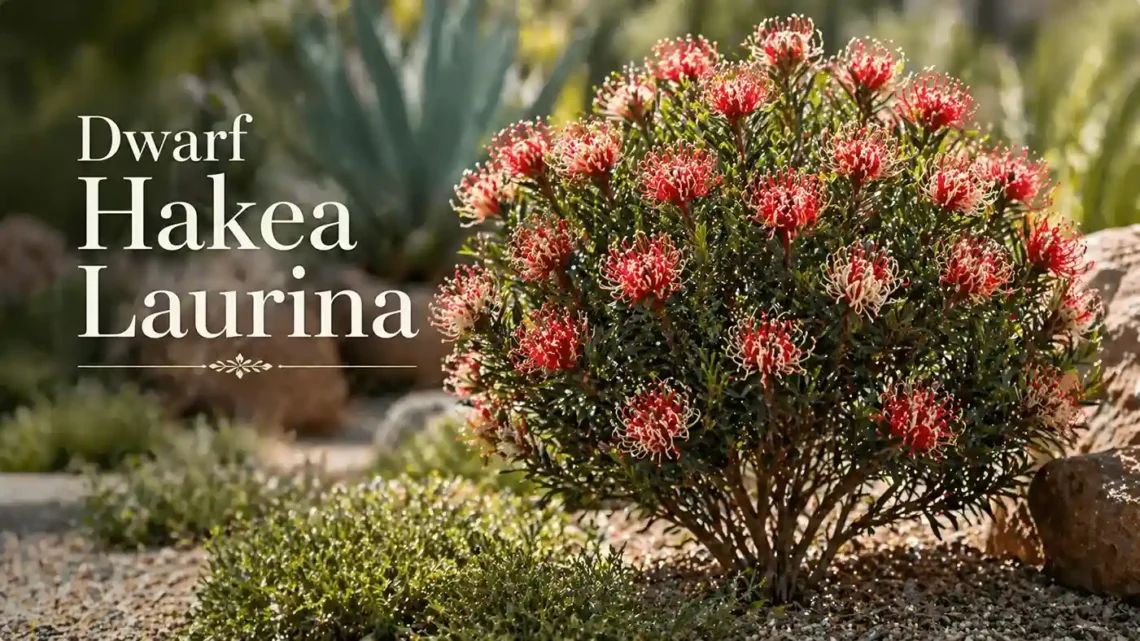
Dwarf hakea laurina is a compact form of Hakea laurina, commonly known as the pin cushion tree or pincushion hakea. This smaller-growing shrub retains the signature spherical red-and-cream flowers of the full-sized species while offering a more manageable size for modern landscapes. Native to southwestern Australia, it belongs to the Proteaceae family and is valued for its drought tolerance and ornamental appeal.
Unlike the larger or weeping hakea laurina forms, the dwarf variety is specifically cultivated for tight spaces. It is widely used in small gardens, hedging, and urban landscaping due to its structured growth and low maintenance requirements. Its ability to deliver striking blooms without occupying large space makes it a preferred choice for compact environments.
Quick Summary
- Dwarf hakea laurina is a compact version of the pincushion hakea with distinctive round, red-and-cream flowers
- Ideal for small gardens, hedges, and low-maintenance landscapes
- Thrives in well-drained soil, full sun, and dry climates
- Offers similar visual appeal to larger varieties like weeping hakea laurina but in a smaller size
What Is a Hakea Plant? (Understanding the Genus)
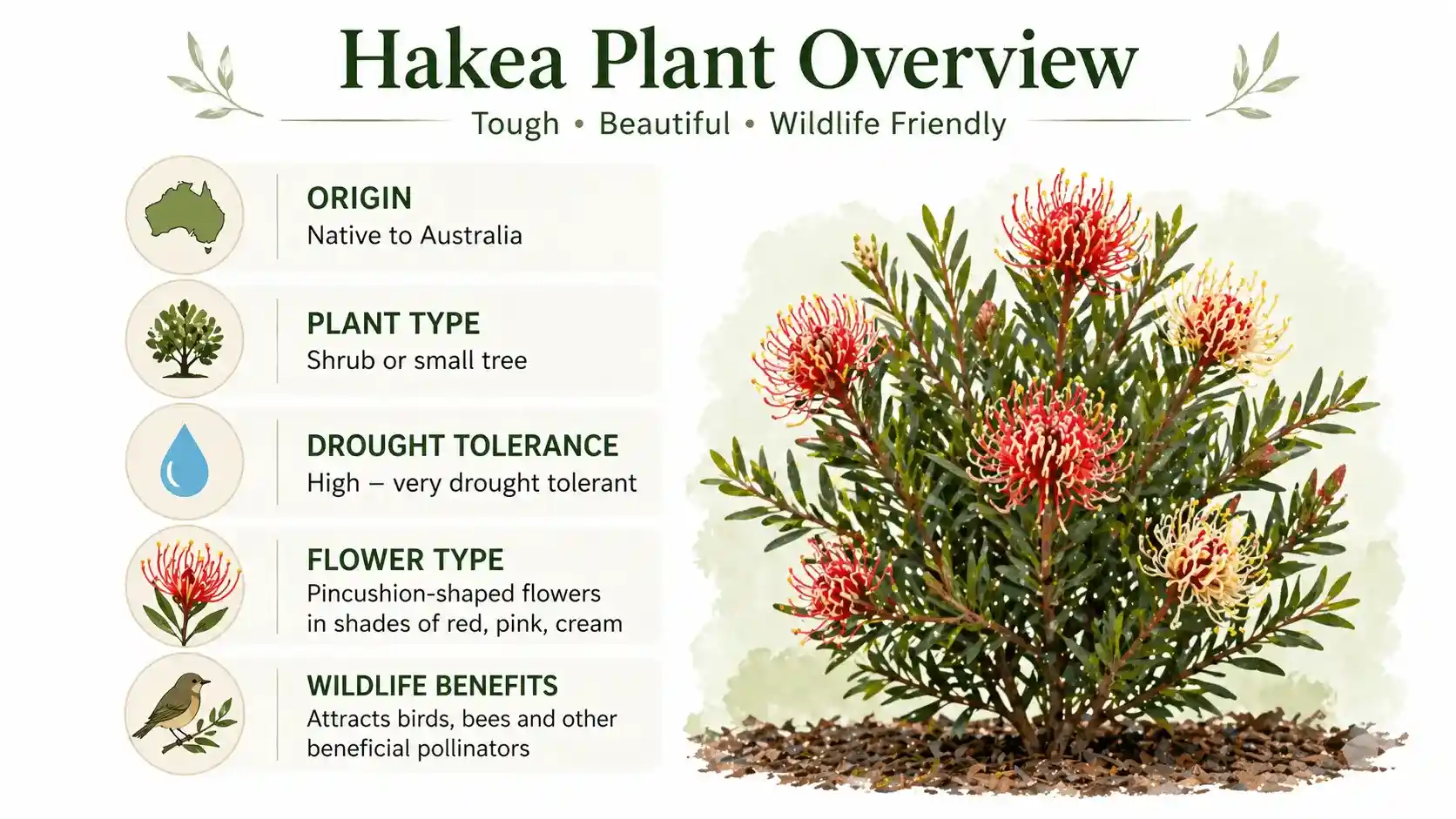
A hakea plant is a genus of woody shrubs and small trees belonging to the Proteaceae family, native primarily to Australia. These plants are well-adapted to dry, nutrient-poor soils and are widely used in native landscaping due to their resilience. The genus Hakea is part of the Proteaceae family and includes many drought-tolerant species native to Australia (see Hakea for broader botanical context).
Key Characteristics of Hakea Plants
- Evergreen shrubs or small trees
- Tough, leathery leaves (varied shapes depending on species)
- Unique flower structures, often spherical or spiky
- High drought tolerance
- Deep root systems for water efficiency
Common Names
Hakea laurina is widely known by several names:
- Pin cushion hakea
- Pincushion hakea
- Pin cushion tree
Ecological Role
Hakea plants play an important role in native ecosystems:
- Provide nectar for birds and pollinators
- Improve soil stability
- Thrive in low-water environments
Hakea species vary widely in structure and care requirements, as seen in related species like Willow Leaf Hakea Care: 8+ Essential Growth Secrets Guide, which highlights different growth habits within the genus.
Dwarf Hakea Laurina vs Standard Hakea Laurina
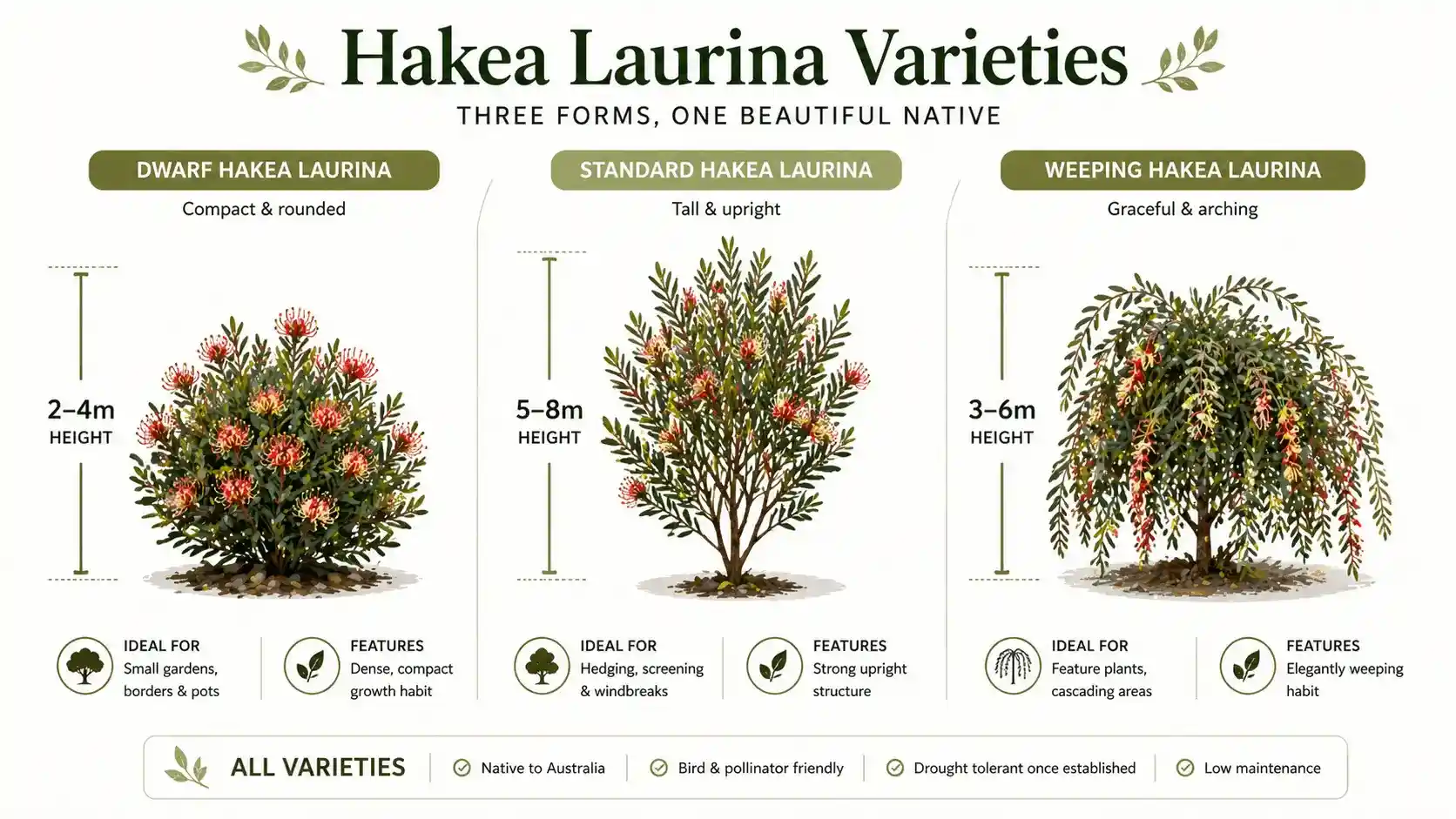
Comparison Table
| Feature | Dwarf Hakea Laurina | Standard Hakea Laurina | Weeping Hakea Laurina |
| Height & Spread | 2–4 m | 5–8 m | 4–7 m |
| Growth Habit | Compact, rounded | Upright tree | Graceful, weeping form |
| Landscape Use | Hedges, small gardens | Feature tree | Ornamental focal point |
| Maintenance | Low | Moderate | Moderate |
Key Differences
- Size: Dwarf varieties are significantly smaller and easier to manage
- Structure: Compact vs upright or weeping growth habit
- Usage: Better suited for hedging and confined spaces
- Pruning Needs: Minimal compared to full-sized trees
Dwarf Hakea Laurina Size and Growth Characteristics
Dwarf hakea laurina typically reaches a mature height of 2 to 4 meters, with a similar spread. Its compact and rounded form makes it ideal for structured planting.
Growth Influencers
- Soil: Well-drained sandy or loamy soils promote healthy growth
- Climate: Performs best in warm, dry regions
- Water: Low water needs once established
The plant maintains a dense, bushy appearance compared to the more open structure of standard hakea laurina trees. For quick reference data, check this dwarf hakea laurina Google Sheets reference to compare key size, spacing, care, and landscape-use details in a simple table format.
Plant Size (Detailed Breakdown)
Mature Dimensions
- Height: 2–4 meters
- Width: 2–3 meters
Comparison with Full-Sized Forms
- Standard hakea laurina trees can grow up to 8 meters
- Dwarf forms remain compact and controlled
Suitability
- Small gardens
- Urban landscapes
- Narrow planting spaces
Dwarf hakea aligns with general expectations of dwarf shrubs, offering reduced size without sacrificing visual impact.
Growth Rate and Seasonal Behavior
Dwarf hakea laurina grows at a slow to moderate rate, depending on environmental conditions.
Seasonal Patterns
- Active growth during warm seasons
- Slower growth in cooler months
Flowering
- Produces iconic pincushion flowers
- Blooming typically occurs in winter to early spring
Growth Factors
- Full sunlight enhances flowering
- Moderate watering supports steady growth
- Well-drained soil prevents root issues
Popular Varieties and Cultivars of Hakea Laurina
Several dwarf cultivars offer variation in size and flowering intensity.
Notable Varieties
- Hakea ‘Stockdale Sensation’
- Compact growth
- Bright, dense flowers
- Hakea laurina ‘Mini Pini’
- Smaller form
- Ideal for tight spaces
Differences Between Cultivars
- Slight variations in height
- Flower color intensity
- Growth density
These dwarf forms are part of the broader category of hakea trees Australia, adapted for modern landscaping.
How to Use Dwarf Hakea Laurina in Landscaping
Dwarf hakea laurina is highly versatile in landscape design.
Common Uses
- Feature shrub
- Native garden planting
- Low-maintenance borders
- Hakea hedge or hakea laurina hedge
Benefits
- Drought tolerant
- Attracts birds and pollinators
- Requires minimal upkeep
Design Tips
- Space plants 1.5–2 meters apart for hedging
- Combine with other native shrubs
- Use in layered planting designs
For hedge designs, combining dwarf hakea with other natives like Ultimate Grevillea Olivacea Hedge Guide: 7+ Easy Care Tips can create layered, visually rich boundaries. Before planting, review this dwarf hakea laurina compact native shrub selector to decide whether this shrub suits your hedge, border, feature planting, or small garden layout.
Care Guide for Dwarf Hakea Laurina
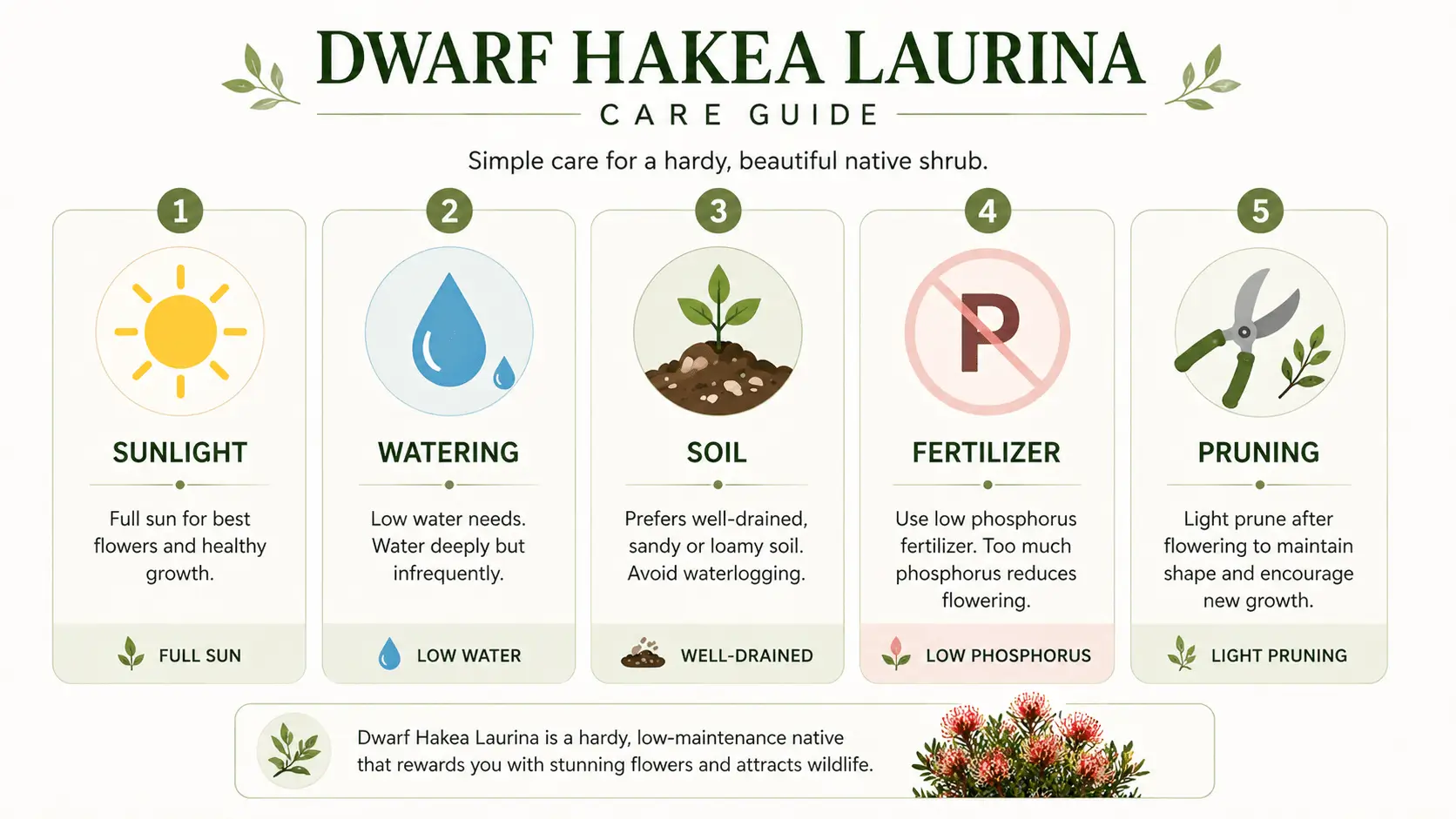
Watering
- Low water requirements once established
- Avoid overwatering
Light
- Requires full sun for optimal growth
Soil
- Must be well-draining
- Avoid heavy clay soils
Fertilization
- Use low-phosphorus fertilizers designed for native plants
Pruning
- Light pruning to maintain shape
- Encourages better flowering
Climate
- Best suited for dry and warm climates
Propagation Methods for Dwarf Hakea Laurina
Methods
- Seeds:
- Longer germination time
- Natural propagation method
- Semi-hardwood cuttings:
- Faster and more reliable
- Requires controlled conditions
Challenges
- Slow root development
- Variable success rates
Tips
- Use well-draining propagation mix
- Maintain consistent moisture without waterlogging
Common Problems and Solutions (Troubleshooting Guide)
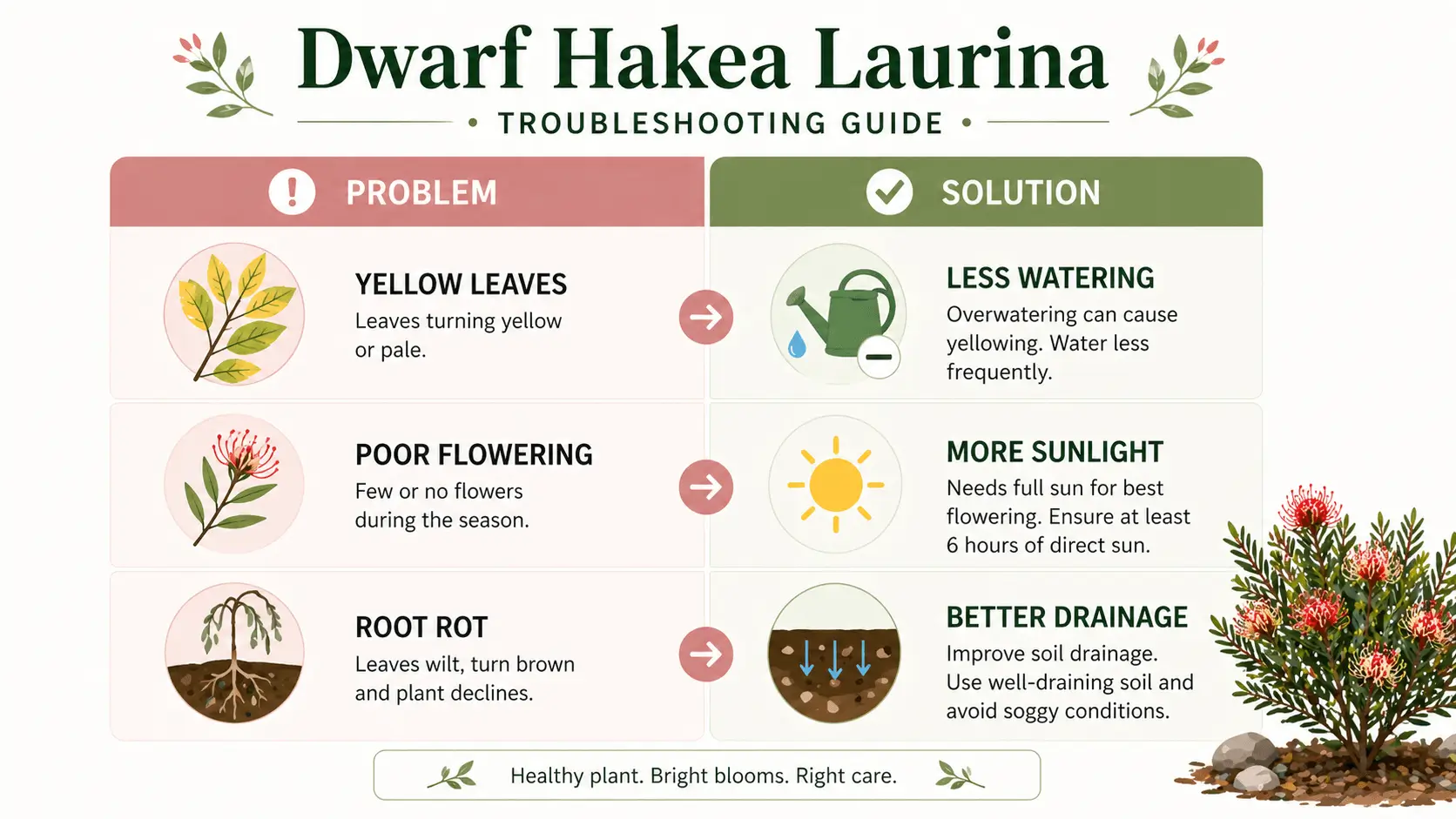
Common Issues
- Yellowing leaves: Overwatering
- Poor flowering: Insufficient sunlight
- Root rot: Poor drainage
Prevention
- Ensure proper soil preparation
- Water only when necessary
- Plant in full sun
Pests are generally minimal due to the plant’s hardy nature.
Beginner Mistakes to Avoid
- Overwatering drought-tolerant plants
- Using high-phosphorus fertilizers
- Planting in heavy clay soil
- Incorrect hedge spacing
- Ignoring sunlight requirements
These mistakes often lead to poor growth and reduced flowering.
Environmental Limitations and Growing Conditions
Climate Suitability
Dwarf hakea laurina is best suited to Australian climates and similar dry regions.
Limitations
- Young plants may be sensitive to frost
- Cannot tolerate waterlogged soil
Ideal Conditions
- Full sun exposure
- Free-draining soil
- Low humidity environments
Comparison with Other Dwarf Landscape Plants
Comparison Table
| Feature | Dwarf Hakea Laurina | Dwarf Pittosporum | Dwarf Cryptomeria |
| Size | 2–4 m | 1–3 m | 1–2 m |
| Maintenance | Low | Moderate | Moderate |
| Water Needs | Low | Moderate | Moderate |
| Best Use | Native hedges | Formal hedges | Ornamental foliage |
This comparison helps in selecting plants based on climate, space, and maintenance preferences. For a deeper side-by-side check, use this filterable dwarf hakea laurina shrub lookup to compare compact native shrubs by height, spread, water needs, hedge use, and maintenance level.
When comparing native dwarf shrubs, options like 7+ Smart Banksia Ericifolia Dwarf Care Tips for Easy Growth provide similar compact growth and drought tolerance, making them strong alternatives.
How Dwarf Hakea Laurina Fits Into Native Gardening Trends
Dwarf hakea laurina plays a significant role in modern native gardening.
Key Contributions
- Supports water-wise gardening
- Enhances biodiversity
- Provides habitat for pollinators
Its integration into native plant landscaping reflects a shift toward sustainable and low-maintenance garden designs.
Conclusion
Dwarf hakea laurina combines compact size, striking pincushion flowers, and low-maintenance care requirements. Its adaptability makes it ideal for small gardens, hedges, and native landscapes. With strong drought tolerance and ornamental appeal, it offers a practical solution for modern gardening needs. Overall, it stands out as a resilient and visually distinctive shrub suited for both residential and urban environments.
While primarily suited for outdoor use, understanding plants like dwarf hakea laurina can complement broader knowledge found in a complete guide to house plants, especially when selecting low-maintenance species.
FAQs
1. How big does dwarf hakea laurina grow?
Dwarf hakea laurina typically grows to a height of 2–4 meters with a spread of 2–3 meters. Growth may vary depending on soil quality, climate, and water availability.
2. What is the difference between dwarf hakea laurina and weeping hakea laurina?
The main difference lies in size and structure. Dwarf forms are compact and rounded, while weeping hakea laurina has a larger size and cascading branches, making it more suitable as a feature tree.
3. How do you care for a dwarf hakea laurina plant?
Care involves full sun exposure, well-drained soil, minimal watering, and occasional pruning. Use low-phosphorus fertilizers suitable for native plants.
4. Can dwarf hakea laurina be used as a hedge?
Yes, it is commonly used as a hedge due to its dense growth. Proper spacing and light pruning help maintain shape and coverage.
5. How do you propagate dwarf hakea laurina?
Propagation can be done through seeds or semi-hardwood cuttings. Cuttings are generally more reliable and faster to establish.
6. Why is my pincushion hakea not flowering?
Common causes include insufficient sunlight, overwatering, or poor soil conditions. Ensuring full sun and proper drainage usually resolves the issue.