Introduction
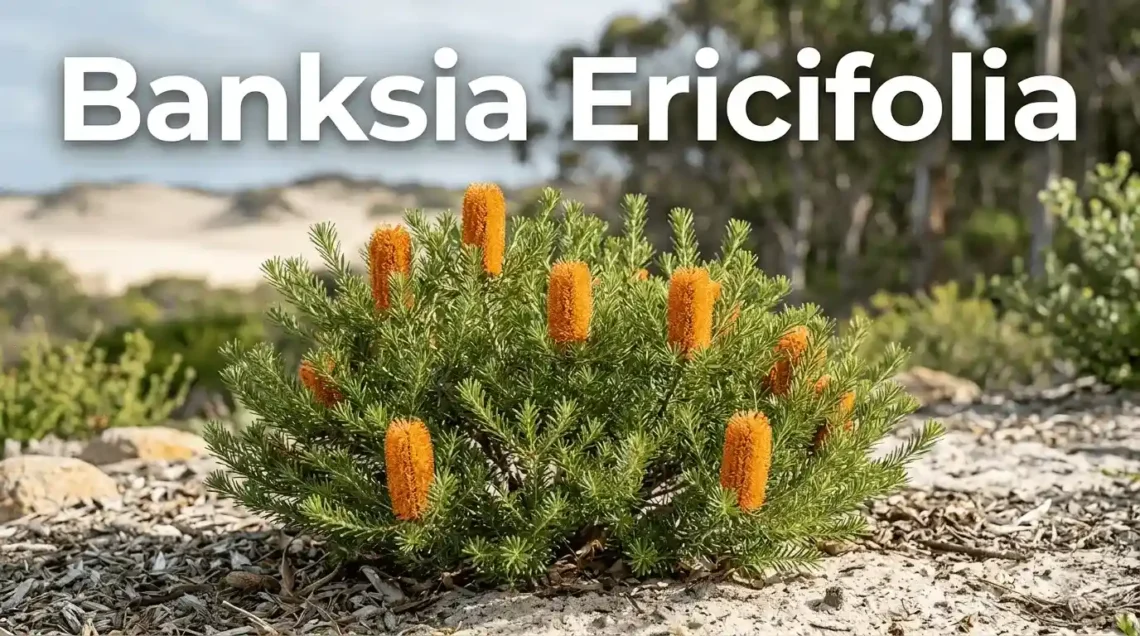
Banksia ericifolia dwarf refers to compact cultivars of the heath-leaved banksia, a native Australian shrub known for its vibrant orange flower spikes and fine-textured foliage. Unlike the standard form, this dwarf variety offers a more manageable size, making it ideal for small gardens, urban landscapes, and containers. It maintains the same ornamental appeal while being easier to maintain and position. Gardeners value it for its ability to attract pollinators, especially birds, and its adaptability to coastal and sandy environments. Its compact structure makes it a practical yet visually striking choice for modern landscaping.
Quick Summary
- Definition: Dwarf cultivars of Banksia ericifolia, growing 1–2 meters tall with dense foliage and bright orange cylindrical flowers.
- Key Traits: Drought-tolerant once established, slow to moderate growth, thrives in well-drained sandy soils.
- Uses: Suitable for hedges, pots, and native gardens; ideal for coastal and urban planting.
- Origin: Native to eastern Australia; dwarf forms like ‘Little Eric’ are bred for compact spaces.
What Is Banksia Ericifolia Dwarf?
Banksia ericifolia dwarf is a compact form of the heath banksia, belonging to the Banksia genus within the Proteaceae family. Commonly referred to as heath-leaved banksia, hairpin banksia, or Little Eric banksia, it is a cultivated variation designed for smaller landscapes. The genus Banksia is part of the Proteaceae family, widely studied for its ecological importance in Australia (see Banksia on Wikipedia).
Botanical Identity and Characteristics
- Features fine, needle-like leaves resembling heath plants, giving it a dense, textured appearance.
- Produces cylindrical flower spikes (10–15 cm long), typically bright orange, blooming in autumn and winter.
- Flowers are rich in nectar, making them highly attractive to honeyeaters and pollinators.
Dwarf vs. Standard Form
The dwarf variety differs from the standard Banksia ericifolia tree form primarily in size and growth habit. While the standard plant can grow into a large shrub or small tree, dwarf cultivars like Little Eric remain compact and bushy, making them more suitable for controlled spaces and container gardening.
Plant Size and Dimensions
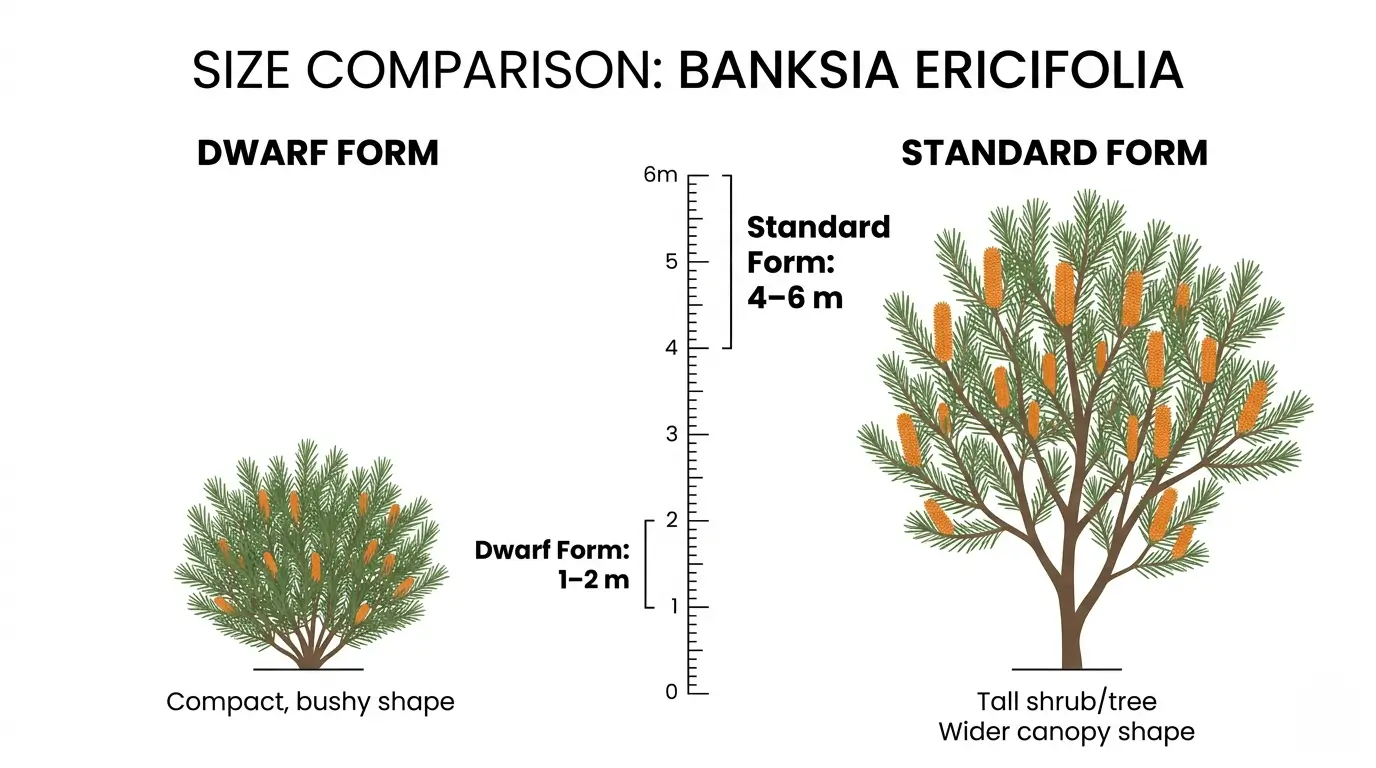
Banksia ericifolia dwarf is specifically bred for reduced size while maintaining ornamental value.
Size Comparison Table
| Aspect | Dwarf Form | Standard Form |
| Mature Height | 1–2 m | 4–6 m |
| Mature Width | 1–1.5 m | 3–4 m |
| Pot Suitability | Yes | No |
Key Size Insights
- Ideal for small gardens, borders, and containers due to its compact structure.
- Requires proper spacing (around 1–1.5 meters) to allow airflow and healthy growth.
- Growth may vary based on soil quality, sunlight, wind exposure, and pruning practices.
- In pots, growth is slightly restricted, resulting in a more controlled size.
Growth Rate
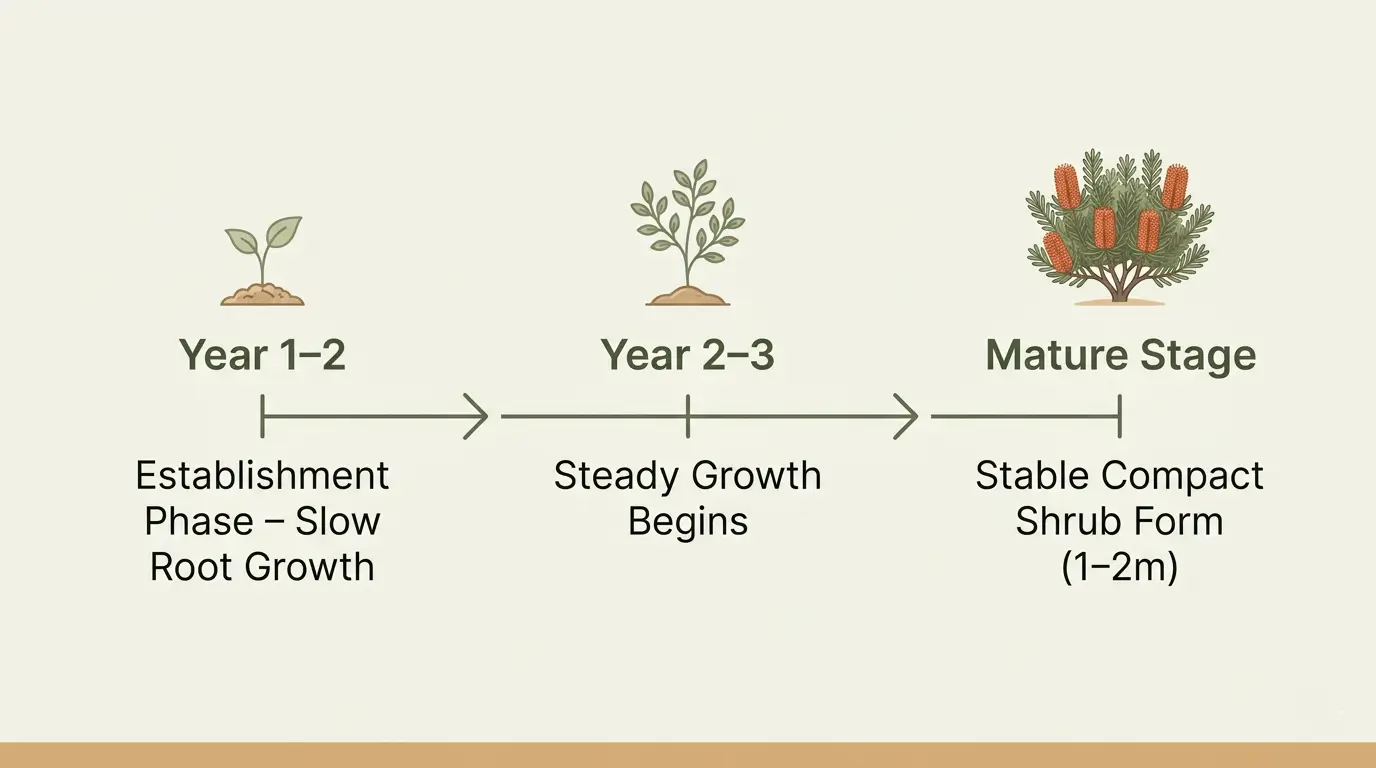
Banksia ericifolia dwarf has a slow to moderate growth rate, especially during its early stages.
Growth Characteristics
- Establishment phase: Slow growth in the first 1–2 years as roots develop.
- Active growth: Becomes steadier once established, especially in spring.
- Sunlight impact: Performs best in full sun with minimal competition.
Factors Affecting Growth
- Well-drained soil encourages healthier root development.
- Overwatering or poor drainage can significantly slow growth.
- Excess fertilizer, especially phosphorus, may damage roots and stunt development.
Care Guide
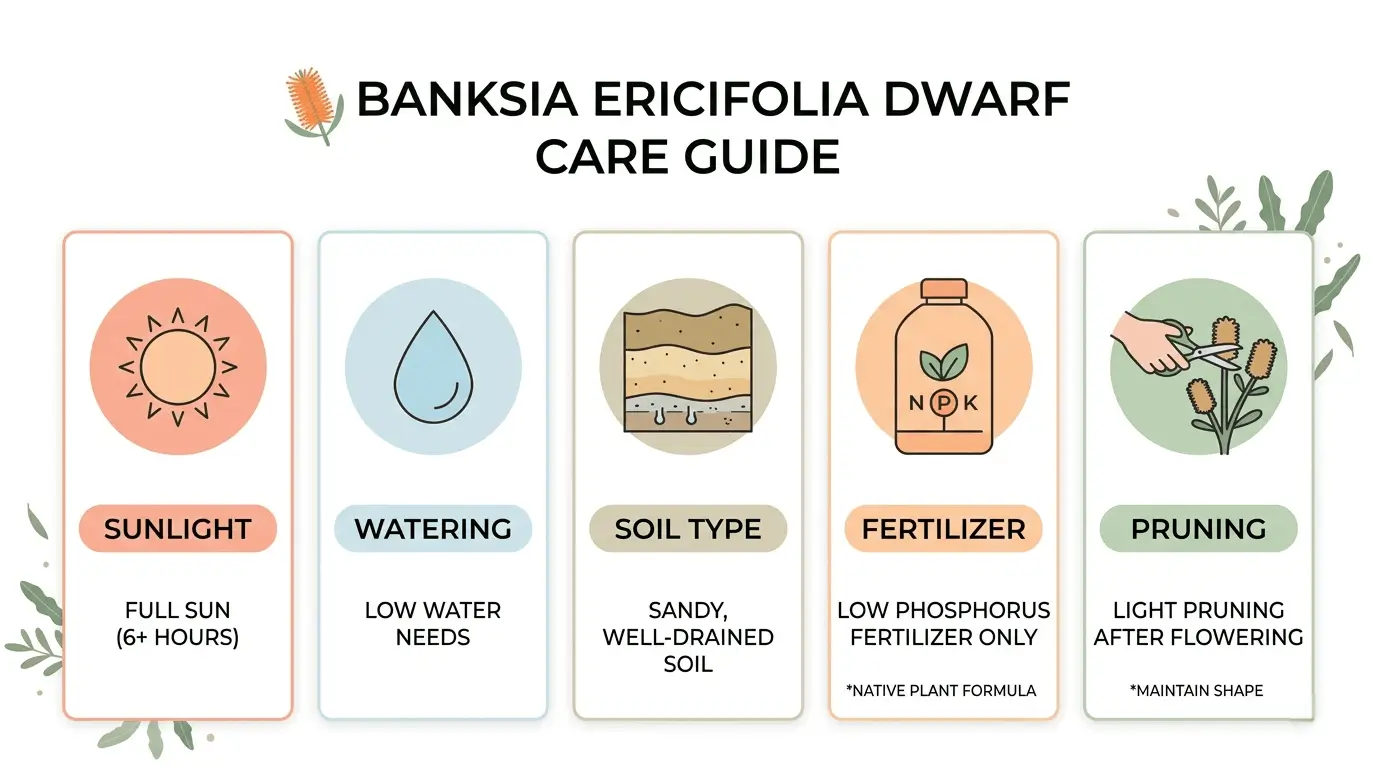
Proper care ensures healthy growth and consistent flowering of banksia ericifolia dwarf.
Watering
- Water deeply but infrequently after establishment.
- Highly drought-tolerant once mature.
- Avoid waterlogged soil, as roots are sensitive to excess moisture.
Light
- Requires full sun (at least 6 hours daily) for optimal growth and flowering.
Soil
- Prefers sandy, well-drained, slightly acidic soil.
- Avoid heavy clay soils unless amended with coarse materials.
Fertilizer
- Use low-phosphorus fertilizers designed for native plants.
- Apply lightly in spring to support growth.
Pruning
- Perform light tip pruning after flowering to maintain shape and encourage bushiness.
- Avoid heavy pruning into old wood.
Climate
- Suitable for USDA zones 8–11.
- Tolerates mild frost (down to approximately -5°C).
- Performs exceptionally well in coastal environments with good airflow.
Practical Care Insights
- A common beginner mistake is using regular fertilizer, which can harm proteoid roots.
- Mulching helps retain moisture and regulate soil temperature, especially in warmer climates.
For gardeners planning broader native gardens, combining banksia with drought-tolerant shrubs such as Ultimate Guide to Native Trees of Australia: Identification & Care ensures a more resilient, low-maintenance planting design.
Banksia Ericifolia Dwarf vs. Similar Varieties
Comparing banksia ericifolia dwarf with other species helps in selecting the right plant for specific needs.
Comparison Table
| Feature | Banksia Ericifolia Dwarf | Banksia Spinulosa (Cherry Candles) | Banksia Integrifolia |
| Height | 1–2 m | 0.5–1.5 m | 5–15 m |
| Flowers | Orange spikes, autumn | Red candles, year-round | Yellow, summer |
| Foliage | Fine, heath-like | Broad, serrated | Smooth, wavy |
| Best For | Hedges, pots | Groundcover | Screens |
Key Differences
- Banksia spinulosa varieties are shorter and often flower more frequently.
- Banksia integrifolia grows into a large tree, suitable for windbreaks and coastal screening.
- Dwarf banksia ericifolia is best for compact hedging and container planting.
When comparing banksia species, gardeners often also evaluate compact and hedging options like Best Hedging Trees: 6+ Essential Types for Privacy and Ultimate Tall Narrow Shrubs Australia for Privacy & Screening for designing structured native landscapes.
Common Problems and Solutions
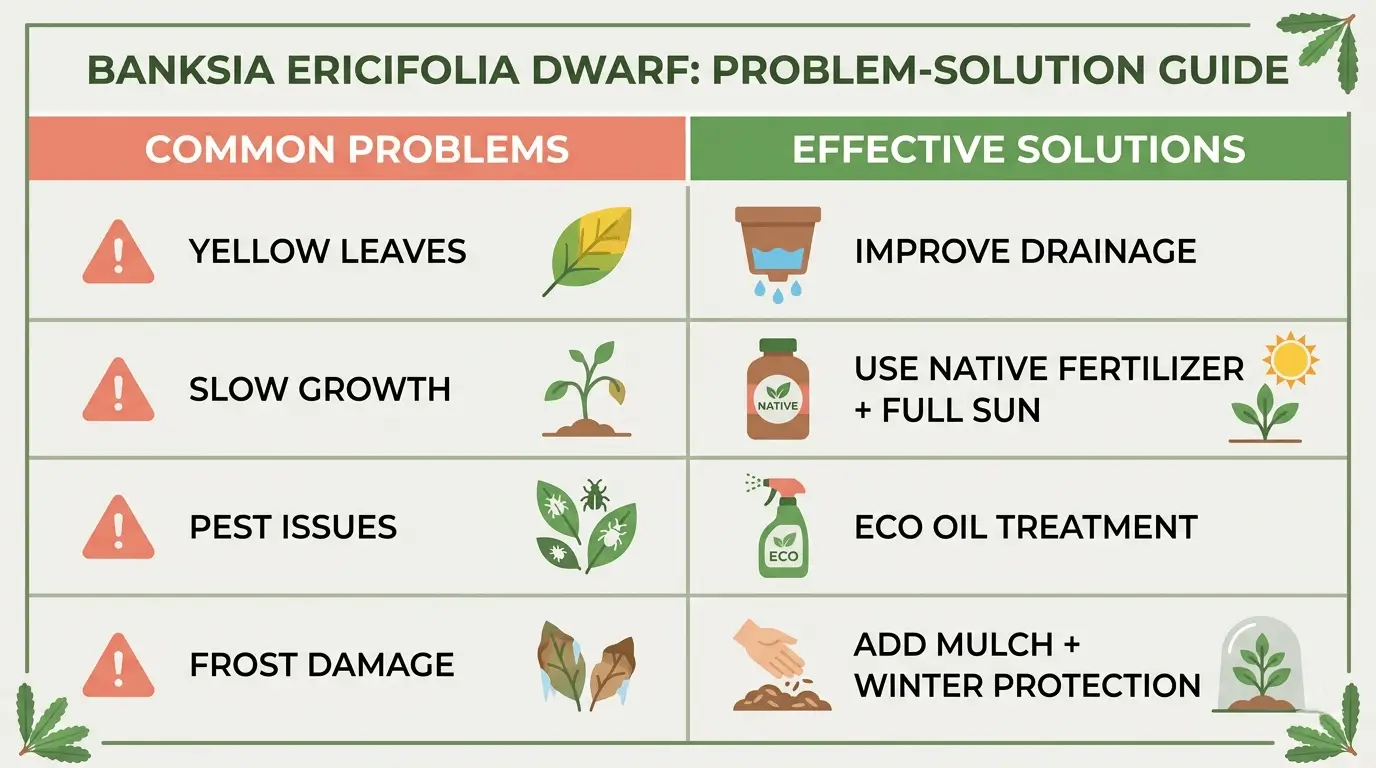
Understanding common issues helps maintain plant health and longevity.
Yellow Leaves
- Cause: Overwatering or poor drainage.
- Solution: Improve soil drainage or repot using a sandy, gritty mix.
Pest Issues
- Common pests: Scale insects or borers.
- Solution: Apply eco-friendly oils and encourage beneficial insects.
Slow Growth
- Cause: Phosphorus toxicity or lack of sunlight.
- Solution: Switch to native fertilizer and ensure full sun exposure.
Frost Damage
- Cause: Exposure to low temperatures in young plants.
- Solution: Apply mulch and provide protection during colder months.
Practical Insight
- Most issues arise from improper soil or watering practices, not the plant itself.
Banksia Varieties Overview
Banksia shrubs include a wide range of species and cultivars suitable for different landscapes.
Common Small Banksia Types
- Banksia spinulosa varieties: Known for compact growth and colorful flowers.
- Banksia collina and cunninghamii: Offer varied heights and foliage textures.
- Dwarf cultivars: Ideal for pots, borders, and urban gardens.
Landscape Use
- Small banksias are commonly used in:
- Native garden designs
- Low-maintenance landscaping
- Wildlife-friendly planting schemes
These varieties contribute to biodiversity and provide long-lasting visual appeal. Banksia ericifolia dwarf is part of a wider group of native shrubs that also includes other ornamental species such as 7+ Essential Banksia Tree Varieties: Types, Size & Colors, which helps understand how different banksia plants vary in size, flower color, and landscape use.
Conclusion
Banksia ericifolia dwarf is a compact, low-maintenance shrub that combines visual appeal with ecological benefits. With its bright orange flowers, fine foliage, and adaptability to coastal and sandy conditions, it is well-suited for modern gardens and containers. Success depends on providing well-drained soil, full sunlight, and avoiding phosphorus-rich fertilizers. Its manageable size and resilience make it an excellent choice for gardeners seeking a native plant that supports wildlife while fitting into smaller spaces.
While Banksia ericifolia dwarf is primarily an outdoor native shrub, it also connects to broader plant care knowledge found in guides like Guide to House Plants, especially in understanding watering, soil management, and container growing principles.
FAQ
What is the mature height of banksia ericifolia dwarf?
Banksia ericifolia dwarf typically grows between 1–2 meters tall, making it significantly smaller than the standard form, which can reach up to 6 meters.
How do you care for banksia little eric?
Plant it in full sun with well-drained sandy soil, water sparingly once established, and use low-phosphorus fertilizer. Light pruning after flowering helps maintain shape.
What are common banksia ericifolia dwarf varieties?
Popular varieties include ‘Little Eric’ and other compact cultivars, known for their dense foliage and bright orange flower spikes.
Can banksia ericifolia dwarf grow in pots?
Yes, it grows well in containers with proper drainage. Repot every 2–3 years and protect the plant from extreme frost conditions.
Banksia ericifolia dwarf vs. banksia spinulosa—key differences?
Banksia ericifolia dwarf grows taller and produces orange flowers in autumn, while banksia spinulosa is shorter, flowers more frequently, and has broader leaves suited for groundcover.