Introduction
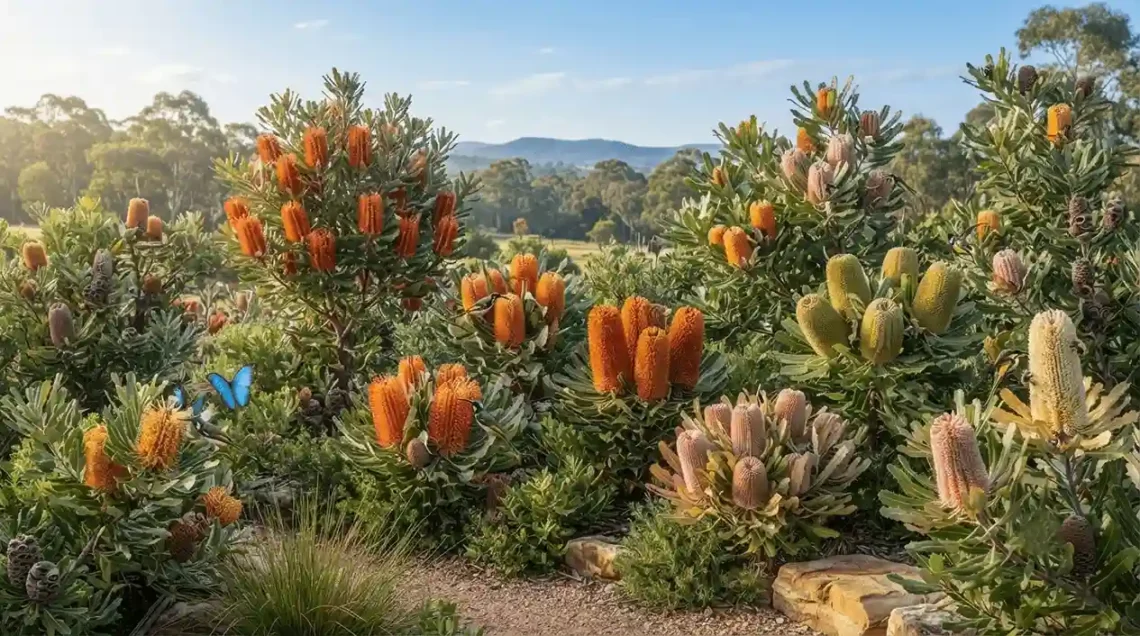
Banksia colours are among the most distinctive features of Australia’s native flora. From bright golden yellow flower spikes to striking orange, red, pink, cream, green, and bronze blooms, the banksia offers exceptional diversity for home gardens and natural landscapes. An Australian banksia is valued not only for its unique flower spikes but also for its attractive foliage, woody seed cones, and ability to thrive in challenging conditions. Depending on the species, cultivar, climate, and flower maturity, a banksia plant may display different shades throughout its blooming season. Understanding the various banksias and their banksia flower colours helps gardeners choose the right variety for both visual appeal and growing conditions.
By Greenery Inside | Plant Care & Gardening Expert
Quick Summary
- Banksia flowers bloom in shades of yellow, orange, red, pink, cream, green, and bronze depending on the species.
- More than 170 Banksia species offer diverse flower colours, growth habits, and landscape uses across Australia.
- Most Banksias perform best in full sun and free-draining soil, producing stronger flowering and healthier foliage.
- Flower colour can vary with maturity, seasonal conditions, and environmental factors.
- Choosing the right Banksia depends on your climate, available garden space, and desired landscape effect.
What Is a Banksia?
A Banksia is a genus of flowering plants native to Australia, renowned for its distinctive cylindrical flower spikes, woody seed cones, and remarkable adaptability. The banksia scientific name belongs to the genus Banksia, which is part of the Proteaceae family. These plants are among the country’s most recognisable native species and play an important role in supporting biodiversity. Banksia belongs to a well-documented genus of Australian wildflowers widely studied in botany and ecology.
The Banksia Australian heritage is closely linked to the country’s unique ecosystems. Today, Australian banksia species grow naturally across coastal regions, forests, heathlands, woodlands, and sandy plains. Their resilience makes them valuable ornamental plants for both residential gardens and large-scale landscape projects.
There are more than 170 recognised banksia species, each displaying unique flower colours, leaf shapes, growth habits, and mature sizes. While some develop into impressive trees, others remain compact shrubs suitable for smaller gardens.
At Greenery Inside, we’ve found that selecting the right species for your local climate makes a noticeable difference in flowering performance and long-term plant health. Gardeners who match species to soil and rainfall conditions generally enjoy more consistent blooms and healthier growth.
Botanical Characteristics
Banksias are easy to identify thanks to several distinctive features:
- Large cylindrical or cone-shaped flower spikes composed of hundreds or thousands of tiny individual flowers.
- Tough, leathery leaves that vary from smooth-edged to deeply serrated depending on the species.
- Woody seed cones that often remain on the plant for years before releasing seeds.
- Strong adaptations to nutrient-poor Australian soils.
- Excellent drought tolerance once established.
Many banksias Australia gardeners grow are also highly valued for attracting nectar-feeding wildlife. Birds, native bees, butterflies, and small mammals frequently visit the flowers, making Banksias one of the most wildlife-friendly plants for native gardens.
Why Banksias Are Popular in Gardens
Banksias are widely planted because they combine ornamental beauty with practical landscape benefits.
Their popularity comes from:
- Exceptional range of flower colours.
- Long flowering seasons in many species.
- Attractive evergreen foliage throughout the year.
- High drought tolerance after establishment.
- Strong resistance to coastal winds and salt spray in suitable species.
- Excellent habitat and food source for pollinators and native birds.
- Availability as trees, shrubs, and compact landscape cultivars.
In our experience growing native plants, Banksias reward gardeners who avoid excessive watering and improve drainage before planting. Unlike many ornamental species, they generally perform best with relatively low maintenance once established.
As of 2026, horticultural experts continue to recommend locally adapted Banksia species and cultivars for sustainable Australian landscapes because they require fewer inputs while providing reliable flowering, wildlife support, and year-round visual interest.
Which Banksia Species Produce Different Flower Colours?
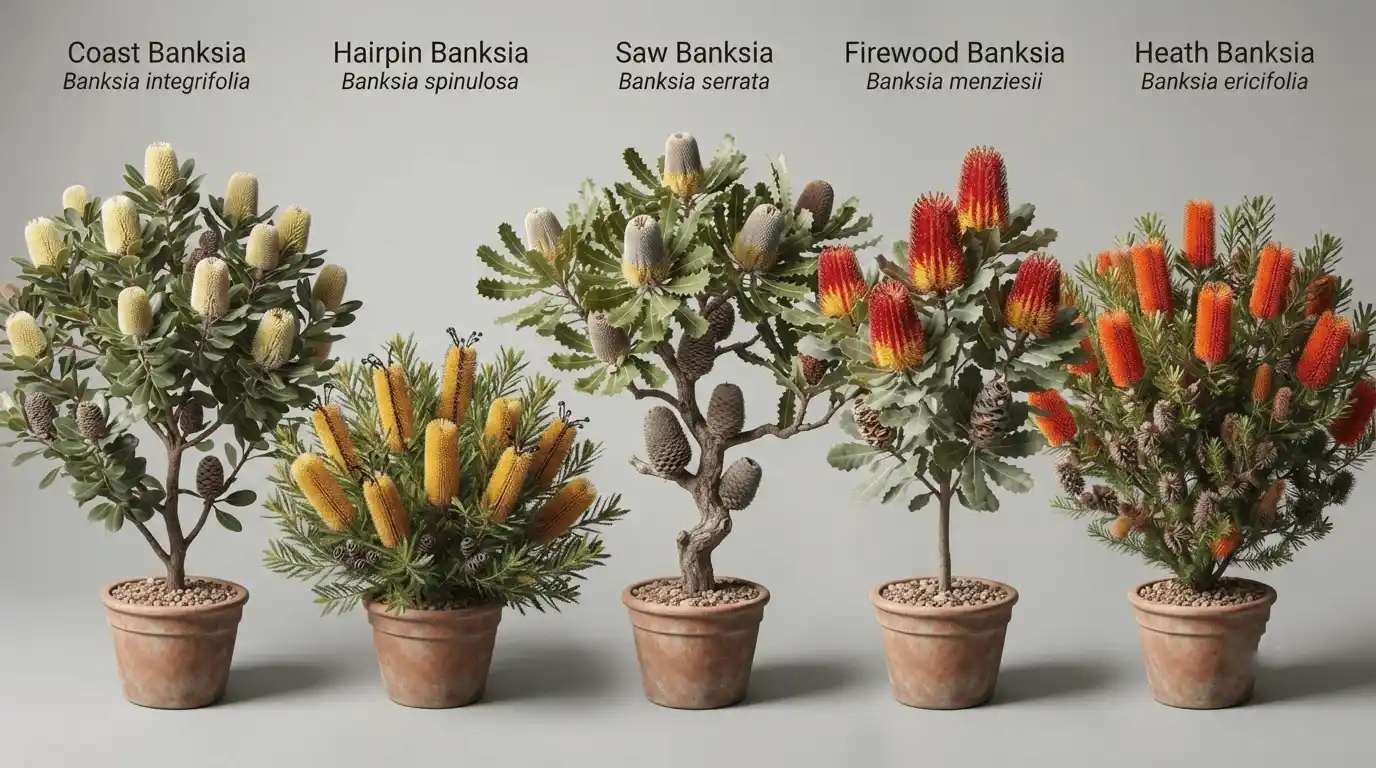
Australia is home to more than 170 Banksia species, each offering unique flower colours, foliage, and growth habits. Whether you are looking for a large shade tree, a compact shrub, or a coastal specimen, selecting the right species helps ensure healthy growth and long-lasting seasonal colour.
Coast Banksia (Banksia integrifolia)
The Coast Banksia (Banksia integrifolia) is one of Australia’s most widely grown native trees. Naturally found along the eastern coastline, it is highly valued for its adaptability to sandy soils, salt-laden winds, and coastal conditions. Because of its strong root system and coastal resilience, Coast Banksia is often compared with other wind-tolerant and pool-safe Australian native trees.
Its flower spikes are typically cream to pale yellow, creating a soft, elegant display from late summer through winter. Mature trees also develop attractive woody seed cones that remain ornamental long after flowering.
Key characteristics
- Flower colour: Cream to pale yellow
- Common names: Coast Banksia, Coastal Banksia
- Scientific name: Banksia integrifolia
- Growth habit: Medium to large evergreen tree
- Typical mature size: 8–16 metres tall, depending on location
- Typical spread: 4–8 metres
The Banksia integrifolia tree features distinctive leathery leaves with glossy green upper surfaces and silvery-white undersides. These Banksia integrifolia leaves create year-round interest and help the tree tolerate coastal exposure.
Because of its adaptability, Banksia integrifolia coastal banksia is commonly planted in parks, streetscapes, windbreaks, and coastal gardens. Although Banksia integrifolia height varies with climate and soil conditions, it generally develops into a long-lived specimen tree. Gardeners should allow adequate space for its mature Banksia integrifolia size when planting.
Hairpin Banksia (Banksia spinulosa)
The Hairpin Banksia (Banksia spinulosa), also known as the Heath Banksia or Heath-leaved Banksia, is one of the most versatile species for residential landscapes. Unlike larger tree forms, it usually grows as a compact shrub, making it ideal for smaller gardens.
Its bright yellow flower spikes are highlighted by contrasting dark styles, giving each bloom a distinctive two-toned appearance.
Key characteristics
- Flower colour: Golden yellow with dark red, maroon, or black styles
- Growth habit: Compact shrub
- Typical height: 1–3 metres
- Best use: Small gardens, borders, native hedges, pollinator gardens
Several cultivated forms are available, including Banksia spinulosa dwarf red, which offers a more compact habit suitable for modern landscapes.
Related forms include:
- Banksia collina
- Banksia spinulosa var. collina
- Banksia cunninghamii
These closely related plants differ slightly in leaf shape, flower colour intensity, and natural distribution.
The narrow Banksia spinulosa leaf gives the shrub a fine-textured appearance throughout the year. Depending on the cultivar, Banksia spinulosa height remains manageable, making pruning and maintenance relatively simple.
At Greenery Inside, we’ve found that Hairpin Banksia is one of the easiest Banksias for beginners because it flowers reliably, attracts birds, and fits comfortably into smaller suburban gardens.
Saw Banksia (Banksia serrata)
The Saw Banksia (Banksia serrata), sometimes called the Sawtooth Banksia, is one of Australia’s most iconic native trees. It is easily recognised by its rugged trunk, large serrated leaves, and bold flower spikes.
Its flowers range from grey-yellow to pale yellow, creating an attractive contrast against its coarse foliage.
Key characteristics
- Flower colour: Grey-yellow to pale yellow
- Growth habit: Large tree
- Typical height: 6–15 metres
- Landscape use: Feature tree, coastal planting, wildlife habitat
The deeply toothed Banksia serrata leaf gives the species its common name. Mature trees develop impressive woody seed cones that persist for many years and provide additional ornamental value.
Because of its rugged appearance and longevity, B. serrata is often selected for larger native landscapes, parks, and restoration projects.
Firewood Banksia (Banksia menziesii)
The Firewood Banksia (Banksia menziesii) is considered one of the most colourful Banksia species found in Western Australia.
Its spectacular flower spikes combine red, crimson, orange, and yellow, producing one of the most dramatic displays among Australian native plants.
Key characteristics
- Flower colour: Red and yellow
- Growth habit: Small to medium tree
- Typical height: 4–10 metres
- Best use: Feature planting, wildlife gardens
The colourful blooms attract honeyeaters, native bees, and nectar-feeding mammals throughout the flowering season.
Compact selections such as Banksia menziesii dwarf and Dwarf Banksia menziesii are increasingly popular for residential gardens where space is limited.
Because of its vibrant colour combinations, the Firewood Banksia often serves as a focal point in Australian native landscapes.
Heath Banksia (Banksia ericifolia)
The Heath Banksia (Banksia ericifolia) is admired for its brilliant orange flower spikes that brighten gardens during autumn and winter.
Its fine, needle-like foliage creates a soft texture that contrasts beautifully with the bold cylindrical blooms.
Key characteristics
- Flower colour: Bright orange
- Growth habit: Upright shrub to small tree
- Typical height: 2–6 metres
- Flowering season: Autumn to winter
Several compact cultivars are available, including Little Eric Banksia (Banksia ericifolia ‘Little Eric’), which is well suited to smaller gardens and native borders.
The mature Banksia ericifolia tree provides excellent shelter for birds while producing reliable seasonal colour.
Depending on growing conditions, Banksia ericifolia height varies considerably, although most garden cultivars remain much smaller than wild populations.
As of 2026, many Australian native plant growers continue to recommend compact cultivars like Banksia Little Eric for urban landscapes because they combine manageable size with prolific flowering.
Old Man Banksia
The name Old Man Banksia commonly refers to mature Banksia serrata trees that develop large, weathered woody seed cones after flowering.
These rough-textured cones resemble the bearded face of an elderly man, inspiring the familiar common name and making the species instantly recognisable.
Key characteristics
- Large persistent woody seed cones
- Grey-yellow flower spikes before cone development
- Strong sculptural appearance
- Valuable habitat for insects and wildlife
The Old Man Banksia tree remains attractive throughout the year, even after flowering has ended. Its textured bark, rugged branching habit, and distinctive seed cones make it a favourite specimen in naturalistic Australian landscapes.
Comparing Popular Banksia Species
| Species | Typical Flower Colour | Growth Habit | Mature Height | Best Landscape Use |
| Banksia integrifolia | Cream to pale yellow | Tree | 8–16 m | Coastal gardens, streetscapes, windbreaks |
| Banksia spinulosa | Golden yellow with dark styles | Shrub | 1–3 m | Small gardens, borders, pollinator gardens |
| Banksia serrata | Grey-yellow | Large tree | 6–15 m | Feature tree, native landscapes |
| Banksia menziesii | Red and yellow | Small to medium tree | 4–10 m | Wildlife gardens, specimen planting |
| Banksia ericifolia | Bright orange | Shrub to small tree | 2–6 m | Native gardens, screening, feature planting |
Choosing the right Banksia species involves more than selecting your favourite flower colour. Mature size, climate suitability, soil drainage, and intended landscape use all influence long-term performance. In our experience, gardeners who consider these factors before planting enjoy healthier plants, more reliable flowering, and lower maintenance over time.
Different Banksia Types by Growth Habit
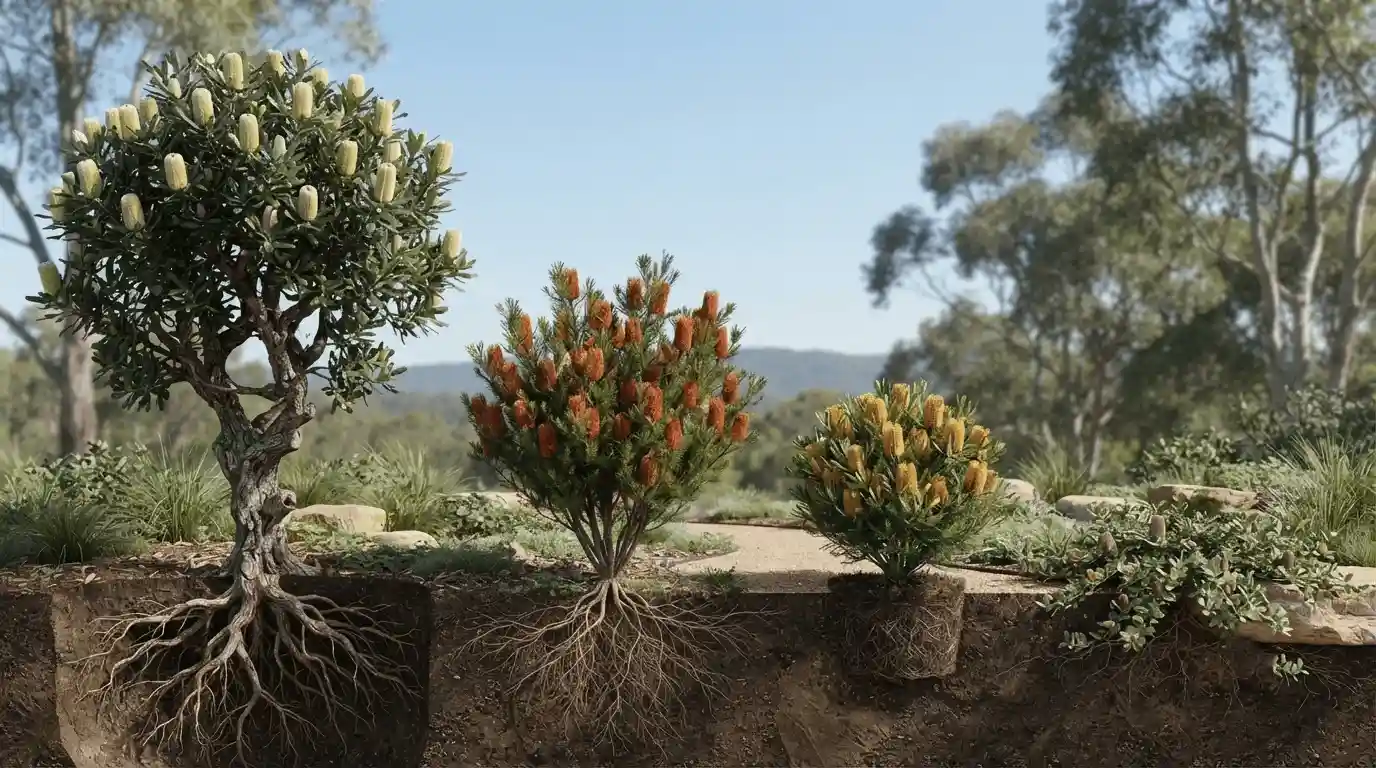
Banksias are available in a wide range of growth forms, making them suitable for everything from compact courtyards to expansive coastal landscapes. Understanding the different Banksia types helps you choose a plant that fits your available space and landscaping goals.
The main growth habits include Banksia trees, Banksia shrubs, dwarf cultivars, and compact landscape forms. While flower colour is often the first consideration, mature size and growth habit are equally important for long-term success.
Banksia Trees
A Banksia tree is ideal for creating shade, structure, and year-round visual interest. Many tree-form species become impressive feature specimens while providing nectar for birds and beneficial insects.
Popular Australian Banksia tree species include:
- Banksia integrifolia (Coast Banksia)
- Banksia serrata (Saw Banksia)
- Banksia menziesii (Firewood Banksia)
Most Banksia trees Australia gardeners grow reach between 6 and 16 metres, depending on the species and local growing conditions.
Banksia Shrubs
A Banksia shrub is better suited to residential gardens where space is limited. Shrub forms produce the same distinctive flower spikes while remaining easier to maintain.
Common shrub species include:
- Banksia spinulosa
- Banksia ericifolia
These Banksia shrubs are excellent choices for mixed native borders, informal hedges, and wildlife gardens.
Dwarf and Compact Banksias
Modern breeding has introduced many miniature Banksia and dwarf cultivars that fit smaller landscapes.
Benefits include:
- Easier maintenance
- Suitable for courtyards and urban gardens
- Reliable flowering
- Attractive container specimens
- Excellent for low native hedges
These compact Banksia varieties allow gardeners with limited space to enjoy native flowers without planting large trees.
Comparing Banksia Growth Types
| Growth Type | Typical Height | Typical Width | Common Flower Colours | Best Landscape Use |
| Tree Banksia | 6–16 m | 4–8 m | Cream, yellow, red | Shade trees, feature planting, coastal gardens |
| Banksia Shrub | 1–4 m | 1–3 m | Yellow, orange, cream | Native borders, screening, wildlife gardens |
| Dwarf Banksia | 0.8–2 m | 1–2 m | Yellow, orange, red | Courtyards, small gardens, containers |
| Compact Cultivars | 1–3 m | 1–3 m | Varies by cultivar | Modern landscapes, low hedges |
When choosing among the many Banksia tree varieties, consider not only flower colour but also mature height, spread, maintenance requirements, and available growing space.
How Flower Colour Influences Landscape Design
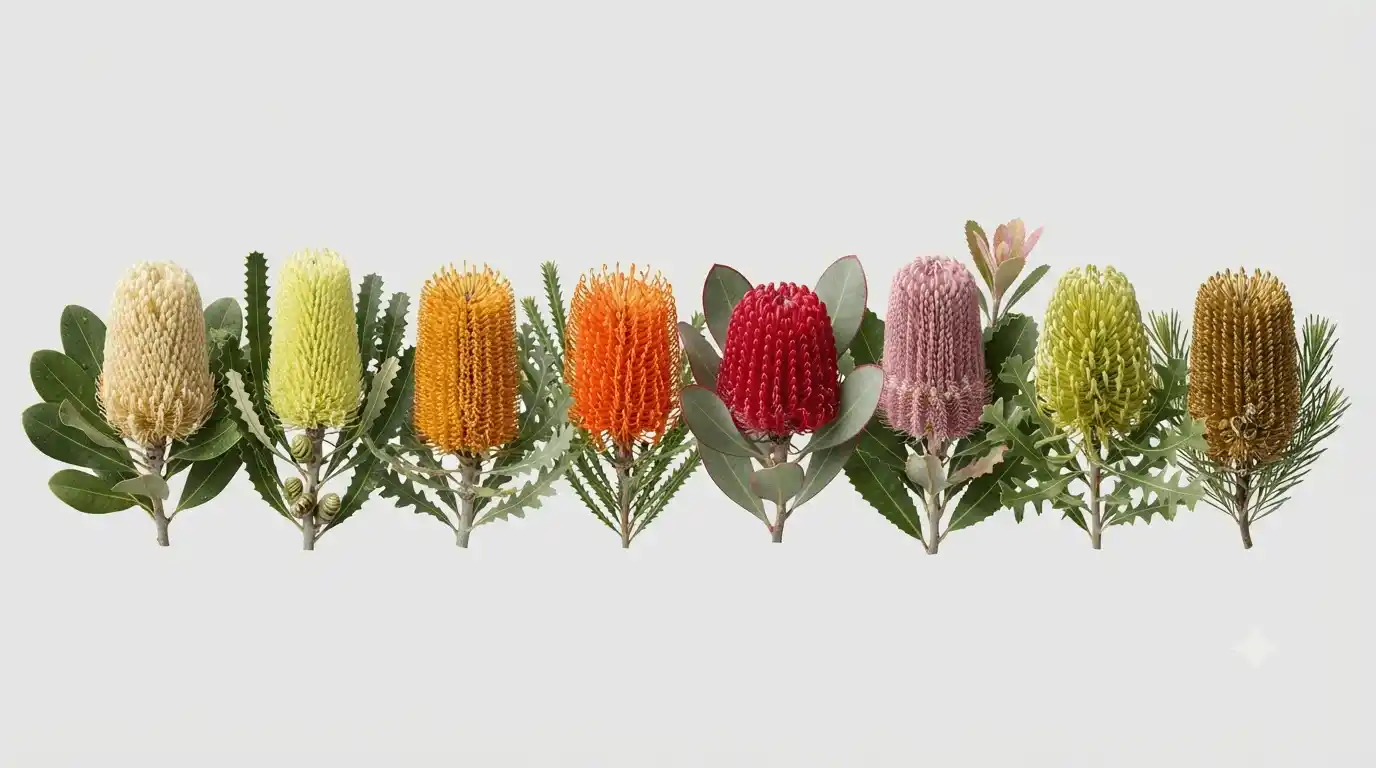
Banksia flower colours can dramatically influence the appearance of a landscape. By combining species with complementary bloom colours, gardeners can create visually balanced gardens that provide seasonal interest while supporting native wildlife.
Because Banksias flower across different seasons, combining several species extends colour throughout much of the year.
Colour Combinations
Warm flower colours create bold focal points, while cream and pale yellow flowers produce a softer, more natural effect.
Popular combinations include:
- Orange and yellow for vibrant native gardens
- Cream with silver foliage for coastal landscapes
- Red and yellow as feature plantings
- Mixed flowering species for year-round colour succession
Native Garden Design
Banksias pair well with many Australian native plants, including Grevilleas, Callistemons, Hakeas, and Westringias. Their varied flower colours add contrast while supporting birds, bees, butterflies, and other pollinators.
Wildlife Gardens
Many nectar-feeding birds rely on Banksias during cooler months when fewer plants are flowering. Species with abundant blooms provide an important food source for:
- Honeyeaters
- Native bees
- Butterflies
- Small mammals
- Beneficial insects
Coastal Landscapes
Cream and pale yellow species, particularly Coast Banksia, blend naturally into coastal environments where sandy soils and salt-laden winds challenge many ornamental plants.
Modern Landscape Ideas
Banksias also complement contemporary garden designs through their bold architectural flowers and evergreen foliage.
Popular uses include:
- Feature specimen trees
- Native screening
- Pollinator gardens
- Coastal gardens
- Modern low-maintenance landscapes
At Greenery Inside, we often recommend selecting Banksias with staggered flowering periods rather than choosing plants based solely on colour. This approach creates longer-lasting seasonal displays while providing a continuous nectar source for wildlife.
Do Growing Conditions Affect Banksia Colours?
Yes. Growing conditions can influence the intensity, abundance, and overall quality of Banksia flowers, although they do not usually change a species’ natural flower colour. Healthy plants growing in ideal conditions generally produce brighter blooms, stronger foliage, and more consistent flowering.
Is Banksia a Sun or Shade Plant?
Banksia is primarily a full-sun plant. Most species require at least six hours of direct sunlight each day to develop healthy foliage and produce abundant flower spikes.
Plants grown in excessive shade often produce:
- Fewer flowers
- Weaker stems
- Reduced colour intensity
- Slower growth
- Sparse foliage
Soil Quality
Banksias naturally grow in well-drained, low-phosphorus soils.
Heavy clay or poorly drained soils can reduce flowering and increase the risk of root diseases.
Improving drainage before planting significantly improves long-term plant performance.
Climate
Most Banksias are adapted to Australia’s varied climates, although individual species differ in their tolerance to:
- Heat
- Frost
- Coastal winds
- Humidity
- Extended drought
Selecting a locally adapted species generally results in healthier flowering.
Seasonal Flowering
Different Banksias bloom during different seasons, with many producing their most colourful displays from autumn through winter.
Seasonal weather patterns influence:
- Flower production
- Bloom duration
- Nectar production
- Pollinator activity
Plant Maturity
Young plants often require several years before producing their best flowering displays.
Mature Banksias flower more consistently because established root systems support stronger annual growth and improved nutrient uptake.
Banksia Care Guide for Healthy Flower Colour
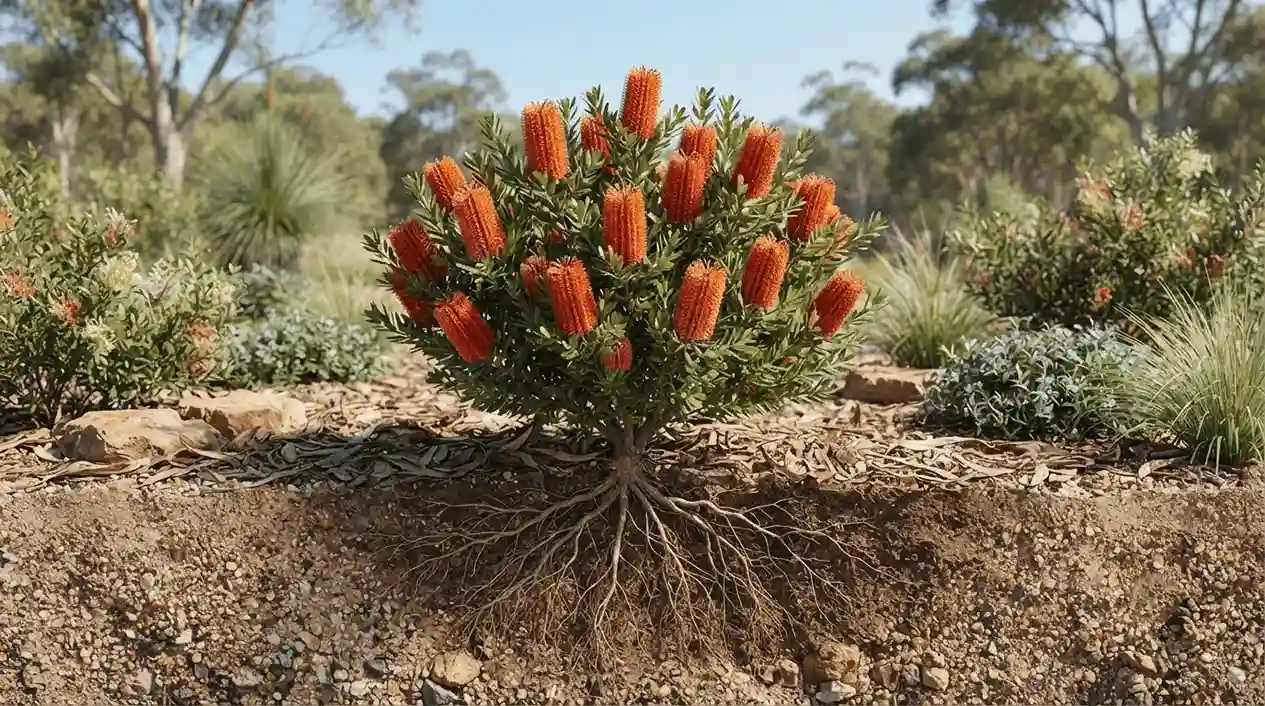
Proper care encourages vigorous growth, abundant flowering, and vibrant colour throughout the blooming season.
Light Requirements
Most Banksias thrive in full sun.
For best flowering:
- Provide at least six hours of direct sunlight daily.
- Avoid planting beneath dense tree canopies.
- Ensure good air circulation around mature plants.
Soil Requirements
Banksias perform best in:
- Well-drained sandy soils
- Slightly acidic to neutral pH
- Low-phosphorus growing conditions
Raised beds or mounds can improve drainage where heavy soils are unavoidable.
Watering
Young plants require regular watering during establishment.
Once established:
- Water deeply but infrequently.
- Allow soil to dry slightly between watering.
- Avoid permanently wet soil around the roots.
From our experience, overwatering is one of the most common reasons newly planted Banksias fail. Deep, occasional watering encourages stronger root development than frequent shallow irrigation.
Fertilising
Banksias require only light feeding.
Use:
- Low-phosphorus native plant fertilisers
- Slow-release formulations designed for Australian native plants
Avoid standard high-phosphorus fertilisers, which may damage sensitive root systems.
Pruning
Light pruning after flowering helps:
- Maintain plant shape
- Encourage branching
- Improve air circulation
- Promote future flowering
Avoid removing large amounts of old woody growth, as some species regenerate poorly from mature stems.
Climate Tolerance
Most Banksias tolerate:
- Drought once established
- Coastal winds
- Salt spray
- Warm Australian summers
Tolerance to frost varies by species, so gardeners should choose cultivars suited to their local climate.
As of 2026, Australian native plant growers continue to recommend planting Banksias during autumn or early spring, allowing roots to establish before periods of extreme summer heat.
Plant Size and Growth Rate
Banksia size and growth rate vary significantly between species. Understanding mature dimensions helps prevent overcrowding and reduces future maintenance.
Plant Size
Depending on the species, Banksias may grow as compact shrubs or large evergreen trees.
Typical mature sizes include:
| Species | Typical Height | Typical Width |
| Banksia integrifolia | 8–16 m | 4–8 m |
| Banksia spinulosa | 1–3 m | 1–2 m |
| Banksia ericifolia | 2–6 m | 2–4 m |
| Banksia menziesii | 4–10 m | 3–6 m |
| Banksia serrata | 6–15 m | 5–8 m |
Always allow adequate spacing based on mature dimensions rather than the plant’s size at purchase.
Growth Rate
Most Banksias have a slow to moderate growth rate.
Growth speed depends on:
- Species
- Climate
- Soil drainage
- Sunlight
- Water availability
- Root establishment
Although many species grow slowly during their first few years, they become increasingly vigorous as root systems mature.
At Greenery Inside, we’ve observed that gardeners who prioritise soil preparation and drainage before planting generally see healthier long-term growth and more consistent flowering than those who rely on fertilisers after planting.
Common Problems That Can Affect Banksia Flower Colour
Healthy Banksias naturally produce vibrant flowers, but poor growing conditions can reduce flowering quality and dull their colour. Identifying problems early helps restore plant health and encourages better blooms in future seasons.
| Problem | Why It Happens | How to Fix It | Prevention |
| Poor flowering | Too little sunlight or immature plant | Move to full sun if possible and allow time to establish | Plant in a sunny location |
| Yellowing leaves | Nutrient imbalance or poor drainage | Improve drainage and use a low-phosphorus native fertiliser | Avoid waterlogged soil |
| Nutrient deficiencies | Unsuitable fertiliser or depleted soil | Apply a fertiliser formulated for Australian natives | Feed lightly during active growth |
| Root rot | Excess moisture and poorly drained soil | Reduce watering and improve drainage | Plant in free-draining soil |
| Frost damage | Exposure to severe cold | Prune damaged growth after frost risk has passed | Select frost-tolerant species |
| Lack of sunlight | Shaded growing position | Increase sun exposure | Choose an open planting site |
One of the most common issues we encounter is overwatering newly planted Banksias. Allowing the soil to drain properly between waterings promotes healthier roots, stronger growth, and more vibrant flower colours.
Banksia vs Similar Australian Native Plants
Banksias are often compared with other Australian native flowering plants because they share similar landscape uses and wildlife benefits. However, each group has distinctive characteristics.
| Feature | Banksia | Grevillea | Callistemon (Bottlebrush) | Hakea |
| Flower shape | Cylindrical spikes | Spider-like flowers | Bottlebrush spikes | Ball or spike-shaped flowers |
| Common flower colours | Yellow, cream, orange, red, pink | Red, pink, orange, cream | Red, pink, white, yellow | Cream, pink, red, yellow |
| Growth habit | Trees and shrubs | Mostly shrubs | Shrubs and small trees | Shrubs and trees |
| Wildlife value | Excellent nectar source | Excellent nectar source | Attracts birds and bees | Supports birds and insects |
| Best garden use | Feature trees, native landscapes | Flowering borders | Screening and feature planting | Native habitat gardens |
While all four genera support wildlife, Banksias are especially valued for their large nectar-rich flower spikes and long-lasting woody seed cones, which add year-round architectural interest.
Beginner Mistakes When Choosing Banksia Colours
Selecting a Banksia based only on flower colour can lead to long-term maintenance issues. Considering climate, mature size, and soil conditions is equally important.
Common mistakes include:
- Choosing colour before climate suitability: A species that thrives in one region may struggle in another.
- Ignoring mature plant size: Small nursery plants can eventually become large trees.
- Poor spacing: Crowded plants compete for light, water, and nutrients.
- Planting in unsuitable soil: Heavy clay soils increase the risk of root diseases.
- Growing Banksias in shade: Most species require full sun for reliable flowering.
- Overwatering: Excess moisture is one of the leading causes of poor growth and root problems.
Greenery Inside recommends researching the mature size and environmental needs of each species before planting. Matching the right Banksia to your garden conditions is the best way to enjoy healthy plants and vibrant flowers for many years.
Conclusion
Banksia colours reflect the remarkable diversity of Australia’s native flora. From soft cream and golden yellow to vivid orange, red, pink, green, and bronze, different species offer unique combinations of flower colour, foliage, and growth habit.
Understanding the differences between Banksia species, their mature size, flowering characteristics, and environmental requirements makes it easier to select the right plant for your landscape. Whether you prefer a compact shrub for a small courtyard or a large specimen tree for a native garden, choosing a species suited to your local climate and soil conditions will encourage healthier growth and more reliable flowering.
With proper care, well-drained soil, and plenty of sunlight, Banksias provide long-lasting colour, valuable wildlife habitat, and year-round ornamental appeal, making them one of Australia’s most rewarding native plants.
Frequently Asked Questions About Banksia Colours
What is a Banksia?
A Banksia is a genus of Australian native flowering plants in the Proteaceae family. They are recognised for their cylindrical flower spikes, woody seed cones, evergreen foliage, and importance to native wildlife.
How many types of Banksia are there?
There are more than 170 recognised Banksia species, ranging from compact shrubs to large trees. They occur naturally across much of Australia and vary in flower colour, size, and habitat.
Is Banksia a sun or shade plant?
Most Banksias are full-sun plants. They perform best with at least six hours of direct sunlight each day, which promotes healthy foliage and abundant flowering.
Which Banksia species has pink flowers?
Pink flowers are less common than yellow or orange blooms. Several cultivated hybrids and ornamental selections produce pink flower spikes, although most naturally occurring species flower in cream, yellow, orange, or red tones.
Do Banksia flower colours change as they age?
Yes. Flower spikes often become more vibrant as they open, then gradually fade to bronze or brown as they mature and eventually develop into woody seed cones.
Which Banksia is best for small gardens?
Banksia spinulosa and compact cultivars such as ‘Little Eric’ are excellent choices for smaller gardens because they remain relatively compact while producing attractive seasonal flowers.
Can Banksias grow in coastal areas?
Yes. Species such as Banksia integrifolia are well adapted to coastal conditions and tolerate sandy soils, salt spray, and strong winds, making them ideal for seaside landscapes.
What is the difference between Banksia integrifolia and Banksia serrata?
Banksia integrifolia typically has smooth-edged leaves with silvery undersides and cream to pale yellow flowers, making it highly suitable for coastal gardens. Banksia serrata has large serrated leaves, grey-yellow flower spikes, and a rugged appearance, making it better suited as a feature tree in larger landscapes.