Introduction
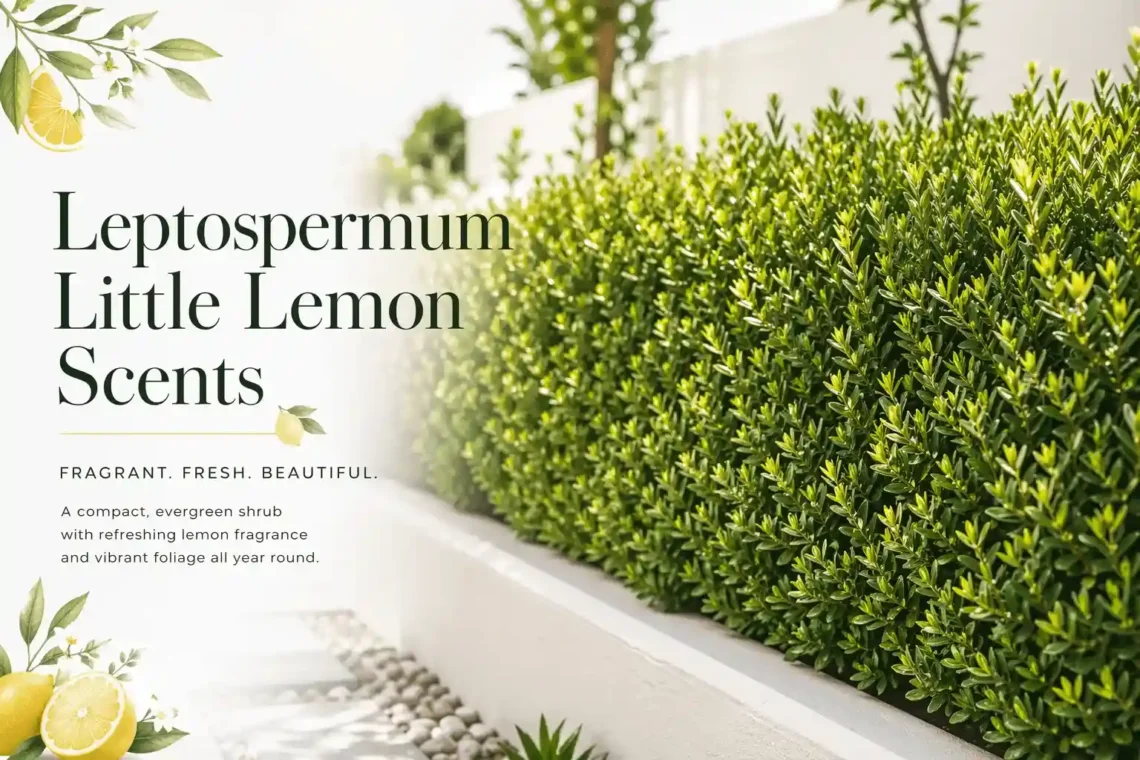
Leptospermum little lemon scents is a compact, aromatic shrub known for its fresh citrus fragrance, dense foliage, and versatility in landscaping. As a dwarf form of the lemon-scented tea tree, it provides the same fragrant qualities as larger varieties but in a smaller, more manageable size. This plant is commonly used for hedging, borders, and decorative planting due to its neat growth habit and low maintenance needs. Its adaptability to different garden conditions makes it suitable for both residential and landscape design applications. Understanding its characteristics and care requirements helps ensure consistent growth and long-term plant health.
Quick Summary
- Leptospermum little lemon scents is a dwarf form of lemon-scented tea tree with strong citrus fragrance
- Ideal for hedges, borders, and small gardens due to compact growth
- Requires well-drained soil, full sun, and moderate watering
- Closely related to leptospermum petersonii, but smaller and easier to maintain
What Is Leptospermum Little Lemon Scents?
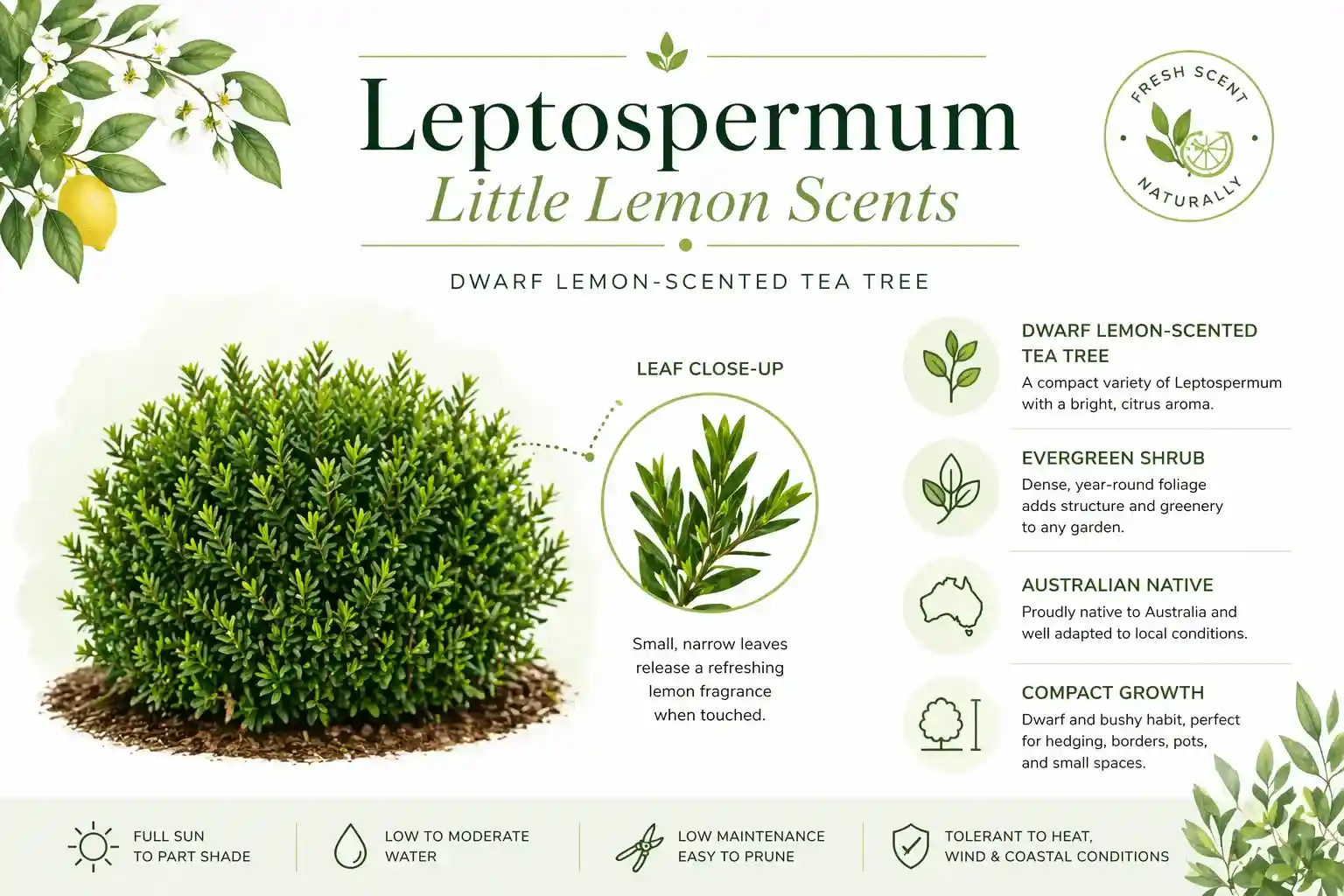
Leptospermum little lemon scents is a dwarf cultivar of leptospermum petersonii, a plant species native to Australia and part of the Myrtaceae family. It is commonly categorized as a lemon scented tea tree due to the citrus aroma released from its leaves. It belongs to the genus Leptospermum, a group of flowering plants native to Australia known for their aromatic foliage.
This compact variety is specifically cultivated for controlled growth, making it suitable for small gardens and structured landscaping. It maintains the aromatic qualities of larger lemon scented trees but with a reduced size and easier maintenance.
- Evergreen shrub with lemon-fragrant leaves
- Compact growth habit compared to full-sized species
- Commonly used as a lemon scented tea tree hedge
Key Features and Plant Characteristics
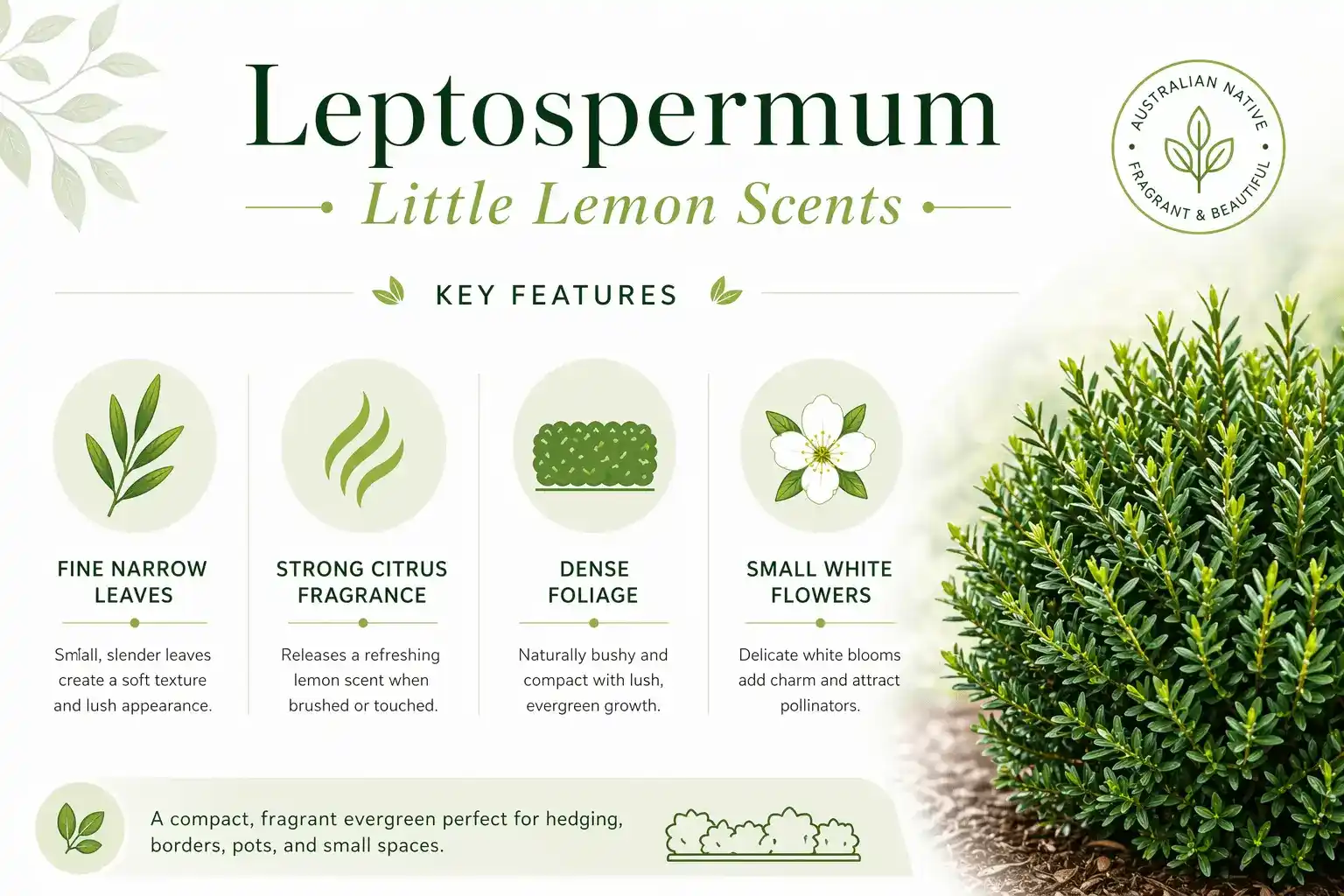
Leptospermum little lemon scents is valued for its fine-textured foliage, aromatic leaves, and dense branching structure. The leaves are narrow and soft, producing a strong lemon scent when crushed.
The plant typically produces small white flowers during warmer months, adding ornamental value. Its dense growth pattern makes it suitable for shaping into hedges or borders.
- Fine, narrow leaves with strong citrus aroma
- Dense foliage ideal for lemon hedge formation
- Small white flowers in warmer seasons
Size and Growth Habit
Mature Height and Spread
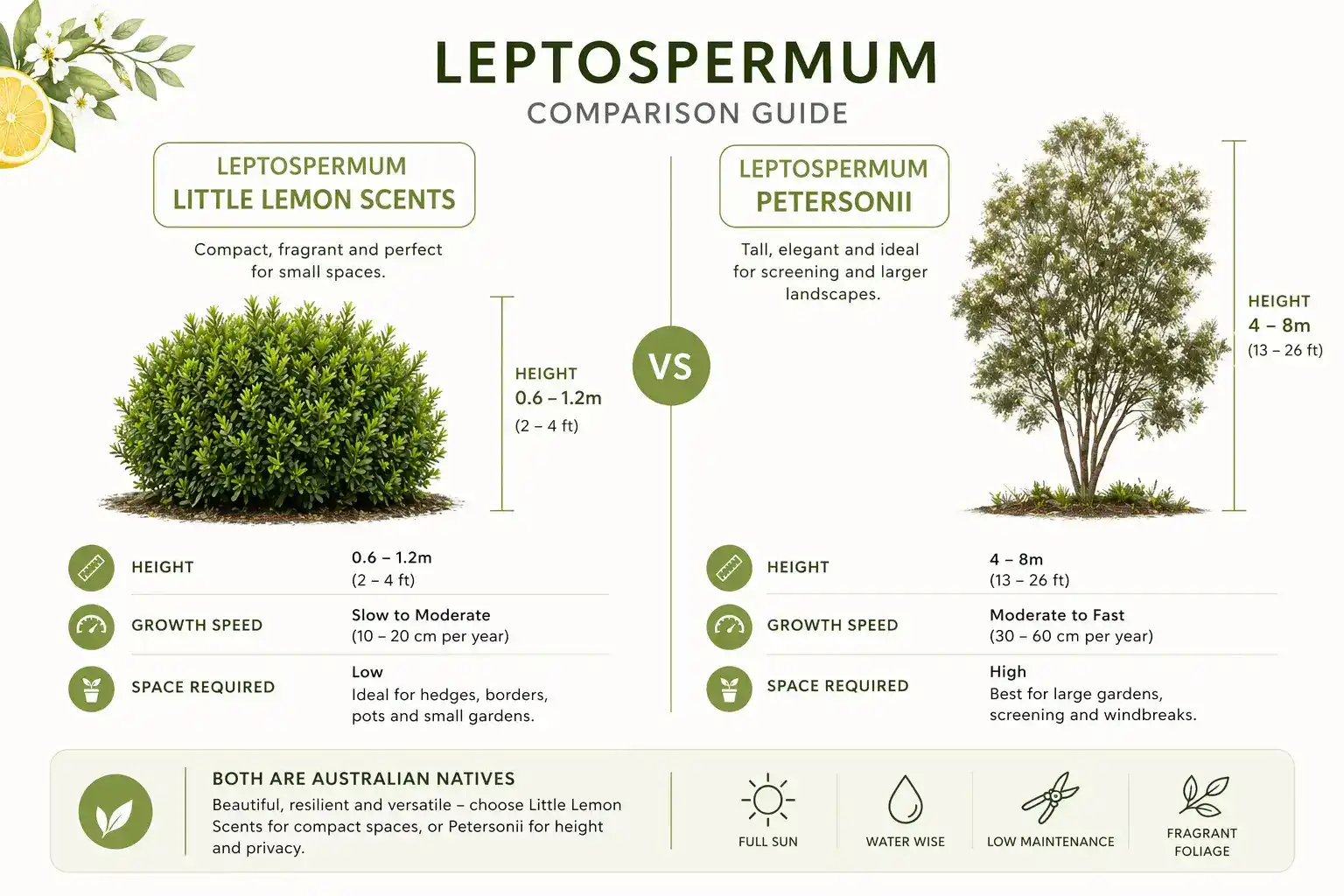
Leptospermum little lemon scents remains compact compared to its parent species. It typically grows to a manageable height of around 1–2 meters, depending on environmental conditions.
In contrast, leptospermum petersonii can grow significantly taller, often reaching heights of 5–8 meters as a tree or large shrub. Indoors, growth is more restricted due to limited space and light availability.
Environmental factors such as soil quality, sunlight, and watering influence the final size of the plant.
Growth Rate and Development
Leptospermum little lemon scents has a moderate growth rate, with steady development under optimal conditions. Growth is influenced by sunlight exposure, soil drainage, and watering consistency.
- Faster growth in warm climates
- Slower in poor soil or low light
The lemon scented tea tree height and growth rate can vary, but this dwarf variety maintains a controlled and predictable structure compared to full-sized plants.
Leptospermum Little Lemon Scents vs Leptospermum Petersonii
Key Differences
| Feature | Little Lemon Scents | Leptospermum petersonii |
| Size | Compact / dwarf | Tall tree or large shrub |
| Maintenance | Low pruning needed | Requires more shaping |
| Use | Hedge, borders | Feature tree, large hedge |
| Growth | Moderate | Faster, larger spread |
| Space Needs | Small gardens | Large landscapes |
Leptospermum little lemon scents is preferred for smaller spaces and low-maintenance landscaping, while leptospermum petersonii is better suited for larger areas where height and spread are desired.
Gardeners choose between these based on available space, maintenance preference, and landscape design goals.
Common Uses in Landscaping
Leptospermum little lemon scents is widely used for both functional and decorative purposes in landscaping. Its compact size and fragrant foliage make it versatile in different garden settings.
- Privacy screening as a lemon scented tea tree hedge
- Decorative garden borders
- Fragrant planting near walkways
- Wildlife-friendly planting
It is often selected for creating structured hedges while adding sensory appeal through its citrus scent. For broader hedge planning, exploring different plant options can help optimize privacy and design.
Ideal Growing Conditions
Light, Soil, and Climate Requirements
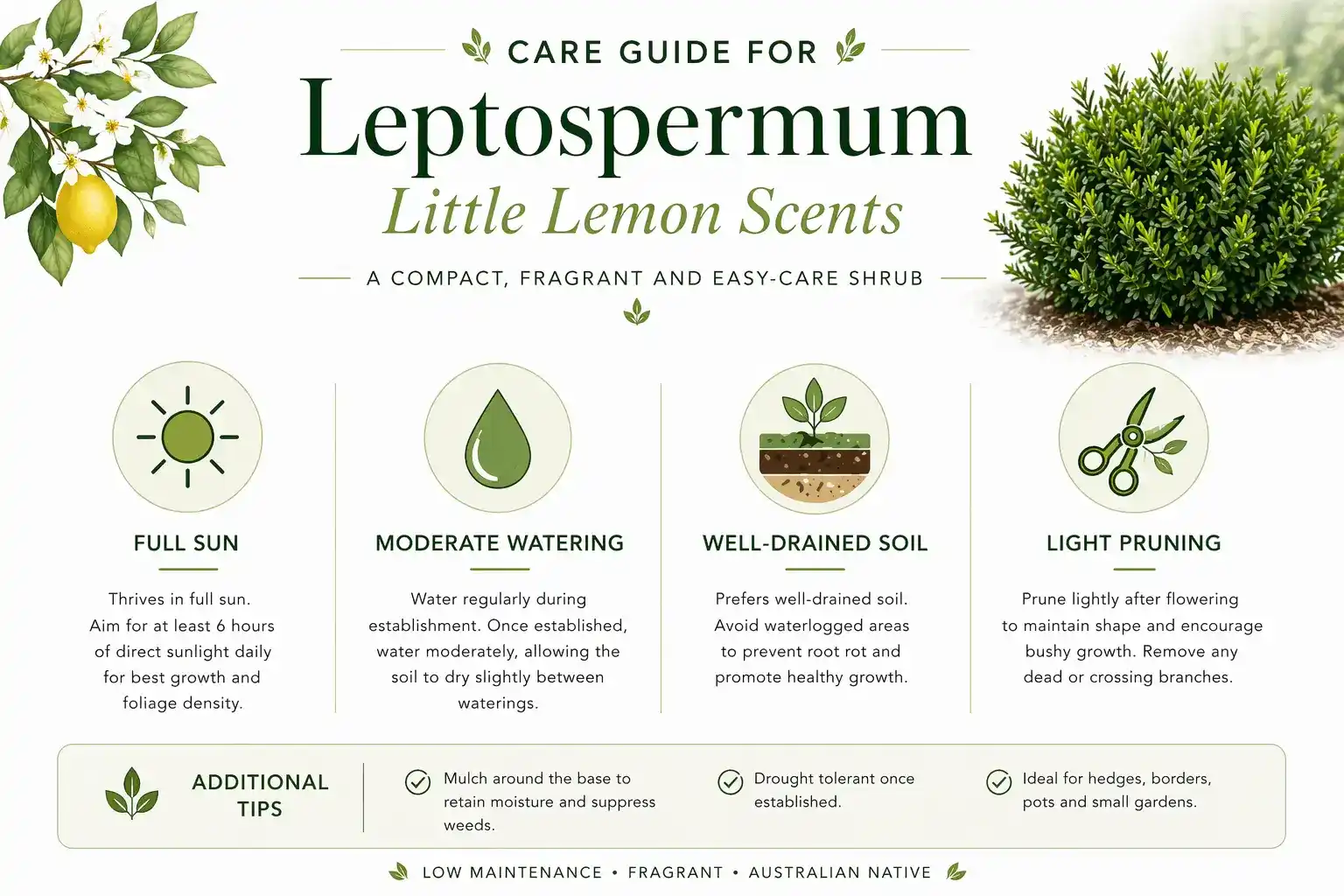
Leptospermum little lemon scents grows best in full sun, where it can develop dense foliage and strong fragrance. Well-drained soil is essential to prevent root problems.
It is well-suited to warm climates, particularly conditions similar to its native Australian environment.
- Thrives in warm, sunny environments
- Tolerates mild drought once established
Care Guide for Healthy Growth
Watering Needs
Leptospermum little lemon scents requires regular watering during its establishment phase. Once mature, it becomes more drought-tolerant and needs only moderate watering.
It is important not to confuse its watering needs with citrus trees, such as guidelines for how often to water a young lemon tree, as this plant prefers less frequent watering once established.
Soil and Fertilization
The plant prefers well-drained soil with moderate fertility. Poor drainage can lead to root issues, making soil structure a critical factor. Fertilization can be applied during the growing season to support healthy foliage, but excessive feeding is generally unnecessary. If your garden has heavy or compacted soil, improving structure is essential for root health and drainage.
Pruning and Maintenance
Regular pruning helps maintain shape and encourages dense growth, especially when used as a hedge.
- Prune lightly after flowering
- Avoid overwatering to prevent root issues
Common Problems and Solutions
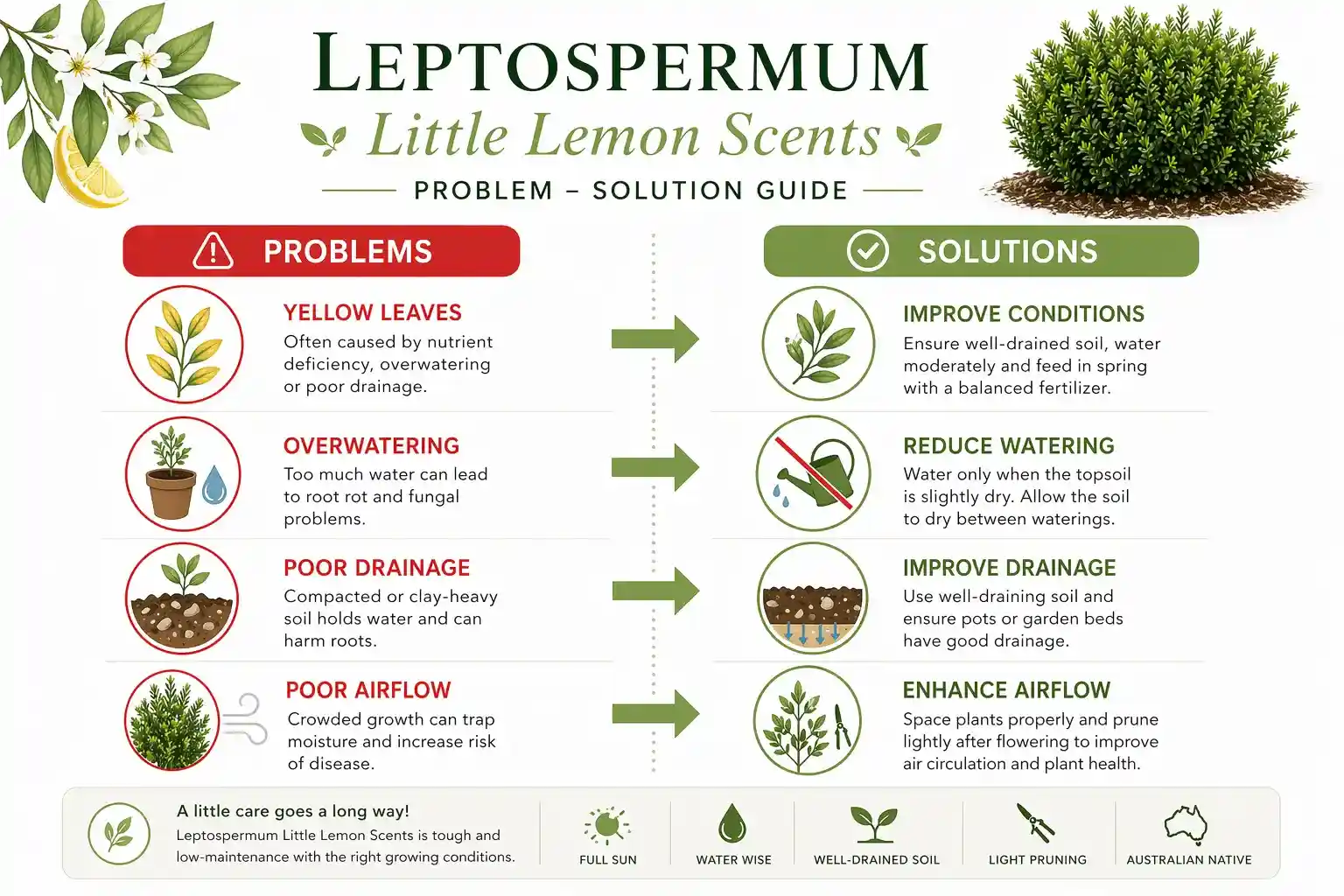
Yellowing Leaves or Poor Growth
Yellowing leaves or weak growth are usually caused by overwatering or poor soil drainage. Excess moisture can lead to root stress and reduced nutrient uptake.
To fix this:
- Improve soil drainage
- Reduce watering frequency
Pest or Disease Issues
Leptospermum little lemon scents is generally resilient but may face issues in humid conditions.
- Monitor for fungal issues in humid conditions
- Ensure airflow between plants
Beginner Mistakes to Avoid
Common mistakes can affect plant health and growth performance, especially for beginners.
- Planting in heavy clay soil
- Overwatering young plants
- Ignoring spacing for hedge growth
- Expecting large tree size from dwarf variety
These errors can lead to poor development, root issues, or uneven hedge formation.
Comparison With Similar Lemon-Scented Plants
Leptospermum vs Lemon Myrtle vs Other Tea Trees
Leptospermum little lemon scents differs from other lemon-scented plants such as lemon myrtle and larger tea tree species in size, fragrance intensity, and usage.
- Some plants are taller and less compact
- Fragrance intensity varies between species
Lemon myrtle, for example, often grows taller and has a stronger culinary use, while leptospermum varieties are more commonly used for ornamental hedging. Other related tea tree species, such as Leptospermum brachyandrum, also differ in foliage color and growth habit, making them suitable for different landscape styles.
Environmental and Seasonal Considerations
Leptospermum little lemon scents shows seasonal growth patterns, with more active development during warmer months. Growth slows in cooler seasons.
It can tolerate mild drought but may be sensitive to frost, especially in colder climates. The concept of leptospermum lemon frost highlights its limited tolerance to freezing conditions.
Proper placement and seasonal care adjustments help maintain plant health throughout the year.
Conclusion
Leptospermum little lemon scents is a versatile, compact, and aromatic plant ideal for hedging and decorative landscaping. Its manageable size, strong citrus fragrance, and low-maintenance care make it an excellent alternative to larger lemon-scented tea tree varieties. With proper growing conditions and basic care, it thrives in a wide range of garden settings, offering both functional and ornamental value.
FAQs
What is leptospermum little lemon scents used for?
Leptospermum little lemon scents is used for hedging, ornamental planting, and adding citrus fragrance to gardens. It is commonly planted in borders, pathways, and small landscape designs.
How tall does leptospermum little lemon scents grow?
It typically grows to around 1–2 meters in height, making it much smaller than standard leptospermum petersonii, which can reach several meters tall.
Is little lemon scents suitable for hedges?
Yes, it is highly suitable for hedges due to its dense foliage and compact growth habit, allowing for easy shaping and maintenance.
How fast does lemon scented tea tree grow?
The growth rate is moderate and depends on sunlight, soil quality, and watering conditions. Warmer climates usually promote faster growth.
What are common problems with lemon scented tea trees?
Common problems include overwatering, poor drainage, and insufficient sunlight, which can lead to yellowing leaves and weak growth.
Is leptospermum little lemon scents native to Australia?
Yes, it is derived from Australian native species such as leptospermum petersonii, which naturally grows in warm, coastal regions.